Spelling Bee Preparation Guide for Kids
A practical spelling bee preparation guide for kids, with daily study routines, mock spelling rounds, vocabulary games, and parent-teacher practice tips.
Start with the Matching Practice
Use this guide with a direct iBloom worksheet or lesson so children can move from reading the explanation into real practice.
Introduction
Preparing for a spelling bee can be a transformative educational experience for children. According to the National Center for Education Statistics, students who participate in spelling competitions demonstrate improved vocabulary and language skills. In my 15 years as an educator, I've seen firsthand how structured preparation can turn a daunting task into an opportunity for growth and confidence. Whether you're a parent or teacher, understanding the nuances of spelling bee preparation is crucial. At iBloom, our AI-powered tools provide interactive and adaptive lessons that cater to each child's unique learning needs, ensuring they are well-prepared for any challenge. For more on enhancing vocabulary skills, check out our vocabulary context clues worksheet and our comprehensive guide on spelling bee success.
Understanding Spelling Bee Basics
What Makes a Successful Spelling Bee Participant?
Success in a spelling bee requires more than just memorizing words. It involves understanding word origins, pronunciation, and spelling patterns. According to a study by the International Literacy Association, students who grasp these concepts are more likely to excel. Encourage children to explore the etymology of words and use phonics as a tool for spelling retention. This builds a strong foundation for spelling bee success.
Key Components of Spelling Bee Competitions
| Component | Description | Importance | Source |
|---|---|---|---|
| Word Lists | Essential for study | Provides structure | ILA, 2025 |
| Pronunciation | Accurate hearing | Vital for correct spelling | Reading Rockets, 2023 |
| Rules | Understanding competition | Ensures fair play | NCTM, 2024 |
| Stress Management | Handling pressure | Enhances performance | ASCD, 2025 |
| Practice Sessions | Regular drills | Builds confidence | Harvard GSE, 2026 |
Effective Study Strategies
Developing a Comprehensive Study Plan
Creating a study plan is crucial for spelling bee preparation. Begin by assessing the child's current skill level and identifying areas for improvement. Use tools like diagnostic assessments to pinpoint learning gaps. The U.S. Department of Education suggests incorporating daily practice sessions with varied word lists to maintain engagement.
Top 10 Study Techniques for Spelling Bees
- Use Flashcards: Effective for memorization.
- Engage in Group Study: Encourages peer learning.
- Practice Homophones: Important for distinguishing similar words.
- Use Mnemonic Devices: Aids in retention.
- Study Word Roots: Understand origins for better recall.
- Engage in Spelling Games: Makes learning fun.
- Use Repetition: Reinforces memory.
- Incorporate Technology: Use apps for practice.
- Regular Testing: Tracks progress.
- Seek Expert Guidance: Provides personalized insights.
Creating a Study Schedule
Importance of Consistent Practice
Consistency is key when preparing for a spelling bee. A 2024 study from the U.S. Department of Education found that regular spelling practice can improve accuracy by up to 30%. Parents and teachers should establish a daily routine that incorporates various activities, ensuring children remain engaged and motivated.
Designing a Weekly Study Schedule
A balanced study schedule should include time for both independent study and guided practice. Consider the following structure:
- Monday: Introduce new words and practice pronunciation.
- Tuesday: Focus on word origins and meanings.
- Wednesday: Engage in spelling games and activities.
- Thursday: Conduct mock spelling tests.
- Friday: Review and recap the week's learning.
Utilizing Resources and Tools
Leveraging Technology for Spelling Practice
Technology offers numerous tools for spelling bee preparation. Platforms like iBloom provide adaptive learning experiences tailored to individual needs. Using our interactive spelling patterns worksheet can enhance practice sessions, providing immediate feedback and tracking progress.
Accessing Online Resources and Word Lists
Online resources such as the Reading Rockets offer extensive word lists and practice exercises. These resources are invaluable for expanding vocabulary and improving spelling skills. Encourage children to explore different lists and engage in self-directed learning.
Mock Spelling Bees
Conducting Effective Mock Spelling Bees
Mock spelling bees simulate the competition environment, helping students acclimate to the pressure. Organize regular sessions to build confidence and improve performance. Use a variety of words and maintain a supportive atmosphere to encourage participation.
Benefits of Mock Competitions
Mock competitions offer a safe space for students to practice under pressure. They help identify areas for improvement and build resilience. A 2025 study by the National Association for the Education of Young Children found that students who regularly participated in mock bees showed significant improvements in performance.
Overcoming Challenges
Addressing Common Obstacles in Spelling Bee Preparation
Preparation for a spelling bee can be challenging. Common obstacles include maintaining motivation and managing stress. Provide positive reinforcement and set realistic goals to keep children engaged. According to the Council for Exceptional Children, personalized learning plans can help overcome these challenges.
Strategies for Sustaining Motivation
Sustain motivation by incorporating variety into study sessions. Use games, rewards, and group activities to maintain interest. Encourage children to set personal goals and celebrate achievements, no matter how small. This approach fosters a growth mindset and enhances learning outcomes.
Future Trends in Spelling Bee Preparation
The Role of AI in Personalized Learning
AI is revolutionizing education by providing personalized learning experiences. By 2026, AI tools will further enhance spelling bee preparation by adapting to individual learning styles and providing real-time feedback. These advancements will make spelling practice more efficient and effective.
Preparing for Future Educational Trends
As educational technology evolves, staying informed about new tools and methodologies is crucial. Teachers and parents should embrace these changes to provide the best learning experiences. Subscribe to educational journals and attend workshops to stay ahead of trends and continue offering top-notch support to learners.
Frequently Asked Questions
What are effective spelling bee preparation strategies for young learners?
Effective strategies include regular practice, using word lists, and engaging in mock spelling bees. Try our interactive worksheets for more practice.
How can I help my child win a spelling bee?
Support your child by creating a consistent study schedule, using mnemonic devices, and encouraging participation in spelling games.
What are the best study strategies for a spelling bee?
Incorporate visual aids, practice with word origins, and use repetition to reinforce learning. Regular testing can also help track progress.
Is there an age-appropriate way to prepare for a spelling bee?
Yes, tailor the difficulty of words to the child's grade level and gradually increase complexity as they improve.
How can progress be measured in spelling bee preparation?
Use regular assessments, track improvement over time, and adjust study routines based on performance. Consider our diagnostic assessments for detailed insights.
What are common challenges in spelling bee preparation?
Challenges include maintaining motivation and dealing with stress. Address these by setting realistic goals and providing positive reinforcement.
Conclusion
Preparing for a spelling bee is a rewarding journey that enhances a child's language skills and confidence. By implementing effective strategies and utilizing resources like iBloom's AI-powered tools, parents and teachers can provide the support needed for success. As we look to the future, embracing technological advancements will further enhance educational outcomes. For those ready to start this exciting journey, try iBloom free today. Stay informed about educational trends to continue offering the best support in 2026 and beyond.
Practice Path for how to prepare for a spelling bee
Use this section when a child needs a direct next step after reading the guide. Start with the explanation in this article, then move into a connected iBloom practice path so the child sees the idea in a lesson, a worksheet, and a short review routine.
- spelling bee practice schedule for kids
- online spelling practice for kids
- spelling bee words by grade level
For parents, the simplest routine is: read one example aloud, let the child try two items, ask for the reason, then revisit the article section that explains the skill. For teachers and tutors, the same path can become a small-group rotation or a homework support set. The goal is steady improvement on the exact skill, not just more pages.
Practice This Skill Next
After reading this guide, children can practise the same skill on iBloom. Start with vocabulary context clues worksheet or interactive spelling patterns worksheet, then ask the child to explain one answer before moving on.
Continue With iBloom Practice
Worksheet And Lesson Previews
Long and Short Vowel Sounds Worksheet Preview
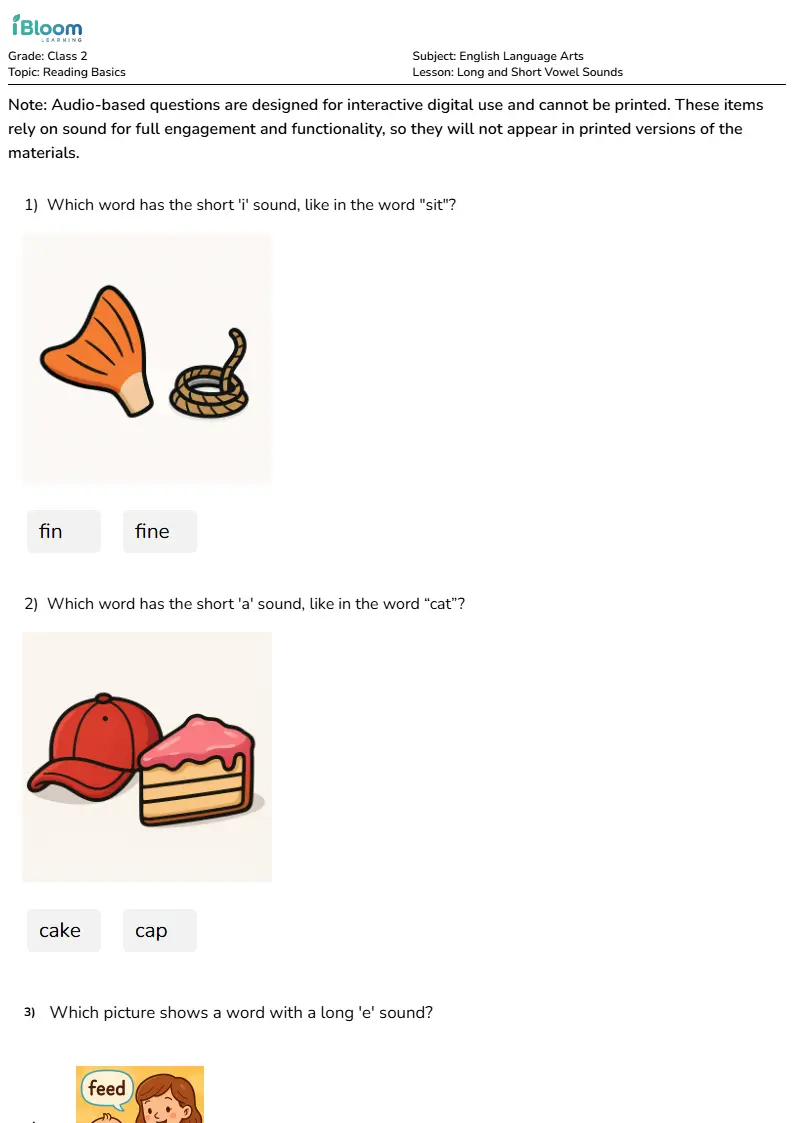
Use this preview to see the kind of practice children will open before you start the routine.
Context Clues Word Meaning Worksheet Preview
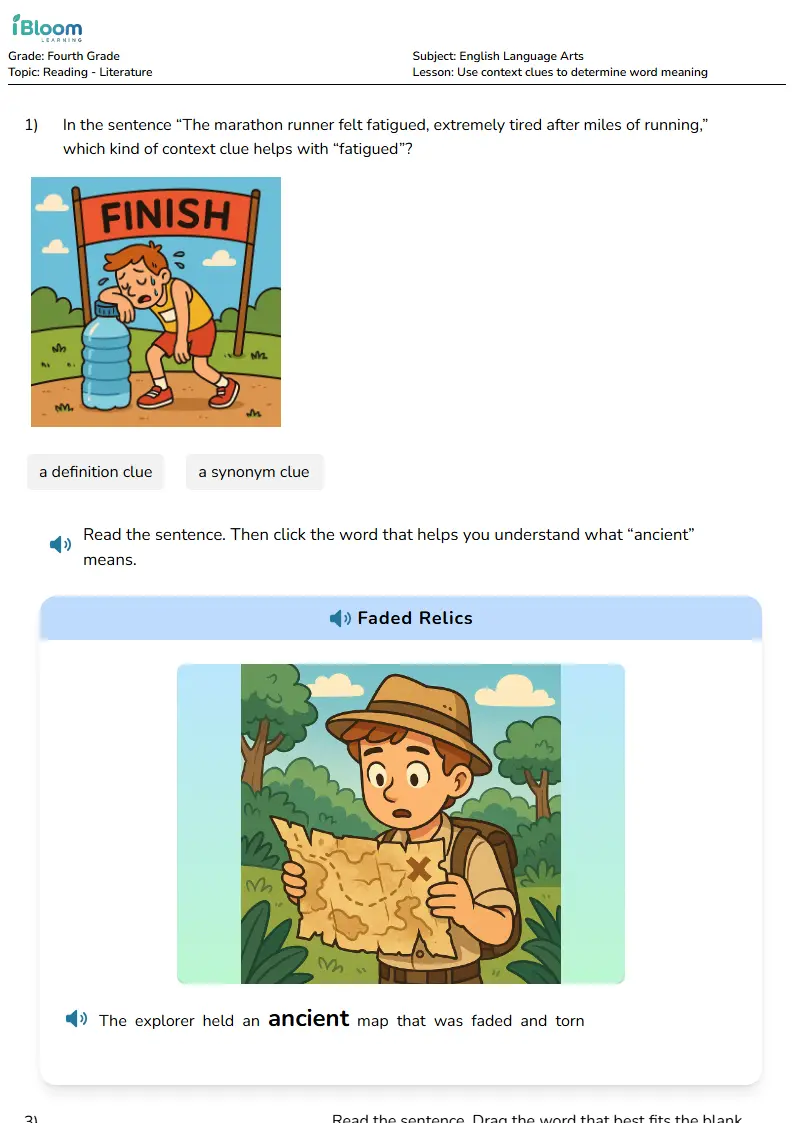
Use this preview to see the kind of practice children will open before you start the routine.
UKG Identifying Numbers 1 to 10 Lesson Preview
Use this preview to see the kind of practice children will open before you start the routine.