Full and Empty Worksheet for Nursery
Full and Empty Worksheet for Nursery with detailed examples, India/US/UAE context, parent and teacher routines, FAQ answers, and direct iBloom practice links.
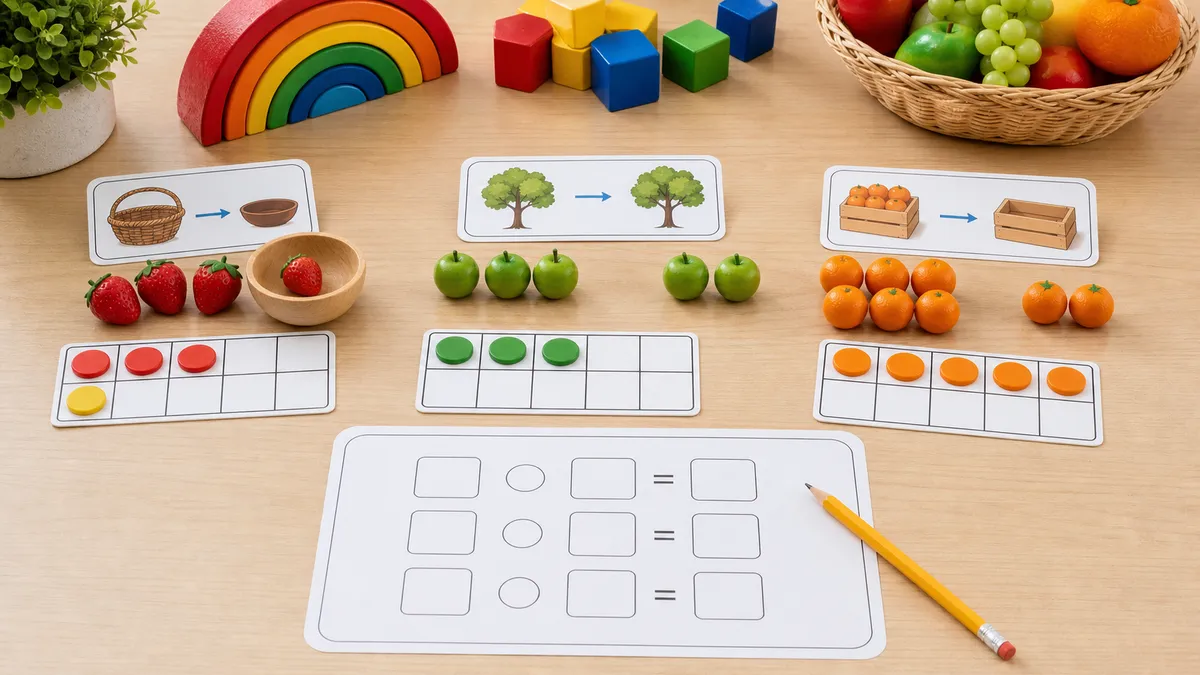
Full and Empty Worksheet for Nursery is a detailed guide for nursery, LKG, preschool, KG1, and early kindergarten children learning capacity words through real containers and pictures. It gives parents, teachers, tutors, and caregivers a complete way to teach the skill with examples, short routines, location-aware classroom context, and direct iBloom practice links.
Table of Contents
Worksheet And Lesson Previews
Full and Empty Worksheets for LKG Preview
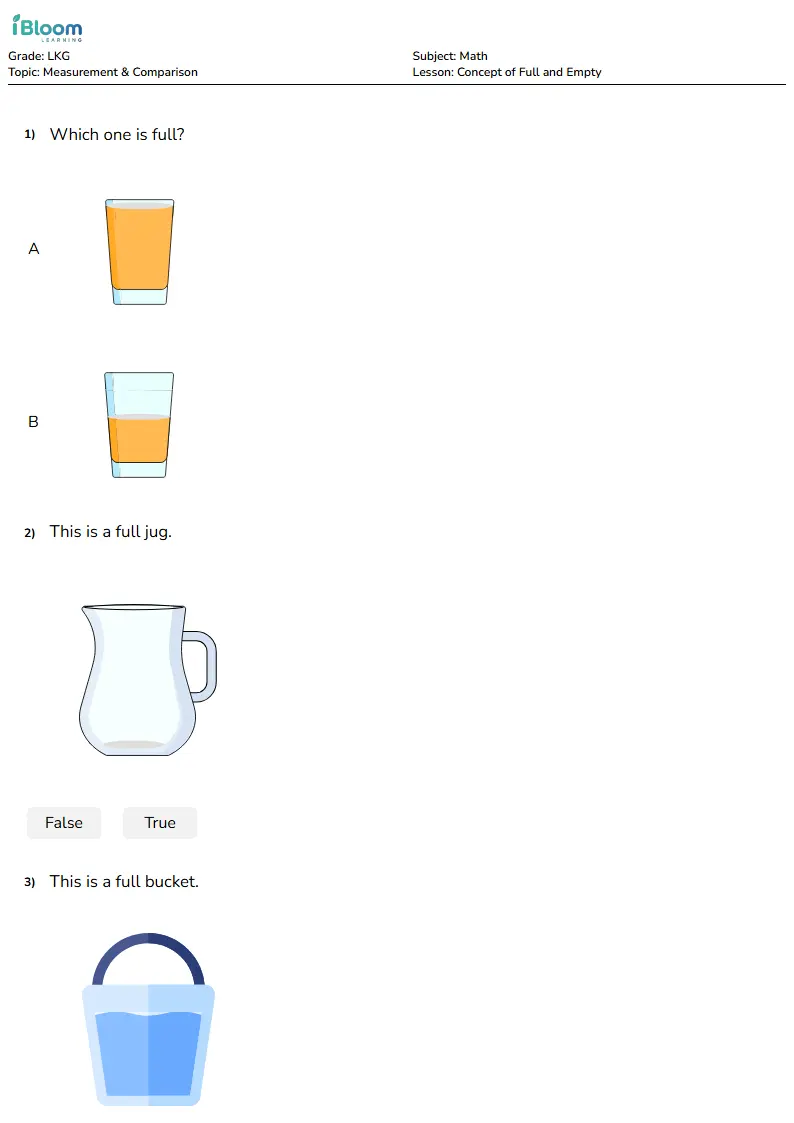
Use this preview to see the kind of practice children will open before you start the routine.
Key Takeaways
- The goal is not only to finish a worksheet. The goal is for the child to notice the clue, say the step, choose the answer, and explain why it works.
- A strong session starts with one model, then one guided example, then a short independent try.
- Real objects, pictures, oral prompts, and short explanations matter before a child works alone.
- Parents should use a calm five-to-ten-minute routine instead of a long worksheet session.
- Teachers can use the same page as a warm-up, small-group lesson, center rotation, homework support, or quick exit check.
- Location context matters because grade names and curriculum labels differ, but the child-facing skill stays similar across India, the United States, and the UAE.
Start With iBloom Practice
Use the guide together with a live iBloom lesson or worksheet. Open one page, model one item, and ask the child to explain one answer before moving to a longer practice set.
What Children Need To Understand
Children need three layers of understanding for full and empty worksheet for nursery. First, they need the everyday meaning of the task. Second, they need a repeatable strategy. Third, they need language for explaining the answer. When one of these layers is missing, children may finish a page but still struggle the next day.
The adult should make the hidden thinking visible. Say the first step aloud. Point to the clue. Show the model. Let the child copy the process once. Then ask the child to try a new item and explain it back. This type of explicit modelling is consistent with research-backed classroom guidance from sources such as IES practice guides, which emphasize clear instruction, worked examples, feedback, and repeated practice.
For many young learners, the most important move is slowing down. A child who guesses quickly may appear confident, but the explanation shows whether the learning is secure. Ask, "What tells you that?" or "Which part helped you decide?" That one question often reveals whether the child needs more modelling or is ready for independent work.
Step-by-Step Teaching Routine
Use this routine before assigning the page independently.
- Name the goal. Tell the child exactly what they are learning today.
- Show one example. Work slowly and say your thinking aloud.
- Ask what they notice. Let the child point, say, sort, count, read, or compare before answering.
- Try one together. Do not correct too late. Give feedback as the child works.
- Ask for an explanation. A short sentence is enough: "I know because..."
- Give one independent item. Watch whether the child uses the same strategy without prompting.
- Review one mistake. Treat the mistake as information, not failure.
This routine works because it keeps the page learner-facing. It does not turn the worksheet into adult talk. The child still does the thinking, but the adult gives enough structure for the thinking to be successful.
Examples And Practice Prompts
| Example | How to use it |
|---|---|
| cup | Fill one cup and leave another empty so the child can compare the amount. |
| box | Put blocks in one box, empty the second box, and ask which word fits. |
| bowl | Show full, almost full, half full, and empty with safe classroom objects. |
| basket | Ask the child to draw one full basket and one empty basket. |
After each example, ask one of these prompts:
- What did you notice first?
- Which clue helped you decide?
- Can you show the step with your finger, pencil, blocks, picture, or words?
- What answer would not make sense? Why?
- Can you make one similar example for me?
Parent Routine
Parents can use this page without turning home practice into a long lesson. Start with the direct iBloom page, sit beside the child, and complete one item together. If the child is confident, let them complete two or three more. If the child hesitates, stop and model another example instead of pushing through the whole page.
A strong home routine looks like this:
- Minute 1: Read the page title and name the skill.
- Minutes 2-3: Model one example slowly.
- Minutes 4-6: Let the child try two items.
- Minutes 7-8: Ask for one explanation and correct one mistake.
- Minutes 9-10: End with a successful item or open a related iBloom page for later.
Parents in busy households often need practical language. Try saying: "We are not racing. We are checking how your brain solved it." That keeps the child from treating the page as a speed task.
Teacher Routine
Teachers can use this guide for whole-class modelling, small-group reteaching, intervention, or homework support. The best classroom use is short and deliberate. Put the example on the board, invite children to identify the clue or step, and then let them complete a matching item on iBloom.
For small groups, assign roles:
- One child reads or names the task.
- One child points to the clue or model.
- One child explains the answer.
- One child checks whether the explanation matches the page.
For children who need support, reduce the number of choices and add a concrete model. For children who are ready for extension, ask them to write a new clue, create a new example, draw a model, or explain a common mistake.
India, US, And UAE Notes
India
For Indian nursery and LKG learners, full and empty appears naturally in classroom oral math, CBSE/ICSE preparatory work, and state-board early concepts. Use local classroom language naturally. For example, children may hear "worksheet," "copywork," "sums," "EVS," "English practice," "mental maths," or "revision" depending on the school. The important point is to connect the adult's words to the child's task on the page.
United States
For US preschool and pre-K learners, the same idea supports measurable attributes, comparison language, and early math vocabulary before formal measurement. Many US classrooms expect children to explain their answer, not only mark it. Parents can support that expectation by asking for one spoken explanation after iBloom practice.
UAE
For UAE nursery, KG1, and KG2 learners, full and empty works especially well in multilingual classrooms because children can connect the English word to a visible container. In multilingual homes, let the child explain the idea in a home language first when needed, then connect it back to the English academic word on the page. This supports understanding without making the worksheet feel like memorization.
Common Mistakes
Children often make predictable mistakes with full and empty worksheet for nursery. Watch for these patterns:
- The child answers from memory instead of using the current clue or step.
- The child completes the page but cannot explain any answer.
- The child skips the instruction and begins from the pictures or numbers alone.
- The child confuses similar words, sounds, pictures, operations, or answer choices.
- The child keeps working after fatigue begins, which causes avoidable errors.
When a mistake appears, do not restart the whole page. Pick one missed item, model the correct thinking, and ask the child to try one similar item. A focused correction is usually more useful than another long worksheet.
Assessment And Review
A child understands the skill when they can do three things: choose the answer, explain the reason, and transfer the idea to a new example. If the child can only choose the answer, continue guided practice. If the child can explain but works slowly, use short repeated sessions. If the child can create a new example, the skill is becoming flexible.
Use this simple review checklist:
- Can the child name the task?
- Can the child identify the clue, model, picture, word, or place-value step?
- Can the child complete one item without guessing?
- Can the child explain one answer in a sentence?
- Can the child correct one mistake after feedback?
Keep Practicing With iBloom
End with one useful next step. If the child needs direct practice, use the iBloom lesson or worksheet links above. If the adult needs more teaching ideas, use the related blog links. Keep the next session short enough that the child can finish with a correct explanation.
Frequently Asked Questions
Who is this guide for?
This guide is for parents, teachers, tutors, caregivers, and children who need a clear routine for full and empty worksheet for nursery.
How long should one practice session take?
Five to ten minutes is enough for many children. A short session with one good explanation is better than a long session with guessing.
Should children use iBloom before or after this guide?
Open the iBloom practice page first if the child needs direct work. Use this guide beside the page to model, explain, and review.
What if the child keeps guessing?
Return to one example. Ask the child to point to the clue or step, say the answer, and explain why it fits. If the child still guesses, make the task more concrete with an object, drawing, sound, or model.
How do I use this for homework?
Choose one short iBloom page, complete a few items, and ask for one explanation. Do not turn homework into a long drill.
How do I use this in class?
Use it as a warm-up, small-group model, center task, or exit check. Ask students to explain one answer so you can hear the thinking.
Does the routine change by country?
The grade label and curriculum language can change, but the learning routine stays similar. Children in India, the United States, and the UAE all benefit from modelling, guided practice, explanation, and review.
What should we do next?
Use one related iBloom practice link above, then return later for a short review.