How Can Kids Tell If an Online Source Is Reliable?
A practical guide for helping children evaluate online sources by checking authority, evidence, timeliness, purpose, and independent confirmation.
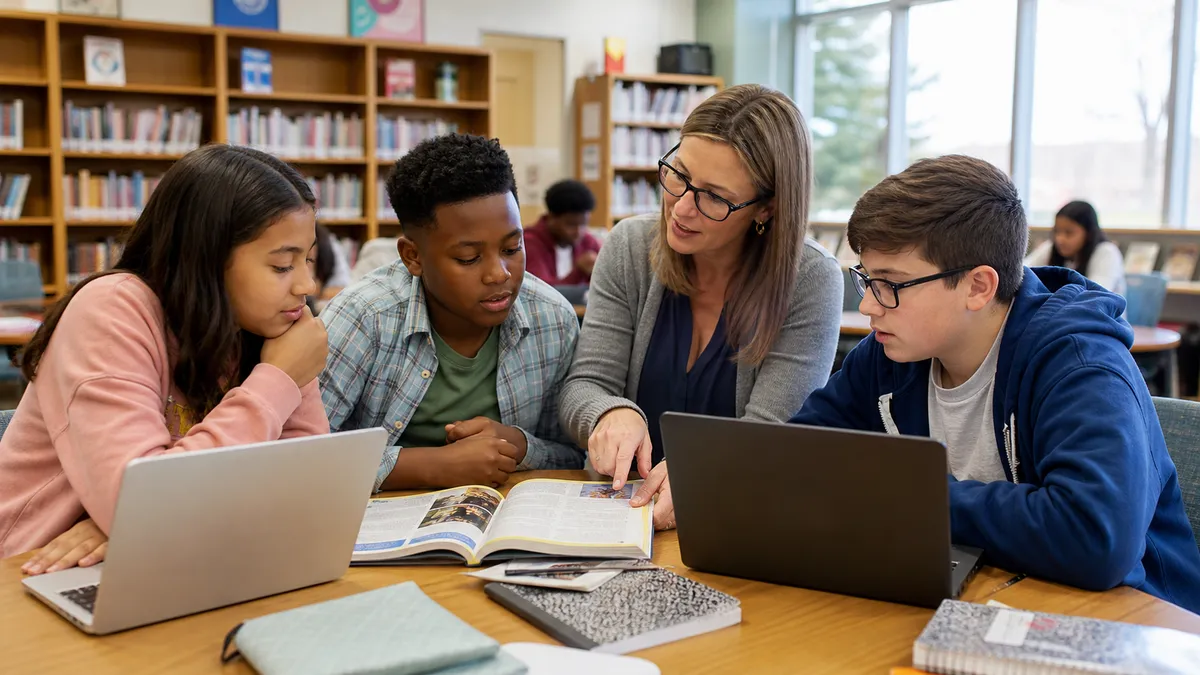
Children can learn to check whether a source is reliable by using a short routine instead of trusting the first result they see. Teach them to CHECK: Clarify the claim, Hunt for who created the source, Examine its evidence and purpose, Compare it with another strong source, and Keep or leave it with a reason. For most children ages 8 to 12, reliability is not a yes-or-no label attached to an entire website. It is a decision about whether a particular source is suitable for a particular question.
This matters during homework, projects, science research, book reports, classroom discussions, and everyday online searches. A page can look polished and still give weak support. A useful source can also have limits: it may be accurate but too old for a changing topic, written for adults, or focused on a different country. Children need a practical way to pause, investigate, and explain why they would use a source.
This guide is for parents, teachers, tutors, librarians, and homeschool educators. It provides a complete teaching sequence, age and grade adjustments, worked examples, classroom and home activities, support for multilingual learners, an assessment rubric, and clear boundaries for safe online practice.
What Is a Reliable Source?
A reliable source gives information that is trustworthy enough for the current task. It usually makes its creator identifiable, shows where important claims come from, separates evidence from opinion, fits the question, and can be checked against other credible information.
Reliability is not the same as perfection. Even a respected organisation can publish an outdated page or a simplified explanation. A personal blog may accurately describe one person’s experience but cannot establish what happens to everyone. A museum photograph may be excellent evidence of an object but may not explain the full history around it. The child’s question determines what evidence is needed.
Teach children to ask, “Reliable for what?” A weather office can be a strong source for a forecast. A neighbour may be a valuable primary source about a local event they witnessed. A textbook may explain a stable scientific idea clearly. A product seller is not the best independent source for deciding whether its own product is superior.
The Oregon School Library Information System guide for elementary source evaluation asks young researchers to consider whether information is reliable and correct, who produced it, when it was made, and why it was created. Those questions are more useful than telling children to trust or reject a source based only on its design or domain ending.
Reliable does not mean “I agree with it”
Children sometimes treat familiar information as reliable and surprising information as unreliable. Explain that agreement is not a test. A source earns trust through relevant expertise, transparent evidence, careful methods, and confirmation, not because it matches what the reader expected.
Popular does not mean well supported
Likes, shares, views, and confident language show attention, not accuracy. A repeated claim can still be wrong. Children should learn to step outside the page and see what knowledgeable, independent sources say.
A domain ending is only a clue
Government, education, commercial, and nonprofit domains can provide useful context, but no ending automatically proves every claim. Children should inspect the actual author, organisation, evidence, date, and purpose. This avoids replacing one shortcut with another.
Teach the CHECK Routine
Write CHECK on a bookmark, project sheet, or classroom poster. Model the routine with safe, teacher-selected examples before asking children to evaluate open-web results independently.
C: Clarify the claim or question
Children cannot evaluate a source until they know what they are trying to verify. “Is this website good?” is too broad. Better questions are:
- Does this page accurately explain why shadows change length?
- Is this image really from the event named in the caption?
- Is this advice appropriate for children in my age group?
- Does this source provide evidence for the claim that a local lake is polluted?
- Is this page current enough for today’s school transport timetable?
Ask the child to write the claim in one sentence. Circle words that need definition. A claim such as “recycling always saves energy” contains an absolute word. The child should look for the type of recycling, material, comparison, and evidence rather than searching only the full sentence and counting matching results.
Clarifying also prevents topic drift. A page about general air pollution may not answer a question about indoor classroom air. A source can be accurate and still irrelevant.
Children who need practice finding a central idea before evaluating a claim can use the iBloom Class 4 lesson on combining information from two texts. Identifying what each source actually says is a necessary step before deciding whether the sources support one another.
H: Hunt for who created it
Ask:
- Is an author, organisation, agency, school, museum, university, or publisher named?
- What relevant knowledge or role does the creator have?
- Is there an About page or author biography?
- Can the creator be found outside this page?
- Is responsibility for the content clear?
Do not teach children that only famous people can be credible. A local conservation officer may have relevant knowledge about a nearby wetland. A child describing their own experience is an appropriate primary source for that experience. The key is matching the source’s position and expertise to the claim.
When the creator is unclear, pause. Search the organisation’s name in a new tab with adult supervision. Look for independent descriptions, not only what the site says about itself. If ownership remains hidden, the source may still offer a useful lead, but it should not carry an important claim by itself.
The Harvard Library guide to evaluating sources asks readers to consider currency, relevance, authority, accuracy, and purpose. This is a useful reminder that “who made it?” includes the creator’s expertise, organizational affiliation, and purpose, not merely a name.
E: Examine evidence, date, and purpose
Evidence may include named studies, data, quotations, photographs with context, documents, observations, or links to original material. Ask:
- What supports the important claim?
- Can we follow the evidence to its original source?
- Does the evidence actually match the claim?
- Is the date visible?
- Does the topic change quickly enough for the date to matter?
- Is the page trying to inform, explain, entertain, persuade, sell, or collect attention?
Purpose does not automatically make a source false. A charity may persuade people to donate while accurately describing its work. A company may provide correct instructions for its product. However, purpose affects what the creator highlights and what they may leave out. Children should seek independent evidence when a source benefits from the conclusion.
Check the difference between a page’s publication date and the date of its evidence. A recent article can rely on an old study. An older primary document can be exactly the right evidence for a history question. Recency matters differently for a scientific discovery, a historical letter, a bus schedule, and a word definition.
C: Compare with another strong source
Teach children to leave the original page and look elsewhere. This is sometimes called reading laterally: instead of studying one page for a long time, the reader checks what other credible sources say about the source and claim.
Use at least one independent source. Independence matters. Five pages that copy the same press release are not five separate confirmations. Look for different organisations, authors, or evidence chains.
The iBloom Class 4 worksheet on comparing different accounts helps children notice that sources can discuss the same subject while selecting different details. That skill supports reliability checks because agreement, omission, and contradiction must be distinguished carefully.
Ask:
- Which facts appear in both sources?
- Does one source add important context?
- Do the sources disagree, or do they answer different questions?
- Do both trace back to the same original evidence?
- Which source explains its methods more clearly?
Agreement increases confidence only when the sources are meaningfully independent and competent. Disagreement is a signal to slow down, define terms, check dates, and look for stronger evidence. It is not a reason to choose whichever answer the child prefers.
K: Keep it or leave it with a reason
The child makes a decision:
- Keep: Suitable evidence for the project.
- Keep with limits: Useful for one detail, example, or viewpoint, but not enough for the main claim.
- Leave: Unclear creator, weak evidence, mismatch with the question, unsafe content, or a stronger source is available.
Require a complete reason. “It looks reliable” is not enough. Better explanations include:
- “I will keep this government weather page because it names the agency, gives a current update time, and matches the forecast on another recognised service.”
- “I will use this interview as evidence of one person’s experience, but not as proof that everyone had the same experience.”
- “I will leave this page because it makes a health claim but does not name an author, evidence, or reviewing organisation.”
The decision is the final learning product. The child should be able to show the path from question to source choice.
A Worked Example: Do Houseplants Clean Classroom Air?
Use a neutral, teacher-prepared example. The aim is to practise the process, not to make children search unsafe or sensational claims.
Step 1: Clarify
The original claim is, “Houseplants clean classroom air.” Ask what “clean” means. Does it mean removing some chemicals in a sealed laboratory chamber, reducing dust, changing humidity, or improving measured indoor air during a normal school day?
Rewrite the question:
Do a few houseplants significantly improve measured air quality in a normally ventilated classroom?
The new question is specific enough to evaluate.
Step 2: Hunt
Source A is a gardening company article. It names the company but no individual author. The company sells indoor plants. That does not prove the article is wrong, but the commercial purpose matters.
Source B is an article from a university department that names researchers and links to a study. The topic fits the researchers’ field. This is a stronger starting point for the scientific claim.
Step 3: Examine
Source A uses phrases such as “naturally purifies” but does not explain how much air changes or under what conditions. It refers generally to research without linking to the original study.
Source B distinguishes controlled chambers from real buildings, describes ventilation, and gives publication details. It has limitations, but the evidence is easier to inspect.
Step 4: Compare
A third source from a public health or building agency explains that ventilation and source control are primary parts of indoor air quality management. It does not say plants have no value; it places their likely effect in context.
The sources are not simply “for plants” and “against plants.” They address scale, conditions, and purpose differently.
Step 5: Keep or leave
A strong child response is:
I would not use the gardening article as the main evidence because it sells plants and does not link its broad claim to a clear study. I would keep the university explanation and the public agency guidance because they identify evidence and explain real-building conditions. I might still use the gardening page as an example of a claim that needs checking.
This response evaluates suitability without insulting the creator or claiming certainty beyond the evidence.
Start With Safe, Curated Source Sets
Open-web evaluation is complex. Parents and teachers should begin with two or three preselected pages, printed extracts, screenshots, book pages, or short source cards. Remove advertising clutter and avoid disturbing examples.
Ages 8 to 9: Grade 3
Focus on:
- Who made this?
- What is the page trying to do?
- What evidence can I point to?
- Does another trusted source say something similar?
Use familiar claims about animals, weather, school history, or simple science. Allow oral answers and source sorting.
The iBloom Class 3 lesson on different points of view supports the idea that information is presented from a position. Point of view does not make a source unusable, but readers need to notice it.
Ages 9 to 10: Grade 4
Add author qualifications, date, links to original evidence, comparison across three sources, and the difference between fact, interpretation, and promotion. Children can record CHECK notes in a table.
Ages 10 to 12: Grades 5 to 6
Add lateral searching, evidence chains, image context, conflicts of interest, methods, missing data, and uncertainty. Ask learners to justify why a source fits one claim but not another.
These ranges are flexible. A child who is a strong reader may still need direct modelling of source evaluation. A multilingual learner may reason well with shorter English frames. Adjust language and text complexity without removing the decision-making.
Do Not Teach a Checklist as a Magic Score
Checklists are useful memory supports, but reliability cannot be calculated by counting surface features. A page with an author, date, and attractive references can still misuse evidence. A primary document may have no modern About page but be highly valuable for a historical question.
Avoid rules such as:
- “All dot-com pages are bad.”
- “Every dot-org page is trustworthy.”
- “A professional design proves quality.”
- “An old source is useless.”
- “The first search result is the best.”
- “If three sites repeat it, it must be true.”
Replace each shortcut with a question about fit, evidence, independence, and context.
Teach the Difference Between Source Types
Primary sources
Primary sources come directly from the time, person, event, or observation being studied: letters, photographs, diaries, interviews, raw data, speeches, artefacts, or original research reports. They provide direct evidence but still require context and interpretation.
Secondary sources
Secondary sources analyse, explain, or synthesise primary and other sources. Textbooks, history books, review articles, and museum essays often fall here. A strong secondary source helps readers understand a wider pattern and shows its evidence.
Reference sources
Reference works provide organised background information: dictionaries, encyclopedias, atlases, databases, and handbooks. They are useful for orientation and definitions, but a project may require following their references to more specific evidence.
Personal experience
Experience is strong evidence of what one person saw, felt, or did. It is weak evidence for a universal claim unless supported by broader research. Teach children to use precise language: “In this interview, one pupil reported...” rather than “All pupils believe...”
AI-generated answers
An AI response is a starting point for questions, wording, or search terms, not automatically a source of evidence. It may not identify where a claim came from, may combine details incorrectly, and may sound certain when evidence is limited. Children should verify important claims with traceable sources and follow school rules about AI use and attribution.
How to Read a Search Result Page
Search results are recommendations generated by a system, not a reliability ranking. Teach children to slow down before opening a result.
Look at:
- The source or organisation name.
- The page title.
- The visible date, if any.
- The snippet, which may be incomplete.
- Whether the result appears to be an advertisement.
- Whether the page directly matches the question.
Do not judge from the snippet alone. Open a promising result, then use CHECK. If the child is using a school search database, explain that curation reduces some risks but does not remove the need to match a source to the question.
Parent Activities for Home
Activity 1: Source sorting
Prepare six safe source cards about one topic: a textbook excerpt, museum page, product advertisement, personal blog, government page, and unsourced image caption. Ask, “What could each source help us know?” Sort into keep, keep with limits, and leave.
There may be more than one defensible answer. Require a reason connected to the question.
Activity 2: Trace the claim
Choose a child-friendly page that mentions a study or report. Follow the link together. Ask whether the original source says the same thing as the summary. Notice any stronger or weaker wording.
Activity 3: One claim, two sources
Search a safe science or geography question using two reputable sources. Compare what they agree on and what each adds. The iBloom Class 4 worksheet on combining information from two texts can reinforce the reading skill behind this activity.
Activity 4: Advertisement detective
Use a harmless advertisement for a toy, stationery item, or snack. Identify claims, evidence, missing information, and the seller’s purpose. Do not ask whether all advertisements are lies. Ask what extra evidence a buyer would need.
Activity 5: Explain your decision
End every activity with:
I would keep, keep with limits, or leave this source because...
The explanation matters more than completing many examples.
Teacher Activities for the Classroom
Model a think-aloud
Project a safe page and narrate:
My question is about how long this animal lives in the wild. This page names a wildlife organisation, but I still need to see where the number comes from. The page was updated recently, but the date alone does not prove the claim. I will open another independent source and compare the lifespan range.
Model uncertainty. Experts do not always decide instantly.
Use evidence cards
Give groups a claim and four source cards. Each card includes creator, purpose, date, evidence, and a short extract. Pupils rank suitability and defend the order. Then change the question. A source that was weak for one question may become useful for another.
Separate source quality from reading level
A source may be credible but too difficult for a child. Provide an accessible summary while retaining a link to the stronger original source. Discuss the difference between “trustworthy” and “usable right now.”
Compare accounts
Use two accounts of the same school or community event. Ask what each person could observe, what each could not know, and which claims need confirmation. The iBloom Class 3 worksheet on different points of view provides related practice in separating perspective from fact.
Build a class source ladder
For a specific project, create a ladder from starting sources to stronger evidence:
- Search result or AI-generated lead.
- Background reference page.
- Named organisation or expert explanation.
- Original report, data, document, or primary source.
Explain that research often moves through the ladder. A starting source can help generate vocabulary even when it is not cited as final evidence.
A Five-Day Mini-Unit
Day 1: Clarify the claim
Give three broad statements and practise turning them into answerable questions. Identify absolute words such as always, never, best, safe, and proven. Ask what evidence would be needed.
Day 2: Hunt and examine
Compare two prepared pages. Locate author or organisation, purpose, date, and evidence. Discuss why none of these features works as a magic stamp.
Day 3: Compare independently
Read a second strong source. Mark agreement, added context, and conflict. Use the iBloom Class 4 lesson on comparing different accounts to support evidence-based comparison.
Day 4: Keep with limits
Teach the middle category. Use a personal interview, company page, or older source. Ask what it can support and what it cannot.
Day 5: Research decision
Give a safe question and three sources. Pupils complete CHECK notes and write a short source decision. Assess the reasoning, not whether every pupil chooses the identical page.
Support Multilingual Learners and Children With Learning Differences
Preteach evaluation words
Teach claim, source, evidence, author, purpose, current, expert, confirm, and limit with examples. Let children match words to icons or gestures.
Use short source cards
Reduce reading volume while preserving the evaluation task. Include clear labels for creator, date, purpose, and evidence. Gradually move these details back into normal page layouts.
Allow oral and home-language reasoning
A child may discuss the source in a familiar language, then use an English frame:
- This source is useful for ___ because ___.
- I need another source to check ___.
- The author can know ___, but may not know ___.
The American Association of School Librarians' elementary research guidance emphasizes modeling research steps and giving young learners manageable ways to practice. Source evaluation should not become a hidden test of English fluency.
Reduce visual distraction
Print an extract, use reader mode, enlarge text, or cover advertisements. Clearly label the source name and original URL. The child should practise evaluation, not fight an inaccessible layout.
Provide a stop rule
Teach children to stop and ask an adult when a page requests personal information, contains disturbing material, triggers a security warning, or leads away from the school task. Reliability instruction never requires a child to continue into unsafe content.
Common Mistakes and Better Corrections
“It is first in the results, so it is best”
Explain that order can reflect many signals, including relevance and promotion. Open the result and evaluate it.
“It has references, so it is reliable”
Follow one reference. Check whether it exists, supports the claim, and is represented accurately.
“It is old, so it is wrong”
Ask whether the question changes over time. An old diary is appropriate evidence of a historical perspective; an old event schedule is not current guidance.
“It disagrees with me, so it is biased”
Ask what evidence the source provides and whether the child’s prior belief has support. Bias is not a label for unwanted information.
“Both sites say it, so it is confirmed”
Check whether both copied the same original. Seek independent evidence.
“The author is an expert, so every claim is true”
Match expertise to the topic and inspect the evidence. Expertise deserves attention, not blind acceptance.
“A source must be fully good or fully bad”
Use “keep with limits.” A page may contain a useful quotation, definition, or example while being unsuitable for a broader conclusion.
Assess Source Evaluation
Use five criteria:
- Question fit: The child states what is being checked.
- Creator and purpose: The child identifies who made the source and why.
- Evidence and currency: The child examines support and relevant dates.
- Independent comparison: The child checks another suitable source.
- Decision and limits: The child keeps or leaves the source with a specific reason.
Score each as beginning, developing, or secure. Avoid giving points merely for finding an About page or date. The explanation must connect the feature to reliability for the current question.
Quick conference prompts
- What claim are you using this source to support?
- How could this creator know?
- Show me the evidence.
- What other source did you check?
- What is one limit of this source?
- Why did you keep or leave it?
A strong elementary response
I am checking whether sea turtles return to the same nesting area. This conservation organisation names its research team and links to tracking information. A university source describes the same behaviour and explains the method. I will keep both, but I will not use a travel blog as the main evidence because it describes one visit and does not show research.
The response is concise, specific, and open about limits.
Build Good Research Habits
Teach children to record:
- Page title.
- Author or organisation.
- Publication or update date when available.
- URL.
- Claim supported.
- Evidence used.
- Date accessed if required by the school.
- CHECK decision and limitation.
Recording at the time of reading prevents lost sources and unsupported notes. It also prepares children for formal citation later.
The iBloom Third Grade lesson on distinguishing a reader’s point of view from the author’s supports an important habit: readers should notice where their own beliefs end and the source’s claims begin.
Frequently Asked Questions
At what age should children learn source reliability?
Children can begin with creator and purpose questions around ages 8 to 9, using curated examples. Older elementary learners can add evidence tracing, independent comparison, dates, and limitations. Adults should continue supervising open-web research.
Is Wikipedia a reliable source for children?
It can be a useful starting point for background and vocabulary, depending on the topic and school rules. Children should inspect cited sources and use stronger original or authoritative evidence for important claims rather than treating any single reference page as final.
Are government websites always reliable?
Government agencies are often authoritative for their own laws, services, data, and official guidance, but children should still check the specific agency, date, evidence, jurisdiction, and question. No domain ending replaces evaluation.
How many sources should a child check?
For a small elementary project, two or three strong, independent sources may be enough. The number depends on the claim and assignment. One source should not carry a disputed or important claim when independent confirmation is available.
What if reliable sources disagree?
Check whether they use the same definitions, dates, population, place, and methods. Look for original evidence and a stronger review. Children may report the disagreement honestly instead of forcing a false conclusion.
How should children evaluate AI-generated information?
Treat it as a lead, not automatic evidence. Identify important claims, find traceable sources, verify them independently, and follow school rules for AI use and attribution.
Is a recent source always better?
No. Recency matters for changing information such as schedules, technology, and current guidance. Older primary documents may be essential for history, and established explanations may remain accurate. Match date to the question.
Can a personal story be reliable?
It can reliably describe one person’s reported experience. It usually cannot prove what happens to everyone. State its scope precisely and add broader evidence when making a general claim.
How can parents help without doing the project?
Ask CHECK questions, help the child locate creator and evidence information, and supervise safety. Let the child make and explain the final source decision.
What should children do when a page feels unsafe?
Stop, close the page, and tell a trusted adult. Do not download files, enter personal information, bypass warnings, or continue investigating disturbing content.
Final Checklist for Parents and Teachers
Before a child uses a source, ask:
- Is the claim or question clear?
- Does this source directly address it?
- Is the creator identifiable?
- Does the creator have a relevant basis for knowing?
- What evidence supports the important claim?
- Can the evidence be followed or checked?
- Is the date suitable for this topic?
- What is the source trying to do?
- What does an independent strong source say?
- Is the page safe and age-appropriate?
- Will the child keep it, keep it with limits, or leave it?
- Can the child explain the decision in one or two sentences?
CHECK is not designed to make children distrust everything. It teaches them to place trust carefully. By Clarifying, Hunting, Examining, Comparing, and deciding to Keep or leave, young researchers learn that reliable information is selected through evidence and reasoning, not appearance, popularity, or confidence.