Pangram Solver Strategies for Kids
Teach kids pangram solver strategies with letter patterns, word families, spelling practice, and iBloom SpellBee links.
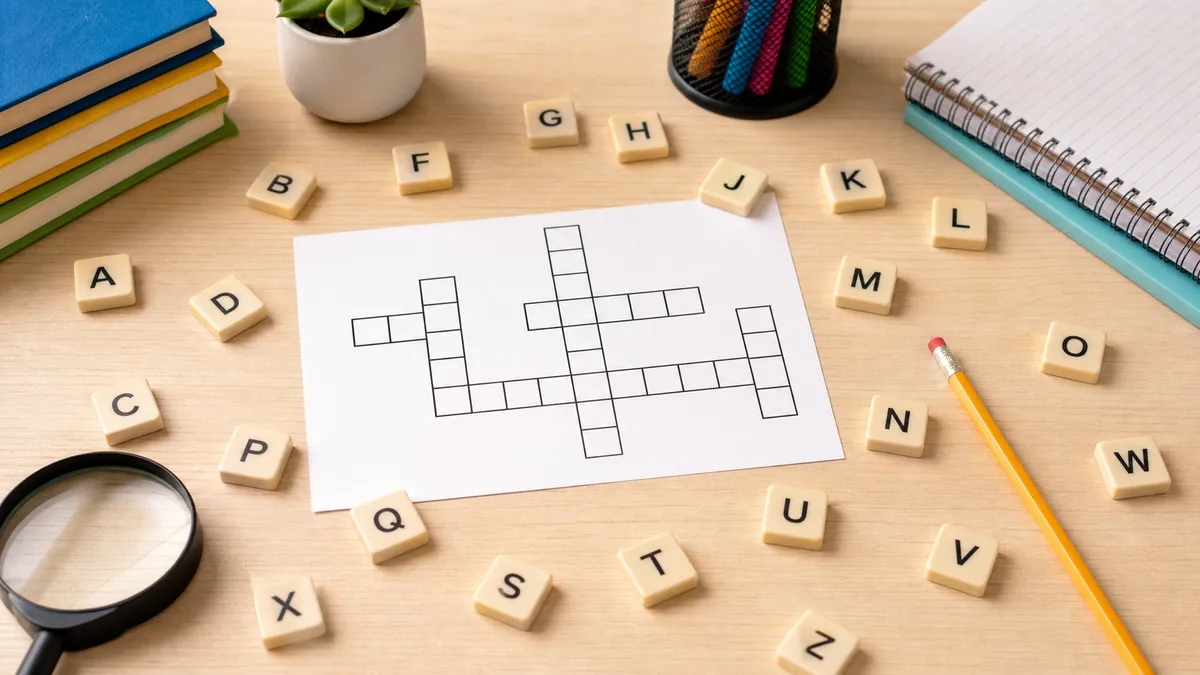
Pangram Solver Strategies for Kids is a practical guide for parents, teachers, tutors, and children who want spelling, vocabulary, and word-game practice to build real reading confidence. It is built around pangram solver and connected iBloom pages such as Pangram Solvers and Spelling Bee Success, Spelling Bee Words by Grade Level, and Solving Our Spelling Puzzles.
Start with the Matching Practice
Use this guide with a direct iBloom worksheet or lesson so children can move from reading the explanation into real practice.
Table of Contents
Worksheet And Lesson Previews
Solving Our Spelling Puzzles Lesson for Class 2 Preview
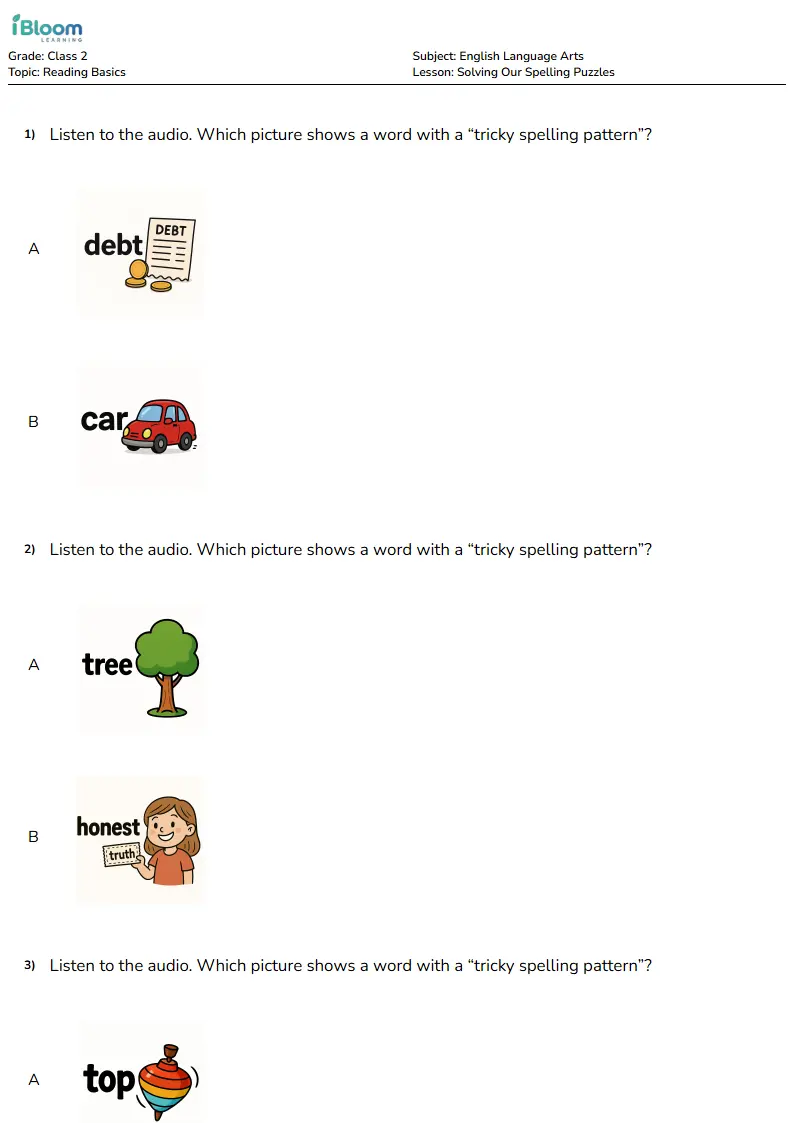
Use this preview to see the kind of practice children will open before you start the routine.
Key Takeaways
- Pangram Solver Strategies for Kids should keep the child noticing letters, sounds, word parts, and meaning.
- Pangrams and word games work best when children explain the pattern they used.
- Parents can keep practice short, oral, and confidence-building.
- Teachers can connect word games to spelling, vocabulary, reading, and writing goals.
- iBloom links should be used throughout the routine, not only at the end.
Why This Skill Matters
A pangram solver strategy is a thinking routine, not only a tool. Children look for the required letters, sort possible word families, test vowel patterns, and explain why a word fits. Use Pangram Solvers and Spelling Bee Success as the older cluster page, then connect the practice to Spelling Bee Words by Grade Level, Online Spelling Practice for Kids, and real iBloom spelling work.
Reading Rockets explains that spelling and word study support reading because children learn how sounds, letters, patterns, and meanings work together. Phonics and decoding guidance also supports explicit attention to letter-sound relationships. Adult-facing sources such as https://www.readingrockets.org/topics/spelling-and-word-study and https://www.readingrockets.org/reading-101/reading-and-writing-basics/phonics-and-decoding help adults plan better word practice; iBloom gives children the actual practice surface.
Step-by-Step Routine
Start with one short word routine: say the word, hear the sounds, look at the letters, sort the pattern, and use the word in a sentence. The adult can model one example, then ask the child to solve one iBloom item, then return to the word game for a quick confidence round. This order matters because children need pattern awareness, not memorized lists alone.
- Preview the iBloom task and name the word skill.
- Ask the child to say the word or pattern aloud.
- Sort the letters, sounds, word family, or spelling pattern.
- Ask, "Which part helped you know?" or "What pattern did you notice?"
- Use Pangram Solvers and Spelling Bee Success or Spelling Bee Words by Grade Level for connected practice.
Examples for Children
For younger learners, keep examples short: cat, map, ship, rain, play, jump. Older learners can work with pangram letters, prefixes, suffixes, roots, silent letters, and multisyllable words. A strong child response sounds like: "I used the vowel pattern first, then checked whether the word made sense in a sentence."
Parent Guidance
Parents can use Pangram Solver Strategies for Kids in ten to fifteen minutes. Choose one iBloom task, ask the child to spell or read aloud, then sort one pattern. If the child misses a word, ask what part was confusing: sound, letter order, vowel pattern, meaning, or memory. Use Online Spelling Practice for Kids when the family needs more online spelling support.
Teacher Guidance
Teachers can use Pangram Solver Strategies for Kids for a mini-lesson, small-group support, literacy centers, revision, or homework preparation. The best classroom routine is model, sort, explain, read in context, and practise again. Use iBloom SpellBee for tricky-word practice and Solving Our Spelling Puzzles when children need a concrete page after the word-game discussion.
Grade-by-Grade Word Practice
For ages 4 to 6, use letter names, beginning sounds, rhymes, oral blending, and very short words. The child can point, say, trace, and match. At this age, Solving Our Spelling Puzzles and short iBloom pages are better than long word lists.
For ages 7 to 9, use word families, vowel teams, blends, endings, and simple pangram challenges. Ask the child to explain why two words belong together. Then move back to worksheet practice so the pattern appears in reading and writing.
For ages 10 to 12, use roots, prefixes, suffixes, Greek and Latin word parts, word origins, and multisyllable spelling. Pangram work can become a strategy game: find the common endings, test the vowels, then explain the strongest word choices.
Pangram and Word-Game Examples
Use examples that protect learning. A parent might say, "Find three words that use this vowel pattern." A teacher might ask, "Which word uses every required letter?" A child might explain, "I tried the ending first, then added a beginning sound." These examples support thinking and then send the learner back to iBloom practice.
Avoid games that become guessing. Do not race through random word lists without reading, spelling, or explaining. The stronger route is notice, sort, spell, read, explain, and practise again.
Home and Classroom Checklist
Before using a pangram or word-study game, adults should choose one goal: letter coverage, vowel patterns, tricky words, word families, or vocabulary meaning. Keep the list short. Ask the child to say the word, spell it, read it in a sentence, and explain the pattern.
Adults should also check transfer. If a child can spell a word during a game but cannot read it in a sentence, the routine needs more reading. If the child can read it but cannot spell it, the routine needs more sound mapping and written practice.
How iBloom Fits
iBloom gives the child a concrete page to complete after the word game. That matters because real learning needs practice, not just a puzzle. A strong routine might begin with Pangram Solvers and Spelling Bee Success for word-game guidance, move to Spelling Bee Words by Grade Level or Online Spelling Practice for Kids for spelling practice, and then return to Solving Our Spelling Puzzles or another worksheet page for independent work.
The best signal is the child's explanation. If the child can say, "I sorted the words by vowel sound, then checked the spelling," the game supported learning. If the child can only repeat the final word, the routine needs to slow down.
Regional Learning Notes
In India, this can support CBSE, ICSE, and state-board English work in Delhi, Mumbai, Bengaluru, Chennai, Hyderabad, Pune, Kolkata, Ahmedabad, Jaipur, Lucknow, Kerala, Tamil Nadu, Karnataka, Maharashtra, Telangana, Gujarat, Rajasthan, and West Bengal. In the United States, it fits classroom and home literacy practice in California, Texas, Florida, New York, Illinois, Pennsylvania, Ohio, Georgia, North Carolina, Michigan, Los Angeles, Houston, Chicago, Phoenix, Philadelphia, Dallas, Austin, Seattle, Boston, Denver, Atlanta, and Miami. In the UAE, the routine works for Dubai, Abu Dhabi, Sharjah, Ajman, Ras Al Khaimah, Fujairah, Umm Al Quwain, and Al Ain families across British, American, IB, and Indian curriculum settings.
Common Mistakes
One mistake is using pangrams as a race without teaching spelling patterns. Another is giving too many words at once. A third is correcting spelling without asking what the child noticed. Keep feedback specific: say the sounds, circle the pattern, check the vowel, use the word in a sentence, and practise a similar item.
Frequently Asked Questions
Who should use Pangram Solver Strategies for Kids?
Use it with elementary learners who need spelling, vocabulary, phonics, word-family, pangram, or word-game practice, whether the support comes from a parent, teacher, tutor, homeschool adult, or older sibling.
How long should one session take?
Ten to fifteen focused minutes is enough. Stop after one strong explanation or one clear revision.
Which iBloom page should I use first?
Start with Pangram Solvers and Spelling Bee Success, then move to Spelling Bee Words by Grade Level or Solving Our Spelling Puzzles for connected practice.
What should parents do after a mistake?
Ask the child to say the word, break it into sounds or parts, compare it with a similar word, and then rewrite or reread it. Keep the correction specific and calm.
What should teachers check?
Teachers should check whether the child can explain the spelling pattern, read the word in context, correct an error, and use a similar word independently.
Practice This Skill Next
After reading this guide, children can practise the same skill on iBloom. Start with Solving Our Spelling Puzzles, then ask the child to explain one answer before moving on.