Picture Subtraction Worksheets for UKG
Use UKG picture subtraction worksheets with counters, story sums, visual examples, and iBloom early math practice links.

Overview
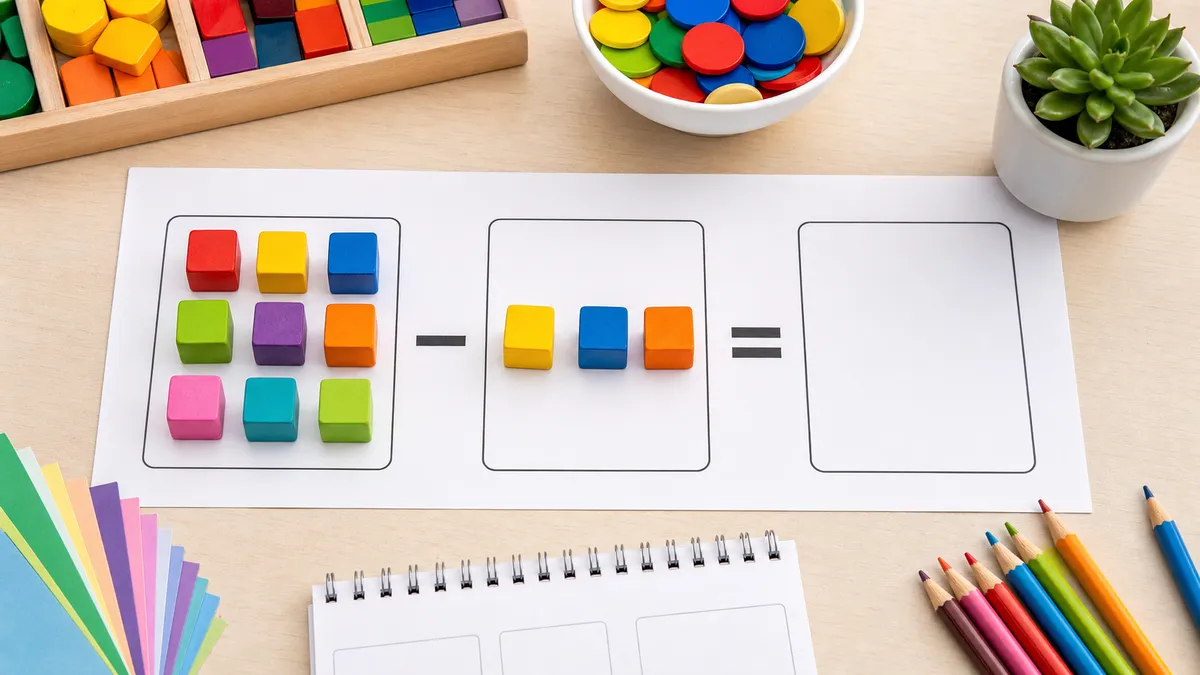
Picture Subtraction Worksheets for UKG is a practical early math guide for parents, teachers, tutors, and young learners. It supports the live iBloom page cluster around picture subtraction worksheet for ukg, and it is written to help children understand the idea, not only finish a worksheet. Use this as a planning guide, then move into iBloom practice such as UKG Subtraction Worksheets, Subtraction Worksheets for Grade 1, and Subtraction Word Problems for Class 1.

Start with the Matching Practice
Use this guide with a direct iBloom worksheet or lesson so children can move from reading the explanation into real practice.
- [Counting Back to Subtract](https://in.ibloom.io/landing-learning/class-1/math/counting-back-to-subtract-(numbers-1-to-10)
- Class 1 Math Lessons


Key Takeaways
- Picture Subtraction Worksheets for UKG works best when children touch, count, say, draw, and then write.
- Adults should ask children to explain how they know, not only mark an answer.
- Short daily practice is more useful than one long session.
- Internal iBloom links should be used throughout the routine as the child's next step.
- External standards and research help adults plan, while iBloom gives children the practice path.

Why This Skill Matters
Early math grows when children connect objects, spoken language, drawings, numbers, and written symbols. The Common Core kindergarten counting standards emphasize counting, comparing numbers, and connecting counting to quantity. The kindergarten operations standards also introduce addition and subtraction as putting together, taking apart, adding to, and taking from. The IES practice guide on teaching math to young children supports focused, intentional math instruction with concrete examples and repeated practice.
For Picture Subtraction Worksheets for UKG, the child should not rush. They should look at the objects or number line, say what they notice, try the item, and explain the answer. That explanation is the bridge between a worksheet and real understanding. A child who can explain the answer is more likely to carry the skill into homework, classwork, and everyday counting.

Step-by-Step Routine
Start with concrete materials. Use counters, blocks, bottle caps, buttons, small cards, or fingers. Then use a drawing. Then use the iBloom page. Finally, ask the child to say the math sentence. This order matters because young learners often understand the action before they understand the symbol.
- Show the child a concrete example.
- Ask the child to count or compare aloud.
- Move to UKG Subtraction Worksheets for focused practice.
- Ask one explanation question.
- Use Counting Back to Subtract or Class 1 Math Lessons for connected review.
Examples for Children
Show 8 counters. Move 3 away. Ask: "How many are left?" The child can count what remains, then say the subtraction sentence aloud: "8 take away 3 leaves 5."
Use small changes to build confidence. Change one counter. Move one card. Ask the child what changed. If the answer is wrong, do not simply correct it. Ask the child to count again, point again, or move the objects again. That gentle retry helps the child discover the mistake.

Parent Guidance
Parents can use Picture Subtraction Worksheets for UKG after school in ten minutes. Choose one example, let the child try, and ask, "How did you know?" If the child is tired, stop after one good explanation. If the child is confident, ask them to make their own example for a sibling, parent, or toy classroom. Use Subtraction Worksheets for Grade 1 when the child needs another related iBloom page.
Teacher Guidance
Teachers can use Picture Subtraction Worksheets for UKG as a mini-lesson, math center, small-group check, or homework bridge. Model one item, let pairs discuss one item, then ask each child to finish one independent response. For early learners, oral explanation can come before written notation. That is especially helpful for multilingual learners and children who understand the math but are still building academic English.
Regional Learning Notes
In India, this routine can support CBSE, ICSE, and state-board practice in Delhi, Mumbai, Bengaluru, Chennai, Hyderabad, Pune, Kolkata, Ahmedabad, Jaipur, Lucknow, Kerala, Tamil Nadu, Karnataka, Maharashtra, Telangana, Gujarat, Rajasthan, and West Bengal. In the United States, it fits home and classroom math practice in California, Texas, Florida, New York, Illinois, Pennsylvania, Ohio, Georgia, North Carolina, Michigan, Los Angeles, Houston, Chicago, Phoenix, Philadelphia, Dallas, Austin, Seattle, Boston, Denver, Atlanta, and Miami. In the UAE, it works for Dubai, Abu Dhabi, Sharjah, Ajman, Ras Al Khaimah, Fujairah, Umm Al Quwain, and Al Ain families across British, American, IB, and Indian curriculum settings.
Common Mistakes
One common mistake is asking for a written answer before the child has handled objects. Another mistake is moving too quickly from numbers 1 to 10 into numbers 1 to 20 without checking whether the child can explain the change. A third mistake is treating every wrong answer as careless. Many errors show that the child is still matching spoken numbers, objects, and symbols. Slow down, return to materials, and let the child explain.
Related iBloom Practice
- [Counting Back to Subtract](https://in.ibloom.io/landing-learning/class-1/math/counting-back-to-subtract-(numbers-1-to-10)
- Class 1 Math Lessons
Frequently Asked Questions
Who should use Picture Subtraction Worksheets for UKG?
Use it with kindergarten, UKG, LKG, Pre-Kindergarten, Class 1, or early elementary learners who need clear visual and hands-on math practice.
How long should one session take?
Ten to fifteen focused minutes is enough. Stop after the child gives one accurate explanation.
Which iBloom page should I use first?
Start with UKG Subtraction Worksheets for the closest practice page, then use Subtraction Word Problems for Class 1 or Counting Back to Subtract for connected review.
What should parents do after a mistake?
Ask the child to count, compare, move, or draw again. Then ask what changed. This keeps correction calm and useful.
Which outside sources support this routine?
Use the Common Core kindergarten math standards, the IES early math practice guide, and NCTM early childhood math guidance for adult planning. Then return to iBloom for child-friendly practice.
Practice This Skill Next
After reading this guide, children can practise the same skill on iBloom. Start with [Counting Back to Subtract](https://in.ibloom.io/landing-learning/class-1/math/counting-back-to-subtract-(numbers-1-to-10) or Class 1 Math Lessons, then ask the child to explain one answer before moving on.