Should Students Erase Mistakes or Show Their Corrections?
A practical guide to deciding when students should preserve an original attempt, show a correction, rewrite cleanly, and demonstrate the learning again.
Should Students Erase Mistakes or Show Their Corrections?
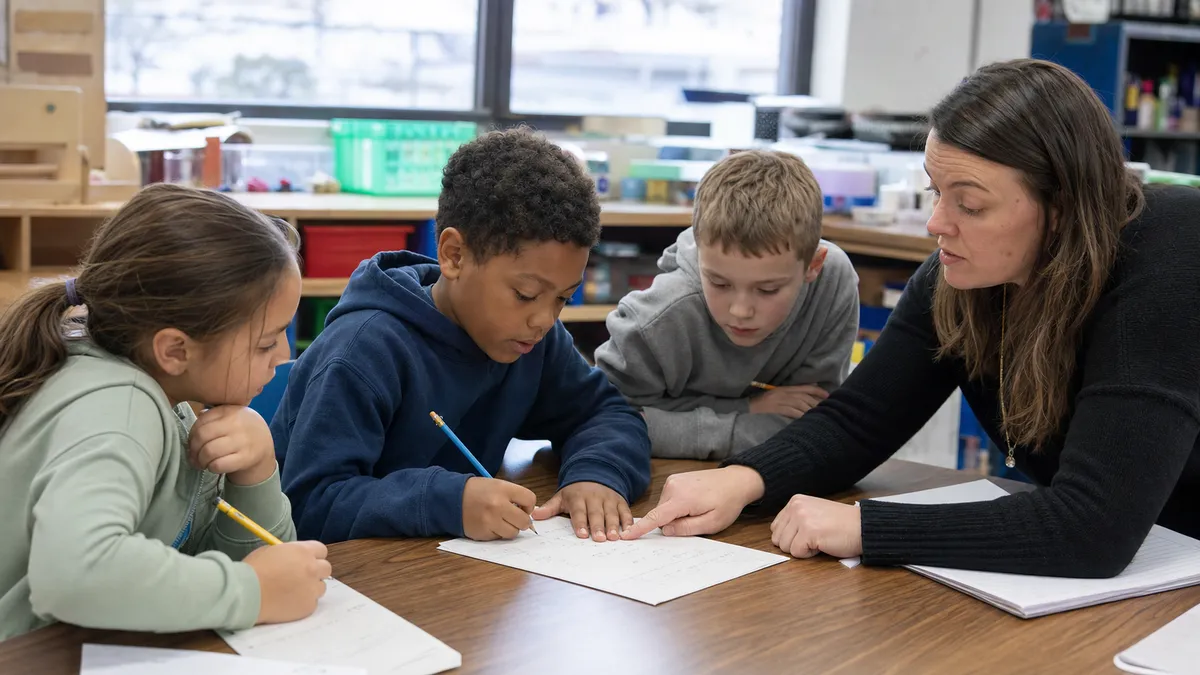
Students should usually show a correction instead of erasing every trace of the original mistake. A practical rule is: keep the first attempt readable, mark the exact place where the thinking changed, write the corrected work nearby, and add a short explanation when the reason is not obvious. That record helps a student, teacher, or parent see whether the problem was a copied symbol, a missed step, a misunderstood idea, or an answer that was never checked. Erasing is still appropriate when crowded paper makes the work unreadable, when a private draft is being prepared for a final audience, or when visible errors create an accessibility barrier.
The goal is not to preserve messy pages as punishment. It is to preserve enough evidence to support the next learning decision. The best correction routine is brief, neutral, subject-specific, and followed by a new opportunity to use the corrected idea without help.
Why the Choice Matters
A page that shows only perfect answers hides the path the learner took. A page covered in unexplained red marks is not much better. Useful correction work sits between those extremes: the learner can identify what changed and why, while the final response remains easy to read.
The U.S. Institute of Education Sciences practice guide on assisting elementary students who struggle with mathematics recommends having students correct errors with an efficient strategy, explain why the new answer is correct, and receive reteaching when they do not yet have a usable strategy. That sequence is more informative than simply replacing one answer with another.
The same principle appears in literacy instruction. The What Works Clearinghouse guide on foundational reading skills describes pausing for self-correction, adding support when needed, and returning to the sentence so that accuracy and meaning are restored. Correction is therefore an action within learning, not housekeeping after learning is over.
Use a Four-Part Correction Routine
Teach one routine and use it consistently:
- Pause. Do not immediately erase or overwrite.
- Locate. Mark the smallest place where the work went off track.
- Repair. Write the corrected step, word, sentence, label, or answer beside the original.
- Explain and retry. State the reason briefly, then solve or apply one similar item independently.
This routine keeps attention on the decision that changed. It also prevents a child from copying a complete model without understanding which part mattered.
What the Page Can Look Like
In math, a student can draw one line through an incorrect digit, place the corrected digit above it, and redo the affected steps. In writing, the student can use an editing mark, revise the sentence below, and name the rule or meaning change. In science, the student can relabel a diagram and explain which observation supports the new label. In reading, most correction happens orally: pause, reread, repair the word, and reread the full sentence for meaning.
Avoid requiring elaborate reflection after every small slip. A transposed digit that the learner independently catches may need only a neat correction. A repeated regrouping error deserves an explanation and another example. The amount of correction should match the instructional value of the error.
Distinguish a Slip From a Misconception
Before deciding how much work to preserve, identify the type of error. The iBloom guide on the difference between a math error and a misconception gives a useful starting point.
A slip occurs when the learner knows the idea but executes it inaccurately: copying 36 as 63, skipping a word, or writing a label in the wrong box. Ask the learner to locate and fix it, then continue.
A strategy error occurs when the learner chooses a plausible process but applies a step incorrectly. Preserve the affected steps, prompt the learner to identify the first mismatch, and have the learner redo from there.
A misconception is a stable but inaccurate idea, such as treating the equal sign as a signal to calculate rather than a statement that two quantities have the same value. Do not make the student repeatedly correct a page using a procedure they do not understand. Stop, model with a contrasting example or concrete representation, check understanding, and then return to one fresh item.
The Institute of Education Sciences guide for teaching academic content and literacy to English learners recommends feedback tied to the current instructional objective rather than marking unrelated features at the same time. A correction routine cannot substitute for focused instruction or reteaching.
A Teacher Decision Guide
Preserve the Original Attempt When
- the reasoning is the evidence you need;
- the same pattern appears more than once;
- students will compare methods;
- the learner must explain a revision;
- the task is formative and revision is part of the lesson;
- a family or support teacher needs to understand the next step.
Allow Erasing or a Clean Rewrite When
- overlapping marks make the final work inaccessible;
- the student has a motor, visual, attention, or processing need;
- the task is a polished publication rather than a learning record;
- private information or an emotionally sensitive response should not remain visible;
- the original reasoning has already been captured another way;
- the student can demonstrate the corrected skill on a new item.
Do not turn “never erase” into a rigid compliance rule. The evidence can be preserved with a photo, a teacher note, a second color, a correction strip, or a separate revision box. The learning purpose matters more than the tool.
How to Introduce the Routine
Model the routine with your own believable mistake. Think aloud without dramatizing: “I copied 48 correctly, but I subtracted the ones as if 3 were larger than 8. I will mark the first wrong step, regroup, and check with addition.” Then show a correction that is readable but not decorative.
Next, present two anonymous samples. One page has the original answer erased and replaced. The other shows the first attempt, the changed step, and a brief reason. Ask students which page gives a teacher more information and which is easier to study later. Establish shared criteria: readable, specific, respectful, and complete enough to explain.
Practice on an intentionally incorrect example before students use the routine on personal work. This separates learning the procedure from the emotions of being wrong. The iBloom math mistake correction guide can support a focused follow-up routine.
Subject-Specific Examples
Mathematics
Suppose a Grade 3 student writes 402 - 186 = 384. Do not ask the child to erase the entire solution. Ask, “Where does your answer first stop matching the value of the numbers?” The learner may notice that regrouping across the zero was handled incorrectly. The correction should preserve the first setup, show the regrouped hundreds and tens clearly, and include a check by addition.
For a computation slip, use a short code such as C for copy, O for operation, or R for regrouping only after teaching the code. For a conceptual issue, use a prompt rather than a label: “Represent 402 with place-value blocks. What must change before you subtract six ones?”
The parent math mistake log routine is useful when the same pattern appears across several practice sessions. Log the pattern, not every wrong answer.
Writing and Spelling
Young writers need room to compose without stopping for every convention. During drafting, mark only errors tied to the current goal. If the lesson targets sentence boundaries, do not require the child to correct every spelling approximation at the same time.
Use a margin symbol or underline to direct attention without supplying the answer. Ask the writer to read the sentence aloud, identify what the reader needs, revise beneath the line, and reread the paragraph. During final publication, a clean copy is appropriate because the correction evidence already exists in the draft.
Reading
Do not make oral reading into a continuous interruption. When a miscued word changes meaning or reflects a taught decoding pattern, pause briefly and allow self-correction. If the learner does not repair it, point to the relevant part, give the minimum prompt needed, and have the learner reread the whole sentence. Preserve evidence with a private teacher note rather than marks that distract the reader.
Science and Social Studies
Ask the learner to revise the claim when evidence does not support it. Keep the original claim visible, add the new claim, and connect the change to an observation, source, map, timeline, or data table. This makes correction about evidence rather than teacher preference.
Feedback That Produces Action
Effective feedback tells the learner what to do next. “Wrong,” an X, or a completed answer gives little direction. A useful prompt is small enough to act on:
- “Circle the first step where the value changes.”
- “Which sentence in the passage supports your answer?”
- “Read this aloud. Where does the thought end?”
- “Compare your label with the key.”
- “Show this fraction with a drawing before changing the symbol.”
The ERIC record for a peer-reviewed study on feedback that corrects and contrasts erroneous solutions reports better conceptual-change transfer for learners who received explicit comparison between their own solution and the accepted model than for a control group given correct answers. Although that study involved undergraduates and should not be generalized as an elementary rule, it supports making the difference between attempts visible rather than merely supplying an answer.
After the learner responds, check the response. A correction is not complete because a new answer appears on paper. Ask one short verification question or provide one parallel problem. If the student succeeds independently, move on. If not, reteach rather than assigning more corrections of the same type.
Avoid Common Correction Traps
Correcting Everything
A page with twenty marks gives no priority. Select one or two patterns connected to the lesson goal. Keep a private note about other patterns for later instruction.
Requiring Long Explanations for Tiny Slips
Reflection should earn its time. “I copied the number incorrectly” may be enough. Save fuller explanations for strategy choices and misconceptions.
Awarding Points for Copying Corrections
If points are returned, require evidence of learning: identify the error, explain the changed idea, and complete a new item. A copied model is practice, not independent evidence.
Publicly Displaying Identifiable Errors
Use anonymous samples and obtain permission when needed. A classroom can examine errors without turning a child into the example.
Treating Neatness as Understanding
Some learners produce crowded work while thinking accurately. Others copy a beautiful correction without understanding it. Judge the reasoning with accessible alternatives, not handwriting alone.
The teacher reteach-groups guide can help convert patterns into short, targeted instruction instead of additional marking.
Accessibility and Individual Needs
Offer correction choices: a different pencil color, a sticky correction strip, a typed revision, oral explanation, manipulatives, a photographed before-and-after sequence, or a teacher scribe. Students with dysgraphia or fine-motor fatigue should not have to rewrite an entire page to prove they noticed one conceptual change.
For students who become distressed by visible errors, use a folded correction flap or separate “first try / new try” boxes. Keep language neutral: “This shows what we know next,” not “You should have known this.” Predictability matters. Tell students in advance which work will be reviewed, how corrections will look, and whether the original attempt affects a grade.
For color-vision differences, never rely on red and green alone. Pair color with symbols or labels. For screen-reader users, use explicit revision notes in accessible digital text instead of visual strike-through as the only signal.
A Five-Minute Family Routine
Parents do not need to regrade the assignment. Ask the child to choose one correction that matters and explain:
- What was I trying to do?
- Where did my work first change direction?
- What did I change?
- Why does the new version make sense?
- Can I do one similar example without help?
If the child cannot answer, send a specific question to the teacher rather than teaching a conflicting method. The iBloom parent checklist for repeated mistakes helps families notice patterns without turning every evening into remediation. For test-related slips, use the separate guide on helping with careless mistakes in exams.
End after one successful retry. The purpose is to restore agency, not make the child relive every error on the page.
Worked Correction Conferences
A correction conference does not need to be a long individual meeting. It can be a sixty-second exchange while the class works, a small-group routine, or a structured partner check. The important feature is that the learner, not the adult, performs the intellectual repair.
Conference 1: A Computation Slip
A student correctly chooses addition for a word problem but writes 47 + 26 = 63. The teacher says, “Your operation matches the story. Check the ones column and tell me what you notice.” The student recomputes seven plus six, changes the ones digit, and checks the total with an estimate. No paragraph is needed. The original operation choice is evidence that the student understood the situation; the localized correction addresses execution.
The follow-up item should change the numbers but keep the same demand. If the student solves it accurately, the conference can end. If the same error appears, the teacher can move from a prompt to a model and guided practice.
Conference 2: A Conceptual Fraction Error
A student says one eighth is larger than one fourth because eight is larger than four. Simply writing the correct comparison would hide the misconception. Ask the learner to build both fractions with equal-sized paper strips or draw two same-sized rectangles. Preserve the original comparison, add the representation, and have the student complete: “When the whole is the same, more equal parts make each part ____.” Then use a new pair such as one fifth and one third.
The correction now includes the idea that changed, not just a reversed symbol. If the student still compares denominators as whole numbers, pause the worksheet and reteach with concrete examples.
Conference 3: A Reading Miscue
A child reads “The puppy chased the ball” as “The puppy changed the ball.” Wait briefly to see whether meaning triggers self-correction. If it does not, point to the middle of the word and ask the child to look through all its parts. After the repair, have the child reread the entire sentence naturally. Record a private note only if the pattern is instructionally important.
Do not require the child to write the misread and corrected words repeatedly unless spelling is also the goal. The useful correction is accurate decoding restored within meaningful reading.
Conference 4: An Unsupported Written Claim
A Grade 5 student writes that a character is brave but cites a scene in which another character takes the risk. Ask, “Whose action does this sentence describe?” The student can keep the first claim visible, replace or refine it, and attach a quotation or paraphrased detail from the correct scene. A fresh check asks for evidence supporting a different trait.
This distinguishes correction based on textual evidence from changing an answer to match the teacher’s opinion.
Build Independent Transfer Into the Routine
Corrections can create an illusion of mastery because the model, answer key, or teacher prompt remains visible. Add a short transfer check after support is removed. Use one of four forms:
- a parallel problem with different numbers or details;
- the same skill in a new representation;
- a verbal explanation without looking at the corrected page;
- a later retrieval question at the end of the lesson or on the next day.
Label the correction and the transfer check separately. The correction documents supported learning; the transfer item provides evidence about what the student can now do. This distinction is especially important when deciding grades, intervention groups, or whether to move to the next lesson.
Transfer checks should be narrow. After correcting capitalization in a proper noun, ask the learner to edit one new sentence, not a full page. After repairing a multi-step equation, give a problem with the same structure but different values. A small, well-matched check is more diagnostic than a large mixed assignment.
Troubleshooting When the Routine Breaks Down
The Student Copies the Correct Answer
Cover the model and ask the student to explain the first changed step. Then provide a similar item. If the learner cannot begin, the work needs reteaching, not another demand to “try harder.” Reduce the task to one decision and model that decision explicitly.
The Student Erases Automatically
Give each task a separate revision box or ask students to put a light box around the answer before checking. Model a single-line strike-through and keep correction tools nearby. Avoid scolding; automatic erasing is often a learned classroom habit.
The Page Becomes Unreadable
Use a sticky note, correction strip, second sheet, or digital comment. Photograph the original if evidence must be retained. Readability is part of accessibility, and preserving thinking does not require squeezing every revision into the same space.
Corrections Take the Entire Lesson
Select representative errors. Correct one example of each important pattern, then use a transfer check. If many students share the same misconception, stop individual marking and reteach the class or a short group. The purpose of reviewing errors is to change instruction, not create an unlimited backlog.
The Child Says, “I Don’t Know Why”
Offer a small choice: “Was this a copying problem, a step you forgot, or an idea that still feels confusing?” Ask the child to point to the first uncertain place. If the child cannot identify it, compare the work with a model one step at a time. Over time, reduce the choices so the learner develops independent error awareness.
Families and Teachers Use Different Methods
Ask the child to explain the classroom method first. Families can write a question beside the work rather than replacing the method overnight. Teachers can share one worked example or vocabulary list. When two valid methods exist, compare how each represents the same idea instead of declaring one unacceptable.
A Simple Weekly Review
Once a week, ask students to select one correction that changed their understanding. They can record the task, the type of error, the action that fixed it, and one cue they will use next time. Keep the review to one entry so it remains thoughtful rather than becoming a copying exercise.
Teachers can scan entries for patterns. Several “I did not understand the direction” entries suggest that task instructions need attention. Repeated regrouping misconceptions call for a targeted group. Many copying slips may indicate that students need a slower setup routine or a clearer page layout. This turns correction records into instructional information while keeping the focus on changeable actions.
Grade-Level Variations
Kindergarten and Grade 1
Use oral explanations, manipulatives, and a “first try / next try” box. Adults can record one sentence dictated by the child. Keep correction periods very short.
Grades 2 and 3
Teach simple codes and model how to preserve the first step while changing only the needed part. Ask for one reason and one parallel example.
Grades 4 and 5
Students can classify errors, compare strategies, and maintain a short pattern log. They should distinguish between changing an answer because someone said so and revising it because evidence or reasoning supports the change.
Middle School and Beyond
Use correction memos, test analyses, or revision histories. Ask students to connect the error to a study choice, concept, or process and then demonstrate transfer. Do not assume older learners already know how to use feedback.
A Schoolwide Policy That Stays Practical
A useful policy states the purpose, not a universal pen color. Teams can agree that students will preserve enough of an initial attempt to make important changes visible, receive time to act on feedback, and demonstrate the corrected learning. Individual teachers can then choose conventions appropriate to math, writing, reading, science, art, or digital work.
Audit workload. If teachers spend hours marking but students do not have scheduled time to respond, reduce marking and improve the response routine. Sample corrected work together and ask: Can we see the misconception? Is the feedback actionable? Did the student do the thinking? Is there independent evidence afterward?
Frequently Asked Questions
Should students use a red pen for corrections?
They may, but color is not the learning mechanism. Use any accessible convention that clearly separates the first attempt from the revision. Pair color with a symbol or label.
Should every wrong answer be corrected?
No. Prioritize errors tied to the current objective, repeated patterns, and misconceptions. Minor slips can be fixed briefly; untaught ideas may require instruction rather than correction.
Is erasing ever acceptable?
Yes. Erase or rewrite when clutter reduces readability, a polished final copy is required, privacy matters, or an accommodation calls for a cleaner format. Preserve the reasoning another way when it is instructionally useful.
Should corrections change a grade?
That is a local policy decision. If corrections affect a grade, separate supported revision from independent mastery. A fresh item or reassessment provides stronger evidence than copying a corrected answer.
What if a child refuses to show mistakes?
Start with anonymous examples and teacher-made mistakes. Offer a private correction format, keep the task small, and avoid public exposure. Explain that the record helps adults choose useful support.
How do I know the correction worked?
Ask the learner to explain the changed idea and complete one similar task without the model. Success on the fresh task is better evidence than a neat corrected page.
The Bottom Line
Students should generally show meaningful corrections rather than erase all evidence of their first thinking. Preserve the smallest useful trace, repair it clearly, explain when needed, and verify the learning on a fresh task. Allow clean rewrites and alternative formats when readability, privacy, publication, or accessibility requires them. The page is not a museum of mistakes; it is a working record that should make the next step easier to see.