Spelling Bee Words by Grade Level (2026)
Grade-by-grade spelling bee word lists for Pre-K through Grade 5, with practice routines, difficulty guidance, and parent-teacher study tips for 2026.
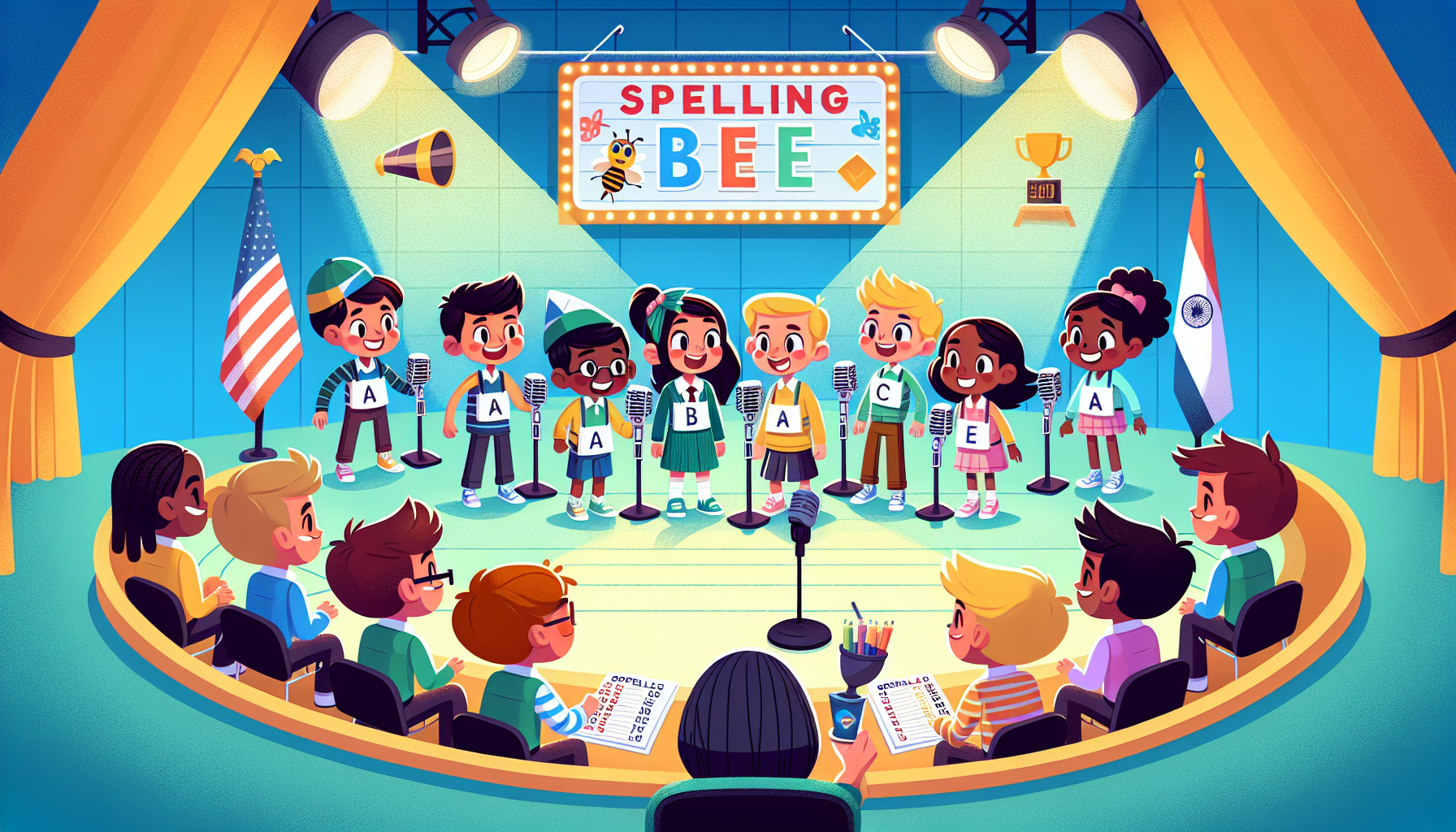
Spelling bees are one of the most effective — and most enjoyable — ways to build vocabulary, confidence, and a genuine love for words. The Scripps National Spelling Bee Research found that students who participate in spelling bees score 15-20% higher on vocabulary assessments than their peers.
But a spelling bee is only as good as its word list. Using words that are too easy means no real learning. Using words that are too hard means frustration and disengagement. Getting the difficulty right — at every grade level — is what makes the difference between a productive spelling bee and a wasted one.
This guide gives you complete, organized word lists for Pre-K through Grade 5, with clear difficulty categories, practice strategies, and guidance on how to use each list effectively.
Start with the Matching Practice
Use this guide with a direct iBloom worksheet or lesson so children can move from reading the explanation into real practice.
How Word Difficulty Is Determined
Spelling bee word difficulty isn't arbitrary. It's based on three factors:
Phonics complexity: Words with more letter-sound rules to remember are harder. "Cat" is easy (c-a-t, three simple sounds). "Knight" is hard (k-n-i-g-h-t, silent letters and multiple sounds).
Pattern familiarity: Words that follow common spelling patterns are easier than those that break the rules. "Sleep" (ea makes the /ee/ sound) is easier than "friend" (no regular pattern, must be memorized).
Word length: Longer words typically have more opportunities for error. But length alone is less important than pattern complexity. A long word with a clear pattern can be easier than a short word with an irregular pattern.
Pre-K and Kindergarten Word Lists
At this level, words are simple, phonetic, and short. Focus on three-letter CVC words first, then move to simple four-letter words. These lists use the s, m, a, t, p sequence for maximum blending success.
Easy Words (Pre-K)
cat, dog, sun, hat, map, pen, bed, cup, red, box, run, sit, hot, bun, can, lap, wet, pig, big, man, fan, pan, van, tap, nap, cap, rip, dip, lip, tip, mix, six, box
Medium Words (Kindergarten)
fish, frog, jump, tree, book, door, moon, star, blue, green, hand, foot, bird, duck, ball, milk, king, ring, wing, ship, chip, shop, jump
Sight Words for Recognition (Pre-K and Kindergarten)
These words should be recognized by sight — they're too irregular to sound out: the, a, to, is, it, in, on, at, go, we, my, me, be, he, she, we, they
Grade 1 Word Lists
Grade 1 introduces consonant blends, digraphs, and the beginning of sight words. Words become slightly longer and use more complex letter combinations.
Easy (Grade 1 Review)
book, cake, desk, flag, game, hand, ice, jump, kite, lamp, milk, nest, open, page, rain, rain, star, flag, flag
Medium (Grade 1 Primary)
clean, sleep, street, spring, train, craft, crash, fresh, splash, throat, whisper, think, that, then, this, what, when, which, where, about, around, before, bring, brown, carry, change
Sight Words (Grade 1)
said, have, like, were, when, what, there, little, down, saw, put, could, should, would, every, found, goes, write, use, your
Grade 2 Word Lists
Grade 2 words introduce vowel teams (ai, ea, oa, ee), r-controlled vowels (ar, or, er), and more complex digraphs. This is where pattern-based spelling becomes essential.
Vowel Pattern Words: ai
rain, train, paint, wait, sail, tail, mail, gain, chain, plain, brain, stain, obtain
Vowel Pattern Words: ea
clean, dream, steam, cream, team, leaf, beach, reach, speak, real, meal, seal, heal
Vowel Pattern Words: oa
boat, coat, toast, road, load, soap, float, coast, throat, show, grow, blow, snow, know
Vowel Pattern Words: ee
sleep, keep, feel, meet, feet, tree, green, street, need, week, deep, sheep, peek
R-Controlled Vowels: ar
car, far, jar, star, card, hard, yard, farm, arm, art, part, start, far
R-Controlled Vowels: or
horn, corn, for, more, store, shore, short, sport, sort, form, cord
Suffix Practice: -ed and -ing
walked, talked, jumped, played, helped, looked / walking, talking, jumping, playing, helping, looking
Double Letter Words
hill, still, well, will, tell, well, ball, fall, call, tall, smell, spell, tell, sell
Grade 3 Word Lists
Grade 3 introduces harder consonant combinations, more complex suffixes, and Latin roots. Words are longer and the patterns are less obvious.
Advanced Words
beautiful, beginning, believe, between, brought, carried, different, difficult, delicious, important, knowledge, language, lightning, bright, night, fight, sight, right, might, tight, flight, slight, bright
Suffix Practice: -tion, -sion
station, motion, action, nation, portion / division, television, explosion, confusion
Tricky Words (Must Be Memorized)
friend, because, different, through, beautiful, country, enough, rough, tough, enough
Grade 4-5 Word Lists
At this level, words include Latin roots, Greek elements, complex suffixes, and irregular spellings. These words are challenging even for strong spellers.
Grade 4 Advanced
accommodate, acknowledge, acquire, apparatus, appearance, appreciate, approach, argue, brilliant, bureau, business, calendar, category, cemetery, colleague, comfortable, committee, communicate, competition, completely, conscience, conscious
Grade 5 Advanced
abbreviate, abbreviation, abilities, absence, absolutely, abundance, accelerate, acceptable, acceptance, accessible, accumulate, accuracy, accurately, achievement, acquaintance, adolescent, aggravate, aggressive, alleviation, amendment, amphibious, analytics, anniversary, anonymous
Latin and Greek Roots (Grades 3-5)
Teach these roots once, and dozens of words become spellable:
- graph (write): biography, biography, autobiography, graphic, telegraph, photograph
- phon (sound): telephone, phonics, symphony, microphone, phonetic
- tele (far): telescope, telegraph, telephone, television, telepathic
- bi (two): bicycle, bifocals, bilateral, binoculars, binary
- tri (three): triangle, tricycle, tripod, trilingual, triple
How to Practice Spelling Bee Words
The Daily Routine
- Listen and say: Read the word aloud clearly. Have your child say it back.
- Spell it in your head: Give them 5-10 seconds to think through the spelling.
- Write it: Child writes the word from memory.
- Check: Compare with the correct spelling. If wrong, go back to Step 1.
- Repeat in a sentence: Use the word in a sentence to reinforce meaning.
Practice Tips by Grade
Pre-K to Grade 1: Focus on saying sounds clearly before attempting spelling. Use letter tiles or magnetic letters. Practice for 10 minutes maximum per session.
Grade 2 to Grade 3: Sort words by pattern before practicing. Group all -ight words together, all -ea words together. Pattern recognition is faster than memorization.
Grade 4 to Grade 5: Focus on Latin and Greek roots. Once a child knows "graph" means "write" and "phon" means "sound," dozens of words become easier to spell. Build vocabulary alongside spelling.
Use iBloom SpellBee for Practice
iBloom SpellBee automatically adjusts difficulty based on performance, giving children practice at their exact level. Features include:
- Grade-based word lists organized by difficulty
- Adaptive difficulty that gets harder as the child improves
- Daily challenges for consistent habit-building
- Achievements and leaderboards to maintain motivation
- Word game and MCQ game modes for variety
Frequently Asked Questions
What spelling words should a 1st grader be able to spell?
By the end of Grade 1, children should be able to spell CVC words, consonant blends (bl, cl, fl, gl, pl, sl, br, cr, dr, fr), digraphs (sh, ch, th, wh), and high-frequency sight words like 'said,' 'have,' 'like,' 'were,' 'when,' 'what,' and 'there.'
What are the hardest spelling bee words?
The hardest spelling bee words are those that break phonics rules: friend (no regular pattern), because (ea doesn't make the expected /ee/ sound), different, through (ou doesn't make the expected sound), and beautiful (eau is unusual). These irregular words must be memorized individually.
How many words should a child practice per day?
For regular spelling practice, 10-15 words per day at an age-appropriate level is ideal. For a spelling bee competition, focus on 20-30 words per day from the appropriate grade level list, with daily review of previously learned words using spaced repetition.
How do I help my child prepare for a school spelling bee?
Use the word in a sentence before practicing the spelling. Have the child spell it aloud first, then write it. Review previously learned words daily using spaced repetition (practice each word 3 times on 3 different days). Make practice competitive with a point system or timer to keep energy high.
Is there a free spelling bee app?
Yes. iBloom SpellBee is a free spelling game for kids Pre-K through Grade 5. It features grade-based word lists, adaptive difficulty that adjusts based on performance, daily challenges, and a leaderboard. Play without an account at ibloom.io/spellbee.
How do I determine the right difficulty level?
Choose words where your child spells about 70-80% correctly. If they spell fewer than 70% correctly, the list is too hard — move to an easier level. If they spell more than 80% easily, move up to the next level. On iBloom SpellBee, the difficulty adjusts automatically based on their performance.
Conclusion
Spelling bee word lists are most effective when they follow a clear sequence — from simple CVC words in Pre-K to complex Latin-root words in Grade 5. The key principles are: match the difficulty to the child's current level, focus on pattern-based sorting rather than memorization, and use daily short practice (10-15 minutes) with the rule of three (three more correct spellings on three separate days before removing a word from the active list).
iBloom SpellBee applies all three principles automatically — giving children practice at exactly the right level, organized by pattern, with spaced repetition built in. Free to play at ibloom.io/spellbee.
Play iBloom SpellBee Free Take a Free Spelling Assessment Browse Spelling and Phonics Worksheets
Practice This Skill Next
After reading this guide, children can practise the same skill on iBloom. Start with Browse Spelling and Phonics Worksheets, then ask the child to explain one answer before moving on.
Continue With iBloom Practice
Worksheet And Lesson Previews
Long and Short Vowel Sounds Worksheet Preview
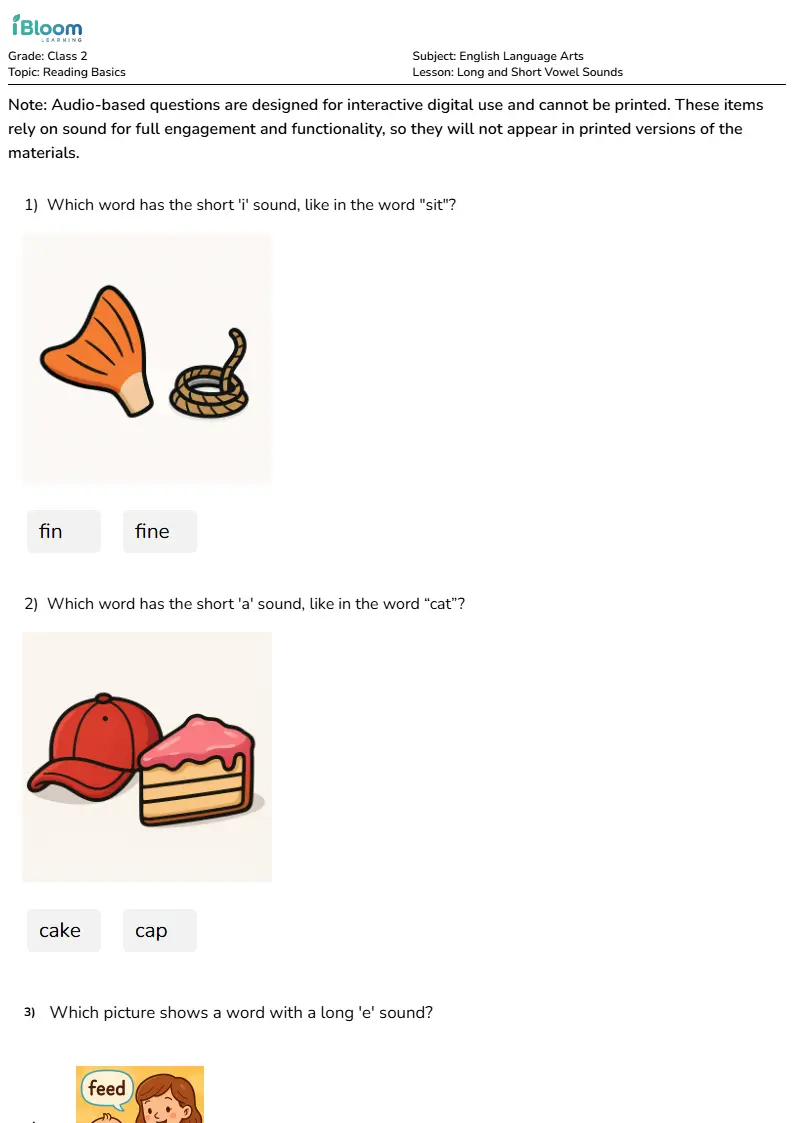
Use this preview to see the kind of practice children will open before you start the routine.
Context Clues Word Meaning Worksheet Preview
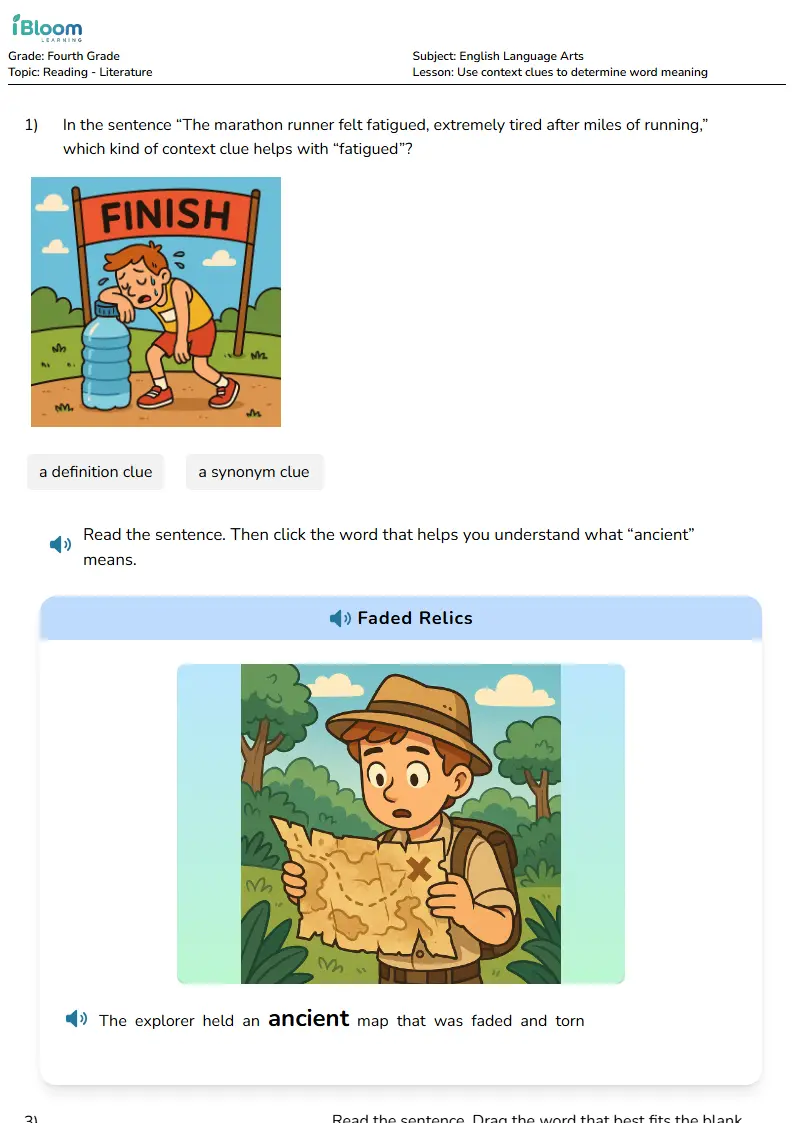
Use this preview to see the kind of practice children will open before you start the routine.
UKG Identifying Numbers 1 to 10 Lesson Preview
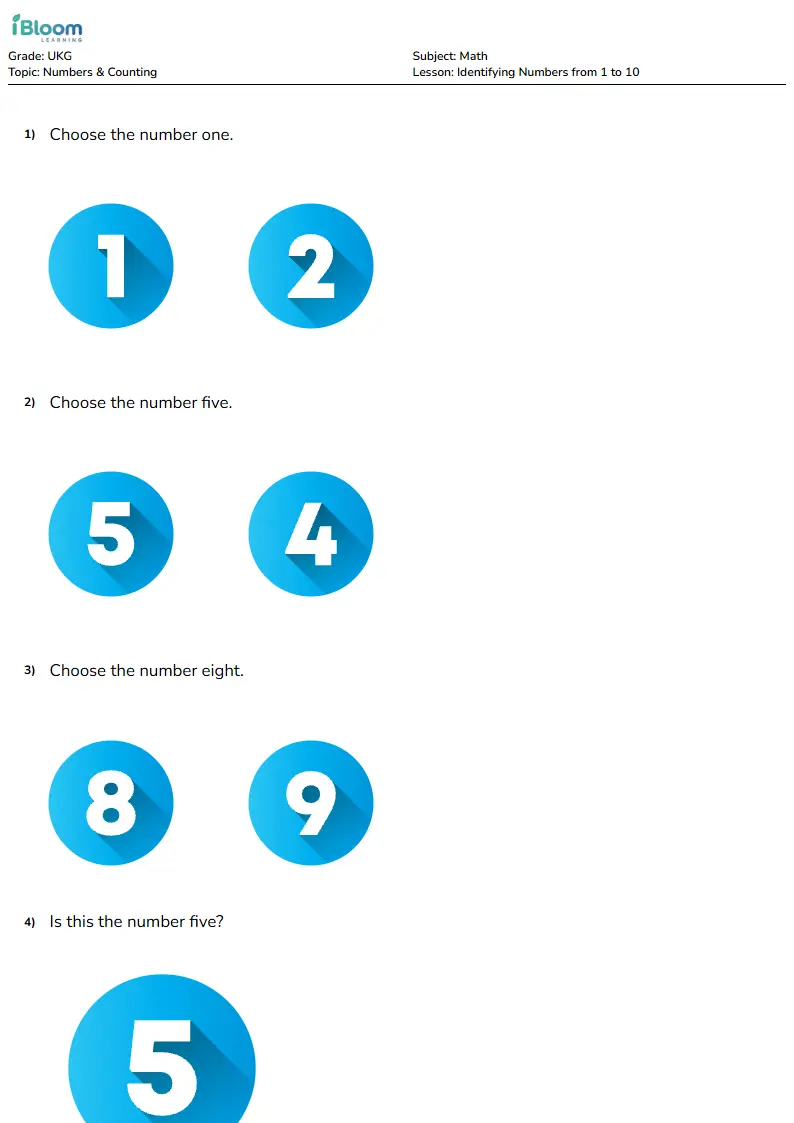
Use this preview to see the kind of practice children will open before you start the routine.