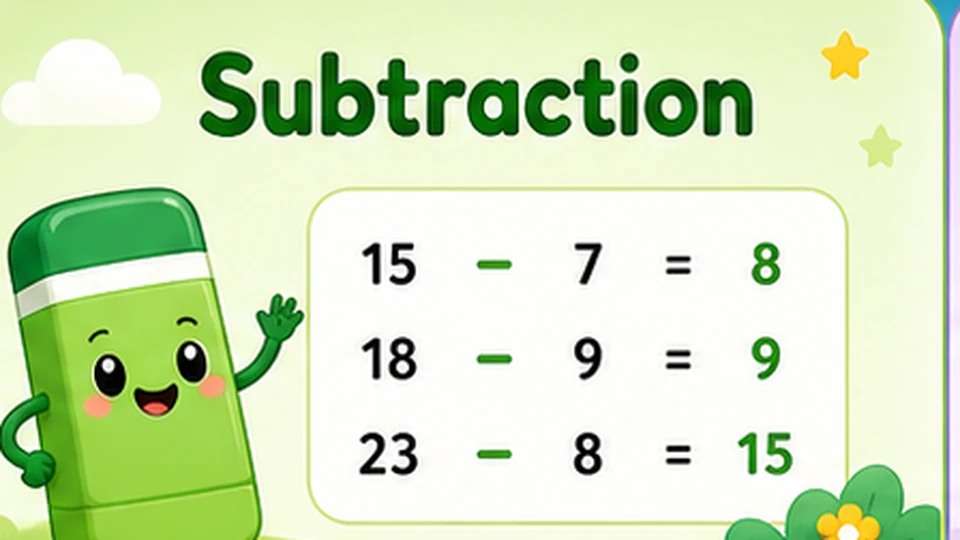
Subtraction Sums for Class 3 with Borrowing
Practice subtraction sums for Class 3 with borrowing using free printable-style and interactive worksheets with step-by-step help for kids, parents, and teachers.
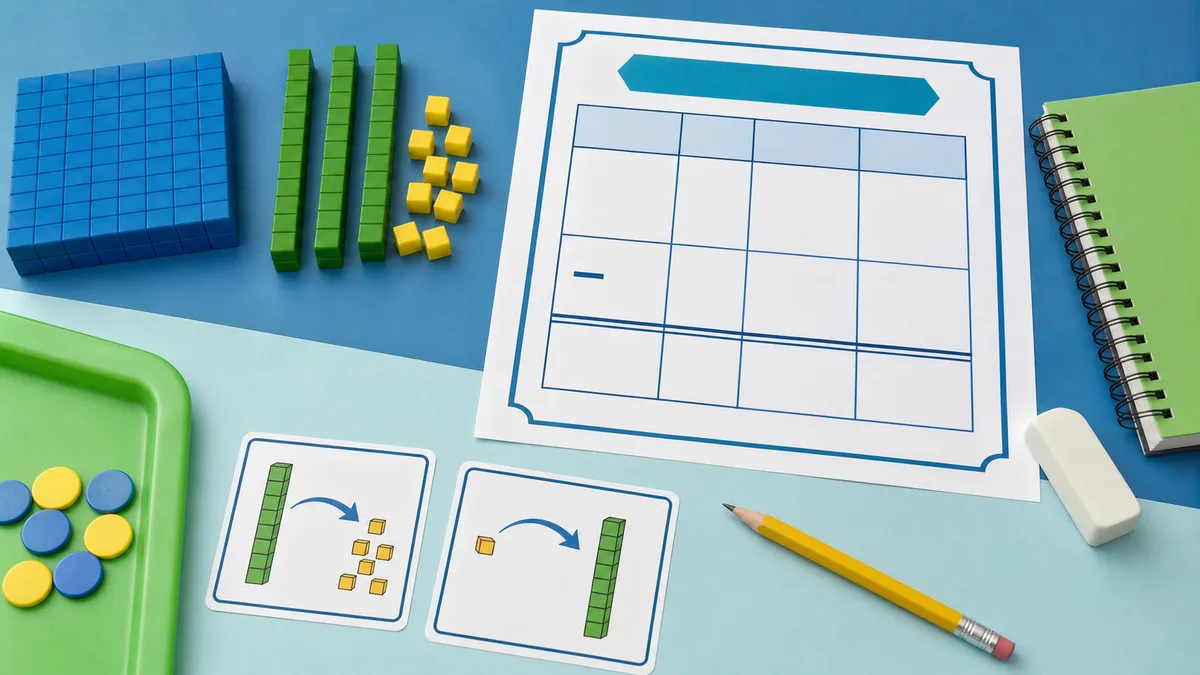
Practice subtraction sums for Class 3 with borrowing with clear regrouping steps, worked examples, and free interactive worksheet practice. Children can learn why one ten becomes ten ones, solve each column carefully, and check an answer by adding back.
Start Here: Free Class 3 Worksheet and Lesson
Start with the subtraction sums for Class 3 with borrowing worksheet) for interactive practice. When a child needs a slower explanation, open the Class 3 borrowing subtraction lesson and work through one example at a time.
Subtraction Sums for Class 3 with Borrowing
Parents and teachers can use these subtraction sums for Class 3 with borrowing as a short worksheet routine at home, in school, or during tuition practice. The activities support CBSE, NCERT-aligned, ICSE, and state-board revision while keeping the steps simple enough for children to explain aloud.
Use the interactive subtraction worksheet) first, then open the paired borrowing lesson if the child needs another model. Ask the child to solve a small set, explain one regrouping step, and check one answer by addition.
Table of Contents
Key Takeaways
- subtraction worksheets grade 3 with borrowing works best when children practise a small set and explain one answer.
- Parents should use short daily practice instead of a long worksheet packet.
- Teachers can turn one page into a warm-up, center, small-group reteach, or exit ticket.
- Children need examples, feedback, and a next step inside iBloom.
- The goal is useful learning for children, not a list of disconnected terms.
Why This Skill Matters
This skill matters because borrowing becomes easier when children connect the column method to place value. A child should understand that regrouping one ten creates ten ones before subtracting the ones column.
For adult planning background, this guide uses sources such as this education reference and connects that guidance to a child-friendly iBloom routine. The source helps adults understand the broader skill; the iBloom links give children a practical place to practise.
For Class 3 learners in India, this practice fits school revision, homework support, tuition review, and short holiday practice. The routine stays the same: model one sum, let the child try a small set, and ask for one explanation.
Use this article with the interactive Class 3 subtraction worksheet) and paired Class 3 lesson so children can move from explanation into actual practice.
Practice Routine
Start with one clear model. Say the skill aloud, show one example, and ask the child what they notice. Then let the child try three to five items independently. The adult should listen for thinking: Does the child use a clue, sound, pattern, word part, sentence, or count? Does the child guess? Does the child know why the answer works?
Use this sequence:
- Preview the skill in one sentence.
- Model one item slowly.
- Let the child complete a small set.
- Ask for one explanation.
- Choose one follow-up page for spaced review.
For children who need support, make the task smaller. For children who finish quickly, ask them to write or say a new example. A child who can create a similar question is usually showing stronger understanding than a child who only marks answers.
Examples Children Can Try
- Build 342 - 178 with base-ten blocks before writing the column method.
- Ask the child to explain why one ten becomes ten ones.
- Check a subtraction answer by adding back.
- Compare a no-borrowing example with a borrowing example.
These examples are intentionally simple enough for home and classroom use. Parents can ask them orally, tutors can use them as warm-ups, and teachers can put them in small-group folders. If a child struggles, return to the easiest example and build back up.
A 15 Minute Practice Plan
Use a short plan so the child knows what will happen before the page begins. Spend two minutes naming the skill, three minutes modelling one item, six minutes letting the child try a small set, two minutes checking one answer aloud, and two minutes choosing the next step. This routine works well because it gives children enough structure to start without turning practice into a long lecture.
For a worksheet session, choose quality over quantity. A child who solves four items and explains one answer clearly is building a stronger habit than a child who rushes through a full page. Teachers can use the same plan in small groups by replacing the parent check with a partner explanation. Tutors can use it to decide whether the next session should review vocabulary, directions, reading accuracy, spelling patterns, or study habits.
Mistake Patterns to Notice
Adults should watch for the pattern behind the wrong answer. Some children know the answer but rush. Some can decode or read the words but miss the direction. Some understand the first example but cannot transfer the idea to a new sentence. Others need a smaller set, a visual cue, or a chance to say the answer before writing.
When a child makes an error, use one prompt before giving the answer. Try: "Point to the clue," "Read the direction again," "Show the part of the word that helped," "Say the word slowly," or "What is the next tiny step?" These prompts keep responsibility with the child while still giving enough support to continue.
Parent Guide
Parents should keep practice calm and visible. Sit beside the child, name the skill, and let the child do the thinking. A helpful prompt is, "Show me how you knew." Another useful prompt is, "Can you make one more like this?"
Families can connect the page to school notebooks, CBSE or ICSE revision, tuition review, and short holiday practice. Encourage the child to say each regrouping step before writing the answer.
Teacher Guide
Teachers can use this guide for small groups, independent centers, parent communication, or quick diagnostics. The most useful classroom move is to record the mistake pattern. Did the child miss the clue? skip the vowel sound? confuse the word meaning? rush the answer? copy without understanding?
Use one page for four purposes:
- Warm-up: one item on the board or projector.
- Small group: three items with adult feedback.
- Center: one worksheet plus one oral explanation.
- Exit ticket: one transfer question before leaving the group.
Teachers who want a second adult reference can review this supporting source while planning lessons or parent communication. In the classroom, the child-facing routine should stay simple: model, practise, explain, and revisit.
Differentiation Ideas
For children who need support, reduce the number of items, cover part of the page, read the first direction aloud, or give a word bank. For children who are ready for more, ask them to create a new example, explain why a wrong answer is tempting, or connect the skill to a reading passage, spelling list, or homework task.
In a mixed classroom, one worksheet can have three levels of work. The first group completes fewer items with adult prompts. The second group completes the main set and explains one answer. The third group writes a new item for a partner. This keeps everyone connected to the same skill while changing the amount of support.
Child Friendly Self Check
Children can use this self check after practice:
- I read the direction before answering.
- I tried one item carefully.
- I checked one answer.
- I can explain how I knew.
- I know what to try next.
This self check is short enough for young learners and still useful for older children. Parents can read it aloud, teachers can put it on the board, and tutors can use it as a closing routine.
Frequently Asked Questions
Who is this guide for?
It is for parents, teachers, tutors, homeschool families, and children who need a practical routine for subtraction worksheets grade 3 with borrowing.
How long should practice take?
Most children do well with 10 to 15 minutes. Stop after one useful correction or one confident explanation.
Should children finish every worksheet?
No. A short completed set with one explanation is usually more useful than a long page completed silently.
Can this work for multilingual children?
Yes. Let the child explain the idea in the strongest language first if needed, then repeat the important English word, sound, sentence, or answer.
What should we do next?
Choose one related iBloom lesson, worksheet, or blog from the links above so the skill appears again in a new context.
Related practice
Practice this topic
Continue with a lesson, generator, or printable worksheet.