Vocabulary Activities for Upper Elementary
Plan upper elementary vocabulary activities with context clues, word parts, word maps, spelling games, and reading links.

Overview
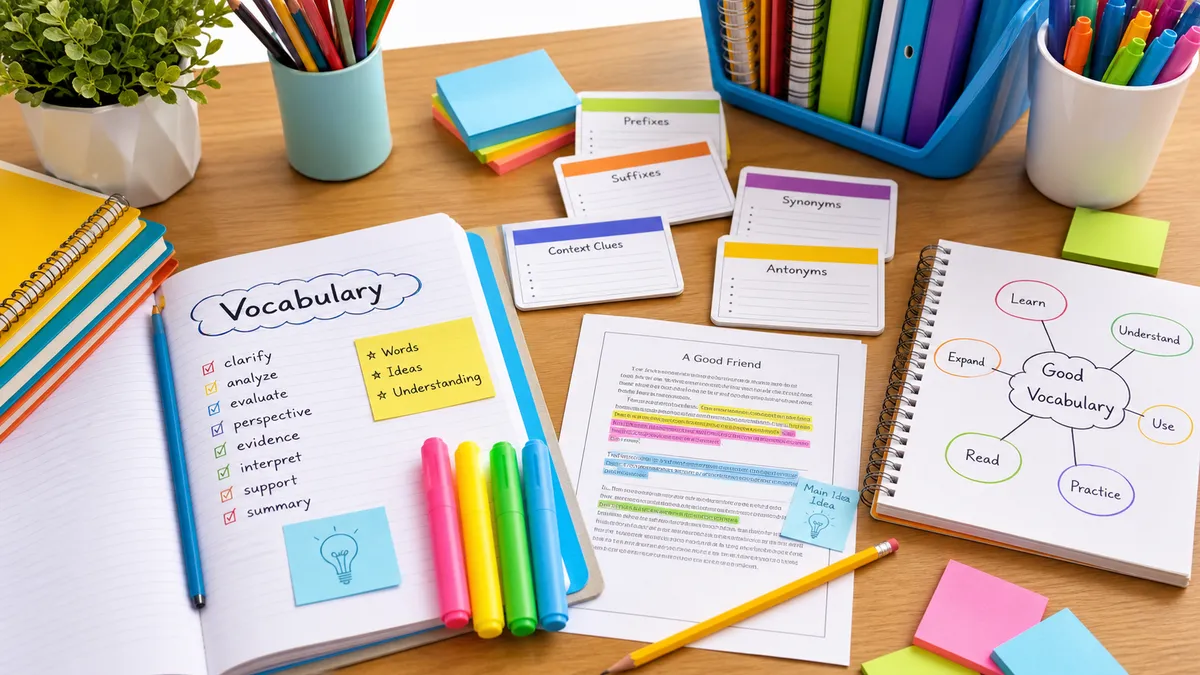
Vocabulary Activities for Upper Elementary is a practical guide for parents, teachers, tutors, and children who need a classroom and home guide for Grade 3-5 vocabulary practice across context clues, word parts, reading, spelling, and subject words. It supports iBloom's reading, spelling, and vocabulary cluster while staying distinct from existing spelling bee guides. Start with Crossword Puzzles for Vocabulary Practice, then move into the exact iBloom lesson and worksheet links below.

Start with the Matching Practice
Use this guide with a direct iBloom worksheet or lesson so children can move from reading the explanation into real practice.


Worksheet And Lesson Previews
Reading Hard Words in Sentences Worksheets for Class 4 Preview
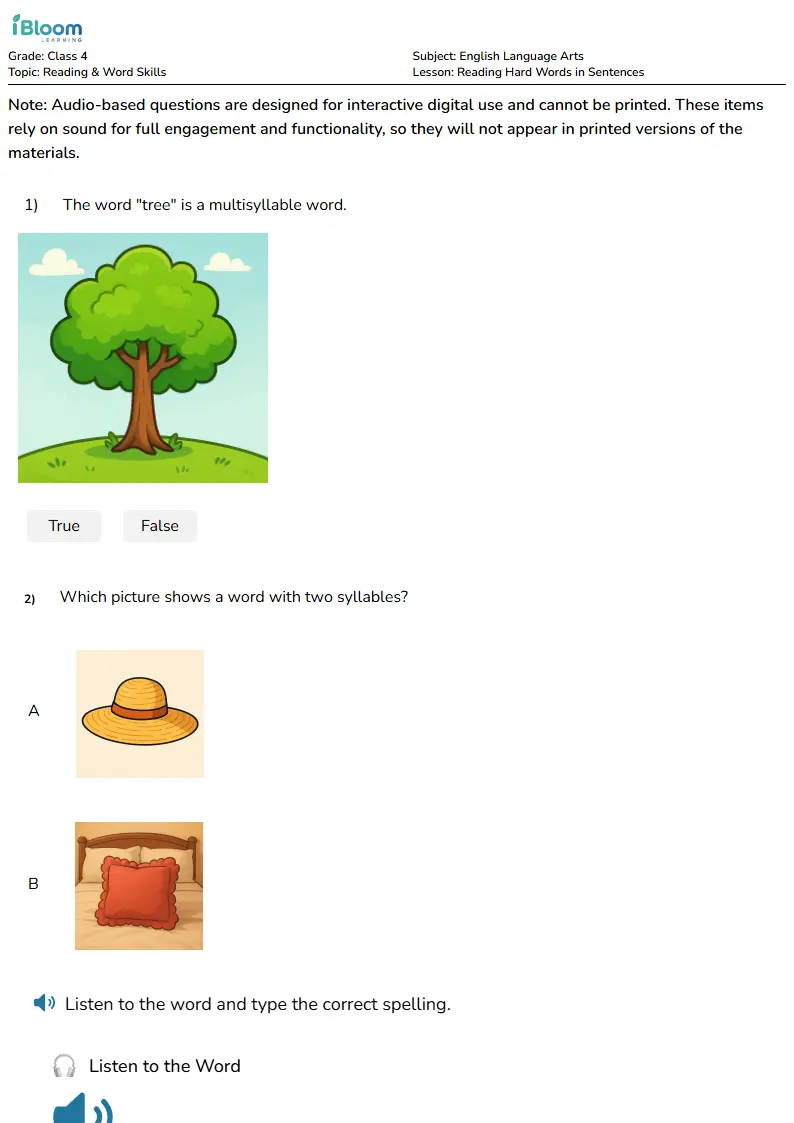
Use this preview to see the kind of practice children will open before you start the routine.
Science Vocabulary Worksheets for Class 5 Preview
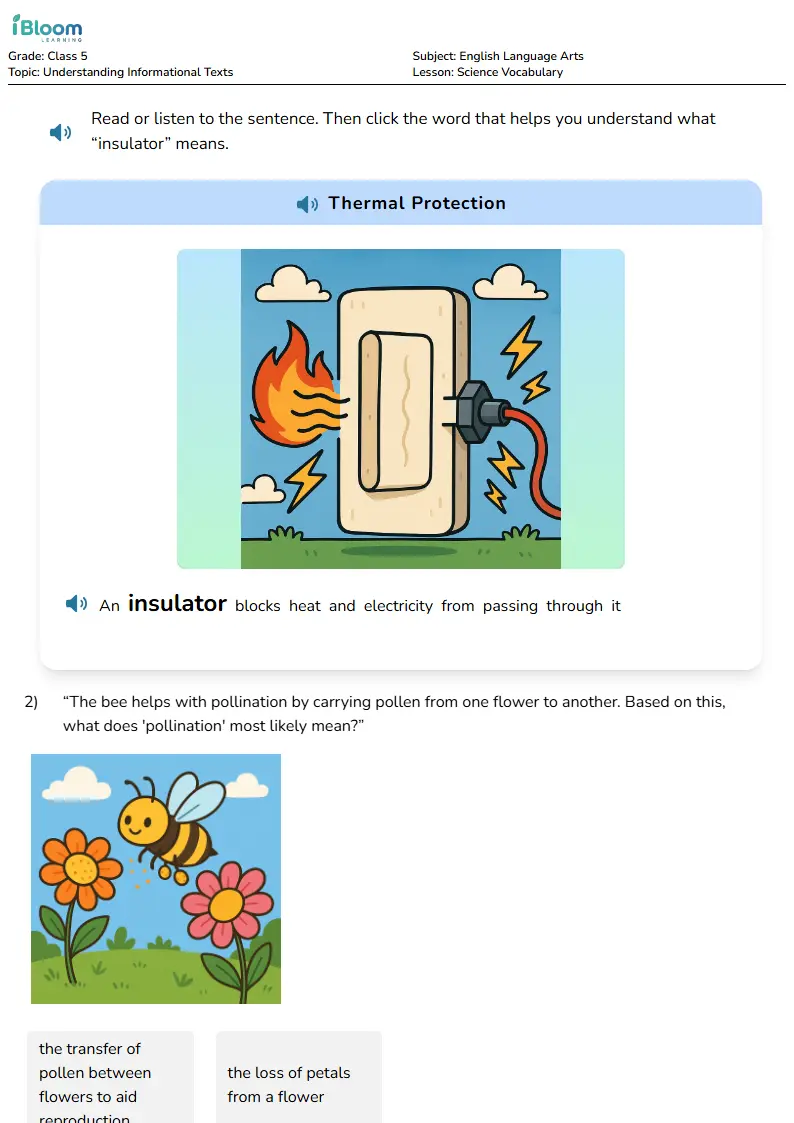
Use this preview to see the kind of practice children will open before you start the routine.

Key Takeaways
- Vocabulary grows when children meet words in sentences, speak about meanings, write their own examples, and revisit words over time.
- Context clues, word parts, spelling patterns, and reading comprehension should work together.
- A strong worksheet routine asks children to explain how they know, not only circle an answer.
- Parents can support vocabulary in short daily conversations.
- Teachers can link this skill to reading groups, writing lessons, spelling review, and subject vocabulary.

Why This Skill Matters
Children do not become strong readers by memorizing definitions alone. They need to notice how a word behaves in a sentence, how the surrounding ideas support meaning, and how word parts such as prefixes, suffixes, roots, vowel patterns, and familiar word families carry clues. This is why vocabulary activities for upper elementary should be connected to reading, writing, and speaking.
Authoritative literacy resources such as Reading Rockets vocabulary guidance, phonics and decoding guidance, and IES practice guides support explicit instruction, repeated practice, and active word use. The iBloom approach below turns that into a parent- and teacher-friendly routine.
How to Teach It
Start with a short sentence or word card. Ask the child to read it aloud, identify the unknown word or word part, and explain what helped. Then ask the child to test the meaning by replacing the word with a simpler phrase. Finally, ask for a fresh sentence. This routine is simple enough for home practice and strong enough for classroom small groups.
The key prompt is: "What helped you know?" Children may point to a clue word, a picture, a root word, a prefix, a suffix, a rhyme, or a familiar spelling pattern. The adult's job is to help the child name that clue and use it again.

Examples and Mini-Lessons
Try these examples:
| Example | What Children Notice | Next Step |
|---|---|---|
| word maps | A clue in the sentence or word part | Explain the meaning in your own words |
| context-clue hunts | Contrast, example, prefix, suffix, or usage | Write another sentence |
| prefix and suffix sorts | A related word, picture, or pattern | Add it to a word notebook |
For a stronger lesson, ask children to sort words into groups: words with the same prefix, words with the same suffix, words that show feelings, words that describe actions, words that belong to science, and words that appear in stories. Then connect the sorting to an iBloom page such as Context Clues for Kids or Reading Hard Words in Sentences.
Home Practice Routine
Parents can use a ten-minute routine:
- Read one sentence or short passage together.
- Choose one interesting or difficult word.
- Ask what helped the child understand it.
- Write or say a new sentence.
- Revisit one older word from yesterday.
This works in Delhi, Mumbai, Bengaluru, Chennai, Hyderabad, Pune, Kolkata, Ahmedabad, Los Angeles, Houston, Chicago, Dallas, Seattle, Boston, Dubai, Abu Dhabi, Sharjah, Ajman, and Al Ain because the routine is not tied to one curriculum label. It is tied to how children actually learn words.
Classroom Routine
Teachers can use the same structure for mini-lessons, vocabulary notebooks, partner talk, reading centers, spelling review, and exit tickets. One strong classroom move is to ask students to underline the clue and write "I know because..." before answering. That gives the teacher a fast view of whether the child is reasoning or guessing.
For learners who need support, reduce the number of words and add oral rehearsal. For advanced learners, ask for non-examples, related words, and subject-specific usage. Upper elementary students can connect vocabulary work to science, social studies, literature, and information text.
Regional Practice Notes
In India, this supports CBSE, ICSE, state-board, and tuition-based English practice. In the United States, it fits ELA standards, intervention blocks, guided reading, and homework review. In the UAE, it helps children in British, American, IB, and Indian curriculum schools use stable vocabulary routines even when school terminology changes.
iBloom Practice Path
Use these links naturally as the child grows:
- Crossword Puzzles for Vocabulary Practice for the main cluster connection.
- Context Clues for Kids for exact lesson or worksheet practice.
- Reading Hard Words in Sentences for the paired word-meaning task.
- Science Vocabulary worksheet for the next related skill.
- iBloom SpellBee guide for broader reading, spelling, or vocabulary support.
Related iBloom Practice
Frequently Asked Questions
How often should children practise vocabulary?
Short daily practice works best. Five to ten minutes with explanation, speaking, and one written sentence is more useful than a long list memorized once.
Should children guess word meanings from context?
They should make a thoughtful possible meaning, test it in the sentence, and confirm it when needed. The goal is not random guessing.
Can this help spelling bee preparation?
Yes. Spellers perform better when they understand meanings, word families, roots, spelling patterns, and usage. Vocabulary practice gives spelling a stronger memory path.
What should teachers do when students still guess?
Hide the choices, model one clue, and ask students to explain "I know because..." before choosing an answer.
Practice This Skill Next
After reading this guide, children can practise the same skill on iBloom. Start with Reading Hard Words in Sentences or Science Vocabulary worksheet, then ask the child to explain one answer before moving on.