



About this worksheet
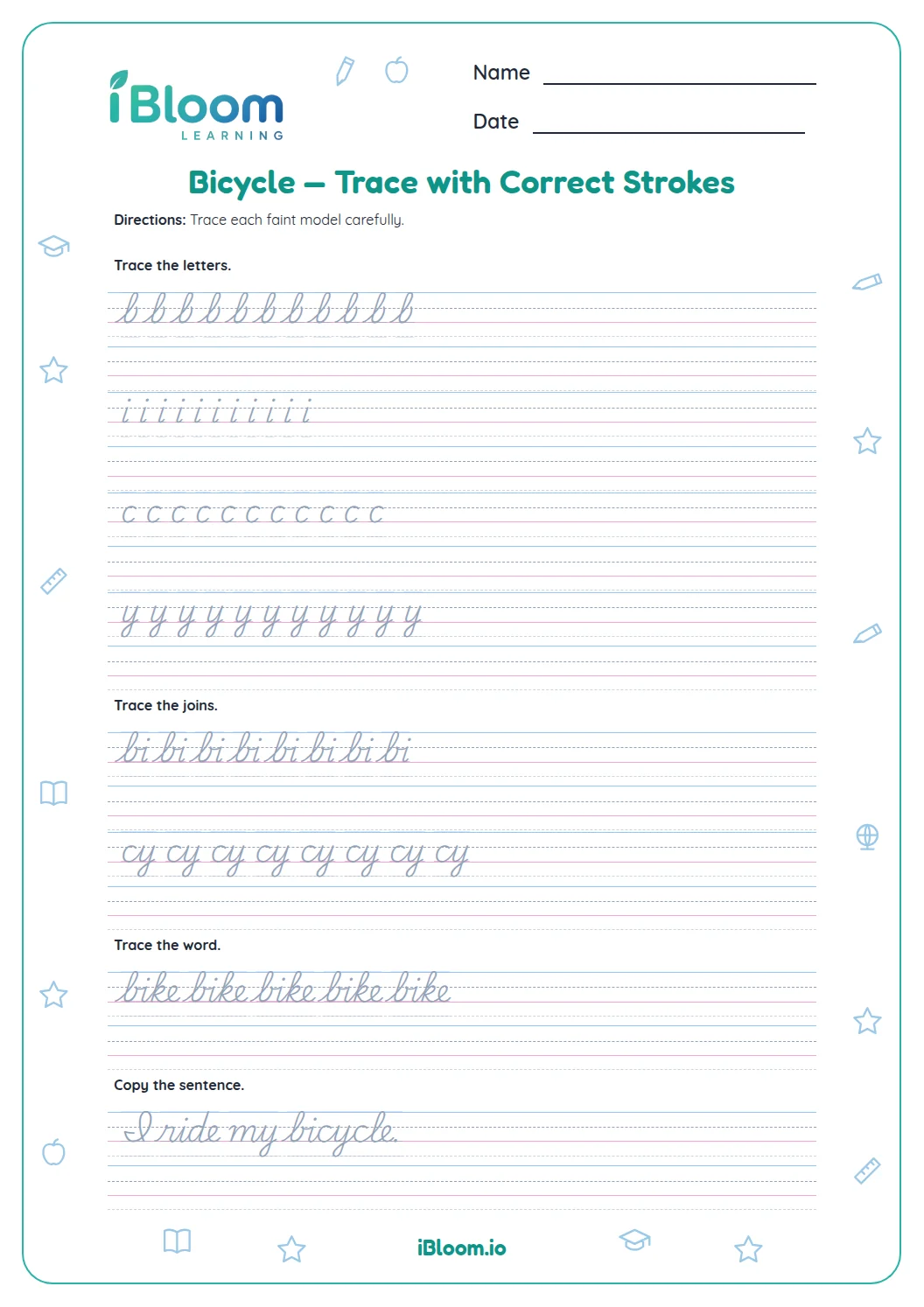
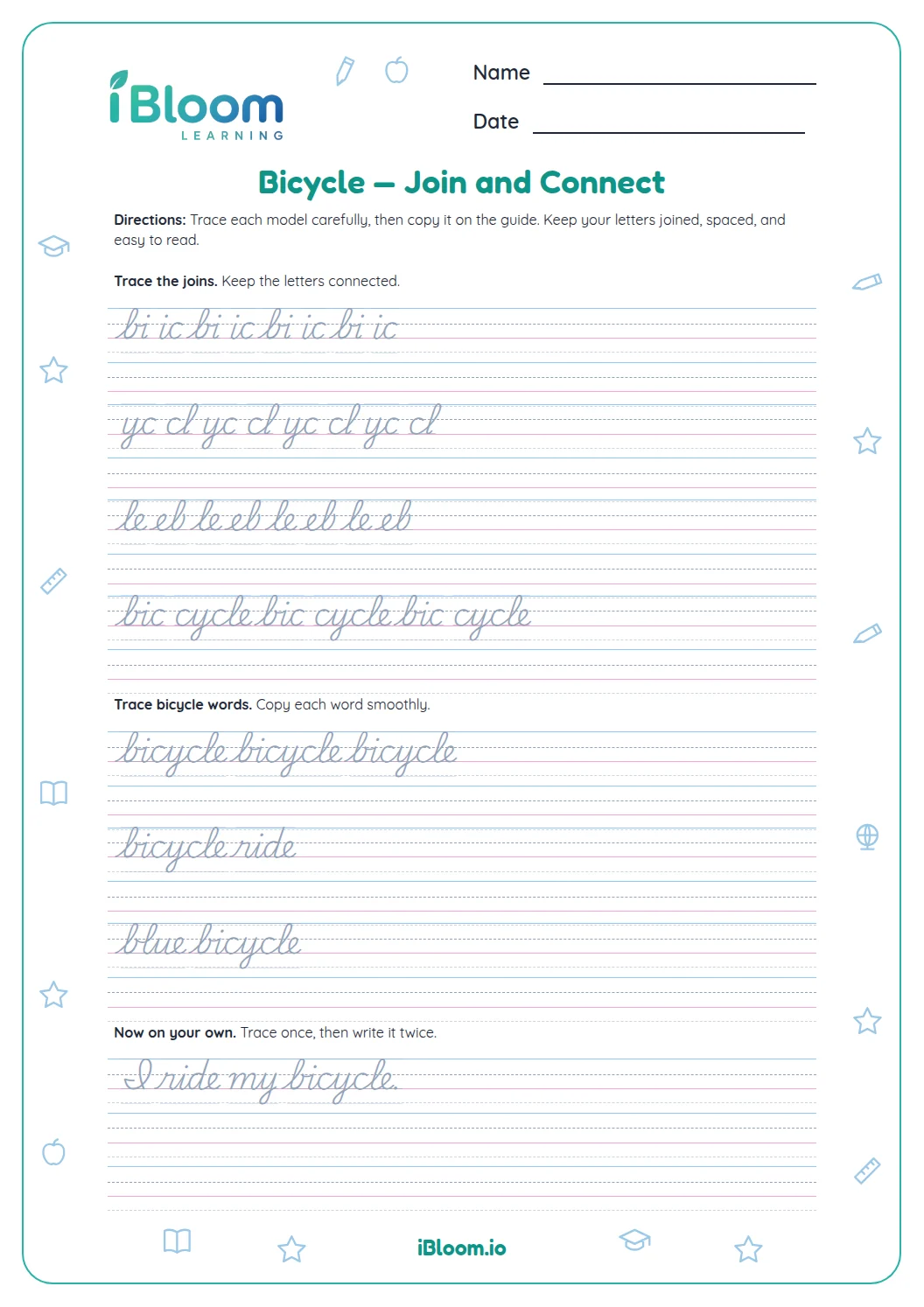
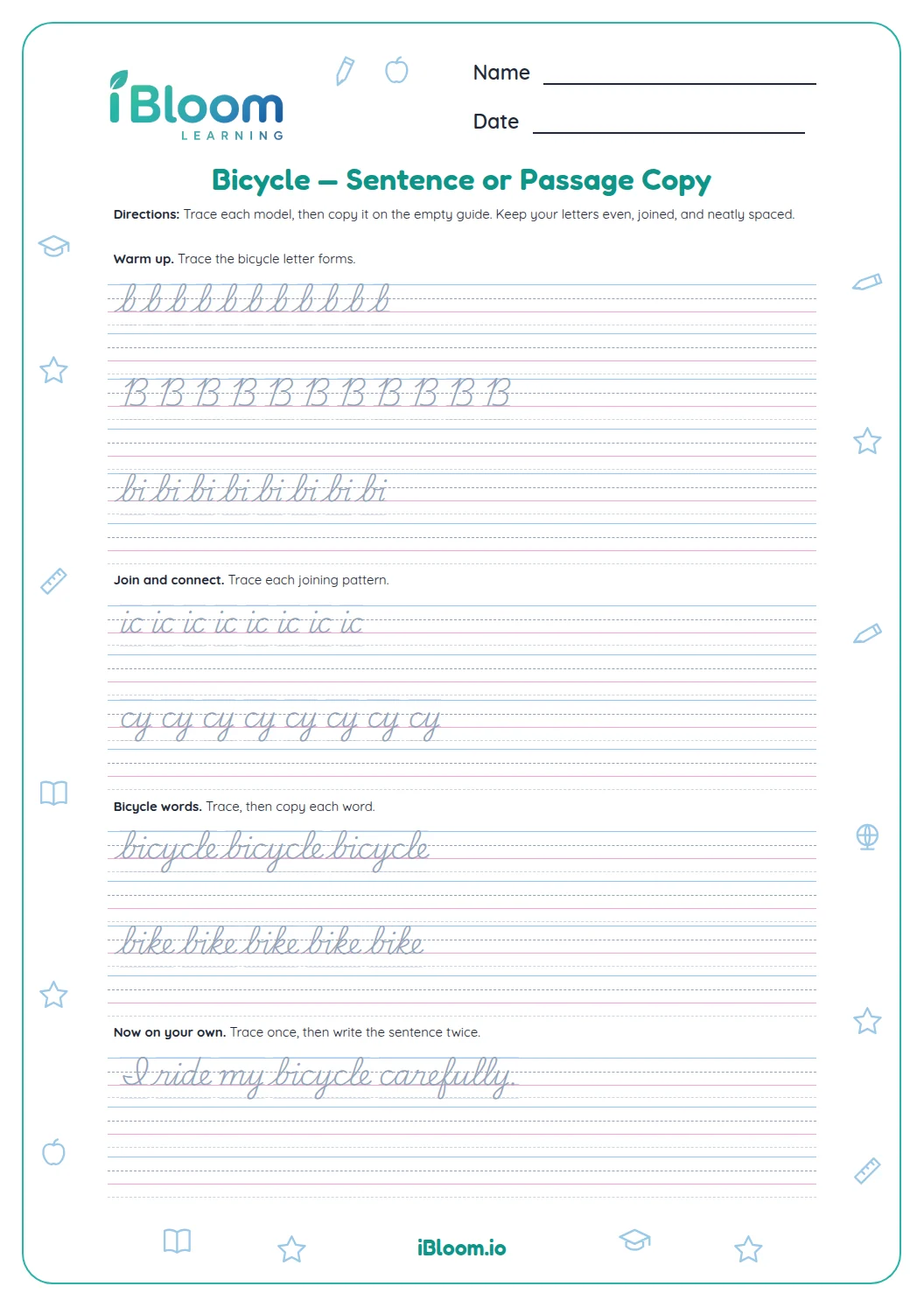
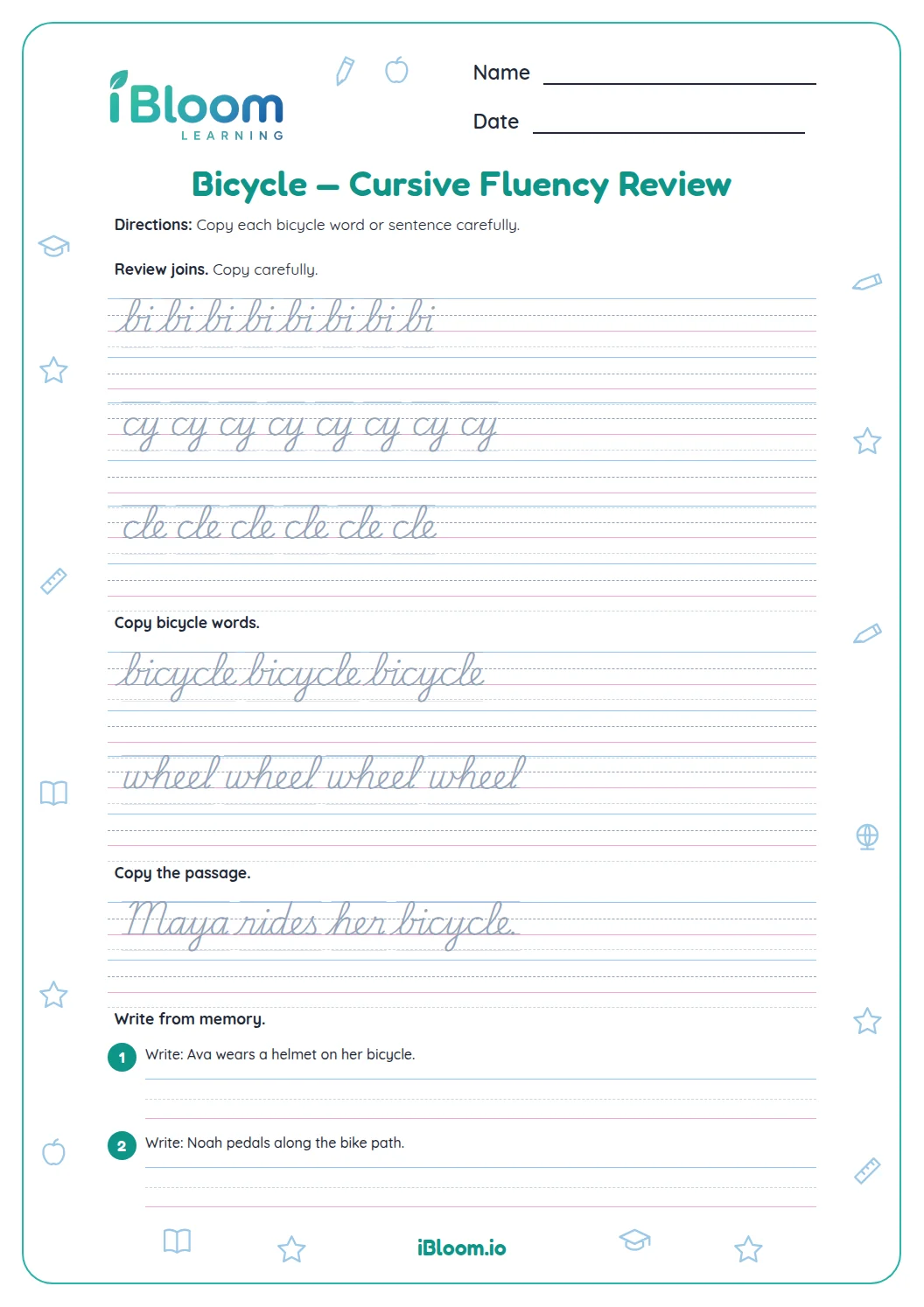
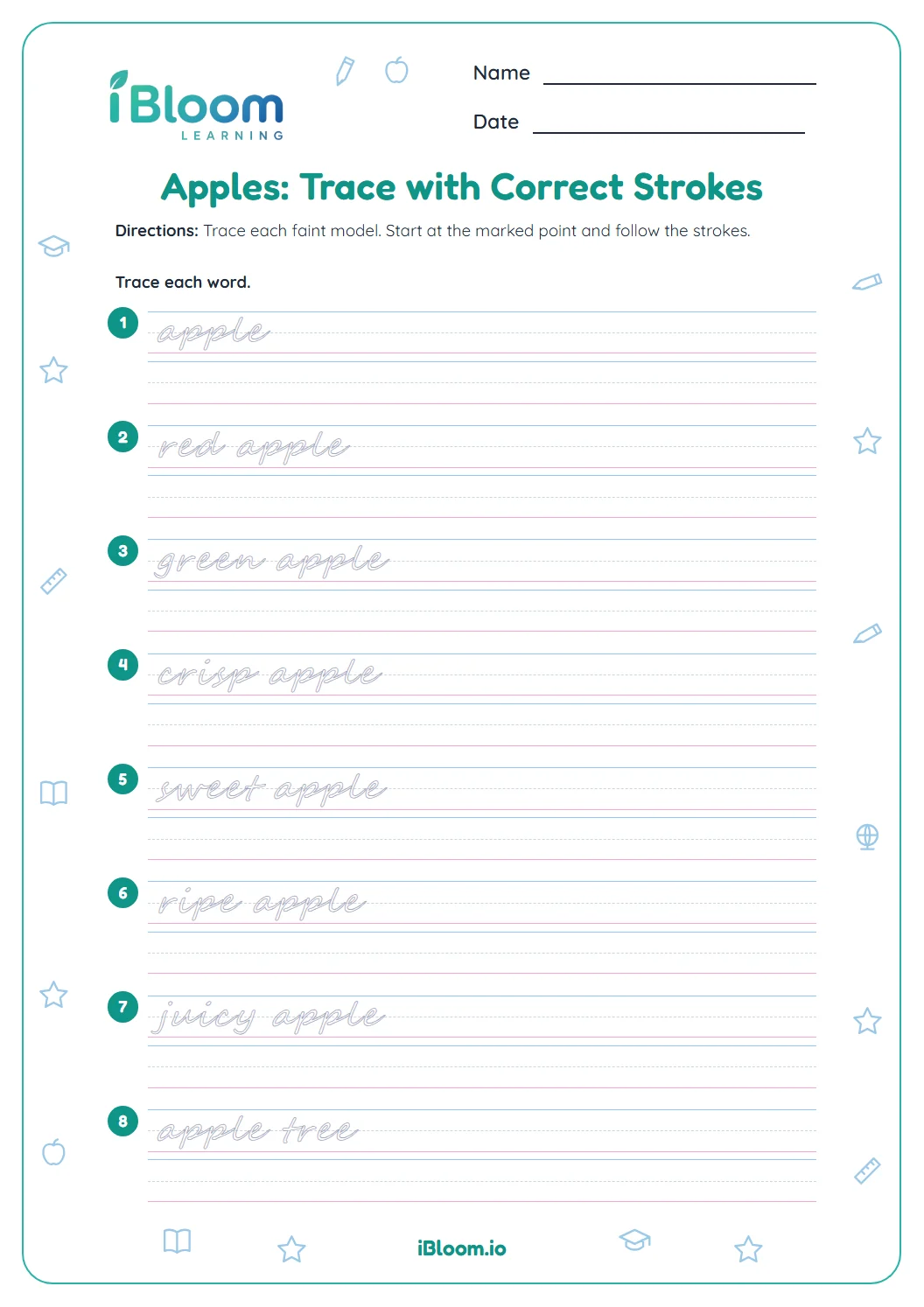
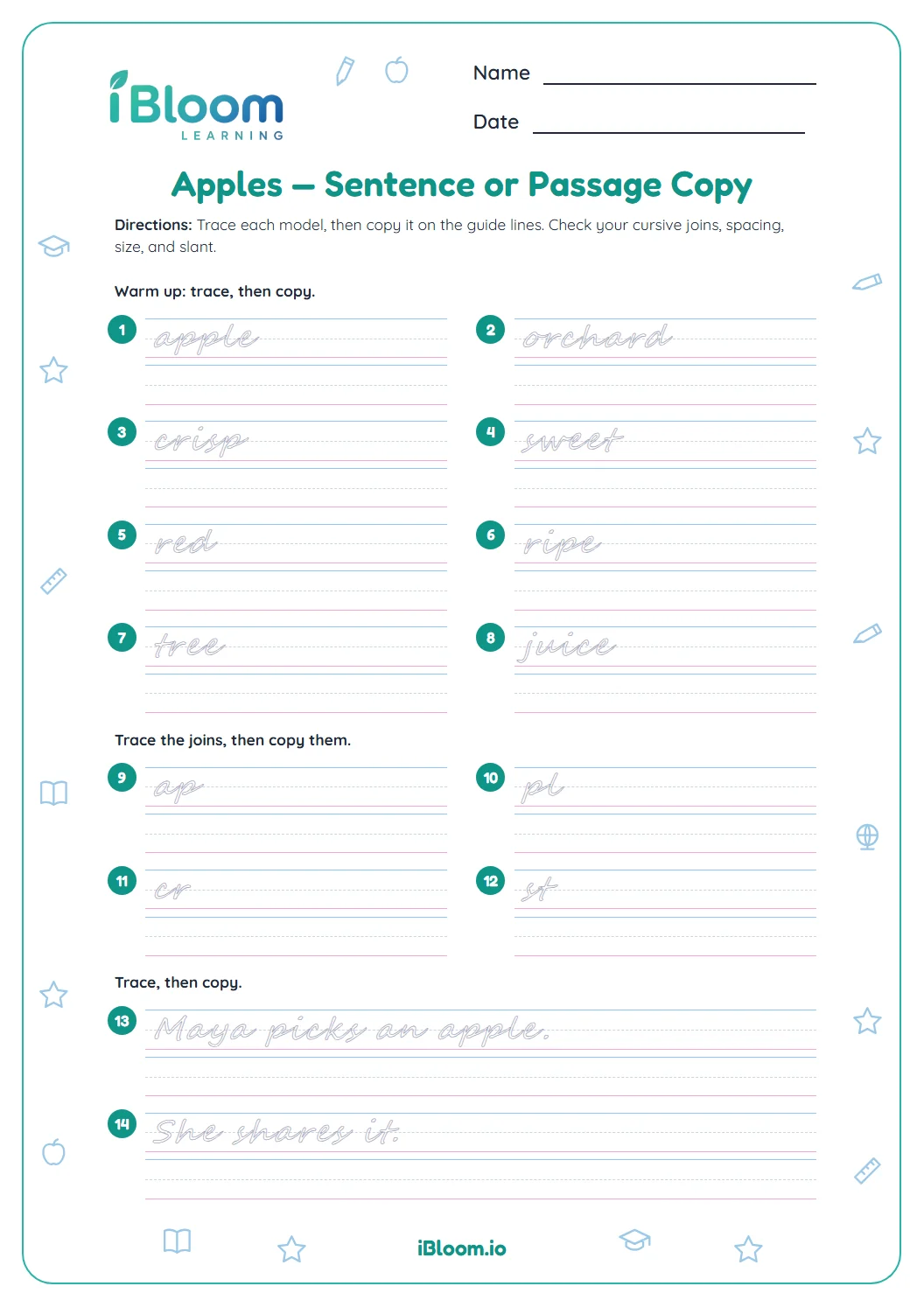
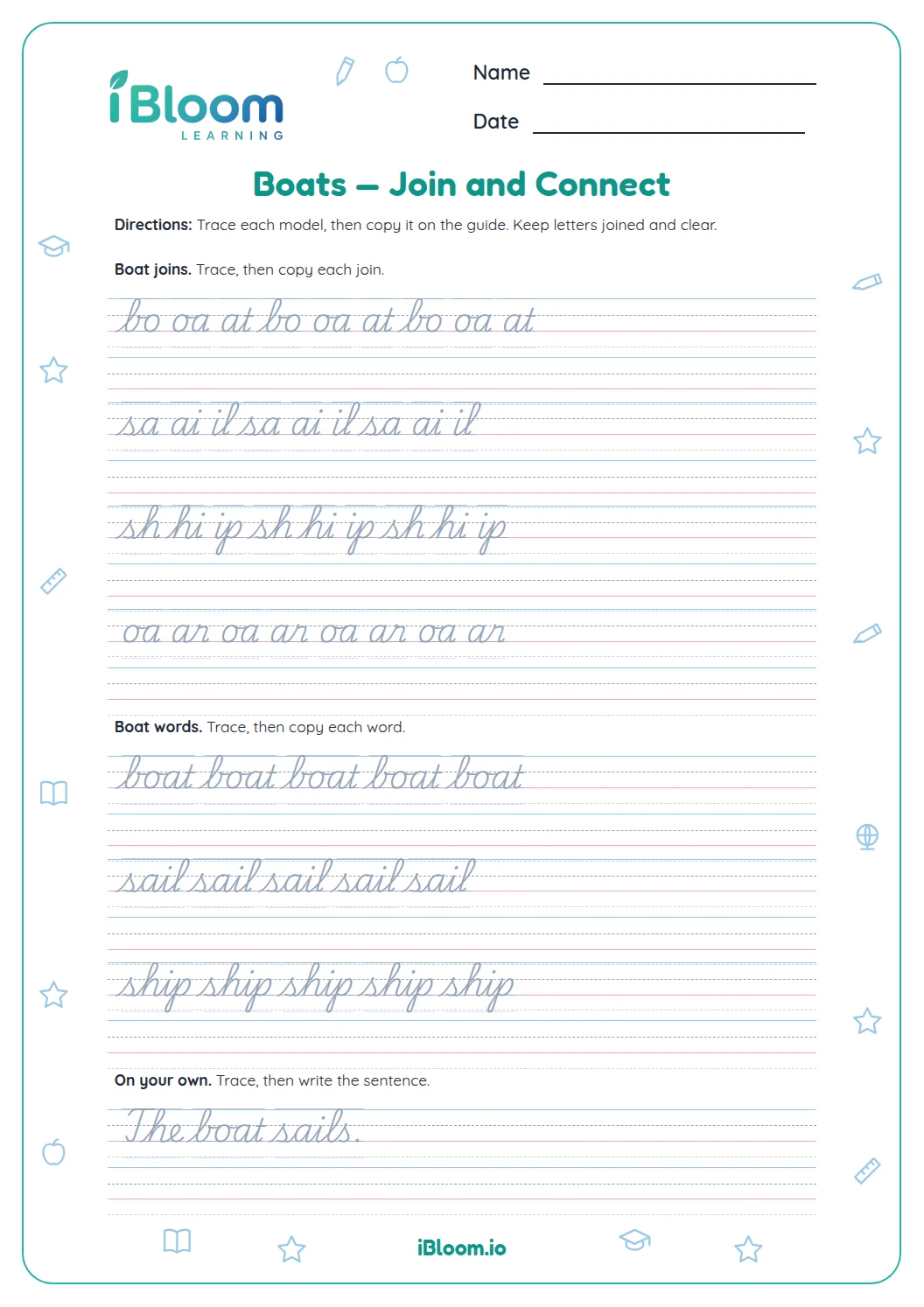
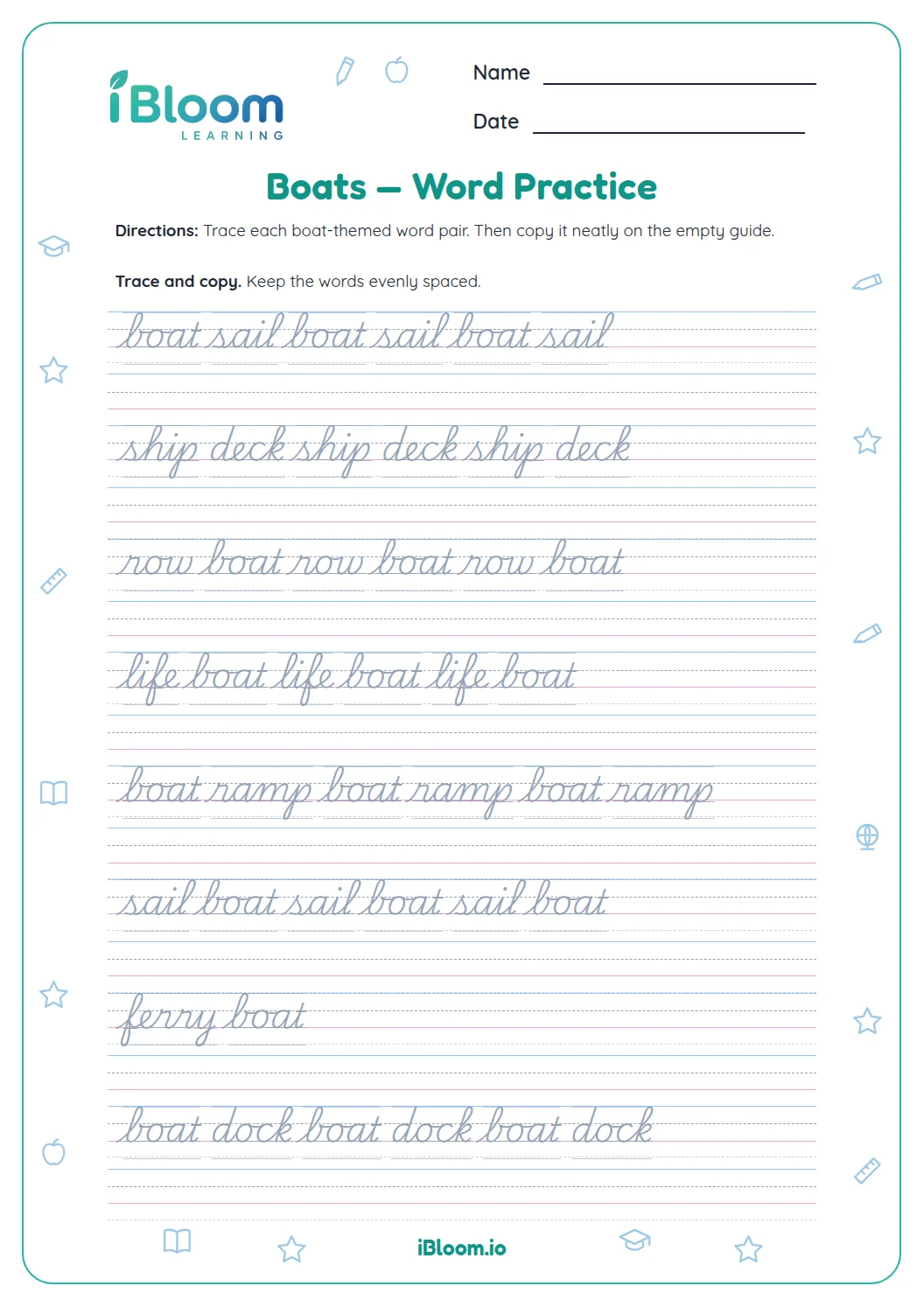
This free cursive worksheet gives students in Grades 2–5 fourteen short bicycle-related words to trace and copy. Each prompt prints a cursive model with a gray tracing row and a blank copying row, so learners can practice joins, letter size, and spacing. The set includes words such as “wheel,” “pedal,” to provide varied letter patterns.
How should a student use each cursive model?
Trace the gray model once, then copy the same word on the blank handwriting line. Keep letters on the line and use steady spacing between words and letters.
The sheet begins with “learn,” the supplied saved question, then adds bicycle-related words from short examples such as “bell,” “wheel,” “pedal,” and “helmet.”
- 1Trace: learn
- 2Copy: learn
- 3Compare the copy with the model for joined letters, letter size, and spacing.
What should a learner check while copying?
Look at letter shapes and joins as well as neatness. Tall letters should rise above the middle line; letters such as a, e, and r should stay a consistent size.
How can these words support handwriting practice?
The familiar bicycle vocabulary gives each short practice line a clear word to read and copy. Say the word, trace it, and then write it independently.
Read the word before tracing it.
- 1Follow the gray model from left to right.
- 2Keep letters resting on the baseline.
- 3Copy the word without tracing.
- 4Compare letter size, joins, and spacing with the model.
Common mistakes and quick fixes
The mistake
Lifting the pencil between letters that should connect.
The fix
Trace slowly and follow the model’s joins.
The mistake
Making every letter the same height.
The fix
Keep small letters consistent and let tall letters rise above them.
The mistake
Crowding letters or leaving large gaps.
The fix
Use steady spacing and keep the whole word balanced on the line.
What to practice next
Make more practice
Questions parents and teachers ask
What should a student do on each cursive line?
Read the bicycle word, trace the gray cursive model, and copy the same word on the next line. The repeated pattern lets learners focus on connected letter forms, steady size, and spacing. The source word “learn” begins the updated practice.
Which bicycle words are included?
The 14 target words are learn, bike, ride, bell, wheel, pedal, chain, brake, tire, road, path, light, safe, and spin. They name bicycle parts, riding actions, or related ideas, and include different letter shapes and joins for students to trace and copy.
How can I help a child check cursive handwriting?
Compare the copy with the model. Look for letters resting on the baseline, consistent small-letter height, clear joins, and even spacing. Encourage a slow, careful copy first; speed can come after the letter shapes are easy to read. A short pause between copies can help the learner notice a pattern and make a careful correction.
Does this worksheet include an answer key?
Yes. The key lists the target word for each prompt. Cursive copies can look different while still being correct, so use the model as a guide for legible letter formation, connected strokes, and spacing rather than expecting every copy to match exactly.
How many words are included, and how many pages print?
The sheet has 14 trace-and-copy words and prints across four worksheet pages, followed by four answer-key pages. Each prompt shows a gray cursive model and a blank line for copying. The key repeats the target word, while handwriting is checked for readable shapes and spacing.