


About this worksheet
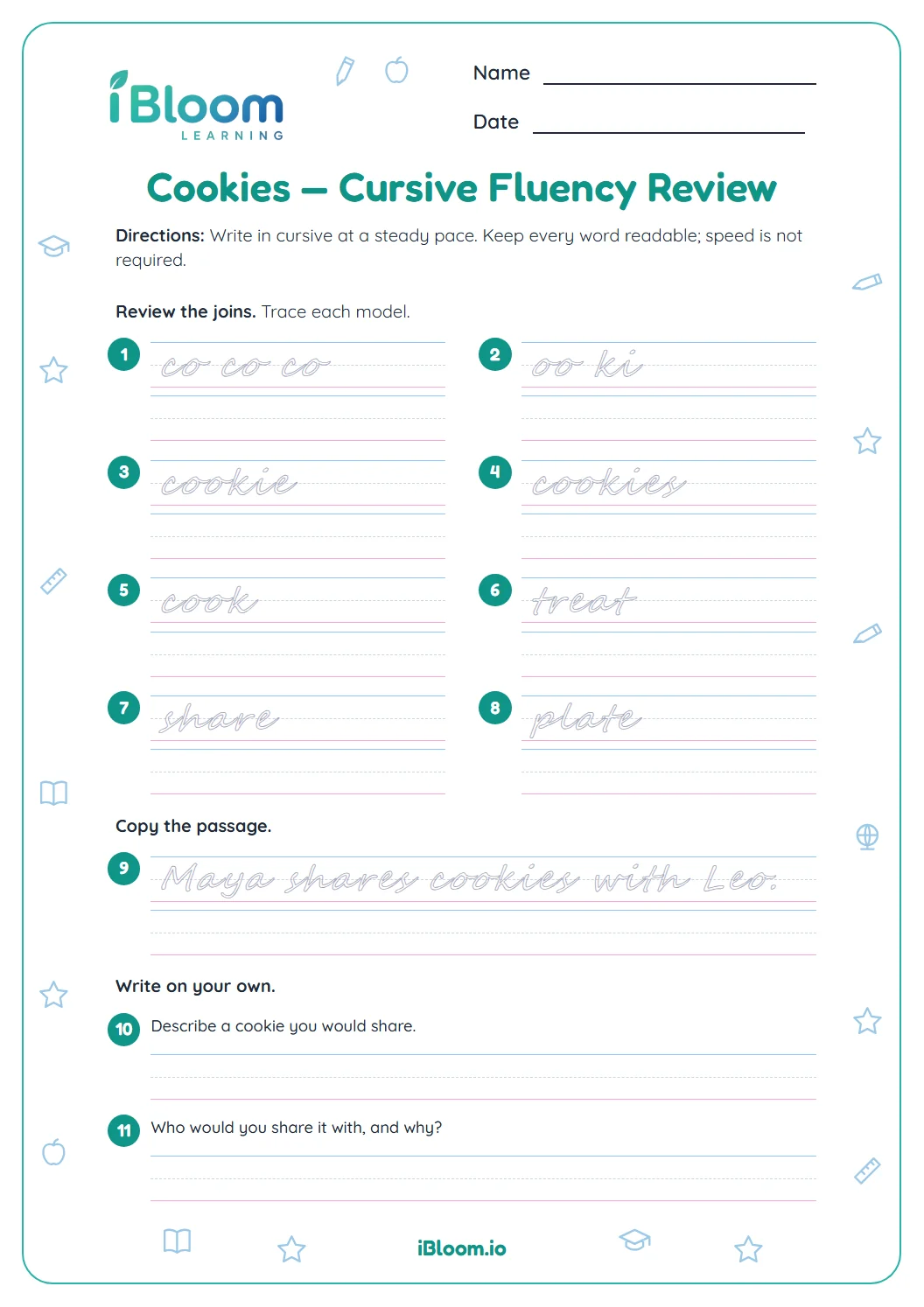
This handwriting page gives students a clear progression: copy a few short cookie words and sentences, then practice longer connected lines about mixing, baking, cooling, and sharing cookies. The prompts stay short enough for the cursive template, while the final items build fluency with spacing and connected letter forms.
How to copy a cursive sentence
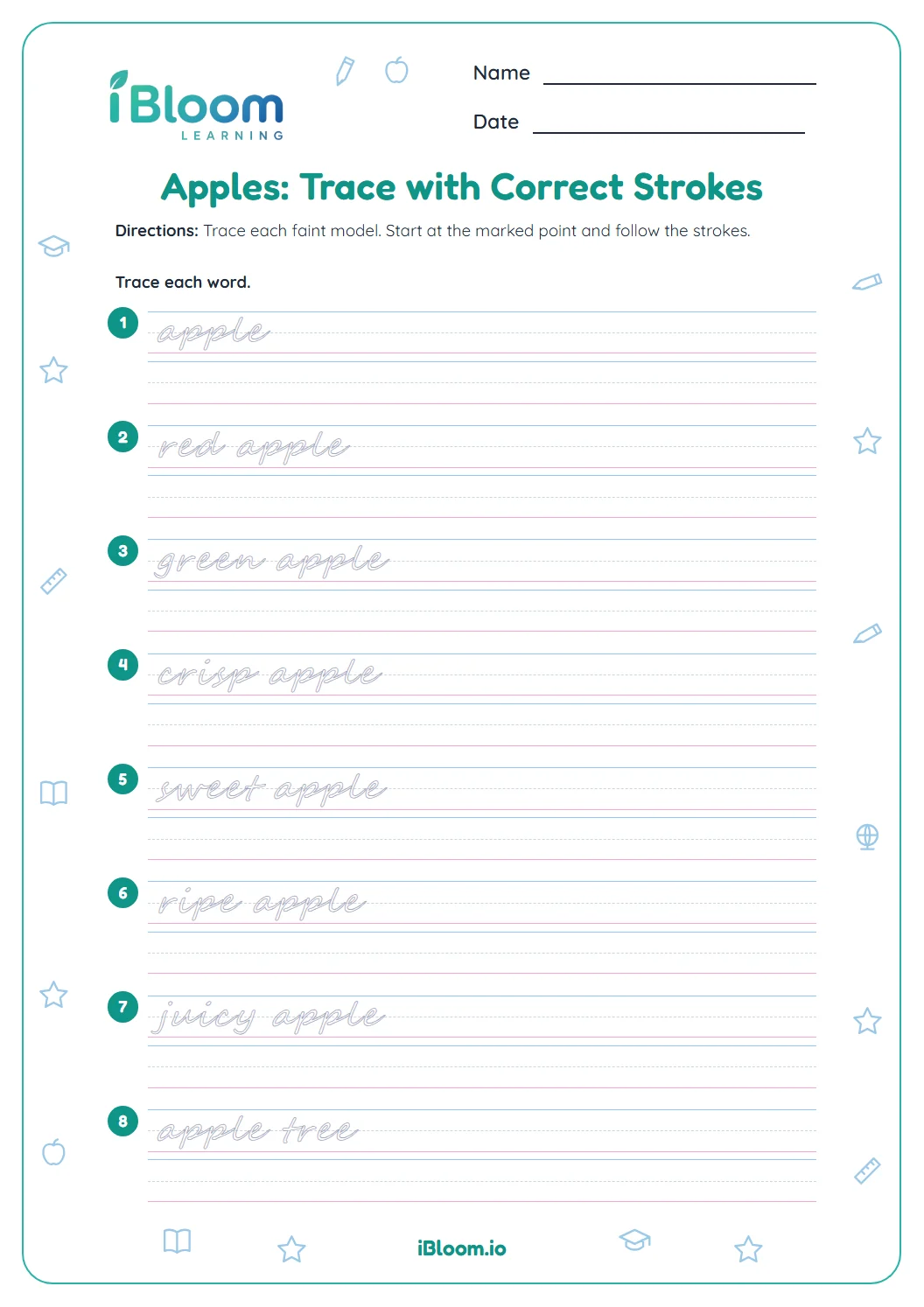
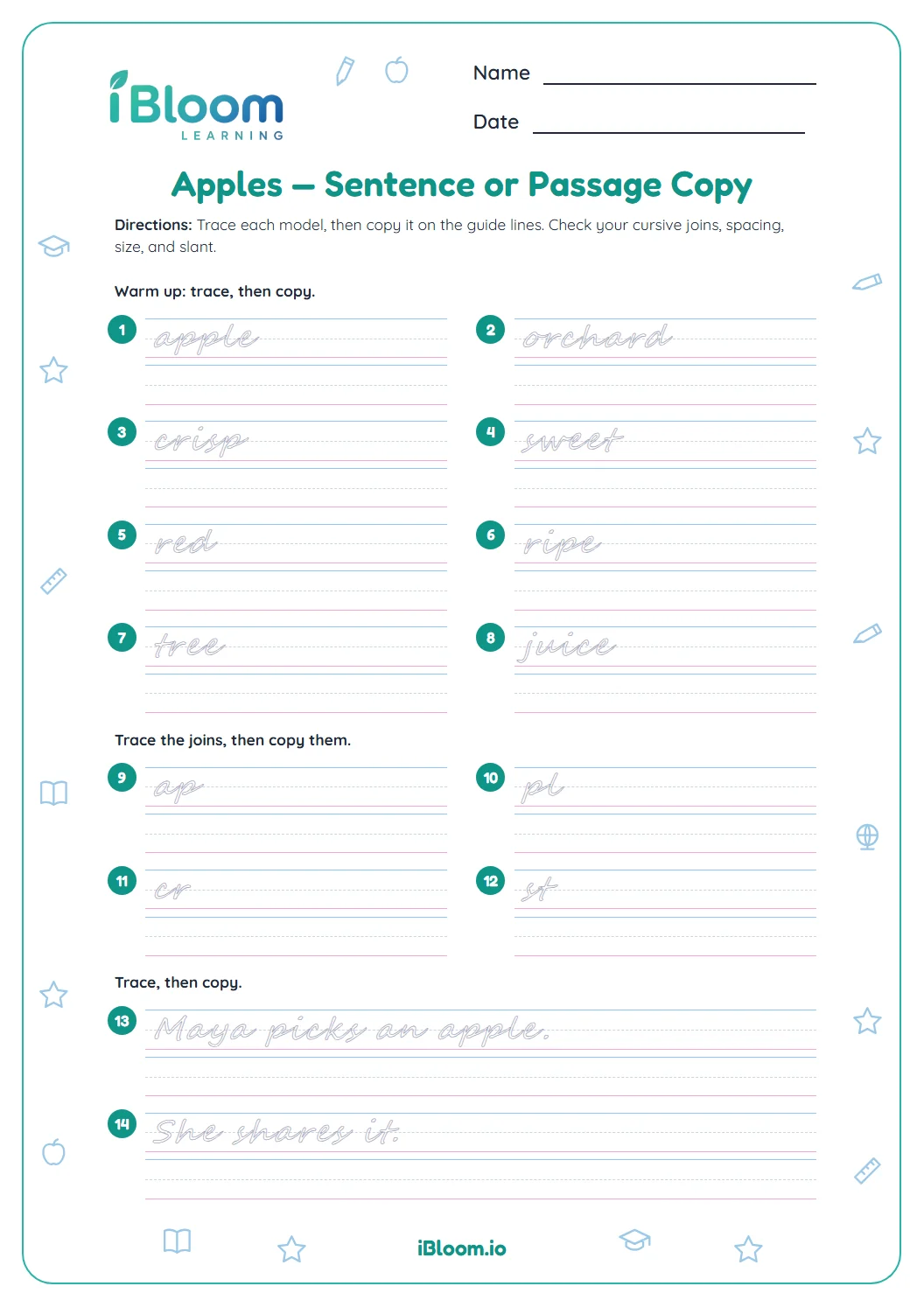
Start at the gray model and follow the letter shapes and joins. Then copy the same words on the empty row, keeping letters on the baseline and leaving a small space between words.
Longer lines make it easier to notice whether spacing stays consistent. A student can pause at each word, but should keep the letters within that word connected.
What does this page practice?
The copy lines move from individual cookie words to brief instructions and then longer original sentences. Each line repeats the exact model so learners can focus on letter formation rather than spelling a new sentence.
- Short words build smooth joins.
- Sentences practice capital letters, spacing, and punctuation.
- Longer lines build steady cursive fluency.
Why copy both words and sentences?
For “Mix the dough.”, trace the model first, then copy the same words on the empty row. Keep the letters in each word joined and leave a clear space after the period.
Short words give learners room to watch individual letter shapes and joins. Sentences add capitals, punctuation, and spaces between words. This worksheet moves from brief models to longer lines, so students can attend to both connected letters and readable spacing.
What to practice next
Questions parents and teachers ask
What should students focus on while copying cursive?
Follow the shape and direction of each letter in the model. Keep letters within a word connected, place them on the writing line, and leave a clear space before the next word. Comparing the copied line with the model helps students notice form and spacing.
Does this worksheet include both words and sentences?
Yes. The first lines use short cookie words, followed by brief directions and original sentences about baking and sharing. The repeated model lets learners focus on cursive formation, connections, spacing, capitals, and punctuation rather than inventing their own wording at their own pace.
How can a learner check a copied sentence?
Compare the copy with the printed model one word at a time. Check that all words are present and in order, then look at letter shapes, joins, baseline placement, spaces, capital letters, and punctuation. The answer key repeats the text for easy checking.
How does cursive copy practice support writing?
Copying words and sentences by hand gives students time to attend to letter formation, word spacing, baseline placement, and punctuation. This sheet offers repeated models so learners can practice clear, connected cursive and compare their finished line with the original text before moving to the next sentence.
Why copy both words and sentences?
Short words give learners room to watch individual letter shapes and joins. Sentences add capitals, punctuation, and spaces between words. This worksheet moves from brief models to longer lines, so students can attend to both connected letters and readable spacing.