
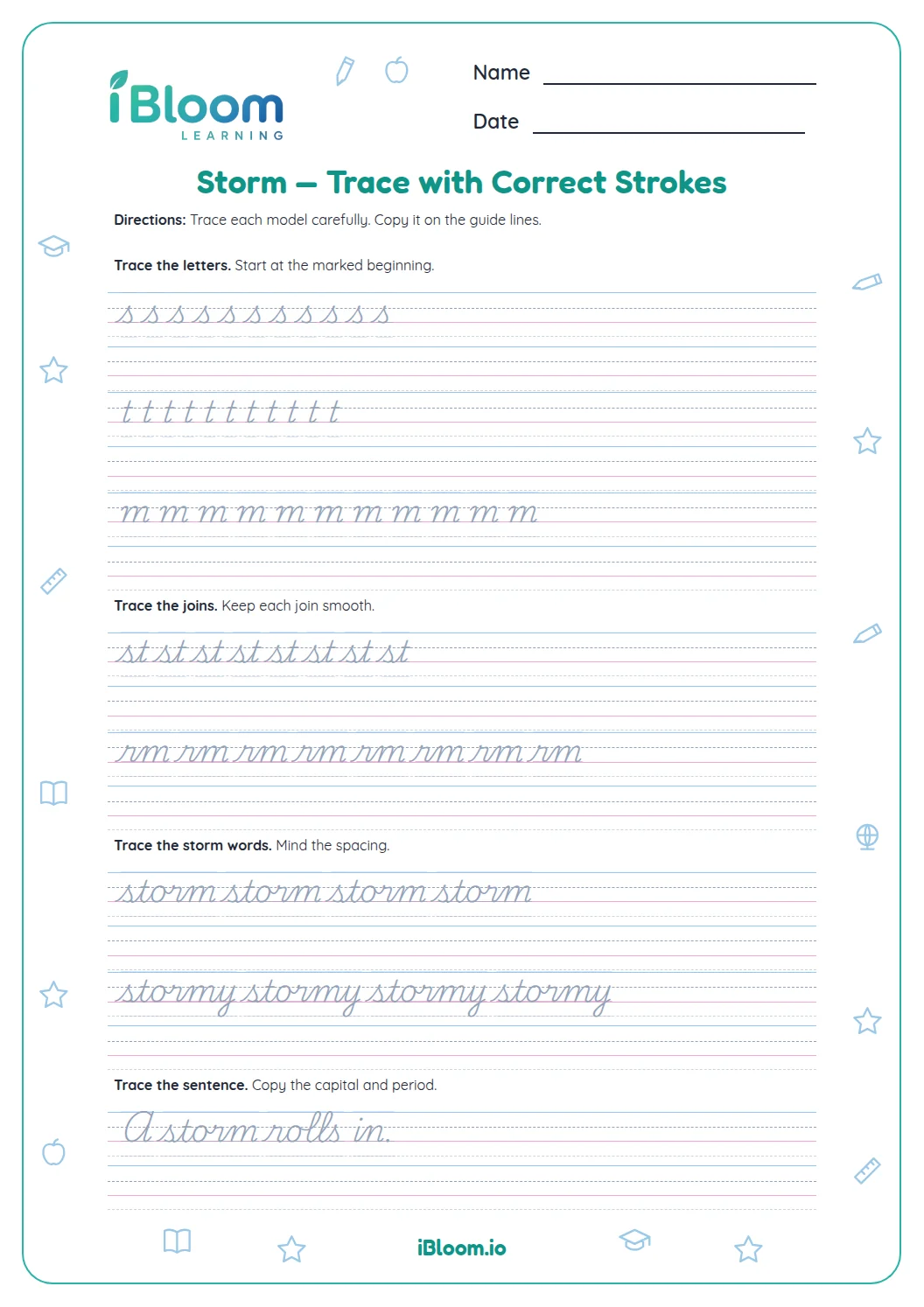
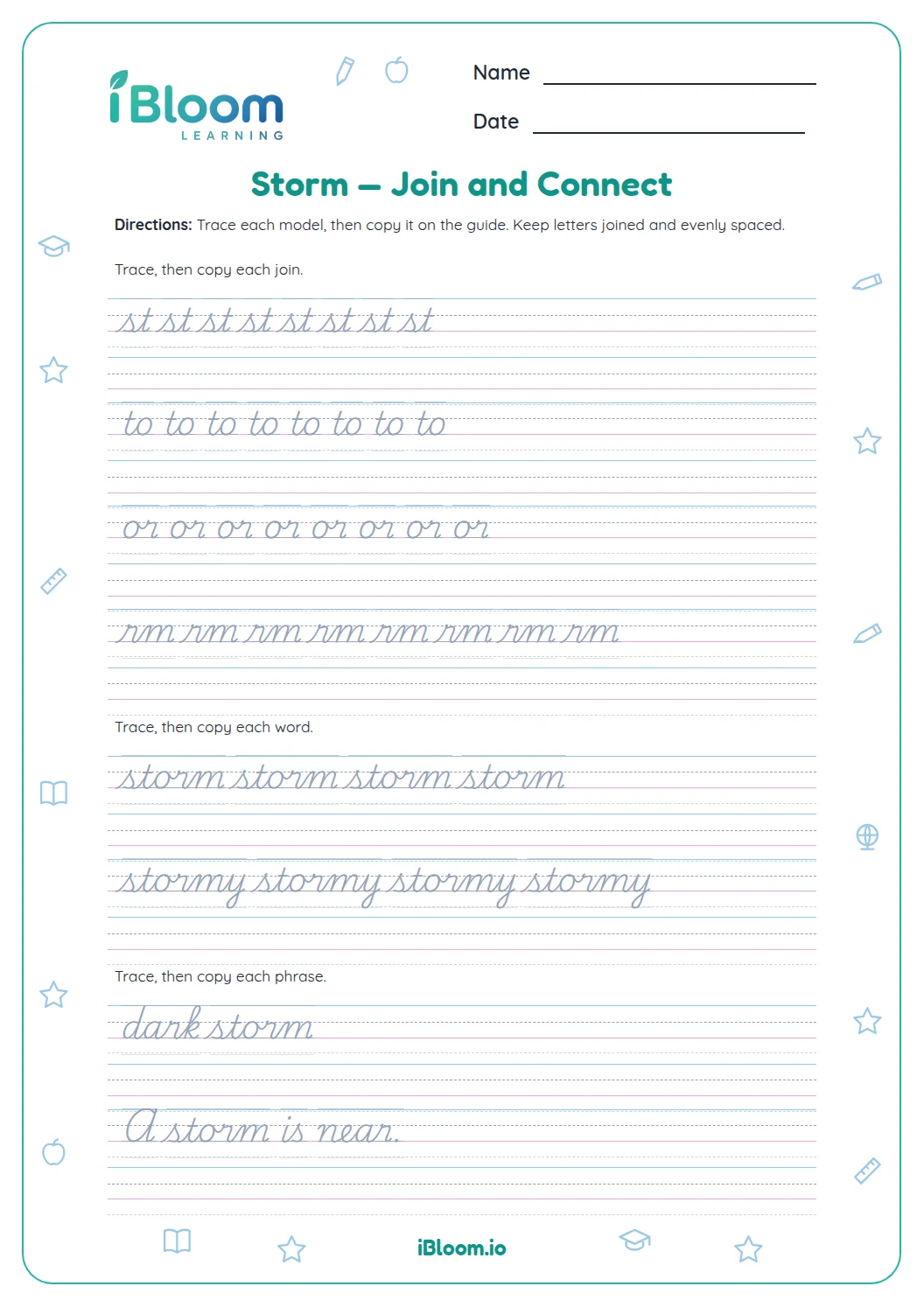
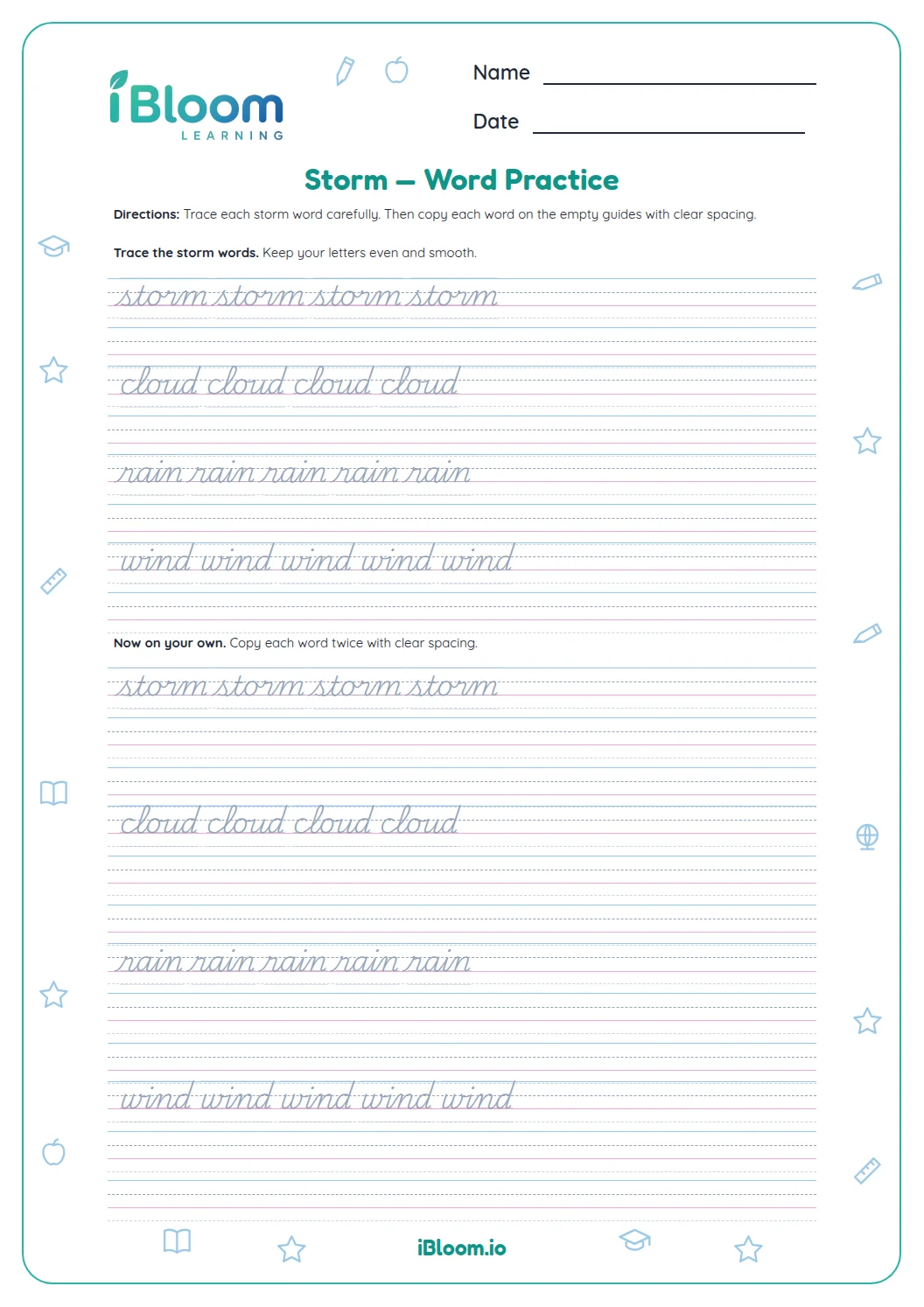
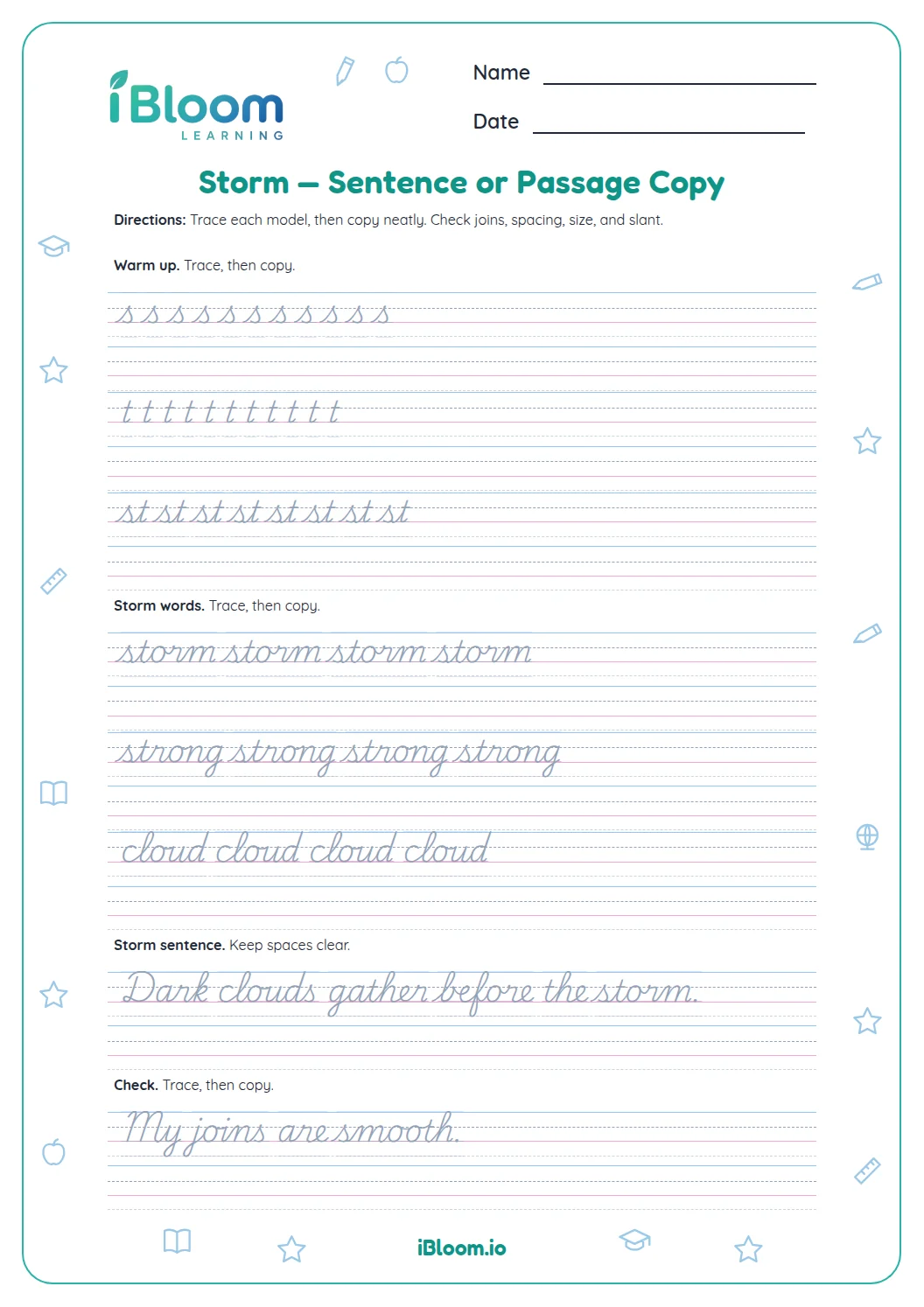
About this worksheet
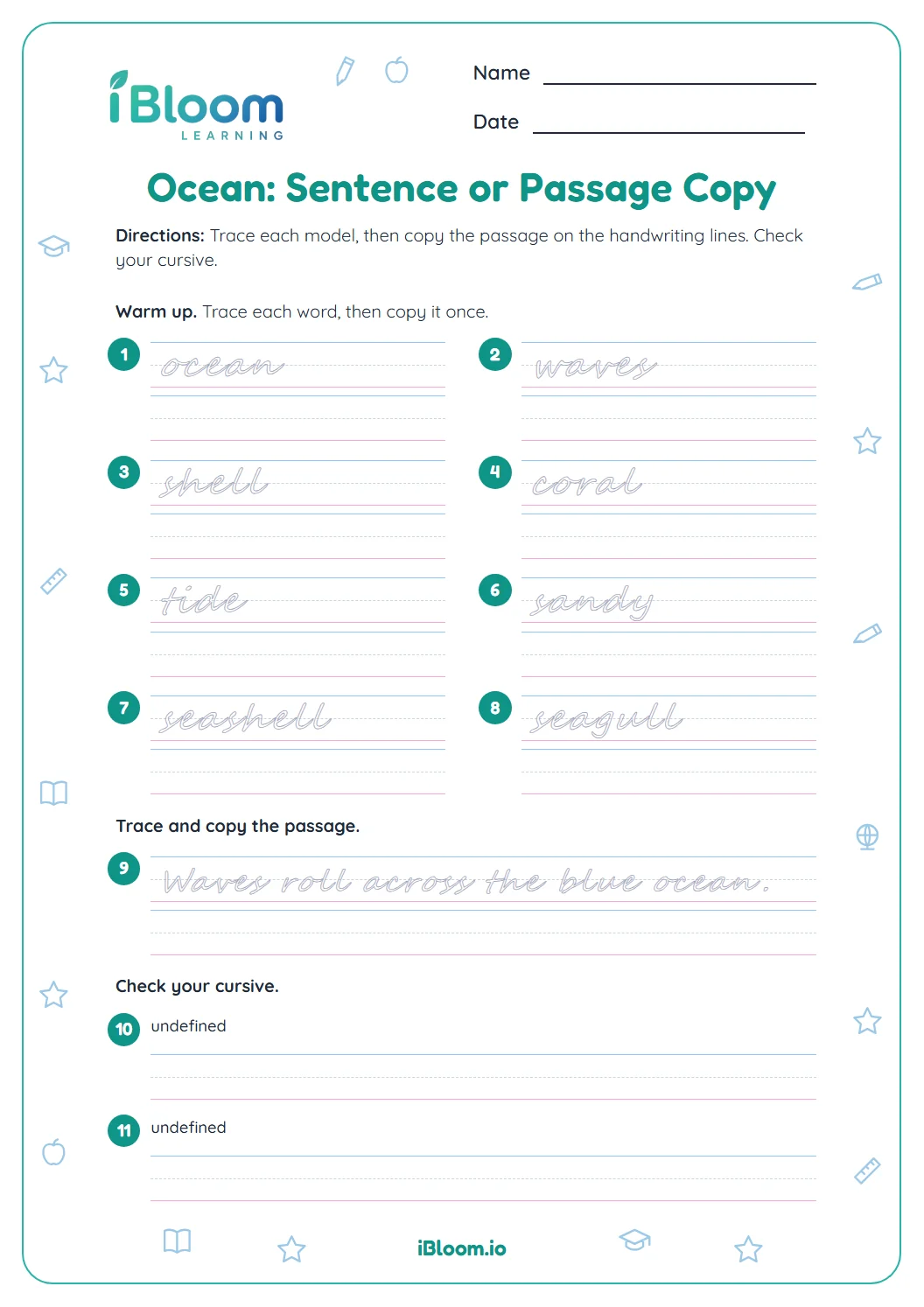
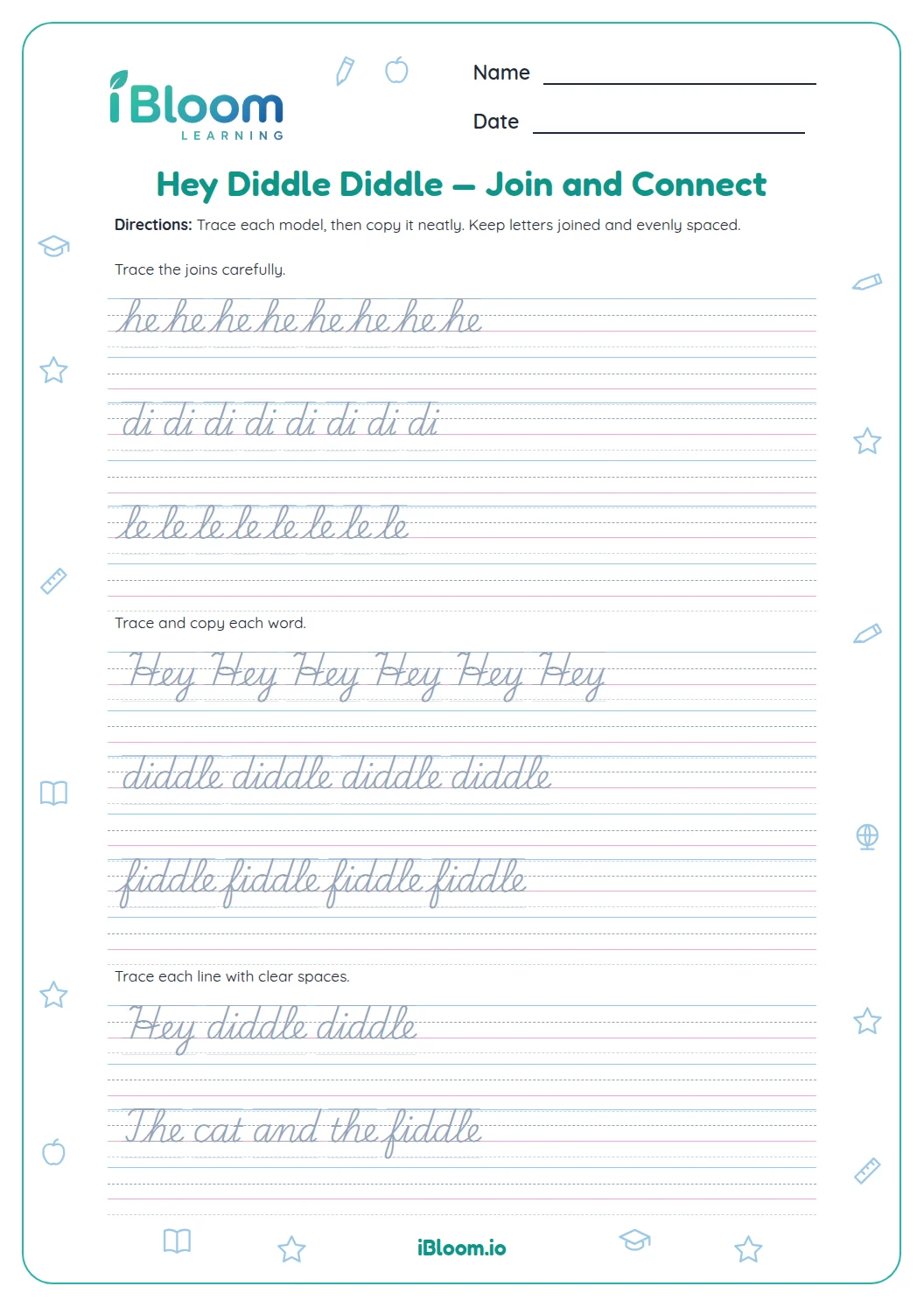
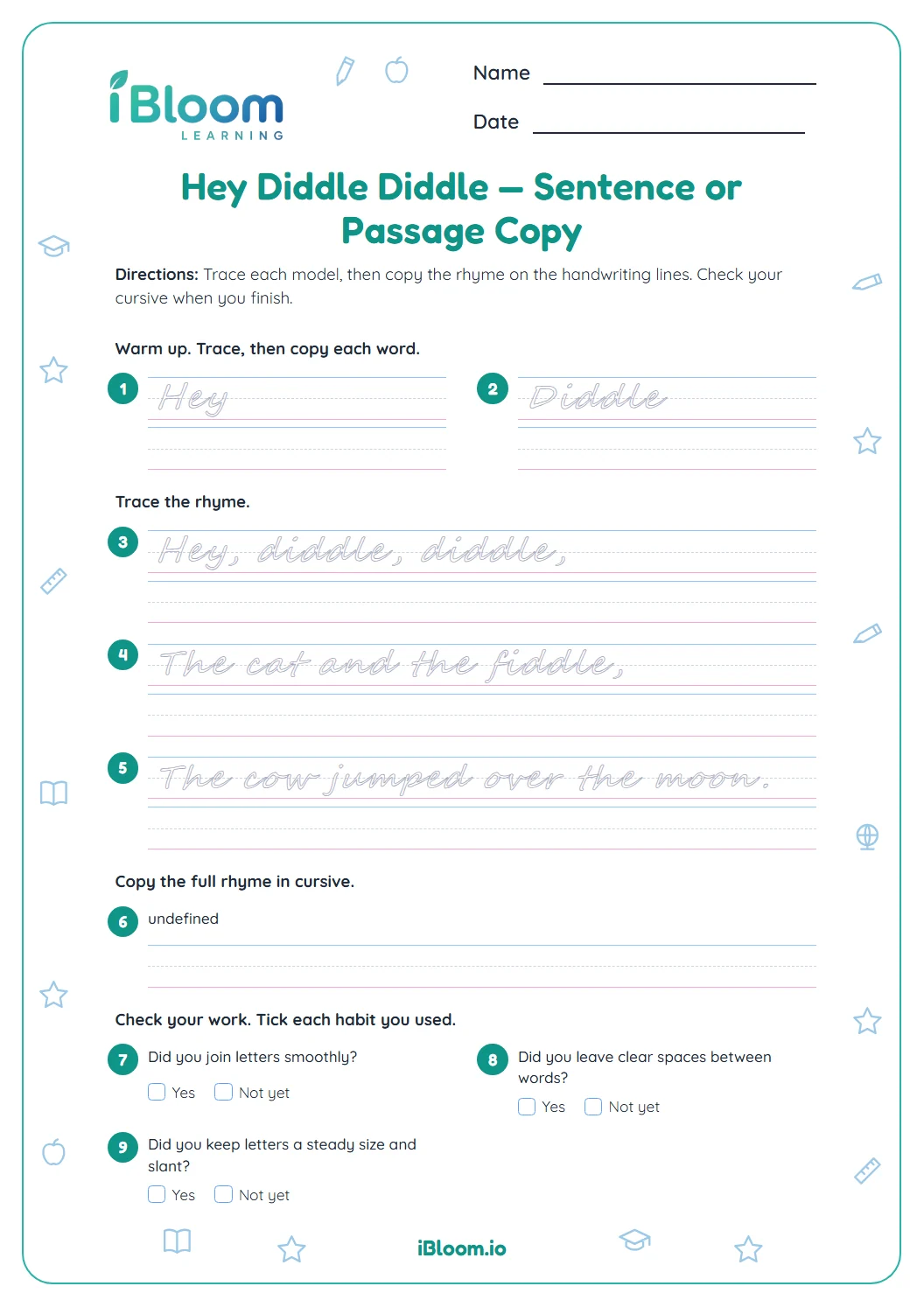
This free Storm cursive worksheet gives children in Grades 2–5 a short passage to trace and copy one sentence at a time. Seven sentences tell a simple weather story: clouds gather, rain falls, and the sun comes out. Each row has a gray cursive model and a blank ruled line for copying, making fourteen writing tasks. The three parts follow the storm’s beginning, middle and end. Use the sheet with children who already recognize cursive letters and are ready to maintain readable joins, word spacing and punctuation across several sentences.
What story do the cursive lines tell?
Part A begins with gray clouds and wind. Part B brings the rain as the narrator watches it. Part C ends with passing clouds, sunshine and singing birds. Read the seven sentences in order before picking up a pencil so the copying has meaning.
How should children use each pair of lines?
Trace the gray sentence first, following the model’s letter shapes. On the empty line, copy the same sentence once. Keep the first capital, spaces and final period. The answer key repeats the target text as a checking model.
- 1Rain taps the roof.
- 2Trace the capital R and the connected lowercase letters.
- 3Copy the sentence, leaving spaces after Rain, taps and the.
- 4Finish with the period.
What should a fluency review focus on?
Choose one feature at a time: even letter height, readable joins or visible spaces. A steady, legible line is the aim. Let children pause at word boundaries, then reread their own copy to check that the sentence still says what they intended.
If attention fades, complete one part and return to the next part later. The story remains easy to follow across those short sessions.
How to work through the sheet
- 1Read all seven sentences aloud as one short storm story.
- 2Trace the first sentence slowly, watching the model’s joins.
- 3Copy it once on the empty handwriting line.
- 4Continue through a part, checking spaces between words.
- 5Reread the copied sentences and choose one letter or join to improve.
Mistakes to notice and how to help
The mistake
Joining the last letter of one word to the next word.
The fix
Lift the pencil and leave a visible space at each word boundary.
The mistake
Dropping the capital or period while copying.
The fix
Check the first and last marks in the model before moving to the next row.
The mistake
Making short letters as tall as the tall letters.
The fix
Use the handwriting guides and compare a short letter with a tall letter in the same sentence.
What to practice next
Make more practice
Questions parents and teachers ask
Is this a complete passage or separate practice words?
The seven sentences form one short storm passage. They begin with gathering clouds, continue with falling rain, and end with sunshine and birdsong. Each sentence has its own tracing and copying row, so children complete fourteen writing tasks while following a connected sequence of weather events.
Which grades can use the Storm sheet?
The sheet is labeled for Grades 2–5 and suits children who can recognize cursive letters and are practicing connected writing. Choose it by handwriting experience as well as grade. A child who needs help can work through one part with an adult before continuing.
Should my child race through the sentences?
No, use a comfortable pace that keeps the writing readable. The review asks children to carry consistent joins, spacing and letter size across seven sentences. Read a finished line together and check one feature before continuing, rather than making speed the measure of success.
What does the answer key show for cursive practice?
The key provides the same target sentences as models for checking the copied text. Look for the correct words, capitals and periods, then compare joins and spacing with the cursive model. A child’s handwriting will vary, so focus on whether the letters and words are readable.
Can we finish the worksheet in shorter sessions?
Yes, the three parts make natural stopping points. Practice the two sentences before the rain, then return to the falling rain and clearing sky in later sessions. Before restarting, read the last copied sentence aloud and check its spacing to carry the same habit into the next part.