

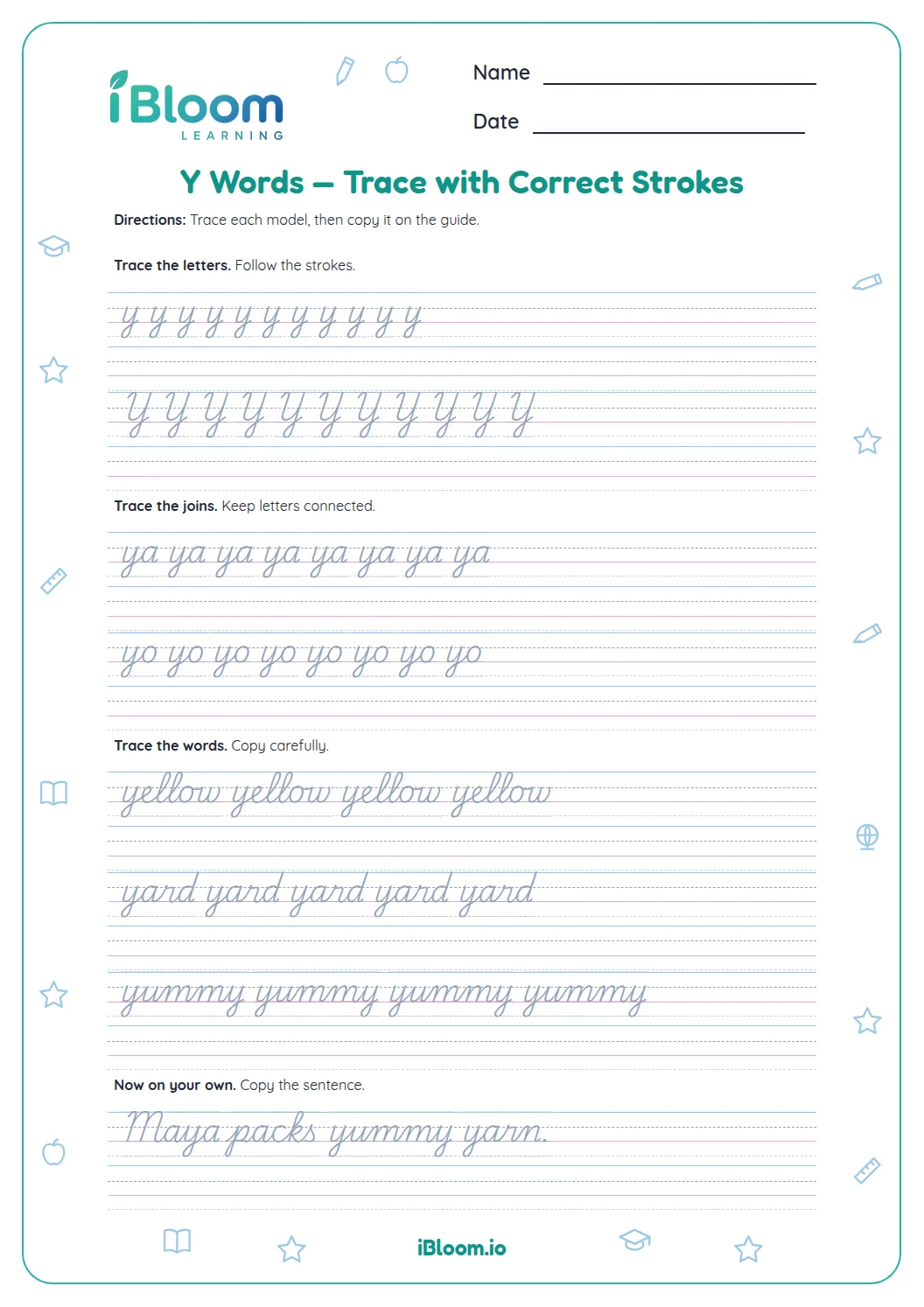

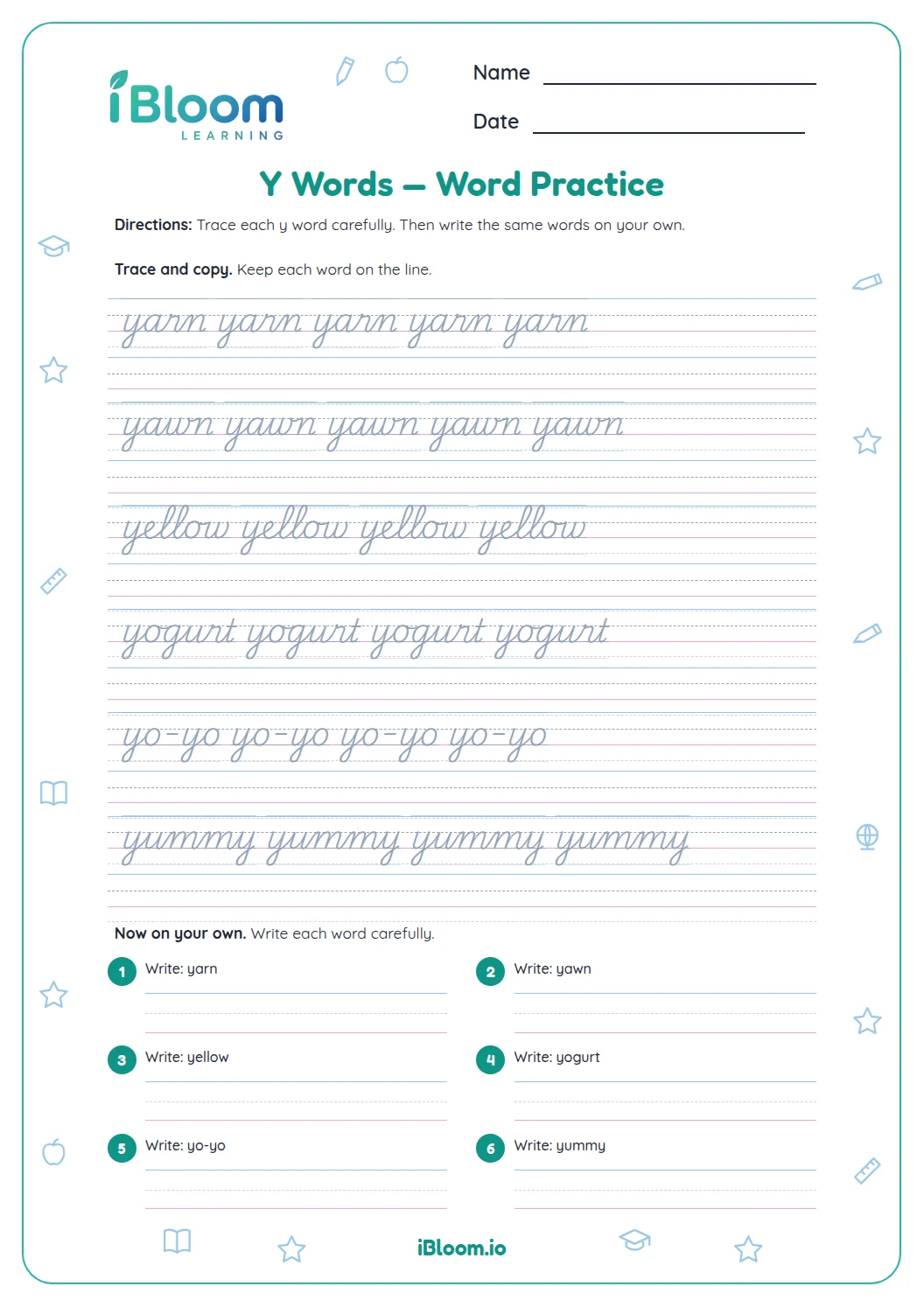
About this worksheet
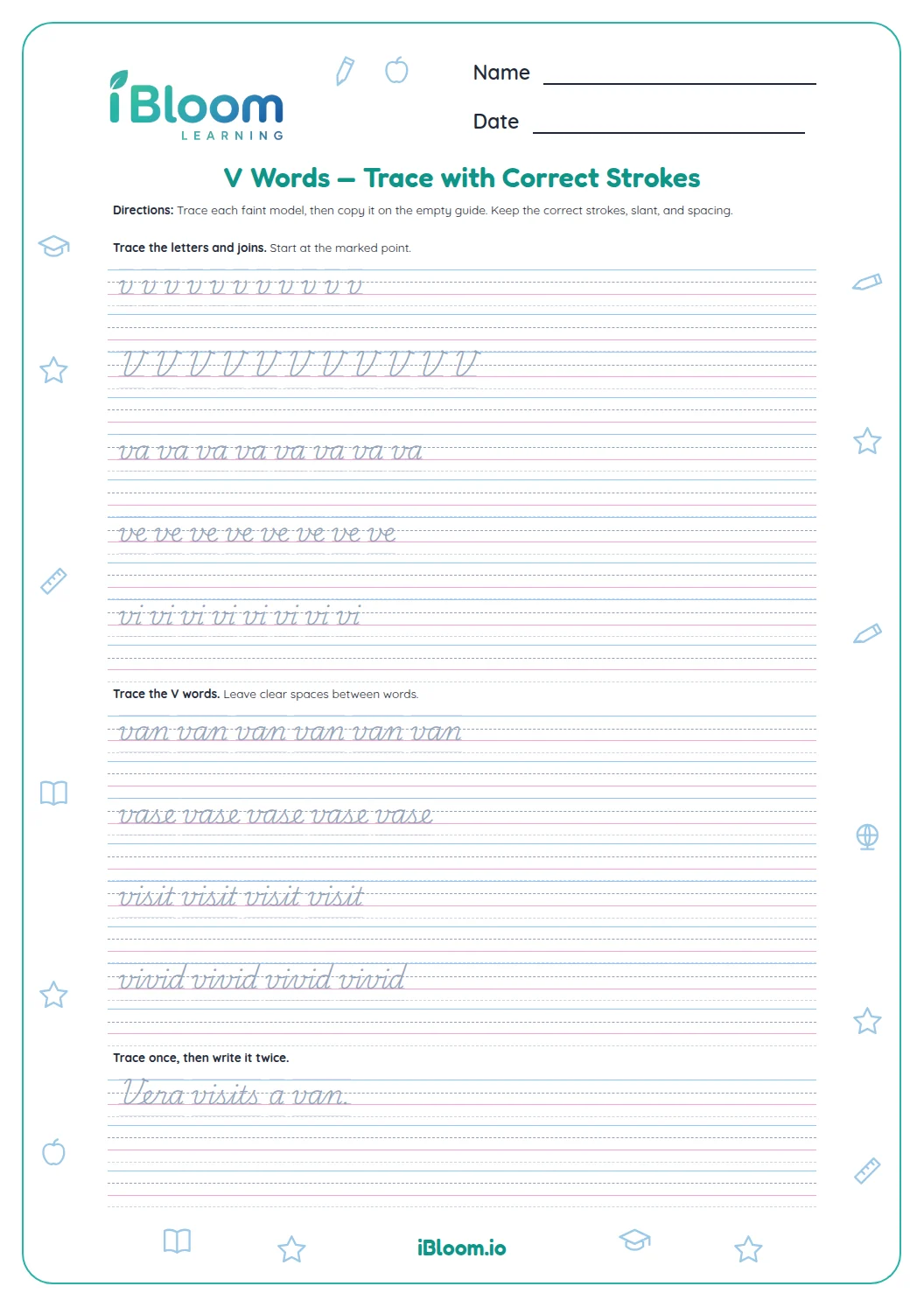
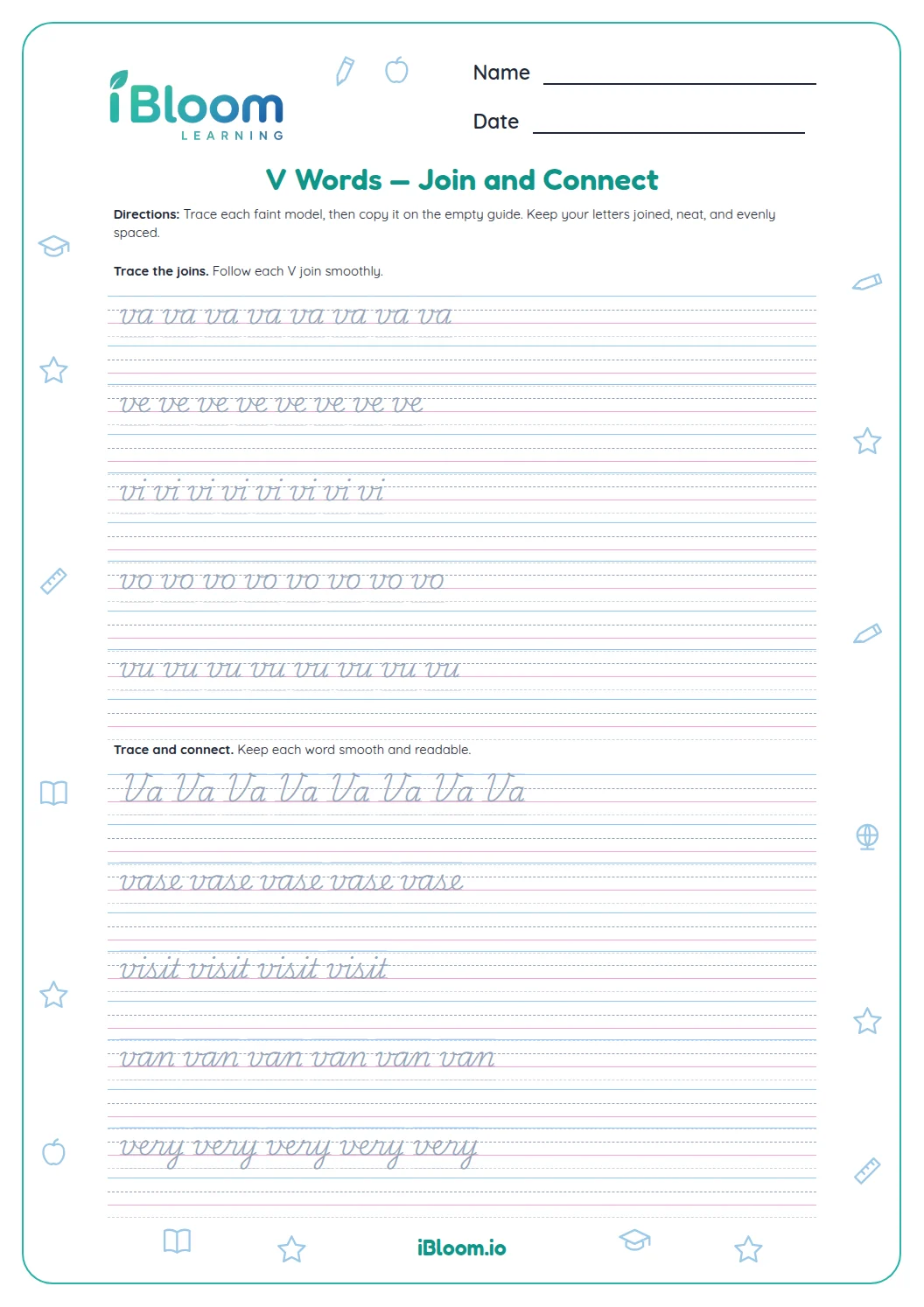
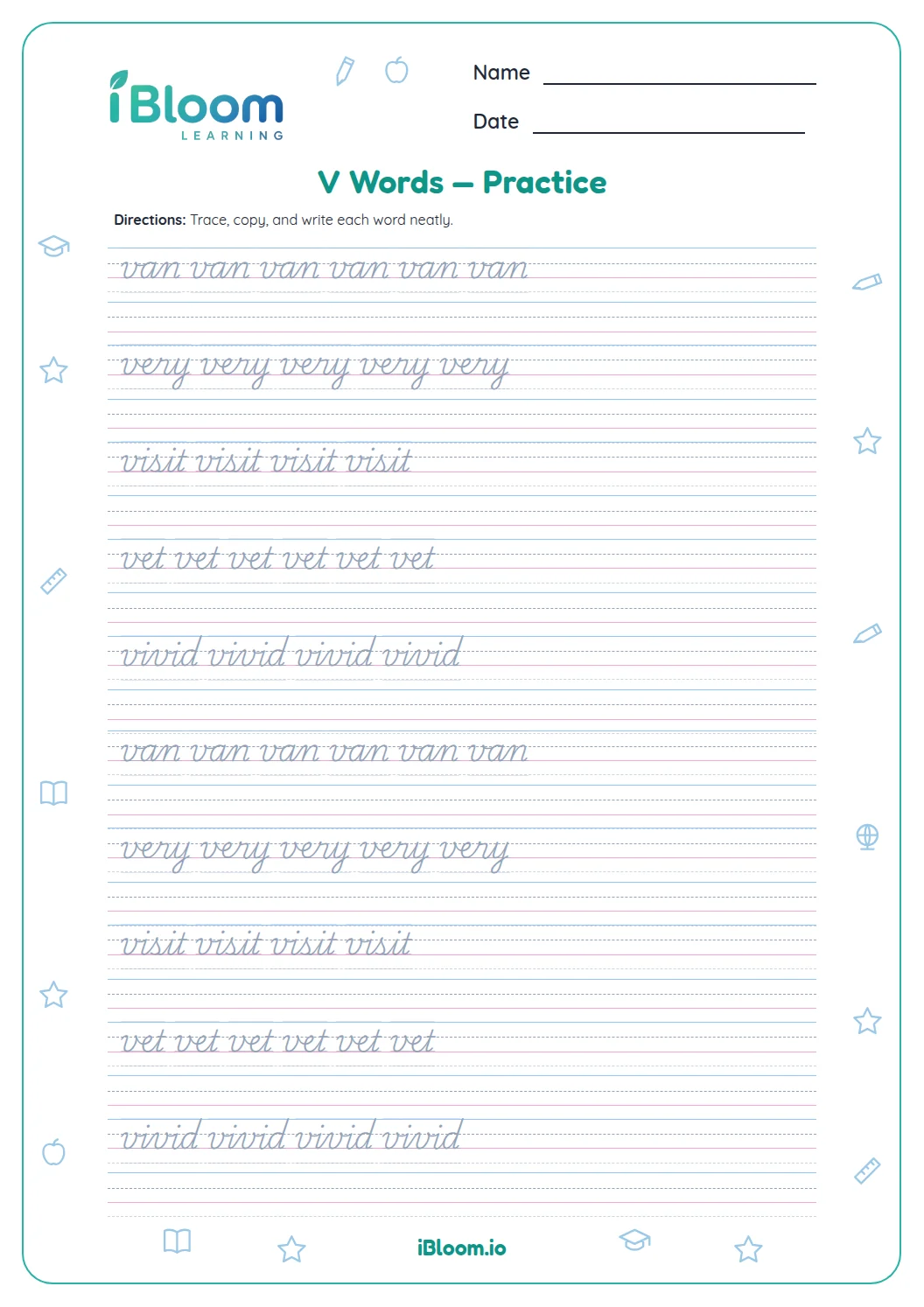
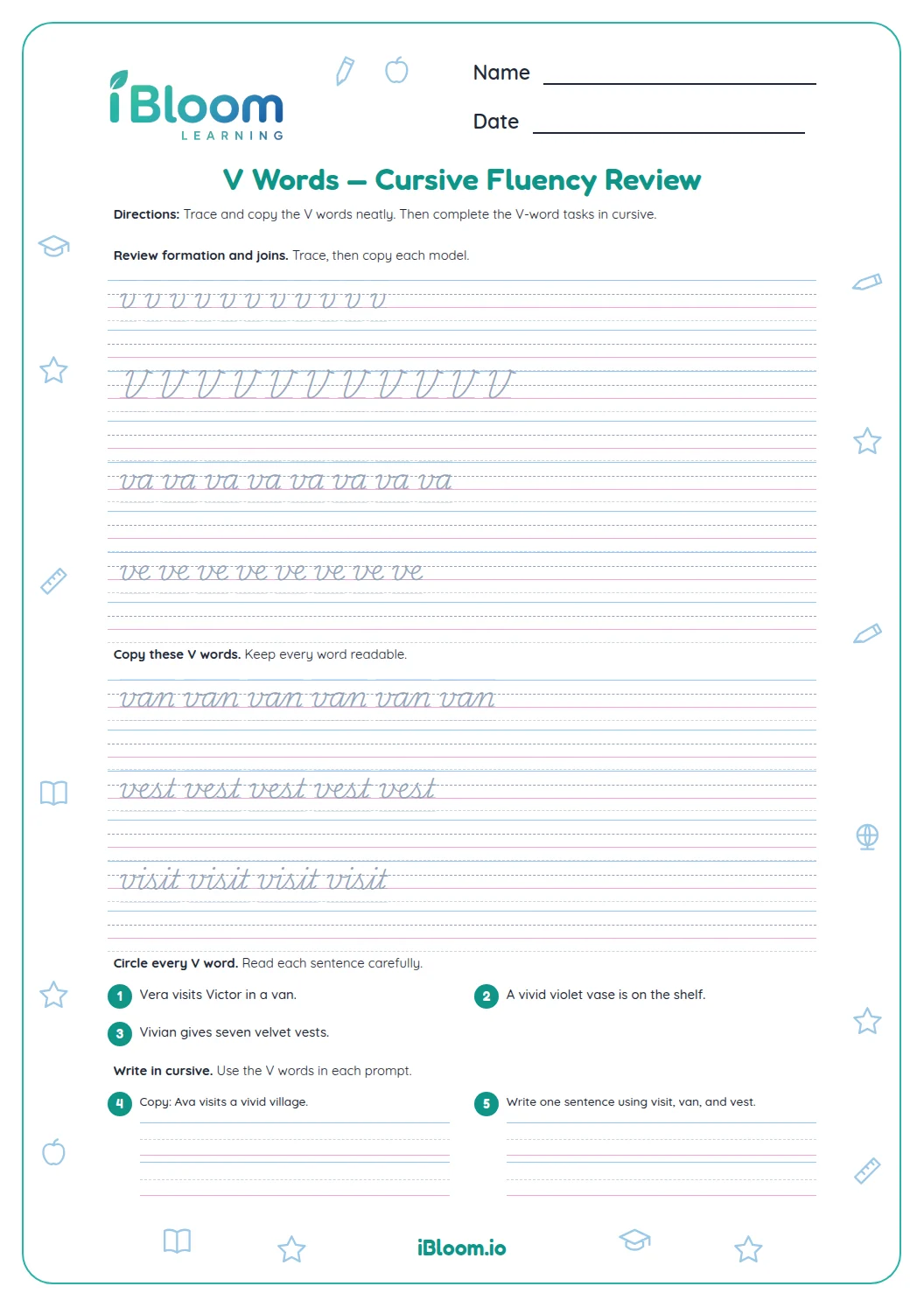
This free printable cursive worksheet gives children in Grades 2–5 seven short sentences to trace and copy. Every sentence includes a word beginning with v, such as van, vest, vine or vase. Each item has a gray cursive model and an empty handwriting row for the child’s own copy. Part A uses short sentences with lowercase v words; Part B adds longer sentences and a capital V in the name Vera. The separate model answer key repeats each sentence in cursive for comparison. Use the sheet after your child has practiced individual cursive letters and is ready to connect them in words.
Which V words will my child copy?
The seven sentences include van, vest, vine, vase, visit, Vera, violin and vote. Children copy complete sentences throughout, starting with “The van is red.” and ending with “We vote for a game.”
Part A has three shorter models. Part B has four longer models, including “Vera has a violin.” That sentence lets children compare a capital V at the start of a name with lowercase v inside a sentence.
How should we move from tracing to copying?
Read the sentence together first. Trace the gray model, following the joins between letters. Then copy the sentence on the empty row, checking one word at a time against the model above it.
- 1Read: The van is red.
- 2Trace van, watching the joins from v to a and a to n.
- 3Copy the whole sentence on the empty row.
- 4Check the capital T, three word spaces and final period.
What should we look for when checking handwriting?
Check whether each word is readable, letters sit consistently on the lines, and spaces separate words. Use the model to compare the shape of v and its connection to the next letter. In Vera, also check the capital V.
Choose one adjustment for the next sentence, such as leaving a wider space or keeping small letters near the middle guideline. Children can complete Part A in one session and return to Part B after a break.
How to use this worksheet
- 1Read the first sentence and locate its V word.
- 2Trace the gray model slowly, watching the letters connect.
- 3Copy the whole sentence on the empty row beneath it.
- 4Compare the copy with the model for letter shapes and word spaces.
- 5Check the capital and period, then choose one thing to improve on the next line.
Mistakes to watch for
The mistake
Joining the last letter of one word to the first letter of the next.
The fix
Lift the pencil between words and leave a visible space before starting again.
The mistake
Writing a lowercase v at the start of Vera.
The fix
Compare the name with its model and copy the capital V at the sentence opening.
The mistake
Copying every word but leaving off the period.
The fix
Read the sentence once more and add the same ending punctuation as the model.
What to practice next
Make more practice
Further reading
Questions parents and teachers ask
How many sentences are on this worksheet?
There are seven sentences, arranged as three in Part A and four in Part B. Each sentence has a gray row to trace and an empty row to copy. That gives children fourteen handwriting rows to work on, with a model available immediately above every independent copy.
Does every sentence include a V word?
Yes, every sentence includes at least one word beginning with v. The models use van, vest, vine, vase, visit, violin and vote, plus the name Vera. The sentence about Vera includes both capital V and lowercase v so children can compare those forms in connected writing.
Should my child copy the whole sentence or only the V word?
Copy the whole sentence, including its first capital and final period. The V word is the handwriting focus, but the other words provide practice with spacing and connected writing. Reading the complete model aloud first helps your child keep the word order while moving to the empty row.
Can we split the practice into shorter sessions?
Yes, use Part A for one session and Part B for another. Part A contains three sentences and Part B has four, each with tracing and copying rows. Before starting the second part, compare one earlier copy with the model and choose a specific goal, such as clearer spaces between words.
What is the answer key for a copying activity?
The key is a set of model copies of the same seven sentences. Use it to compare letter forms, joins, spacing, capitals and periods. A child’s handwriting can vary slightly from the printed model while still being readable; discuss one useful adjustment instead of marking every small difference.