Free printable practice
Addition Practice Activities
Printable addition flashcards for helping children practise basic sums, build fact fluency, and use quick mental math strategies.
Free printable worksheet PDFs
Preview every available page, then download the free worksheet PDF for home, homeschool, tutoring, or classroom practice.
Preview the exact activity before downloading it.
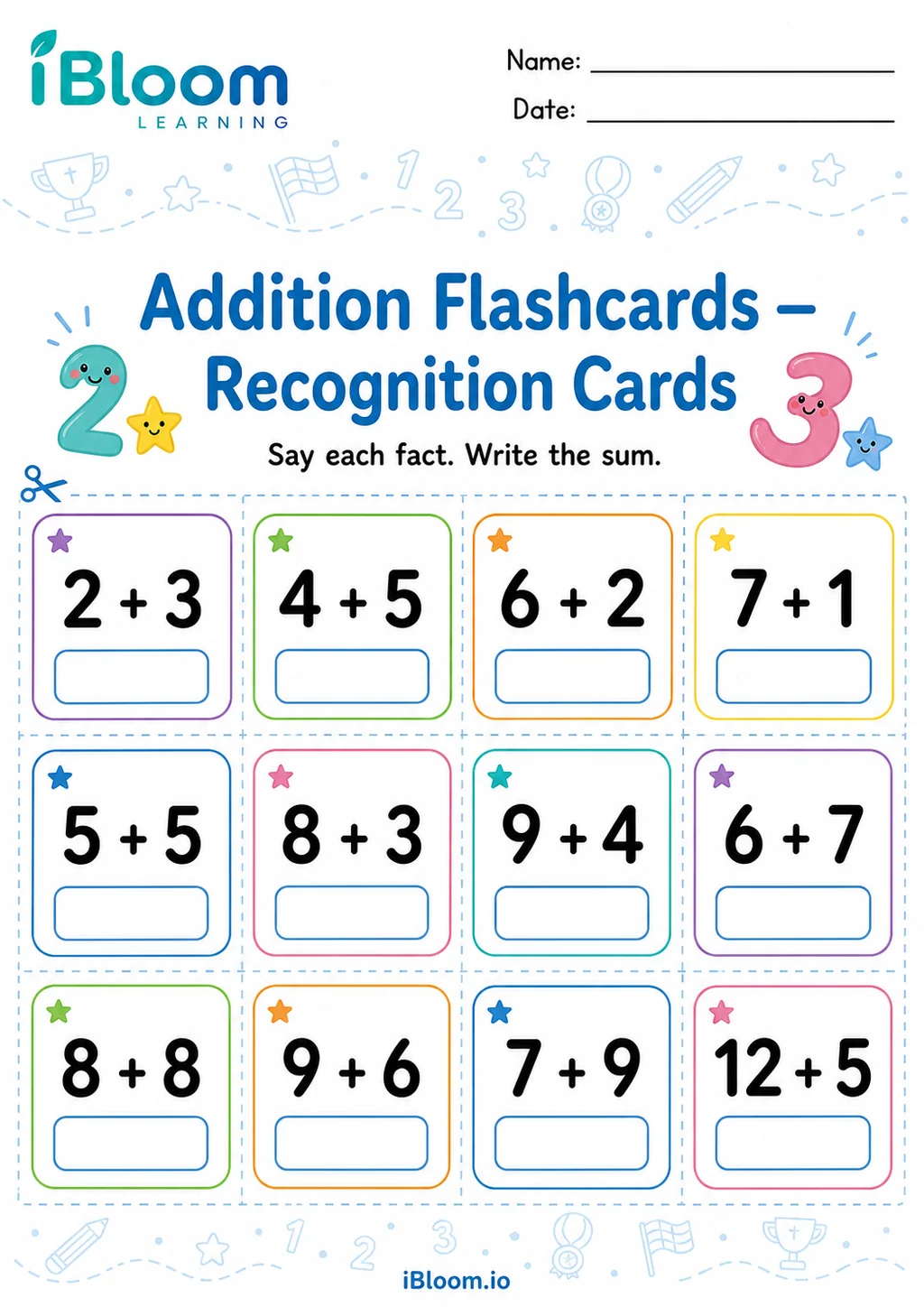 Addition — Recognition CardsPrintable addition flashcards for helping children practise basic sums, build fact fluency, and use quick mental math strategies. This recognition cards worksheet provides a distinct, age-appropriate way to practise the same lesson.Kindergarten, Grade 1, Grade 2, Grade 3Free PDF preview
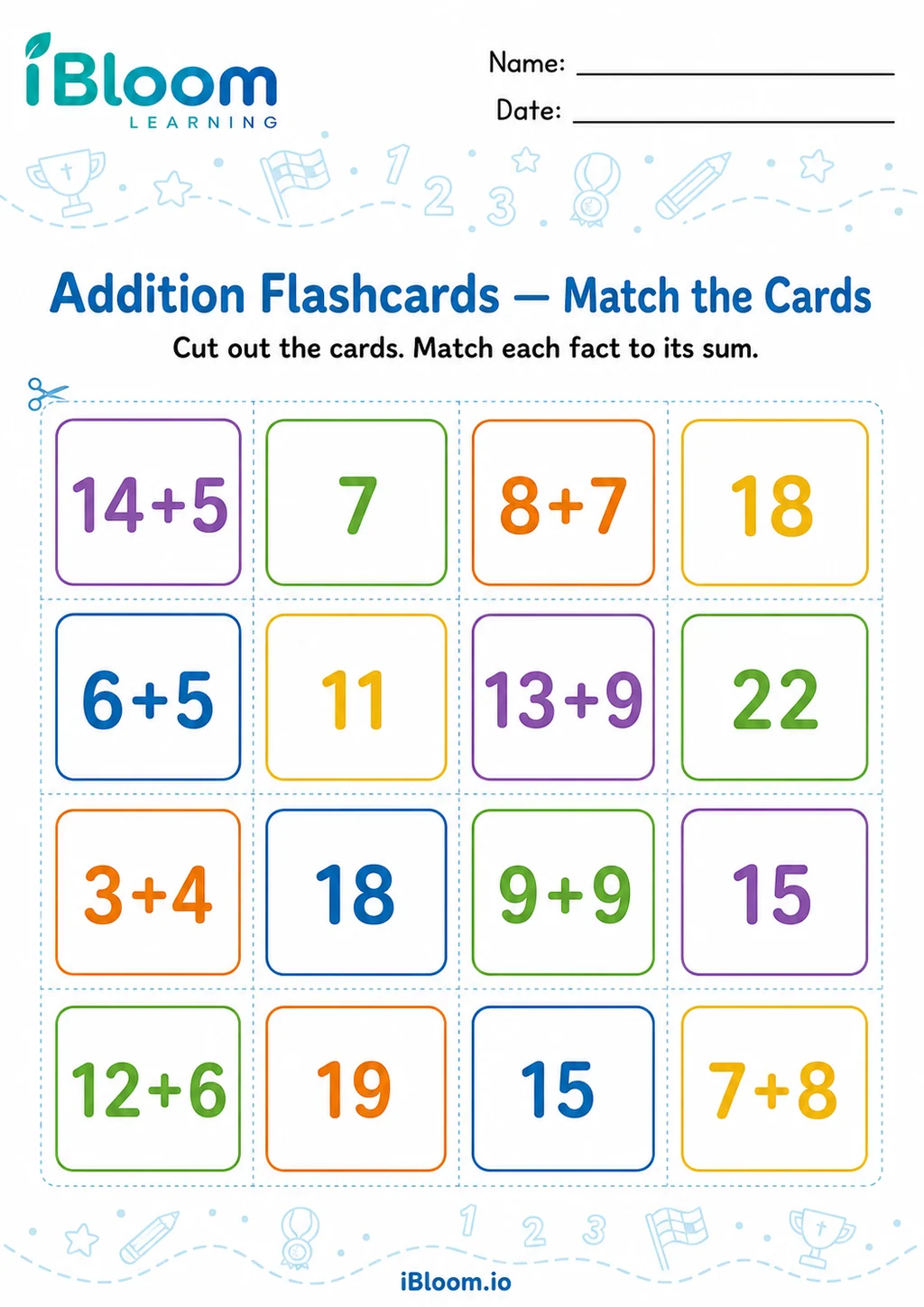 Addition — Match the CardsPrintable addition flashcards for helping children practise basic sums, build fact fluency, and use quick mental math strategies. This match the cards worksheet provides a distinct, age-appropriate way to practise the same lesson.Kindergarten, Grade 1, Grade 2, Grade 3Free PDF preview
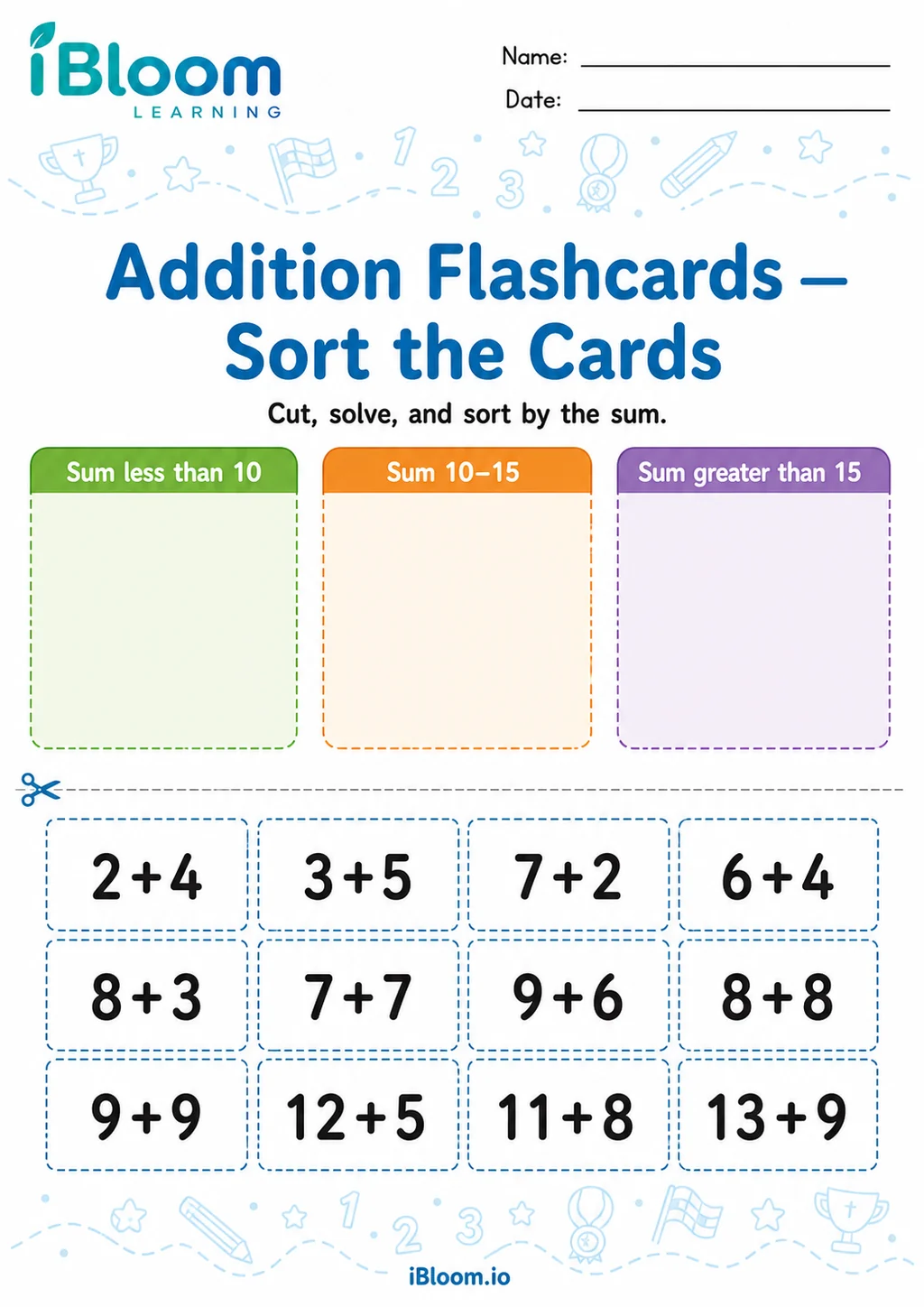 Addition — Sort the CardsPrintable addition flashcards for helping children practise basic sums, build fact fluency, and use quick mental math strategies. This sort the cards worksheet provides a distinct, age-appropriate way to practise the same lesson.Kindergarten, Grade 1, Grade 2, Grade 3Free PDF preview
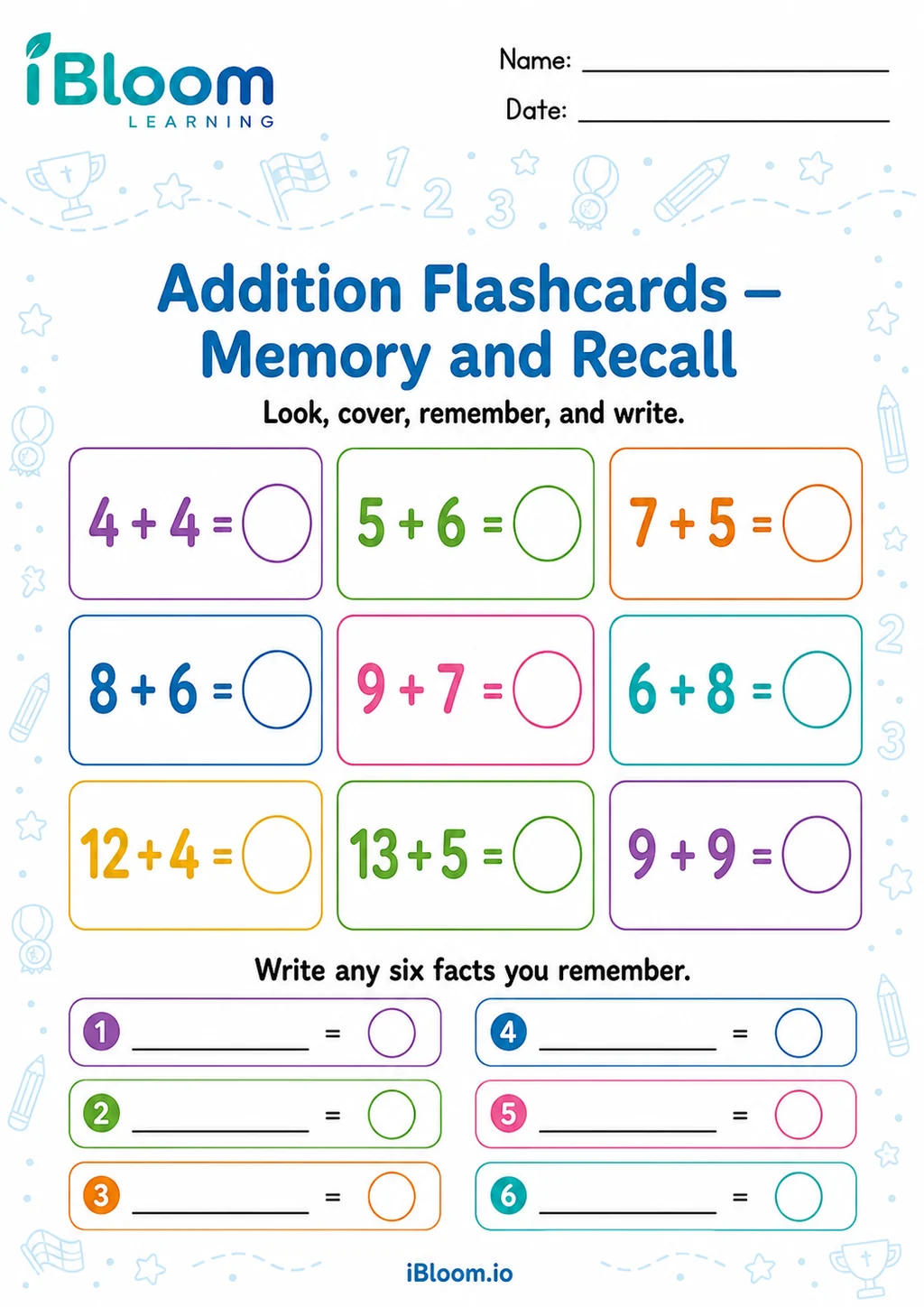 Addition — Memory and RecallPrintable addition flashcards for helping children practise basic sums, build fact fluency, and use quick mental math strategies. This memory and recall worksheet provides a distinct, age-appropriate way to practise the same lesson.Kindergarten, Grade 1, Grade 2, Grade 3Free PDF preview
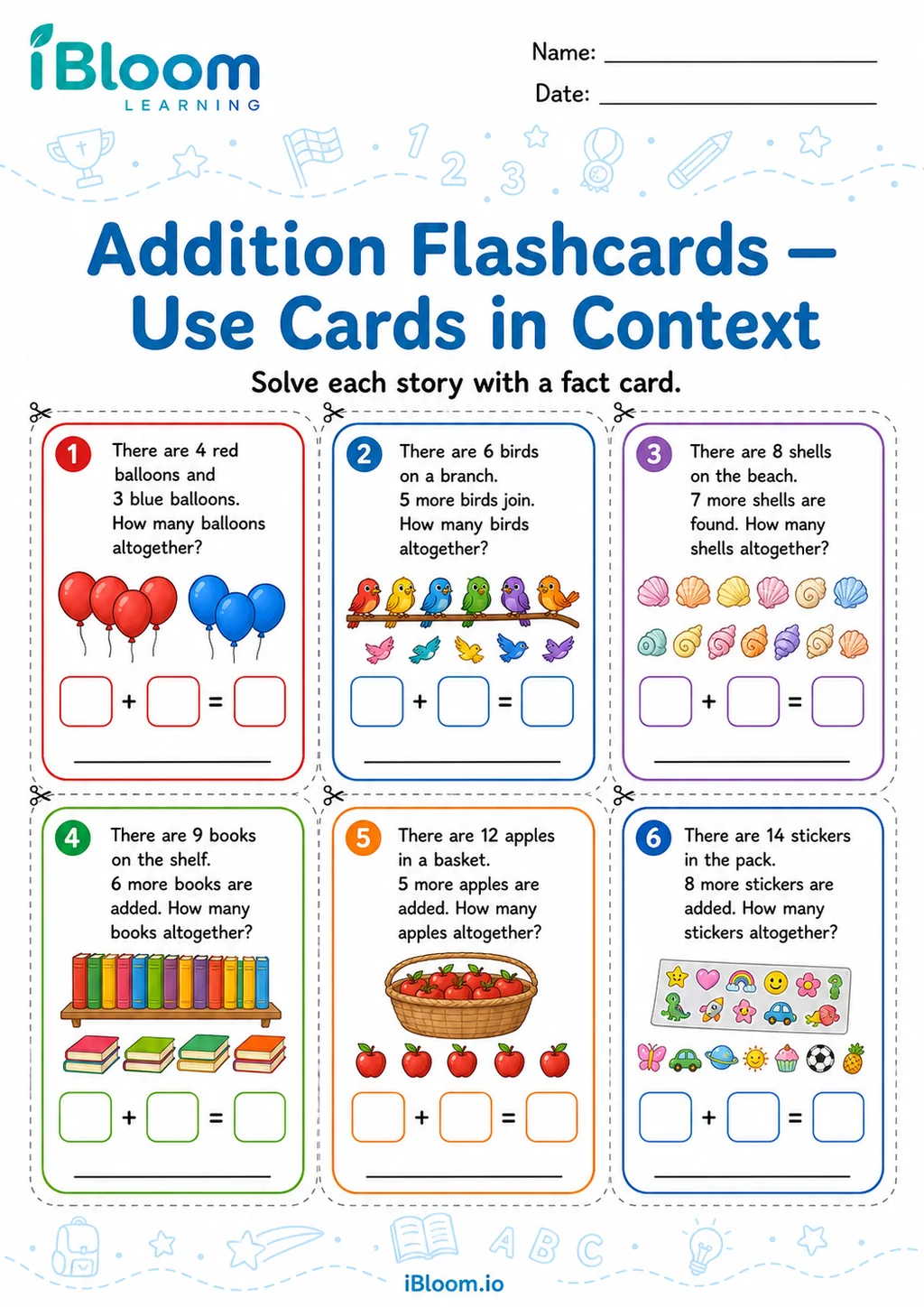 Addition — Use Cards in ContextPrintable addition flashcards for helping children practise basic sums, build fact fluency, and use quick mental math strategies. This use cards in context worksheet provides a distinct, age-appropriate way to practise the same lesson.Kindergarten, Grade 1, Grade 2, Grade 3Free PDF preview
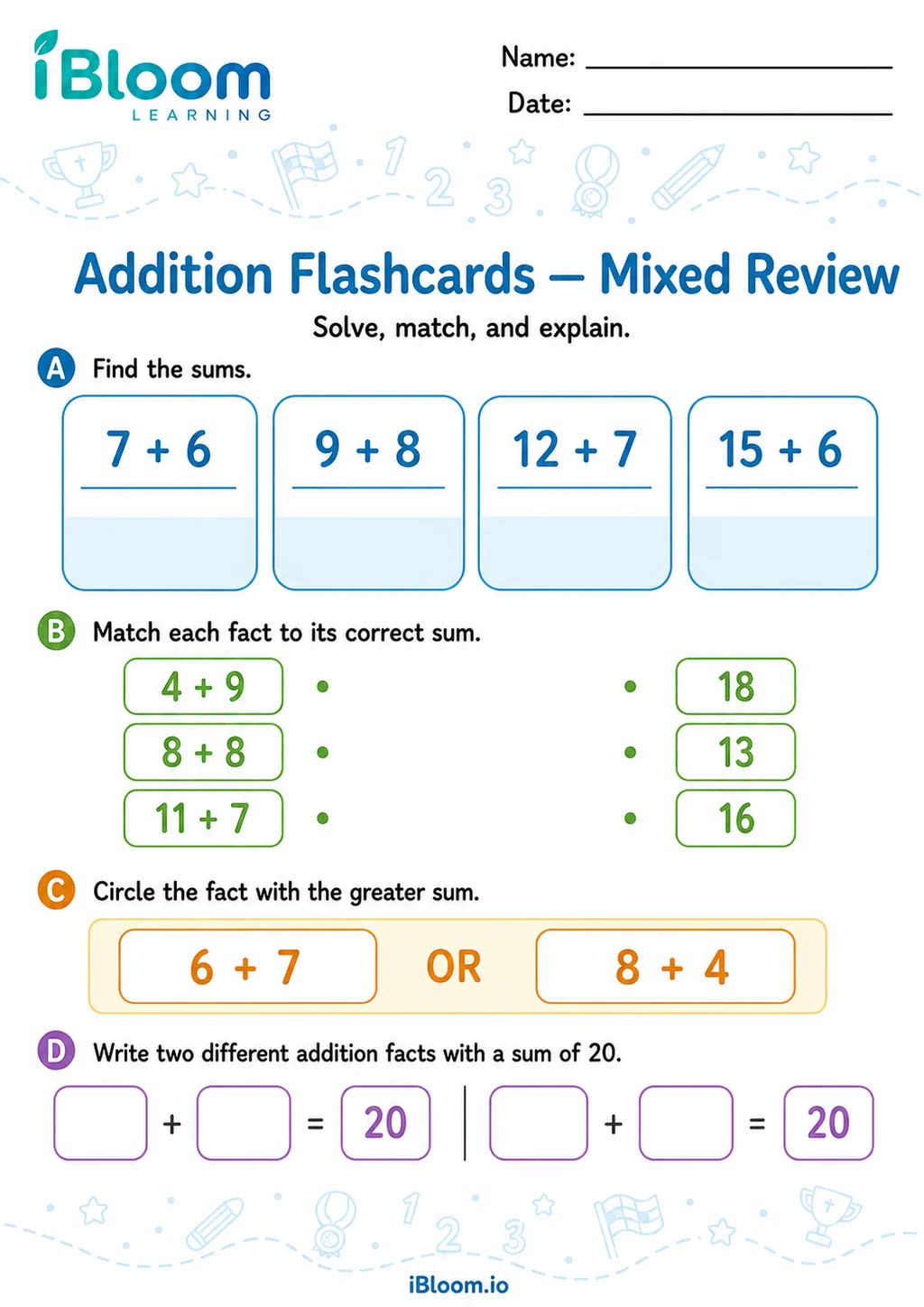 Addition — Mixed Flashcard ReviewPrintable addition flashcards for helping children practise basic sums, build fact fluency, and use quick mental math strategies. This mixed flashcard review worksheet provides a distinct, age-appropriate way to practise the same lesson.Kindergarten, Grade 1, Grade 2, Grade 3Free PDF preview
Practice that builds confidence
Addition facts children practise
These printable addition flashcards help children practise joining numbers, recognizing sums, and answering addition facts with growing confidence. They are suited to home practice, math centers, warm-ups, and quick review when a child is learning basic addition strategies.
Each activity focuses on a clear equation format so children can read the addends, think about the plus sign, and say or write the sum. Use the cards for oral practice, matching games, fact sorting, or short independent drills without turning addition into a long worksheet.
These flashcards sit in the Flashcards > Math > Addition collection and focus on the core idea that addition means putting quantities together. Children see an equation, identify the addends, and find the sum. Repeated exposure helps them move from counting every object to recognizing familiar facts and using mental math.

How skills progress
Start with facts a child can model easily, such as 3 + 2, then mix in facts that require more thinking. Children can first answer aloud, then explain how they know, and later sort cards into groups: facts they know instantly, facts they can solve with a strategy, and facts they need to practise again. This simple progression builds accuracy before speed.
A parent routine that works
Choose a small stack of cards. Ask your child to read each equation, solve it, and place it in a “know it” or “try again” pile. For a missed fact, avoid giving the answer immediately. Have your child show the numbers with fingers, draw quick dots, count on from the larger addend, or find a related fact. Revisit only the try-again pile, then end with a few successful cards.

Classroom uses for teachers
Teachers can use the cards for math centers, partner quizzes, entrance routines, small-group intervention, or exit checks. They also work well for movement games: place sums around the room, call out an equation, and have students find the matching answer. For independent practice, students can record the equation and sum on a mini whiteboard or notebook.

Common errors to watch for
Some children reverse digits in the answer, count both addends from 1 instead of counting on, or confuse the plus sign with “write any bigger number.” Others answer too quickly and miss combinations with the same sum. Encourage children to say the full sentence, such as “4 plus 3 equals 7,” so the equation structure stays clear.
Free printable PDF download
Use this addition flashcards worksheet page to preview the activity, print it, or download it as a PDF for quick practice. It works well for homework, homeschool lessons, tutoring, morning work, revision, and classroom centers.
Answers and answer key support
After the child completes the worksheet independently, parents and teachers can use the answer support or answer key information to check the work, review mistakes, and choose the next practice step.
Why iBloom worksheets help
The iBloom addition flashcards are designed for flexible, hands-on practice rather than one long page of sums. A child-friendly strategy is: “Start with the bigger number, count on the smaller number, then check if the answer makes sense.” This keeps practice active, focused, and easy to repeat.
Helpful answers
Frequently asked questions
How should children use these addition flashcards?
Children can read each equation, solve it aloud, and sort the cards into facts they know and facts they need to practise. Missed cards can be revisited with counters, fingers, dots, or a counting-on strategy.
Are these cards only for memorizing addition facts?
No. They also help children understand addends, the plus sign, and the idea of combining quantities. Memorization becomes easier after children use strategies and explain how they found the sum.
What is a good strategy for a child who counts every number from 1?
Teach the child to start with the larger addend and count on the smaller addend. For example, for 5 + 2, start at 5 and count 6, 7.
Can teachers use these in math centers?
Yes. The cards work well for partner quizzes, matching games, small-group practice, exit checks, and sorting activities based on known facts and challenging facts.
What should I do when my child gives a wrong sum?
Ask the child to show the problem with fingers, dots, or objects, then reread the equation. Encourage checking rather than guessing so the child connects the answer to the addends.
Is this addition flashcards worksheet free?
Yes. You can preview it for free and use the printable worksheet for home or classroom practice.
Can I download this addition flashcards worksheet as a PDF?
Yes. Use the worksheet download option to save a printable PDF, or print the worksheet directly from the page.
Does this addition flashcards worksheet include answers or an answer key?
When the activity has fixed answers, iBloom includes answer support so parents and teachers can check the completed worksheet.