Free printable practice
Generic Which Is Better Practice Activities
Class 3 children practise choosing a side, giving reasons, and writing clear opinion paragraphs with printable “which is better” prompts.
Free printable worksheet PDFs
Preview every available page, then download the free worksheet PDF for home, homeschool, tutoring, or classroom practice.
Preview the exact activity before downloading it.
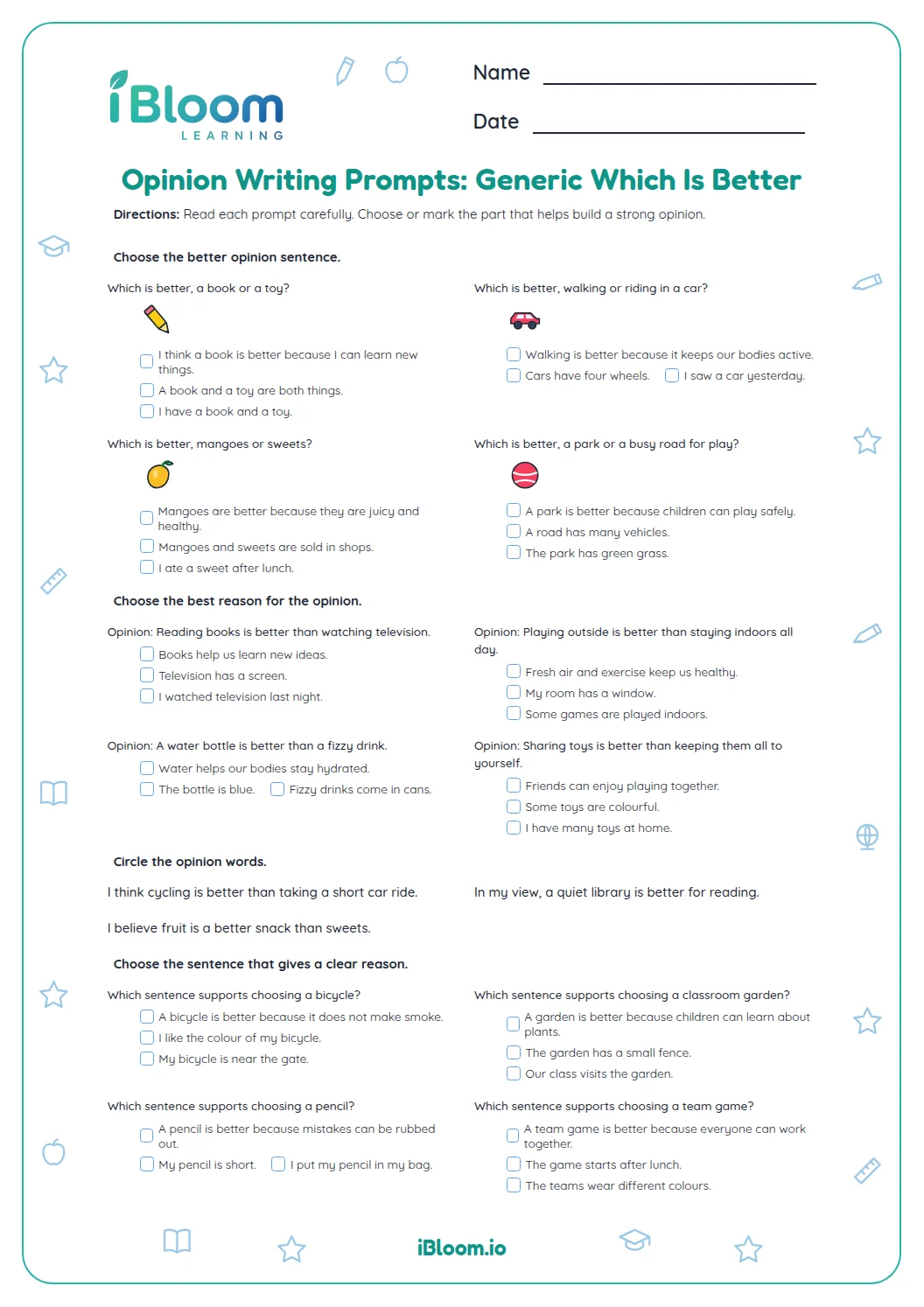 Opinion Writing Prompts: Generic Which Is Better — Recognise the SkillRecognise the Skill for opinion writing prompts: generic which is better in Class 3. Recognise the better choice, opinion sentence, supporting reasons, and clear opinion paragraph parts.Class 3Free PDF preview
 Opinion Writing Prompts: Generic Which Is Better — Guided CompletionGuided Completion for opinion writing prompts: generic which is better in Class 3. Choose a side, complete opinion sentences with reasons, then finish two guided opinion paragraphs.Class 3Free PDF preview
 Opinion Writing Prompts: Generic Which Is Better — Sentence PracticeSentence Practice for opinion writing prompts: generic which is better in Class 3. Choose the stronger opinion sentence, complete opinion sentence frames, and write clear reasons for which option is better.Class 3Free PDF preview
 Opinion Writing Prompts: Generic Which Is Better — Write and ApplyWrite and Apply for opinion writing prompts: generic which is better in Class 3. Choose a side, select strong reasons, and write clear opinion paragraphs for generic “which is better” prompts.Class 3Free PDF preview
 Opinion Writing Prompts: Generic Which Is Better — Edit and CorrectEdit and Correct for opinion writing prompts: generic which is better in Class 3. Choose the correctly edited opinion sentences, then rewrite flawed opinion sentences with capitals, punctuation, spelling, and grammar corrected.Class 3Free PDF preview
 Opinion Writing Prompts: Generic Which Is Better — Mixed Review and ChallengeMixed Review and Challenge for opinion writing prompts: generic which is better in Class 3. Choose a clear opinion, identify strong reasons, use linking words, and write a short opinion paragraph.Class 3Free PDF preview
Practice that builds confidence
What this skill builds
These Class 3 opinion writing worksheets help children answer “Which is better?” questions by choosing one option, explaining their view, and supporting it with sensible reasons. The focus is not on a right answer, but on saying what they think clearly and politely.
The printable activities guide children to compare two choices, organise ideas, use opinion words, and write a short paragraph with a beginning, reasons, examples, and a closing sentence. They are useful for grammar and writing practice at home or in the classroom.
“Which is better?” prompts are a simple way to introduce opinion writing because children already make choices every day. In these activities, a child learns to move from “I like this” to “I think this is better because…”. That shift builds reasoning, sentence control, and confidence in written expression.

From choice to paragraph
The practice can progress in clear steps: read the prompt, choose one side, list two or three reasons, add an example, and finish with a concluding line. Useful vocabulary includes opinion, reason, example, compare, better, prefer, because, also, and finally. Children may write about general choices rather than topic-heavy facts, so the emphasis stays on structure and clarity.
Parent routine for home practice
Ask your child to read the prompt aloud and circle the option they prefer. Then say, “Give me one strong reason and one small example.” Let the child speak the answer first before writing. After the paragraph is written, reread it together and check: Did it state an opinion? Does each reason match the opinion? Is there a closing sentence such as “That is why I think this is better”?

Classroom uses for teachers
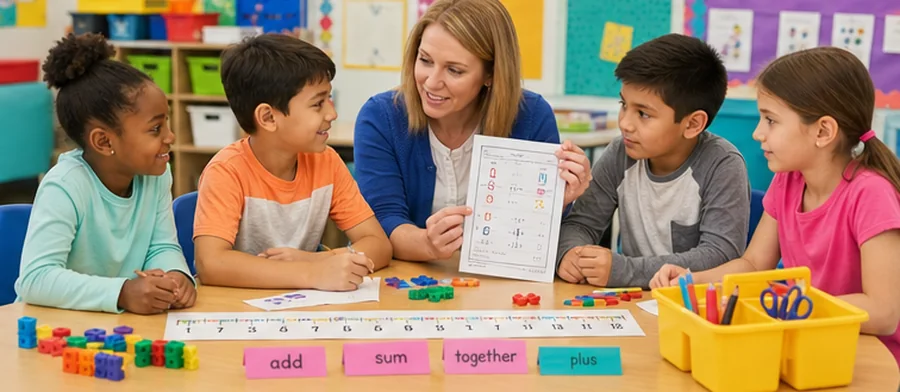
Teachers can use these worksheets for writing warm-ups, independent practice, peer discussion, or literacy centres. They also work well before a longer opinion writing task, because children can practise the core pattern in a short, focused format. Pair work is especially helpful: one child explains a choice, while the partner asks, “Why?” or “Can you give an example?”
Common errors to watch for
Some children choose both options, give reasons that do not support the opinion, or repeat the same idea in different words. Others write only a sentence instead of a developed response. Encourage them to use linking words and to make each reason different. Also remind them that respectful opinion writing does not need to say the other choice is “bad”.
Free printable PDF download
Use this which is better opinion writing worksheets class 3 page to preview the activity, print it, or download it as a PDF for quick practice. It works well for homework, homeschool lessons, tutoring, morning work, revision, and classroom centers.
Answers and answer key support
After the child completes the worksheet independently, parents and teachers can use the answer support or answer key information to check the work, review mistakes, and choose the next practice step.
Why iBloom worksheets help
iBloom worksheets keep the task manageable for Class 3 learners by focusing on one opinion skill at a time: deciding, explaining, and organising. A child-friendly strategy is: Pick one, say why, add proof, close it. This gives young writers a dependable path from a quick preference to a complete opinion paragraph.
Helpful answers
Frequently asked questions
What does a “Which is better?” opinion prompt teach?
It teaches children to choose between two options, state an opinion, and support that opinion with reasons and examples instead of writing only what they like.
How much should a Class 3 child write for these prompts?
A short paragraph is usually enough: one sentence for the opinion, two or three supporting sentences, and one closing sentence.
Can a child choose either option in the worksheet?
Yes. The goal is not to pick the teacher’s or parent’s preferred answer. The child should choose one side and explain it clearly with matching reasons.
What sentence starters can help with these activities?
Helpful starters include “I think…”, “In my opinion…”, “One reason is…”, “For example…”, “Another reason is…”, and “That is why…”.
How can I help if my child gives very short answers?
Ask follow-up questions such as “Why do you think so?”, “Can you give an example?”, and “What is another reason?” Then have the child add those spoken ideas to the writing.
Is this which is better opinion writing worksheets class 3 free?
Yes. You can preview it for free and use the printable worksheet for home or classroom practice.
Can I download this which is better opinion writing worksheets class 3 as a PDF?
Yes. Use the worksheet download option to save a printable PDF, or print the worksheet directly from the page.
Does this which is better opinion writing worksheets class 3 include answers or an answer key?
When the activity has fixed answers, iBloom includes answer support so parents and teachers can check the completed worksheet.