







About this worksheet
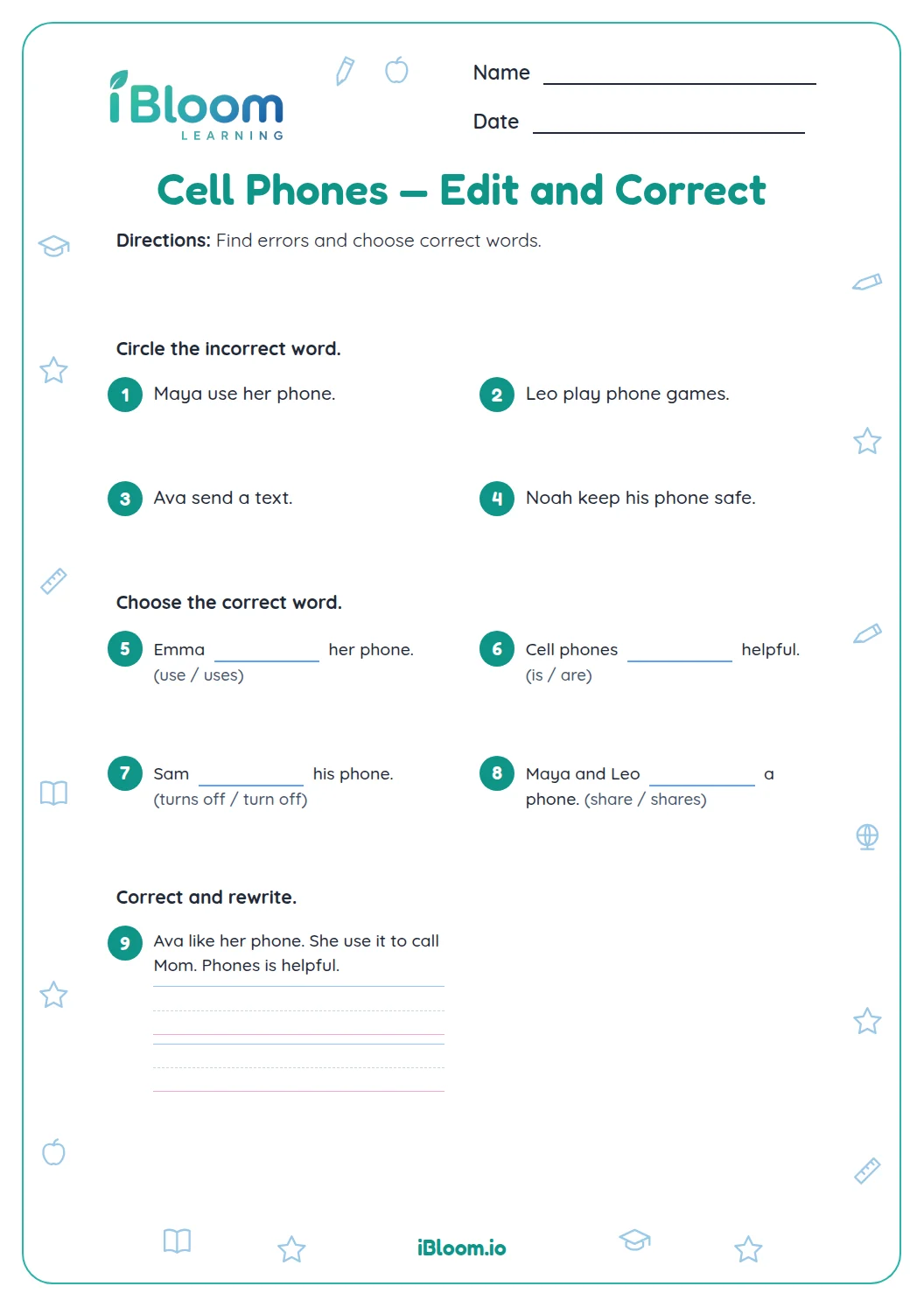
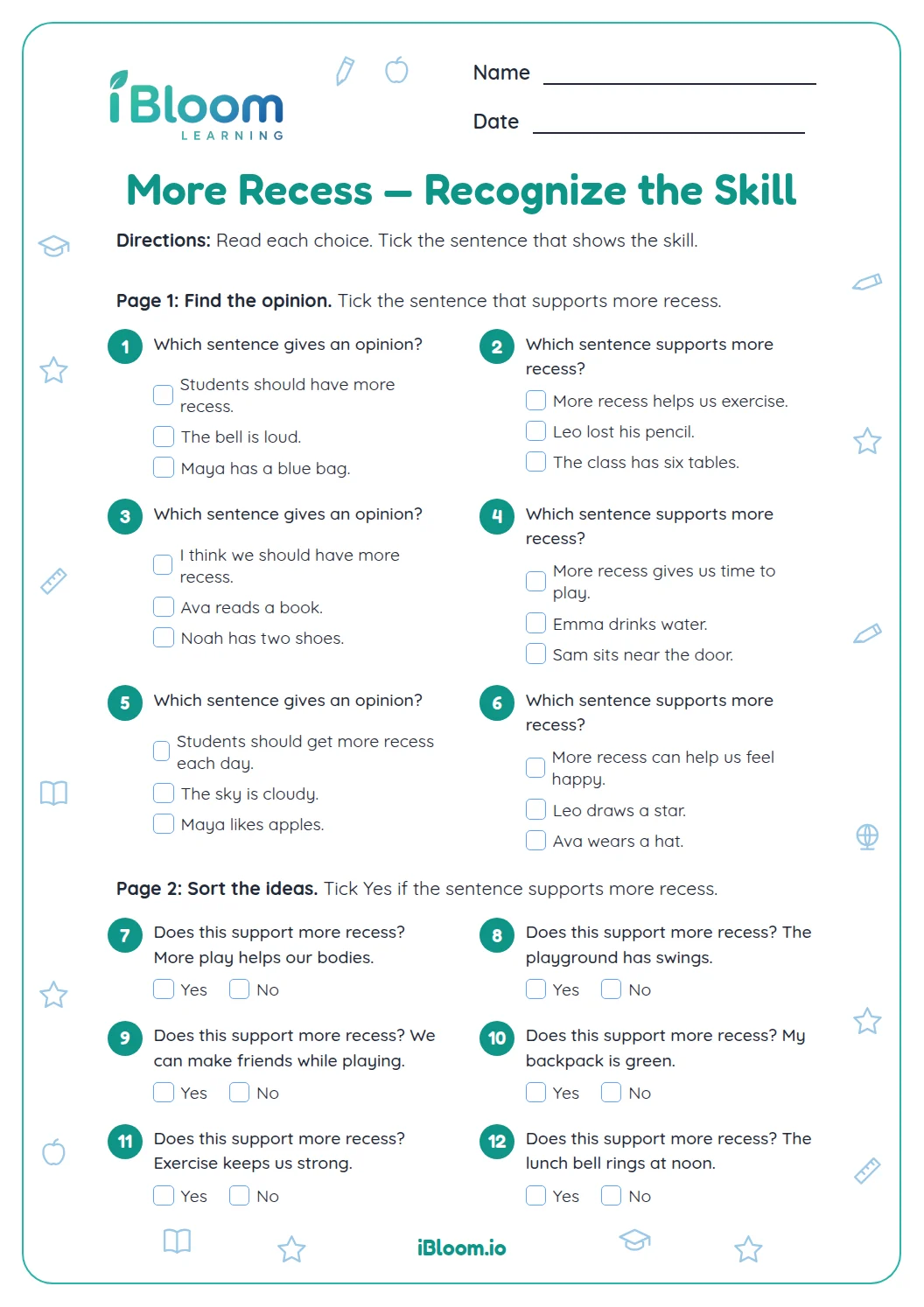
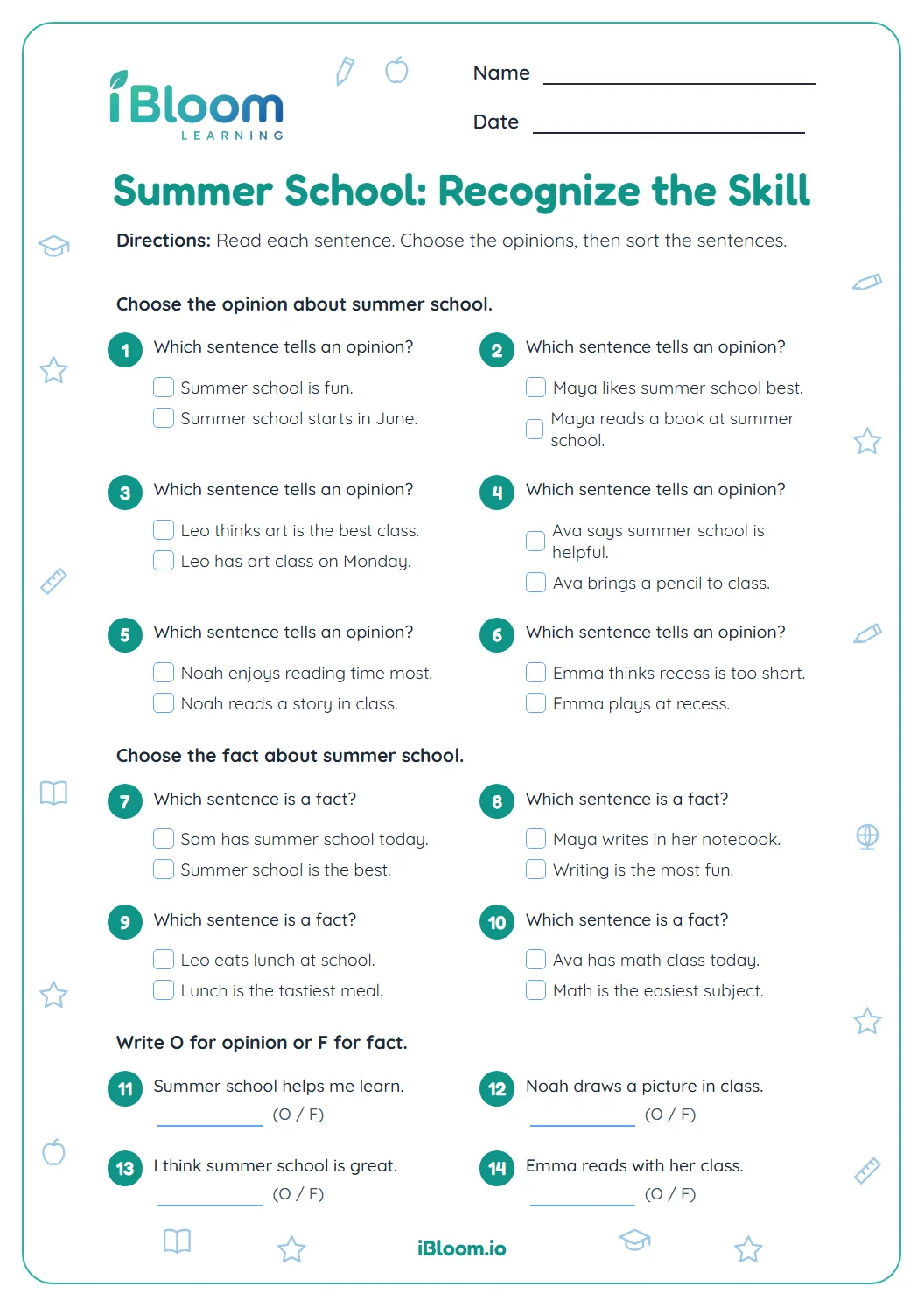
This Grade 1 printable uses cell-phone statements to help students tell an opinion from a fact. The first ten questions ask students to label each statement; five more sentence completions revisit the same topic. The answer key gives a quick way to check the labels and choices together.
How can a student tell an opinion from a fact?
An opinion tells what a person thinks or believes. A fact is a statement that can be checked. In Part A, students mark ten statements about phones with O or F. For example, “A phone can show a map” is a fact because it can be checked.
What comes after the sorting practice?
Part B has five multiple-choice sentence completions about phone rules and uses. Read the whole sentence with each choice; the best answer should make sense and fit the words already there.
How can families review the answers?
Use the key after the student finishes a group. For a disputed label, ask what evidence could confirm the statement or whether it expresses a viewpoint.
- 1A phone can help a child call ___.
- 2Answer: a parent
How to use this worksheet
- 1Read each statement aloud and ask whether it can be checked.
- 2Label the ten statements O or F.
- 3Complete the five sentence choices in Part B.
- 4Check answers with the key after finishing each part.
- 5Discuss any statement that was hard to classify.
Common mix-ups and quick fixes
The mistake
Calling a statement a fact just because it sounds believable.
The fix
Ask what source or observation could check whether it is true.
The mistake
Treating every sentence with “I think” as a fact.
The fix
Notice that the phrase introduces a person’s viewpoint, so it signals opinion.
The mistake
Confusing an opinion about phone use with a claim about what a phone can do.
The fix
Separate the viewpoint from a feature that can be checked.
What to practice next
Make more practice
Questions parents and teachers ask
What is the difference between an opinion and a fact?
An opinion tells what someone thinks or believes; a fact is something that can be checked. In Part A, students label ten statements about phones. For example, “I think cell phones are helpful” is an opinion, while whether a phone can send messages can be checked.
What do O and F mean on the worksheet?
O stands for opinion, and F stands for fact. Students write one letter beside each of the ten statements in Part A. They can ask whether the statement expresses a viewpoint or describes something that could be verified.
Are all statements about phones facts?
Part B has five multiple-choice sentence completions about phone use. Students select a phrase that makes the sentence complete and sensible, then check the five choices against the answer key after finishing the part. Ask what observation or source could confirm it; a personal preference remains an opinion even when many people agree.
What does Part B ask students to do?
Part B has five multiple-choice sentence completions about phone use. Students select a phrase that makes the sentence complete and sensible, then check the five choices against the answer key after finishing the part. Students select a phrase that makes the sentence complete and sensible, then check the five choices against the answer key after finishing the part.
How can I help if my child is unsure?
Ask the child to explain what makes a statement an opinion or a fact. For a fact, discuss how it could be checked. For an opinion, listen for a belief or judgment. The key can confirm the intended label after the child has tried.