





About this worksheet
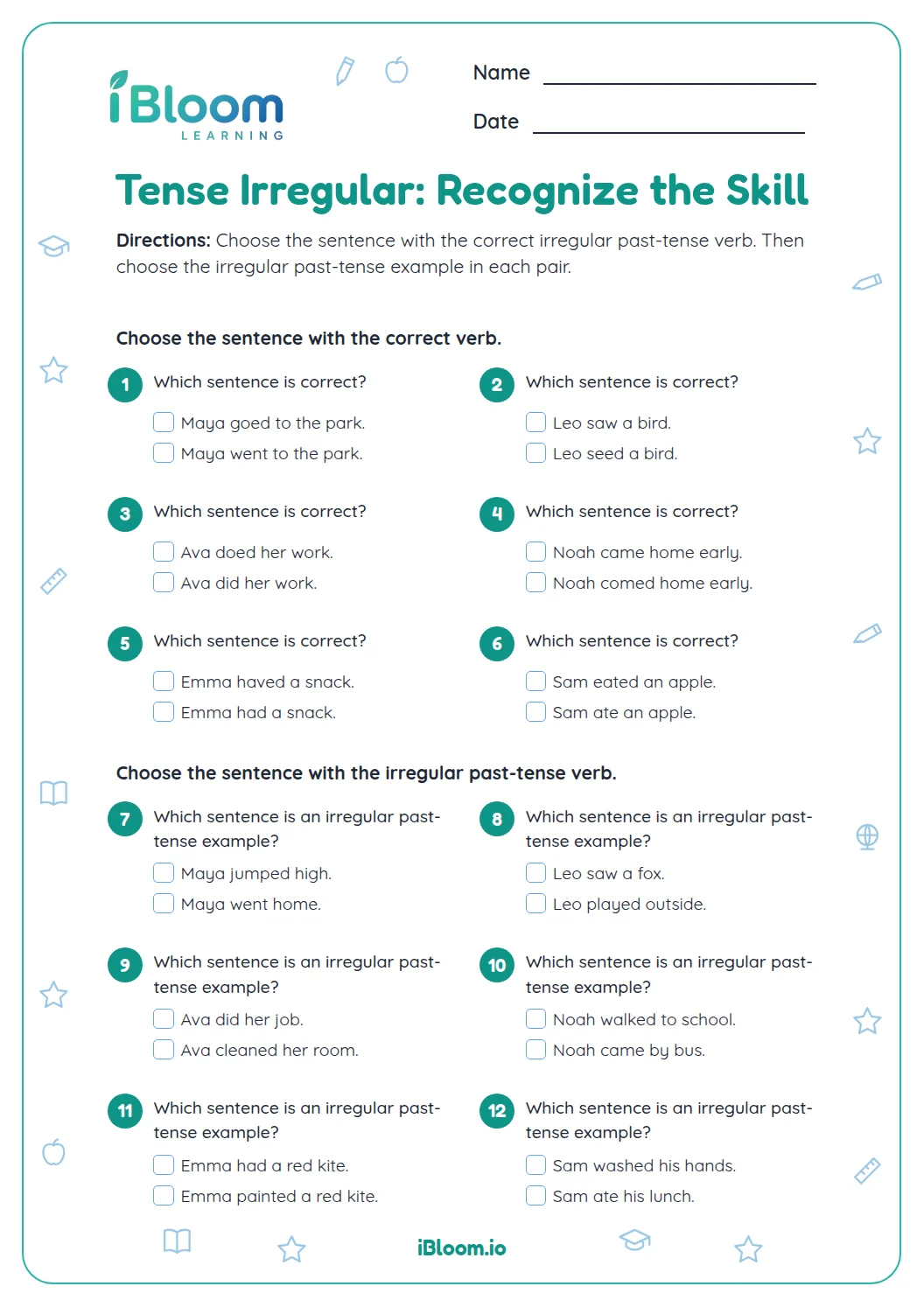
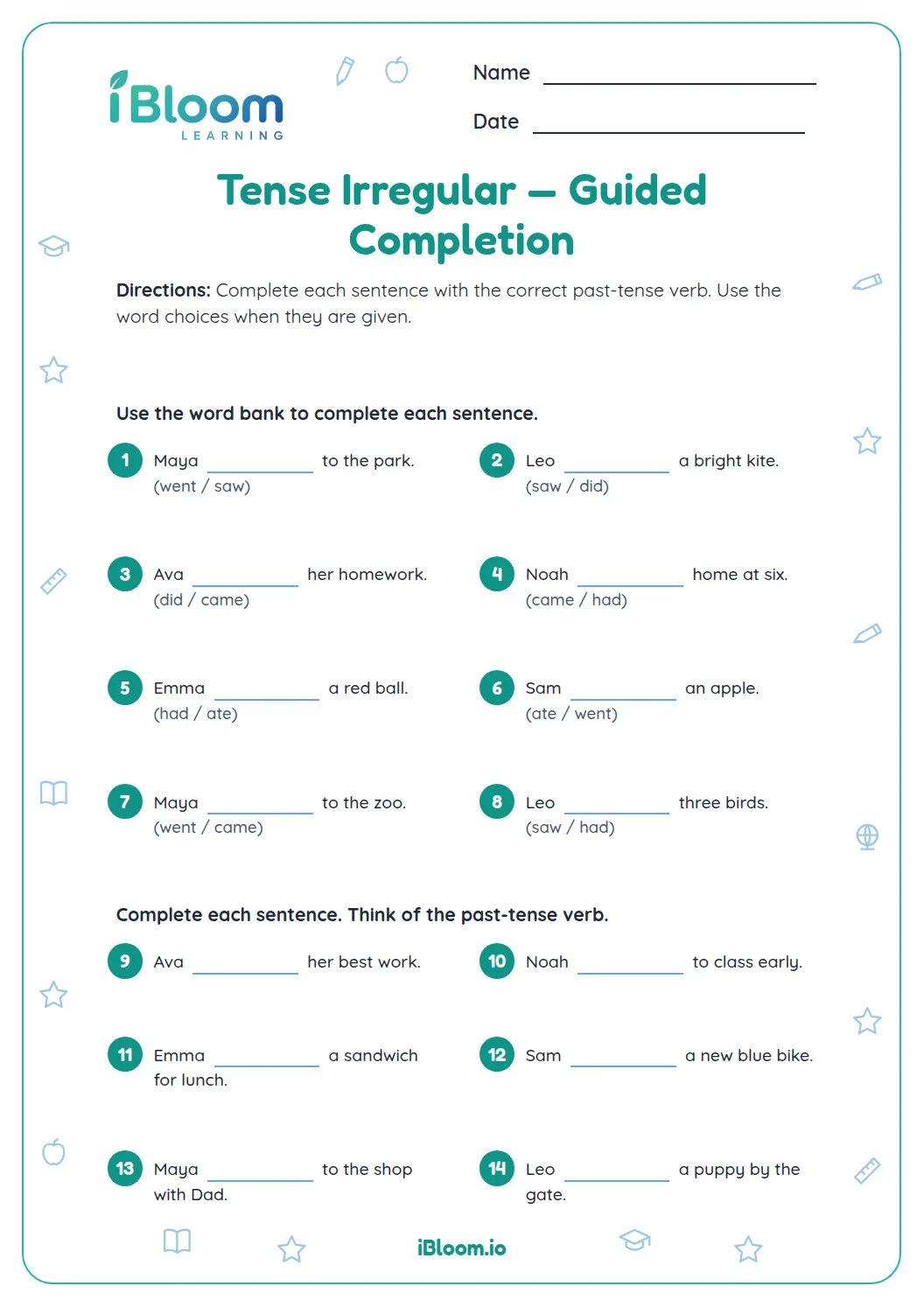
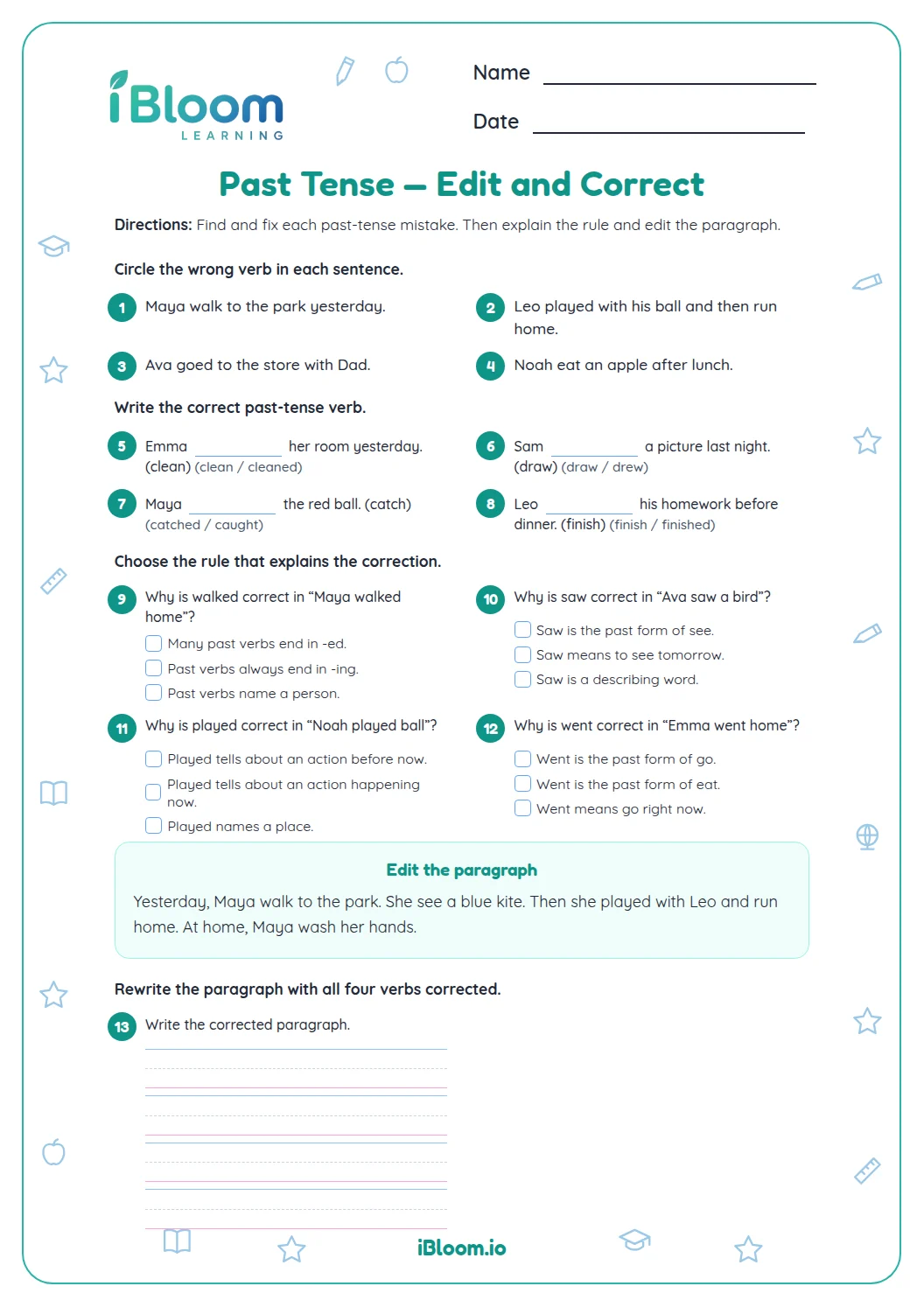
This Grade 1 worksheet practices irregular past-tense verbs through sentence clues and original writing. Students complete 12 sentences with forms such as saw, went, and ate, then write four sentences using supplied verbs. The answer key shows the completion answers and sample responses; other sensible sentences can also be correct.
Aligned to L.1.1.e
How do you know an action happened in the past?
Time clues such as yesterday, last night, and on Monday tell when the action happened. In question 1, “Yesterday” means the verb see must change to saw.
- 1Yesterday, I ___ a bright bird. (see)
- 2Yesterday, I saw a bright bird.
Why do some verbs change their spelling?
Many verbs do not make the past by adding -ed. See changes to saw, go changes to went, and eat changes to ate. Read the whole sentence aloud to check that the action already happened.
How can students use each new verb?
After filling in a blank, say the complete sentence and point out the time clue. A child can then make a new sentence with the same past-tense verb.
How to use this worksheet
- 1Read the whole sentence and find its time clue.
- 2Say the verb in parentheses aloud.
- 3Think of the form used for an action that already happened.
- 4Write the changed verb in the blank.
- 5Read the finished sentence aloud and check it with the key.
Common mistakes and quick fixes
The mistake
Writing “goed” for go.
The fix
Go changes to went; it does not take -ed.
The mistake
Adding -ed to every verb, such as “eated.”
The fix
Learn the changed form with the sentence: “Yesterday, I ate.”
The mistake
Using the present form after “yesterday.”
The fix
Use the time clue to check that the verb tells about an action already finished.
Common Core alignment
This sheet uses common irregular verbs to practice past-time meaning.
Use irregular verbs to show that an action happened in the past.
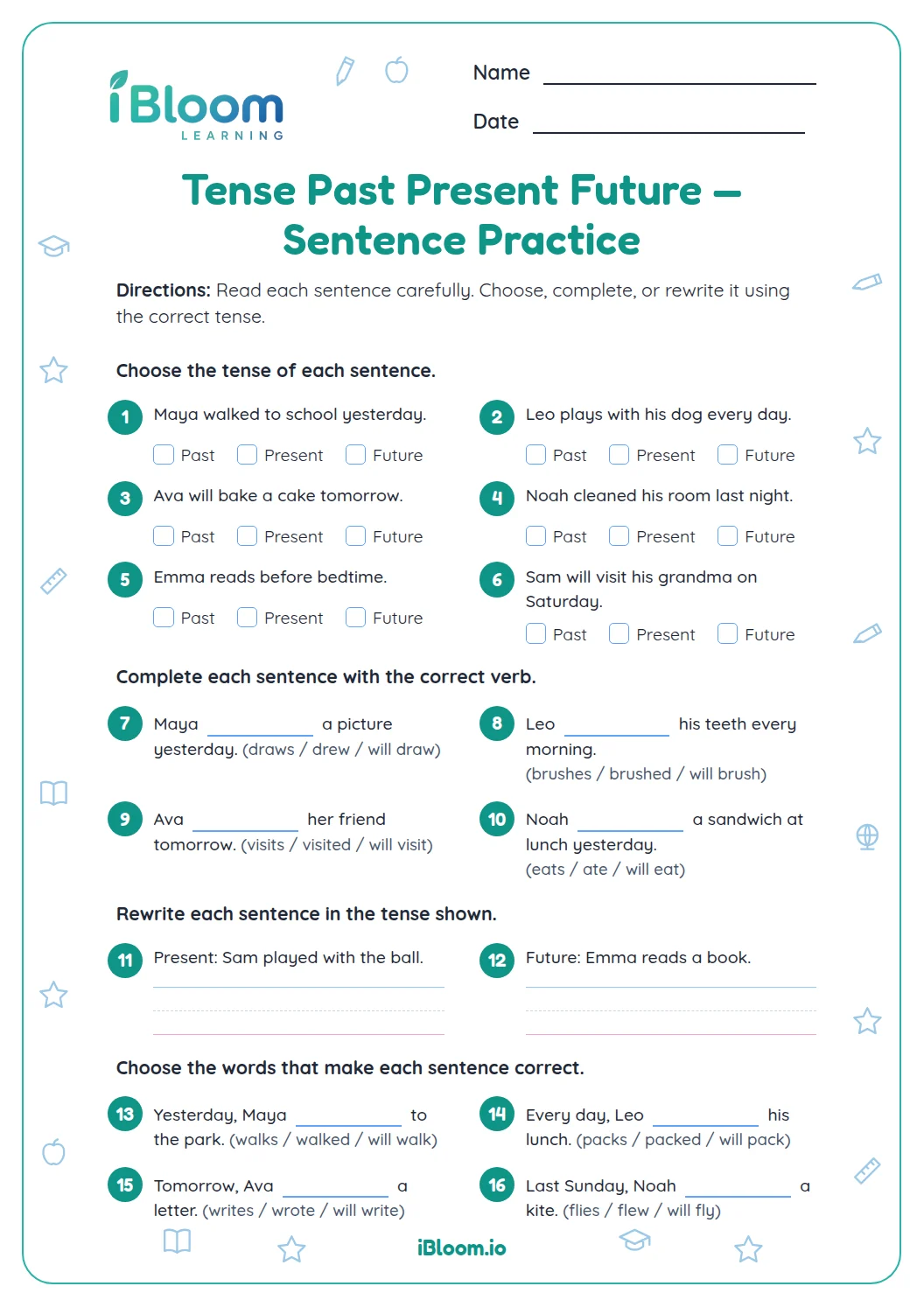
On this sheet: All 16 prompts cue a past action and ask students to supply its irregular past form.
Show the official wordingHide the official wording
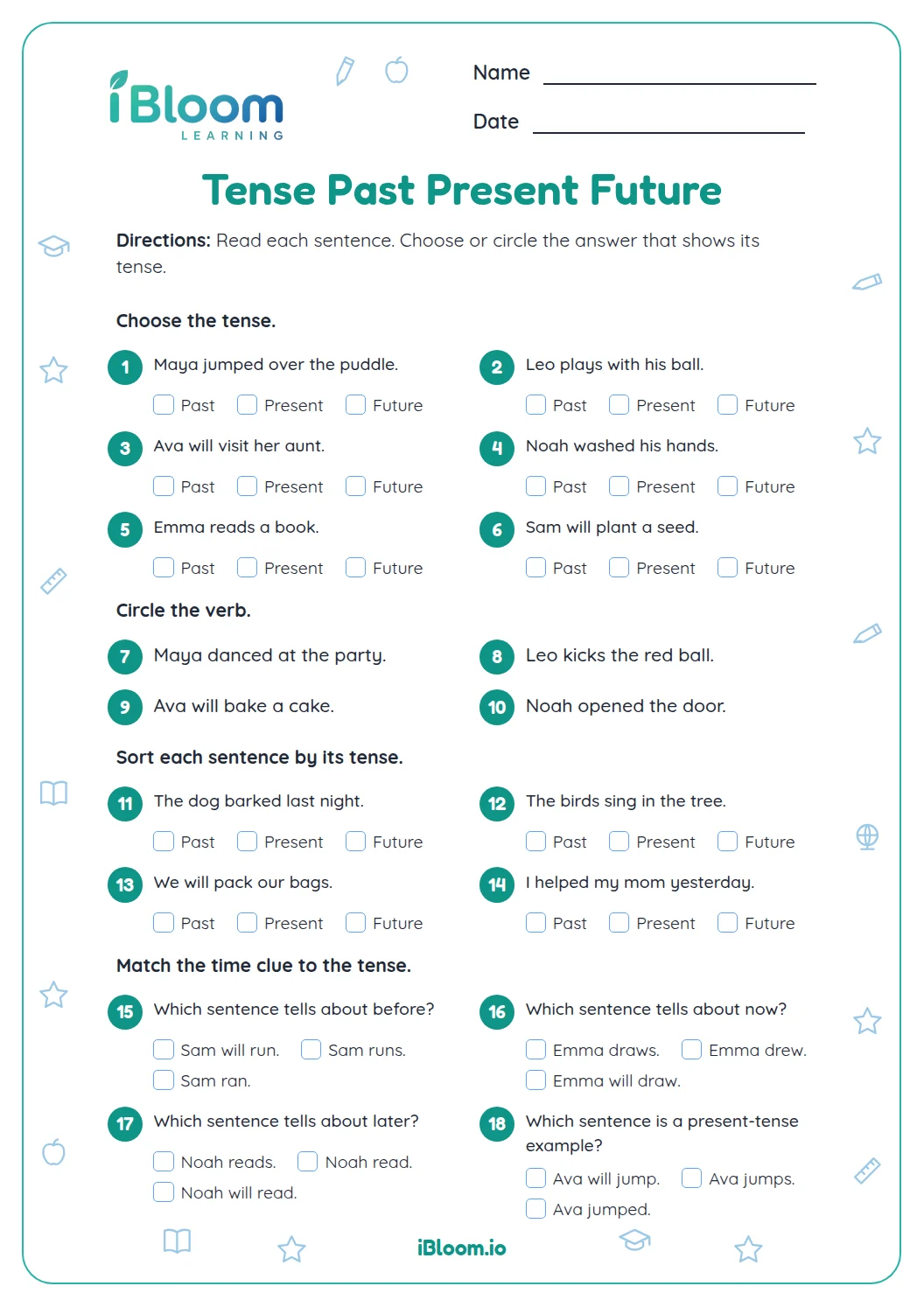
Use verbs to convey a sense of past, present, and future (e.g., Yesterday I walked home; Today I walk home; Tomorrow I will walk home).
What to practice next
Make more practice
Further reading
Questions parents and teachers ask
Which verbs are practiced?
There are 16 questions on two worksheet pages, followed by a two-page answer key. The first 12 ask students to supply an irregular past-tense verb in a sentence. The last four ask students to write their own sentences with a given verb, so several answers can be correct.
What does irregular mean here?
Students complete sentences with irregular past forms including saw, went, ate, and took. Four final prompts ask them to use ate, sang, drank, and slept in original sentences. The key includes sample sentences for those prompts; any clear sentence using the required past-tense verb can work.
Should my child add -ed to every verb?
No. These target verbs have changed forms to learn. Encourage your child to say the base verb and its past form together, then read the completed sentence to hear whether it fits the time clue. The verb in parentheses names the action; the sentence clue helps the student choose its past-tense form.
How should we use the answer key?
Let your child finish the page first, then check each word against the key. When an answer needs correction, reread the sentence’s time clue and say the base verb and past form aloud before rewriting it. The verb in parentheses names the action; the sentence clue helps the student choose its past-tense form.
How long does this worksheet take?
Most families can set aside about 15 minutes for the 16 short sentences, though the pace depends on how familiar the verbs are. A brief pause between groups can help a new form stick. The verb in parentheses names the action; the sentence clue helps the student choose its past-tense form.
What can we practice next?
Try using the verbs in original sentences about something that happened yesterday. The linked past-present-future practice compares time forms, while the edit-and-correct and sentence-practice sheets extend this same verb skill. The verb in parentheses names the action; the sentence clue helps the student choose its past-tense form.