


About this worksheet
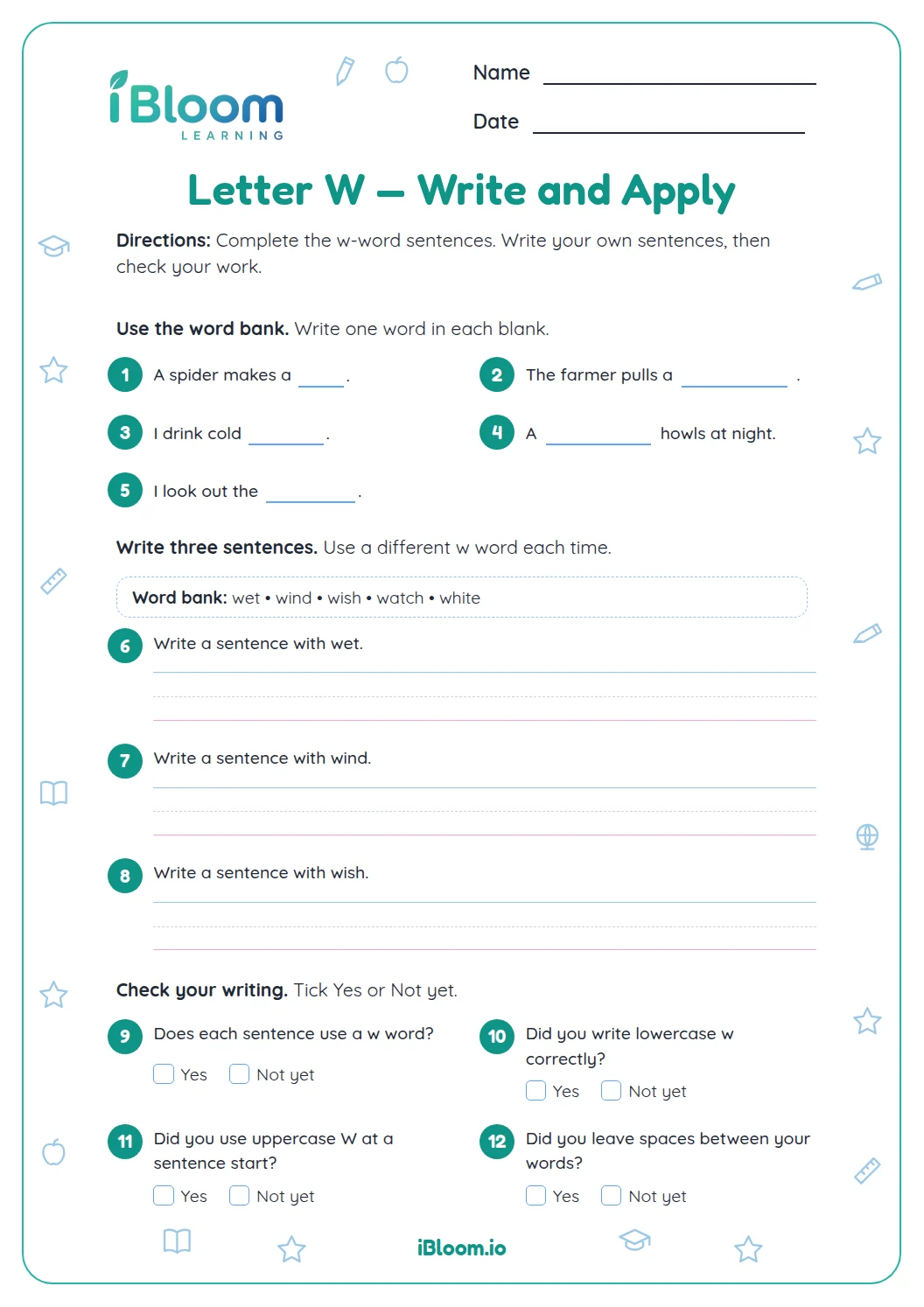
This page focuses on the shape and use of W and w. Children distinguish the uppercase and lowercase forms, locate them in short words, and correct a missing first letter before printing and tracing each form.
How can children tell W from w?
Uppercase W is taller; lowercase w is shorter and fits between the writing lines. Both forms name the same letter and make the same sound, as in web and Willow.
The page moves from spotting each form to correcting words and tracing both forms.
What is on the worksheet?
The 15 activities practice uppercase and lowercase W recognition, word correction, letter printing, and tracing. The words include Wes, Willow, Wren, web, stew, and owl.
- Part A: recognize uppercase W
- Part B: find lowercase w
- Part C: edit words and trace both forms
How to use this worksheet
- 1Read the direction for each part before beginning.
- 2Ask the learner to explain one answer aloud and check it with the key.
Common mistakes and quick fixes
The mistake
Rushing and overlooking what the question asks.
The fix
Read the whole prompt, solve, then check that the answer fits.
The mistake
Stopping after finding a number without checking it.
The fix
Put the answer back into the original question.
What to practice next
Questions parents and teachers ask
What is the difference between W and w?
W is the uppercase form and w is the lowercase form of the same letter. Uppercase W is taller; lowercase w is shorter and sits between the writing lines. Both make the /w/ sound, as in web and Willow. The page practices recognizing and forming each shape.
Which words on this page use W?
The worksheet uses familiar examples including Wes, Willow, Wren, web, Wig, stew, and owl. Learners look for W or w at the beginning, middle, or end of a word, then correct a word with the target letter. They also trace both uppercase and lowercase forms.
How can children practice writing W and w?
First trace the model slowly, following its strokes. Then print the letter independently on the writing line, keeping uppercase W tall and lowercase w small. Short, careful practice helps children notice the difference in size and position. The worksheet includes both recognition and formation activities.
How should we use the answer key?
Use the key to check letter recognition and the corrected words. Tracing and printing are practice tasks, so compare the written form with the model rather than expecting every child’s letter shape to look identical. Point out that uppercase and lowercase forms share the same sound.