



About this worksheet
This Letter X page moves from tracing X and x to noticing the letter in familiar words, then writing a complete sentence. Children practice both the /ks/ sound at the end of fox and box and the x at the start of x-ray.
Aligned to L.1.1.a
How to practice the letter X
Start at the top and make two slanting strokes to form uppercase X. Lowercase x uses the same crossed strokes at a smaller size. Say the sound at the end of fox as you trace.
X is less common at the beginning of English words, so this page includes x-ray as a beginning example and fox, box, Max, and six for the /ks/ sound.
- 1The fox hid in a box.
- 2Find x in fox and box.
What is on the worksheet?
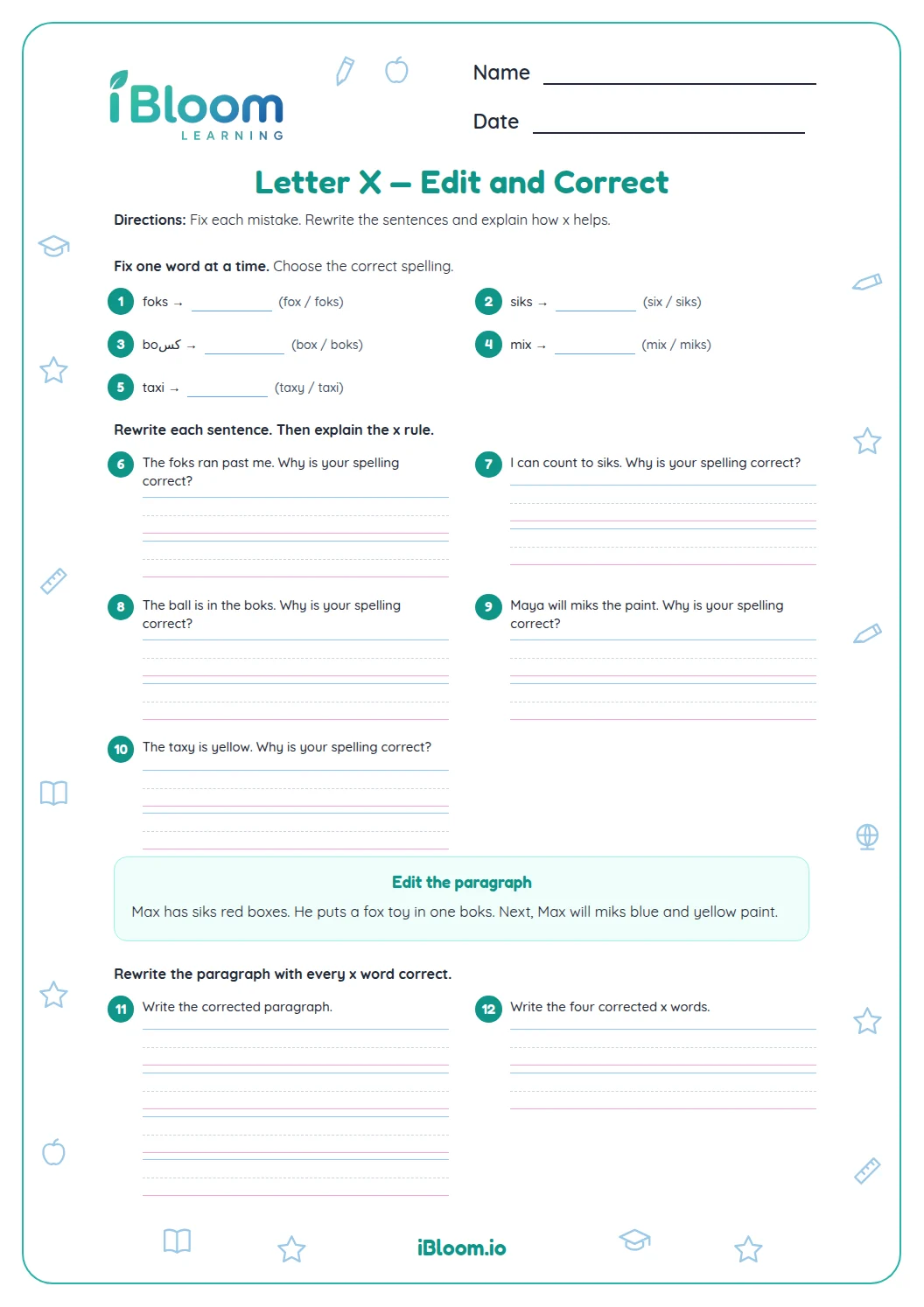
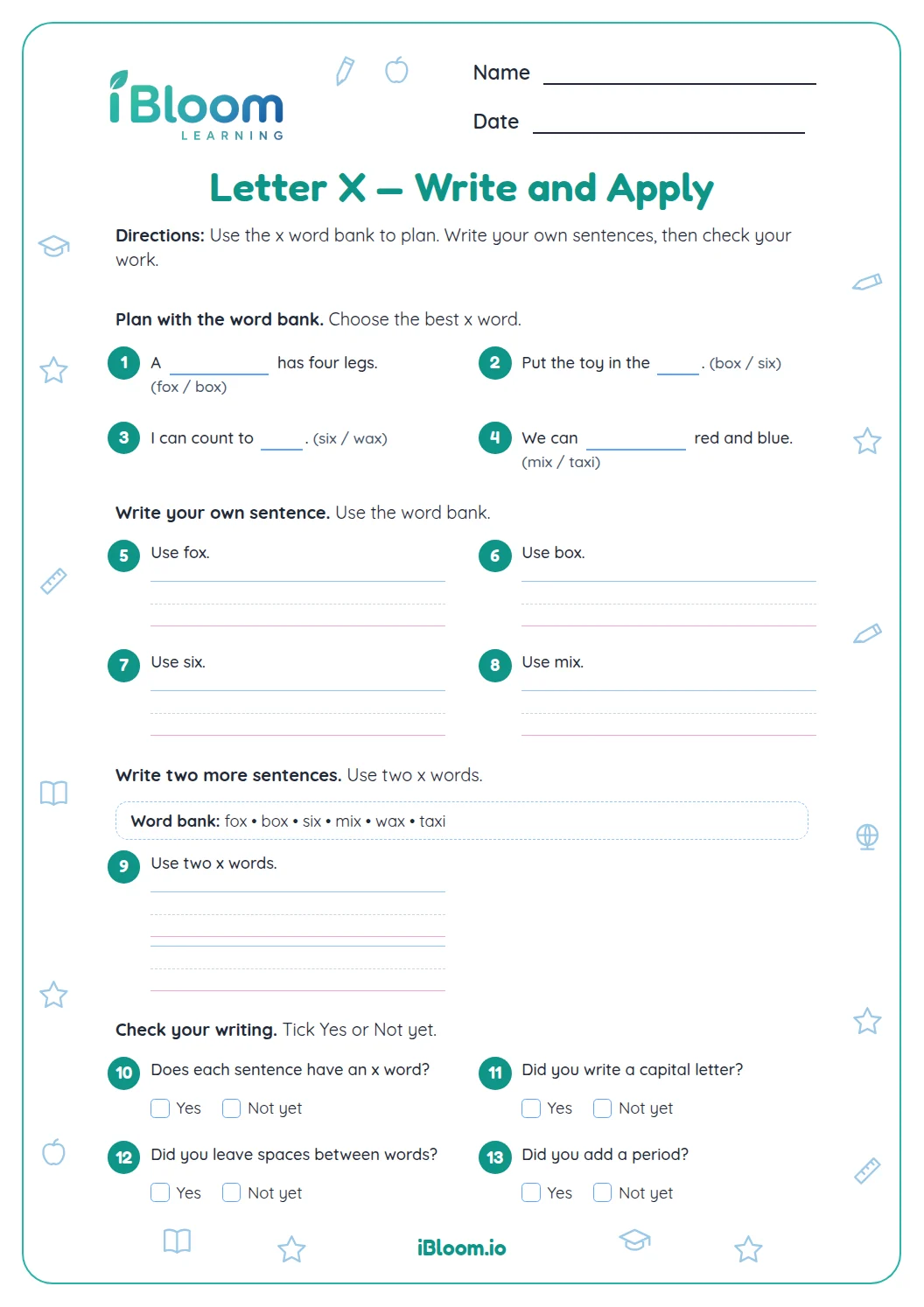
Part A traces uppercase X, lowercase x, fox, and box. Part B chooses words and fills simple sentence contexts. Part C finds x in short sentences. Part D writes X and creates complete sentences.
- Part A: four tracing rows
- Part B: four word questions
- Part C: four circle-the-word questions
- Part D: two letter answers and two original sentences
A simple practice routine
- 1Trace uppercase X slowly, then trace lowercase x.
- 2Say each word aloud and listen for /ks/.
- 3Find x in the Part C sentences.
- 4Read each Part D sentence aloud and check that it tells a complete thought.
Letter X reminders
The mistake
Reversing the two strokes so they do not cross.
The fix
Make one slanting line, then cross it with a second slanting line.
The mistake
Looking only for x at the start of every word.
The fix
Check the whole word: x often comes at the end, as in fox and box.
Common Core alignment
This worksheet practices CCSS L.1.1.a by tracing and printing uppercase X and lowercase x.
Print uppercase and lowercase letters, including X and x.
On this sheet: Tracing and writing tasks practice uppercase X and lowercase x.
Show the official wordingHide the official wording
Print all upper- and lowercase letters.
What to practice next
Make more practice
Further reading
Questions parents and teachers ask
How do you write uppercase X?
Make one slanting stroke, then cross it with a second slanting stroke. The worksheet gives a trace row before children write the letter themselves. Encourage a slow, controlled cross rather than drawing the two lines so quickly that they miss each other.
How do you write lowercase x?
Lowercase x uses the same two crossed strokes as uppercase X, written smaller. Trace the model first, then try the letter without tracing. The page also asks children to find x in words such as fox, box, Max, and six.
What sound does x make in fox?
At the end of fox, x spells the sounds /k/ and /s/ together, often described as /ks/. The worksheet uses familiar words with final x and includes x-ray as a word beginning with x. Say each word aloud while noticing where the letter appears.
Does x often begin English words?
X is less common at the beginning of familiar English words than at the end. X-ray is a recognizable beginning example, while fox and box show x at the end. This page asks children to notice both positions and to print the letter.
What writing practice is on this page?
There are 16 tasks in four parts: tracing uppercase and lowercase X, choosing and recognizing words with x, and writing the letter or a sentence. The final sentence prompts allow different correct responses, so the key gives sample sentences.
Is an answer key included?
Yes. The separate key shows the target letters and words and provides sample responses for the two sentence prompts. Because children can write many sensible sentences using fox or box, compare their sentence with the prompt rather than requiring the sample wording exactly.