







About this worksheet
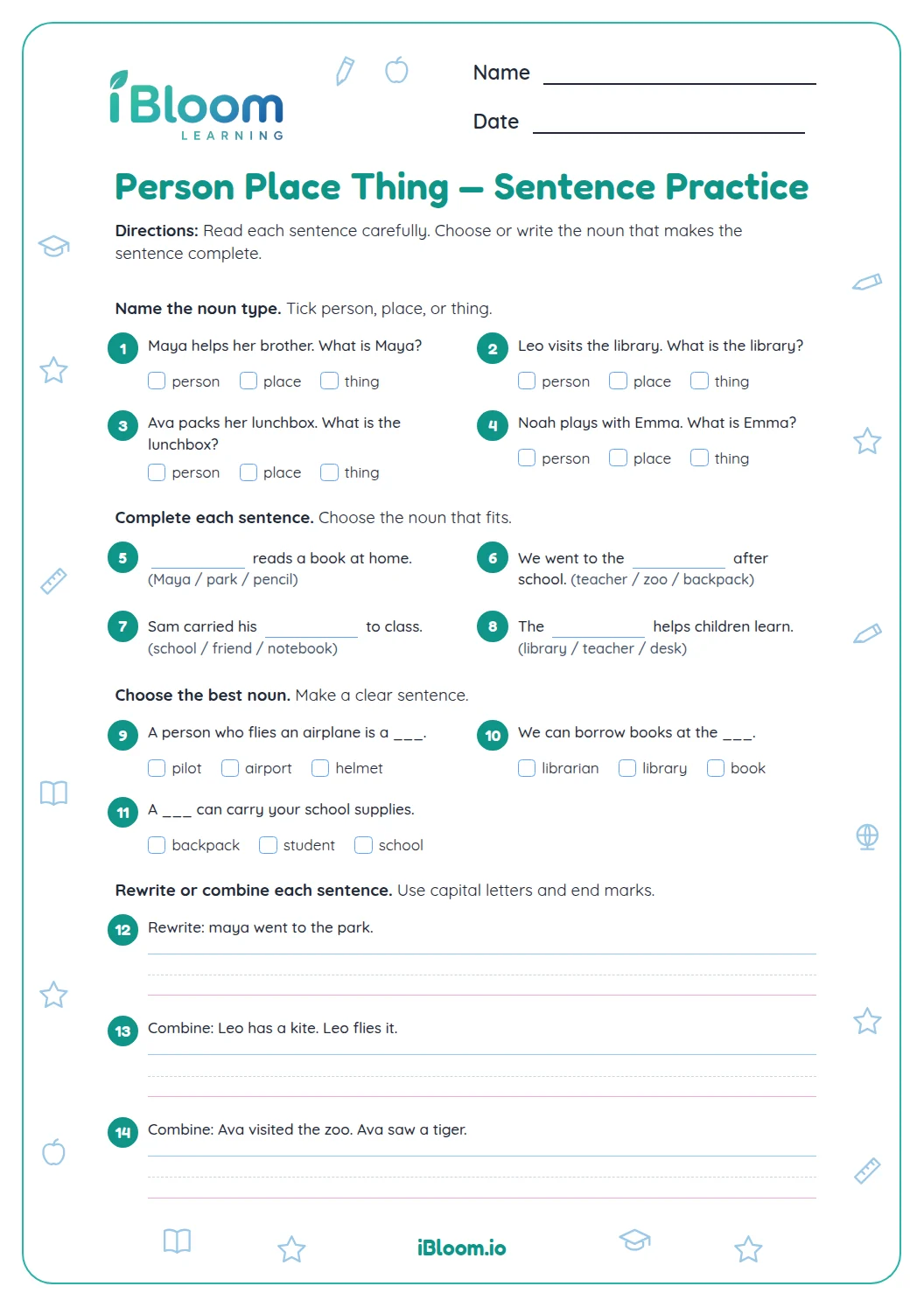
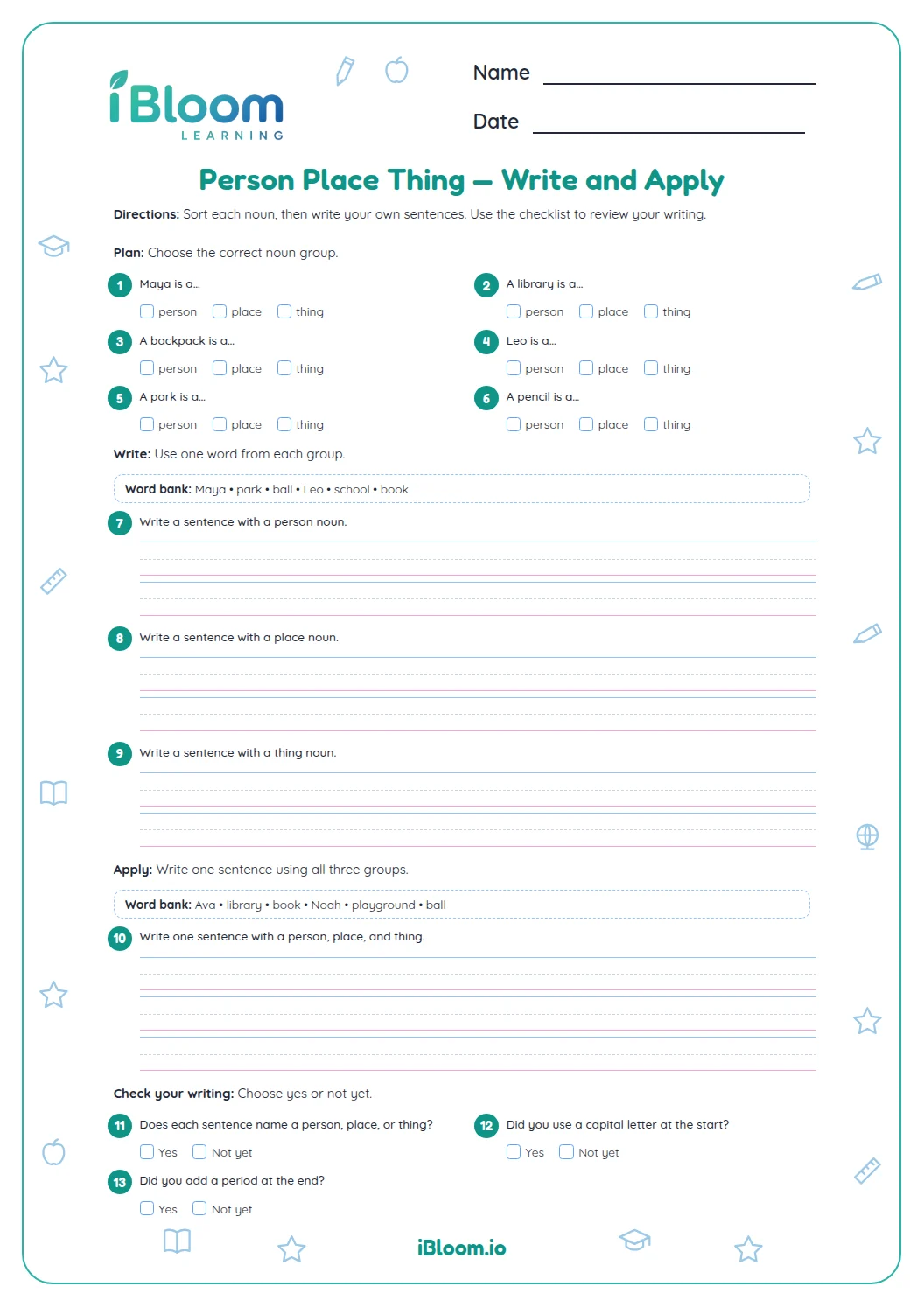
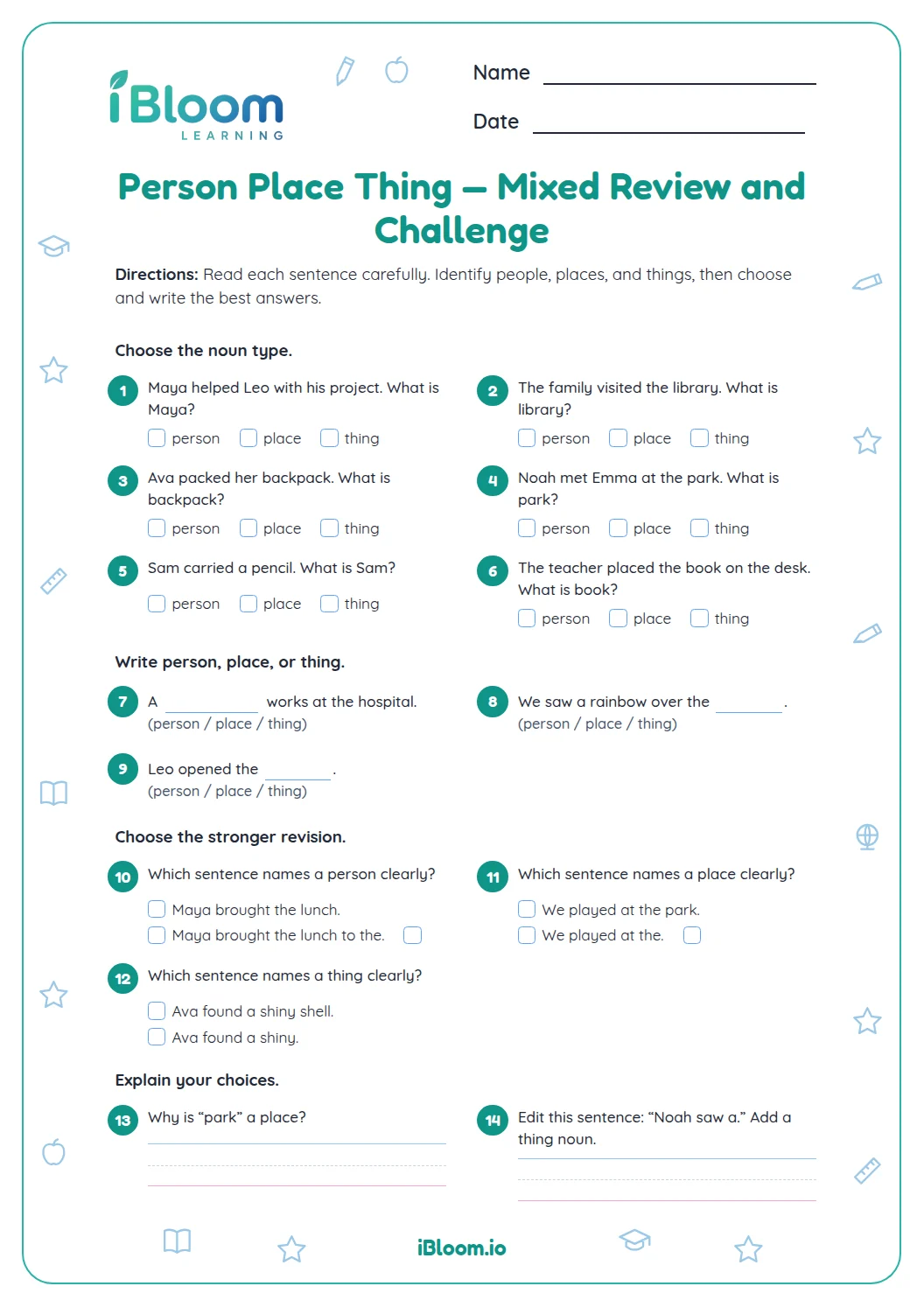
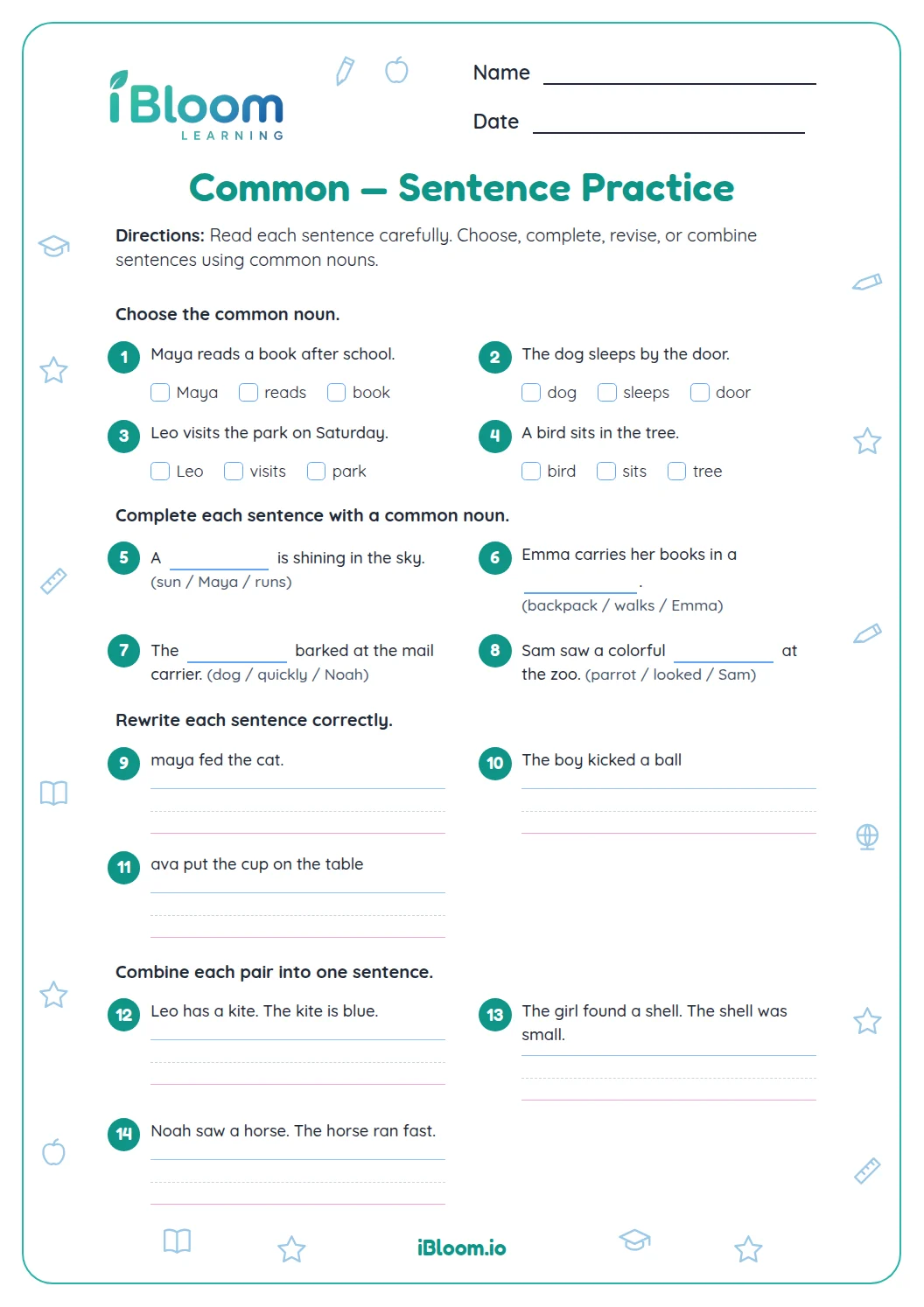
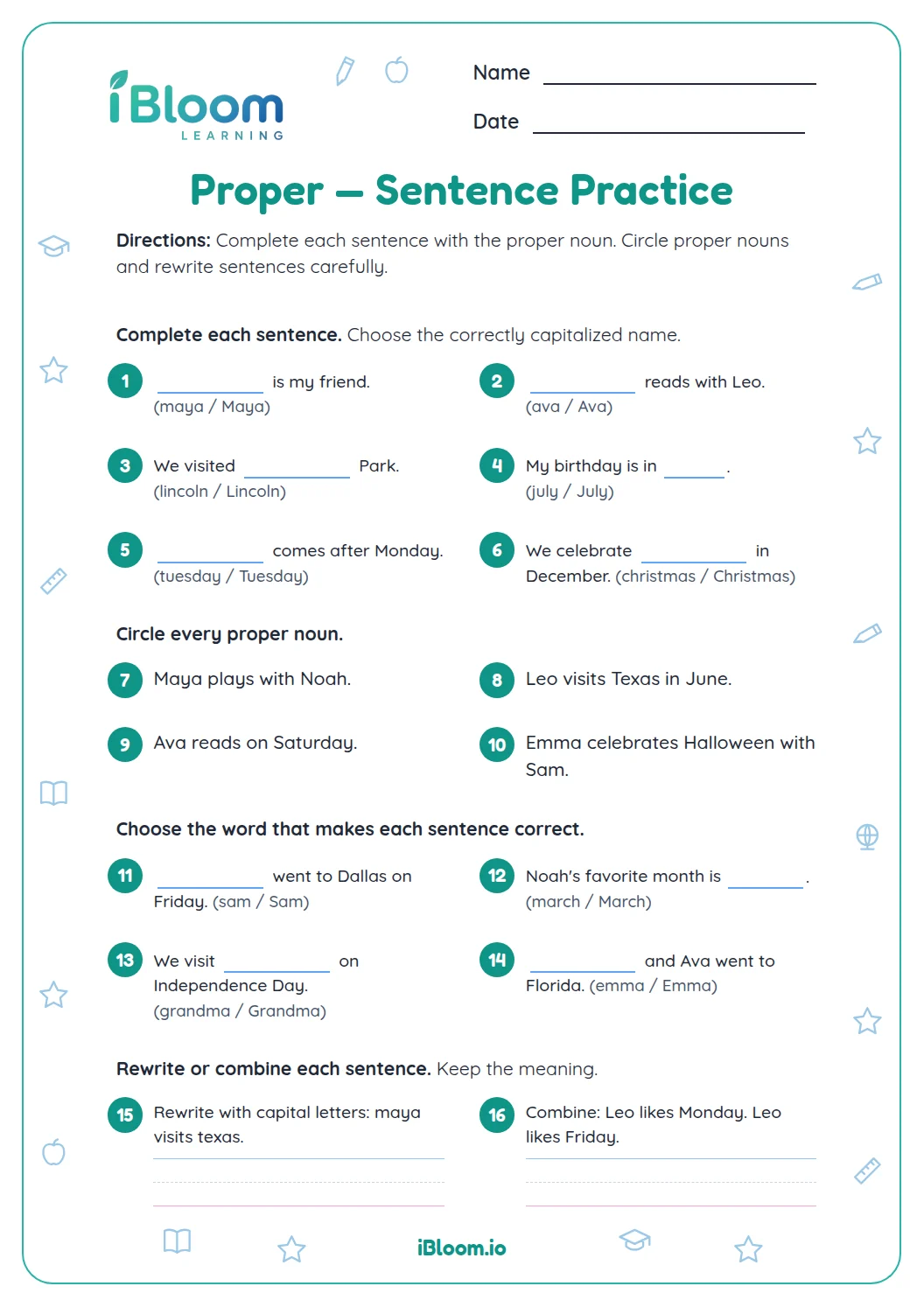
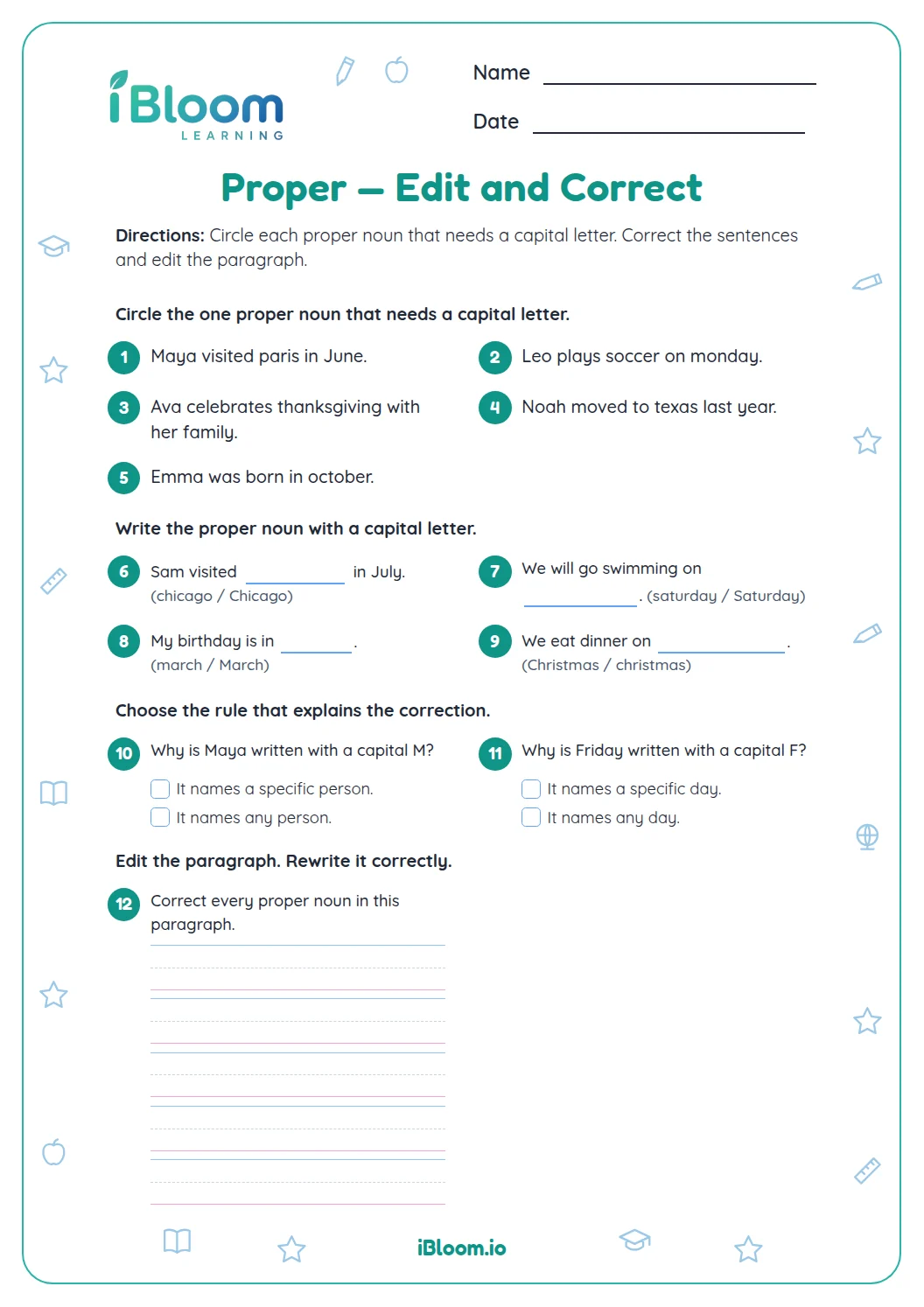
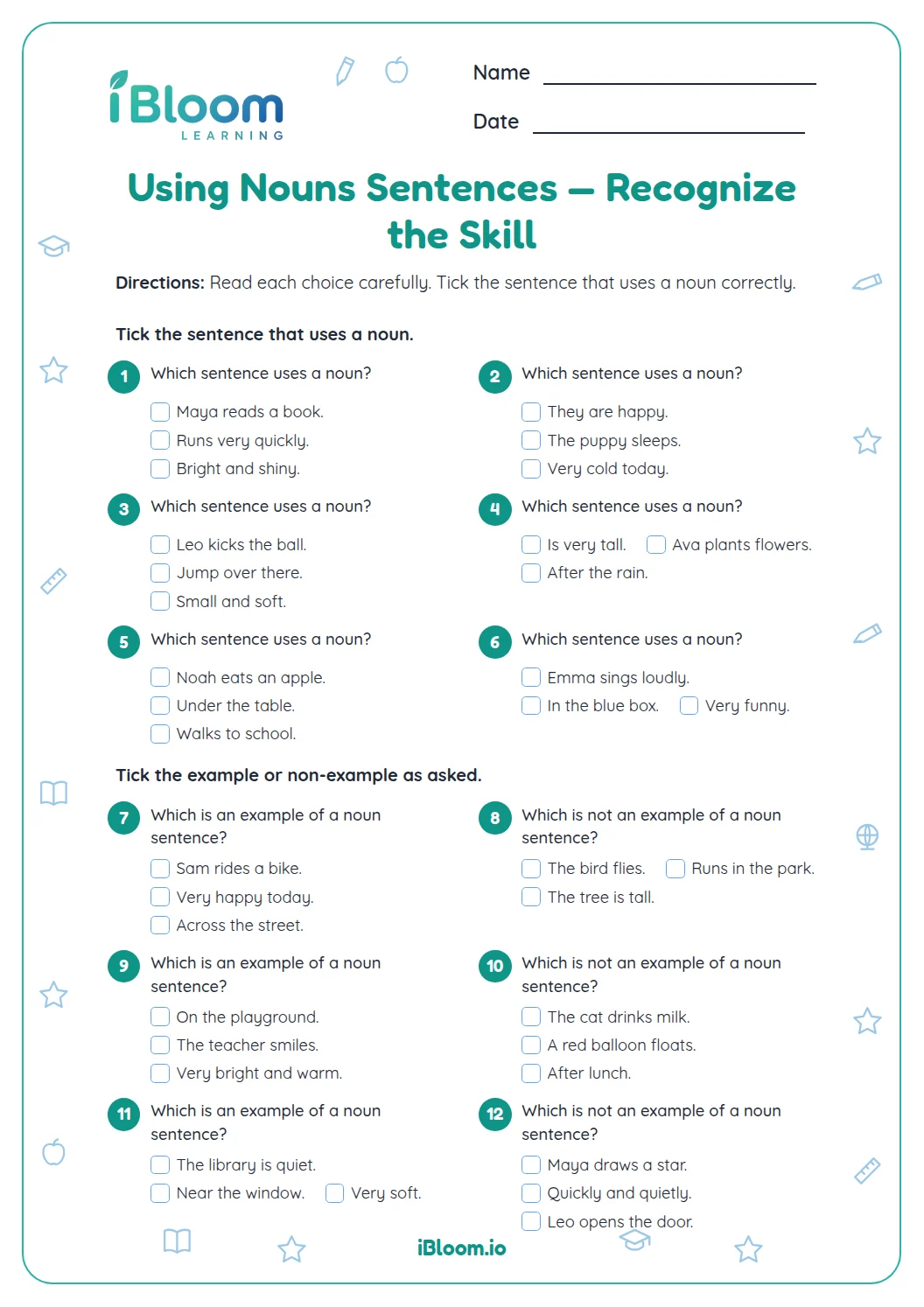
This free Grade 2 printable worksheet gives children practice finding nouns that name people, places, and things. Four sentences ask them to spot a noun, four items sort nouns by category, and eight editing items ask them to capitalize names of people, places, days, and months. The answer key shows the corrected forms. The editing practice connects to CCSS L.2.2.
Aligned to L.2.2
How do you spot a person, place, or thing?
A noun names a person, place, or thing. In “Maya packed a lunch,” Maya names a person and lunch names a thing. This sheet begins by asking children to find one clear noun in each short sentence.
Next, children sort single words by what they name, then edit lowercase names of people, places, days, and months.
- 1Maya packed a lunch. → Circle Maya, the person named in the sentence.
Which nouns need capital letters?
A person’s name and a specific place name begin with capital letters. Days and months also begin with capitals. Words such as teacher, pond, and book are common nouns, so they stay lowercase unless they begin a sentence. Each editing prompt gives a lowercase word or name to correct.
For example, denver names one particular city, so it should be written Denver. The word city names any city and stays lowercase in the middle of a sentence.
How can a child check an edited sentence?
Read the cue and identify the word that needs capitals. Check names of people, titles used with names, cities, lakes, days, and months. Common nouns such as teacher or pond stay lowercase unless they begin a sentence.
How to use this worksheet
- 1Read each sentence and circle only the noun requested.
- 2Sort each listed word by whether it names a person, place, or thing.
- 3For editing, find the person, place, day, or month named in the sentence.
- 4Write the corrected capitalized word or name in the blank.
- 5Compare the corrected sentence with the answer key.
Common mistakes and quick fixes
The mistake
Capitalizing every noun
The fix
Common nouns such as teacher and pond do not need capitals in the middle of a sentence. Capitalize a noun there only when it is a specific name.
The mistake
Missing a place name
The fix
Look for a word that names one city, state, or landmark. Capitalize that name.
The mistake
Changing words that are already correct
The fix
Read for capitals first and keep the sentence wording the same.
Common Core alignment
This practice connects noun recognition and sentence editing with standard English conventions.
Use standard English capitalization in sentences and proper names.
On this sheet: Students correct capitalization at sentence beginnings and in names of people and places.
Show the official wordingHide the official wording
Demonstrate command of the conventions of standard English capitalization, punctuation, and spelling when writing.
What to practice next
Make more practice
Further reading
Questions parents and teachers ask
What is a person, place, or thing noun?
A noun names a person, place, or thing. In “Maya packed a lunch,” Maya is a person noun and lunch is a thing noun. This sheet asks children to find nouns in sentences, sort category words, and then edit capitals in full sentences.
Which questions ask children to edit sentences?
Questions 9 through 16 ask children to rewrite a lowercase name or time word with the needed capitals. They include people, cities, a lake, a day, and a month. The separate key gives each corrected form so a child can check one part at a time.
Should every noun start with a capital letter?
No. A common noun such as pond or teacher stays lowercase in the middle of a sentence. A specific name, such as Denver or Maya, begins with a capital, as does the first word of every sentence. The editing items let children practice both kinds.
How many questions are on the worksheet?
There are 16 questions across the practice pages: four noun-finding sentences, four category choices, and eight capitalization edits. The separate answer key gives the answers, including corrected forms for each name or time word. Children can finish one part at a time and check it.
How should I use the answer key?
Have your child finish one part before checking that part with the key. For an edited sentence, compare capitals and punctuation while keeping the original wording. If a different correction seems possible, use the key to discuss the proper name or sentence beginning.