Free printable practice
Laughter Practice Activities
Grade 2 draw-and-write laughter prompts help children turn funny moments into illustrated stories with details, feelings, and clear sentences.
Free printable worksheet PDFs
Preview every available page, then download the free worksheet PDF for home, homeschool, tutoring, or classroom practice.
Preview the exact activity before downloading it.
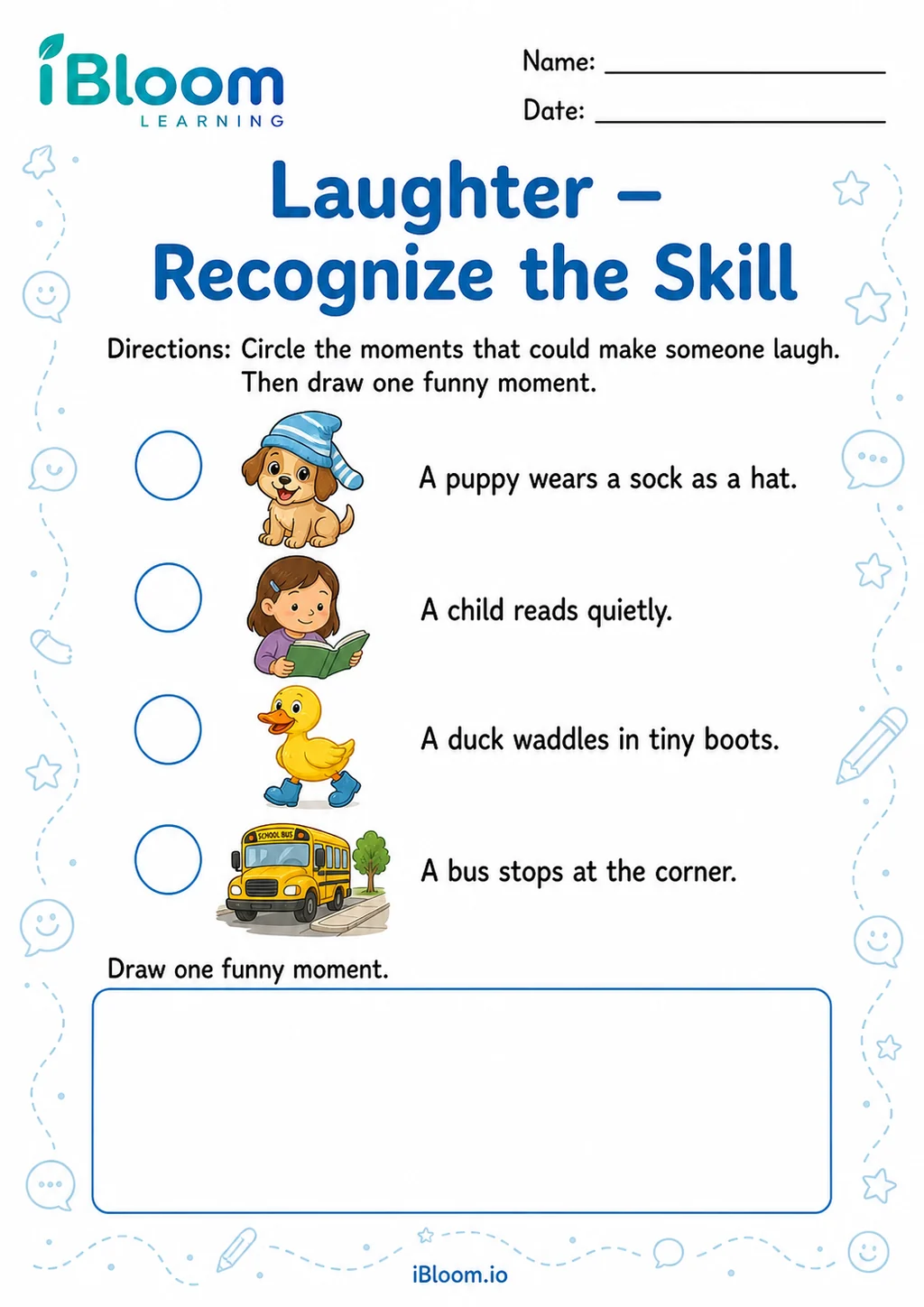 Laughter — Recognize the SkillGrade 2 draw-and-write laughter prompts help children turn funny moments into illustrated stories with details, feelings, and clear sentences. This recognize the skill worksheet provides a distinct, age-appropriate way to practise the same lesson.Grade 2Free PDF preview
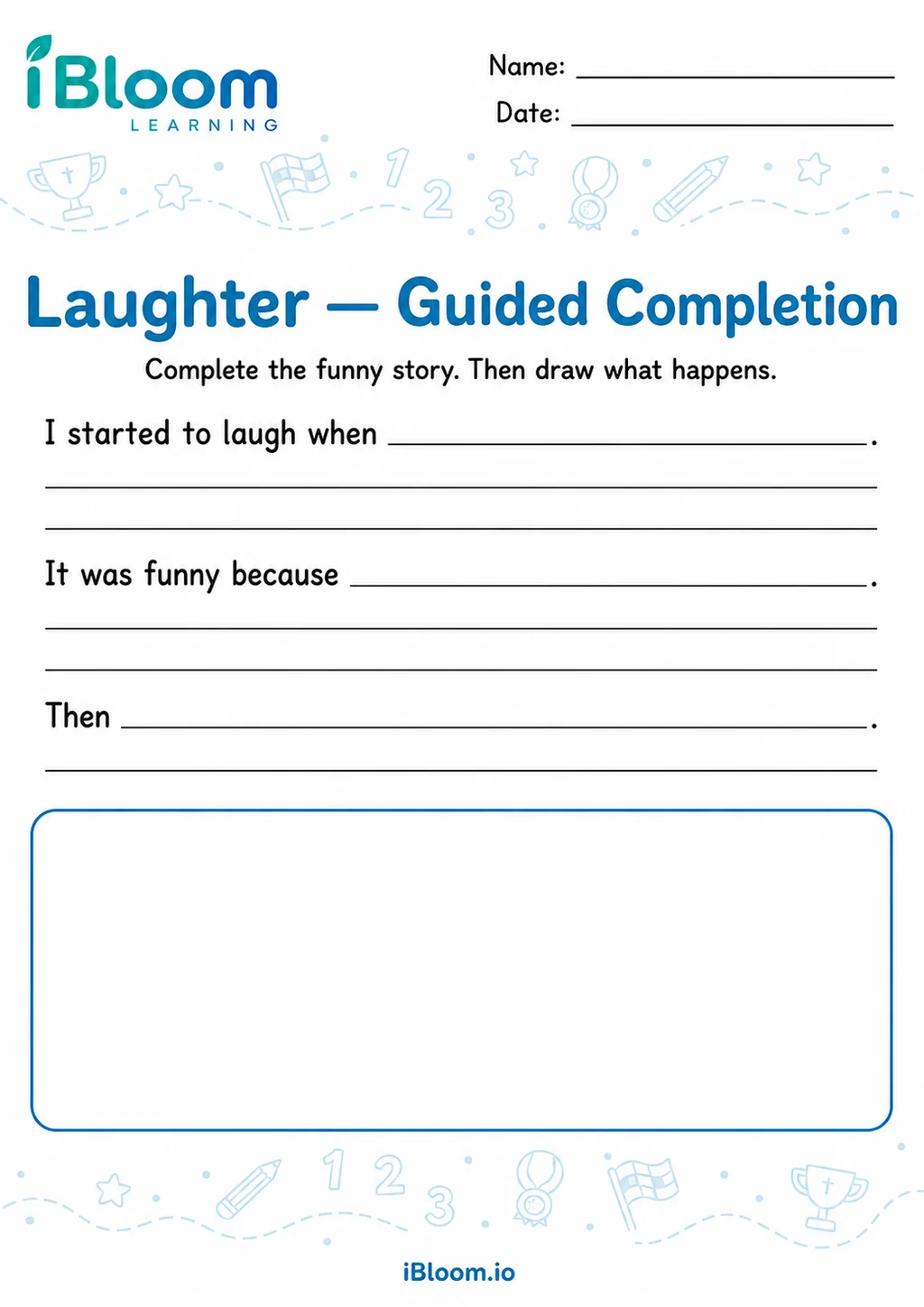 Laughter — Guided CompletionGrade 2 draw-and-write laughter prompts help children turn funny moments into illustrated stories with details, feelings, and clear sentences. This guided completion worksheet provides a distinct, age-appropriate way to practise the same lesson.Grade 2Free PDF preview
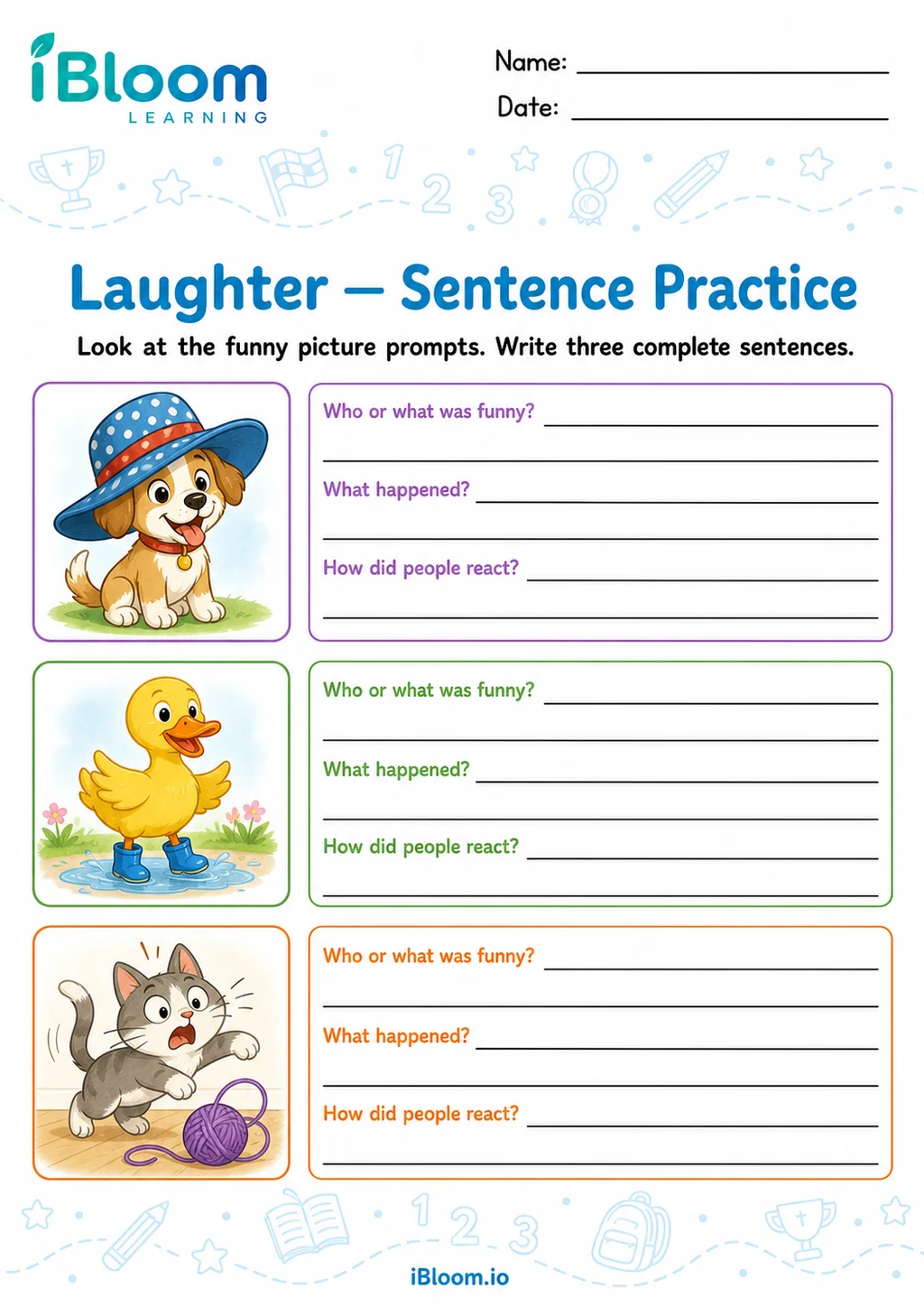 Laughter — Sentence PracticeGrade 2 draw-and-write laughter prompts help children turn funny moments into illustrated stories with details, feelings, and clear sentences. This sentence practice worksheet provides a distinct, age-appropriate way to practise the same lesson.Grade 2Free PDF preview
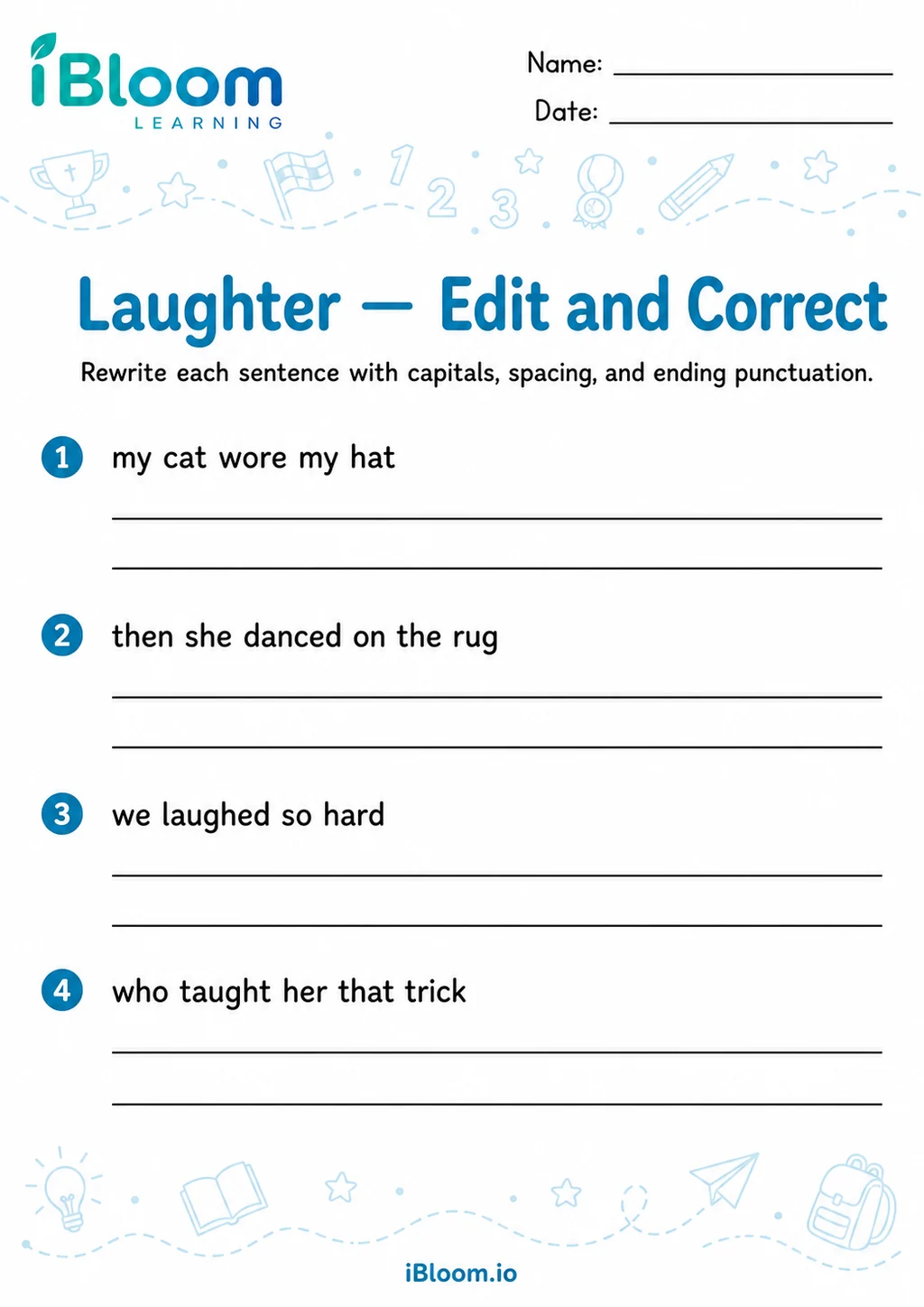 Laughter — Edit and CorrectGrade 2 draw-and-write laughter prompts help children turn funny moments into illustrated stories with details, feelings, and clear sentences. This edit and correct worksheet provides a distinct, age-appropriate way to practise the same lesson.Grade 2Free PDF preview
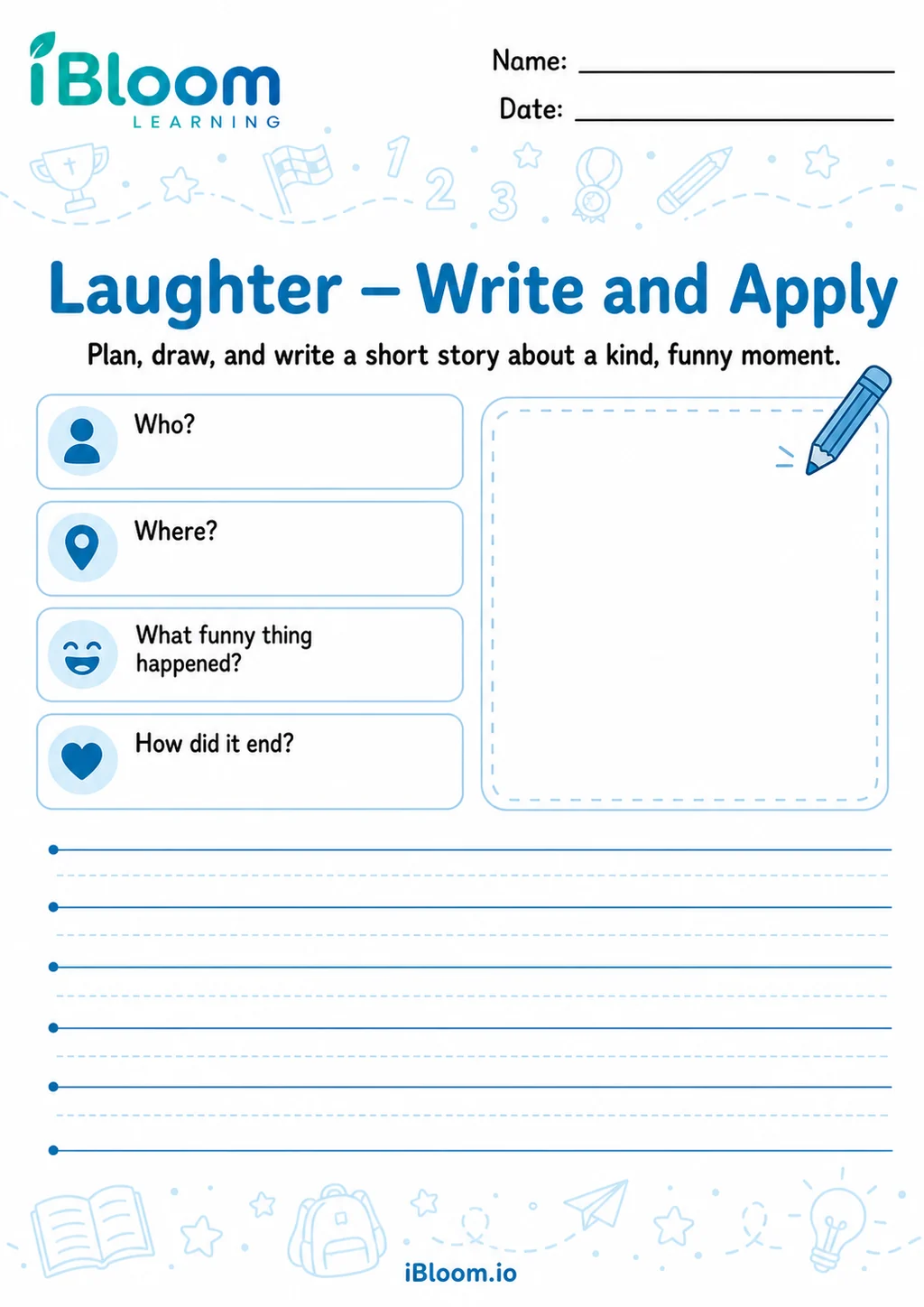 Laughter — Write and ApplyGrade 2 draw-and-write laughter prompts help children turn funny moments into illustrated stories with details, feelings, and clear sentences. This write and apply worksheet provides a distinct, age-appropriate way to practise the same lesson.Grade 2Free PDF preview
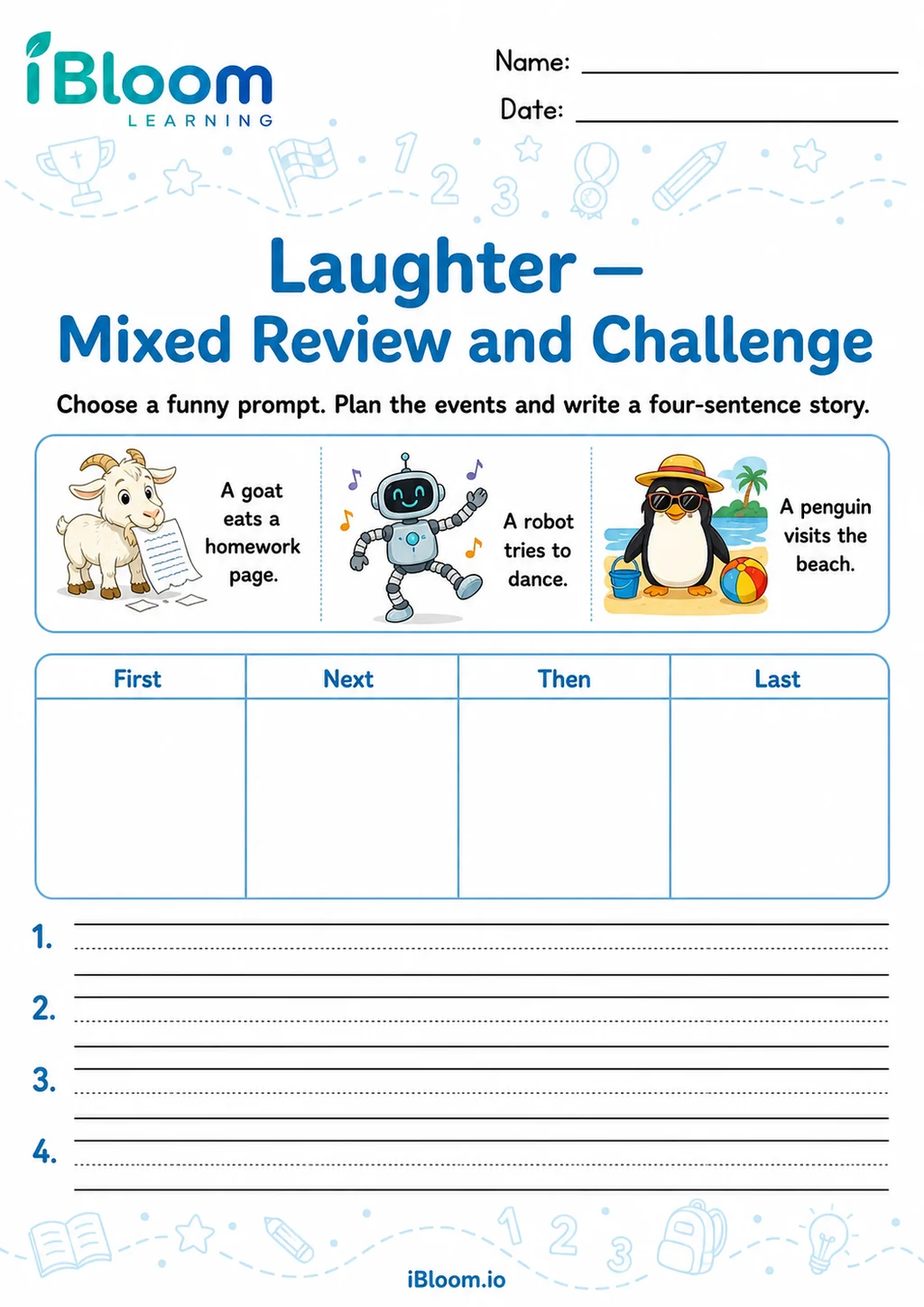 Laughter — Mixed Review and ChallengeGrade 2 draw-and-write laughter prompts help children turn funny moments into illustrated stories with details, feelings, and clear sentences. This mixed review and challenge worksheet provides a distinct, age-appropriate way to practise the same lesson.Grade 2Free PDF preview
Practice that builds confidence
Building from pictures to sentences
These Grade 2 laughter draw-and-write worksheets invite children to think about what makes people laugh, then turn that idea into a picture and a short written response. Students practise choosing a funny moment, showing characters’ feelings, and writing sentences that explain what happened.
The printable activities combine drawing space with lined writing areas, so children can plan visually before they write. Prompts may lead them to describe a silly event, a laughing character, a joke-like surprise, or a happy memory using grade-appropriate vocabulary and sentence structure.
Laughter is a friendly topic for Grade 2 writers because most children can connect it to real experiences: a pet doing something silly, a friend making a funny face, or a surprise ending in a story. The drawing area helps them decide who is there, where the scene happens, and what causes the laughter before they begin writing.

Writing about cause and reaction
A strong laughter response is more than saying, “It was funny.” Children learn to explain the cause and the reaction: what happened first, who laughed, and how the character felt afterward. Encourage words such as giggled, chuckled, surprised, embarrassed, cheerful, silly, and delighted when they fit the picture.
A simple parent routine
At home, ask your child to tell the funny moment aloud in three parts: “First… Then… At the end…” Next, have them sketch the main action. Before writing, prompt one extra detail: What did the person look like while laughing? What sound did they make? After the page is complete, ask your child to read it aloud and check that each sentence starts with a capital letter and ends with punctuation.

Classroom uses for teachers
Teachers can use these pages during writing centers, morning work, creative writing lessons, or as a follow-up to read-alouds with humorous scenes. They also work well for sharing circles: students show the illustration, read their writing, and listen for whether classmates can identify the funny part.

Common errors to watch for
Second graders may draw an energetic picture but write only one vague sentence. They may also skip the reason for the laughter, repeat “funny” too often, or use run-on sentences joined by many ands. Guide them to add one specific action, one feeling word, and one clear ending sentence.
Free printable PDF download
Use this grade 2 laughter writing prompts worksheet page to preview the activity, print it, or download it as a PDF for quick practice. It works well for homework, homeschool lessons, tutoring, morning work, revision, and classroom centers.
Answers and answer key support
After the child completes the worksheet independently, parents and teachers can use the answer support or answer key information to check the work, review mistakes, and choose the next practice step.
Why iBloom worksheets help
These iBloom worksheets keep the task focused on one joyful idea, which lowers writing pressure while still building narrative skills. A child-friendly strategy is: draw the laugh, name the cause, show the feeling, then write the ending. This gives young writers a clear path from imagination to organized sentences.
Helpful answers
Frequently asked questions
What do Grade 2 students write about in laughter draw-and-write worksheets?
They write about a funny scene, memory, character, or event that causes laughter. The drawing helps them plan the action, and the writing explains what happened and how the people felt.
How can I help my child add more detail to a laughter prompt?
Ask questions about the cause and reaction: Who laughed? What made it funny? What did the character say or do? Then encourage your child to add one action word and one feeling word.
Are these worksheets suitable for reluctant writers?
Yes. The laughter theme is playful, and the drawing space lets children begin with an idea before facing the writing lines. This can make the task feel more approachable.
What writing skills can teachers practise with these pages?
Teachers can practise idea development, sequencing, descriptive words, complete sentences, capitalization, punctuation, and sharing writing aloud with classmates.
Should the picture match the writing?
Yes. In Grade 2, matching the illustration to the written sentences helps children connect visual planning with clear communication. The picture should show the main funny moment or reaction.
Is this grade 2 laughter writing prompts worksheet free?
Yes. You can preview it for free and use the printable worksheet for home or classroom practice.
Can I download this grade 2 laughter writing prompts worksheet as a PDF?
Yes. Use the worksheet download option to save a printable PDF, or print the worksheet directly from the page.
Does this grade 2 laughter writing prompts worksheet include answers or an answer key?
When the activity has fixed answers, iBloom includes answer support so parents and teachers can check the completed worksheet.