








About this worksheet
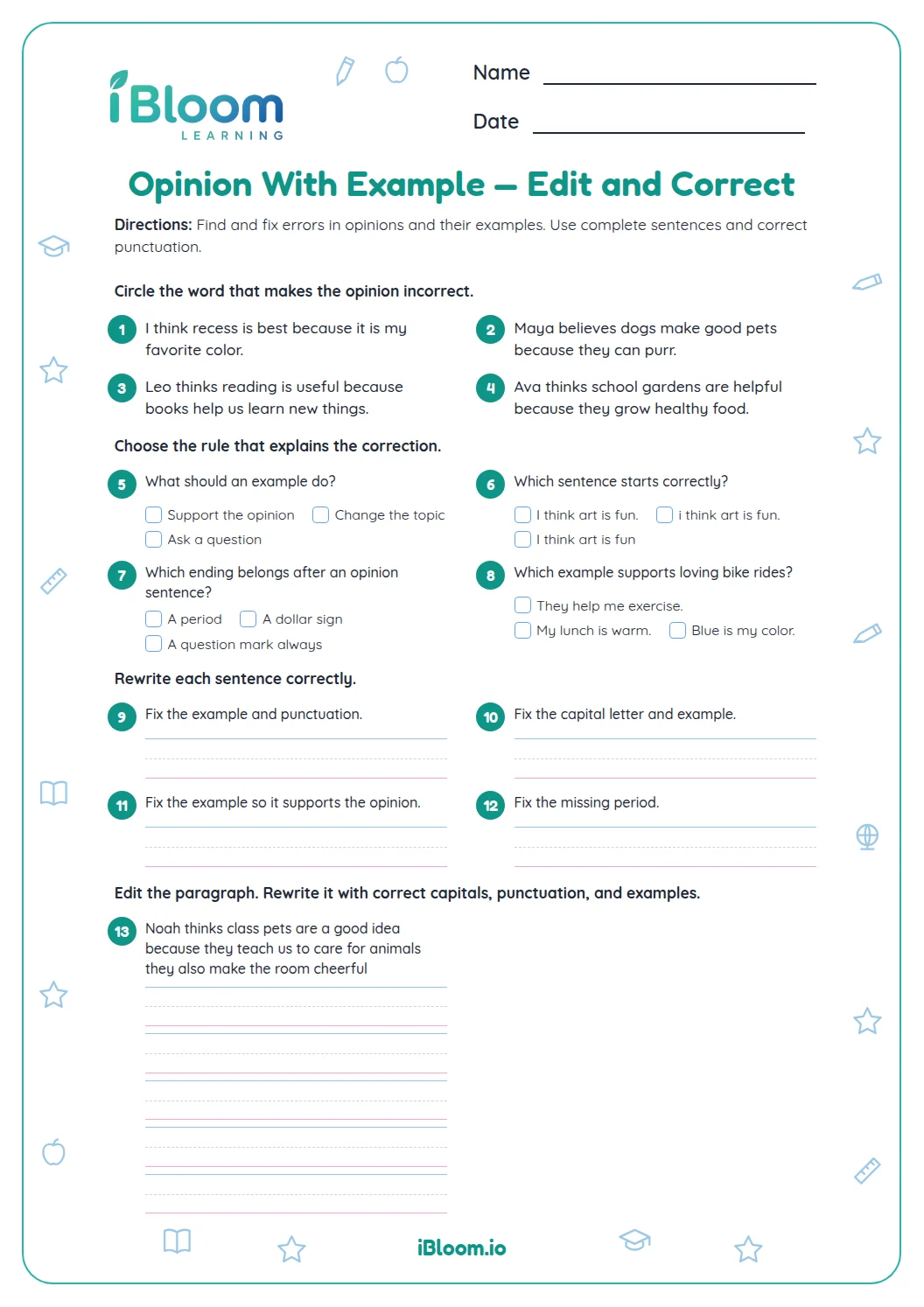
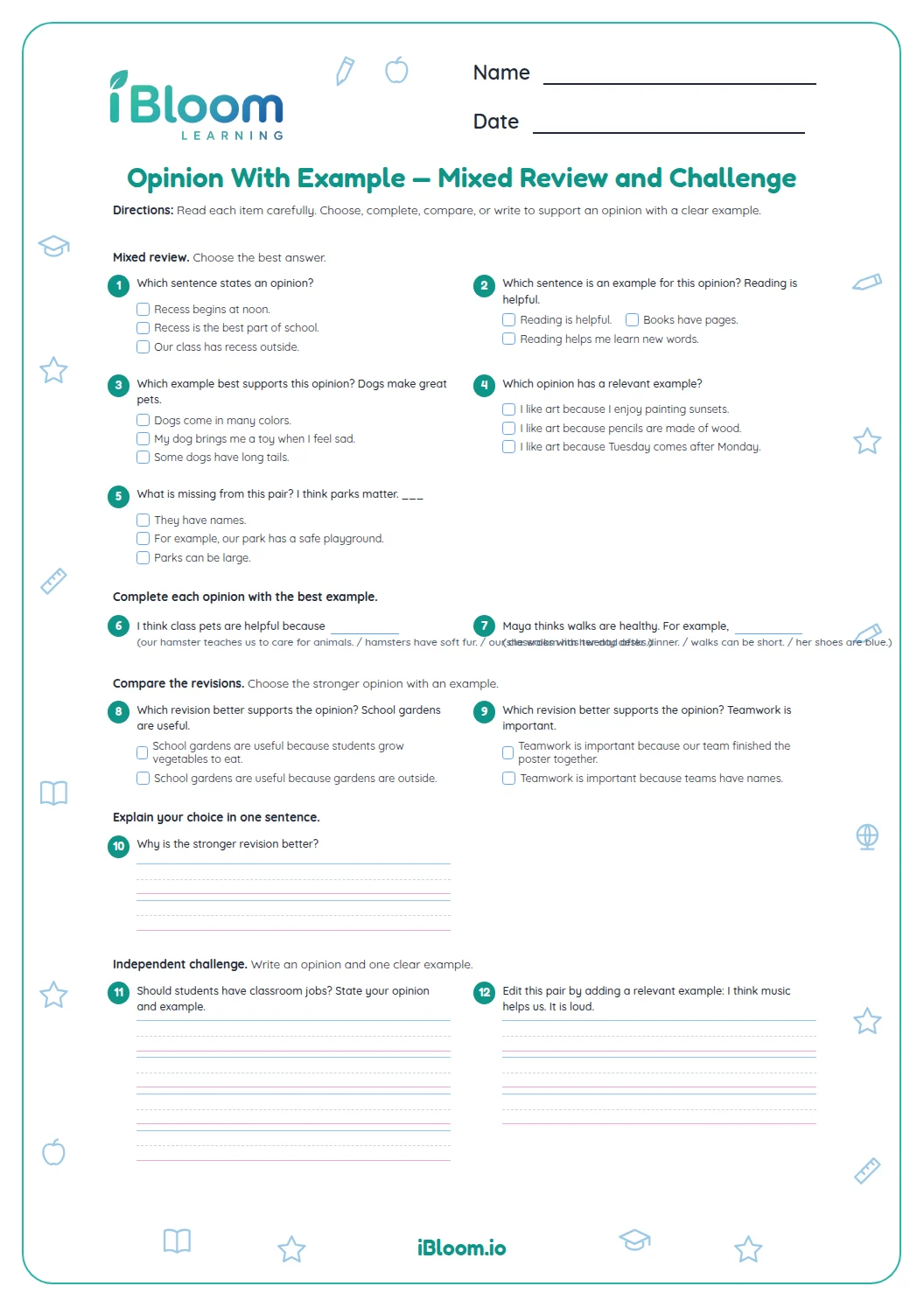
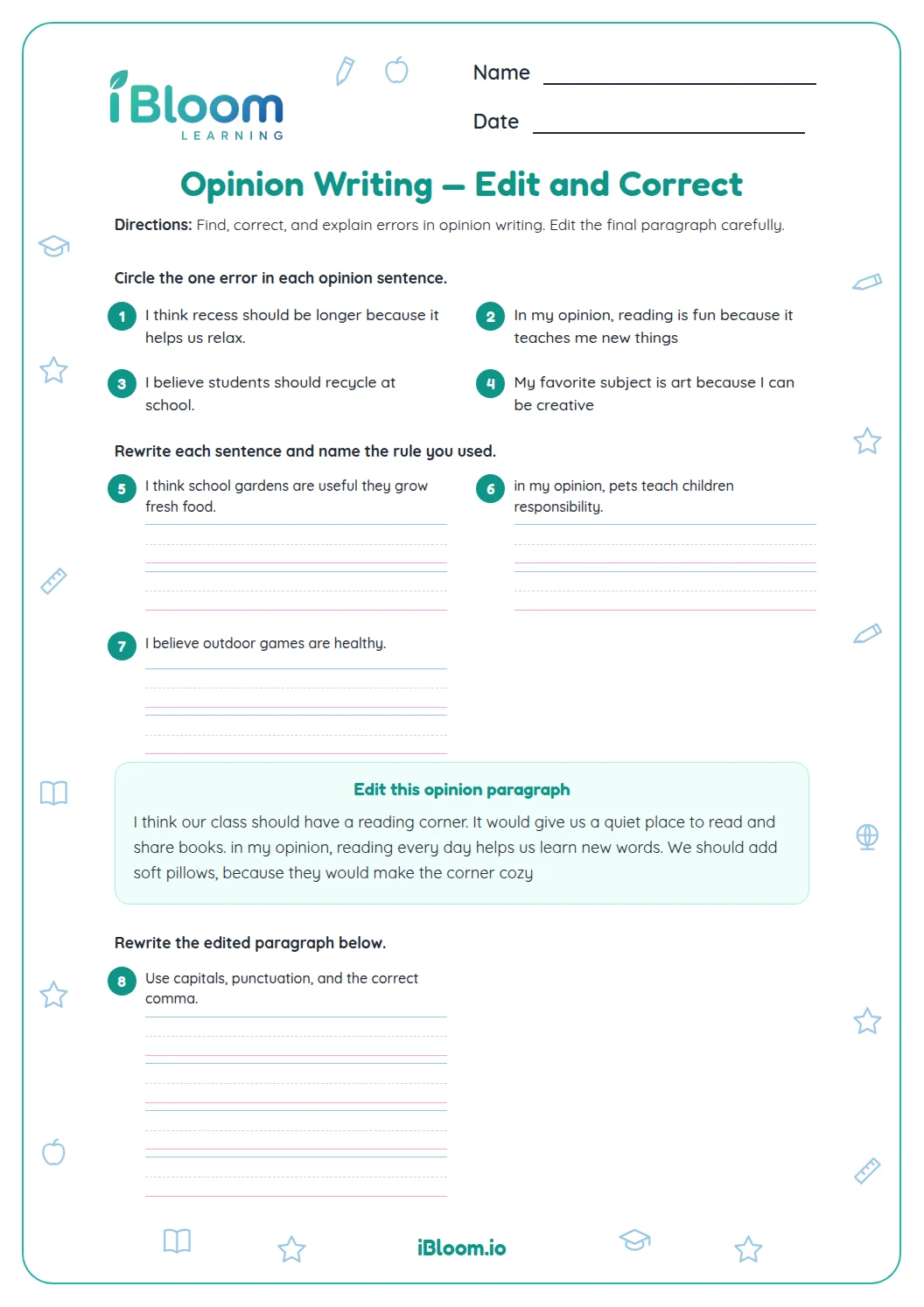
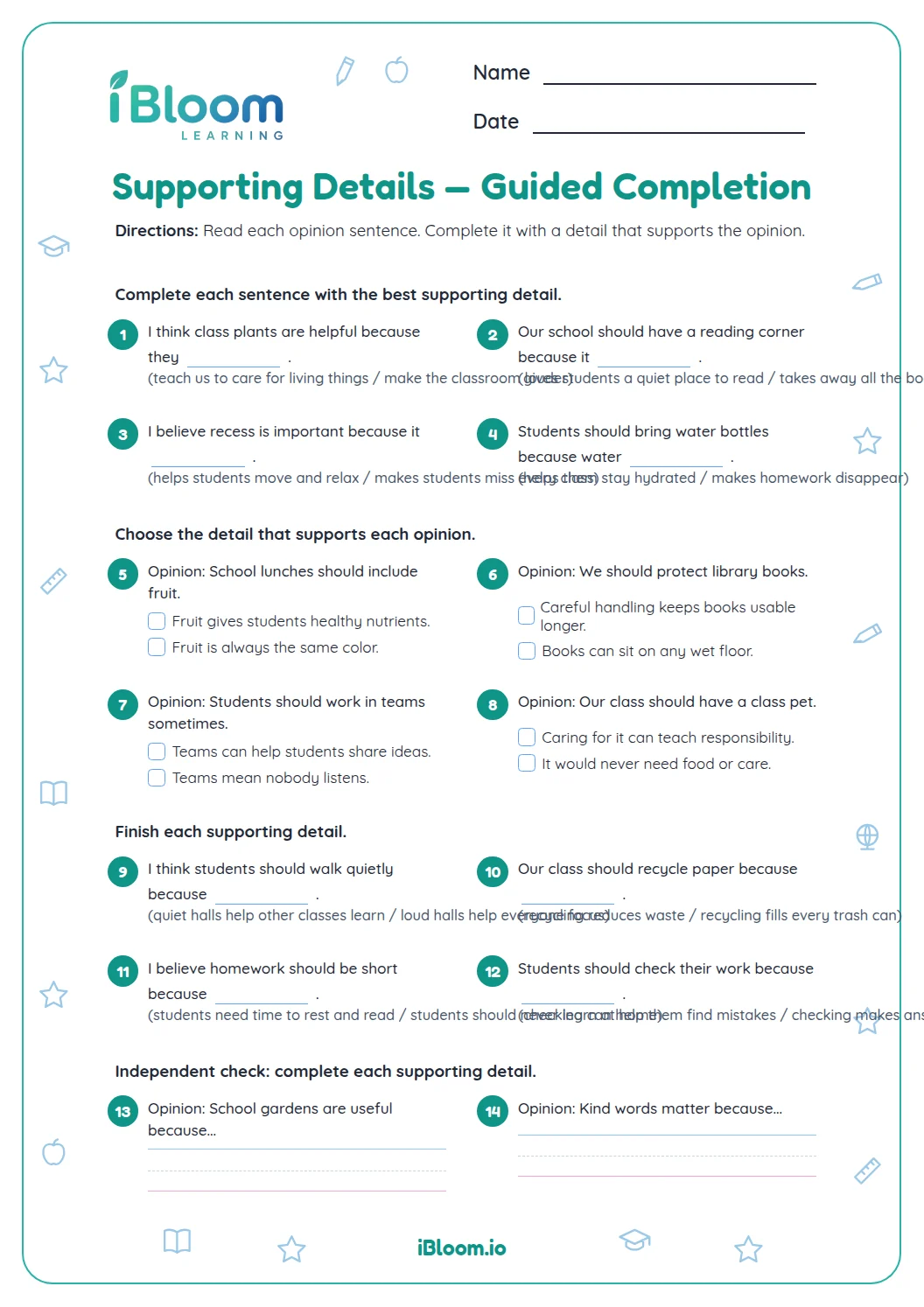
This Grade 3 guided-completion worksheet connects opinions to the examples that support them. Students distinguish an opinion from a fact, choose details that fit a point of view, complete statements with linking words, and write a few supported opinions of their own. Familiar topics such as recess, reading, and classroom routines keep the focus on the writing move. The practice aligns with Common Core W.3.1.b, providing reasons that support an opinion. The key includes answers and sample responses.
Aligned to W.3.1.b
What does guided completion include?
Students begin by identifying opinions and selecting relevant details. Then they complete sentence frames and write a short opinion with a supporting example.
- Tell a fact from a point of view.
- Choose a detail that supports the opinion.
- Use a linking word to connect the reason.
How does an example support an opinion?
A useful example gives a concrete case of the reason. If the opinion is that a plant corner is helpful, describing how students water and track a plant shows what they can do there.
- 1Opinion: Our class should have a plant corner.
- 2Example: Students could take turns watering a bean plant and recording its growth.
How can students check their supporting detail?
Read the opinion and the example together. Ask whether the example helps the reader understand why the writer holds that opinion.
How to use this worksheet
- 1Read the statement and decide whether it gives a fact or an opinion.
- 2Name the writer’s point of view.
- 3Choose a detail that relates directly to that point.
- 4Use because or for example to connect the ideas.
- 5Reread the completed sentence to check that it makes sense.
Common mistakes and quick fixes
The mistake
Choosing a detail that shares the topic but does not support the opinion.
The fix
Ask how the detail helps show the opinion is reasonable.
The mistake
Writing another opinion instead of an example.
The fix
Add a concrete action, event, or observation.
The mistake
Using because without giving a reason.
The fix
Finish the sentence with the cause or support.
Choose or add a reason and example that supports the stated opinion.
On this sheet:
Show the official wordingHide the official wording
Provide reasons that support the opinion.
What to practice next
Make more practice
Further reading
Questions parents and teachers ask
How is a reason different from an example?
A reason explains why the writer holds an opinion. An example gives a particular case that helps the reader picture or understand that reason. A sentence about a class garden can name a reason, while describing students measuring bean plants gives a concrete example that supports it.
Can a supporting example be a personal detail?
A personal observation can support an opinion when it clearly connects to the point. For example, saying students took turns caring for a class plant shows one way a plant corner can teach responsibility. The detail should help explain why the writer’s opinion makes sense.
Which linking words appear in the practice?
Students work with linking words such as because and so. These words help connect an opinion with its reason or result. The completed sentence should make the relationship clear when read aloud, so the reader can tell why the example belongs with that opinion.
How should students check a completed opinion?
Read the opinion, reason, and example together. Ask whether the example gives a specific detail that supports the reason. If it only mentions the same topic without showing support, choose a more relevant detail that helps explain the writer’s point.
What does the last part ask students to write?
The last question asks students to state an opinion about a classroom routine and add one example that supports it. The answer key gives a sample response, while students may use a different clear example that fits their own opinion.