
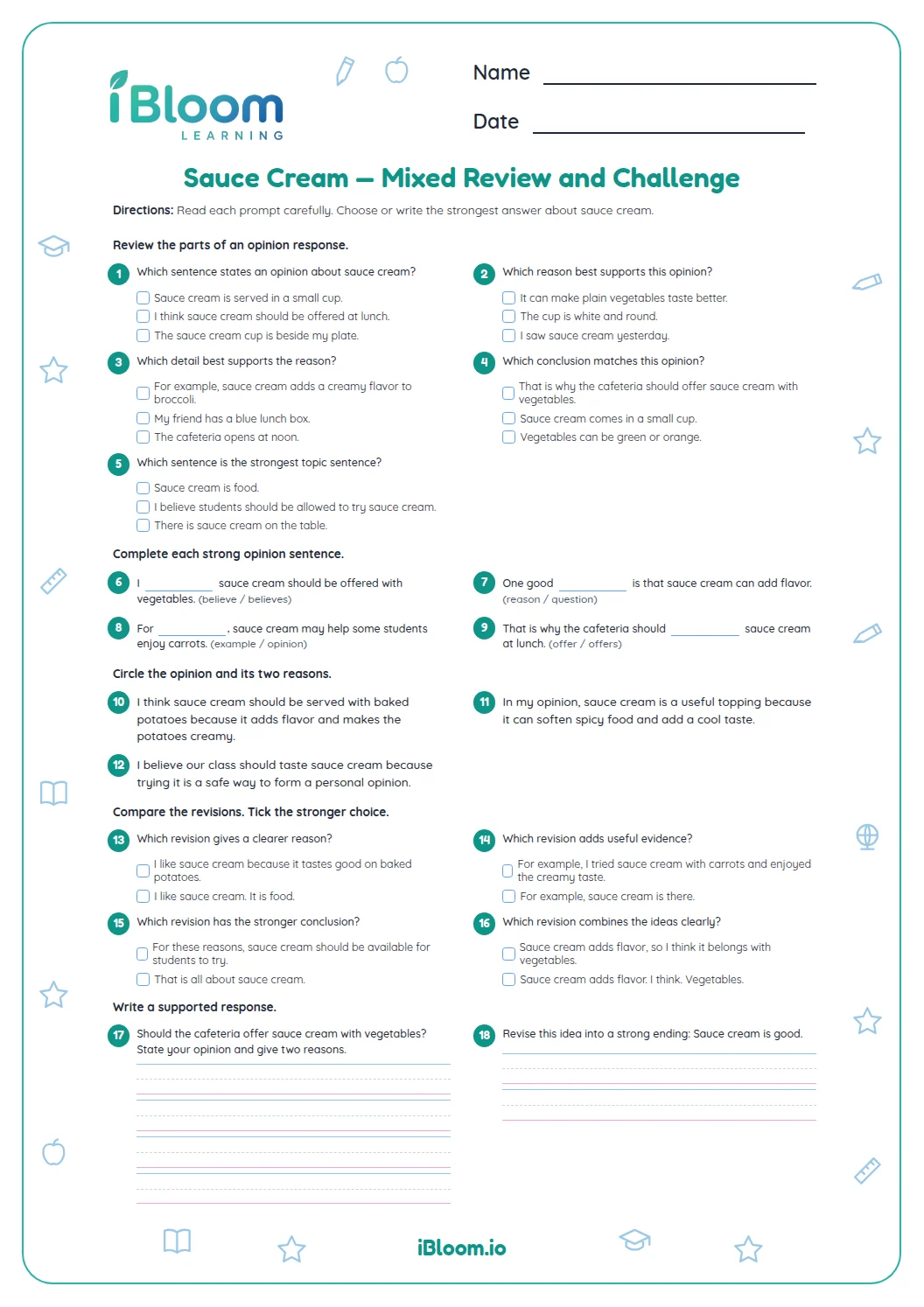
About this worksheet
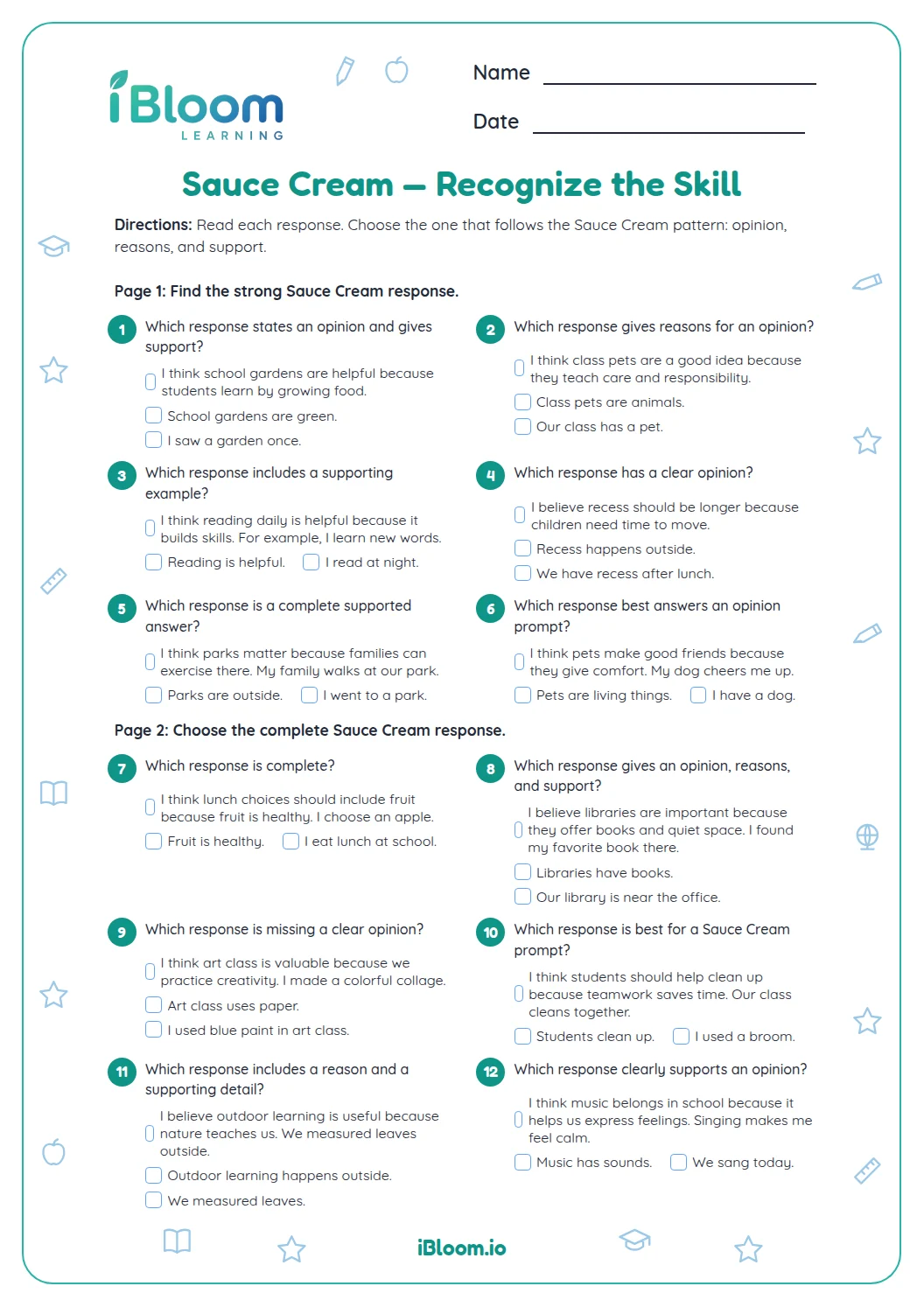
Using familiar sauce and topping choices, learners distinguish an opinion from a fact, give reasons, connect contrasting ideas, and practice a simple conclusion.
State an opinion and give a reason
An opinion tells what a writer thinks or prefers. A reason explains why. A sentence such as “I like berry sauce because it tastes fresh” includes both parts.
Connect ideas for the reader
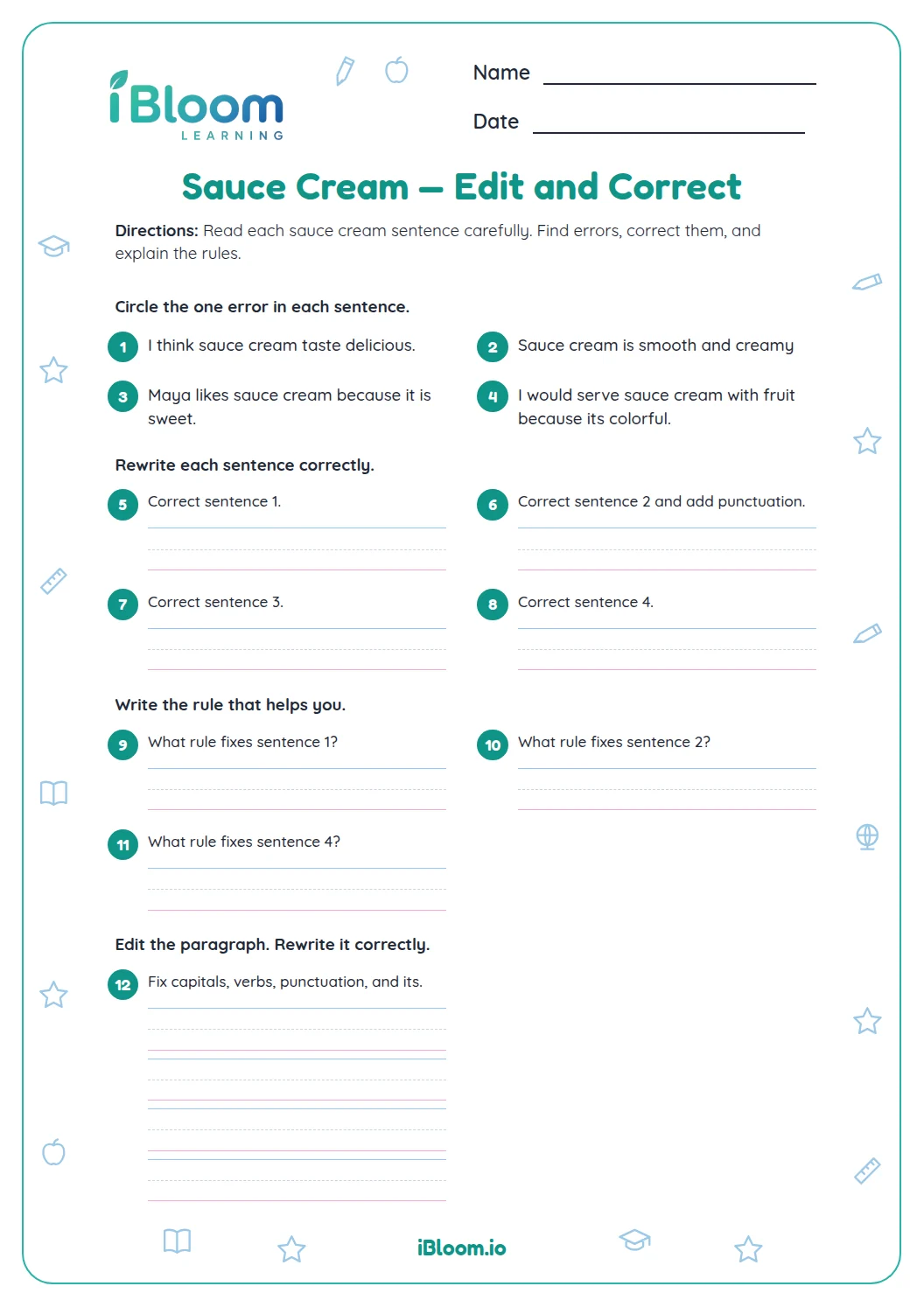
Words such as because link a claim to a reason. Words such as but show a contrast. A closing sentence can remind readers of the writer’s main opinion.
How to use this worksheet
- 1Identify opinion statements and reasons in Part A.
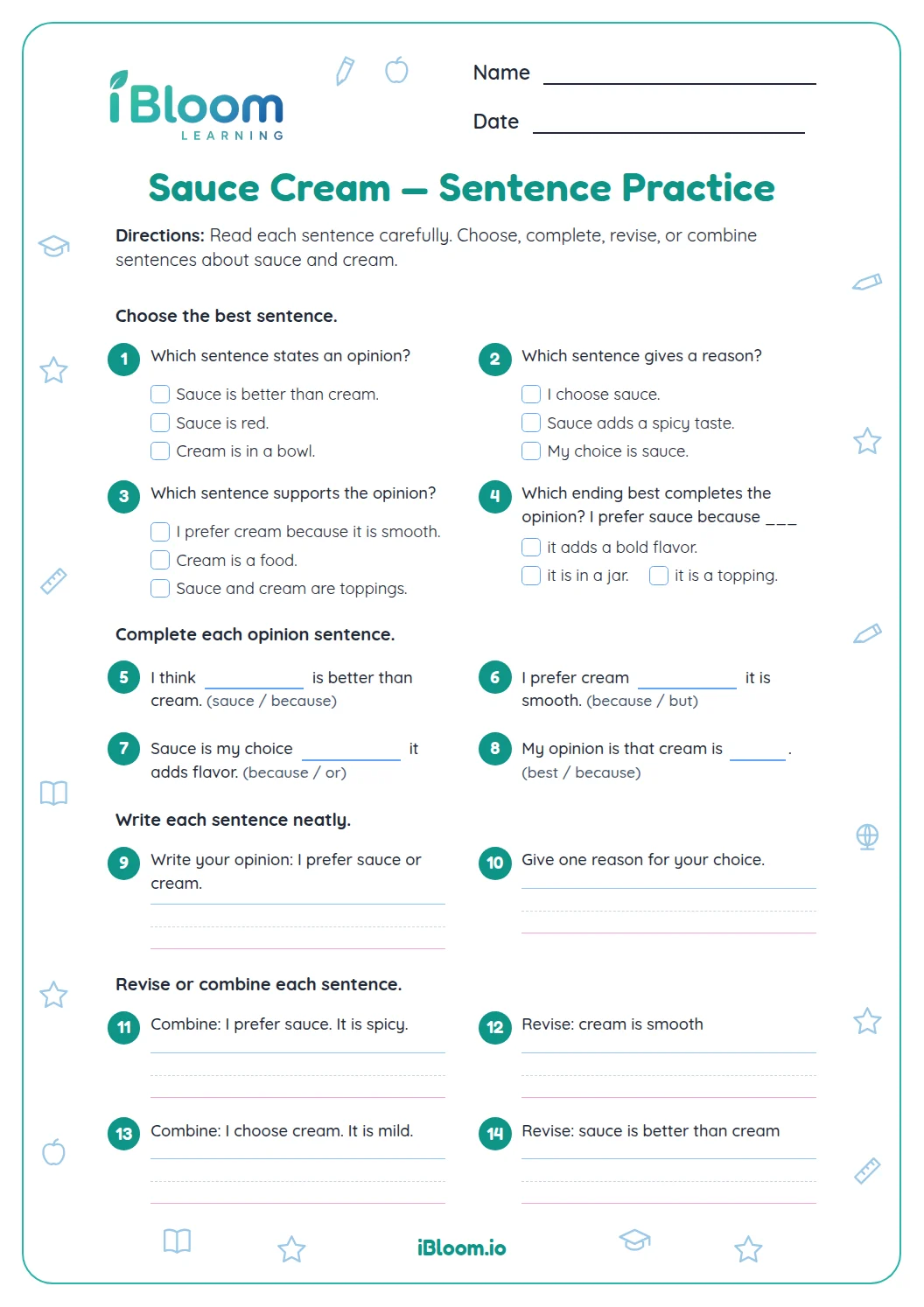
- 2Complete each sentence in Parts B and C with a fitting word or idea.
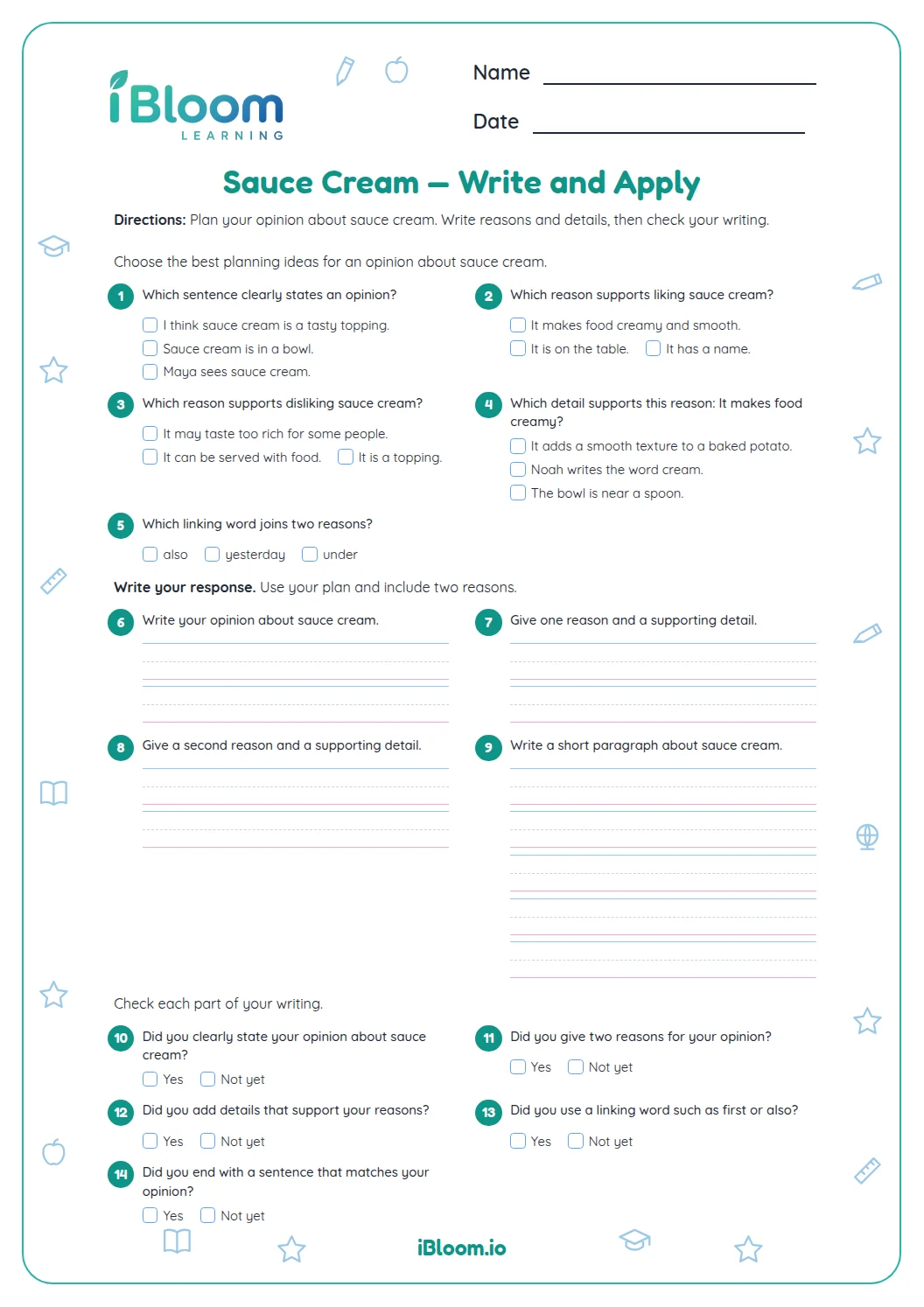
- 3For open responses, give a clear opinion and a reason; answers may vary.
A common mix-up
The mistake
Giving a preference without explaining it.
The fix
Add a reason that tells the reader why you prefer it.
What to practice next
Further reading
Questions parents and teachers ask
What will students practice?
Students identify an opinion and a reason, choose linking words such as because and but, then complete short opinion statements. Familiar sauce and topping choices let learners focus on how writers state preferences and support them with reasons.
Do the last questions have only one answer?
Several prompts invite students to choose a topping or supply a reason, so answers can vary. The key gives sample responses. A different response is also appropriate when it states a clear opinion and gives a fitting reason that supports the writer’s preference.
How can a learner write a stronger opinion?
State the preference directly, add a reason that explains it, and use a linking word to connect the ideas. For example, a learner can name a favorite topping and explain the taste or texture that makes it appealing to the reader.
What does a conclusion do?
A concluding sentence gives the reader a final reminder of the writer’s opinion. On this worksheet, learners complete a closing thought that restates the idea that fruit is the best topping, then try a short opinion of their own.