



About this worksheet
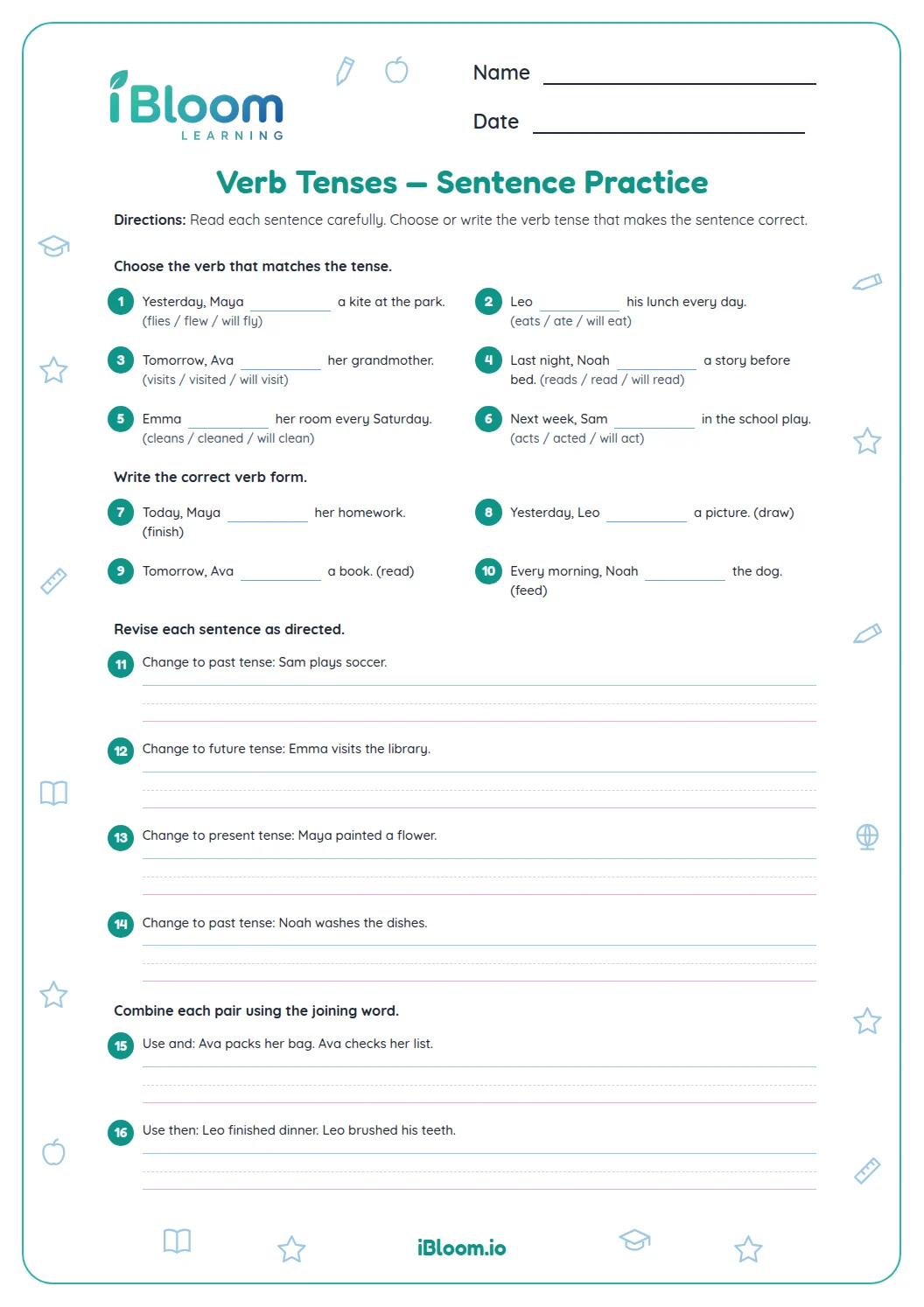
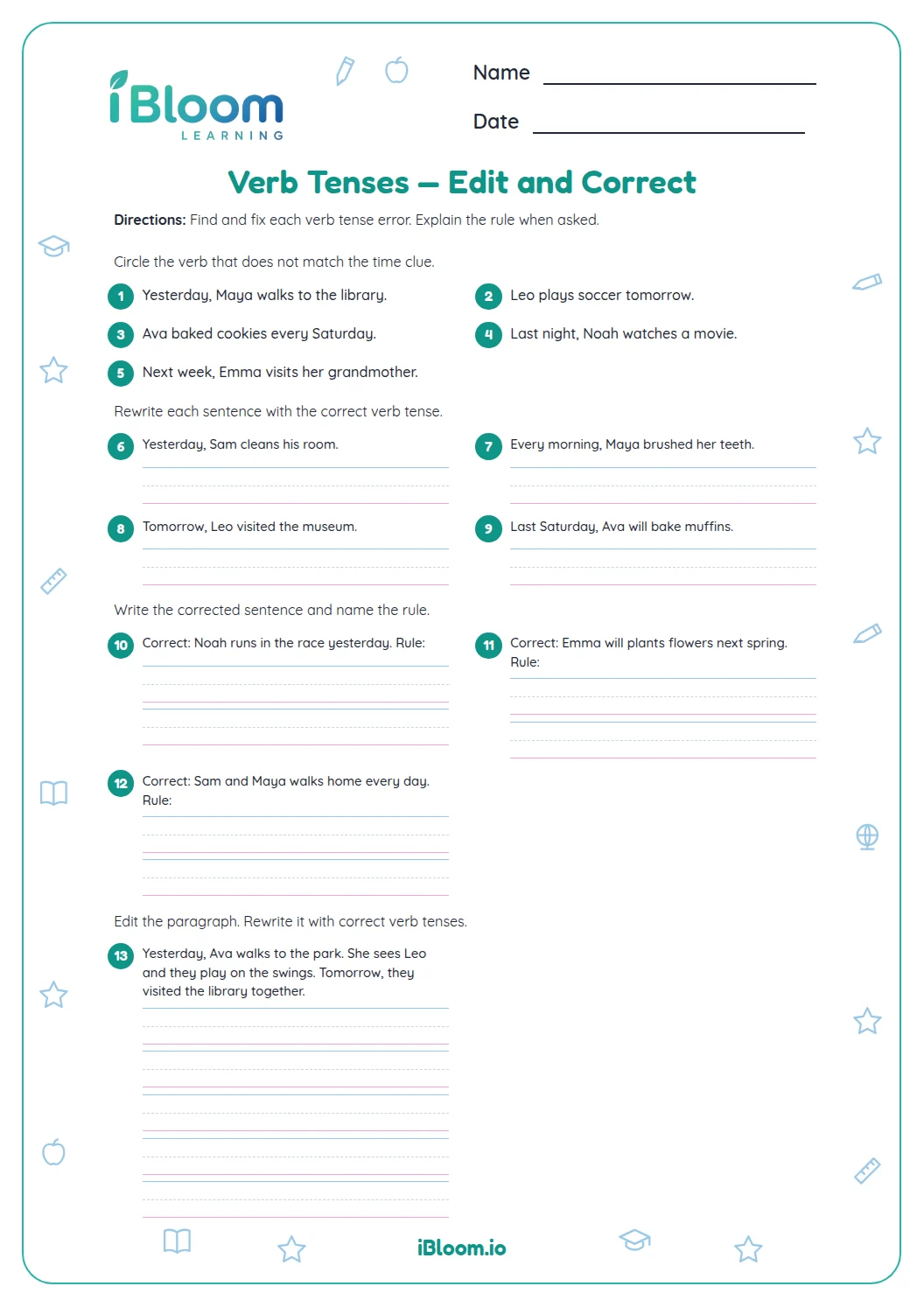
This Grade 3 printable gives learners 14 short questions on using verbs in context and choosing forms that fit each sentence. It includes a separate answer key for checking responses.
Aligned to L.3.1
What will learners practice?
The worksheet has 18 questions arranged in increasingly demanding parts. Each part focuses on a distinct way to use verb tenses.
For example, question 1 asks: “{qs[0]["prompt"]}” The answer key gives a concise check for every item.
- Part A builds recognition of verb tenses.
- Later parts ask learners to apply the idea and explain a choice.
How can students work through verb tenses?
Read the complete prompt first, then look for the detail that signals verb tenses. Reread the sentence or model before choosing an answer.
How should families review the answers?
Compare each response with the key, then revisit the words or details that support it. Ask the learner to explain one answer in their own words.
How to use this worksheet
- 1Read the directions and name the skill in your own words.
- 2Complete Part A carefully, checking each prompt before answering.
- 3Move through the later parts in order and use evidence from the item.
- 4Compare answers with the key and correct any missed items.
- 5Choose one response and explain how you reached it.
Common mistakes and quick fixes
The mistake
Answering before rereading the full item.
The fix
Read the whole sentence or model again, then point to the clue that supports the answer.
The mistake
Choosing an answer because it looks familiar.
The fix
Check that the choice fits the exact meaning and wording in the prompt.
The mistake
Skipping a check after finishing.
The fix
Use the key to review every response and explain any correction.
Curriculum alignment
This worksheet practices skills described in L.3.1.
Recognize and use simple past, present, and future verbs from sentence clues.
On this sheet: Questions identify and supply simple verb tenses using clear time clues.
Show the official wordingHide the official wording
Demonstrate command of the conventions of standard English grammar and usage when writing or speaking.
What to practice next
Make more practice
Questions parents and teachers ask
What tenses appear on this worksheet?
Students practice simple past, present, and future forms. They choose verbs that fit time clues, identify a verb’s tense in context, and write a verb form from a base verb. The examples use familiar actions such as cleaning, waiting, and visiting.
How many questions are included?
The worksheet contains 14 questions in three parts, followed by a separate two-page answer key. It moves from choosing a verb form to naming a tense and completing a sentence. Students can finish a section before checking their work. Have the learner point to the clue in the worksheet and explain the choice.
How can I explain “will clean”?
“Will” plus the base verb points to an action that has not happened yet. In “Tomorrow, we will present,” the word “Tomorrow” gives the time clue. Students can look for similar clues before deciding which form to use. Have the learner point to the clue in the worksheet and explain the choice.
Why does “Yesterday, Lena cleaned” use cleaned?
“Yesterday” tells when the action happened. “Cleaned” is the past-tense form of the regular verb “clean,” so it fits the sentence. The other options describe a routine or a future action. Have the learner point to the clue in the worksheet and explain the choice.
How should students check their answers?
Have students finish the worksheet first, then use the key to check each response. For a missed item, reread its time clue and say the sentence aloud with the corrected verb. This makes the relationship between time and tense easier to notice.