Free printable practice
Eating Practice Activities
Grade 4 eating-themed informative writing prompts help students explain food-related topics with facts, organization, examples, and clear conclusions.
Free printable worksheet PDFs
Preview every available page, then download the free worksheet PDF for home, homeschool, tutoring, or classroom practice.
Preview the exact activity before downloading it.
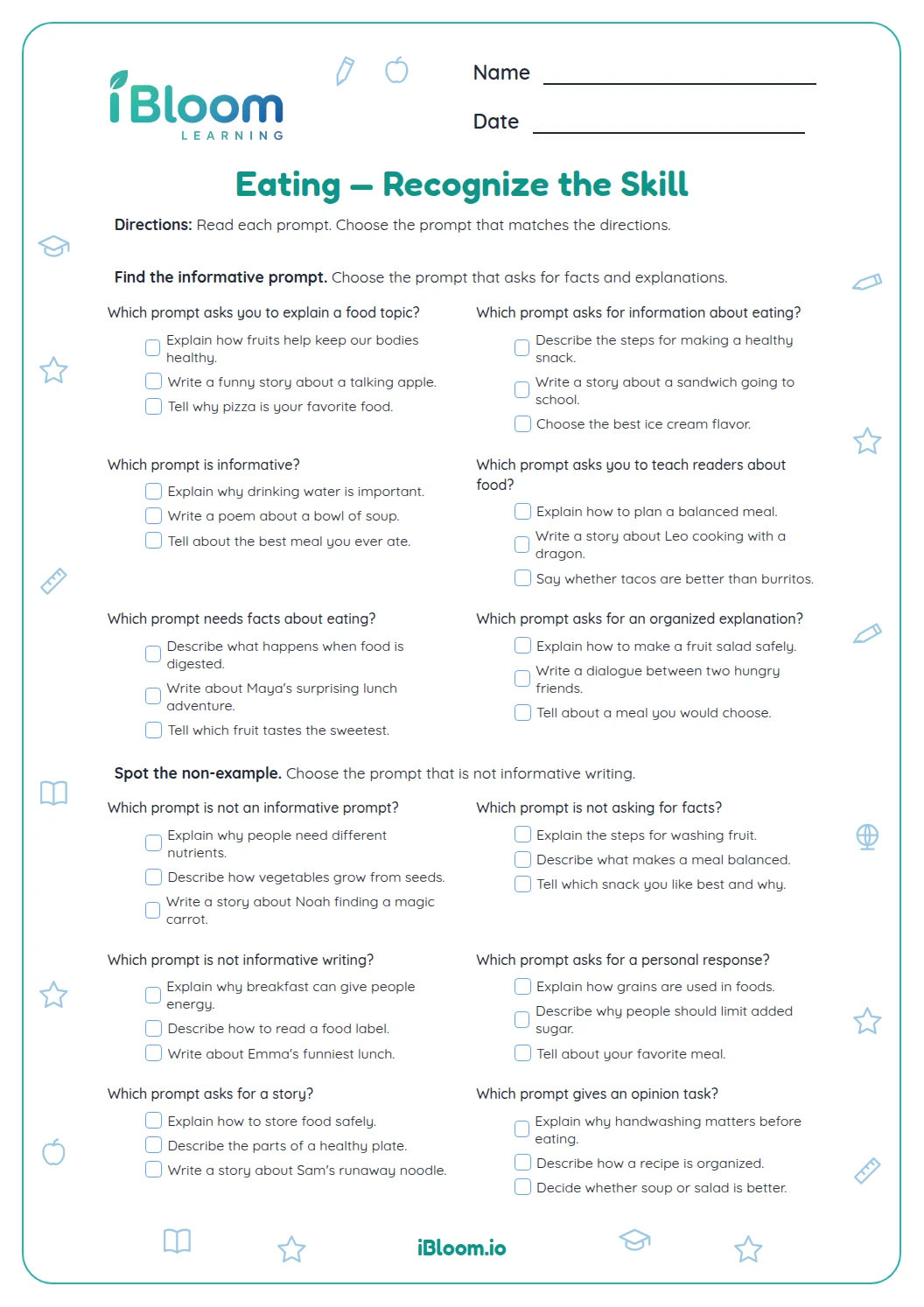 Eating — Recognize the SkillGrade 4 eating-themed informative writing prompts help students explain food-related topics with facts, organization, examples, and clear conclusions. This recognize the skill worksheet provides a distinct, age-appropriate way to practise the same lesson.Grade 4Free PDF preview
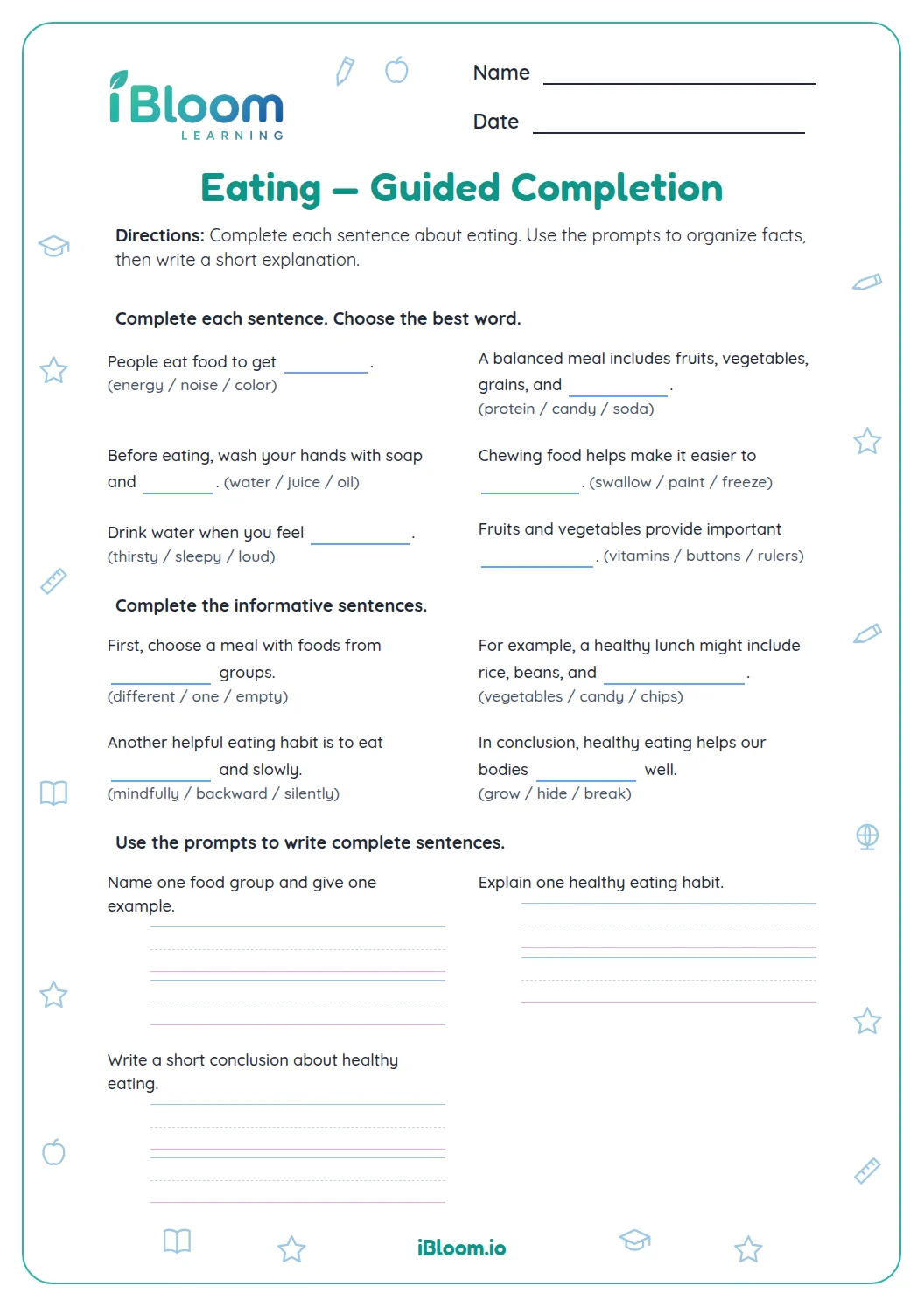 Eating — Guided CompletionGrade 4 eating-themed informative writing prompts help students explain food-related topics with facts, organization, examples, and clear conclusions. This guided completion worksheet provides a distinct, age-appropriate way to practise the same lesson.Grade 4Free PDF preview
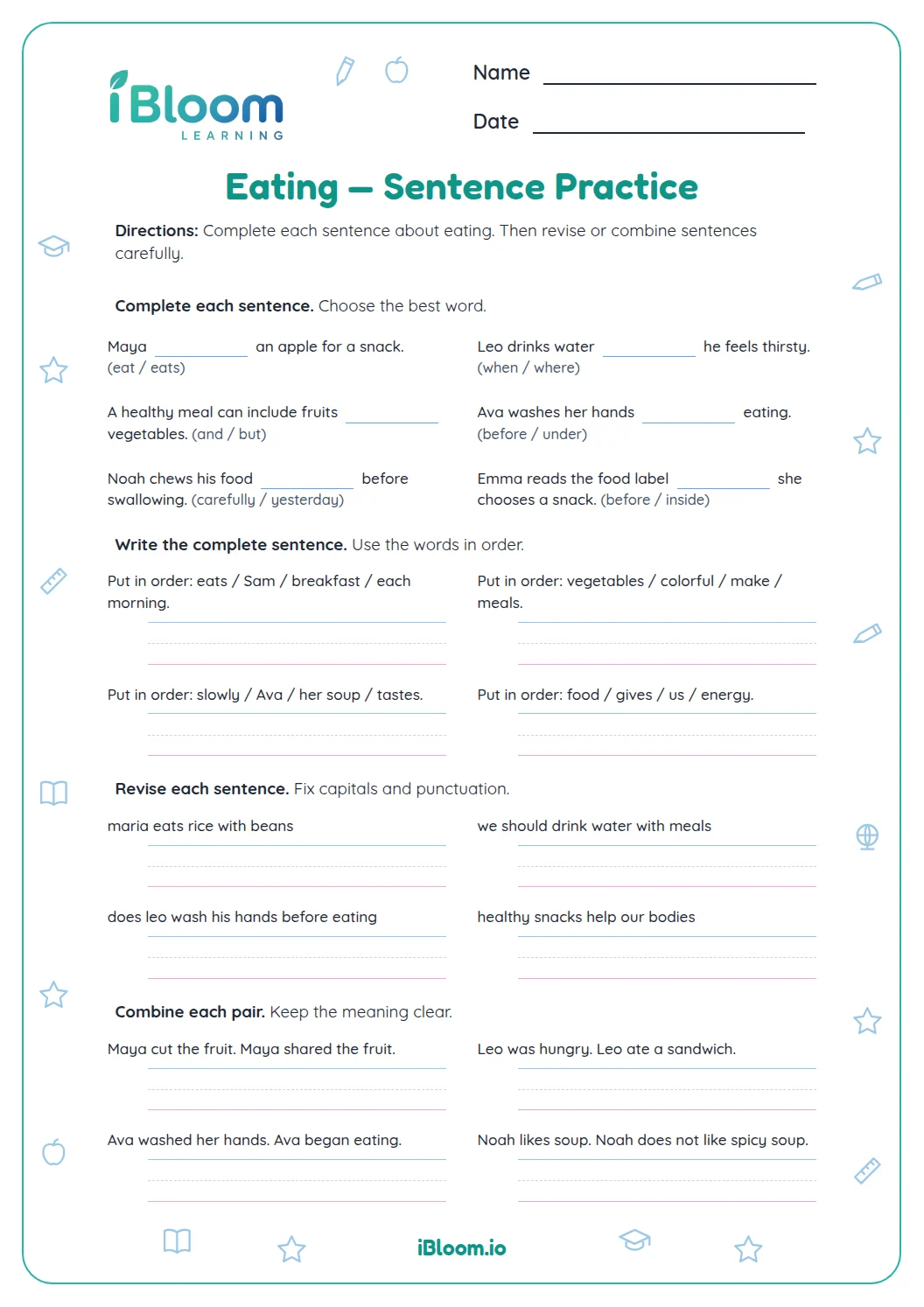 Eating — Sentence PracticeGrade 4 eating-themed informative writing prompts help students explain food-related topics with facts, organization, examples, and clear conclusions. This sentence practice worksheet provides a distinct, age-appropriate way to practise the same lesson.Grade 4Free PDF preview
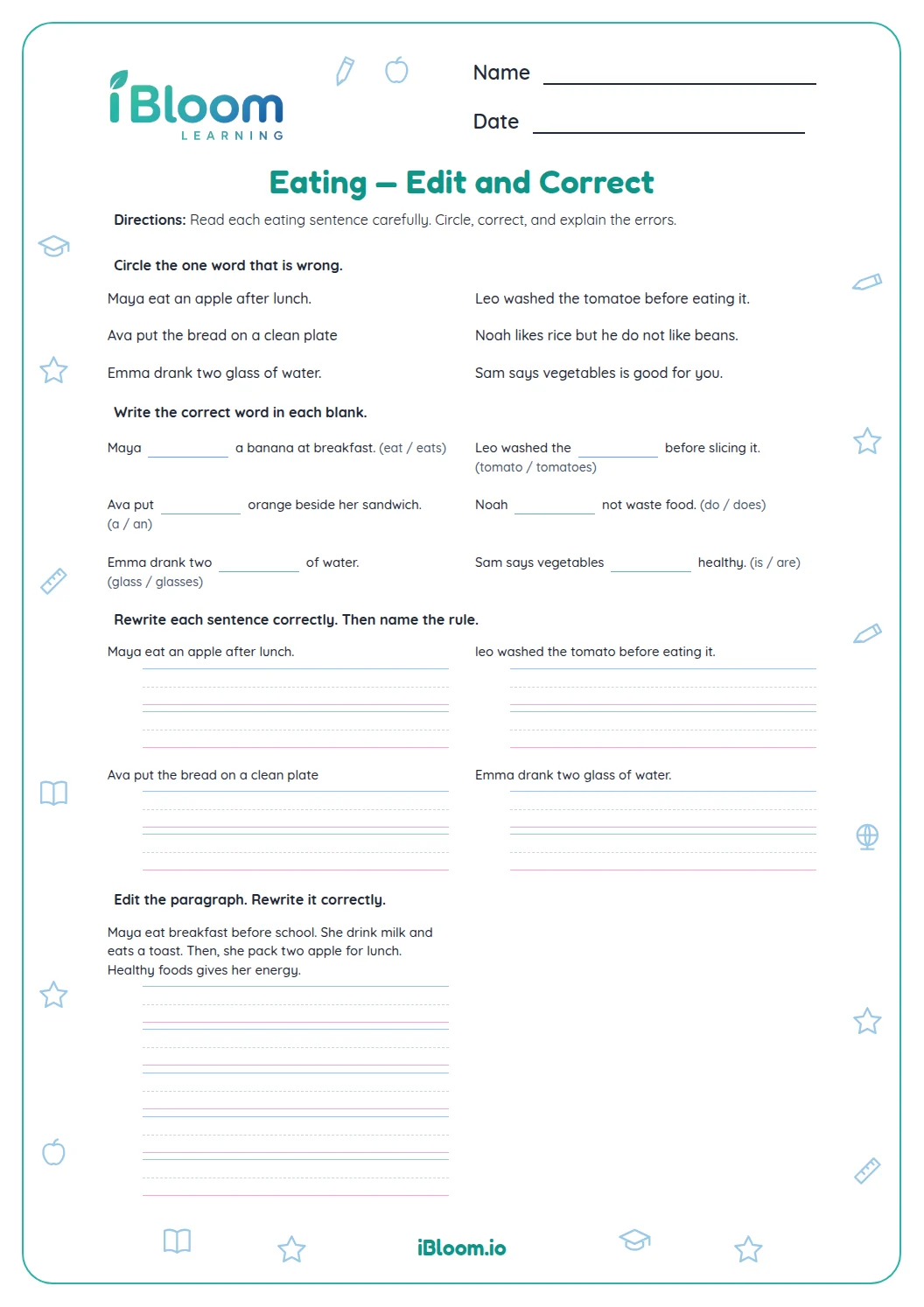 Eating — Edit and CorrectGrade 4 eating-themed informative writing prompts help students explain food-related topics with facts, organization, examples, and clear conclusions. This edit and correct worksheet provides a distinct, age-appropriate way to practise the same lesson.Grade 4Free PDF preview
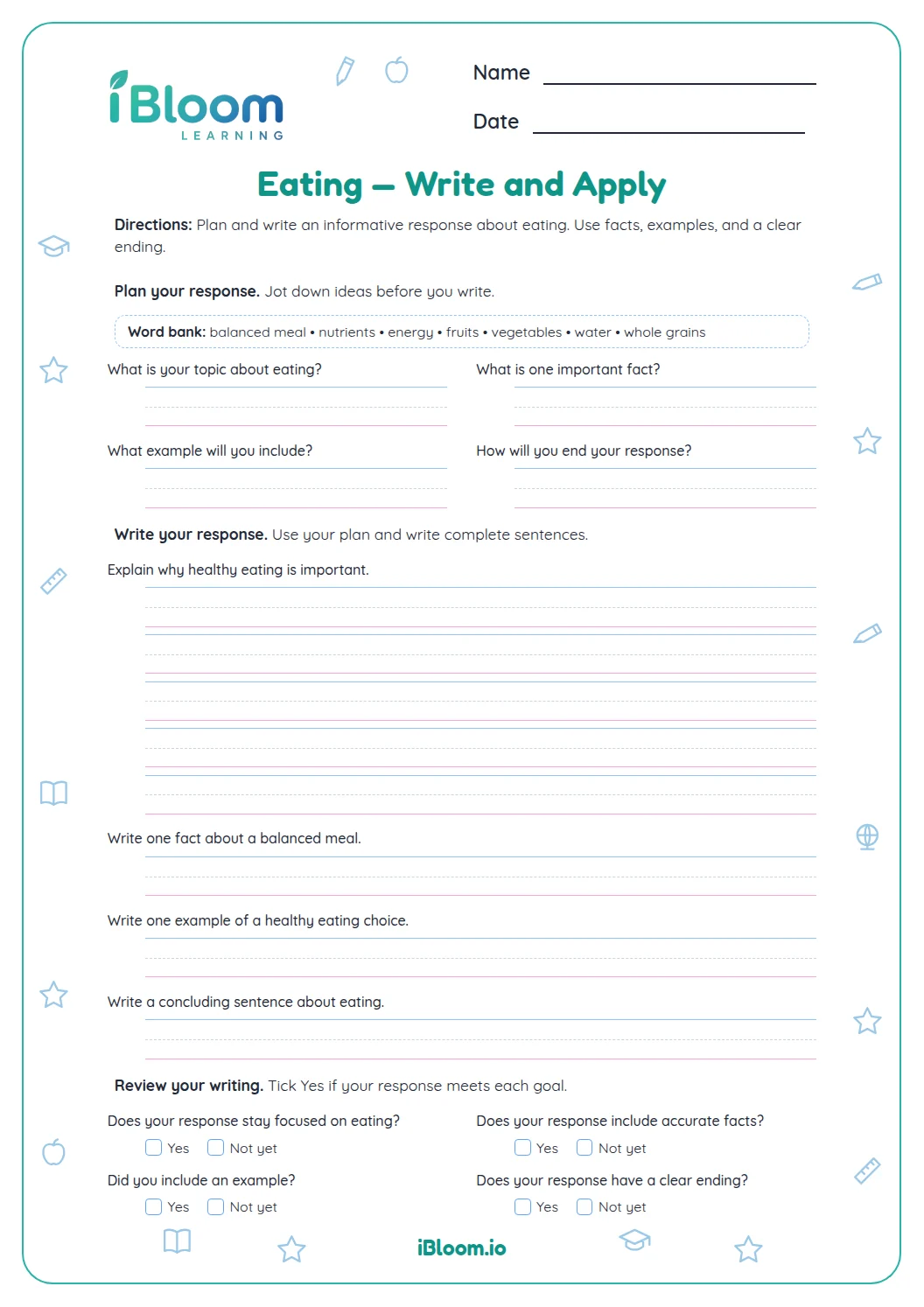 Eating — Write and ApplyGrade 4 eating-themed informative writing prompts help students explain food-related topics with facts, organization, examples, and clear conclusions. This write and apply worksheet provides a distinct, age-appropriate way to practise the same lesson.Grade 4Free PDF preview
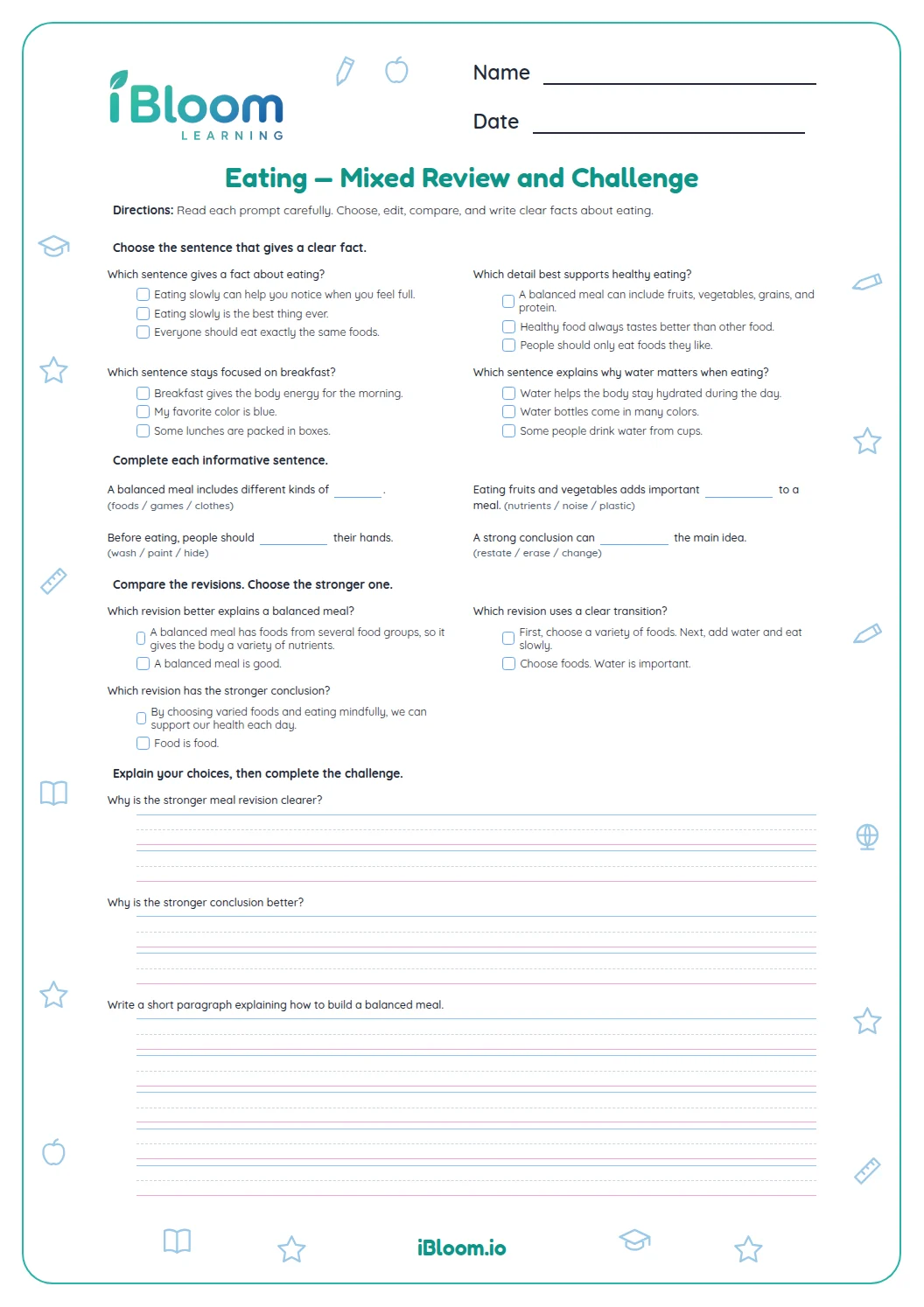 Eating — Mixed Review and ChallengeGrade 4 eating-themed informative writing prompts help students explain food-related topics with facts, organization, examples, and clear conclusions. This mixed review and challenge worksheet provides a distinct, age-appropriate way to practise the same lesson.Grade 4Free PDF preview
Practice that builds confidence
Informative writing with a familiar topic
These Grade 4 informative writing worksheets use eating-related prompts to help children explain ideas clearly, not tell a story or argue an opinion. Students practise choosing relevant facts, defining key words, adding examples, and organizing information about familiar food topics.
The printable activities may ask children to plan and write about meals, snacks, food choices, table routines, or why certain eating habits matter. Each prompt gives students a concrete subject so they can focus on building well-structured explanatory paragraphs.
Eating is part of every child’s daily life, so these prompts give Grade 4 writers a topic they can describe with confidence. Instead of saying “I like pizza,” students learn to explain: What is the topic? What facts help the reader understand it? What examples make the explanation clearer? They may write about packing a lunch, comparing snacks, describing a balanced meal, or explaining a family eating routine.

Building an organized response
A strong Grade 4 informative piece usually has a clear opening, grouped details, linking words, and a closing sentence. These worksheets support that progression by encouraging students to plan before they write. Children can list facts, sort details into categories, and then turn those notes into paragraphs using words such as first, also, for example, because, and finally.
Parent routine for home practice
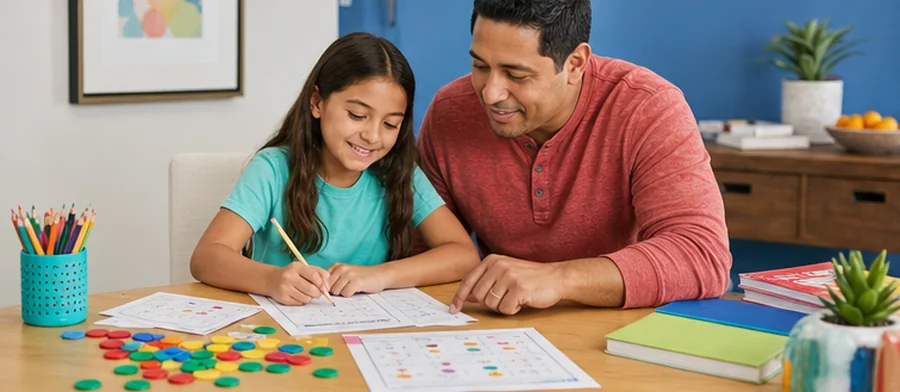
At home, choose one prompt and talk for a few minutes before writing. Ask your child to name the topic, give three true details, and explain one example from real life. For instance, before writing about a healthy snack, they might mention ingredients, when someone might eat it, and why it helps them feel ready for an activity. After writing, have your child underline the topic sentence, circle two facts, and read the closing aloud.
Classroom uses for teachers
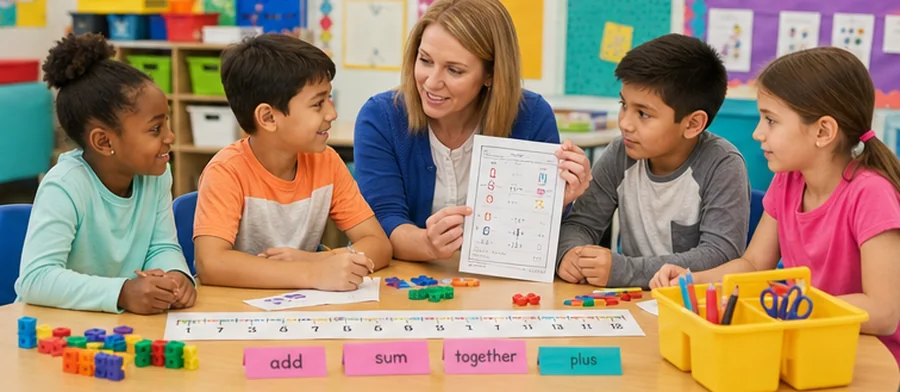
Teachers can use these printables for writing centers, morning work, small-group instruction, or a focused informative writing lesson. The eating theme also works well for oral rehearsal: partners can discuss a prompt, collect vocabulary, and then write independently. Finished responses can be used to check whether students are explaining with facts rather than giving only preferences.
Common errors to watch for
Many students slip into opinion writing, especially with food topics. Watch for sentences that only say something is “good,” “gross,” or “the best” without explaining why. Other common issues include listing facts with no order, repeating the same detail, forgetting a conclusion, or using vague words like stuff and things instead of precise nouns such as ingredients, portions, menu, routine, or nutrition.
Free printable PDF download
Use this grade 4 eating informative writing worksheet page to preview the activity, print it, or download it as a PDF for quick practice. It works well for homework, homeschool lessons, tutoring, morning work, revision, and classroom centers.
Answers and answer key support
After the child completes the worksheet independently, parents and teachers can use the answer support or answer key information to check the work, review mistakes, and choose the next practice step.
Why iBloom worksheets help
The prompts keep the subject familiar while still requiring Grade 4 writing skills: planning, elaboration, transitions, and clear explanation. A child-friendly strategy is “Name it, explain it, prove it”: name the eating topic, explain the main idea, and prove it with facts or examples. This gives students a simple path from prompt to polished informative paragraph.
Helpful answers
Frequently asked questions
What kind of writing do these eating worksheets practise?
They practise informative writing. Students explain food-related topics using facts, examples, definitions, organized details, and a clear ending rather than writing a story or only sharing an opinion.
Are the prompts about nutrition lessons or writing skills?
The main focus is writing. Eating topics provide familiar content, while the practice targets Grade 4 skills such as planning, grouping details, using transitions, and writing explanatory paragraphs.
How can I help my child start an eating prompt at home?
Ask your child to say the topic in one sentence, list three true details, and give one real-life example. Then have them turn those notes into an opening, detail sentences, and a closing.
What should I look for when checking the finished response?
Look for a clear topic sentence, facts that explain the topic, food-related vocabulary, logical order, transition words, and a conclusion that wraps up the explanation.
Can teachers use these worksheets in writing centers?
Yes. The prompts work well for centers, quick writes, small-group practice, or independent informative writing because the eating theme is easy for students to discuss before they write.
Is this grade 4 eating informative writing worksheet free?
Yes. You can preview it for free and use the printable worksheet for home or classroom practice.
Can I download this grade 4 eating informative writing worksheet as a PDF?
Yes. Use the worksheet download option to save a printable PDF, or print the worksheet directly from the page.
Does this grade 4 eating informative writing worksheet include answers or an answer key?
When the activity has fixed answers, iBloom includes answer support so parents and teachers can check the completed worksheet.