

About this worksheet
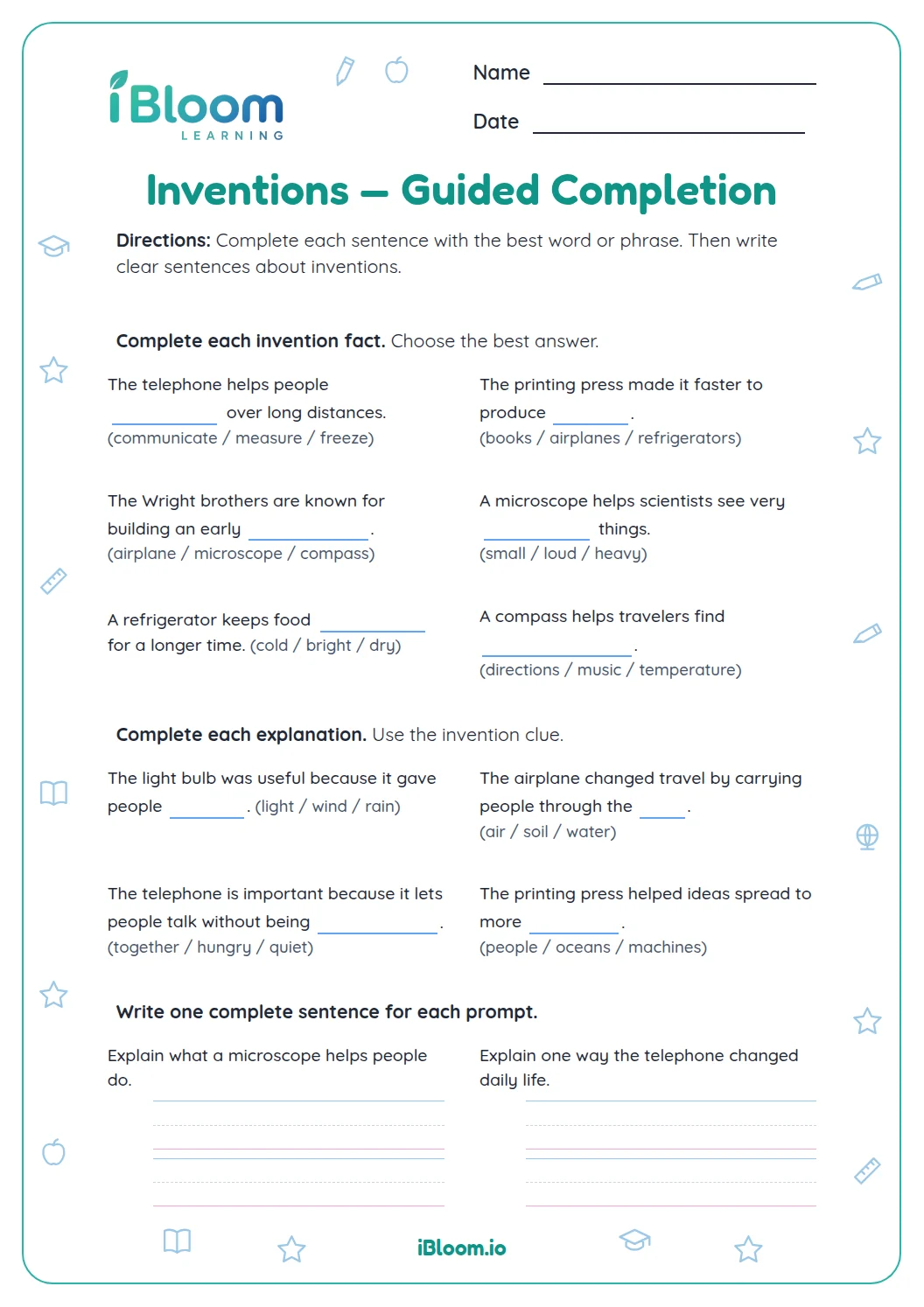
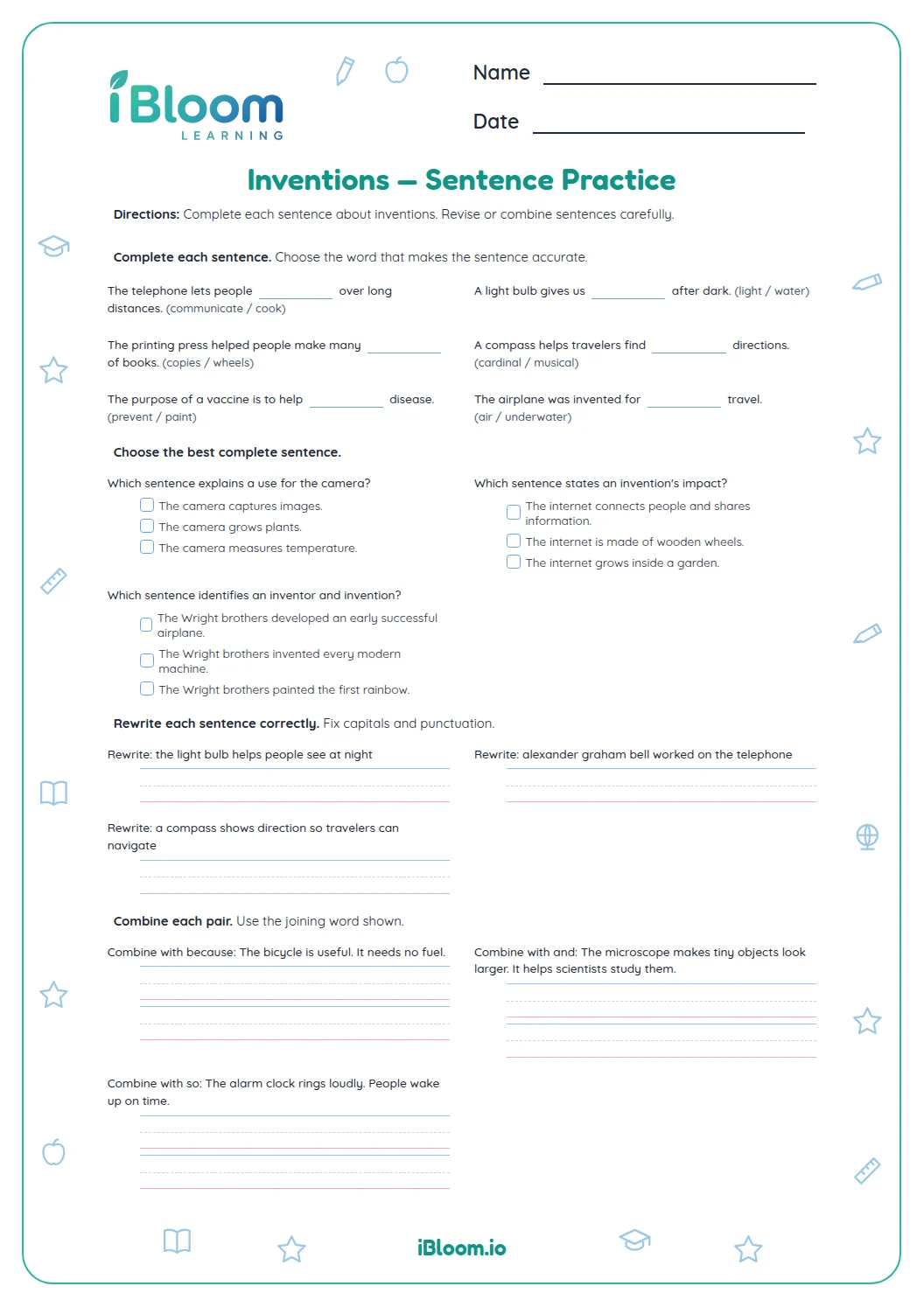
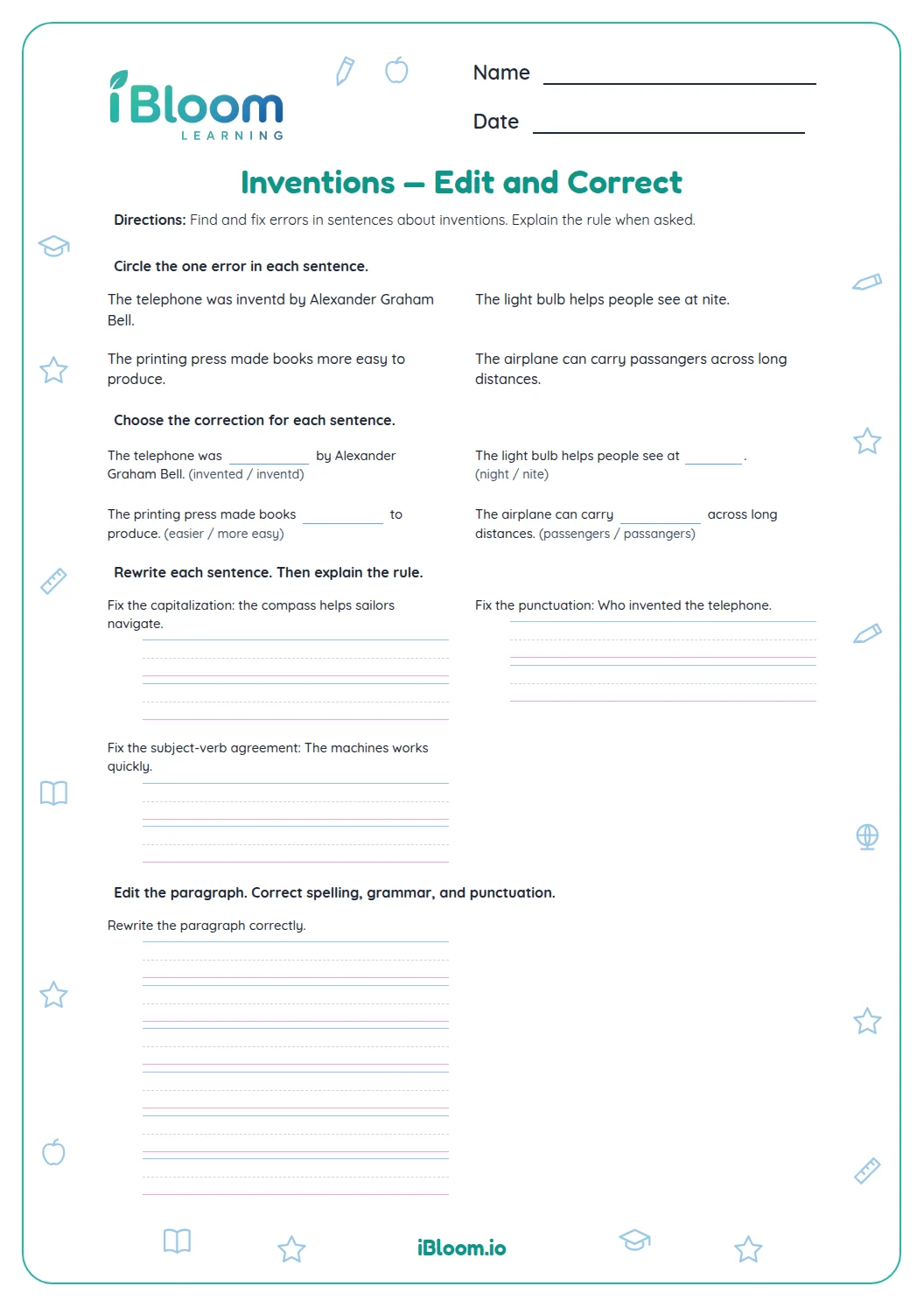
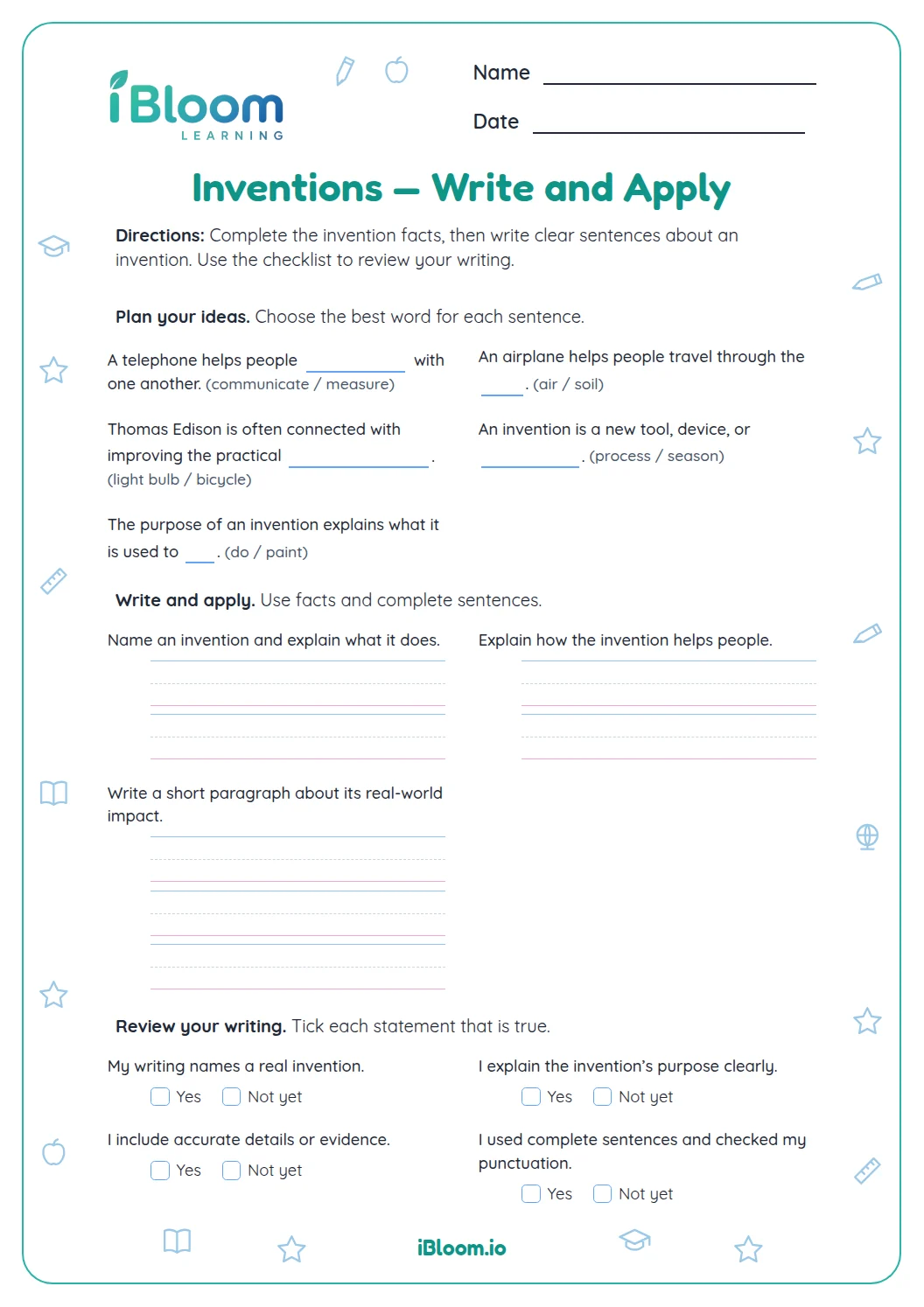
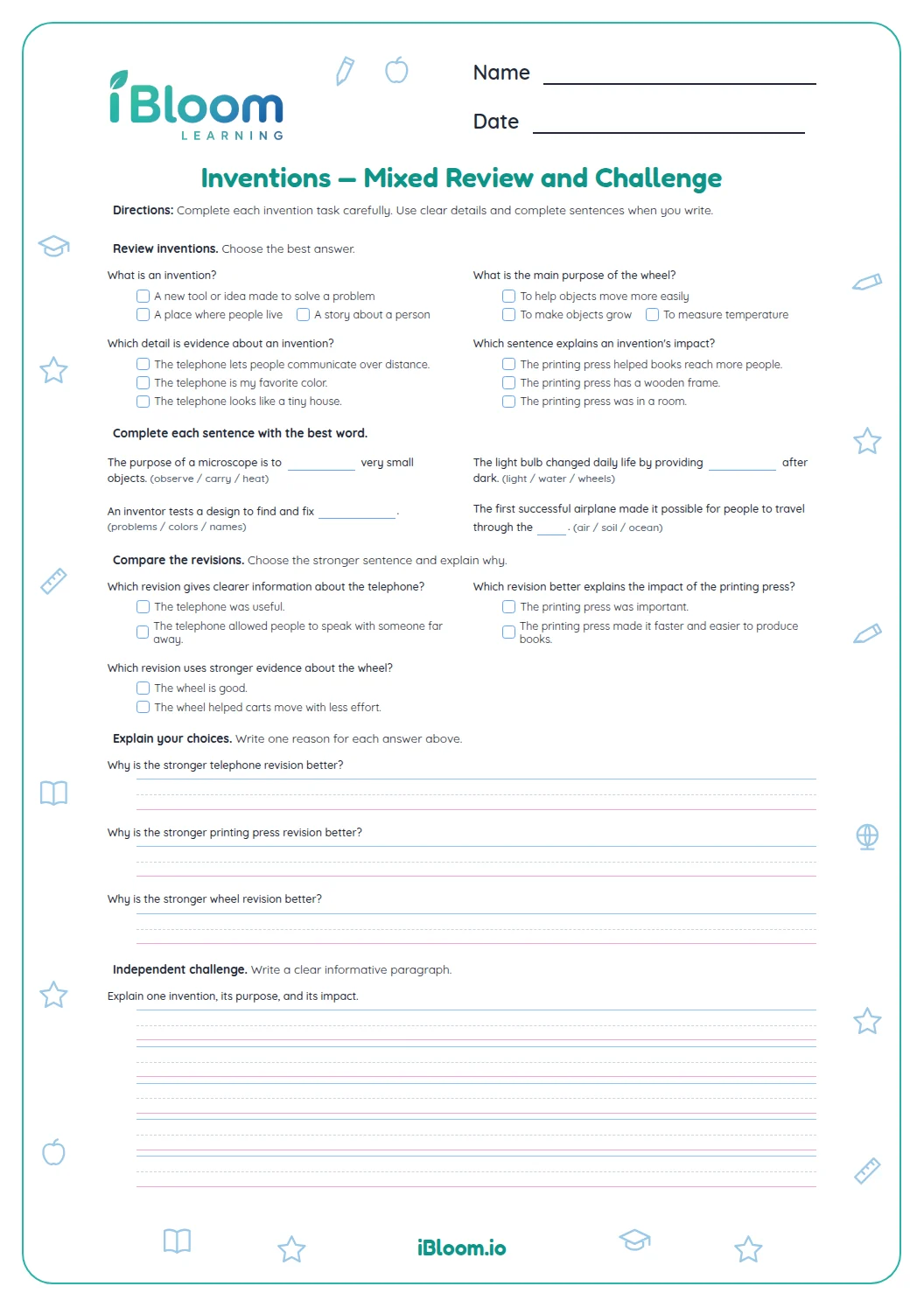
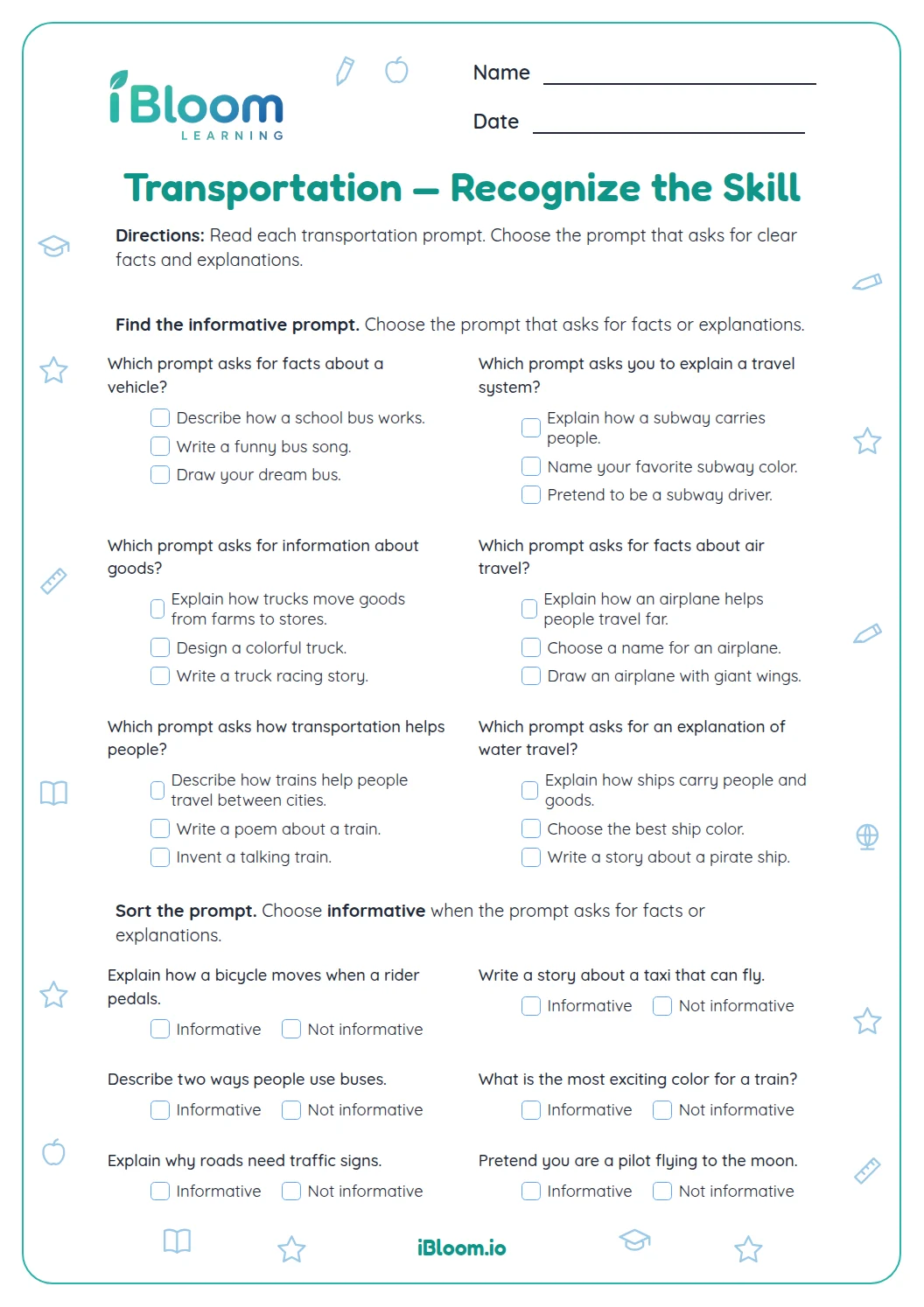
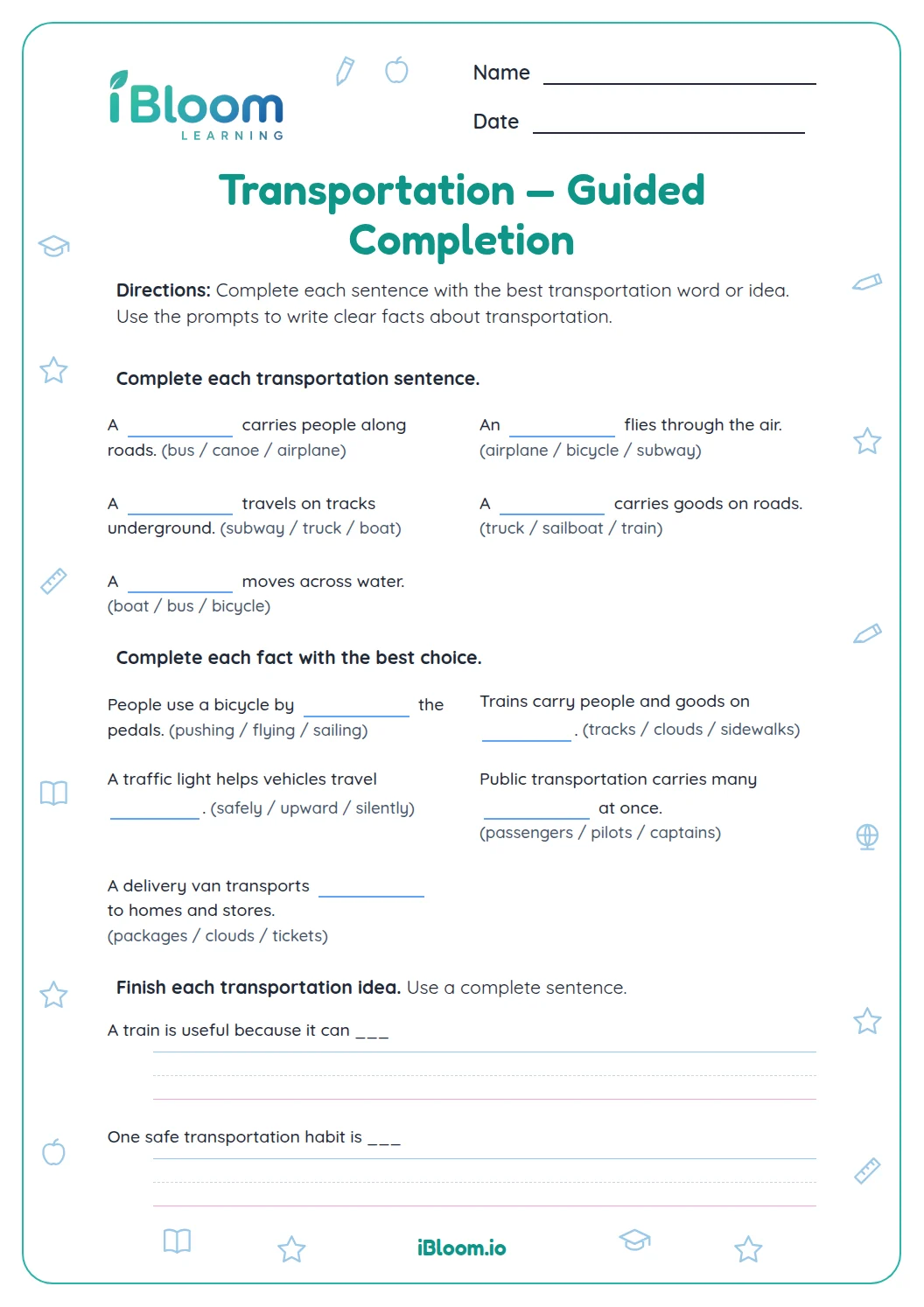
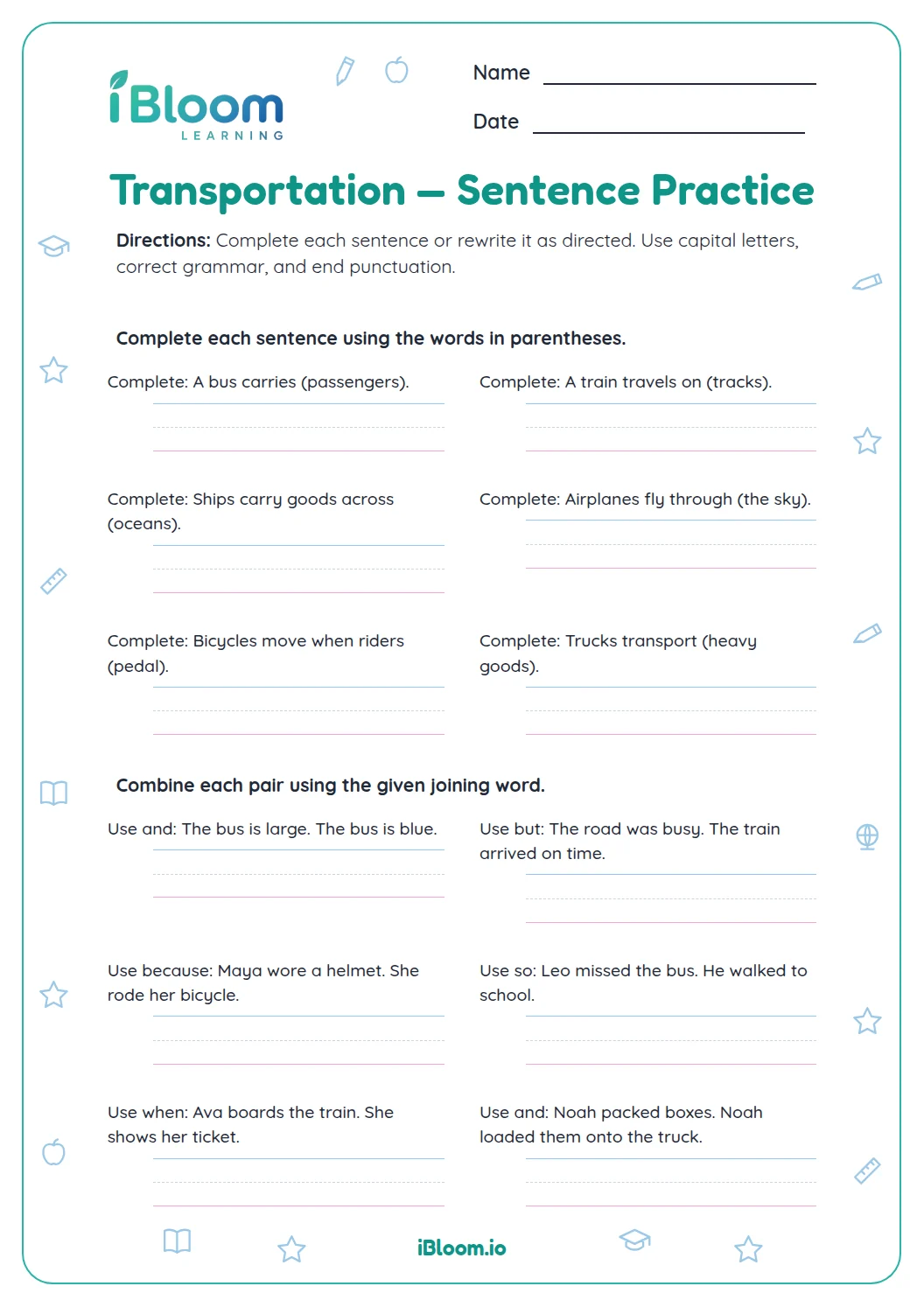
This Grade 4 printable uses inventions to practice informative writing. Across 14 questions, children recognize informative prompts, identify facts and useful details, and write a topic sentence with a matching fact. A separate answer key gives sample responses for the two brief writing questions. The practice supports CCSS W.4.2 by asking learners to choose focused information and write a brief explanation.
Aligned to W.4.2
How can you recognize an informative prompt?
An informative prompt asks the writer to explain how something works, describe a topic, or share facts. It does not ask the writer to persuade someone or invent a story. In question 1, “How did the telephone change communication?” calls for an explanation grounded in information.
In question 1, “How it changed calls” calls for an explanation grounded in information. Choose it over a preference or an imagined story.
- 1Prompt: How it changed calls
- 2It asks for facts about a real invention.
- 3Choose it as the informative prompt.
How do facts support an invention topic?
Use the topic to decide which facts belong. Zipper teeth join fabric edges, a compass needle points north, and a refrigerator removes heat. These details explain an invention’s purpose or operation; a color preference is an opinion.
- 1Question: What do zipper teeth do?
- 2Answer: They join fabric edges.
- 3That fact explains how the zipper works.
How does the sheet move from recognition to writing?
The 14 questions move from recognizing informative prompts to identifying accurate details and applying the skill in two short written responses.
- Part A: recognize informative invention prompts
- Part B: identify facts, details, sources, and opinions, then write two responses
- Answer key on its own pages.
How to use this worksheet
- 1Read the whole prompt before choosing or writing.
- 2Ask whether it requests facts, an opinion, or an imagined story.
- 3Connect each detail to the invention and the question being asked.
- 4For the final two questions, write a clear topic sentence followed by a related fact.
- 5Use the answer key’s sample responses to check that your ideas fit.
Common mistakes and quick fixes
The mistake
Choosing a prompt because it mentions an invention
The fix
Check what the writer is asked to do: explain, persuade, or imagine.
The mistake
Picking a true detail that is off topic
The fix
Match the detail to the paragraph’s specific main idea.
The mistake
Treating an opinion as a fact
The fix
Look for judgment words such as “best” or “most exciting”; those express a viewpoint.
Common Core alignment
Choose focused facts and details that help explain an invention topic.
On this sheet: Learners recognize prompts, topic sentences, details, and plans used to create informative explanations.
Show the official wordingHide the official wording
Write informative/explanatory texts to examine a topic and convey ideas and information clearly.
What to practice next
Make more practice
Further reading
Questions parents and teachers ask
What makes a prompt informative?
An informative prompt asks a writer to explain or describe a topic with facts. “How does a seat belt protect passengers?” invites an explanation. A question asking what is best or what the writer likes calls for an opinion, while a request to imagine a character points toward a story.
How can a child tell a fact from an opinion?
A fact can be checked with reliable information; an opinion expresses a judgment or preference. “A camera records images” is factual. “A bicycle is the best invention” is an opinion. Question 10 asks children to tell the difference between a checkable statement and a personal judgment.
What is a supporting detail?
A supporting detail explains or gives information about the paragraph’s main idea. If the topic sentence explains how a bicycle moves, a detail about pedals turning a chain fits. A jacket color or a favorite ride does not explain how the invention works.
What is one worked example on this worksheet?
Question 5 asks what a wheelbarrow helps people do. “Move heavy loads” directly explains its purpose and can become part of an informative paragraph. A strong topic sentence names the subject and gives the reader a clear focus for the facts that follow.
How many questions are included?
There are 14 questions in two parts: four informative prompt choices, eight short answers about facts and details, and two written responses. A separate answer key includes sample answers for the open-ended writing questions. The set moves from recognizing a prompt to writing a focused explanation.
What comes after recognizing an informative prompt?
After recognizing informative prompts, practice planning a short response. Write a focused topic sentence, list accurate details that explain the invention, and organize those details so a reader can follow them. The last two questions begin that process with an invention topic sentence and a related fact.