






About this worksheet
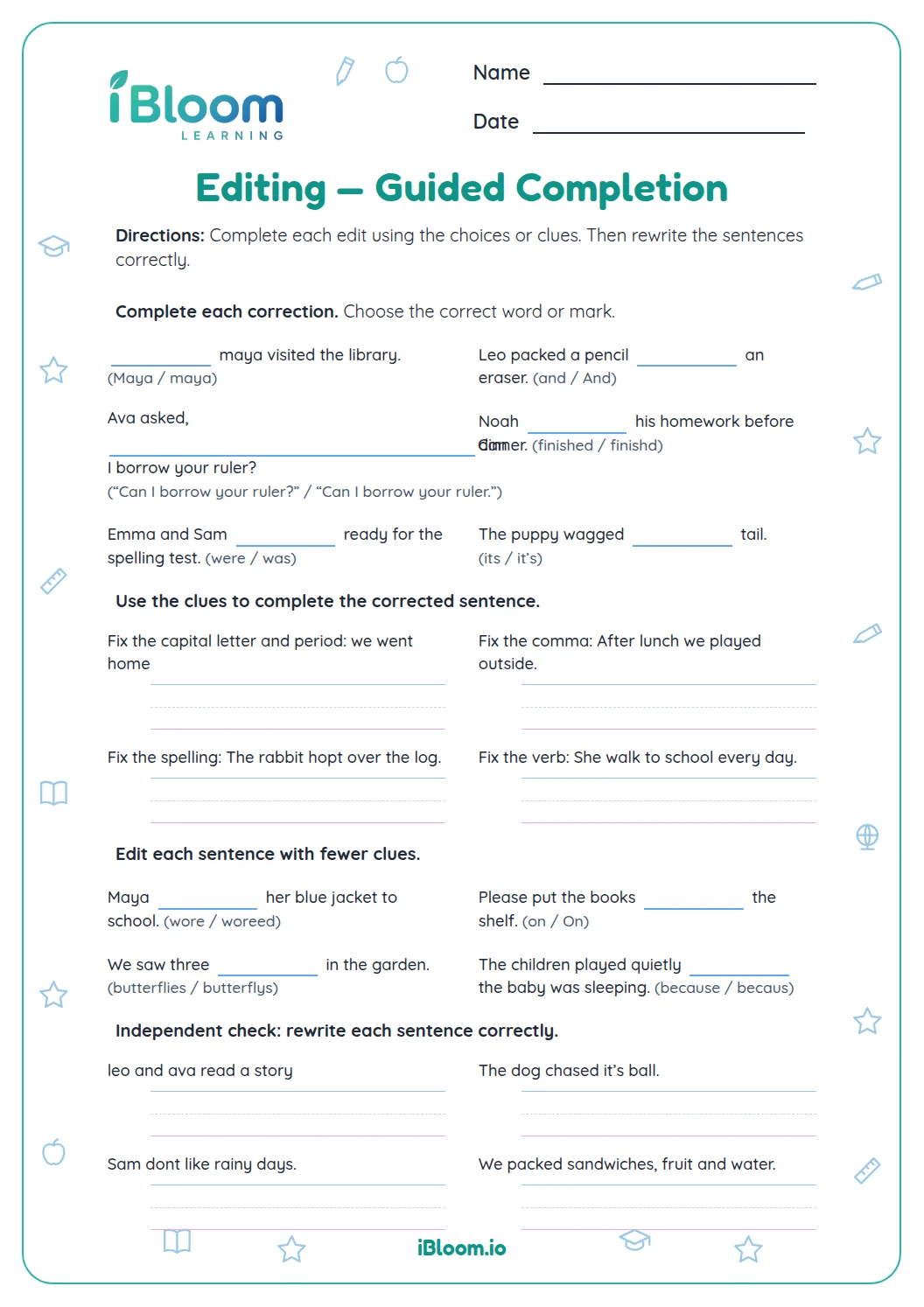
This Grade 4 sentence editing worksheet gives students 15 brief choices to proofread. Part A checks complete thoughts and sentence boundaries; Part B checks capitalization, commas and commonly confused words. Most answers are short words or a corrected sentence, so students can focus on the edit itself. The answer key lists each correct choice. The practice supports CCSS L.4.1.f and L.4.2.a.
Aligned to L.4.1.f and L.4.2.a
What will students edit?
Fifteen multiple-choice items move from complete sentences to capitals and commas, then to common word and punctuation corrections. Each choice is a complete sentence, so students can compare how a small edit changes clarity.
Questions 11–15 ask students to fix familiar mix-ups such as its/it’s and their/they’re.
- Part A: complete thoughts and sentence boundaries
- Part B: capitalization, commas and word choice
How do you spot a fragment or run-on?
A complete sentence has a subject and a complete thought. A dependent opener such as “Before the bell rang” needs a main clause. Two complete thoughts need correct punctuation or a joining word.
- 1“Before the bell rang.” leaves the reader waiting.
- 2“Before the bell rang, we lined up.” completes the thought.
What should a final edit check?
Read once for sentence boundaries, then scan names and places for capitals. For a list of three or more items, commas separate the items. Finally, read commonly confused words in context: its shows possession; it’s means it is.
How to use this worksheet
- 1Read the whole sentence before choosing.
- 2Check that each sentence has a subject and finishes a thought.
- 3Look for two complete thoughts joined without punctuation.
- 4Scan names, places and holidays for capital letters.
- 5Read each corrected sentence aloud, then check the key.
Common mistakes and quick fixes
The mistake
Treating a dependent opener as a complete sentence.
The fix
Ask what happened after “because,” “when” or “before,” then add the missing main clause.
The mistake
Joining two sentences with only a comma.
The fix
Use a period or add a joining word after the comma.
The mistake
Choosing it’s for ownership.
The fix
Expand it’s to “it is”; if that does not fit, use its.
Common Core alignment
This worksheet practices the editing skills described by these standards.
Recognize and correct sentence fragments and run-ons.
On this sheet: Part A asks students to identify complete thoughts and correct fragments or run-ons.
Show the official wordingHide the official wording
Produce complete sentences, recognizing and correcting inappropriate fragments and run-ons.
Capitalize proper nouns and holidays in edited sentences.
On this sheet: Part B and C require students to correct capitalization.
Show the official wordingHide the official wording
Use correct capitalization.
What to practice next
Make more practice
Further reading
Questions parents and teachers ask
What editing skills are on this worksheet?
Students choose corrections for sentence fragments, run-ons, capitalization, commas in a series and commonly confused words. The questions are grouped in two parts, moving from sentence completeness to proofreading details. The separate key gives the corrected sentence for each item. Ask the student to name the proper noun and point to its capital letter before checking the answer key.
How can I explain a sentence fragment?
A fragment leaves out a subject, a complete thought or the main clause needed to finish an idea. For example, “Before the bell rang” makes a reader ask what happened before the bell. Read the complete item aloud after choosing, then use the key to explain the clue that makes the correction clear.
What is the difference between its and it’s?
Its shows that something belongs to an animal or object, as in “The puppy chased its tail.” It’s is short for “it is.” Try replacing the word with “it is”; if the sentence still makes sense, the contraction fits. Use this check after choosing: reread the full sentence and see whether every idea is joined clearly.
How long does this worksheet take?
Plan for about 20 minutes for all 15 questions, with more time if students discuss why a correction works. The answer key is the answer-key page and can be used for self-checking or a quick review together. A brief explanation of the correction helps students carry the same check into a paragraph they write.
What comes after this editing practice?
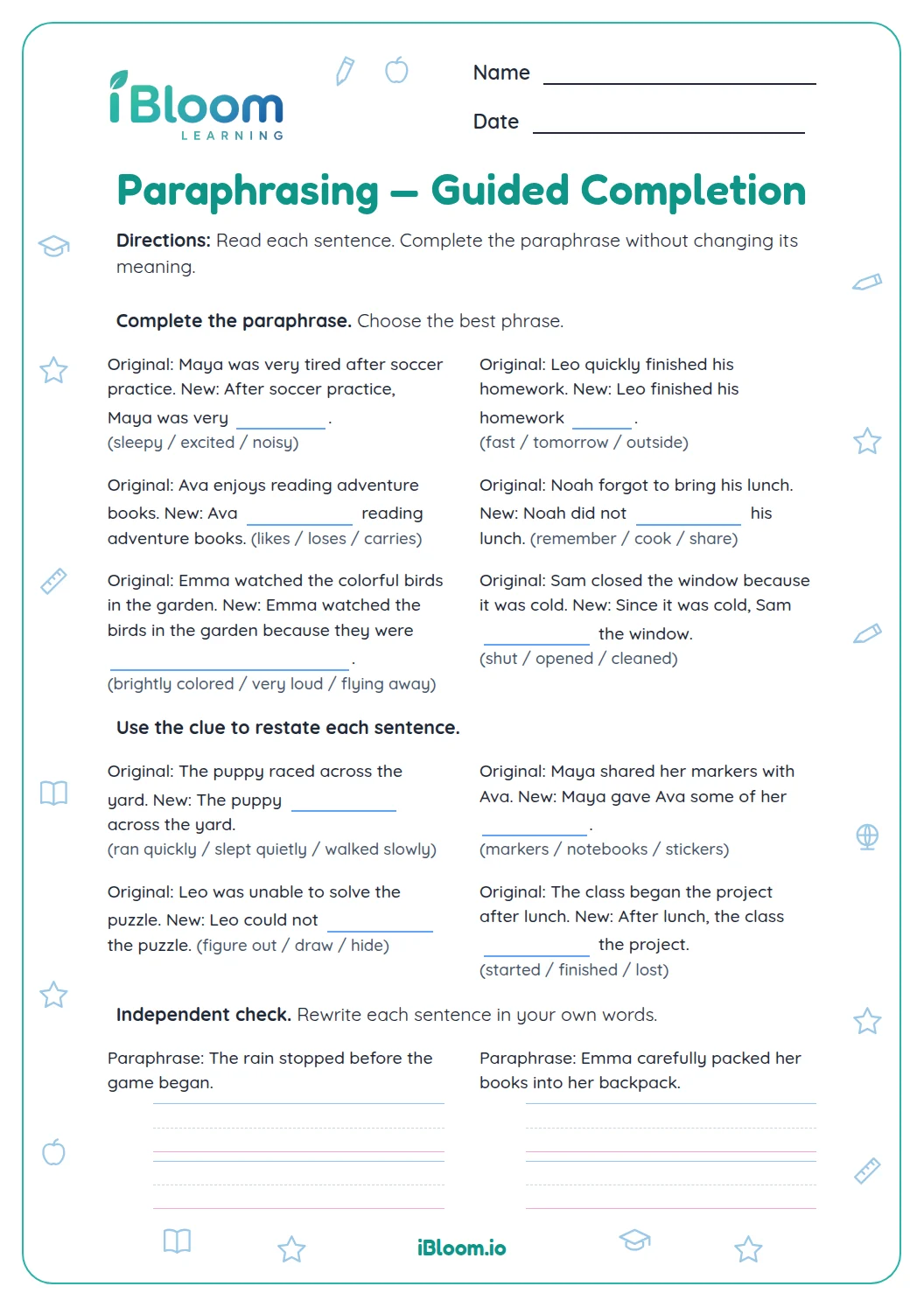
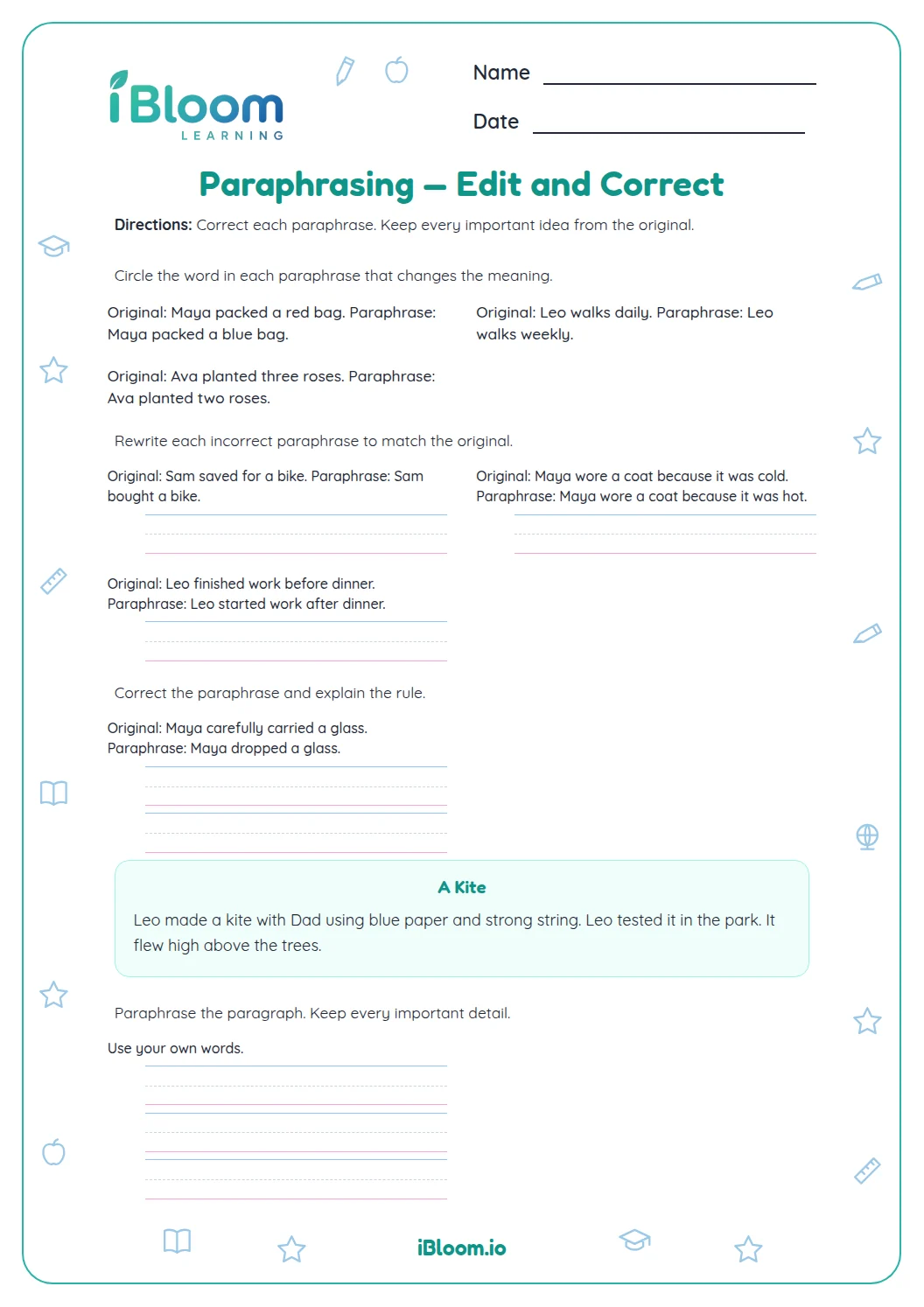
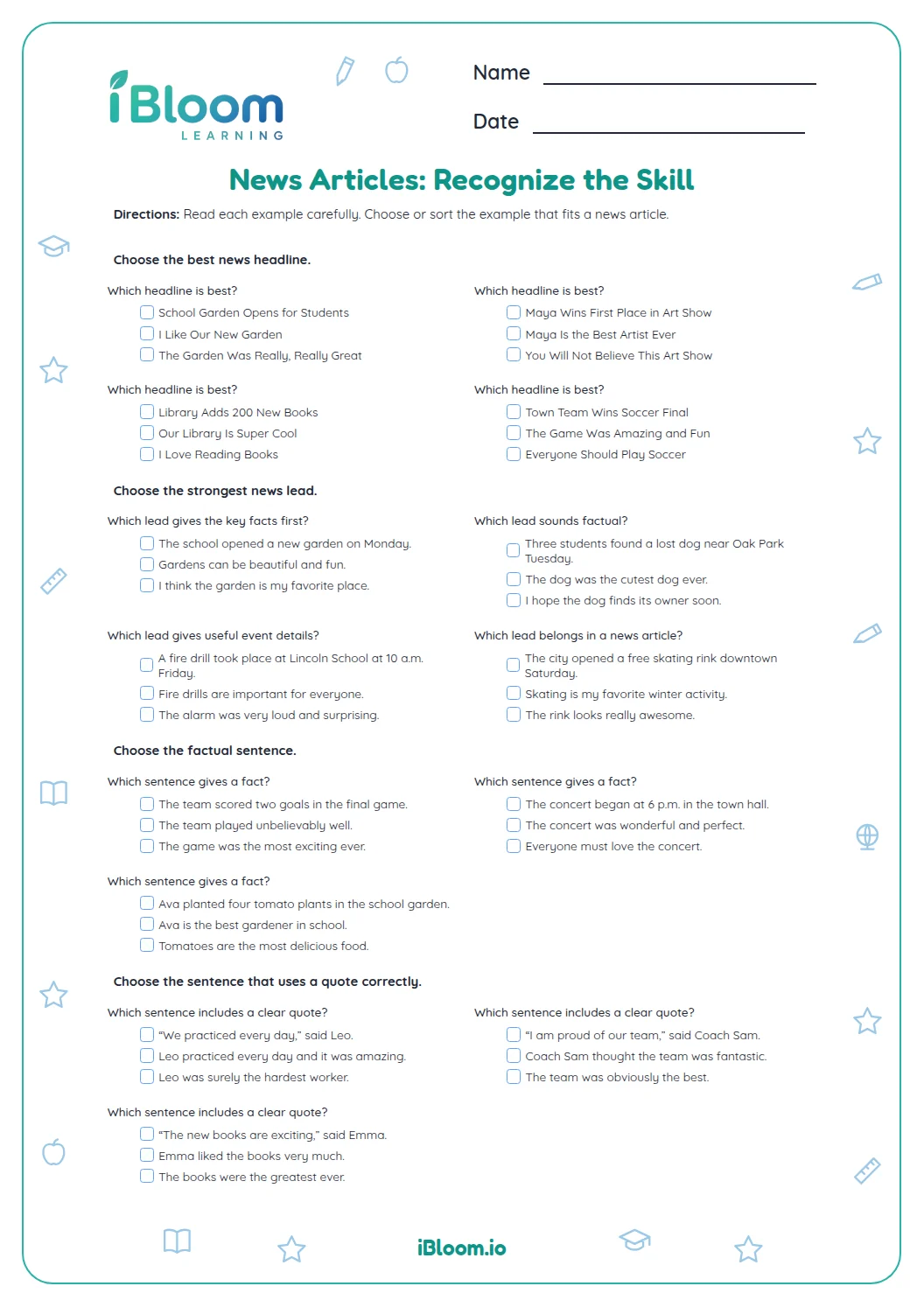
Students can move to a related writing skill such as paraphrasing, news articles or instructional writing. Ask them to use the same editing order on a paragraph of their own: sentence boundaries, capitals, commas and word choice. Students can use the same editing order on a paragraph they have written for class or at home.