





About this worksheet
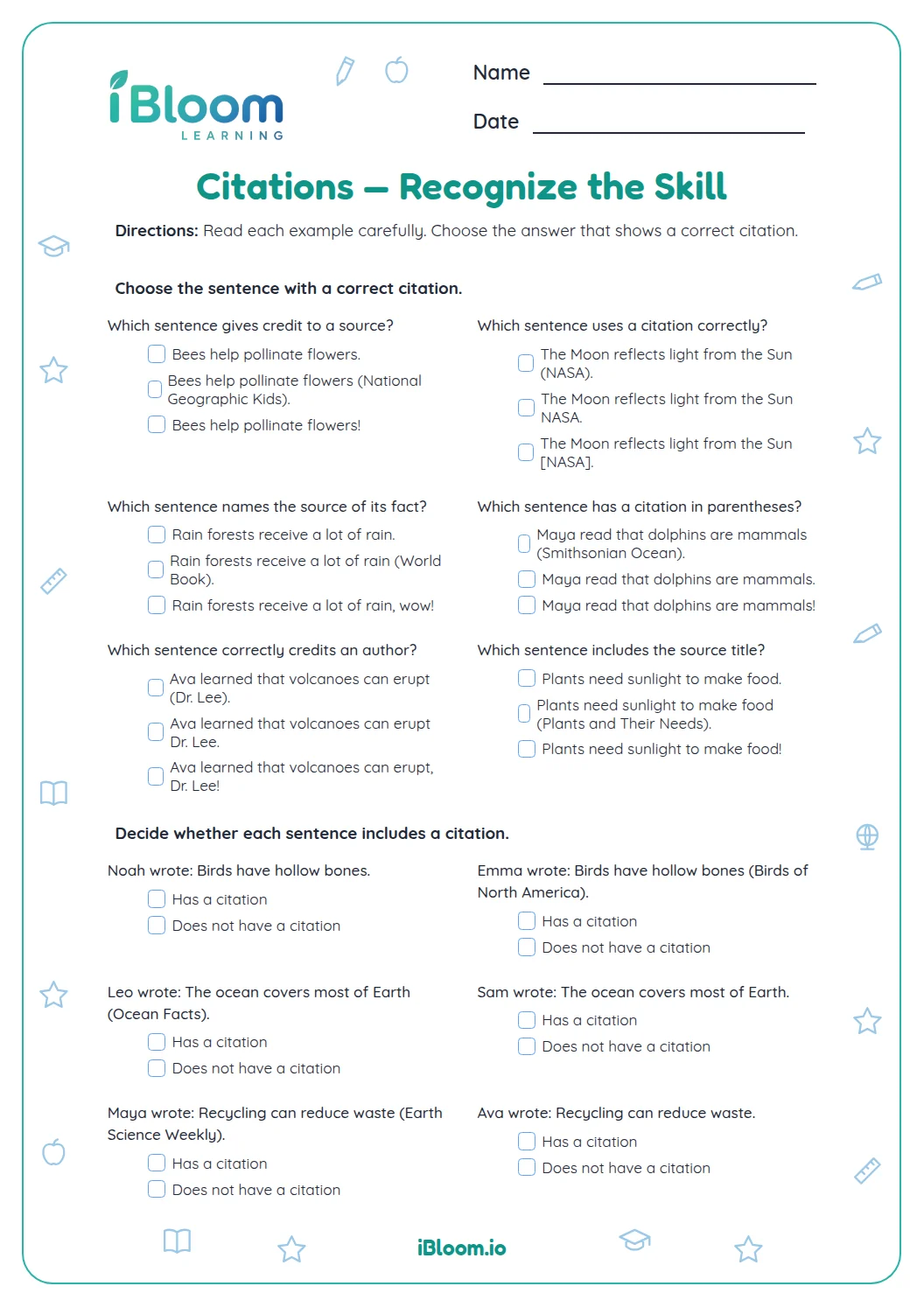
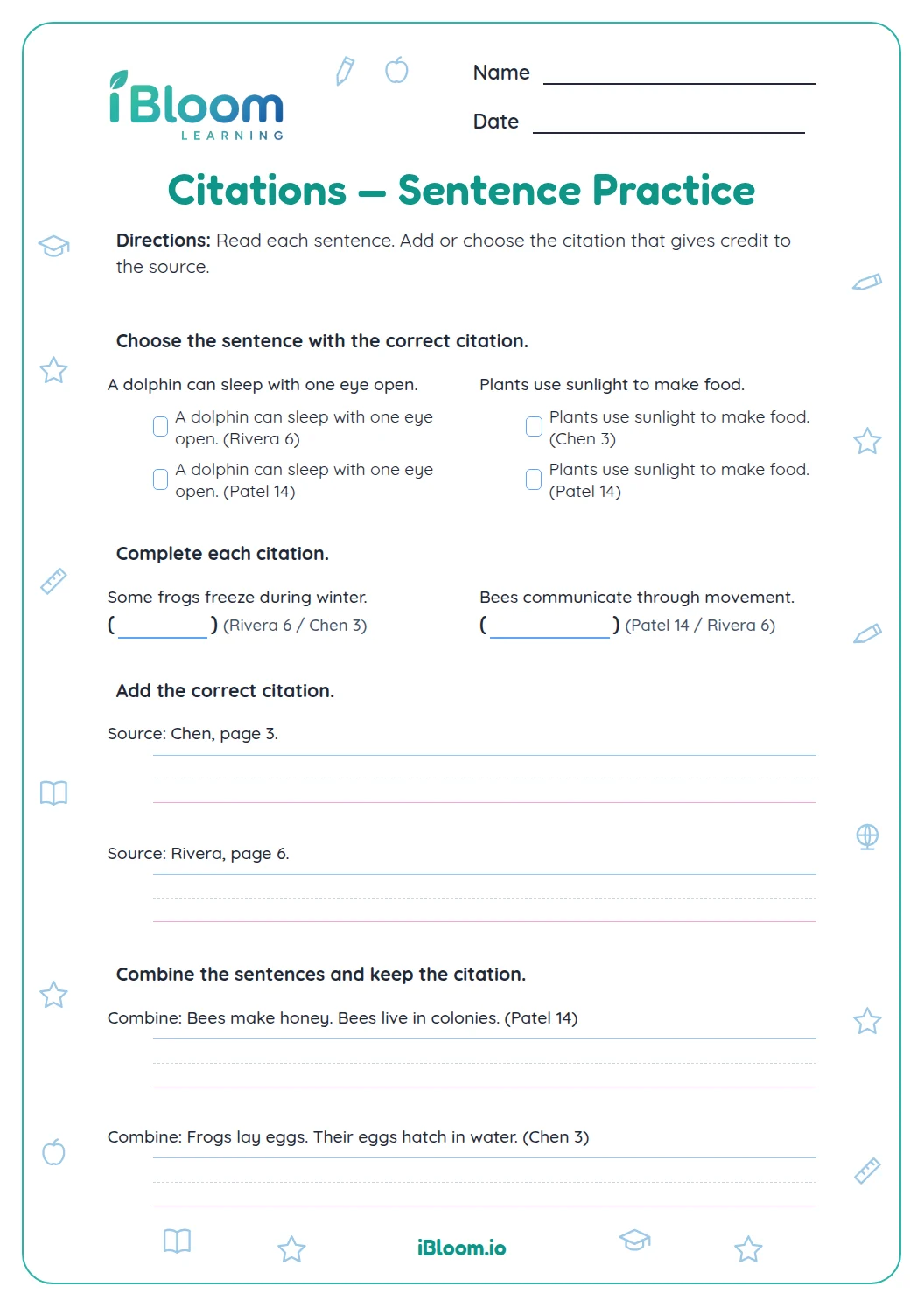
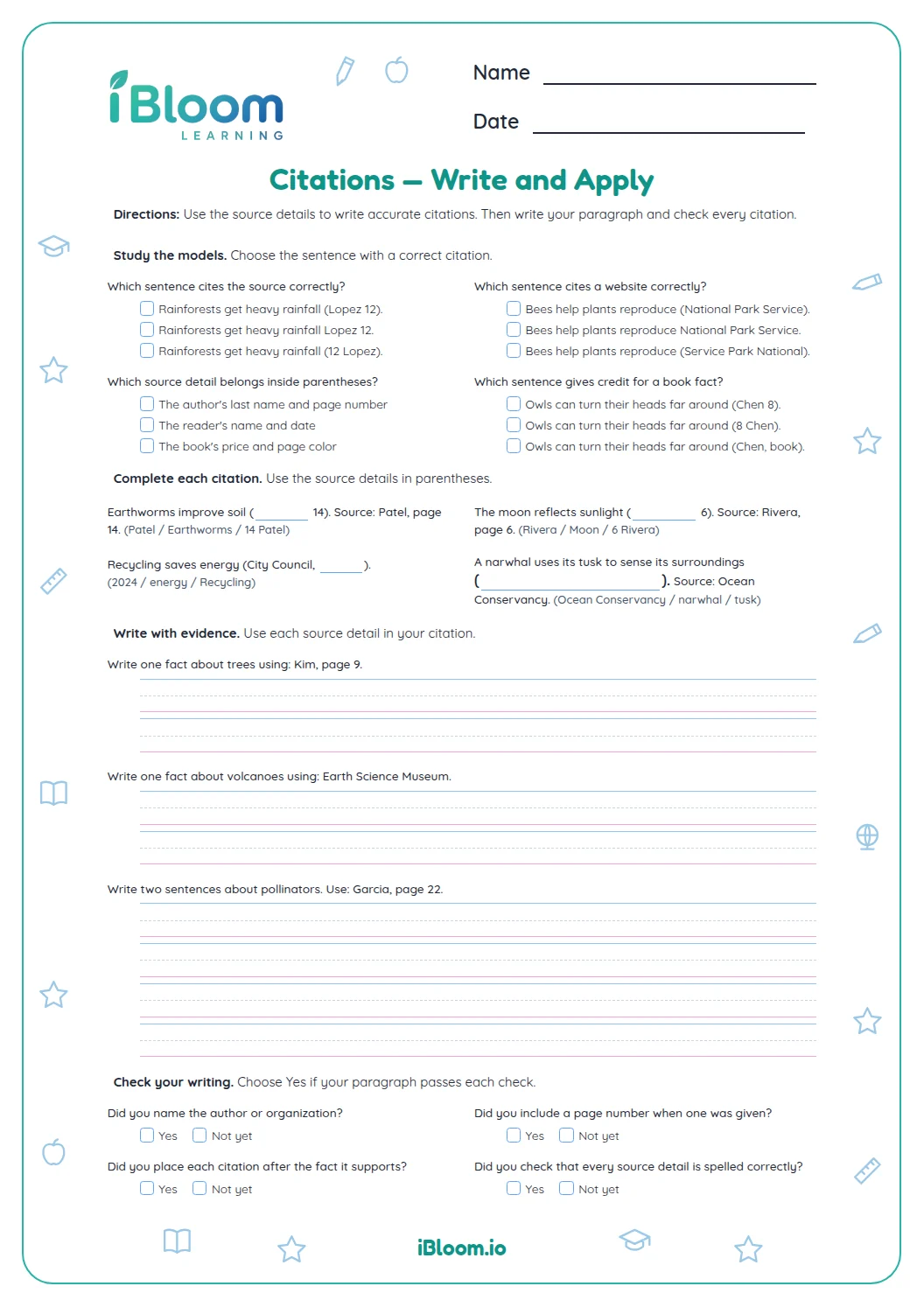
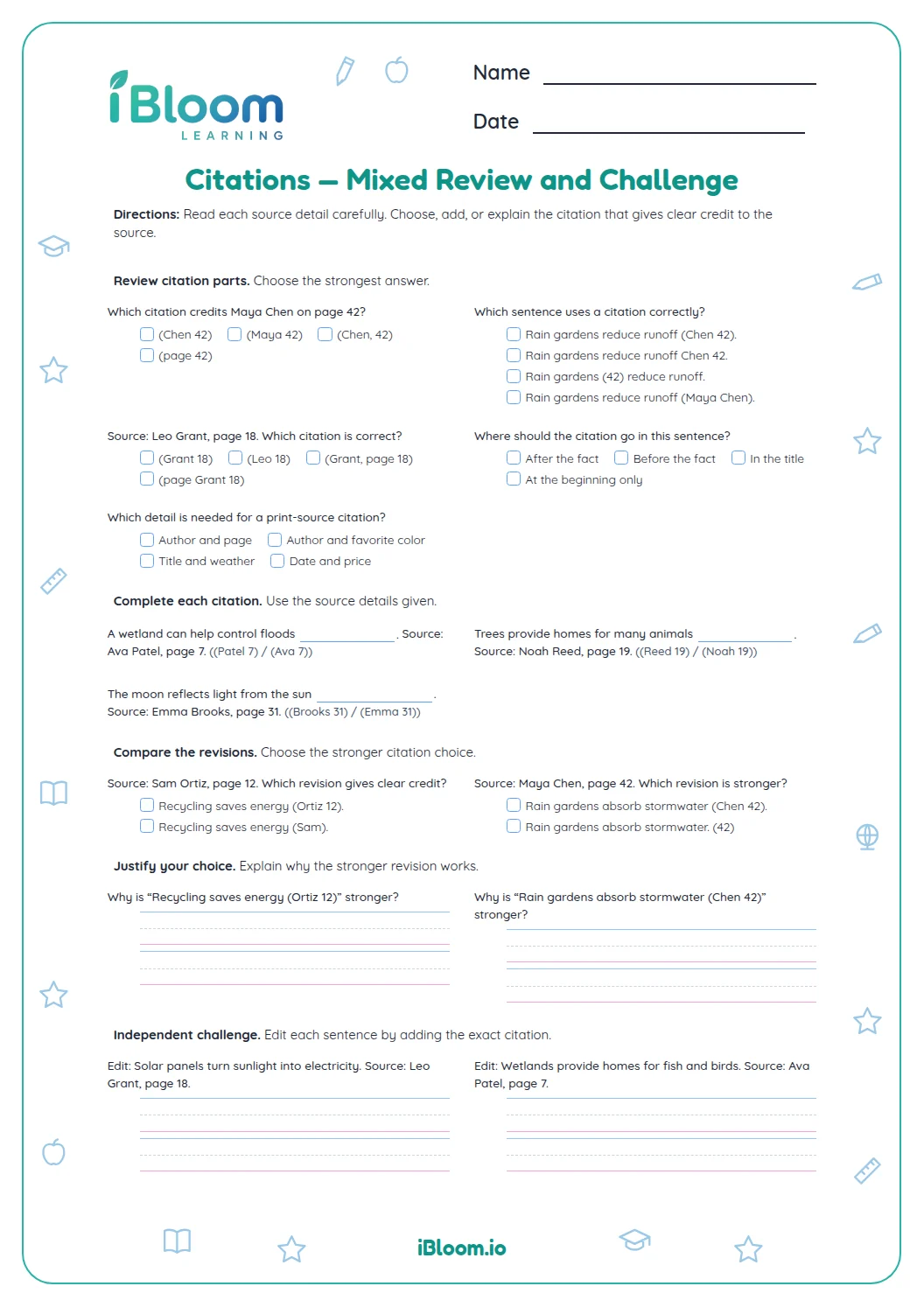
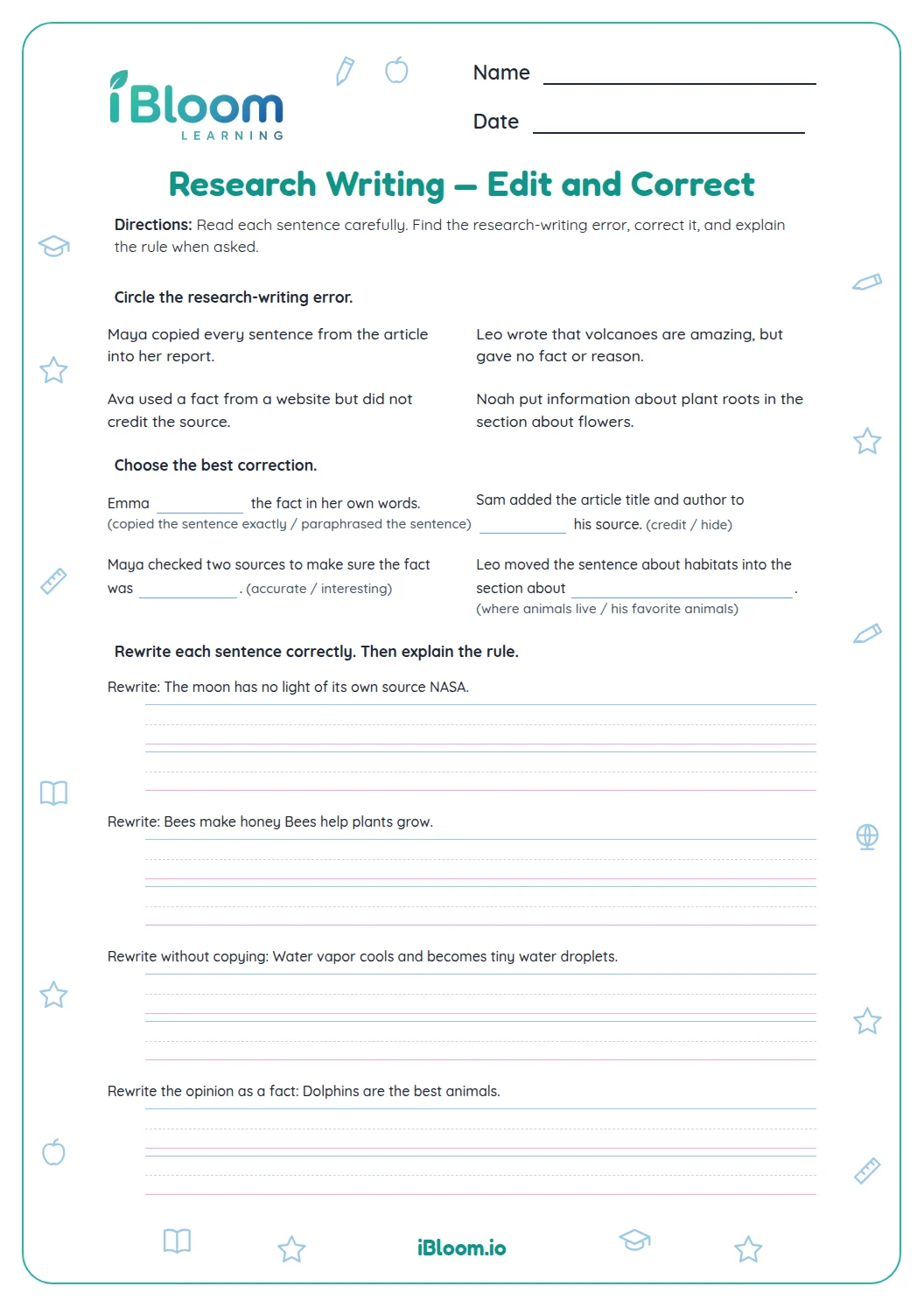
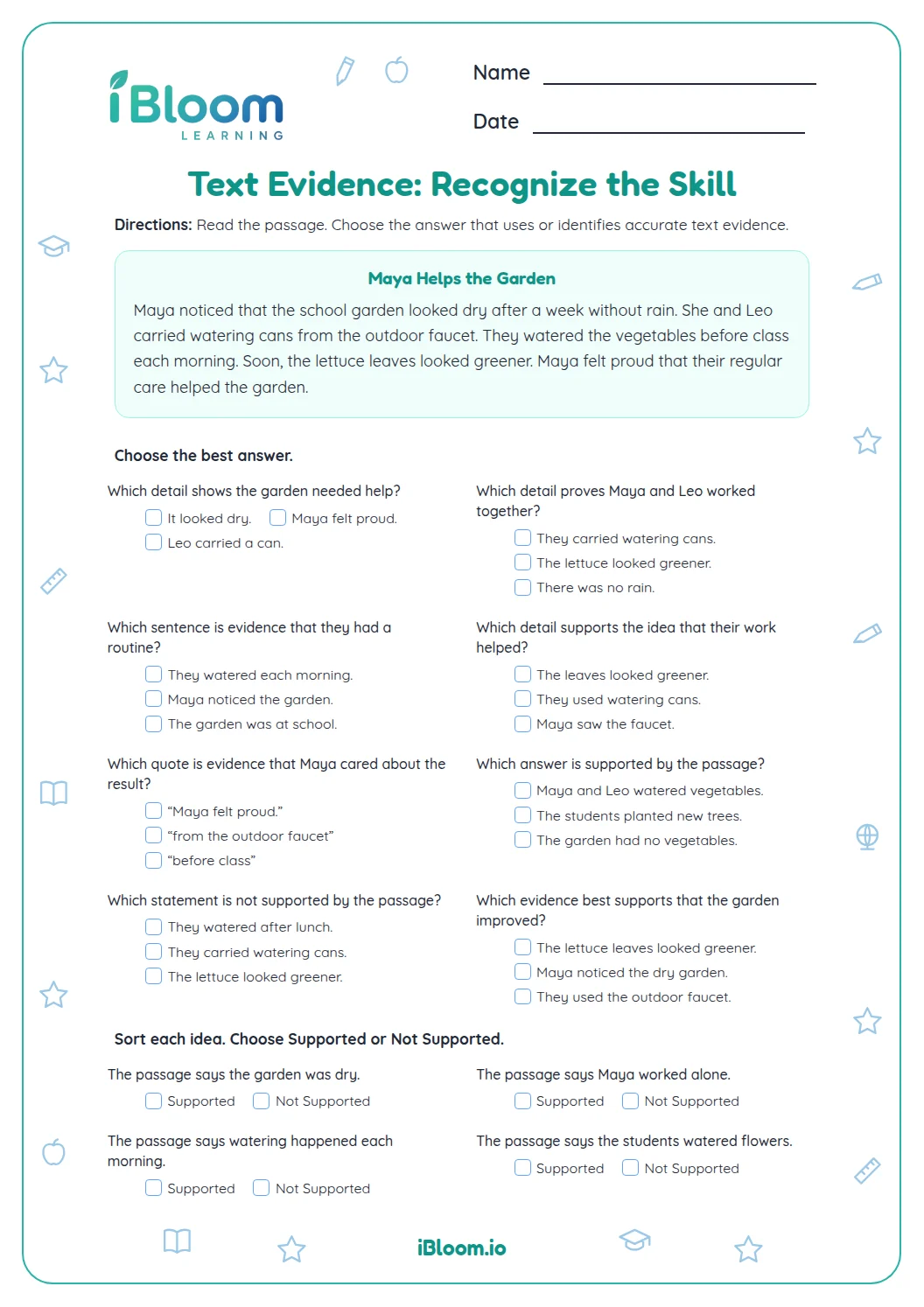
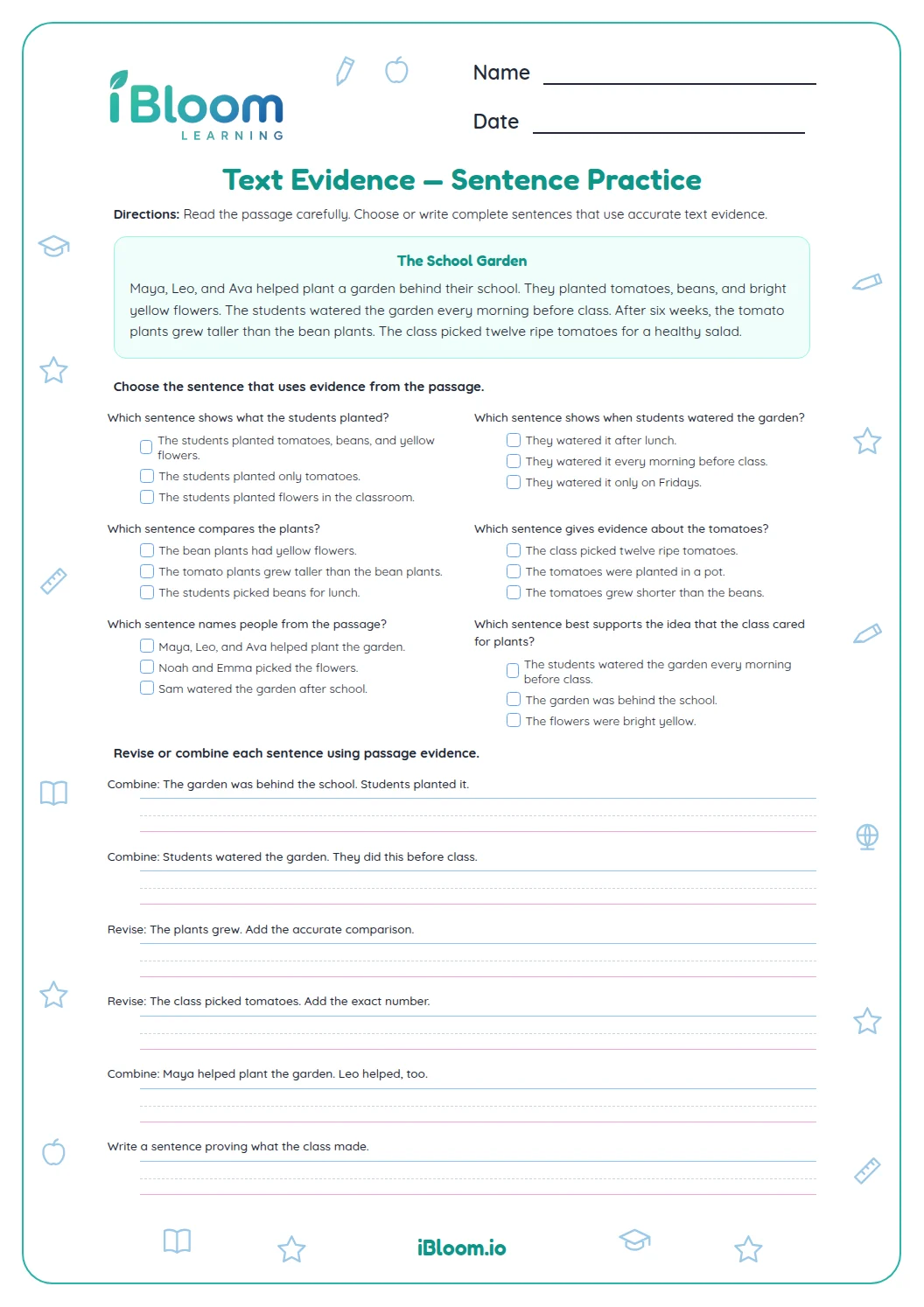
This Grade 5 worksheet gives students practice editing simple source entries for informative writing. They complete entries from supplied author, title, publication, and year details, identify quotation marks for copied words, and add source credit to a paraphrase. Fifteen questions use a consistent classroom format and a separate answer key.
What information belongs in a citation?
A source entry helps readers identify where information came from. This worksheet uses a simple classroom order: author, article title, publication or site, and year. The prompts supply the details so students can focus on checking the entry and filling in what is missing.
A source entry usually lists the author, article title, publication or site, and year in a consistent order.
- 1A source entry includes an author, title, and year.
- 2Check whether the publication or site is also listed.
- 3Question 3 asks students to identify that missing field.
How do quotation marks and paraphrases work?
Use quotation marks around exact words taken from a source. A paraphrase uses new wording but still needs source credit. Questions 2, 7, and 13 check quotation marks; question 10 pairs borrowed words with source credit.
How can a student edit a source entry?
Compare each entry with the source details named in its prompt. Check that the author, title, publication or site, and year are included when supplied. Keep the order consistent, copy titles accurately, and add the source credit after paraphrasing.
How to use this worksheet
- 1Read the source details in the prompt before editing.
- 2Check the author name and its order in the entry.
- 3Compare the title, publication or site, and year with the supplied details.
- 4Put quotation marks around exact borrowed words.
- 5Keep source credit with a paraphrase, even when the wording changes.
Common mistakes and quick fixes
The mistake
Putting an author’s first name before the last name in this entry style.
The fix
Use the “last name, first name” order. Question 8 asks students to identify that order.
The mistake
Treating a paraphrase as if it no longer needs a source.
The fix
The words change, but the idea came from a source. Keep the author credit, as in question 12.
The mistake
Copying a title with a different word or spelling.
The fix
Check the title letter by letter against the source details before completing the entry.
What to practice next
Make more practice
Questions parents and teachers ask
Why cite a source when paraphrasing?
A paraphrase uses a source idea in new words, so it still needs source credit. Question 12 checks whether that credit is needed, and question 2 reviews the marks used around exact copied wording. Students should record source details with their notes.
What information should a source entry include?
Use the details supplied for each source: author, title, publication or site, and year. Questions 3, 6, 9, and 14 ask students to identify a missing publication field, while question 8 checks author order. Compare each field with its source information.
How do quotation marks help a reader?
Quotation marks identify exact words taken from a source, while source credit names where those words appeared. Questions 2 and 7 practice the marks, and question 10 pairs them with credit. Students can use both checks when editing a quotation.
What kinds of editing does this worksheet include?
The 14 questions ask students to identify author order, missing source details, quotation marks, and paraphrase credit. The answer key marks the correct detail or rule for each choice so an adult can review the citation checks. This compact format gives practice across the main editing decisions.
What should students do with source notes?
Keep the author, title, publication or site, and year with each set of notes. Those details help readers identify a source later. When a note uses a source idea, carry its credit into the finished writing, even if you paraphrase the idea in your own words.