





About this worksheet
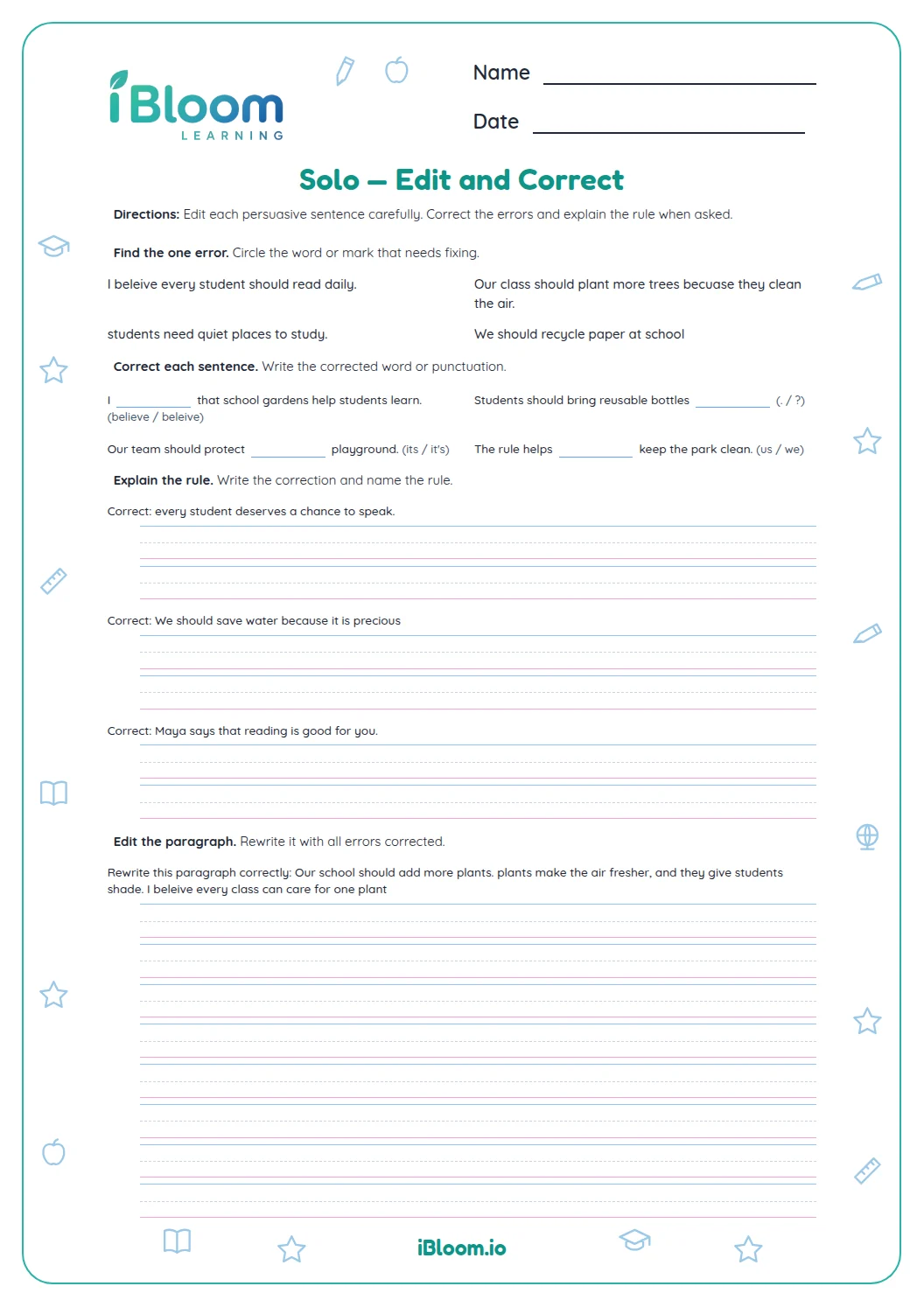
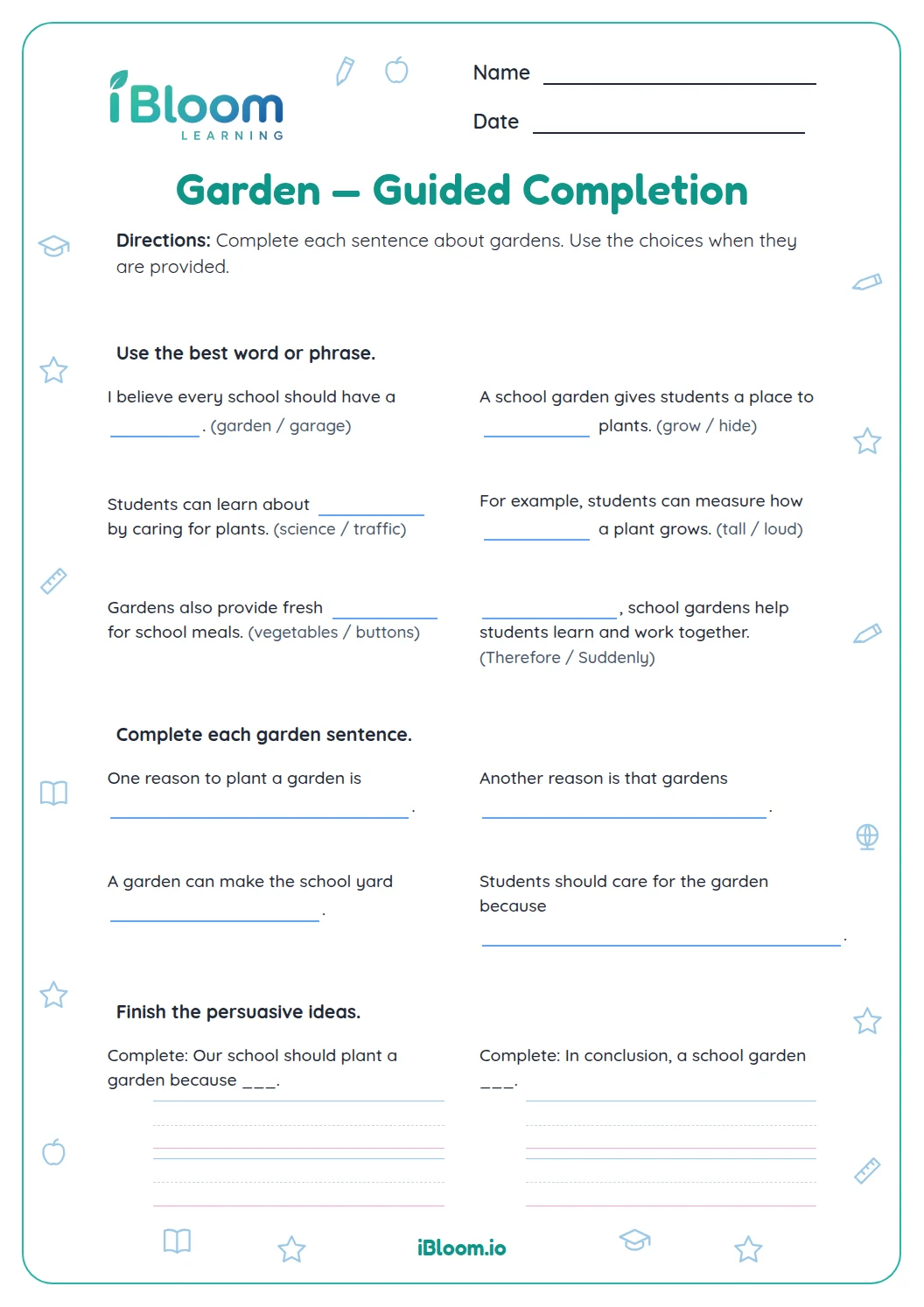
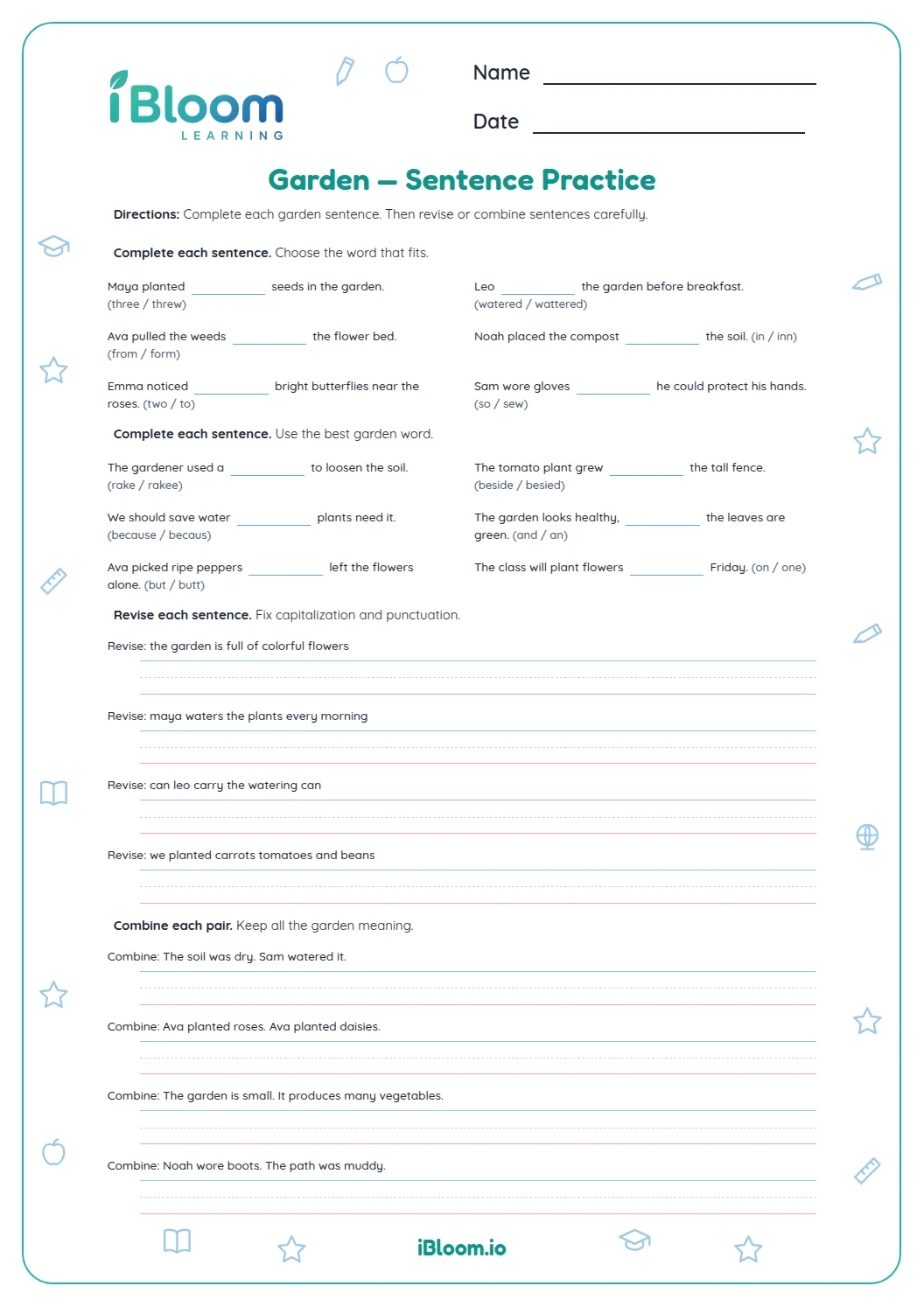
This Grade 5 printable reviews the building blocks of persuasive opinion writing through familiar classroom topics: reading time and a class garden. Students identify opinions and supporting reasons, select relevant evidence, use a linking word, and write original claims, details, and conclusions. The activities align with CCSS W.5.1, which asks writers to support opinions with reasons and information. Fifteen questions and a separate answer key are included.
Aligned to W.5.1
What makes a clear opinion?
An opinion tells what the writer thinks should happen or what choice is best. A fact can be checked; an opinion takes a position.
- 1Opinion: Every class should have a short daily reading time.
- 2Fact: The library has three reading tables.
How can a reason support an opinion?
A useful reason explains why a reader might agree. A specific detail makes the reason clearer. Students learning to observe plant growth is a relevant reason for a class garden.
How do linking words connect ideas?
Words such as because connect a claim to its reason: “Keep the garden because students learn by measuring plant growth.” Check that the words after because explain why.
How should an opinion end?
A conclusion brings the opinion to a close. It can restate the position in fresh words and remind the reader of its value.
How to use this worksheet
- 1Read the prompt and decide what position it asks you to take.
- 2State one clear opinion in a complete sentence.
- 3Add a reason that explains why a reader might agree.
- 4Choose facts or examples that directly support the reason.
- 5Use a linking word to show how the ideas fit together.
- 6End with a sentence that returns to the opinion.
Common mistakes and quick fixes
The mistake
Giving a topic instead of taking a position.
The fix
Use a sentence that says what should happen or what choice is best.
The mistake
Adding a detail that is true but unrelated to the opinion.
The fix
Ask whether the detail helps prove the stated reason.
The mistake
Repeating the exact claim as the conclusion.
The fix
Restate the position in fresh words and briefly reinforce its value.
Support an opinion with reasons, information, linking words, and a conclusion.
On this sheet: Students recognize and compose opinions, reasons, supporting details, and conclusions.
Show the official wordingHide the official wording
Write opinion pieces on topics or texts, supporting a point of view with reasons and information.
What to practice next
Make more practice
Further reading
Questions parents and teachers ask
What counts as evidence for an opinion?
Evidence is a relevant fact, example, or detail that helps explain why a reason supports the writer’s position. A detail about measuring plant growth supports a claim about learning science in a garden because it shows students practicing a science skill.
Are there single correct answers for the writing prompts?
The writing prompts allow different valid answers. The key gives samples; another answer works when it states a clear opinion and supports it with a relevant reason or detail. Encourage the student to explain why the reason fits the position.
How does because help in an opinion paragraph?
Because introduces the reason for a claim. In “Keep the garden because students can measure plant growth,” the words after because explain why the writer supports keeping the garden. A linking word helps readers follow the writer’s thinking.
What should a conclusion do?
A conclusion closes the opinion by returning to the writer’s position, often in fresh words. It can briefly remind readers why the choice matters and leave the reader with a clear final thought. It should connect naturally to the reasons and examples that came before it.
What kinds of writing responses are included?
The 15 items include choices, short answers, and written responses. Students identify opinions and relevant support, complete reasons, revise a claim, and compose their own opinion writing; the key includes sample answers for open responses. The open writing space lets students develop a complete response with a claim and supporting ideas.
Can a response differ from the answer key?
Yes. The open-response key gives examples rather than the only acceptable wording. A response is successful when it gives a clear position and relevant support that answers the prompt. The key’s samples illustrate the task; check that a student’s own response answers the prompt and makes sense.