


About this worksheet
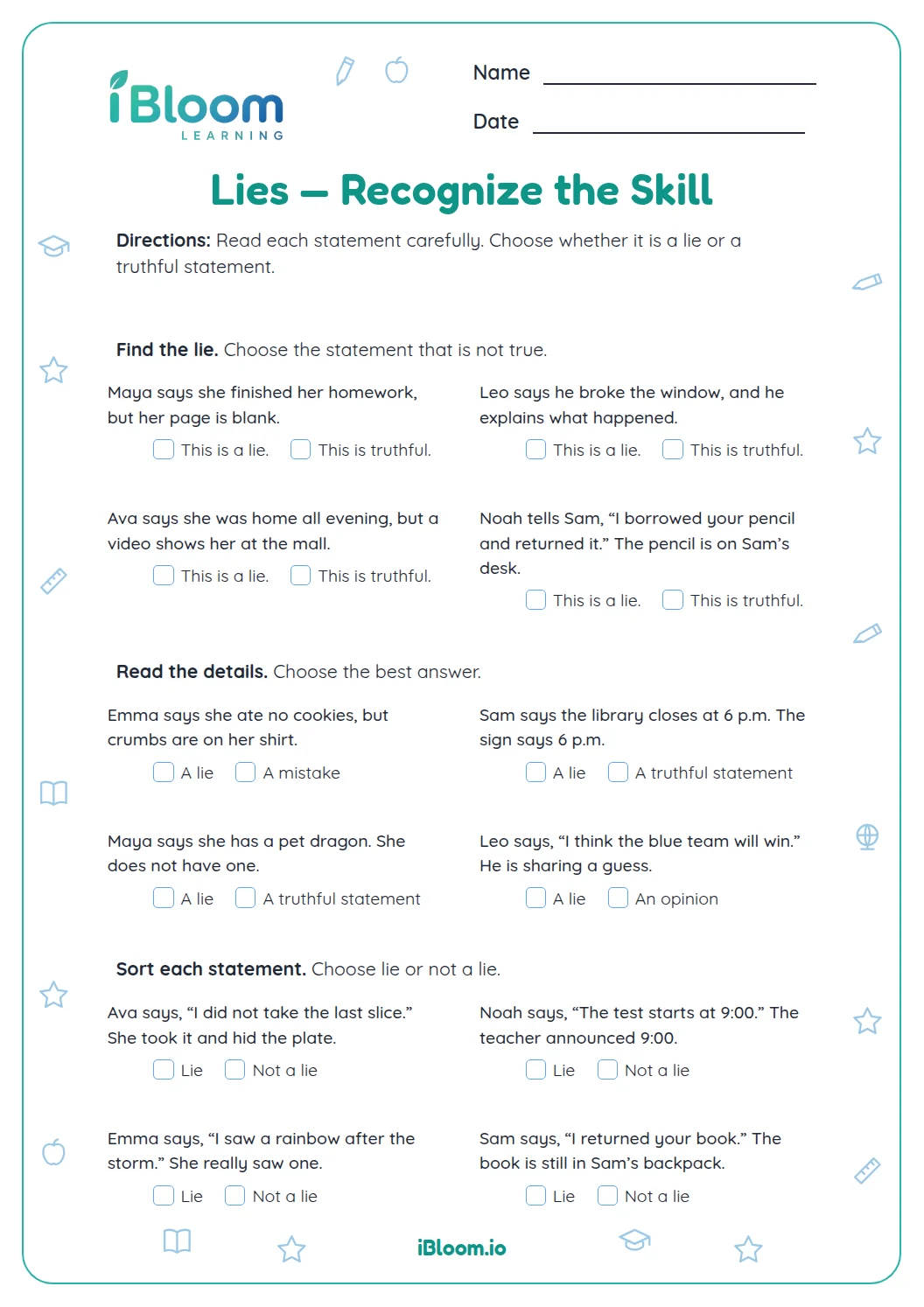
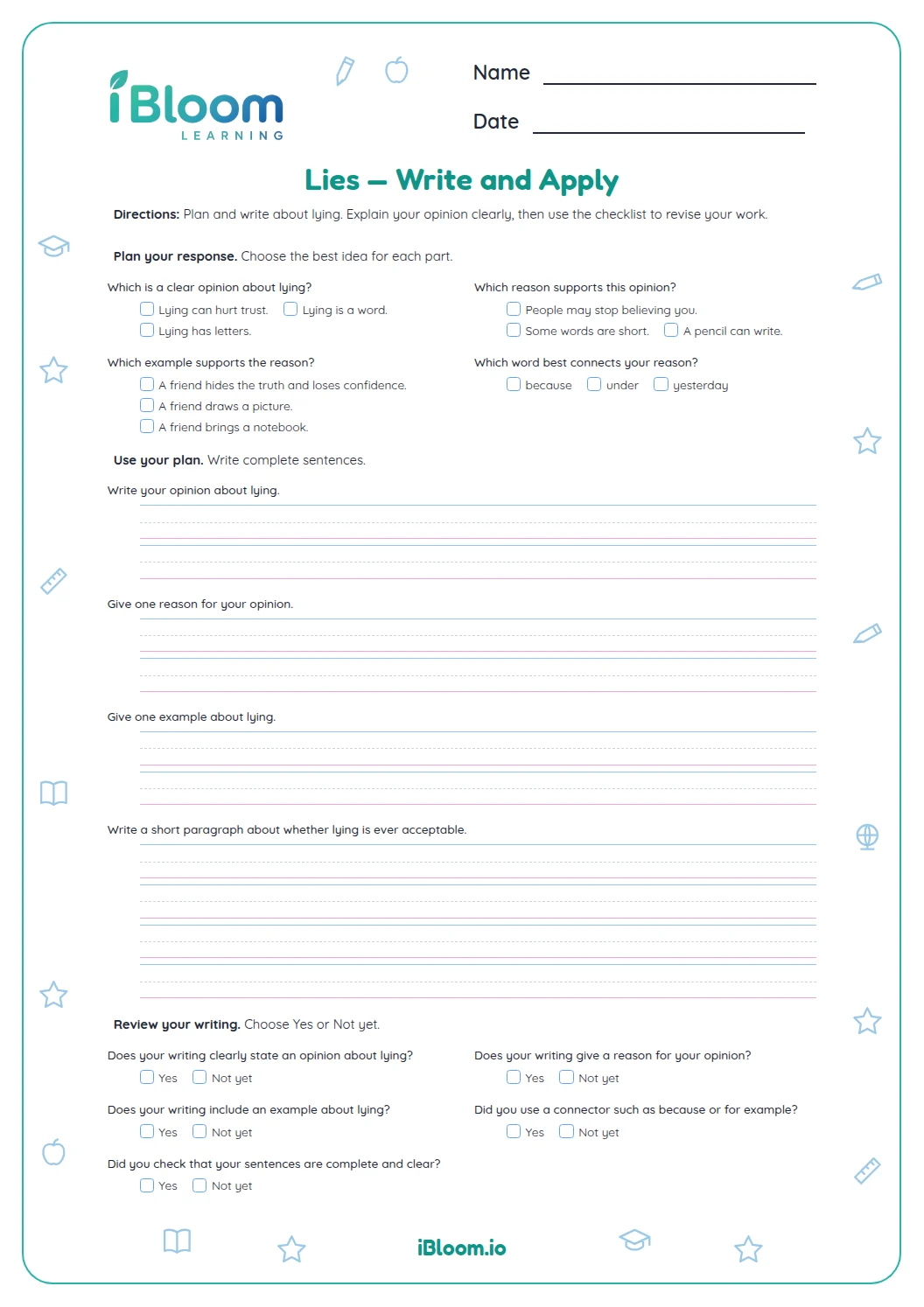
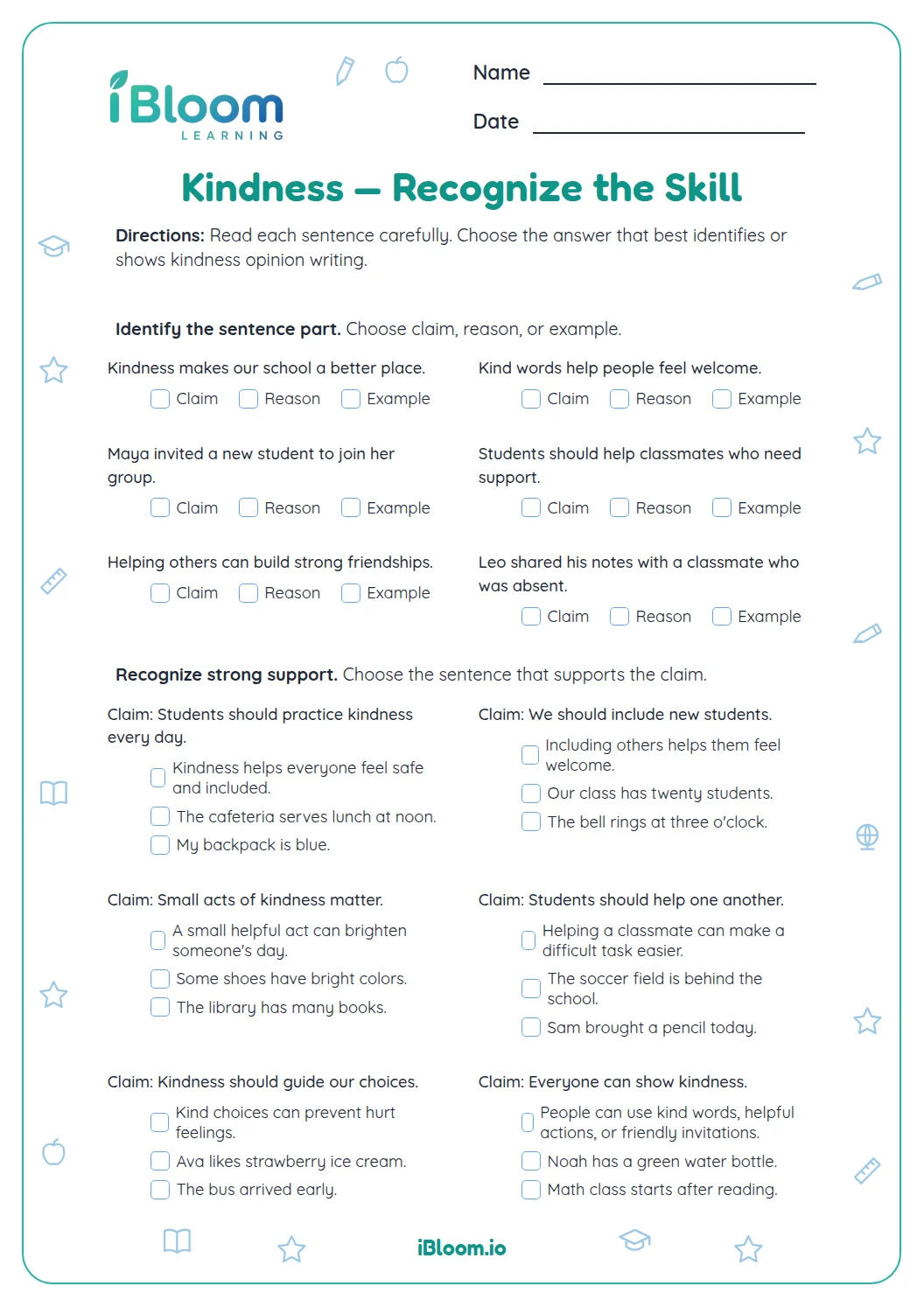
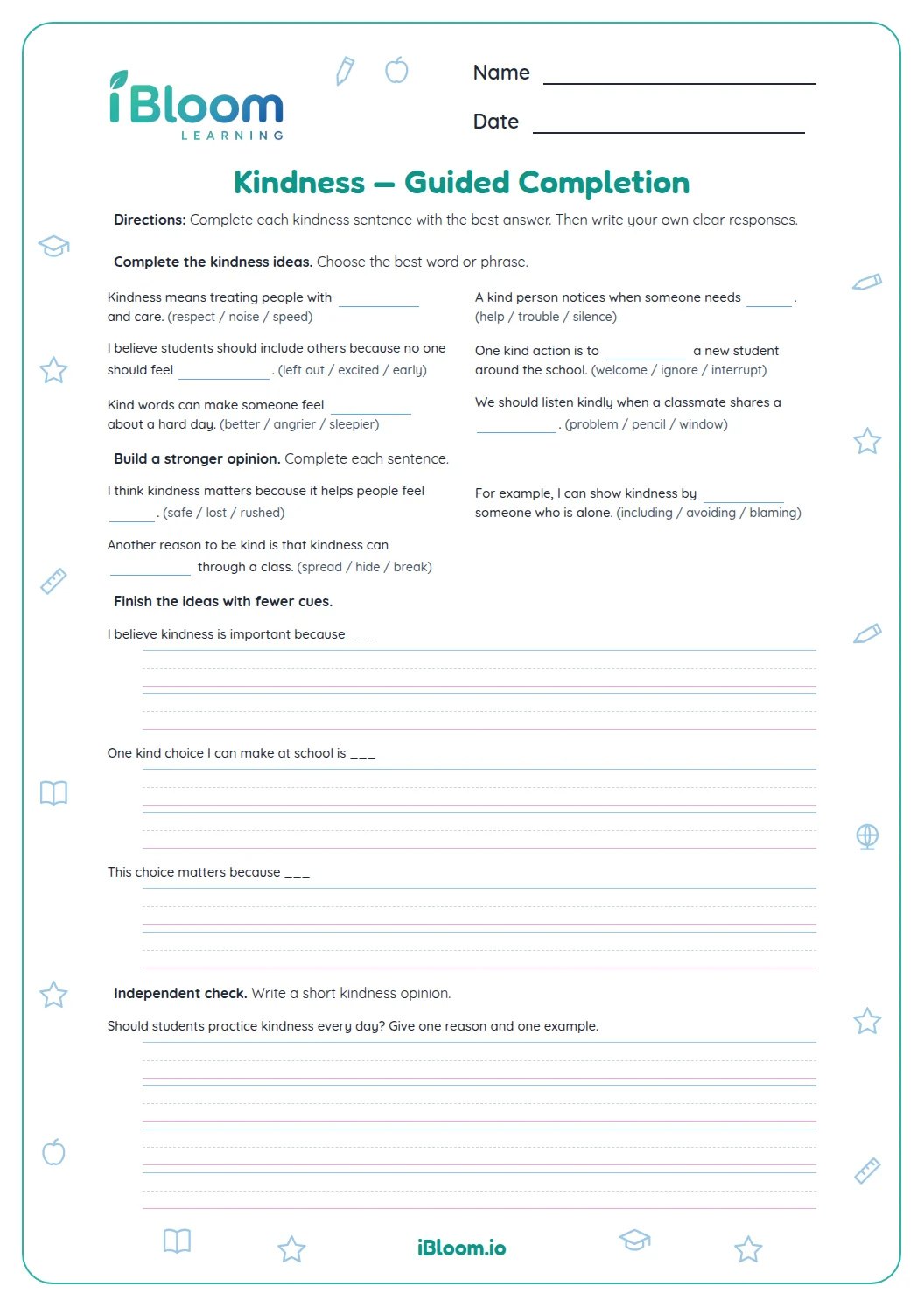
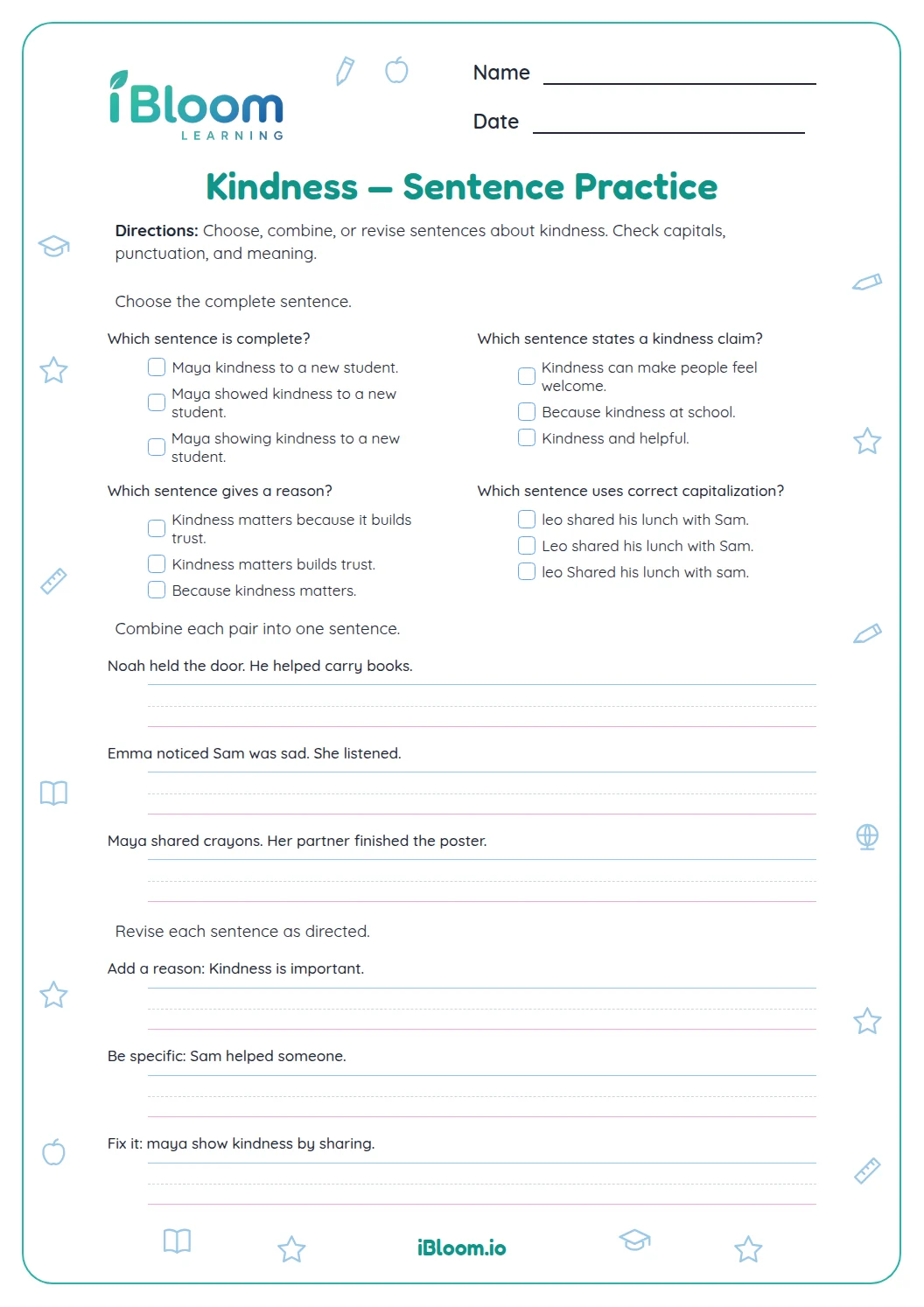
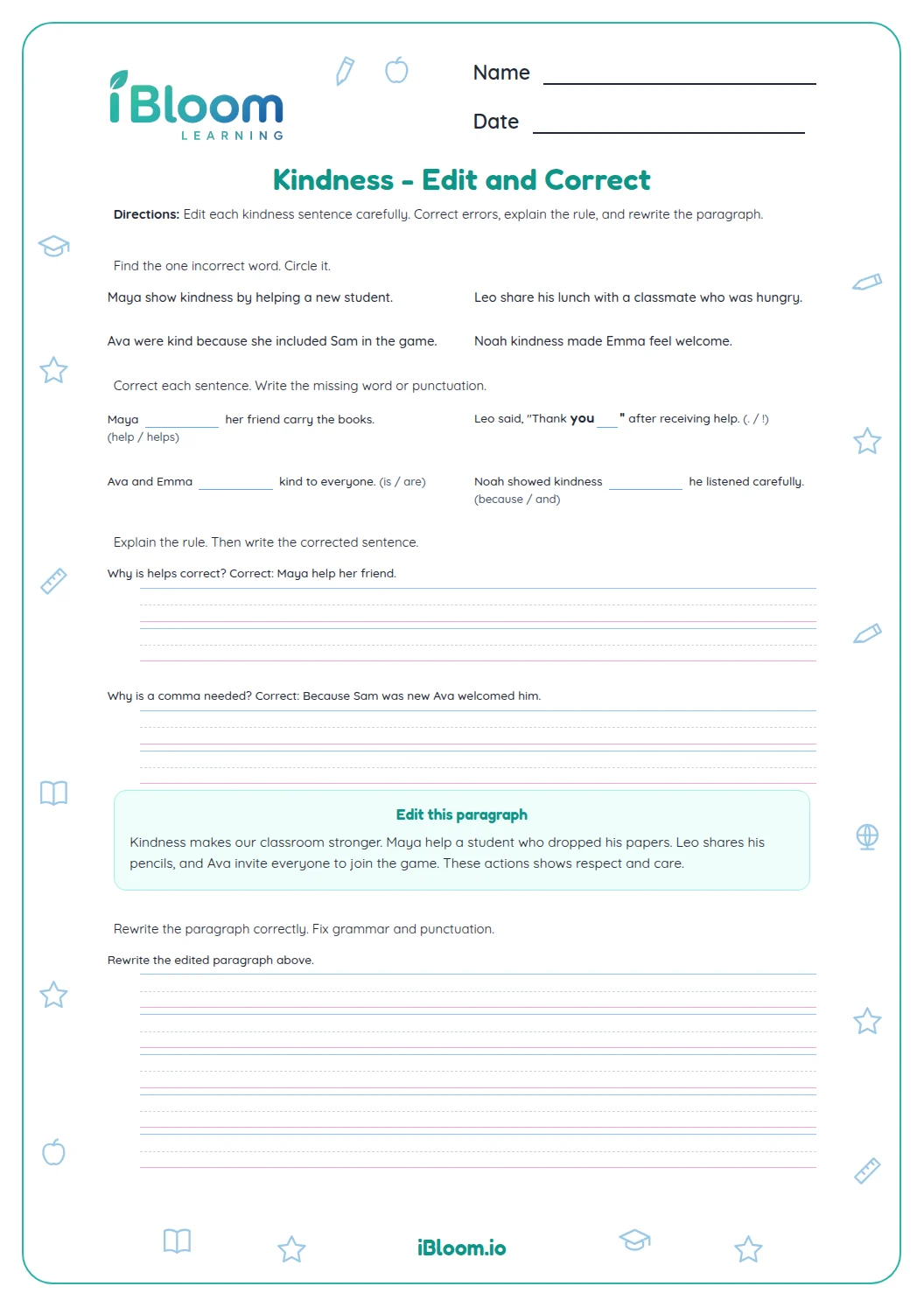
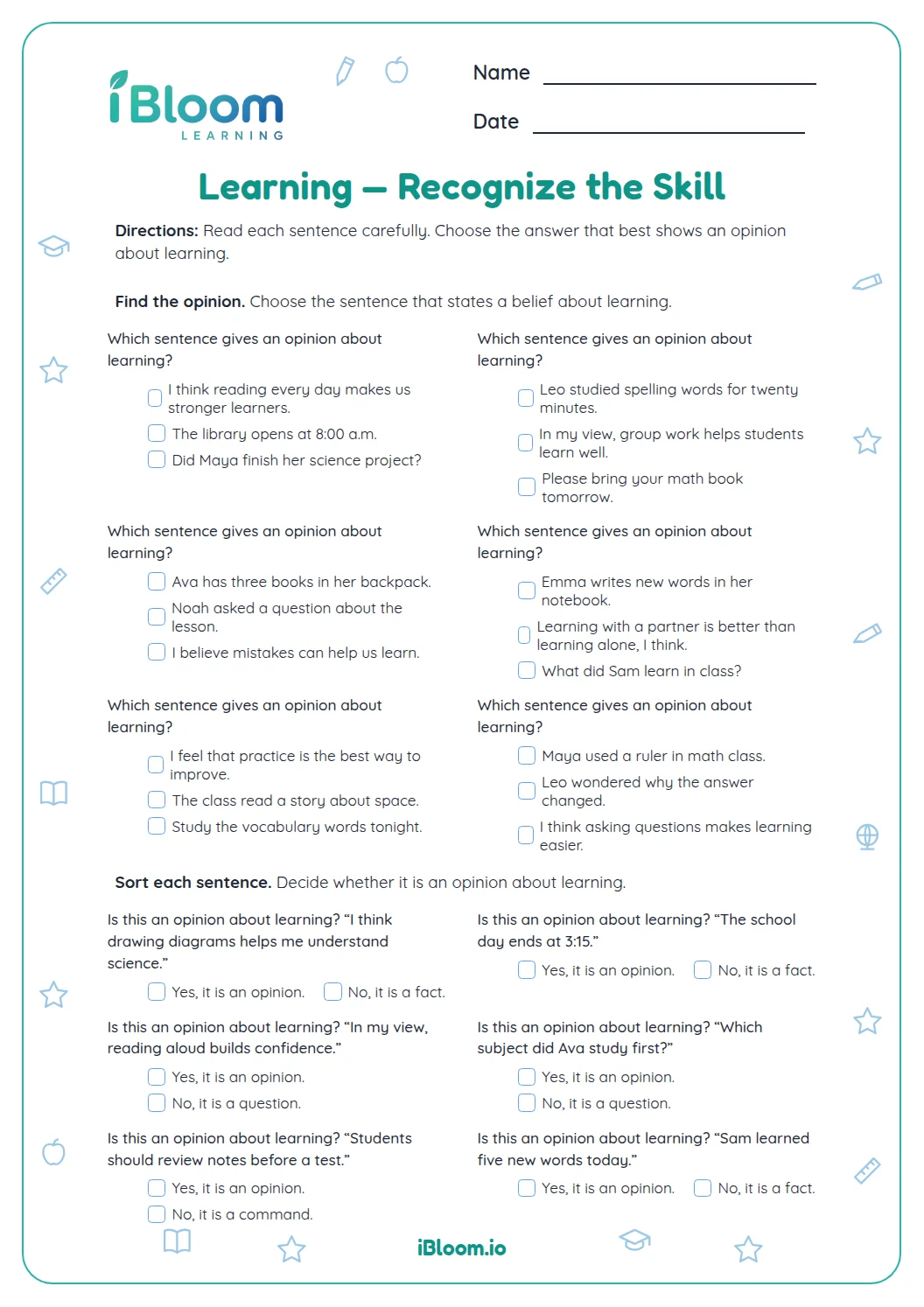
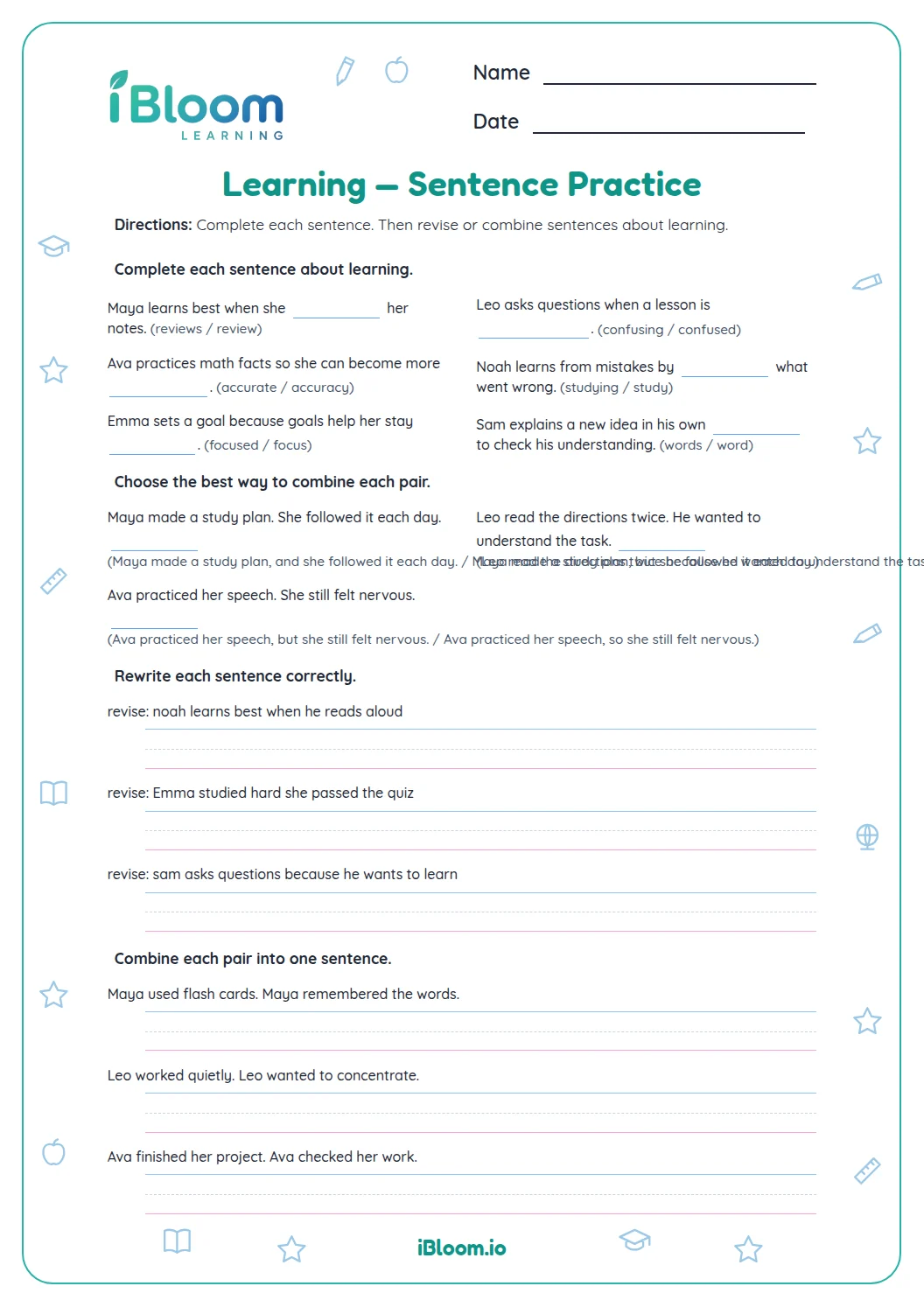
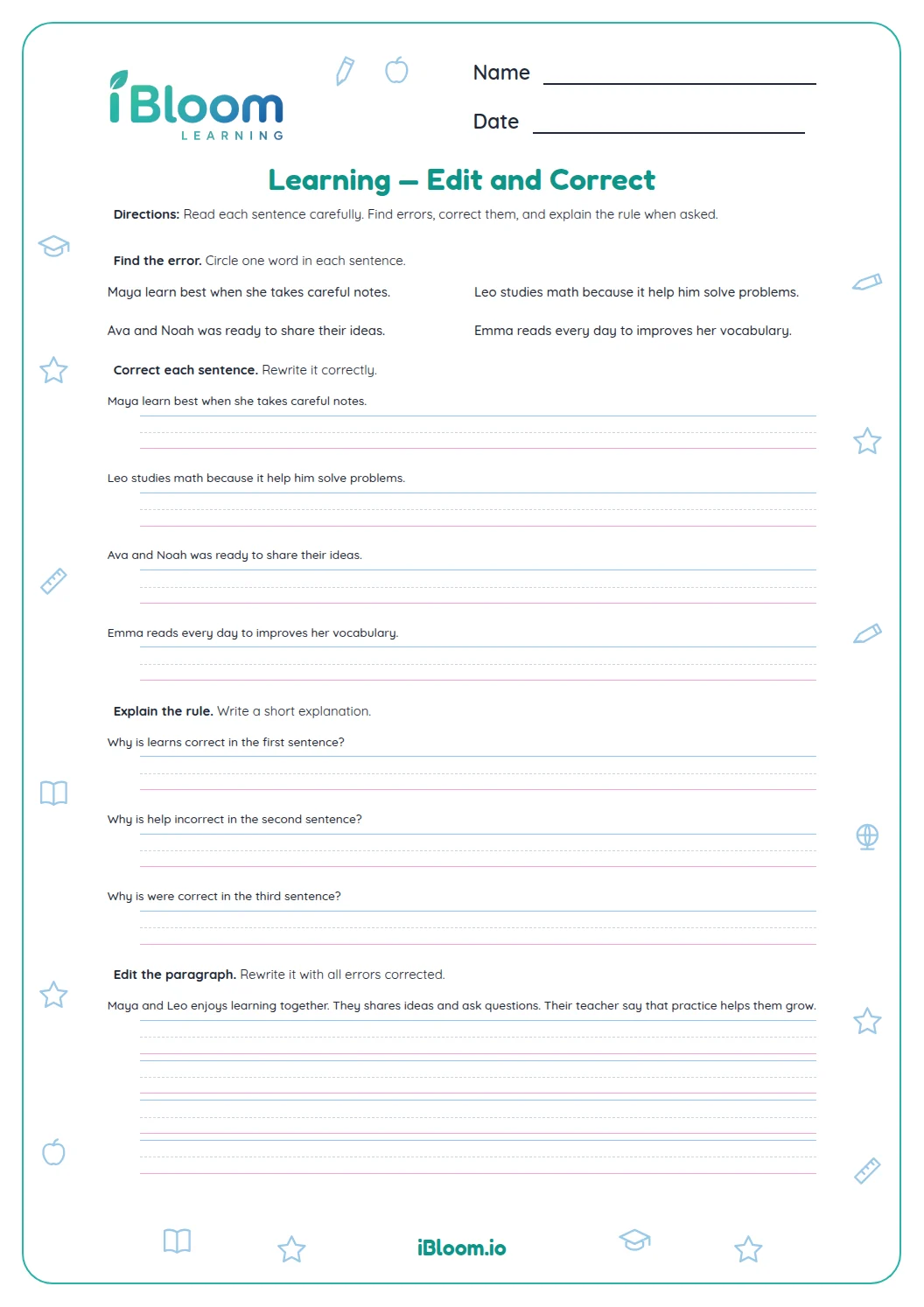
This Grade 5 printable uses short situations about lies and honesty to practice complete sentences and opinion language. Students choose correctly formed sentences, complete sentences with fitting words, correct capitalization and punctuation, and combine related ideas. The 14 questions move from sentence-level choices to written sentences. The separate answer key includes sample wording for the written responses.
How does a clear opinion sentence begin?
A sentence states the writer’s view in a direct way. A reason tells why the writer holds that view, and a detail makes the reason easier to understand.
- 1Honesty matters in friendship.
- 2Friends can rely on truthful words when they need help.
- 3For these reasons, honesty can help a friendship grow.
How can a sentence become clearer?
Remove repeated ideas and make the reason specific. “Truth is good because it is good” repeats the same claim; a clearer reason explains what truth helps people do.
What kinds of writing appear here?
Students identify complete sentence models, correct sentence errors, and build their own opinion responses about honesty.
How can you use this worksheet?
- 1Read each model aloud to hear whether it is a complete thought.
- 2State your view in one sentence.
- 3Add a reason that explains why you think so.
- 4Give a detail or example that makes the reason clearer.
- 5Reread for capitals, end marks, and complete sentences.
Mistakes to watch for
The mistake
Using “because” without finishing the thought.
The fix
Read the sentence after because and make sure it gives a reason.
The mistake
Repeating the opinion instead of supporting it.
The fix
Add a reason that tells why the view makes sense.
The mistake
Joining two complete thoughts with no punctuation.
The fix
Separate them with a period or connect them with a suitable conjunction.
What to practice next
Make more practice
Further reading
Questions parents and teachers ask
What is an opinion sentence?
An opinion sentence states what the writer thinks about a topic. This worksheet uses honesty in friendship as a prompt, then asks students to add reasons and details that help explain their view. The prompts keep the writing focused on a classroom topic.
Do students need to share a personal story?
No personal story is needed. Students can answer the classroom prompt in general terms, such as explaining how truthful words can help friends trust one another. The page can be completed without discussing anything that happened at home. A general classroom response is enough for every question.
What kinds of writing are included?
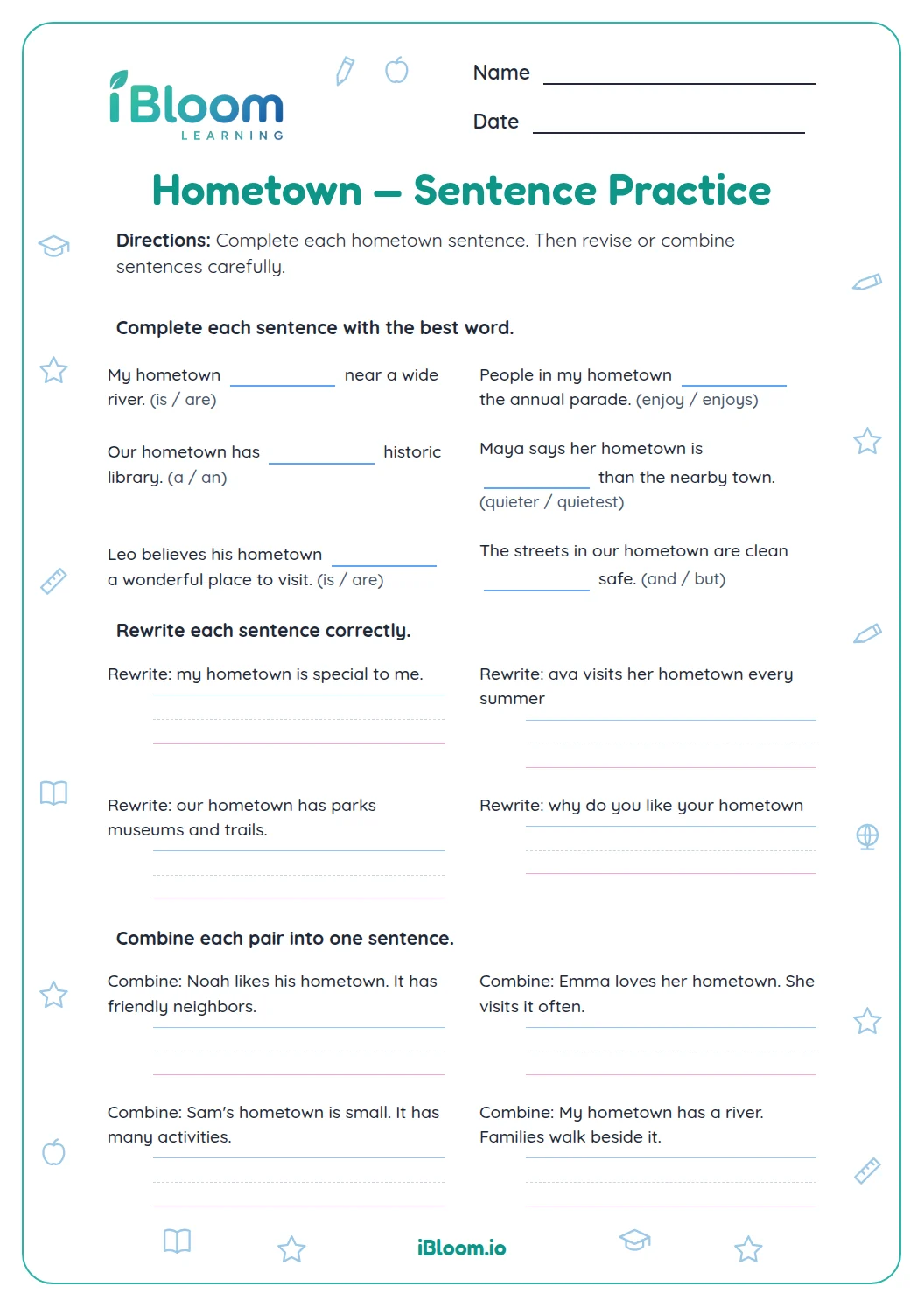
There are 14 questions in four parts: four sentence choices, four word choices, three corrections, and three sentence combinations. Students move from recognizing complete sentences to editing and joining ideas. The answer key gives a sample sentence for each written response.
How can a student improve a reason?
The printable has three worksheet pages and three answer-key pages. The first two parts use selected responses, while the correction and combining sections provide writing space. Print the key pages separately if you want to keep the sample answers out of view during practice.
What can students practice next?
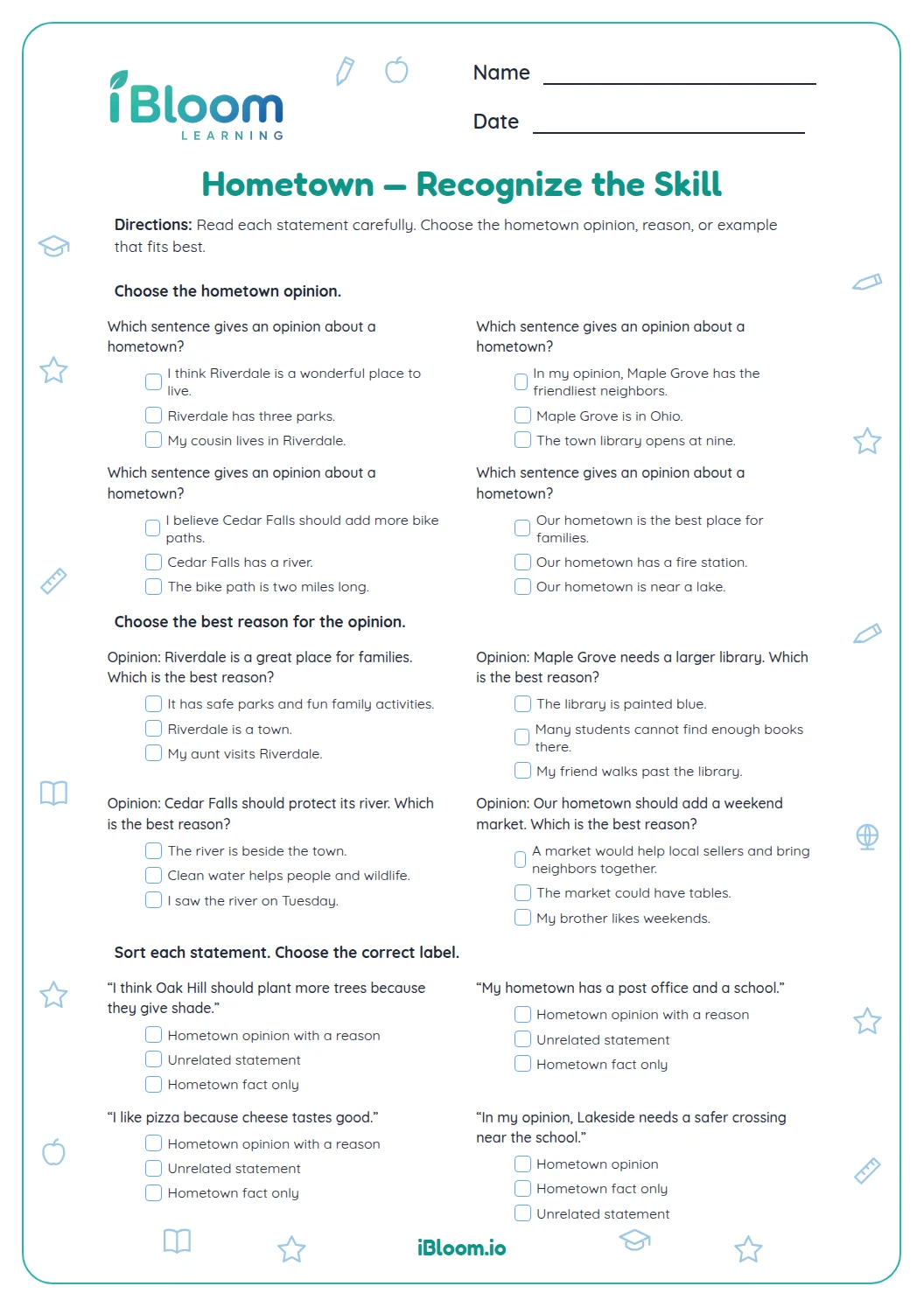
The related opinion prompts use other topics, including kindness, learning, and hometowns. A student can apply the same structure: state a view, explain a reason, and add a detail. Each linked topic gives the writer another chance to practice the same structure.