



About this worksheet
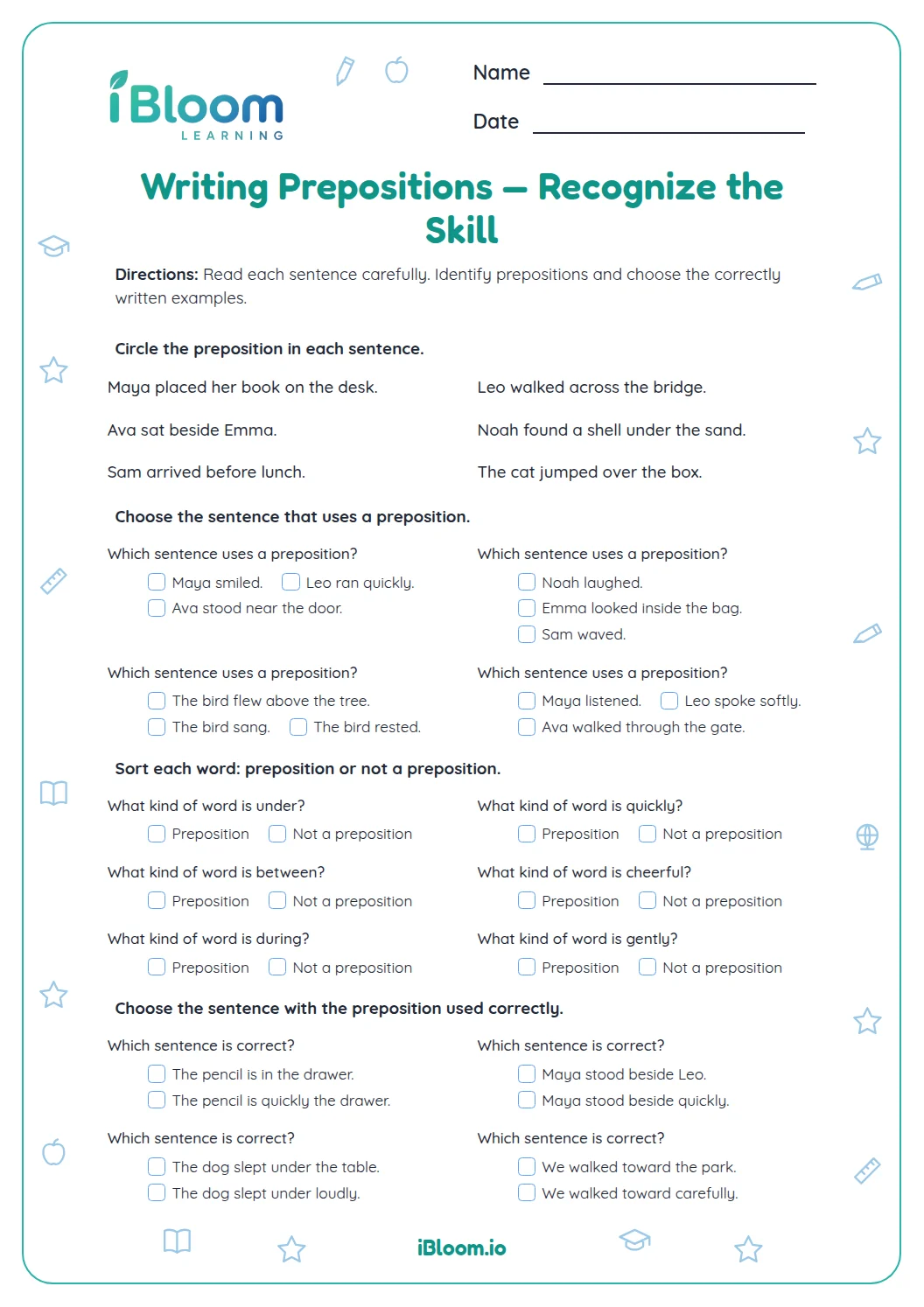
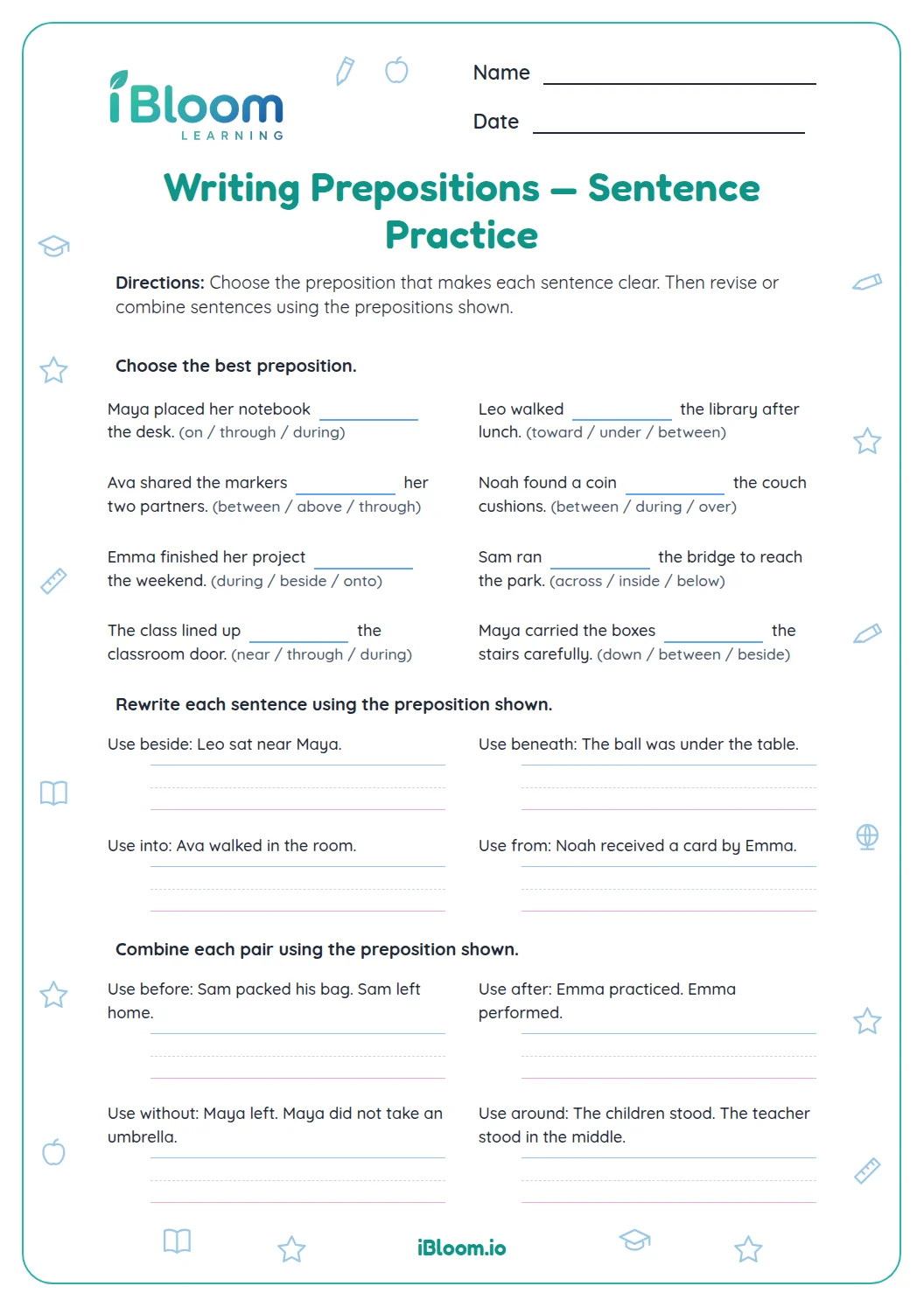
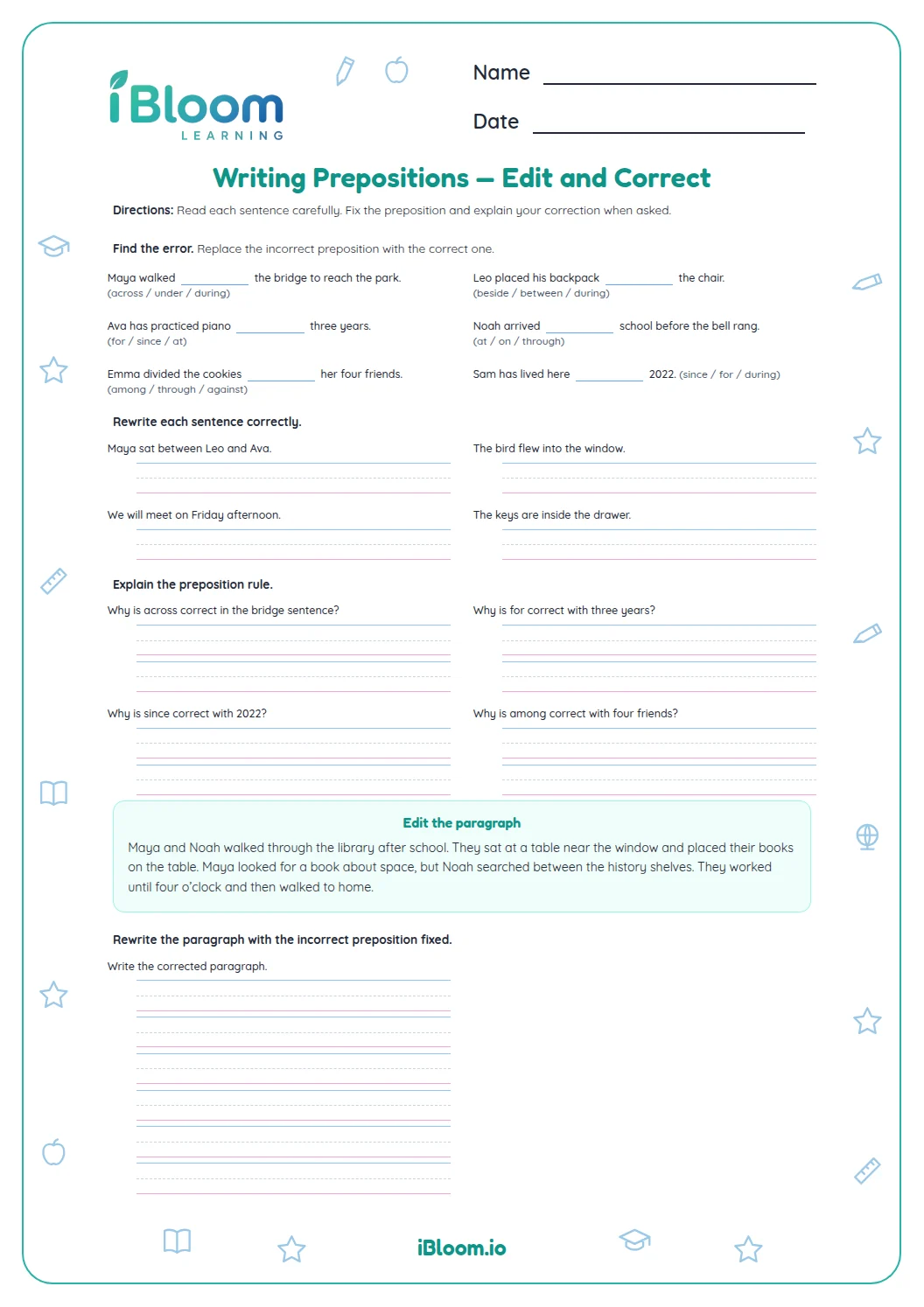
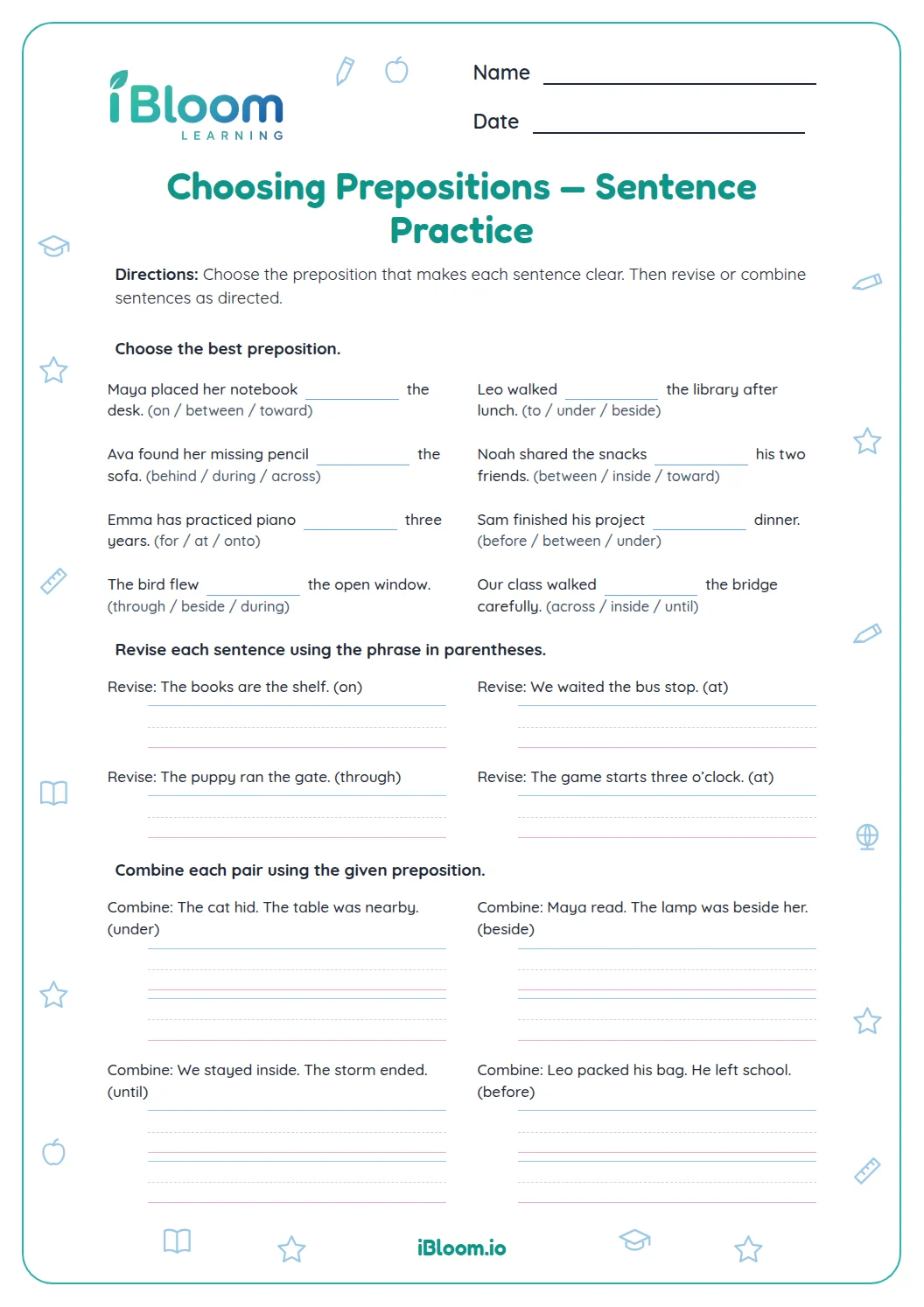
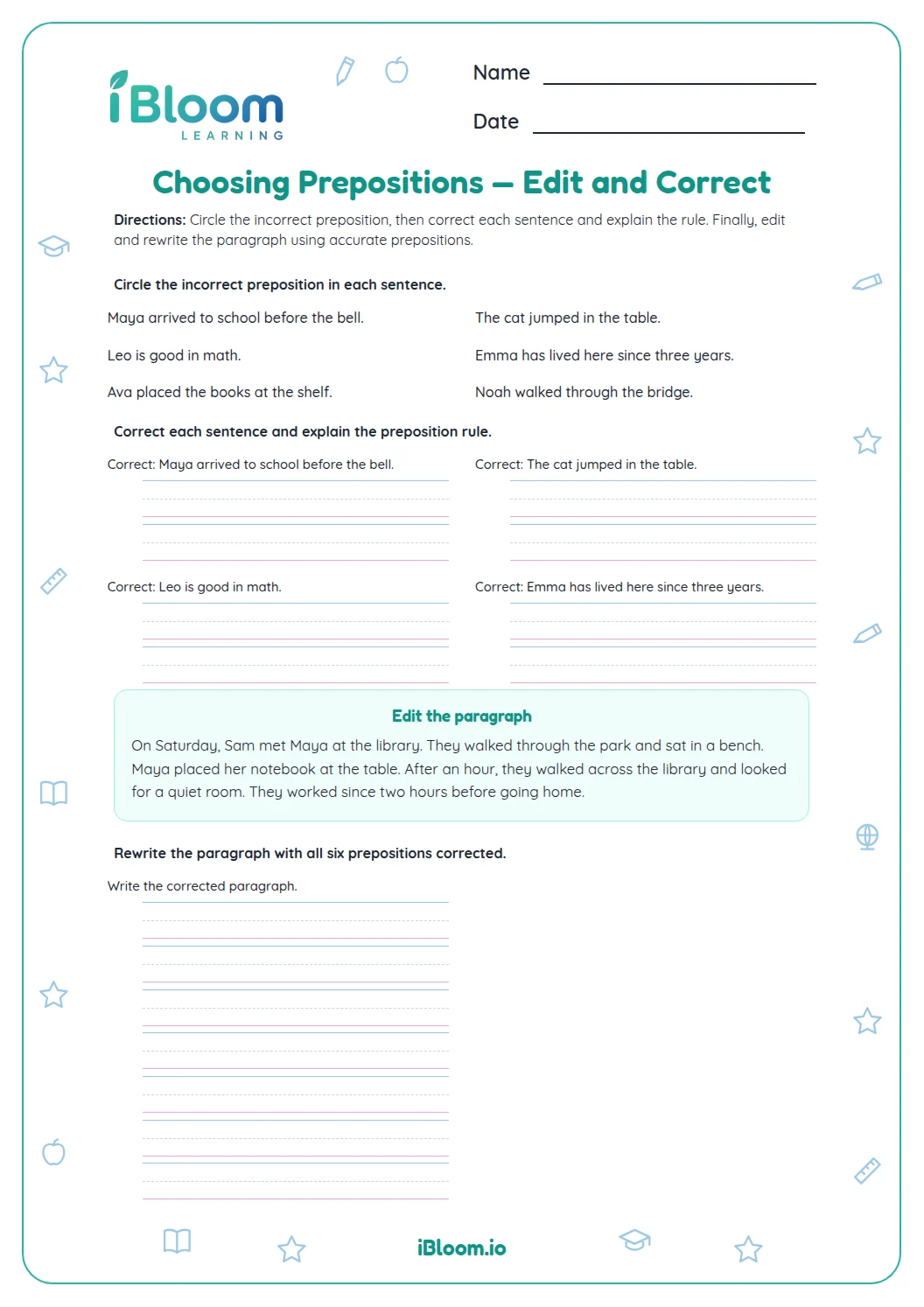
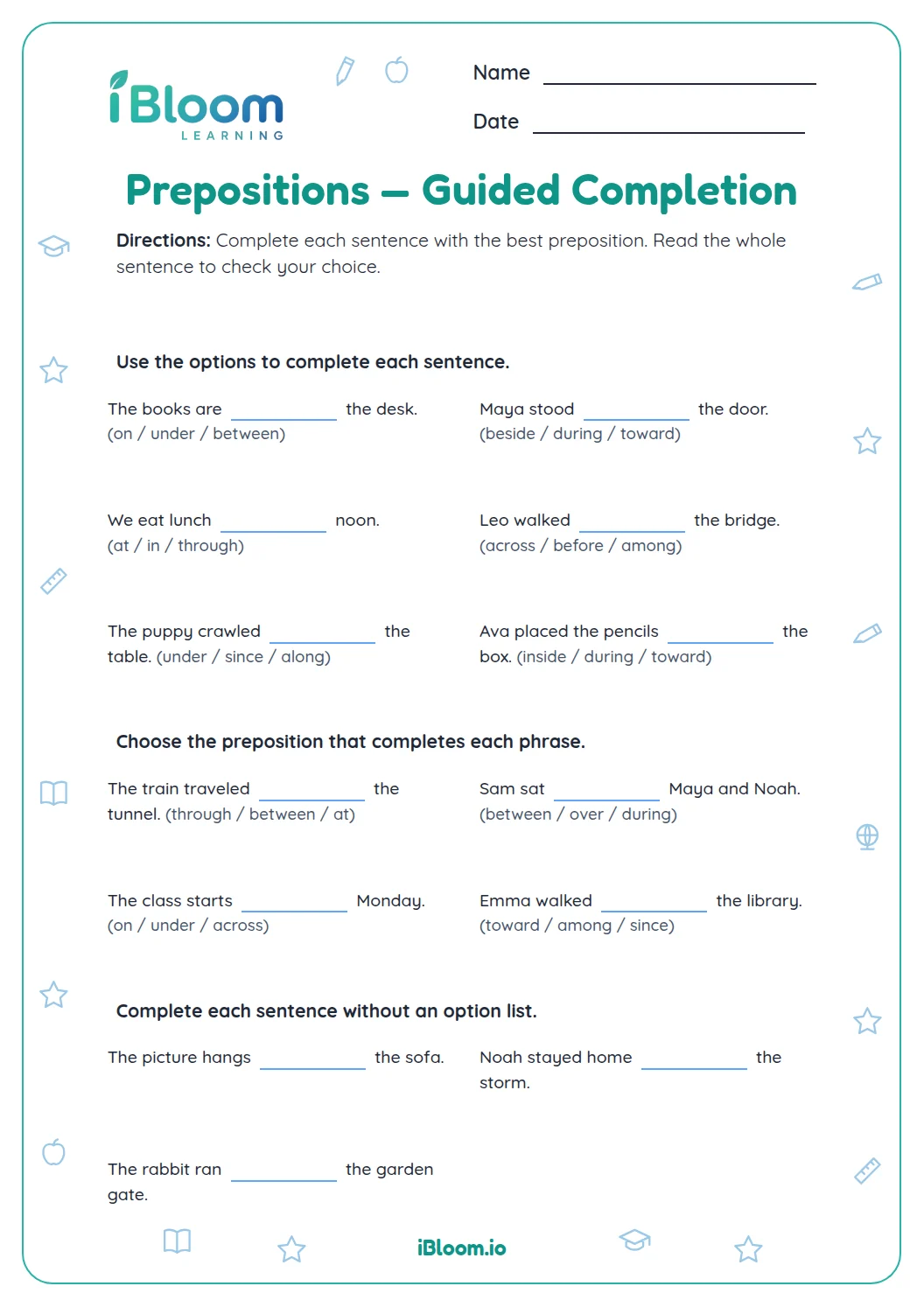
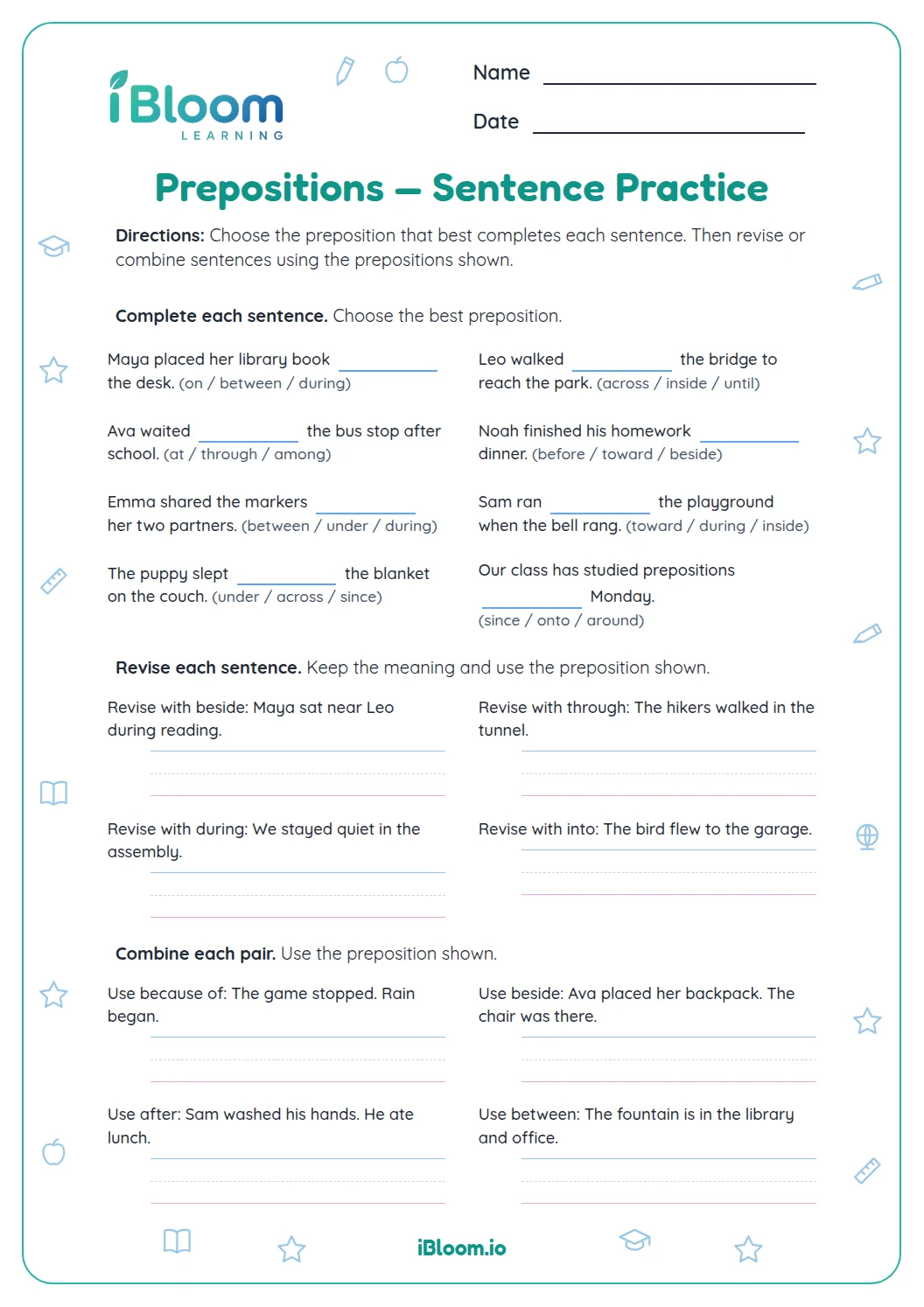
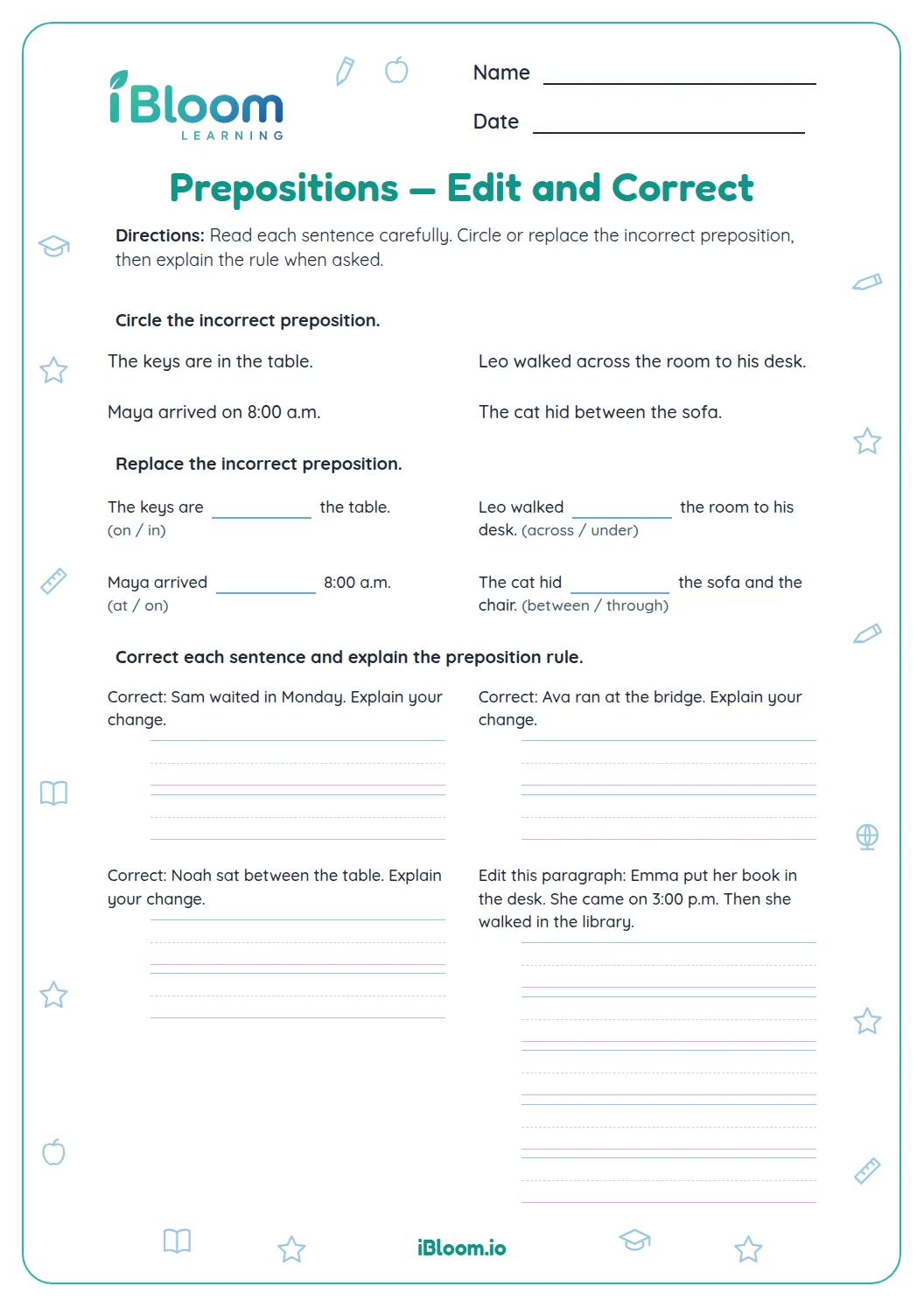
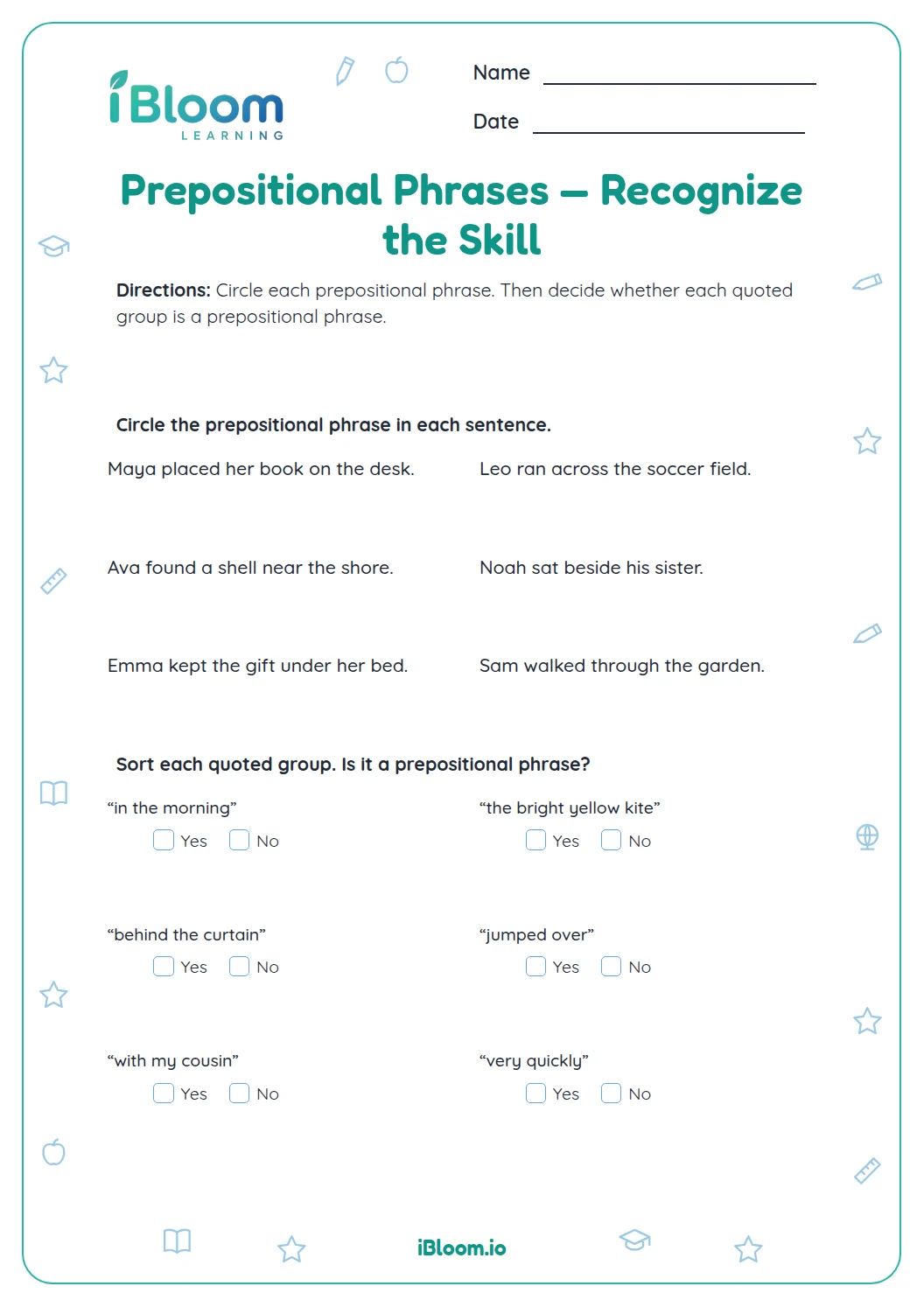
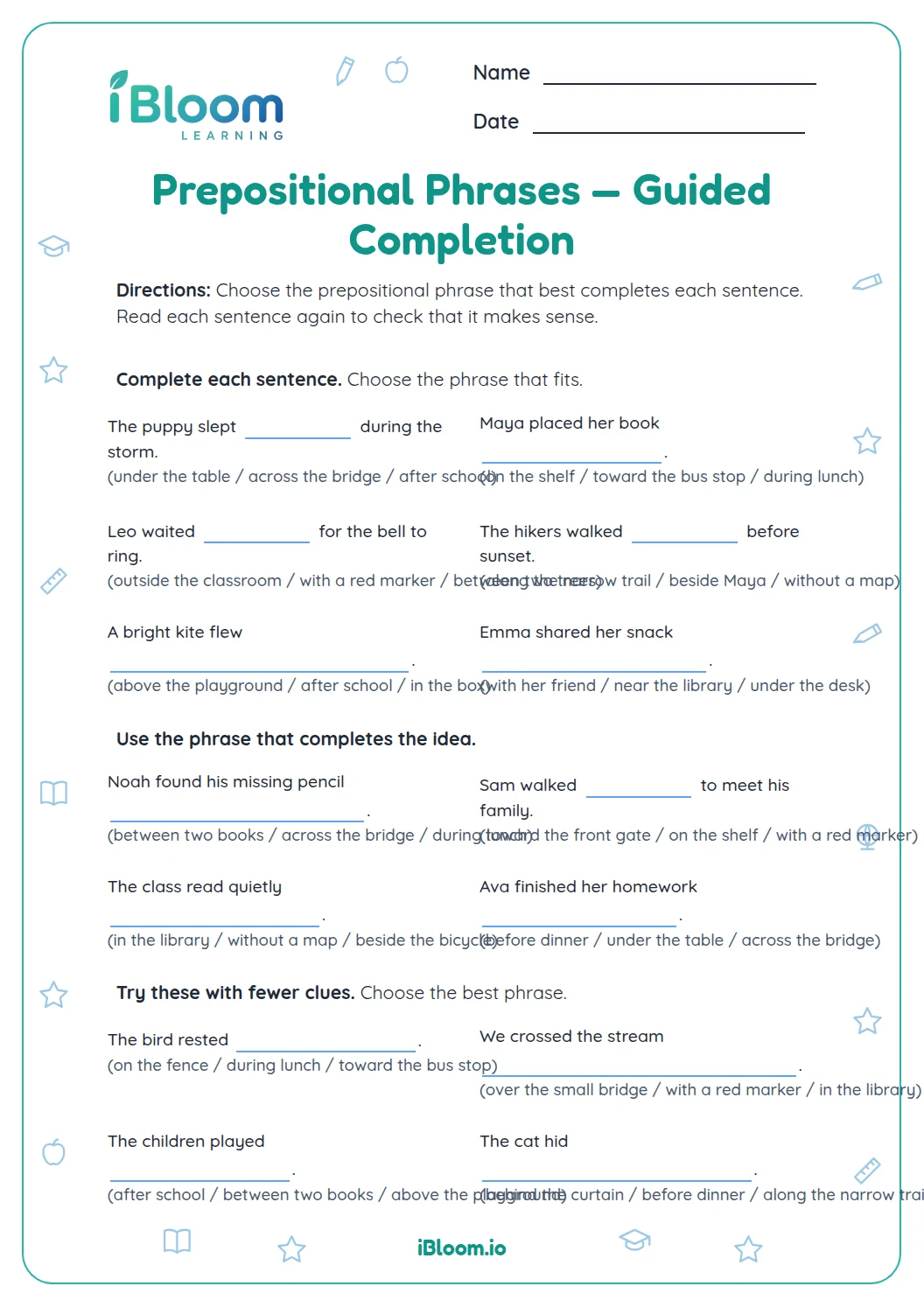
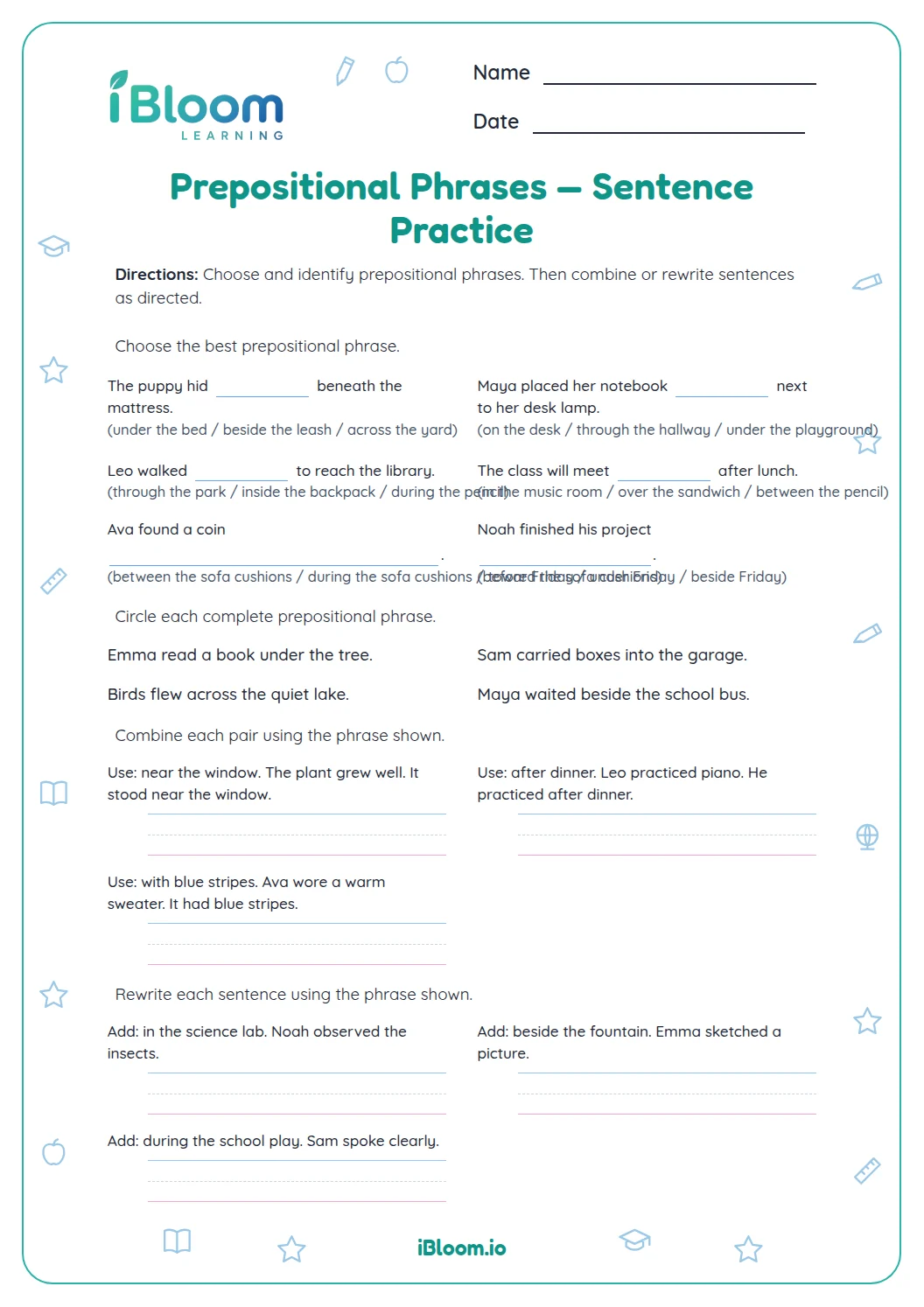
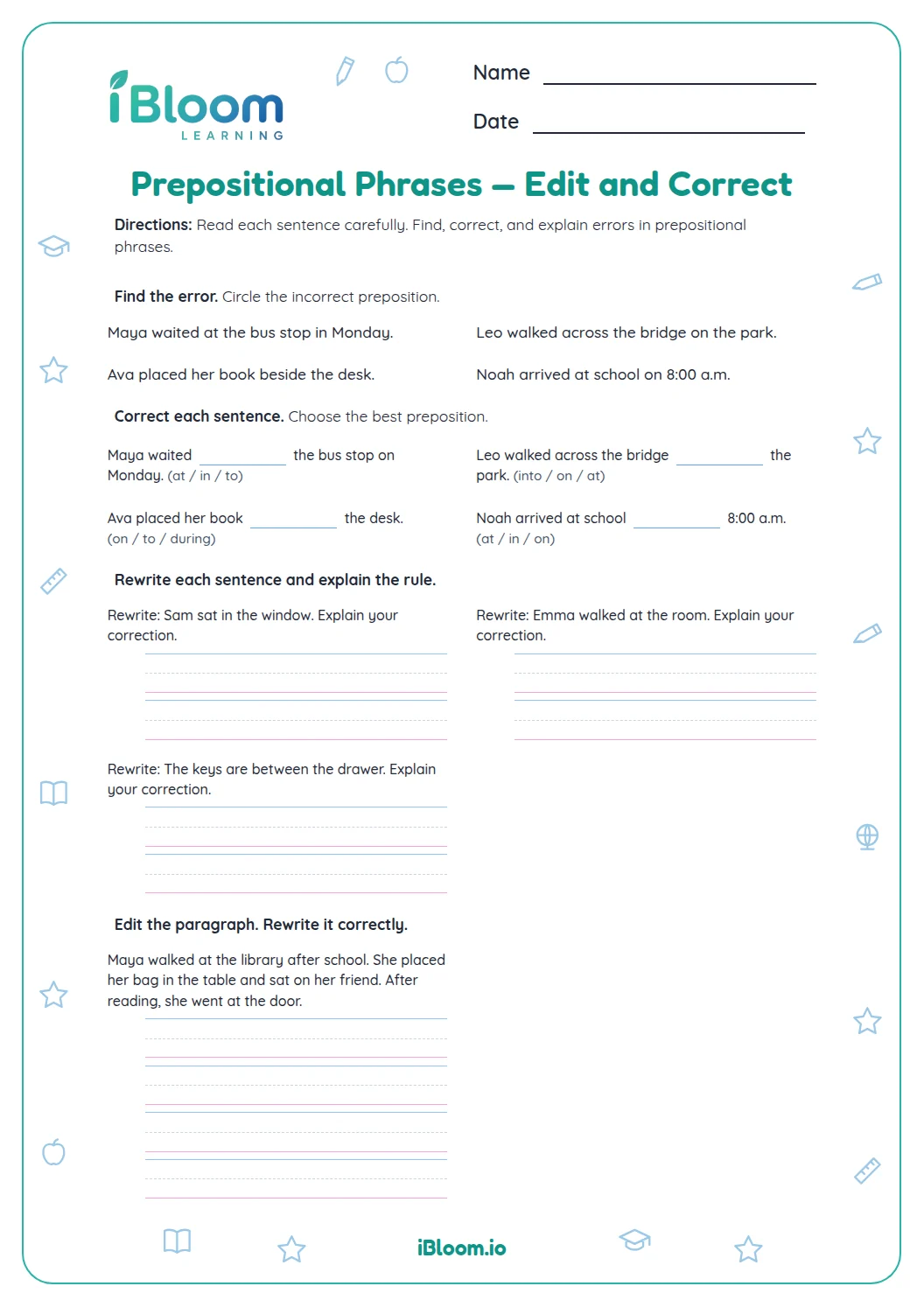
This Grade 5 printable asks learners to apply prepositions in two ways. First, choose a preposition that fits each sentence from three choices. Then write a full prepositional phrase, including the preposition and its object. The items practice how prepositions function in particular sentences, as described by CCSS L.5.1a.
Aligned to L.5.1a
What does a preposition do?
A preposition shows a relationship, often involving place or time. In “The hikers rested beneath the oak tree,” beneath relates the hikers’ resting place to the tree. A prepositional phrase includes the preposition and its object.
How does Part A work?
Each sentence has three choices, so the learner selects a preposition that completes the stated relationship. For example, hikers resting in relation to an oak tree fit beneath. The choices help make the intended answer clear.
What should learners write in Part B?
Write the preposition together with its object. In “The bird nested in a hollow tree,” the full phrase is in a hollow tree. The phrase includes more than the preposition in; it also includes the words naming its object.
- 1The bird nested in a hollow tree.
- 2Preposition: in. Object: a hollow tree.
- 3Phrase: in a hollow tree.
How to use this worksheet
- 1Read the entire sentence before choosing a preposition.
- 2Check that the chosen word shows the relationship described.
- 3In Part B, find the preposition in the sentence.
- 4Include its object when you write the phrase.
- 5Compare the phrase with the answer key after finishing the part.
Common mistakes and quick fixes
The mistake
Writing only the preposition.
The fix
Add the object and its describing words to make the full phrase.
The mistake
Choosing a word that does not fit the relationship.
The fix
Read the completed sentence aloud and check its meaning.
The mistake
Copying only part of the phrase.
The fix
Start at the preposition and include the words that belong to its object.
Common Core alignment
This worksheet gives practice with the skill named in the standard.
Explain how prepositions work in general and in particular sentences.
On this sheet: Learners complete sentences with prepositions and identify prepositional phrases in context.
Show the official wordingHide the official wording
Explain the function of conjunctions, prepositions, and interjections in general and their function in particular sentences.
What to practice next
Make more practice
Further reading
Questions parents and teachers ask
How many questions are included?
This worksheet has 14 questions in two parts. Six sentence-completion questions ask learners to choose a fitting preposition. Eight more ask them to write a complete prepositional phrase from a sentence. A separate answer key is included. Check that the object stays with the preposition.
What counts as a complete prepositional phrase?
A complete phrase includes the preposition and its object, along with any words describing that object. In “in a hollow tree,” in is the preposition and a hollow tree is its object. Check that the object stays with the preposition.
Does Part A have one intended answer?
Yes. Each sentence gives three choices, and the wording is designed to make one choice fit the stated relationship. Learners can read the completed sentence aloud to check that their selection makes sense. Check that the object stays with the preposition.
How should a learner check Part B?
Compare the phrase with the sentence and make sure it begins with the preposition and includes its object. The key gives the intended phrase. If another phrase seems possible, check that it is the one explicitly requested by the sentence prompt.
How long should the worksheet take?
Allow about 20 minutes for the 14 questions. Learners may need extra time to copy full phrases carefully or explain why a preposition fits. Completing one part before checking the answer key keeps the practice focused. Check that the object stays with the preposition.