


About this worksheet
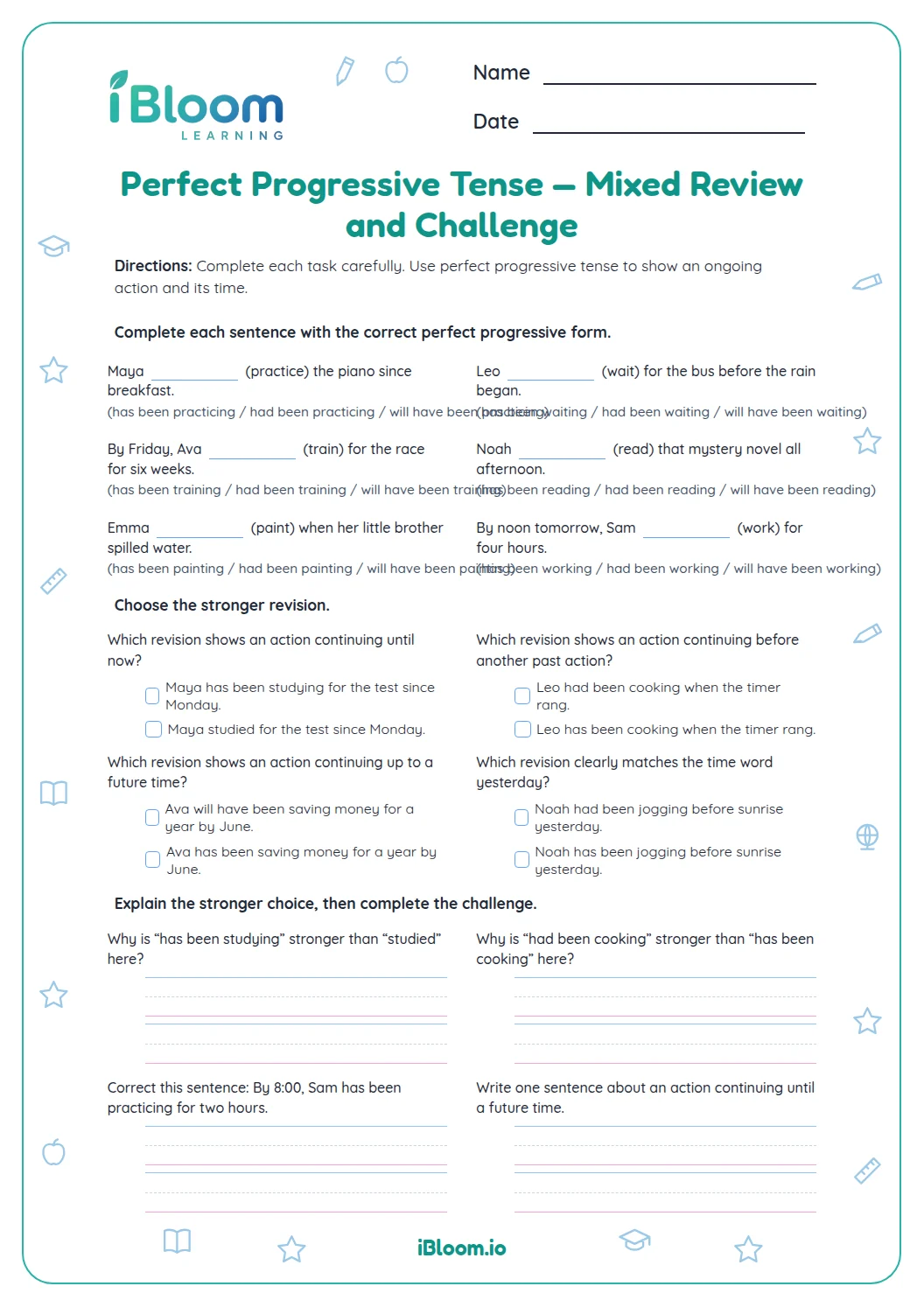
This Grade 5 worksheet guides students through fourteen perfect progressive verb phrases. Part A supplies been and an -ing verb while students add has or have. Part B supplies had been or will have been while students form the -ing verb. Part C asks for the entire phrase, with the base verb and intended tense named in each prompt. Contexts about reading, practice, and waiting connect the forms to ongoing actions at present, past, or future reference times. The sheet practices Common Core L.5.1c, using verb tense to convey time, and includes an answer key.
Aligned to L.5.1c
What words make a perfect progressive phrase?
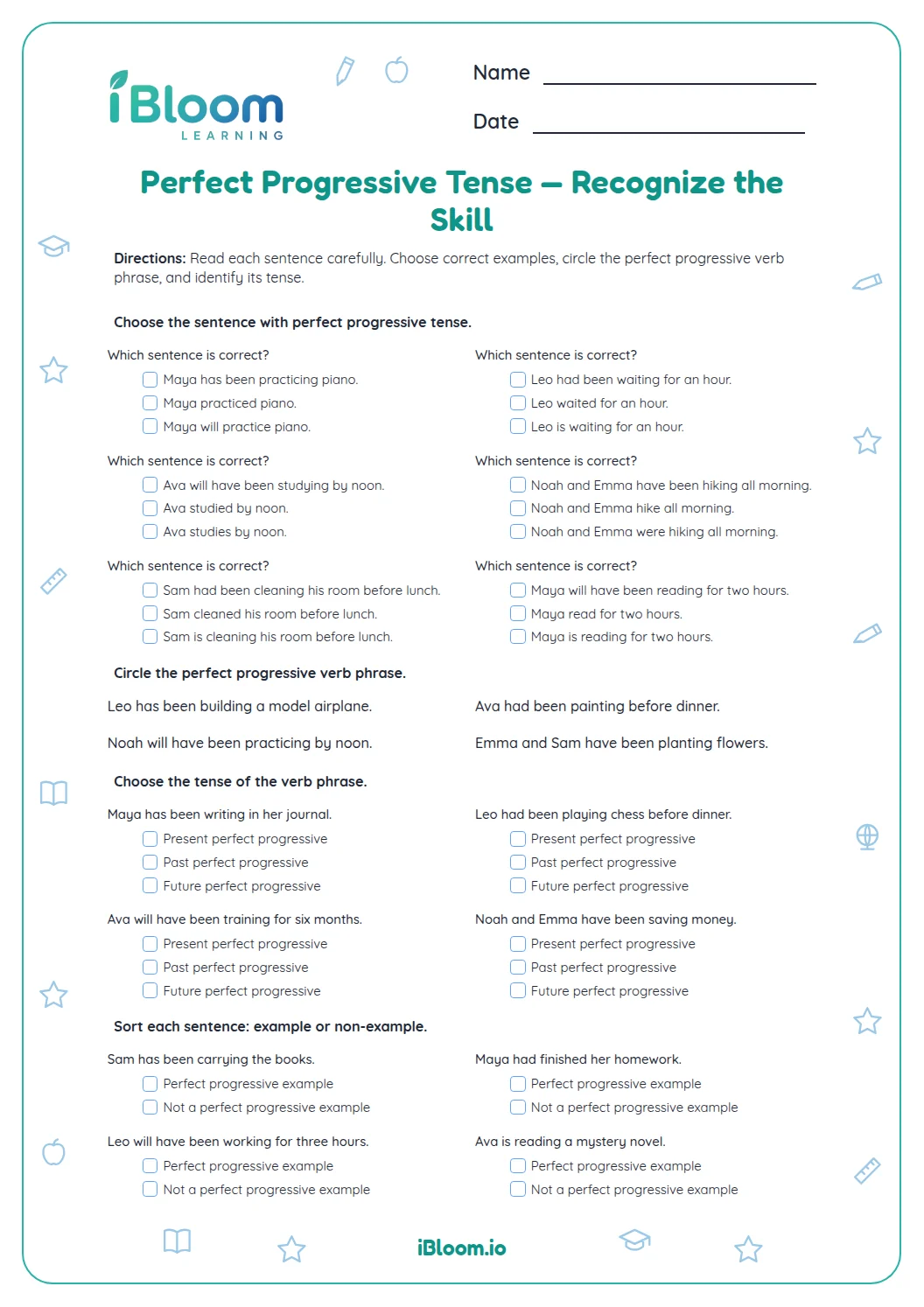
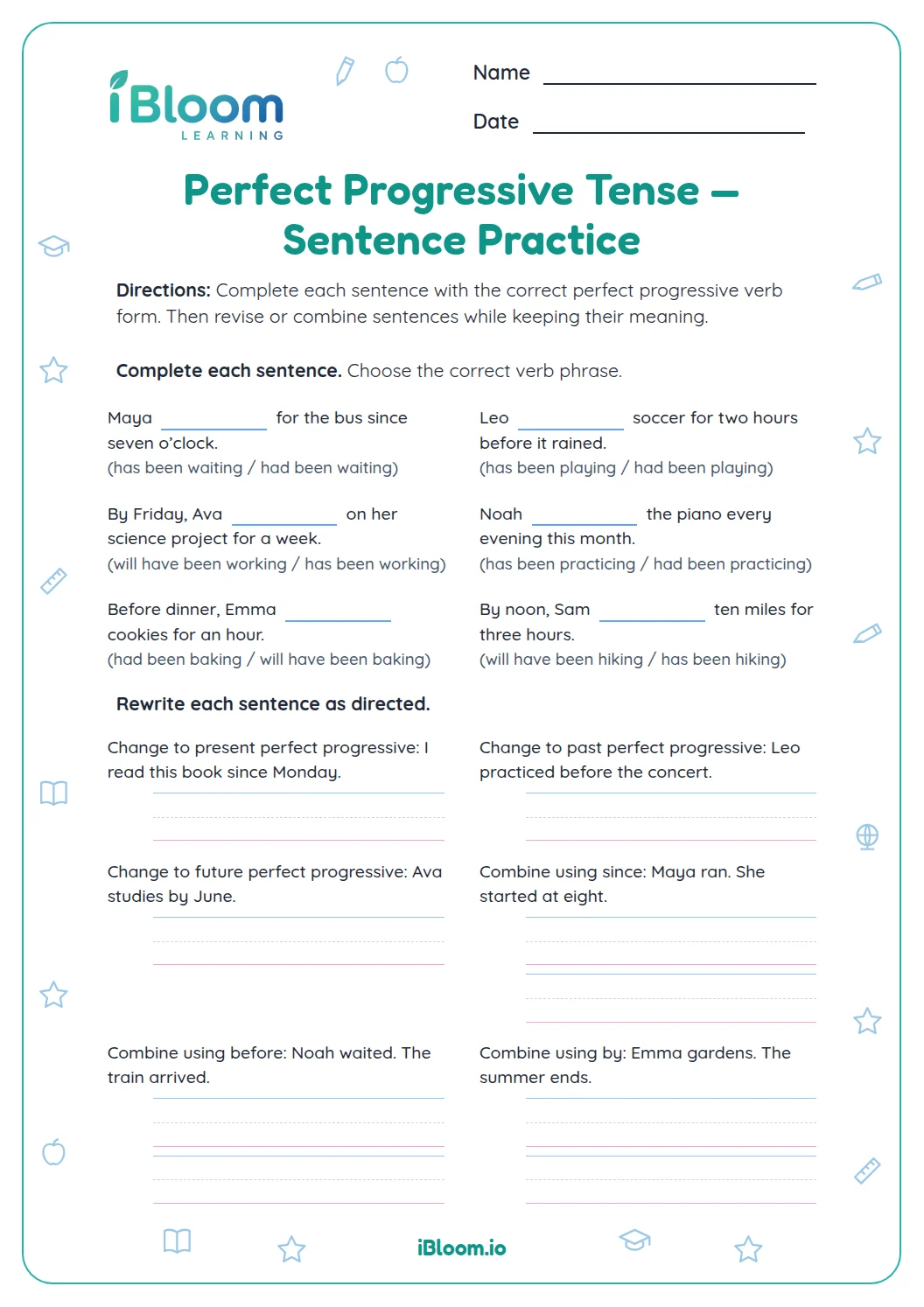
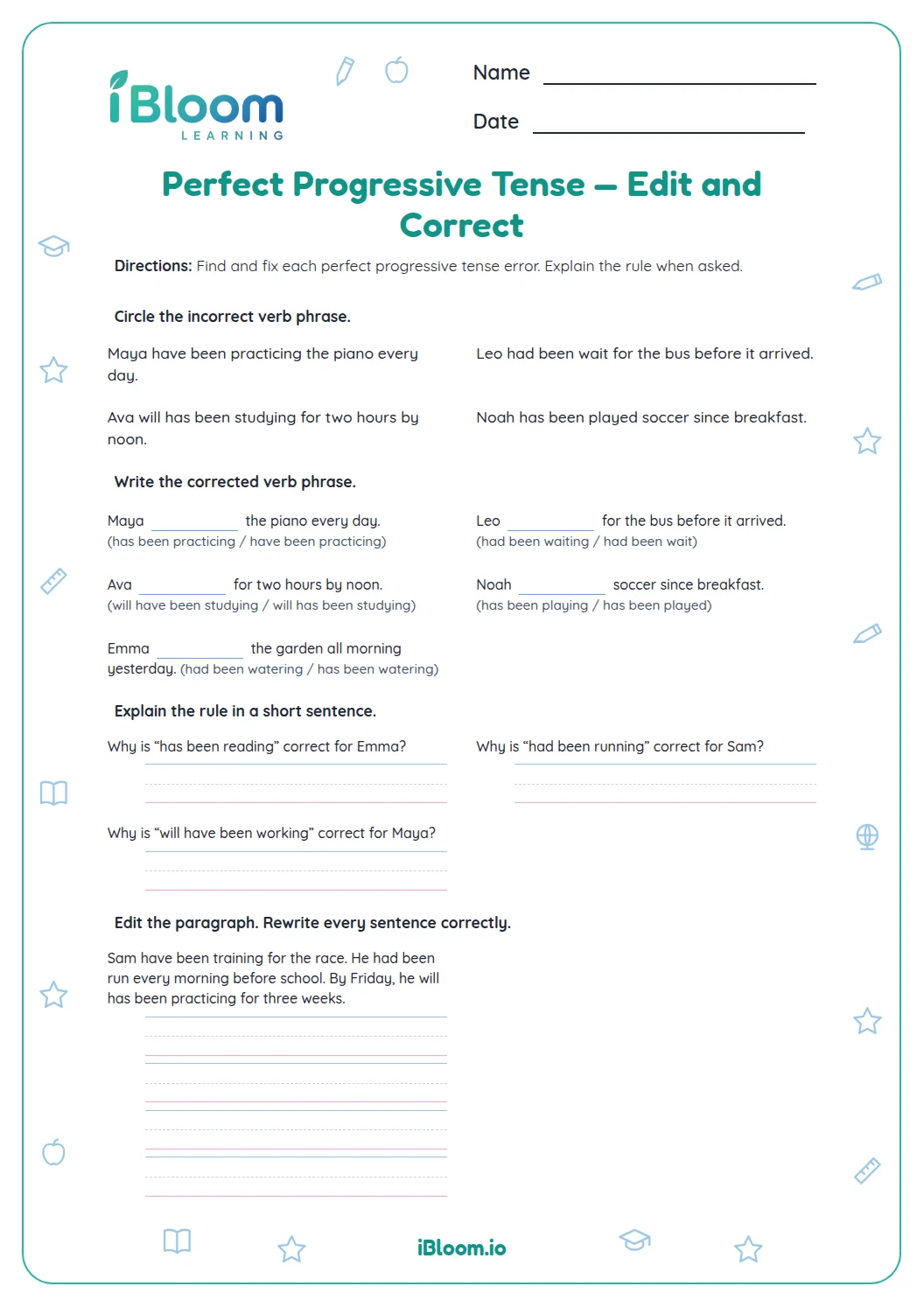
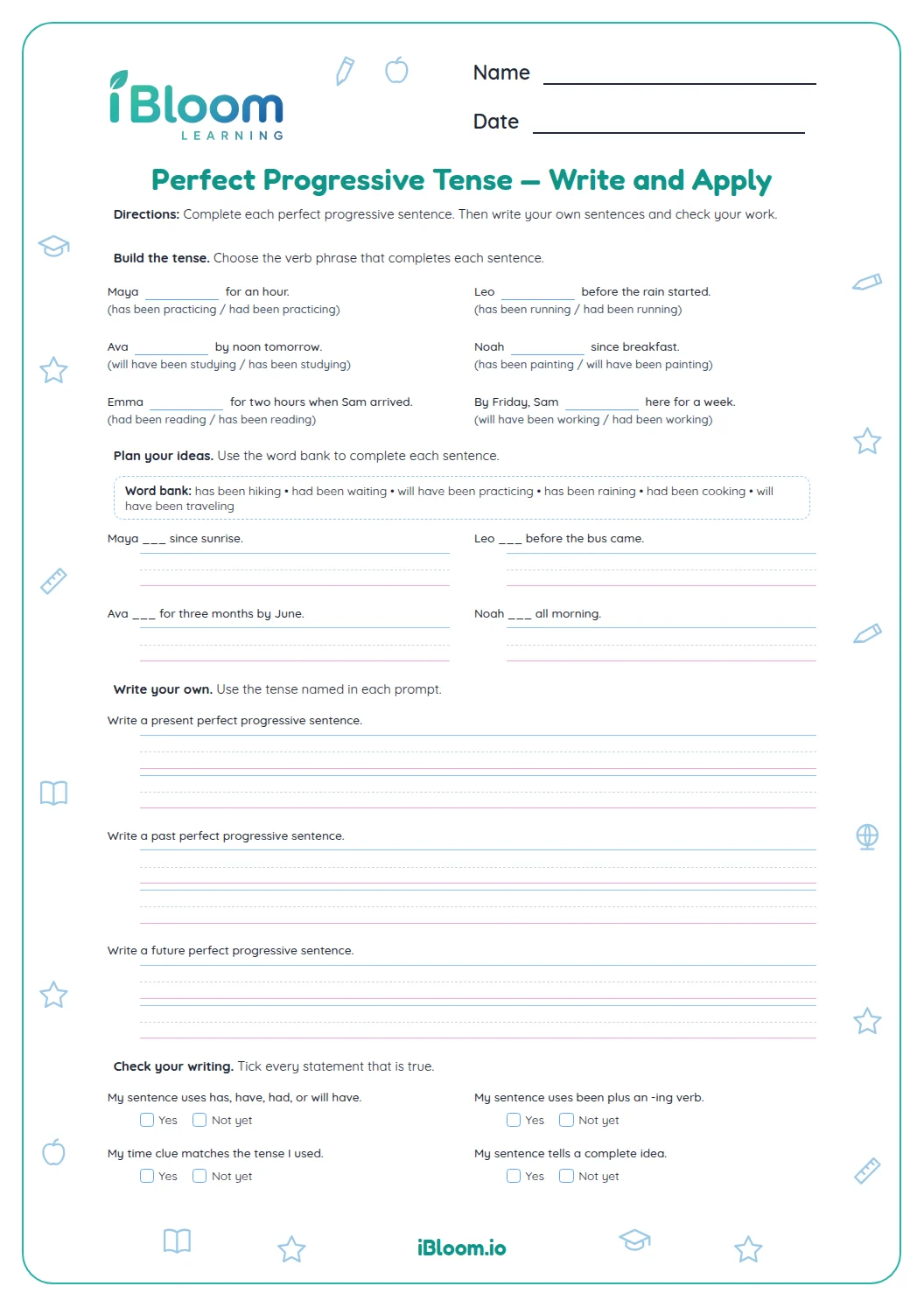
The phrase has two layers of helping verbs followed by an -ing verb. Present forms use has been or have been. Past forms use had been. Future forms use will have been. Each describes an activity continuing over a period leading up to a reference time.
Part A keeps the ending visible so students can focus on agreement: Mia has, we have, the dog has, and I have. Part B then shifts attention to spelling the -ing form.
How do the time clues guide the answer?
The words since nine and still at her desk make question 9 about writing that began earlier and continues now. Its named tense cue confirms that students need the present perfect progressive form. Ana takes has, and write becomes writing.
- 1Ana ___ since nine and is still at her desk.
- 2Base verb: write. Named tense: present perfect progressive.
- 3has + been + writing = has been writing
How does the guidance fade across the sheet?
Part A has four one-word gaps for has or have. Part B has four gaps for -ing verbs, including hiking, running, and living. Part C has six gaps for complete phrases; students must keep every helping verb.
Read each completed sentence aloud and ask where its reference time lies. In question 10, the bus arrival is the past reference point. In question 11, next June is the future reference point.
Use the worksheet step by step
- 1Read the Part A model and compare he has with they have.
- 2Complete questions 1–4 by matching has or have to the subject.
- 3In Part B, write the -ing form and check spelling changes.
- 4In Part C, locate the base verb and named tense before filling the whole phrase.
- 5Read the finished sentences aloud and compare every word with the key.
Mistakes to check and how to fix them
The mistake
Writing Mia have been reading.
The fix
Use has with a singular third-person subject such as Mia; use have with I, you, we, and they.
The mistake
Writing will has been working.
The fix
The future pattern is always will have been plus the -ing form, regardless of the subject.
The mistake
Writing had waiting instead of had been waiting.
The fix
Check for all three pieces: had, been, and the -ing verb.
Common Core alignment
Use present, past, and future verb phrases to locate ongoing actions in time.
On this sheet: Sentence contexts and named tense cues connect each completed phrase to its reference time.
Show the official wordingHide the official wording
Use verb tense to convey various times, sequences, states, and conditions.
What to practice next
Make more practice
Further reading
Questions parents and teachers ask
Which tenses do the fourteen sentences practice?
The sheet practices present, past, and future perfect progressive forms. Part A uses the present pattern, Part B includes past and future patterns, and Part C mixes all three. Every Part C prompt names the intended tense, so students can concentrate on building the complete phrase.
Why do we write “Mia has” but “I have”?
Has agrees with a singular third-person subject such as Mia, he, or the dog. Have goes with I, you, we, and they. Part A gives four opportunities to make that choice while keeping been and the main verb visible in every sentence.
What is the answer to the bus sentence?
The answer is had been waiting. The waiting continued for an hour before the bus arrived, which is the past reference point. Students should write all three words in the blank. The past cue and Part C directions identify the tense.
How should students spell the -ing verbs?
Students should write painting, hiking, running, and living in Part B. Add -ing directly to paint, drop the final silent e from hike and live, and double the final n in run. Read the finished phrase aloud, then check the spelling separately against the key.
Can students complete the page independently?
Students who know helping verbs and basic -ing forms can use the printed models independently. For extra support, complete the first item together and name its subject. Then have the student explain one past and one future phrase before attempting the six full-phrase blanks in Part C.