




About this worksheet
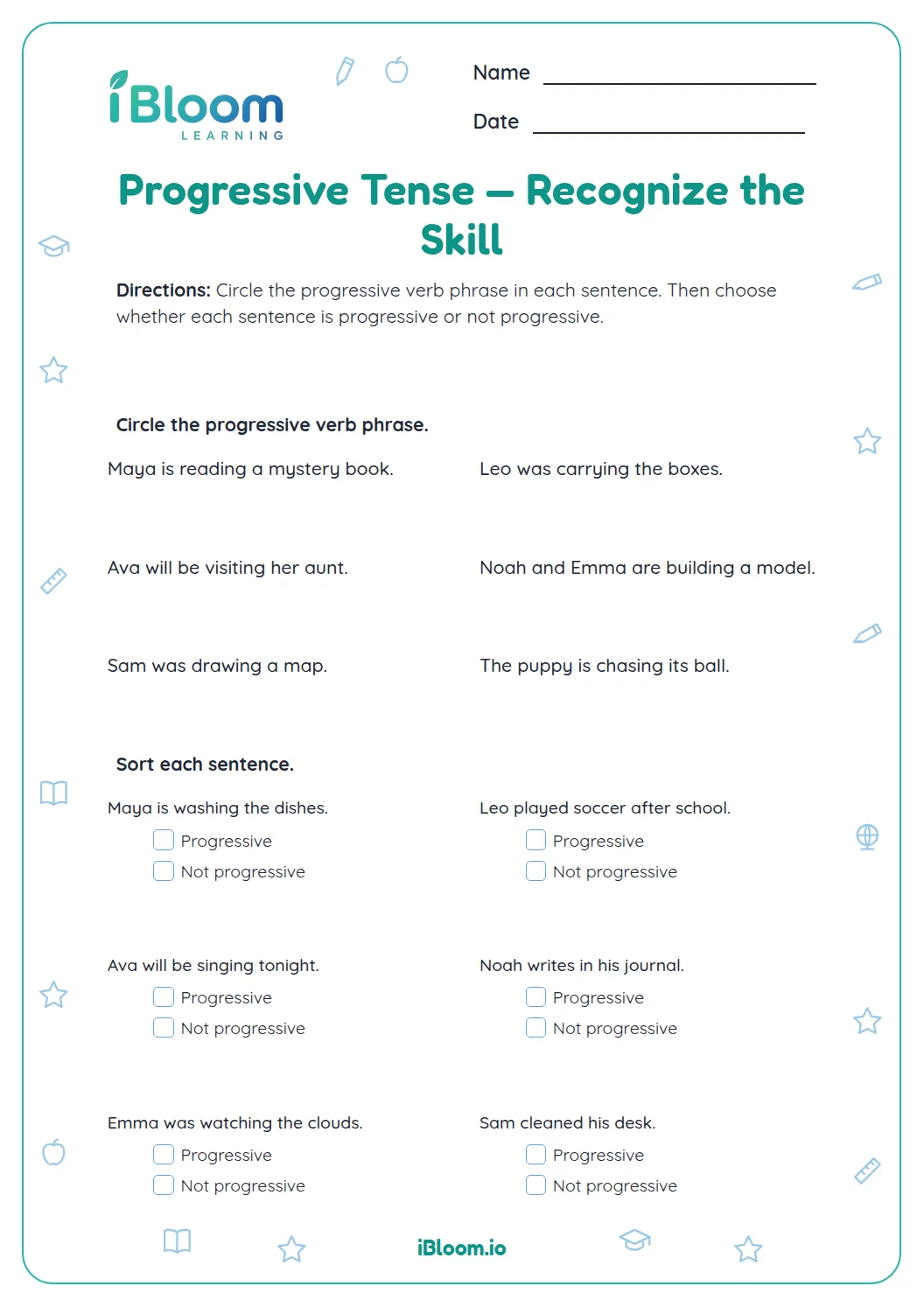
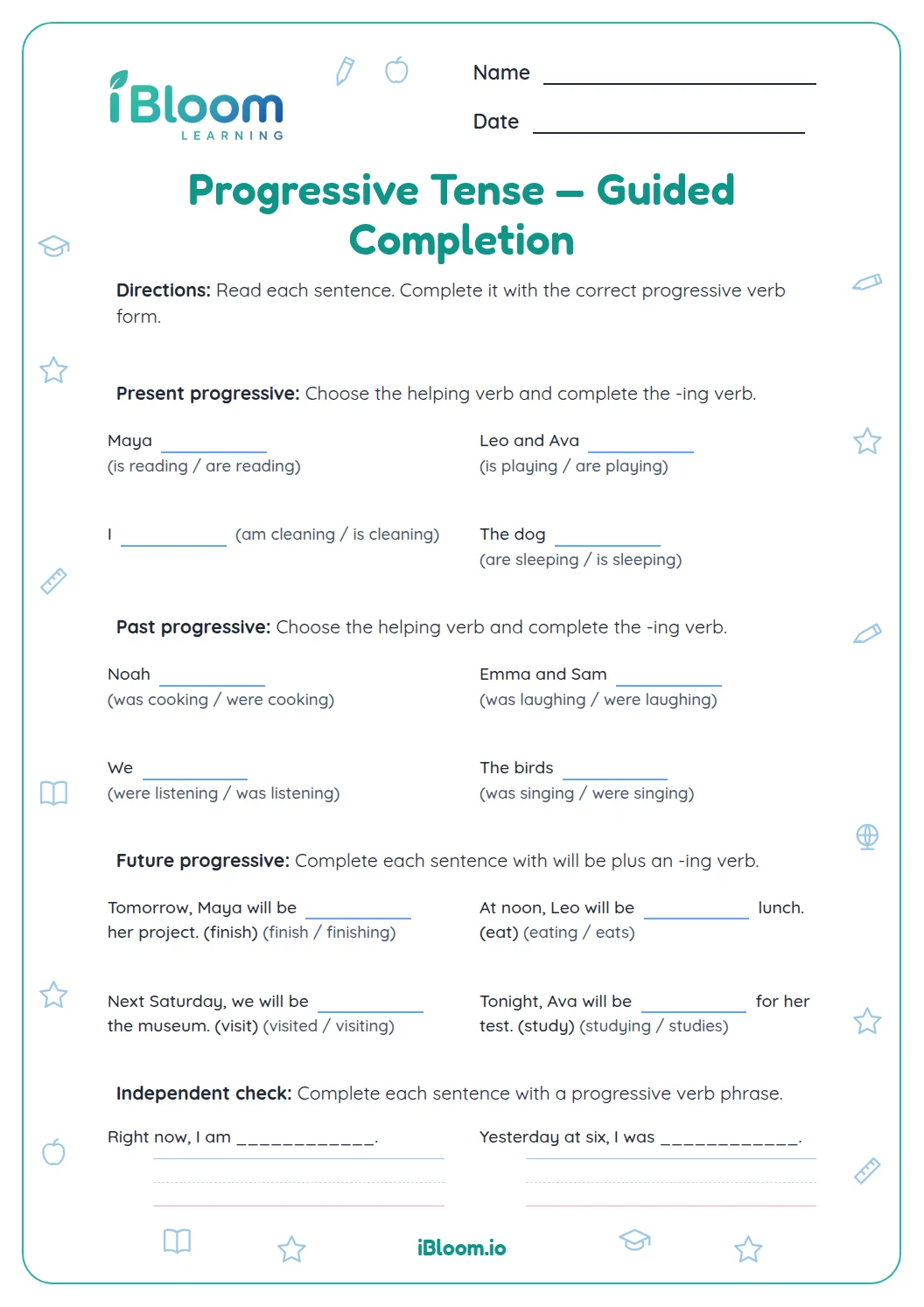
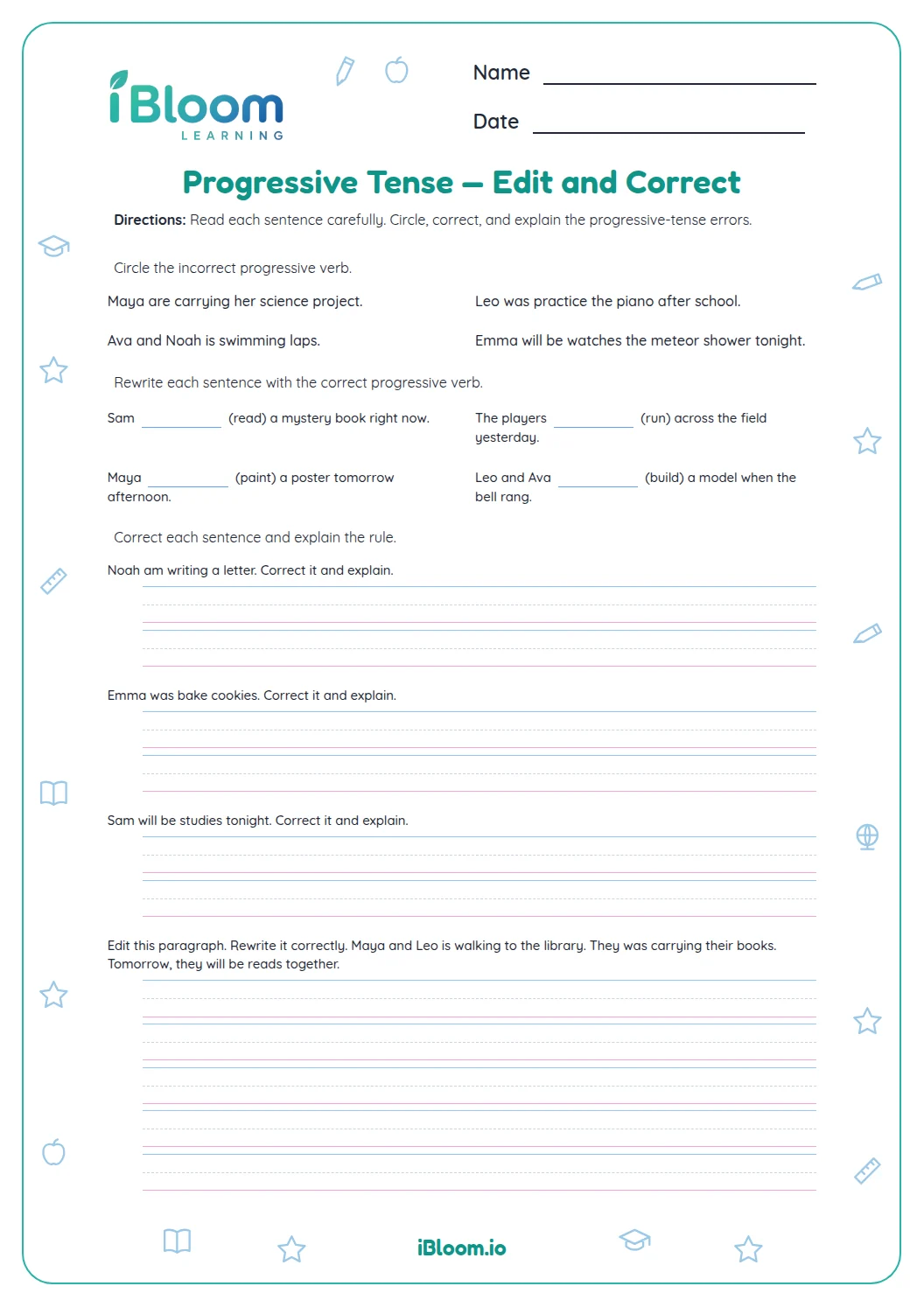
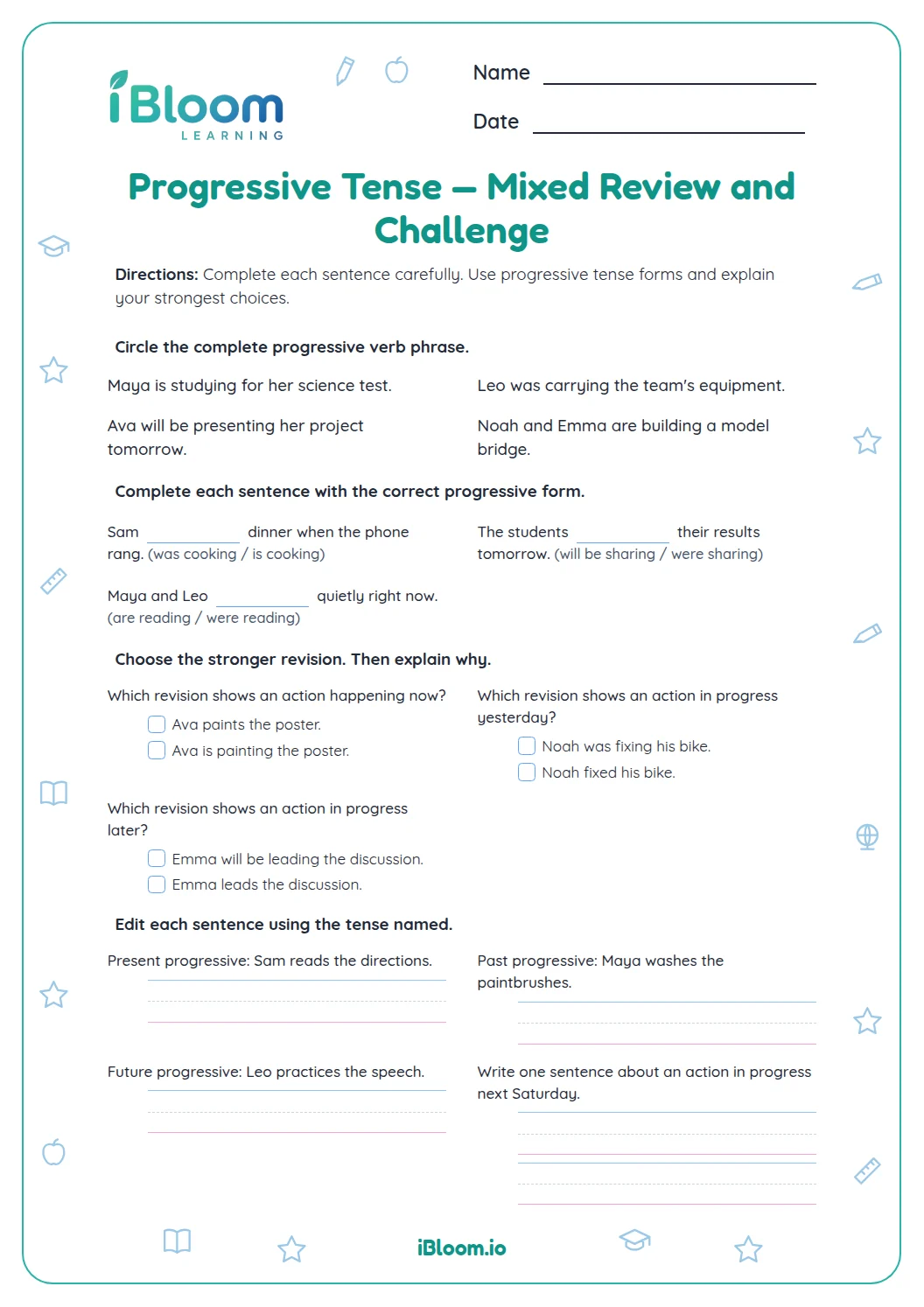
This Grade 5 progressive-tense worksheet moves from recognizing verb forms to using them in original sentences. Learners identify present, past, and future actions in progress, match verb forms to time clues, and write three sentences. A separate answer key lists the selected forms and gives sample writing.
Aligned to L.5.1
How is progressive tense formed?
Use a form of be with a verb ending in -ing: is reading, was reading, or will be reading. The helping verb changes with the time.
How do time clues guide the verb?
Words such as right now, yesterday, and tomorrow point to present, past, and future time. Match the helping verb to that clue.
What should the written sentences include?
Each response needs the subject, the correct progressive verb, and the time clue from the prompt. For example, “Maya is studying right now.”
How to use this worksheet
- 1Read the time clue before choosing a verb form.
- 2Look for a form of be followed by an -ing verb.
- 3Match is or are to present, was or were to past, and will be to future.
- 4Write a complete sentence for each final prompt.
- 5Use the key to check both the time and verb form.
Common mistakes and quick fixes
The mistake
Using was with a present-time clue.
The fix
Match is/are to now, was/were to a past clue, and will be to a future clue.
The mistake
Leaving out the helping verb.
The fix
Include be before the -ing form: “was helping,” not “helping” alone.
The mistake
Using a simple tense when the action is in progress.
The fix
Check that the answer includes be plus the -ing verb.
Common Core alignment
This page gives learners focused practice with the language and writing skill named on the sheet.
Use standard grammar and verb forms when writing progressive-tense sentences.
On this sheet: Learners select and write standard present, past, and future progressive forms in context.
Show the official wordingHide the official wording
Demonstrate command of the conventions of standard English grammar and usage when writing or speaking.
What to practice next
Make more practice
Further reading
Questions parents and teachers ask
What does progressive tense show?
Progressive tense shows an action in progress at a particular time. It uses a form of be with a verb ending in -ing, such as is reading, was reading, or will be reading. The worksheet practices present, past, and future forms.
How do present, past, and future progressive forms differ?
The helping verb signals the time: is or are reading is present, was or were reading is past, and will be reading is future. Learners use time clues in the sentences to choose the matching form. The time clue and the helping verb should agree with one another in each response.
What are the answers to the writing prompts?
A sample response is “I am reading now. I was walking yesterday. I will be playing tomorrow.” Other complete sentences work if they use progressive forms that match the time clues. The sample demonstrates present, past, and future forms in order.
Why does progressive tense need a helping verb?
The helping verb be works with the -ing form to show when the action is in progress. For instance, “was cooking” places the ongoing action in the past. Without the helping verb, the sentence does not use the progressive construction practiced here.
Is an answer key included?
Yes. The answer key follows the 14 worksheet questions. It identifies the 13 multiple-choice answers and offers a sample response for the final writing prompt. Learners can use the examples to check that every progressive verb includes both parts of the construction.