


About this worksheet
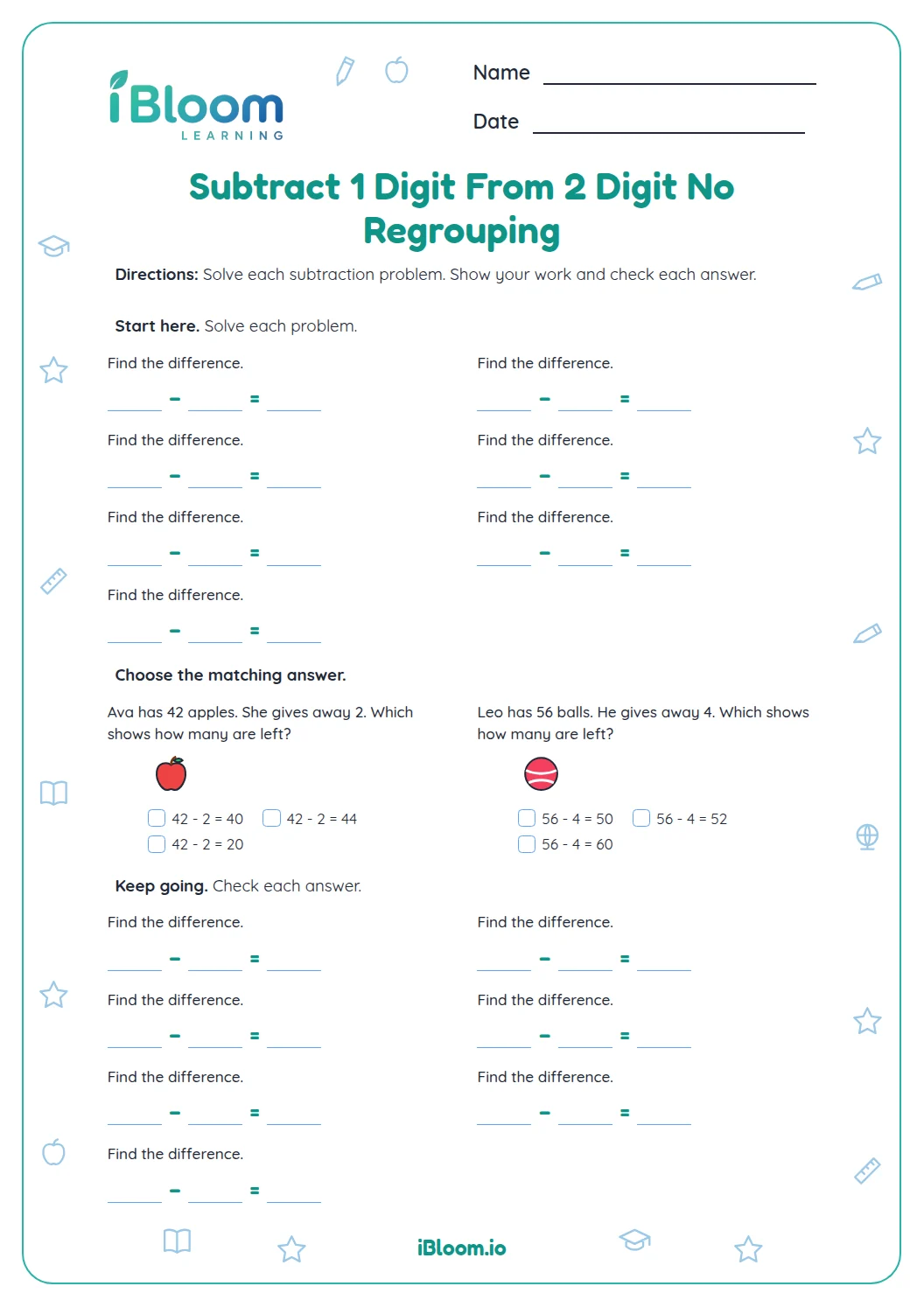
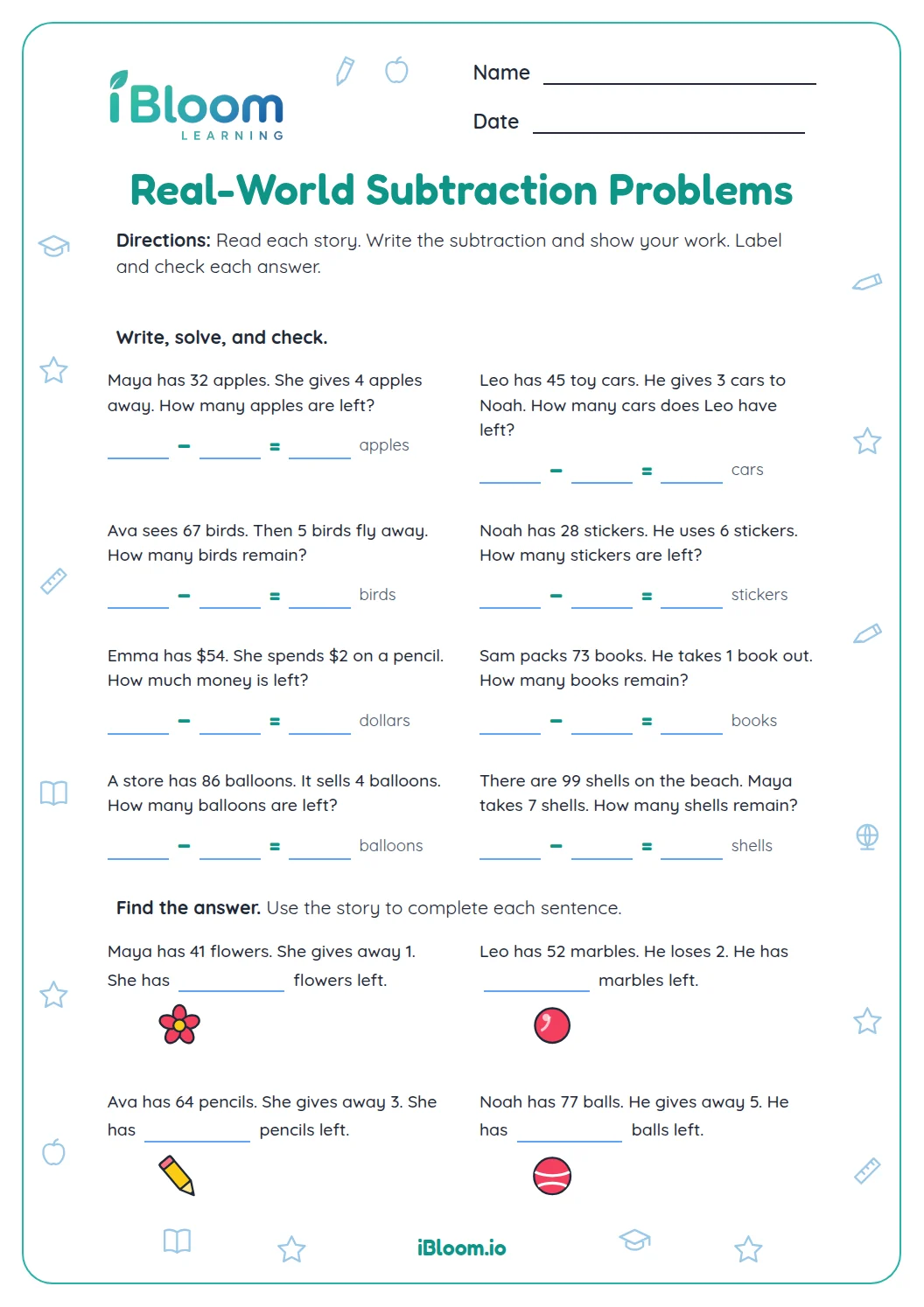
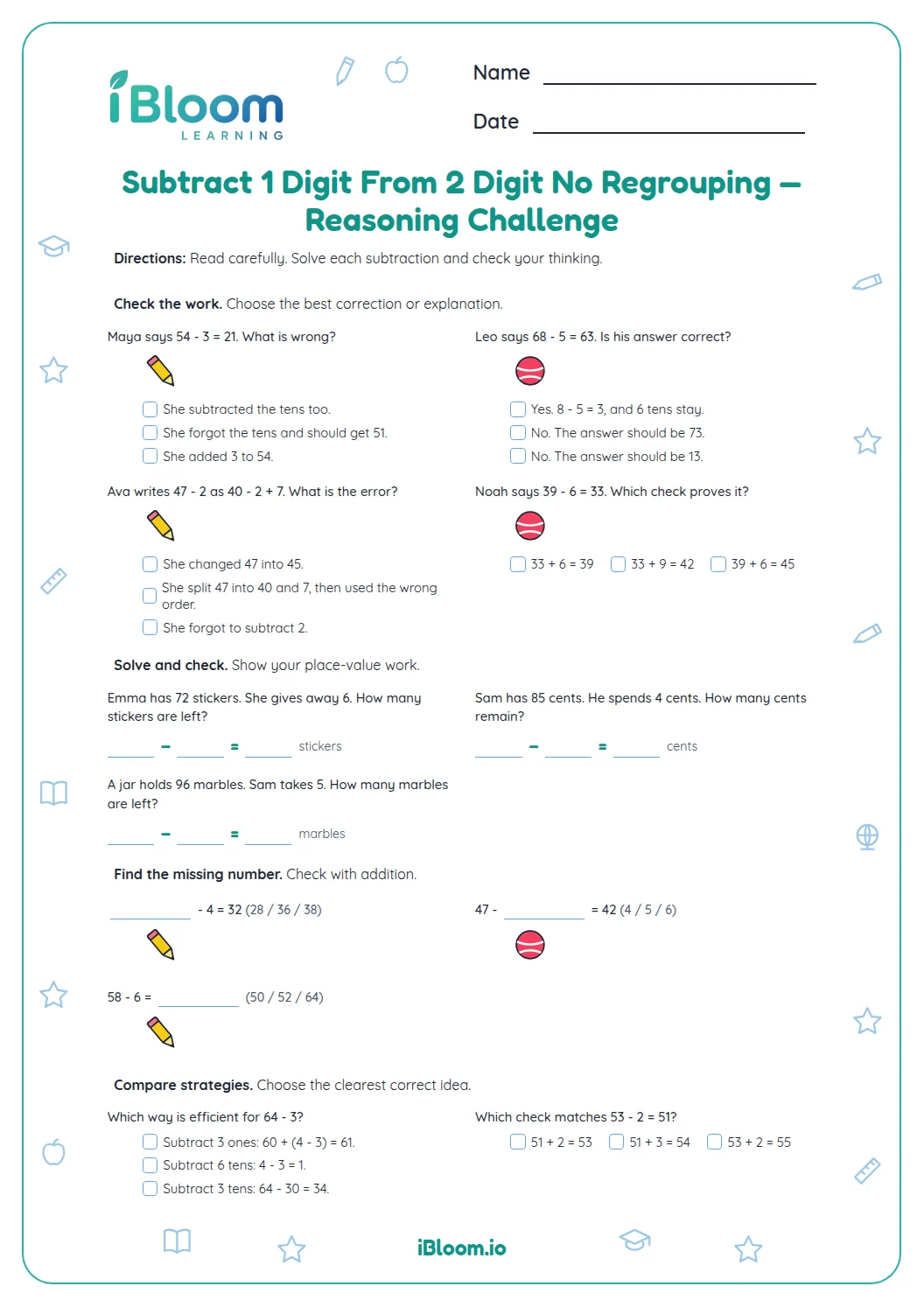
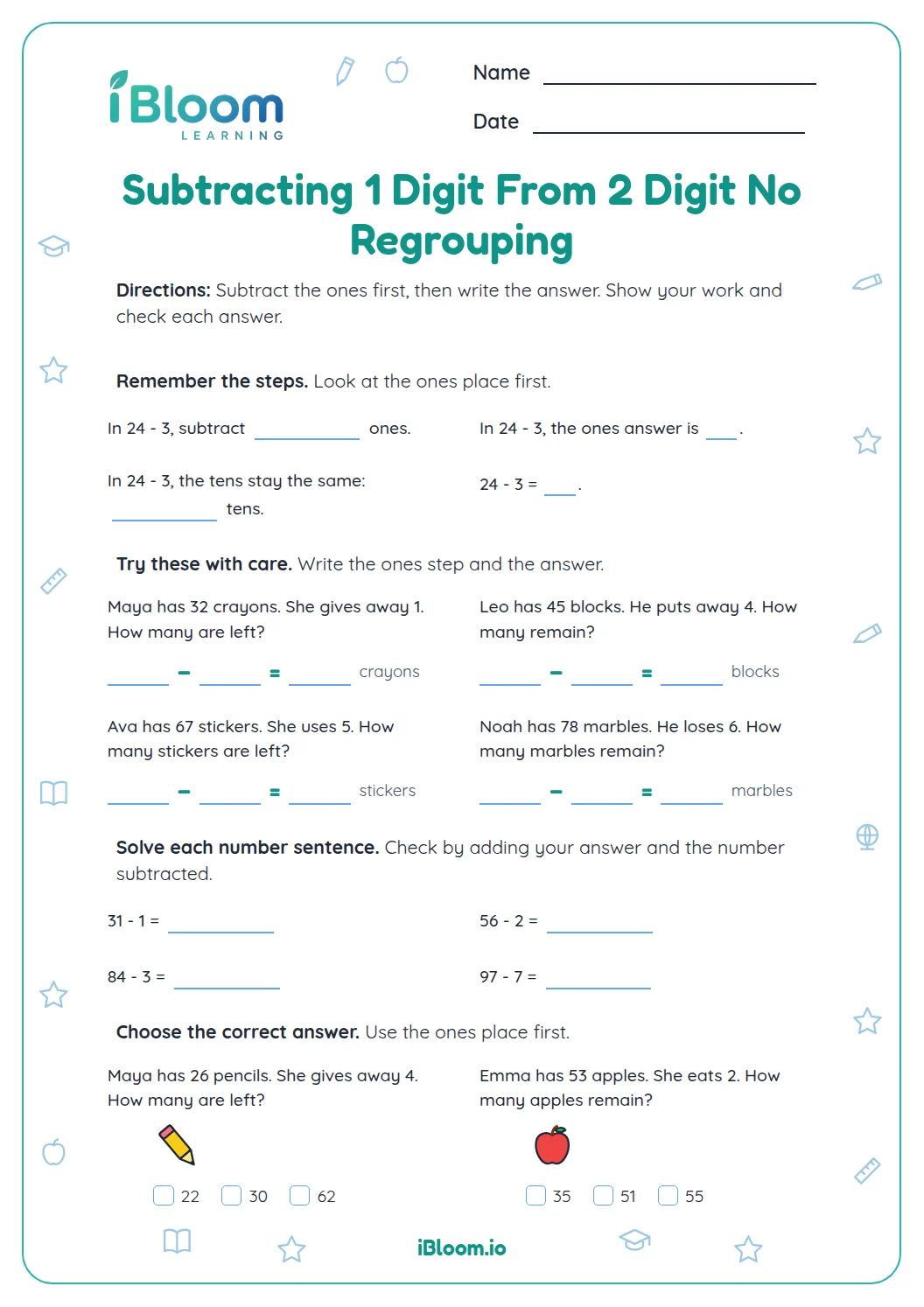
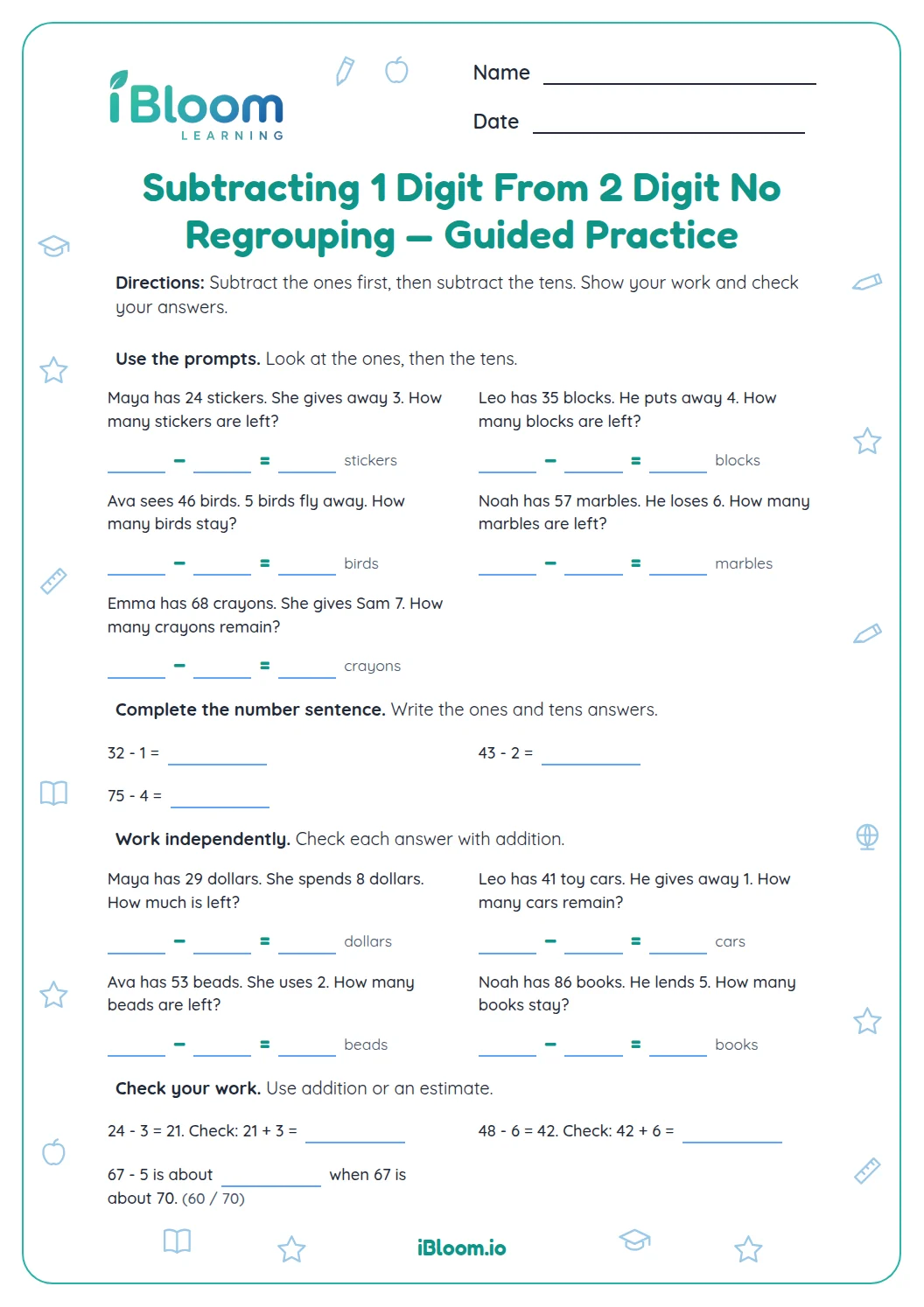
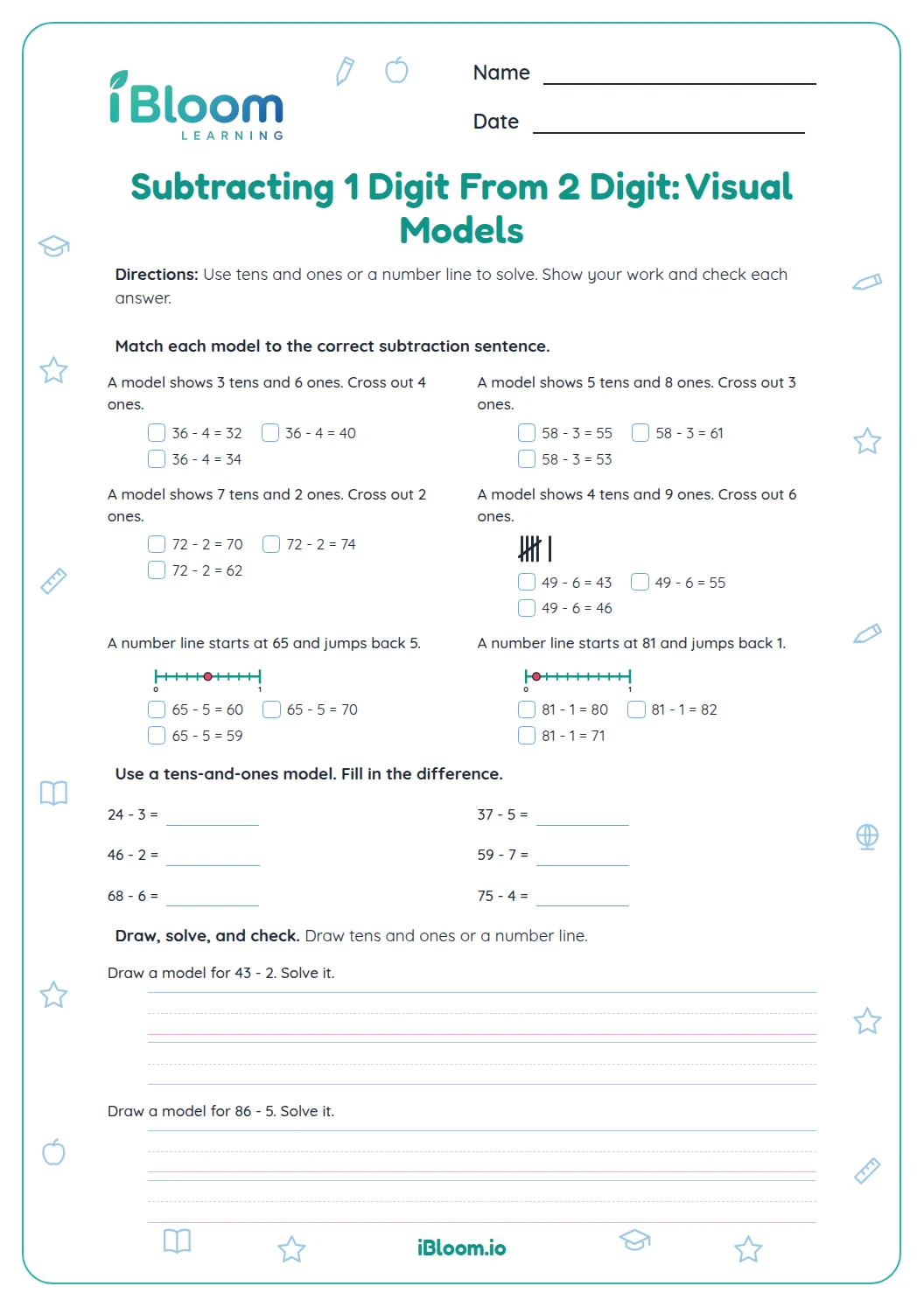
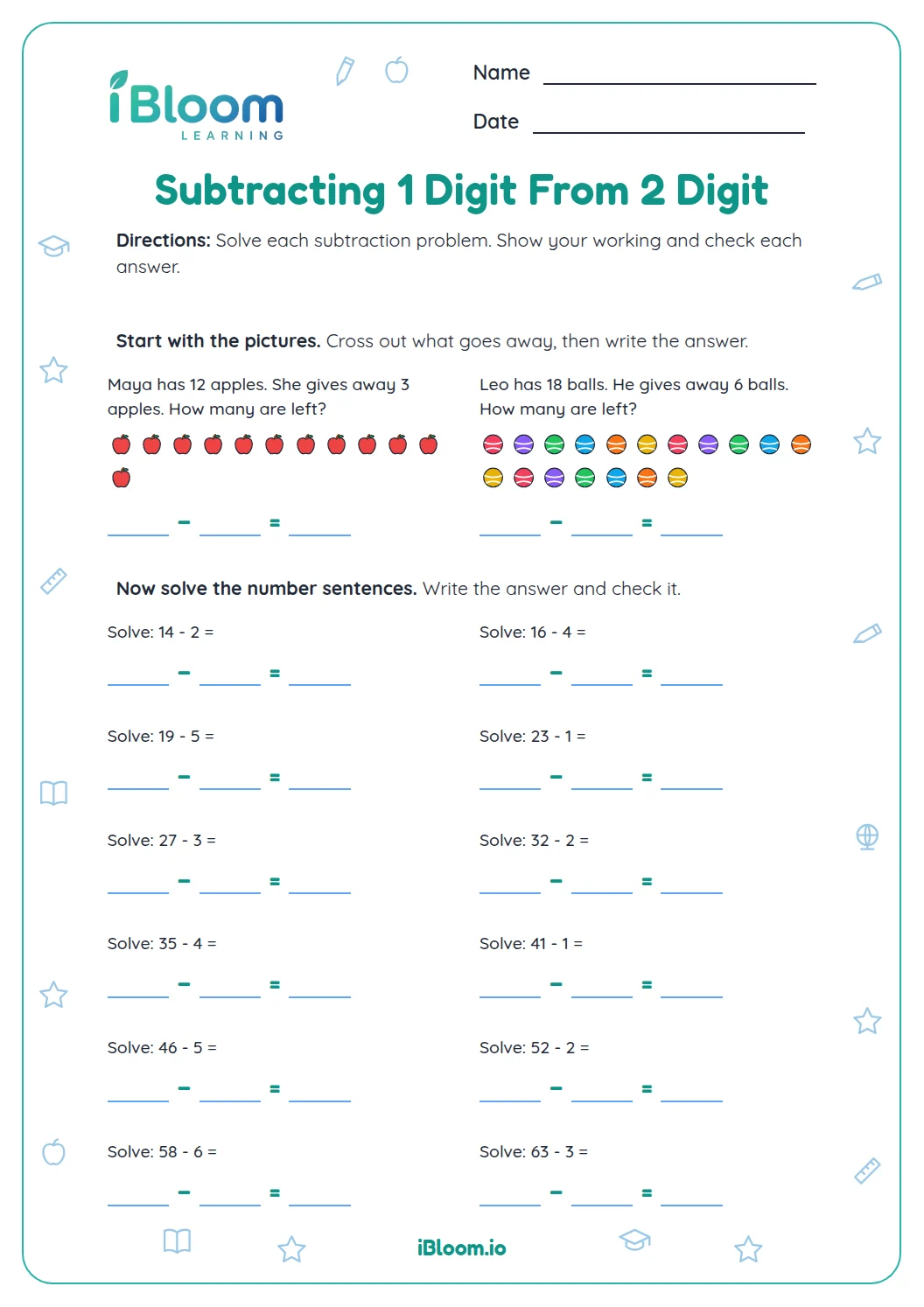
This printable introduces two-digit minus one-digit subtraction without regrouping. Students keep the tens digit and subtract the one-digit amount from the ones; two base-ten models make the place values visible before the equations continue. All 16 problems are chosen so the ones digit is large enough to subtract. The work practices place-value subtraction described in CCSS 2.NBT.B.5.
Aligned to 2.NBT.B.5
How do you subtract a one-digit number without regrouping?
This printable introduces two-digit minus one-digit subtraction without regrouping. Students keep the tens digit and subtract the one-digit amount from the ones; two base-ten models make the place values visible before the equations continue. All 16 problems are chosen so the ones digit is large enough to subtract. The work practices place-value subtraction described in CCSS 2.NBT.B.5.
Keep the tens digit unchanged and subtract from the ones digit. The problems are selected so the ones are sufficient, so no ten needs to be traded.
- 135 − 2
- 25 ones − 2 ones = 3 ones
- 3Keep 3 tens: 35 − 2 = 33
How is the practice organized?
Work through the prompts in order. Use the models or guided examples to establish the method, then apply the same idea independently.
How can students check their work?
The ones digit in the two-digit number is at least as large as the number being subtracted. Students can subtract the ones directly and leave the tens digit unchanged, as in 35 − 2 = 33.
How to use this worksheet
- 1Read the directions at the top of the sheet.
- 2Work carefully through each item in order.
- 3Use a pencil to show each step or trace each model.
- 4Check the answer key after finishing.
Common mistakes and quick fixes
The mistake
Subtracting from the tens digit.
The fix
Subtract the one-digit amount from the ones.
The mistake
Changing the tens digit even though no trade is needed.
The fix
Keep the tens unchanged in these problems.
The mistake
Subtracting the smaller digit from the larger one regardless of place.
The fix
Use the ones place only and follow the subtraction sign.
Curriculum alignment
This page connects the worksheet practice to the standard below.
Subtract within 100 using place-value strategies and the relationship between addition and subtraction.
On this sheet: The problems subtract a one-digit number from a two-digit number without regrouping.
Show the official wordingHide the official wording
Fluently add and subtract within 100 using strategies based on place value, properties of operations, and/or the relationship between addition and subtraction.
What to practice next
Make more practice
Further reading
Questions parents and teachers ask
What does no regrouping mean here?
The ones digit in the two-digit number is at least as large as the number being subtracted. Students can subtract the ones directly and leave the tens digit unchanged, as in 35 − 2 = 33. The examples make the place-value rule visible before independent practice.
What do the base-ten blocks represent?
The blocks in two problems show the starting number as tens and ones. Students can see that only some ones are removed; the tens rods stay the same. The remaining problems ask them to apply that idea to equations.
How many subtraction problems are included?
There are 16 problems. The set begins with direct subtraction and includes base-ten models before continuing with equations. Every starting ones digit is large enough to subtract the one-digit amount without trading a ten. Students can check the tens and ones in each result.
Does the worksheet include an answer key?
Yes. The key is on a separate page and lists each difference. Students can check that the ones were subtracted correctly and that the tens digit stayed the same in every problem. The separate page keeps the answers out of view during initial practice.
Why do the tens stay the same?
No problem requires taking a ten apart because each starting ones digit is large enough. For example, in 46 − 5, subtract 5 from 6 ones and keep the 4 tens, giving 41. The tens digit represents groups of ten, which are not changed in this set.