


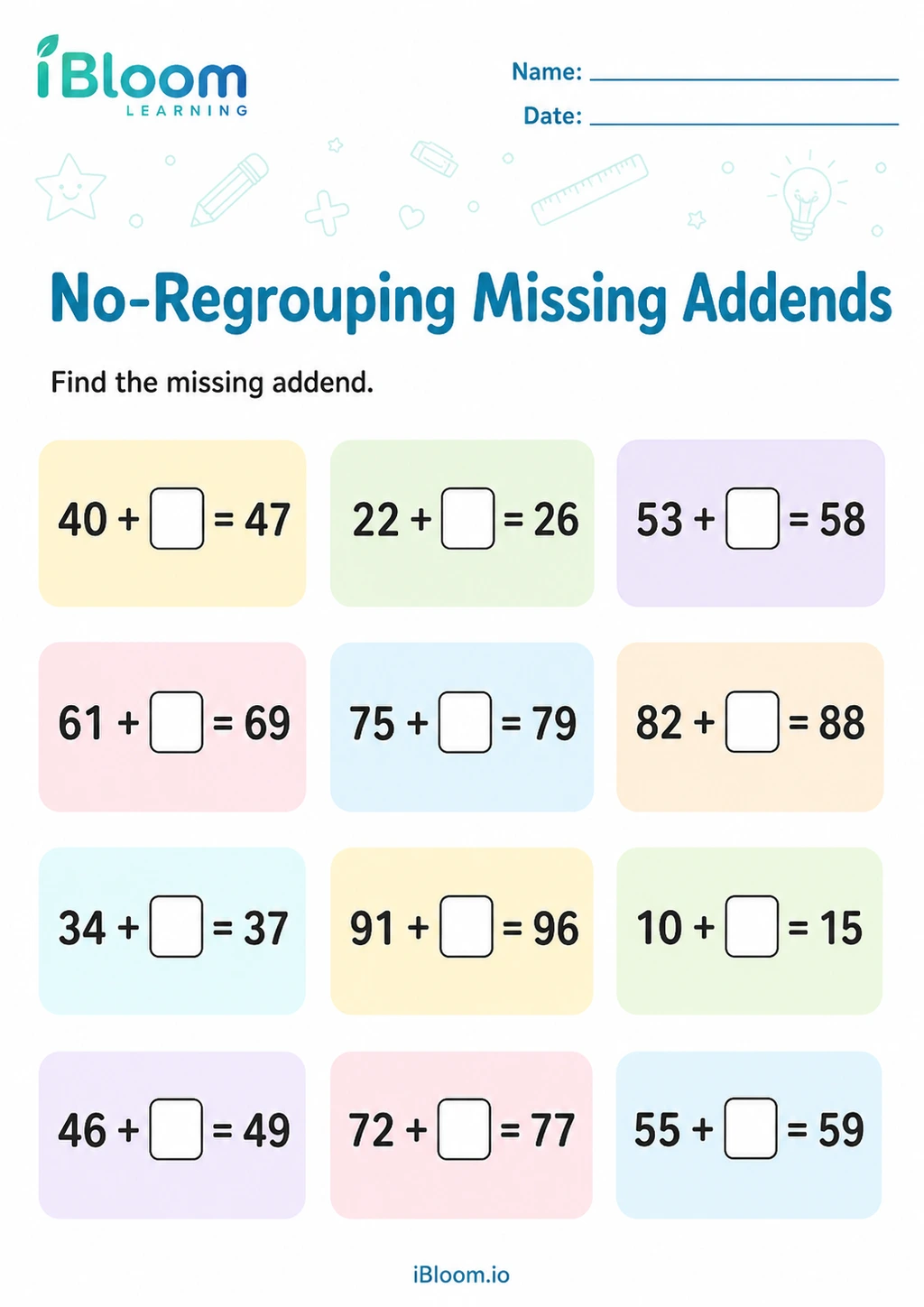
About this worksheet
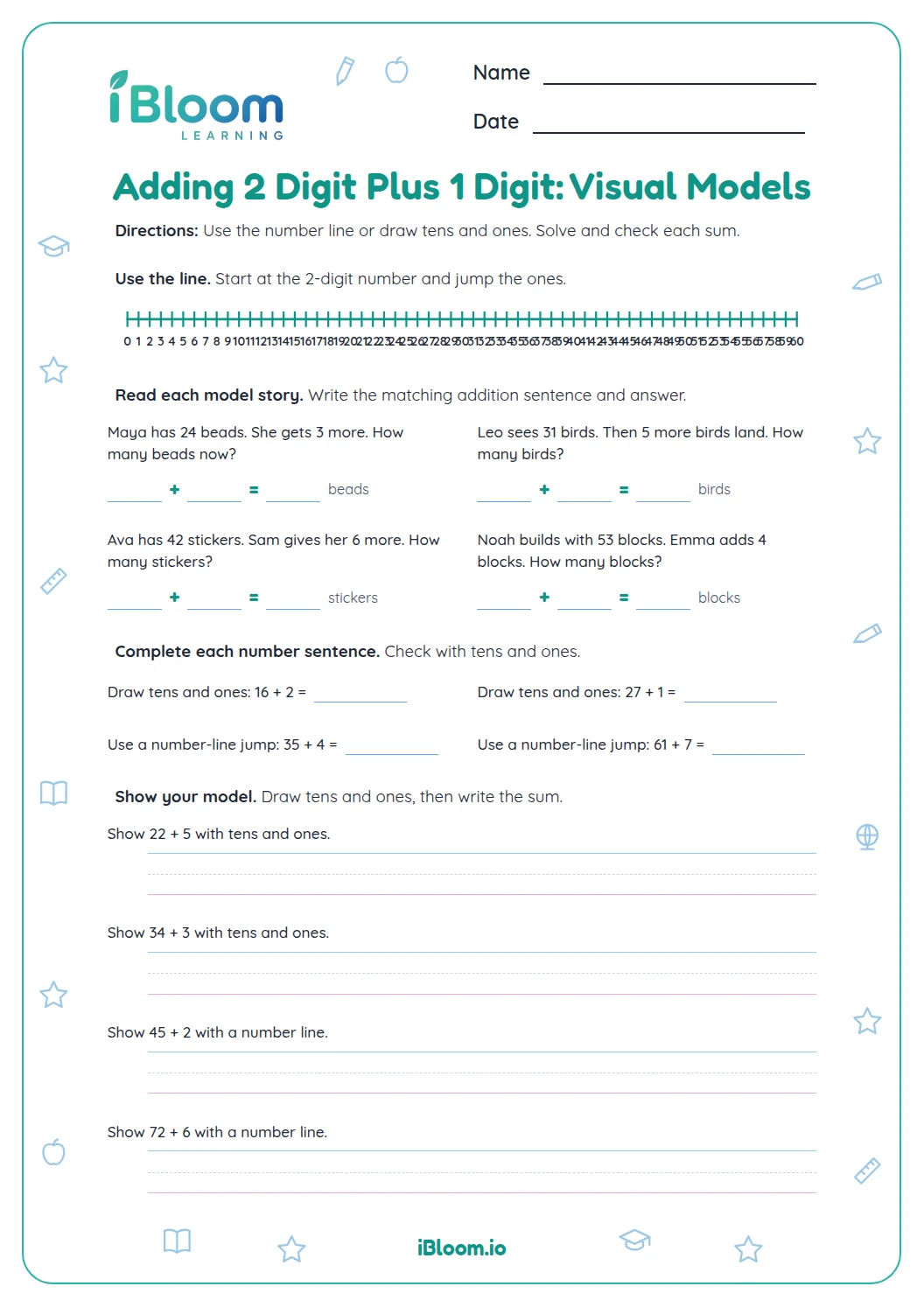
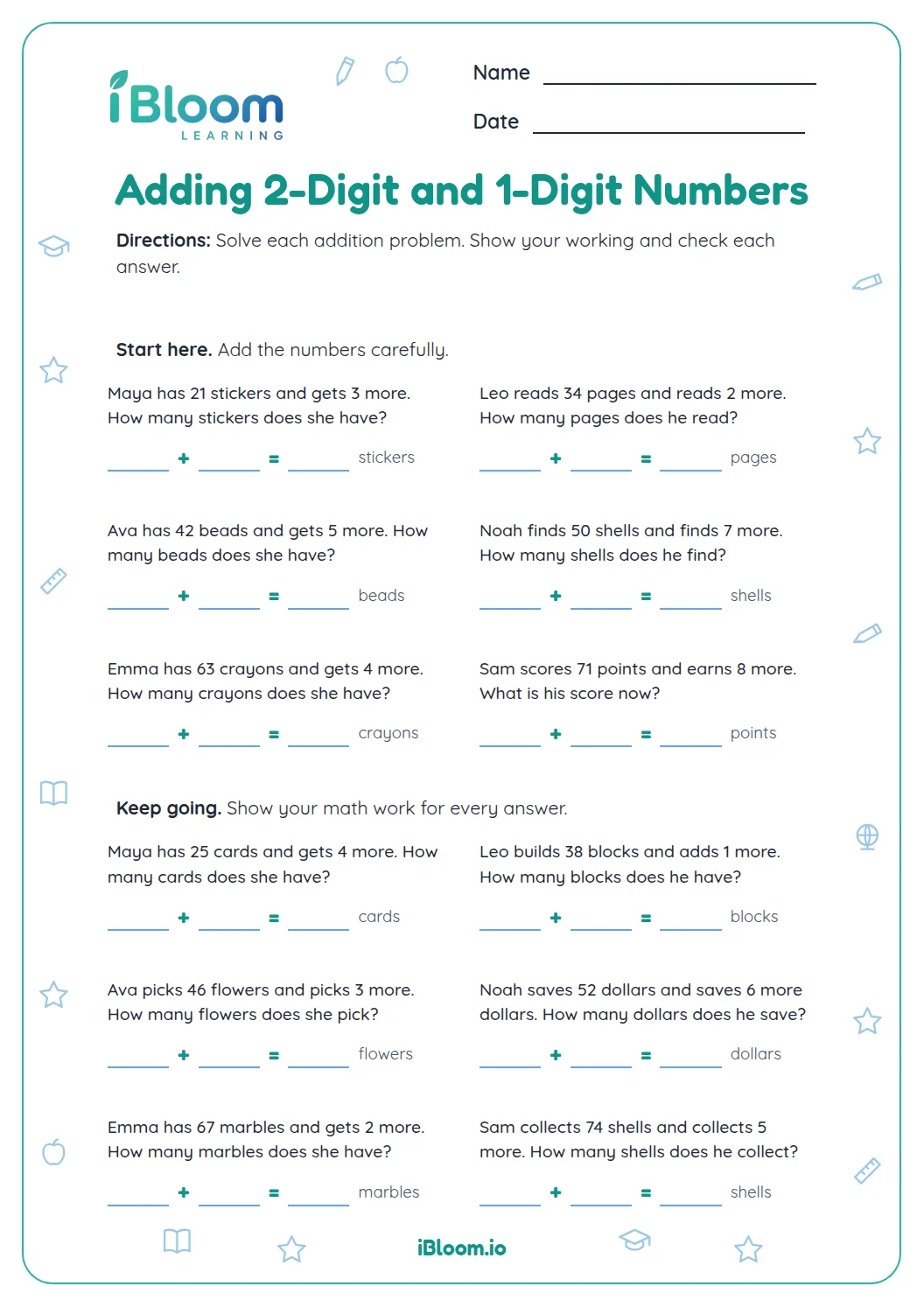
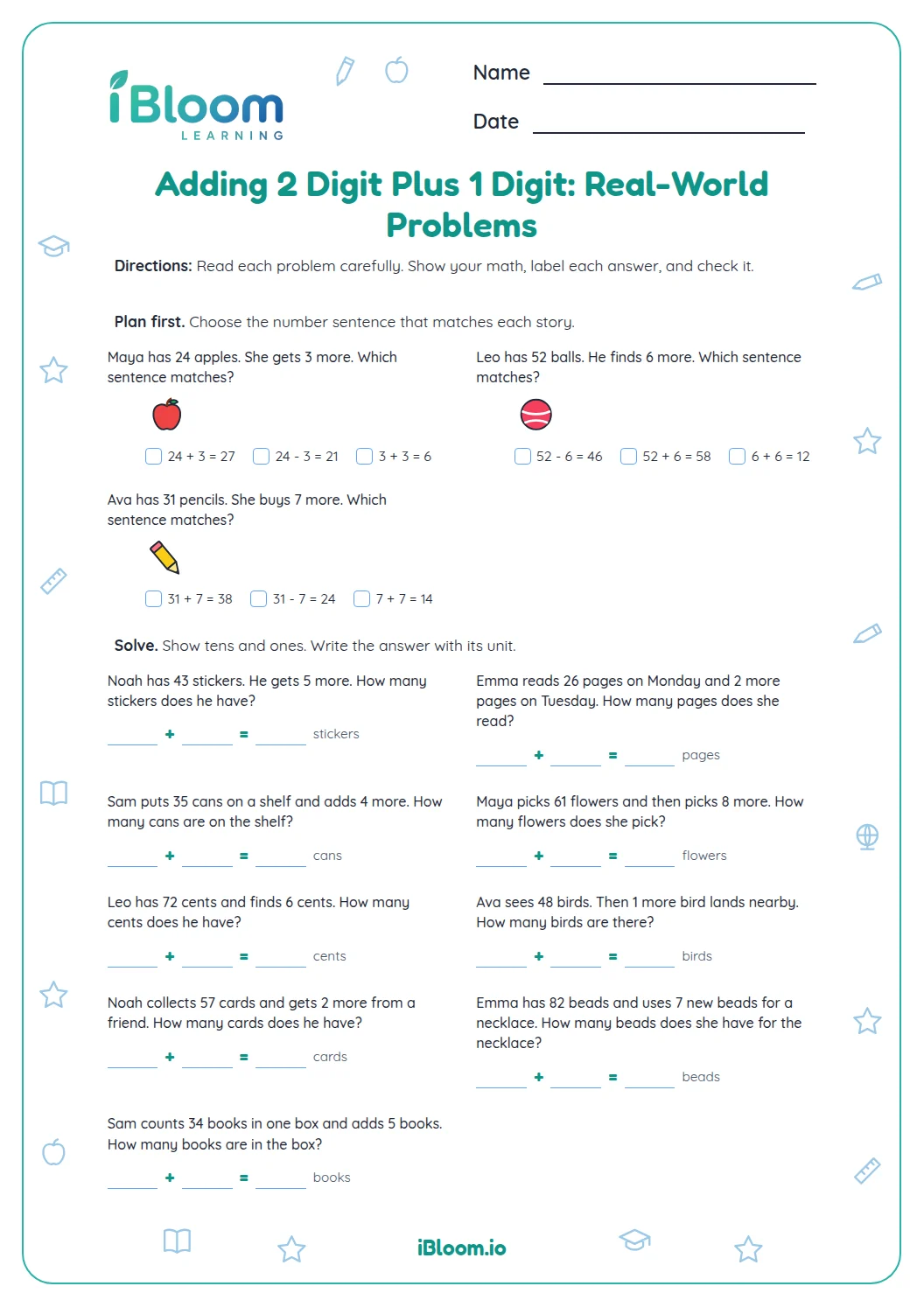
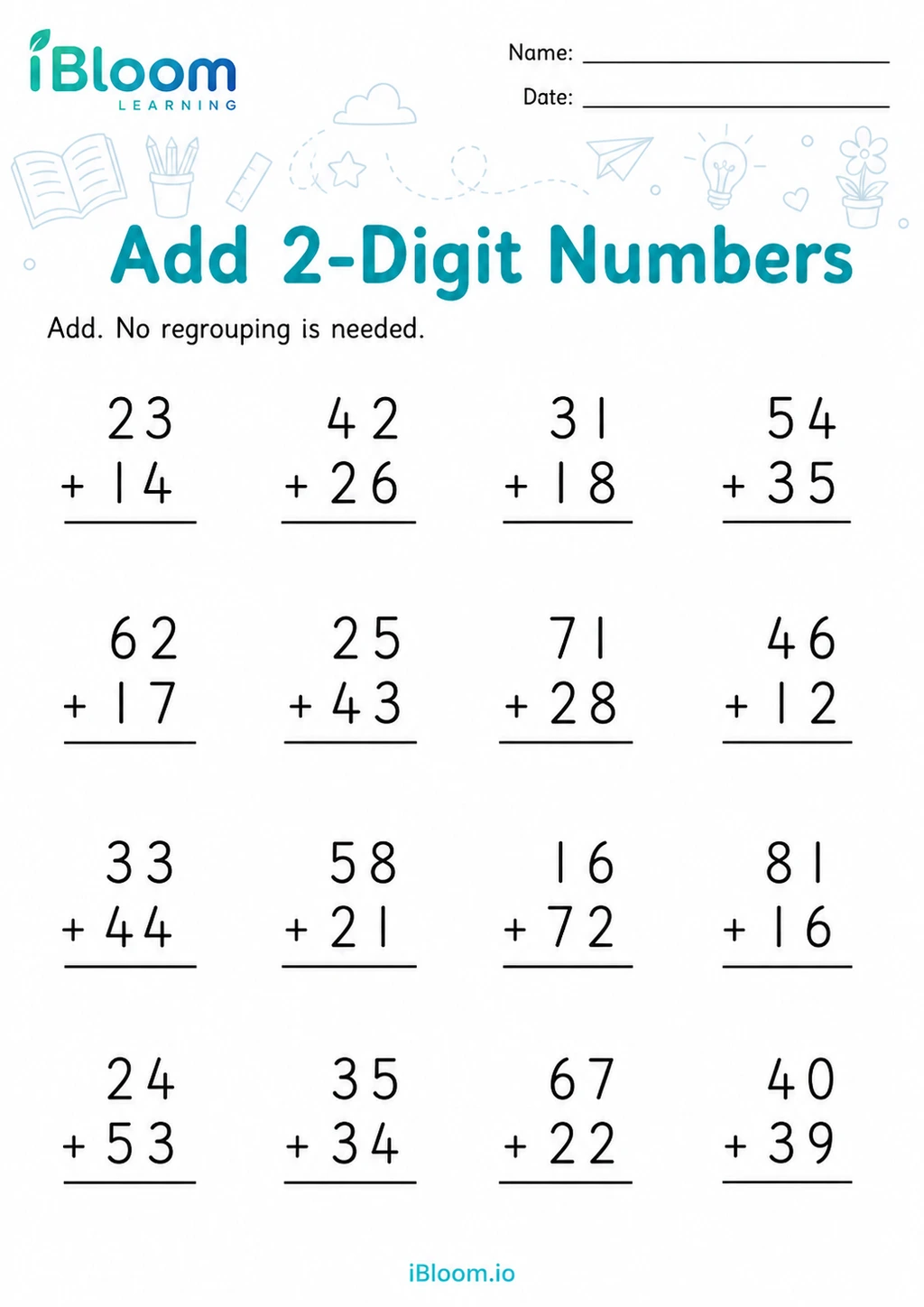
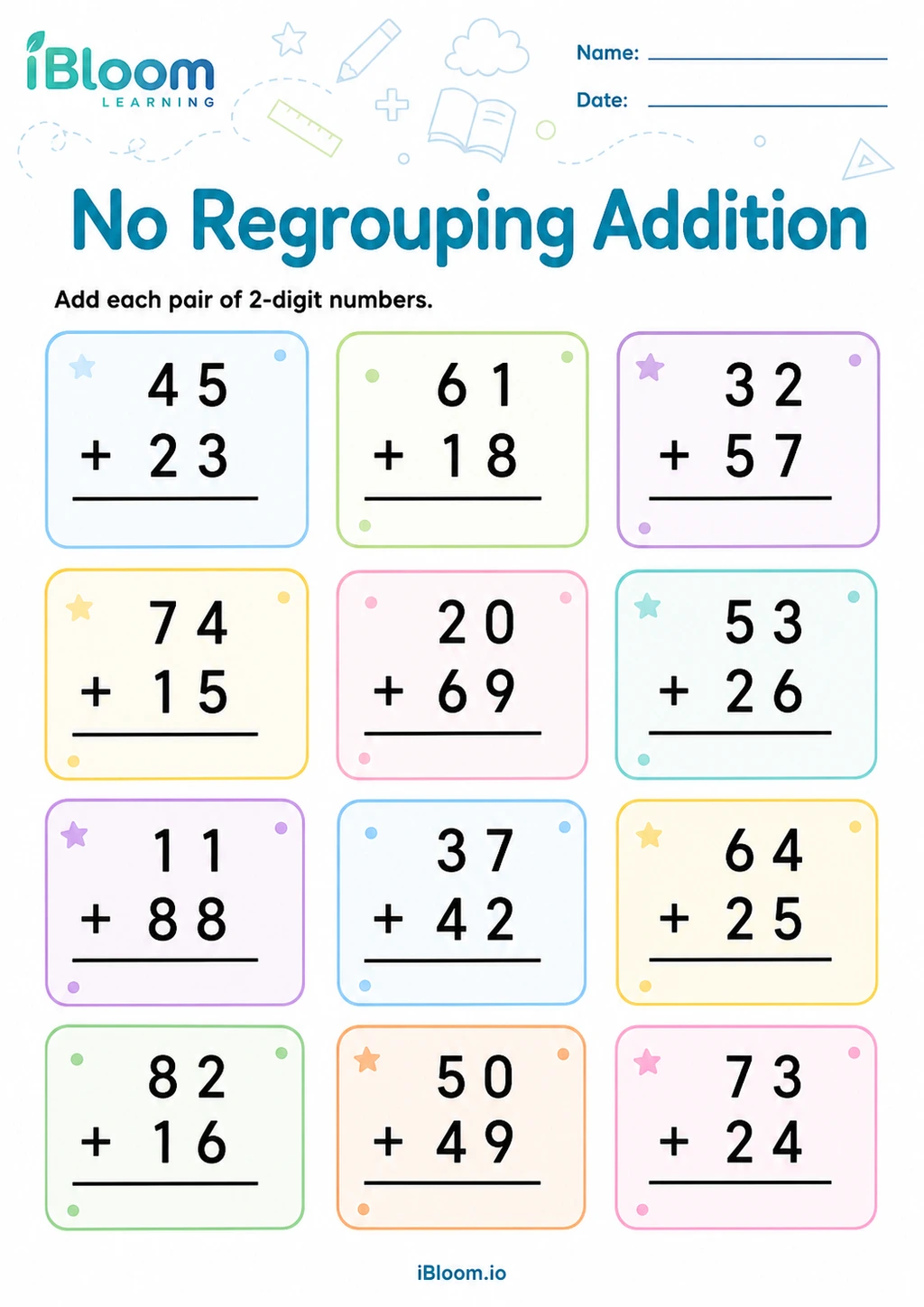
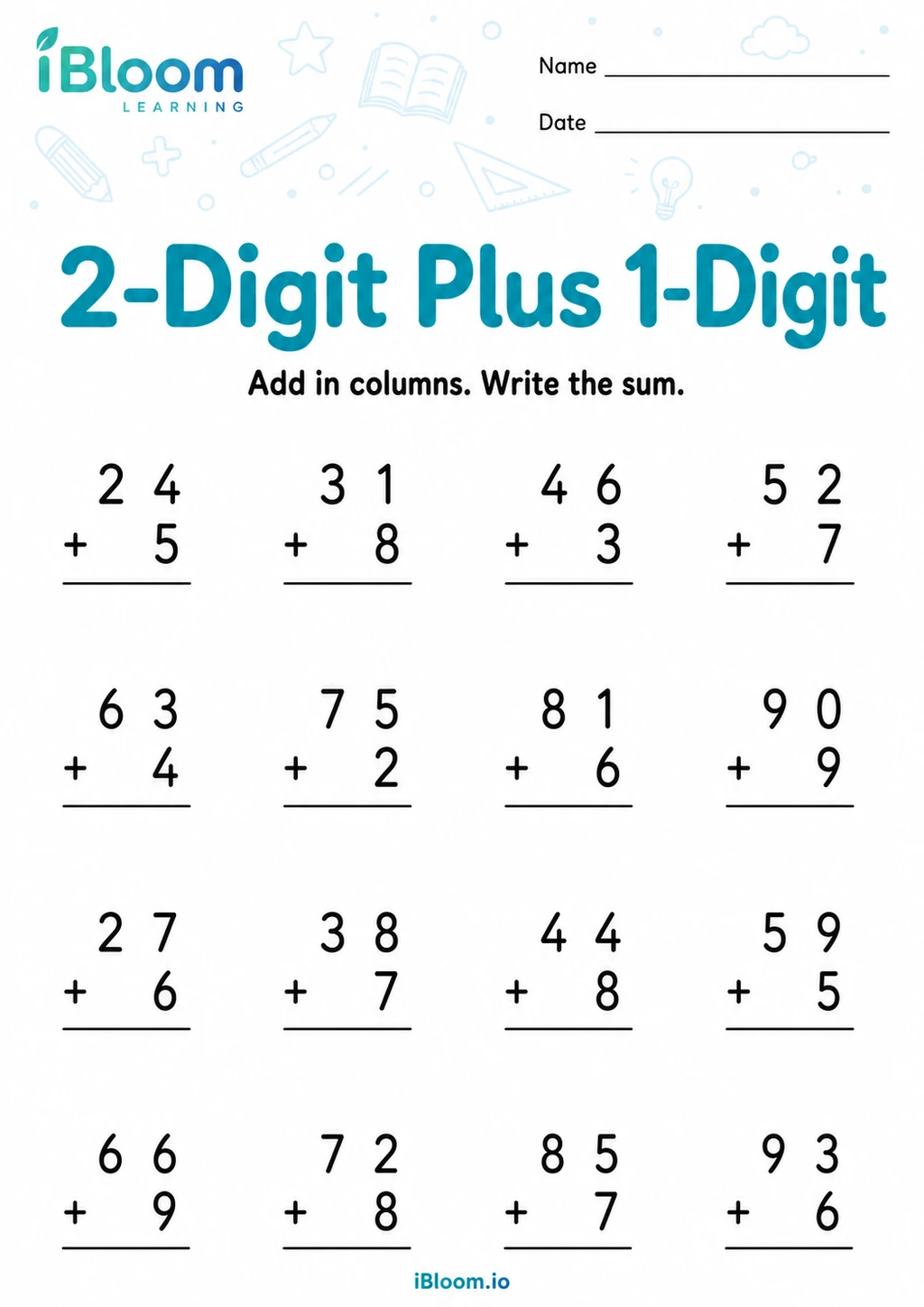
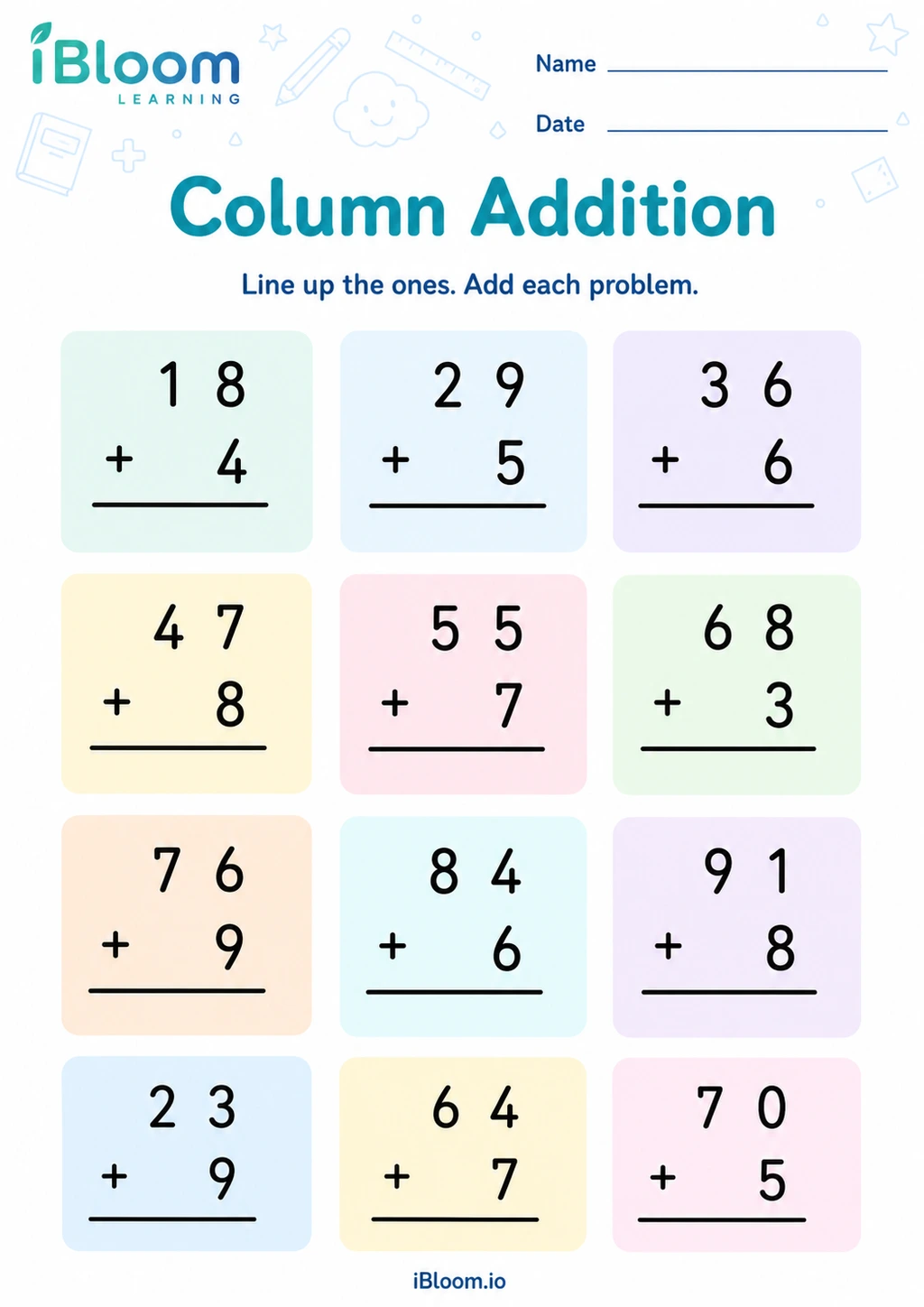
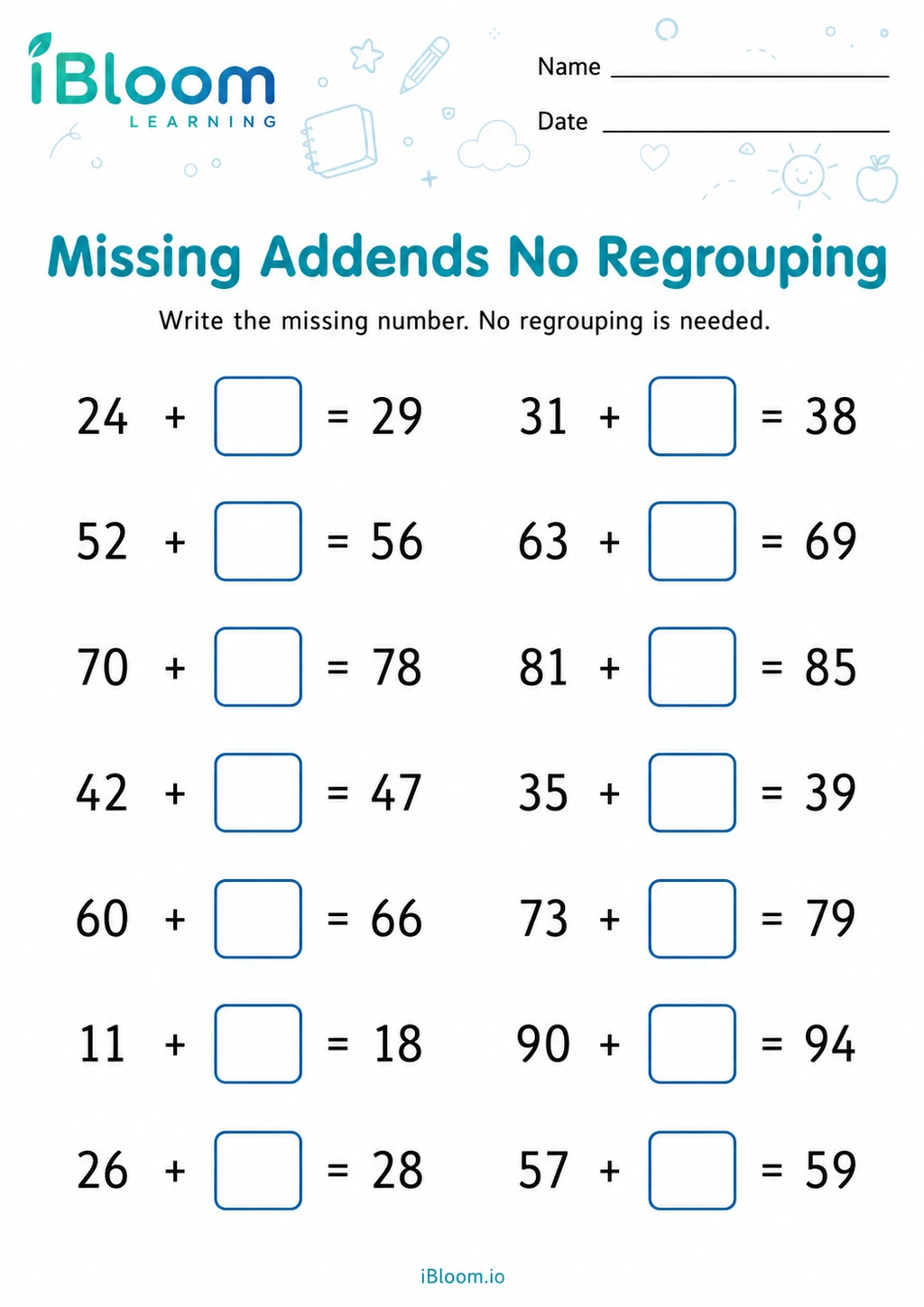
This Grade 2 worksheet practices adding a one-digit number to a two-digit number when the ones total stays below ten. Children write equations for short stories, solve number sentences, estimate with tens, and use subtraction to check sums. The answer key includes units for story problems.
Aligned to 2.NBT.B.5
What will students practice?
Part A turns short stories into addition equations. Part B gives independent sums. Part C practices estimating with tens and checking sums with subtraction. Every addition problem avoids regrouping.
- Part A: 4 story problems with equation space
- Part B: 6 addition sentences
- Part C: 4 estimates and inverse checks
Why does the tens digit stay the same?
The one-digit addend combines with the ones. For example, 42 + 5 makes 7 ones, so the sum is 47 and the 4 tens stay unchanged.
How to use the worksheet
- 1Read the story and identify the starting amount and the amount added.
- 2Write the addition equation and combine the ones.
- 3Keep the tens unchanged when the ones total stays below ten.
- 4Estimate by adding the tens shown in the prompt.
- 5Check a sum by subtracting the added amount.
Common mix-ups
The mistake
Adding the one-digit number to the tens digit. Combine it with the ones instead.
The fix
The mistake
Changing the tens when the ones total is below ten. Keep the tens digit unchanged.
The fix
The mistake
For an inverse check, subtract the amount added from the sum to return to the starting number.
The fix
Curriculum alignment
The page practices two-digit plus one-digit addition with sums that do not require regrouping.
Add and subtract within 100 using place-value strategies and inverse checks.
On this sheet: The worksheet questions give direct practice with this skill.
Show the official wordingHide the official wording
Fluently add and subtract within 100 using strategies based on place value, properties of operations, and/or the relationship between addition and subtraction.
What to practice next
Make more practice
Further reading
Questions parents and teachers ask
How do you add a one-digit number without regrouping?
Add the one-digit number to the ones digit of the two-digit number. When the ones total is less than ten, the tens digit stays the same. For example, 42 + 5 makes 7 ones and 4 tens, for a total of 47.
What do the base-ten blocks show?
The original amount of tens and ones is named in each story. Children write that number and the added amount as an equation, then combine the ones. This connects the page’s word problems with its independent number sentences.
How do I know these sums do not require regrouping?
In each problem, the ones digits add to less than ten. That means the ones remain in the ones place and the tens digit does not need to change. Each example lets a child focus on combining the ones accurately.
How long does the worksheet take?
Plan for about 20 minutes for all 14 questions. The page begins with story problems and equation space, then moves to independent sums and short checks. Children can take extra time to write an equation for each story.
What is included in the answer key?
The key lists each story sum, equation answer, estimate, and inverse check. Story answers include the matching unit, such as stickers or pages, so children can check both the number and what it counts in the situation. A different clear equation can also be correct.