


About this worksheet
This printable gives Grade 2 learners real-world practice with equal parts. Sandwiches, pies, paper, snacks, and other familiar objects are divided into halves or fourths, and fraction models reinforce what each part means. Students identify one part, describe several parts, and reason about what remains. The page gives children concrete practice naming equal shares and matching them to fraction notation.
What makes parts equal?
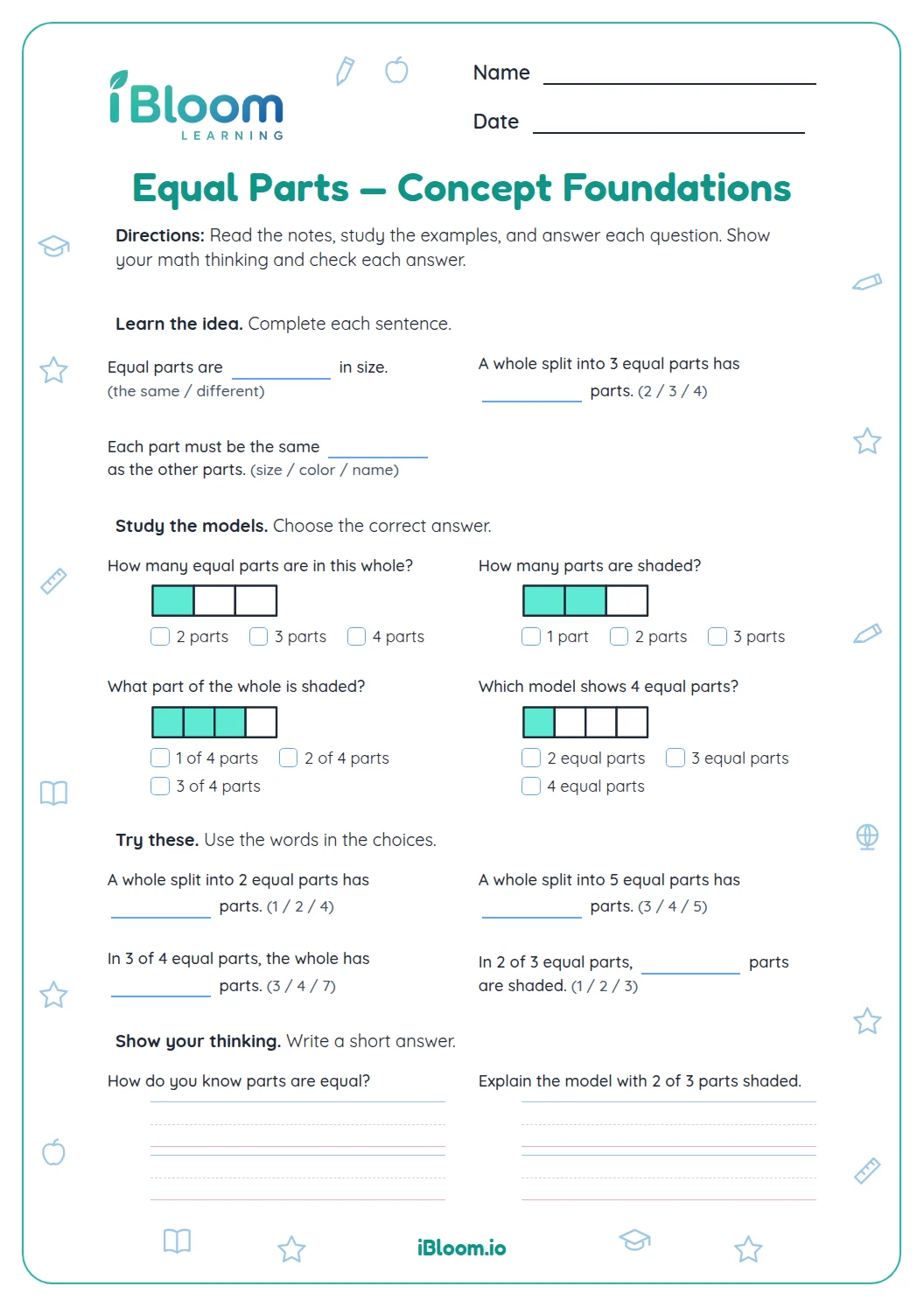
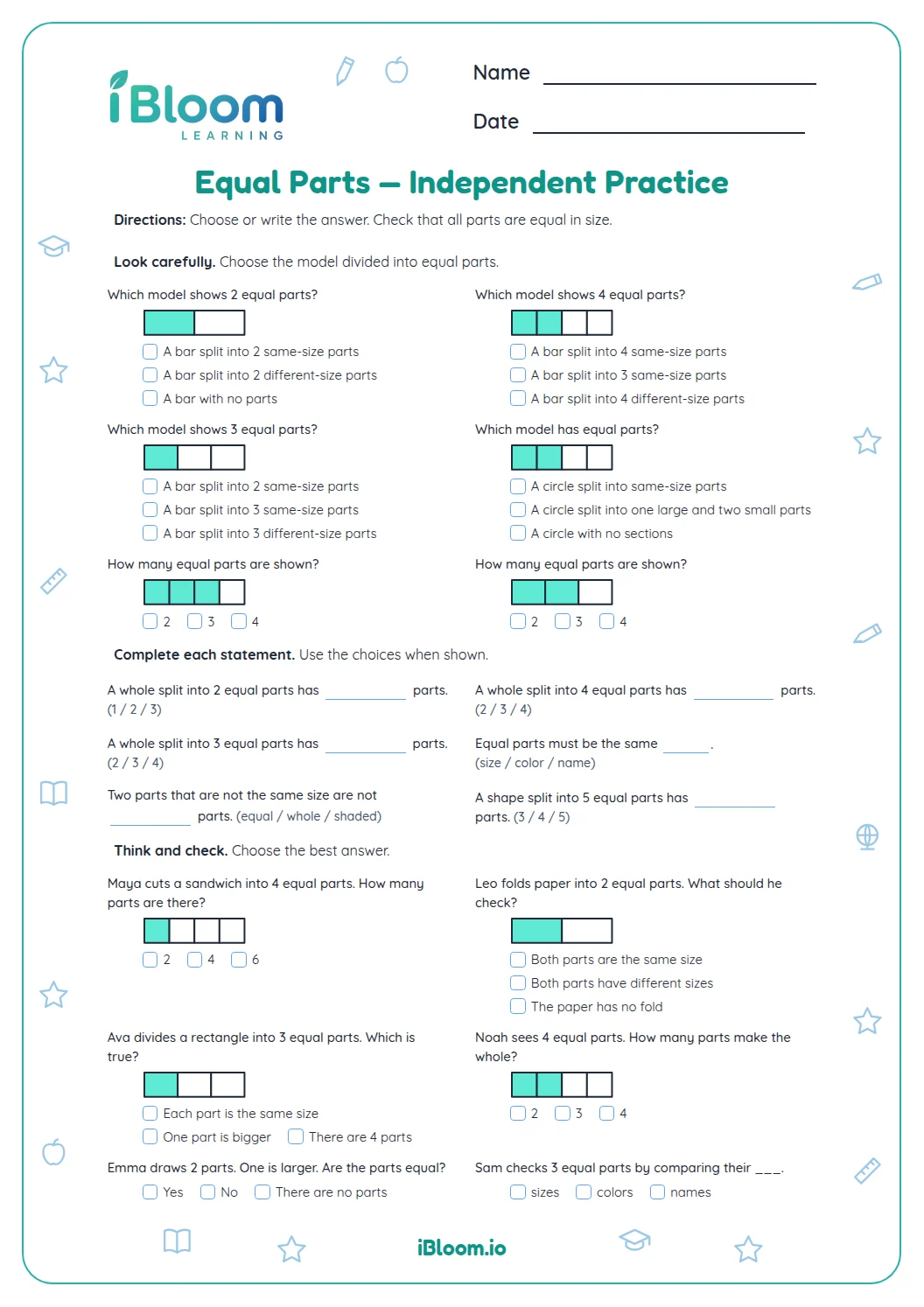
Parts are equal when each share has the same size. A sandwich split into two same-size pieces has halves; a sandwich cut into pieces of different sizes does not show equal halves.
- 1A sandwich is cut into 2 equal pieces.
- 2One of the two equal pieces is one half.
How does a fraction name the parts?
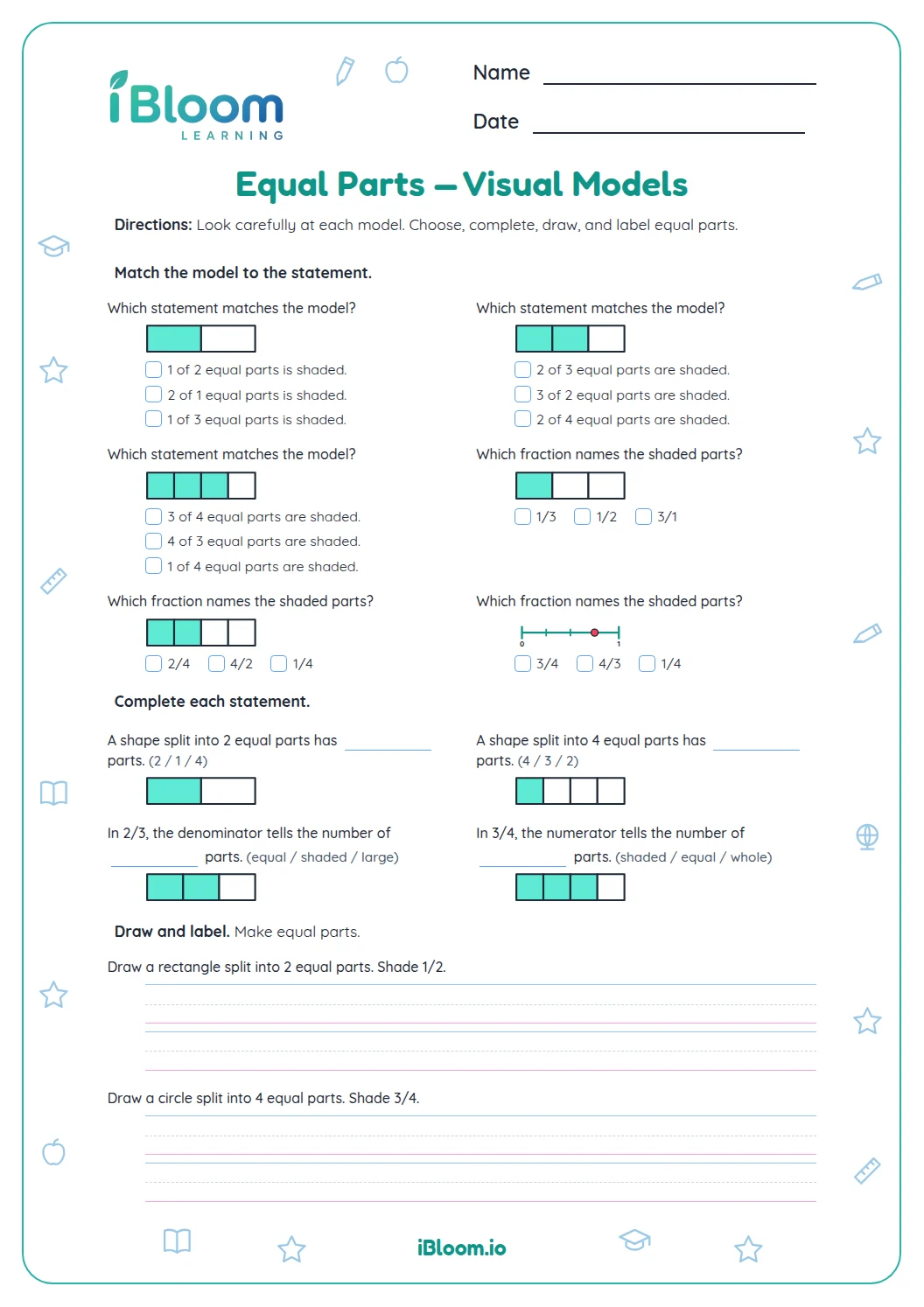
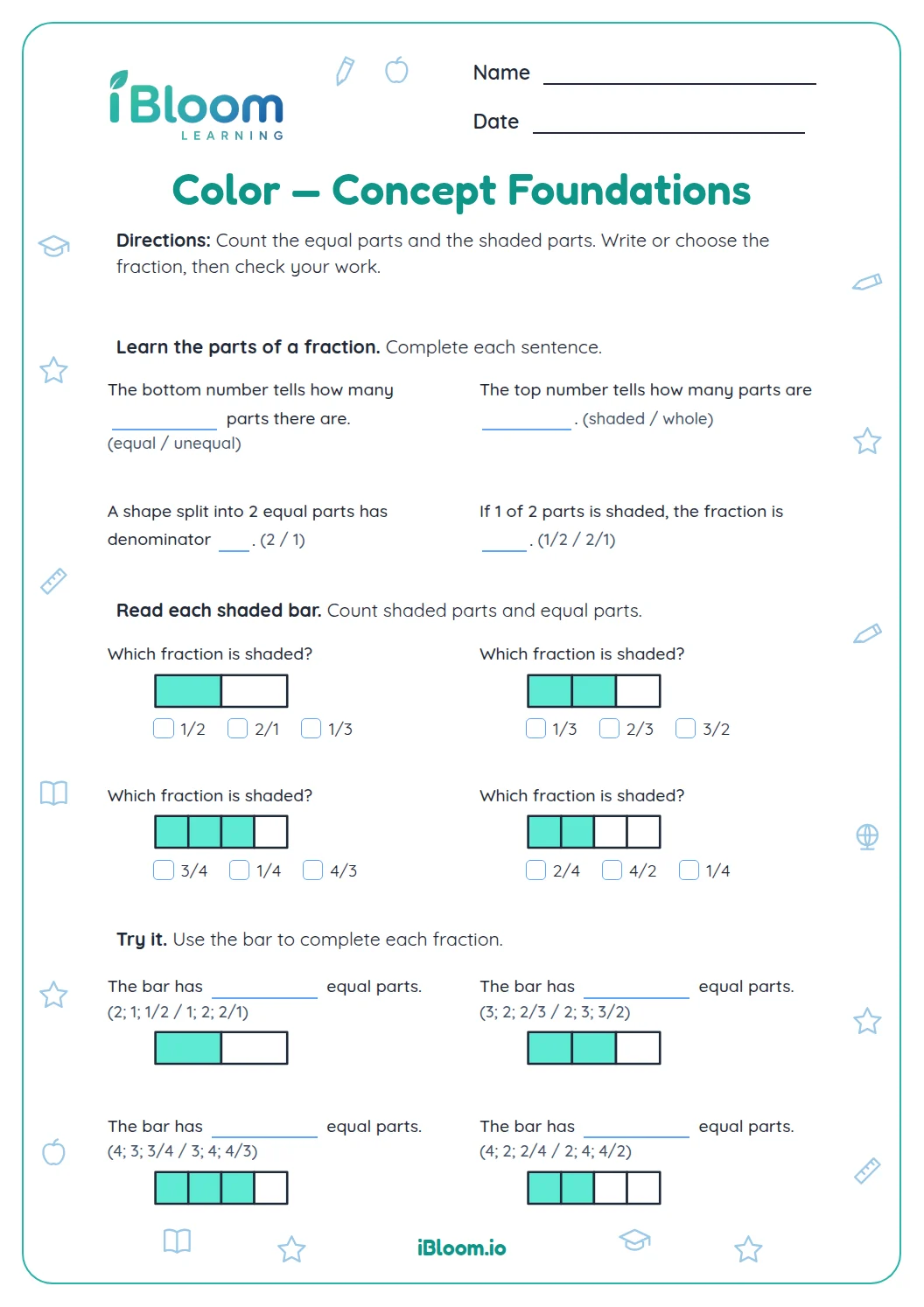
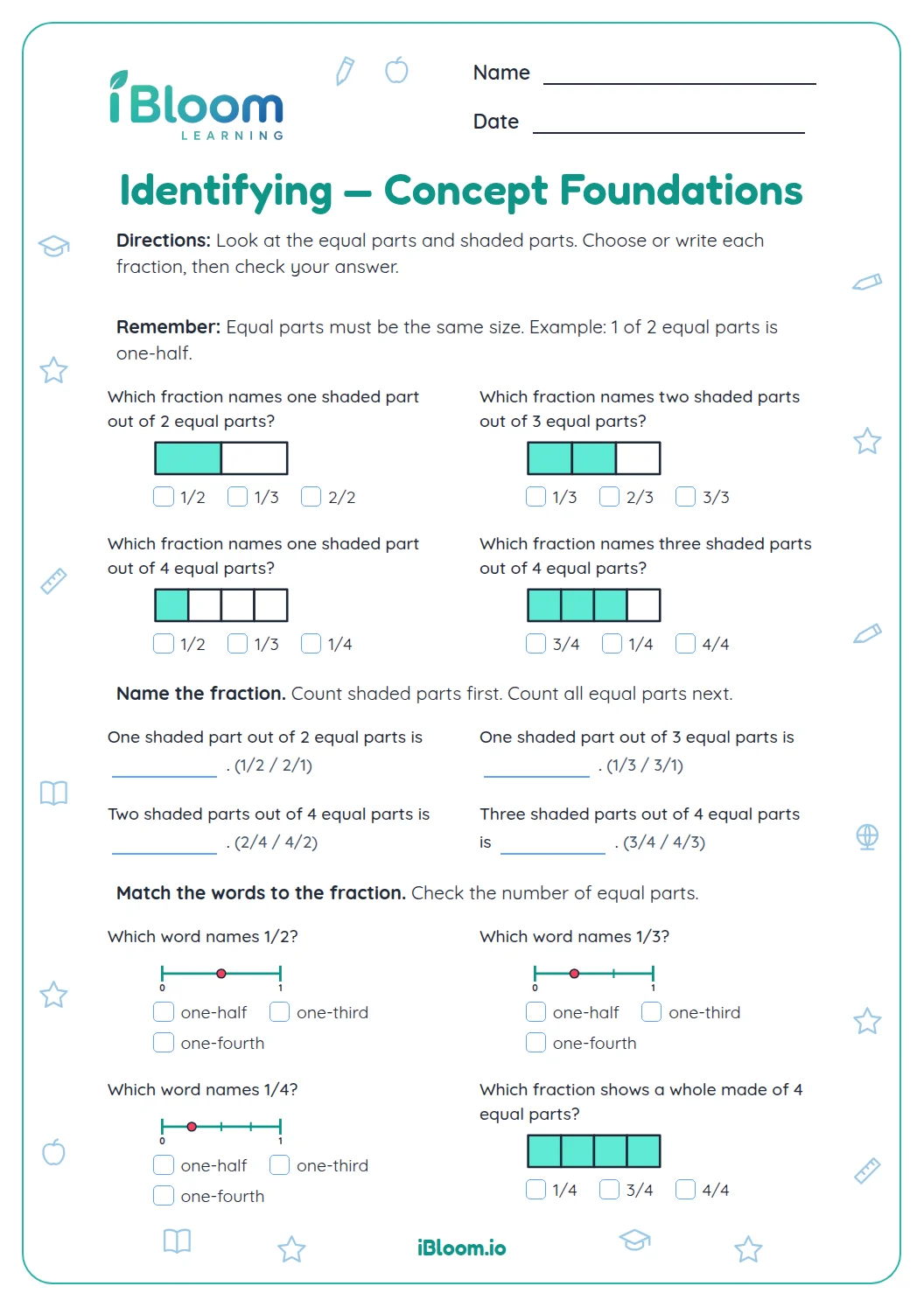
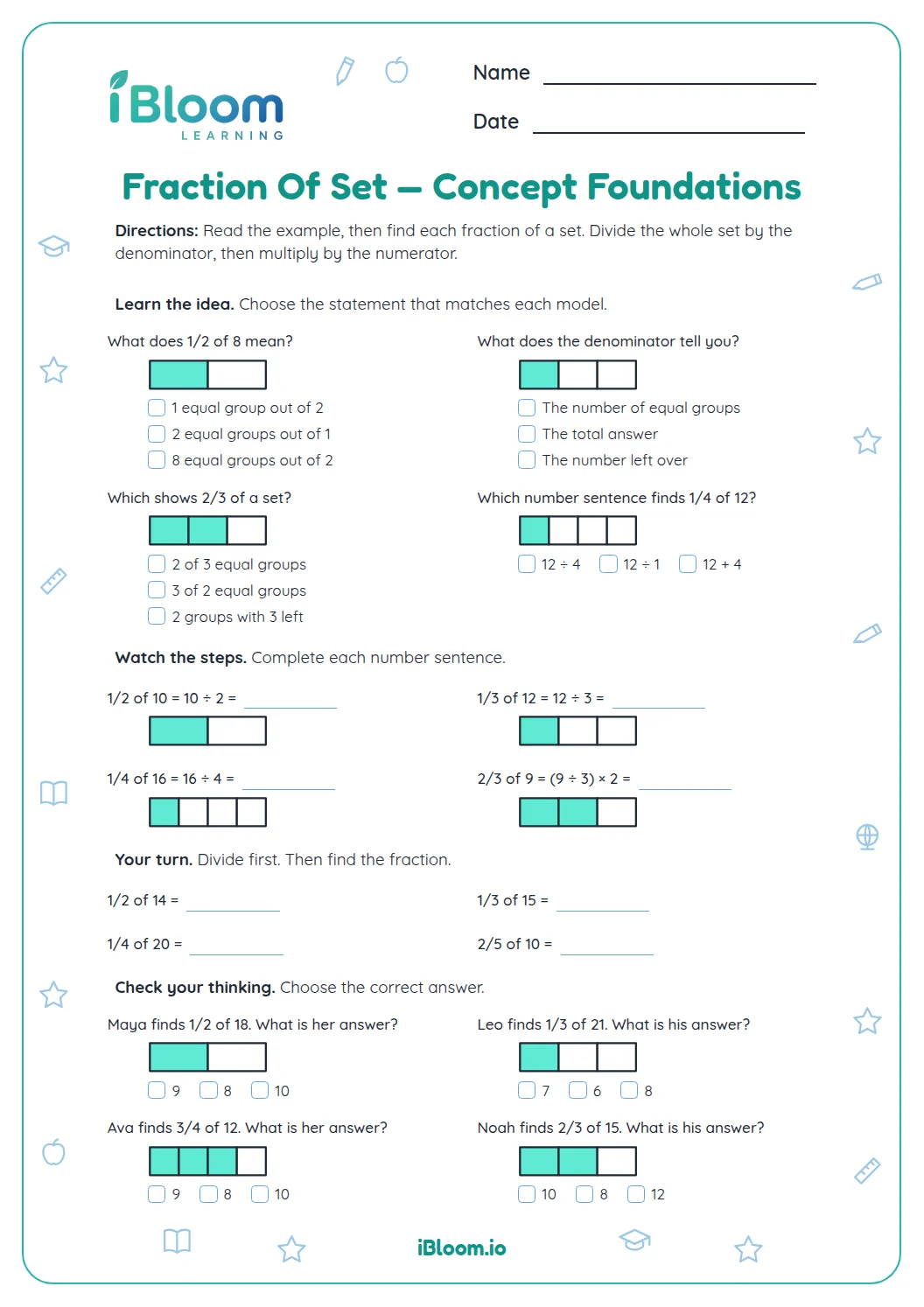
The bottom number tells how many equal parts make the whole. The top number tells how many parts are being counted. In 3/4, the whole has four equal parts and three are selected.
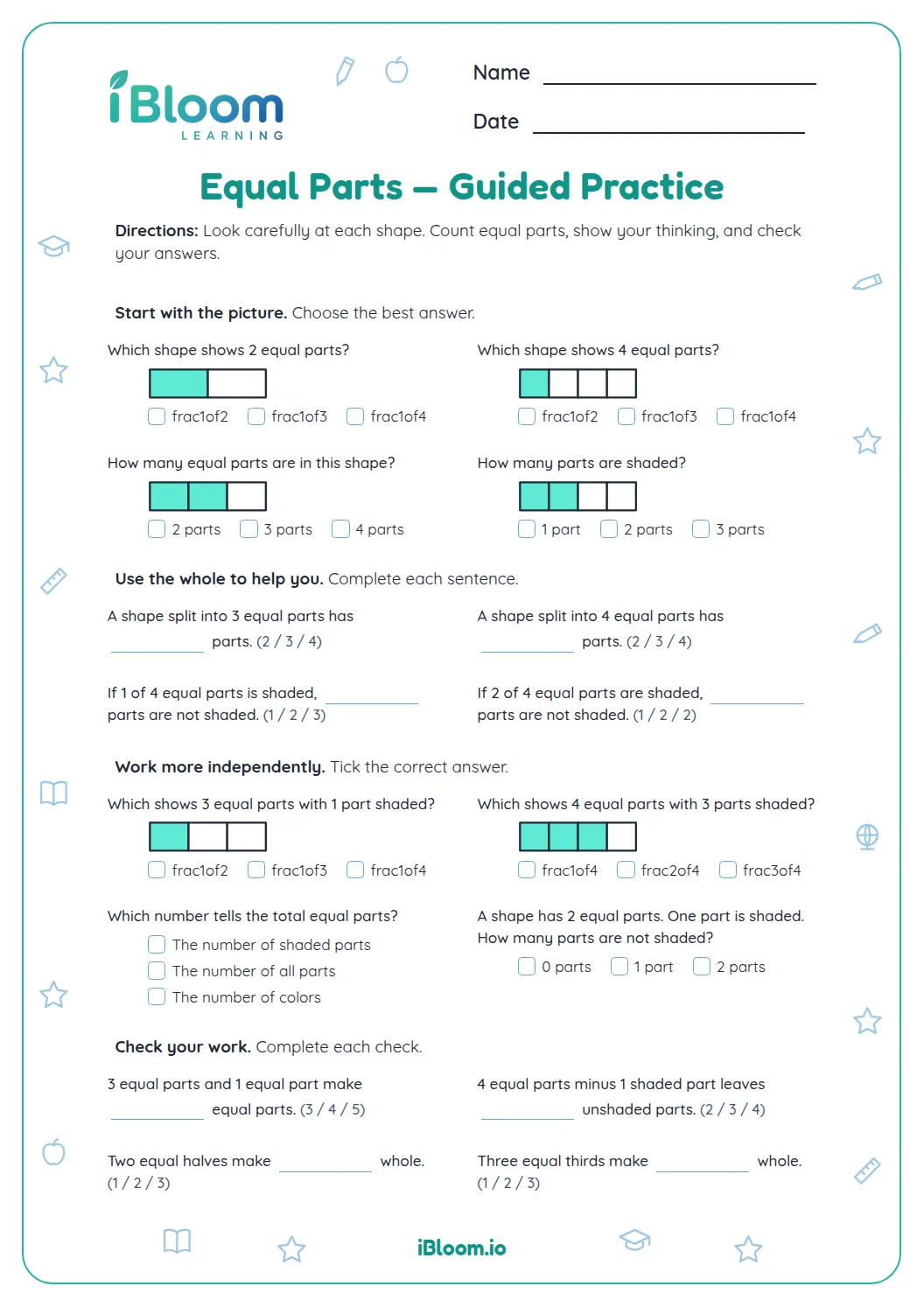
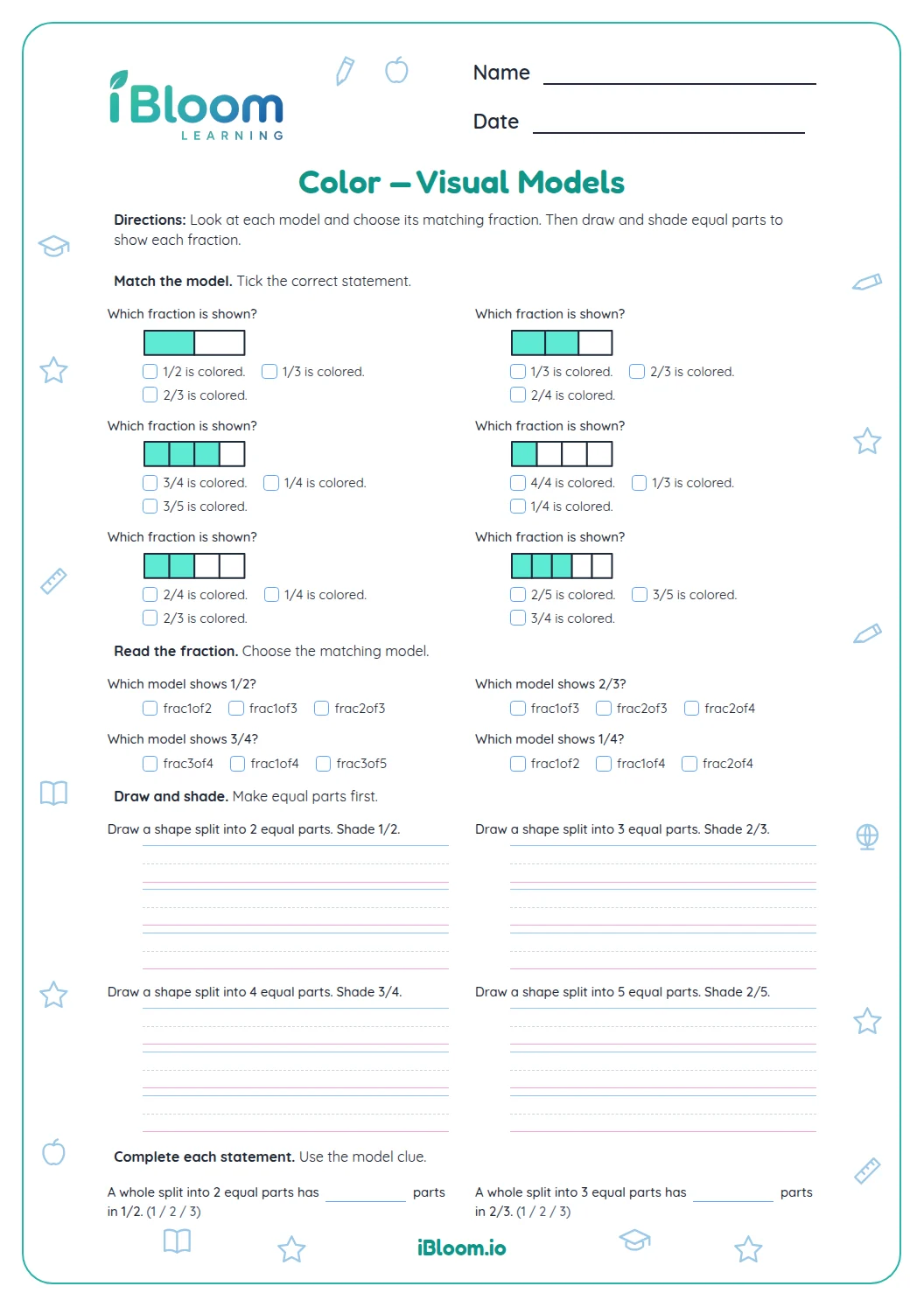
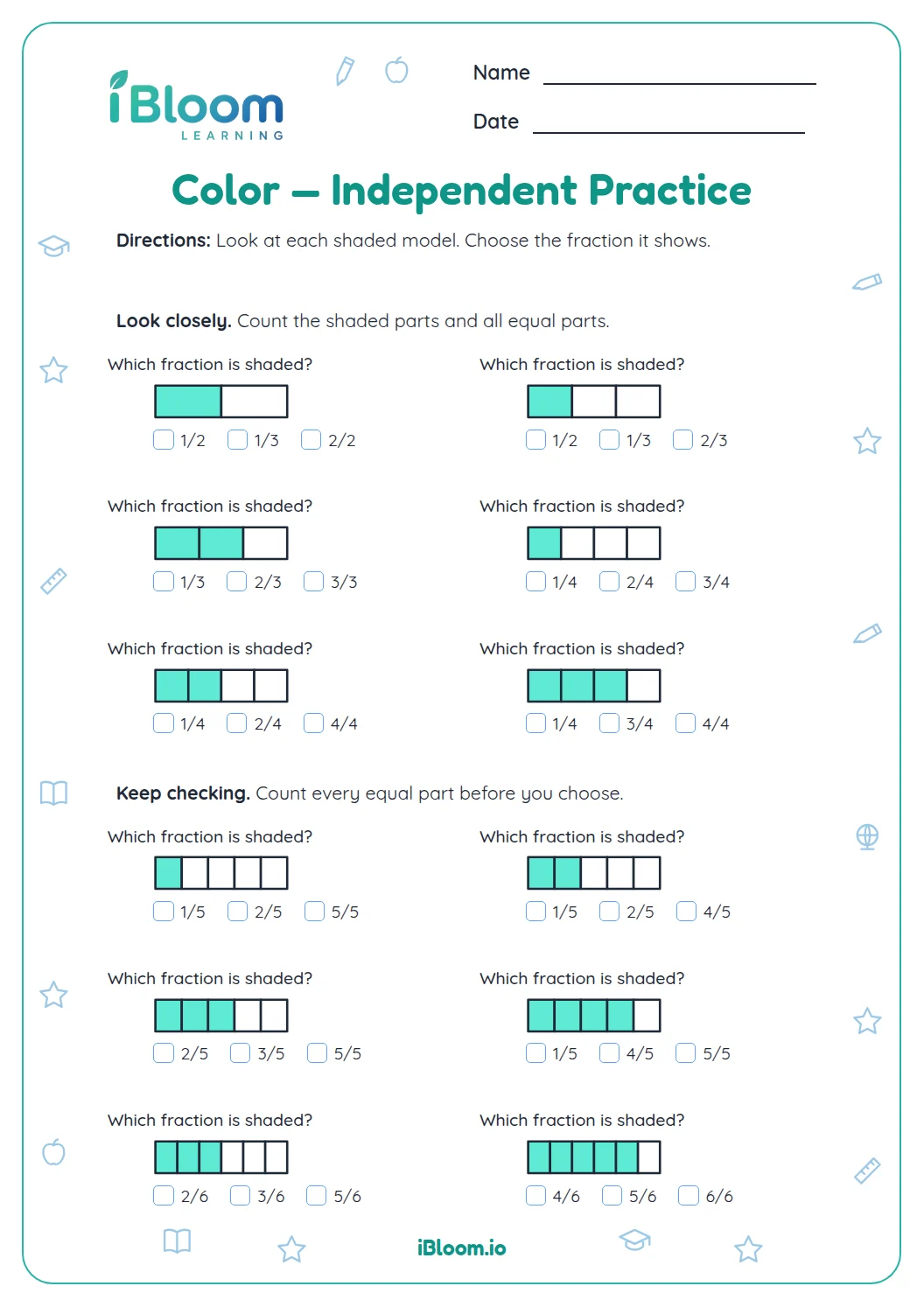
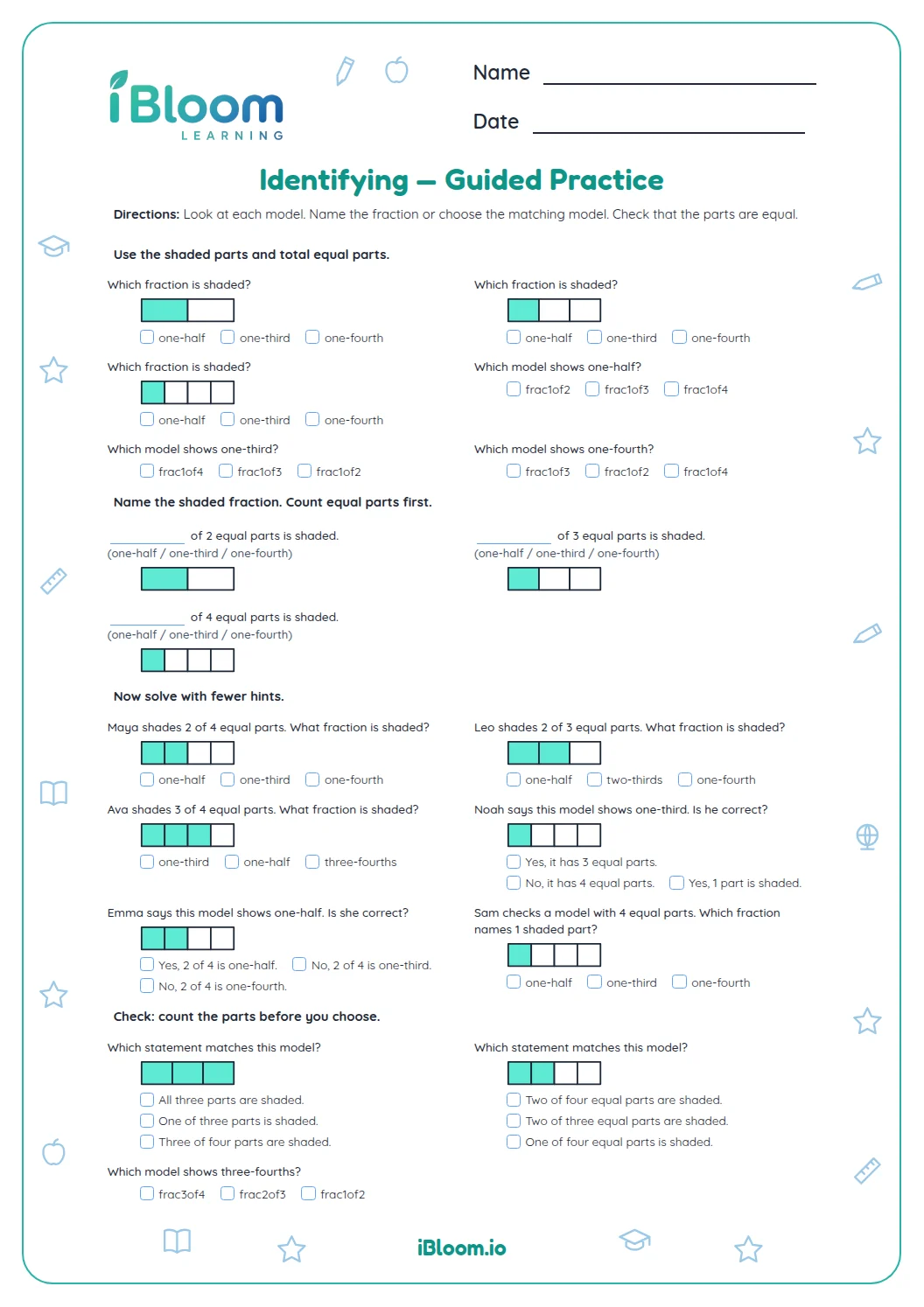
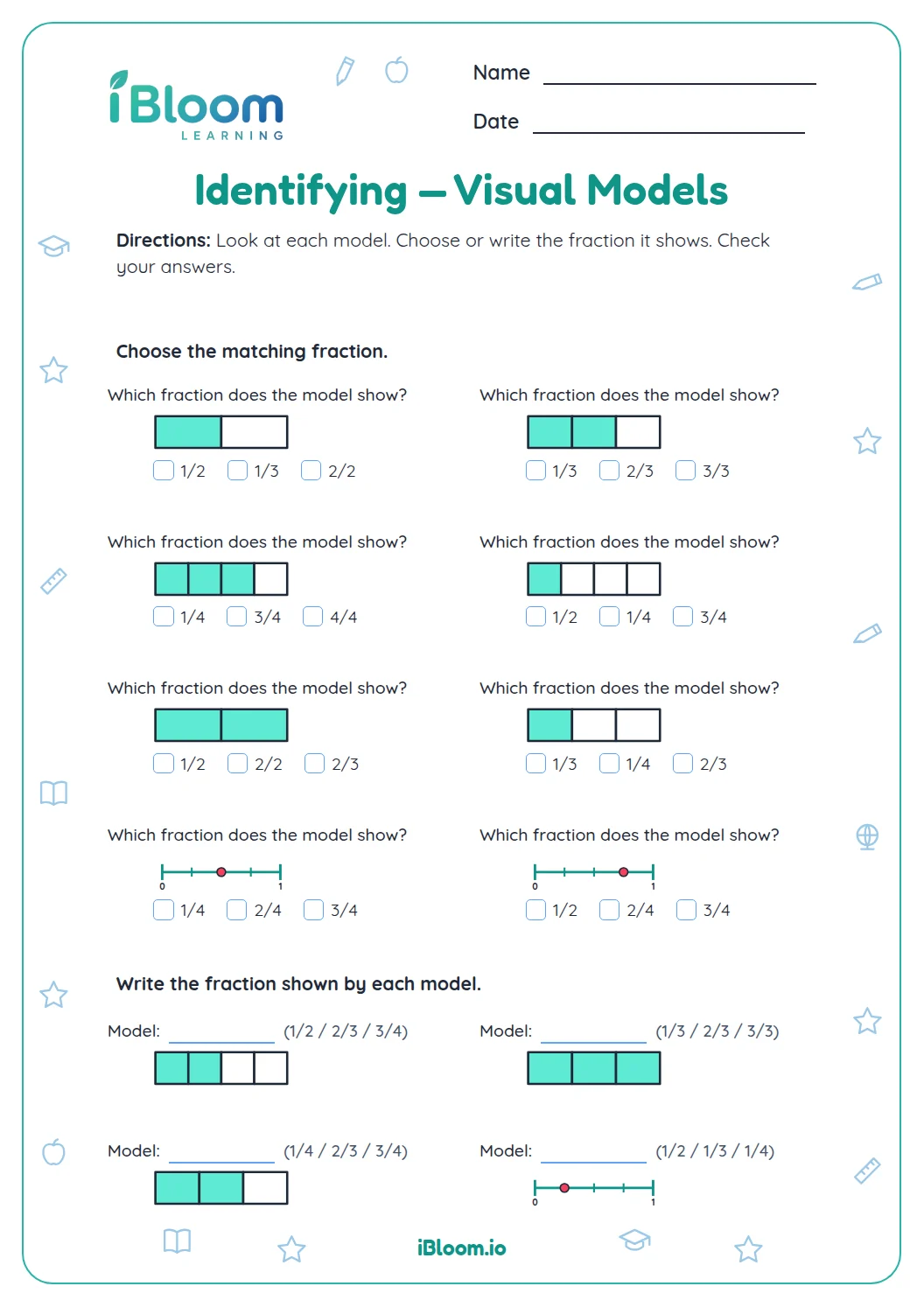
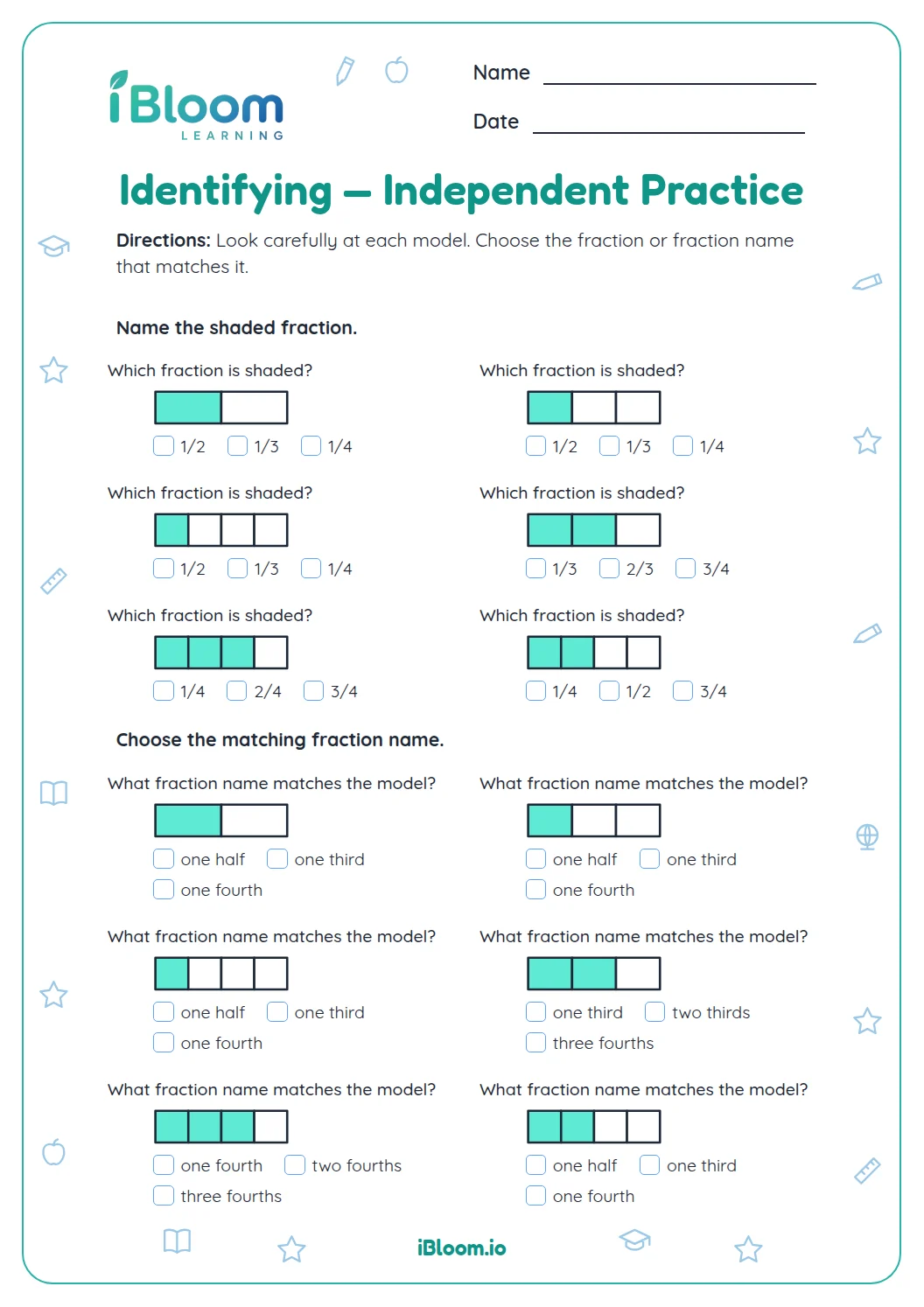
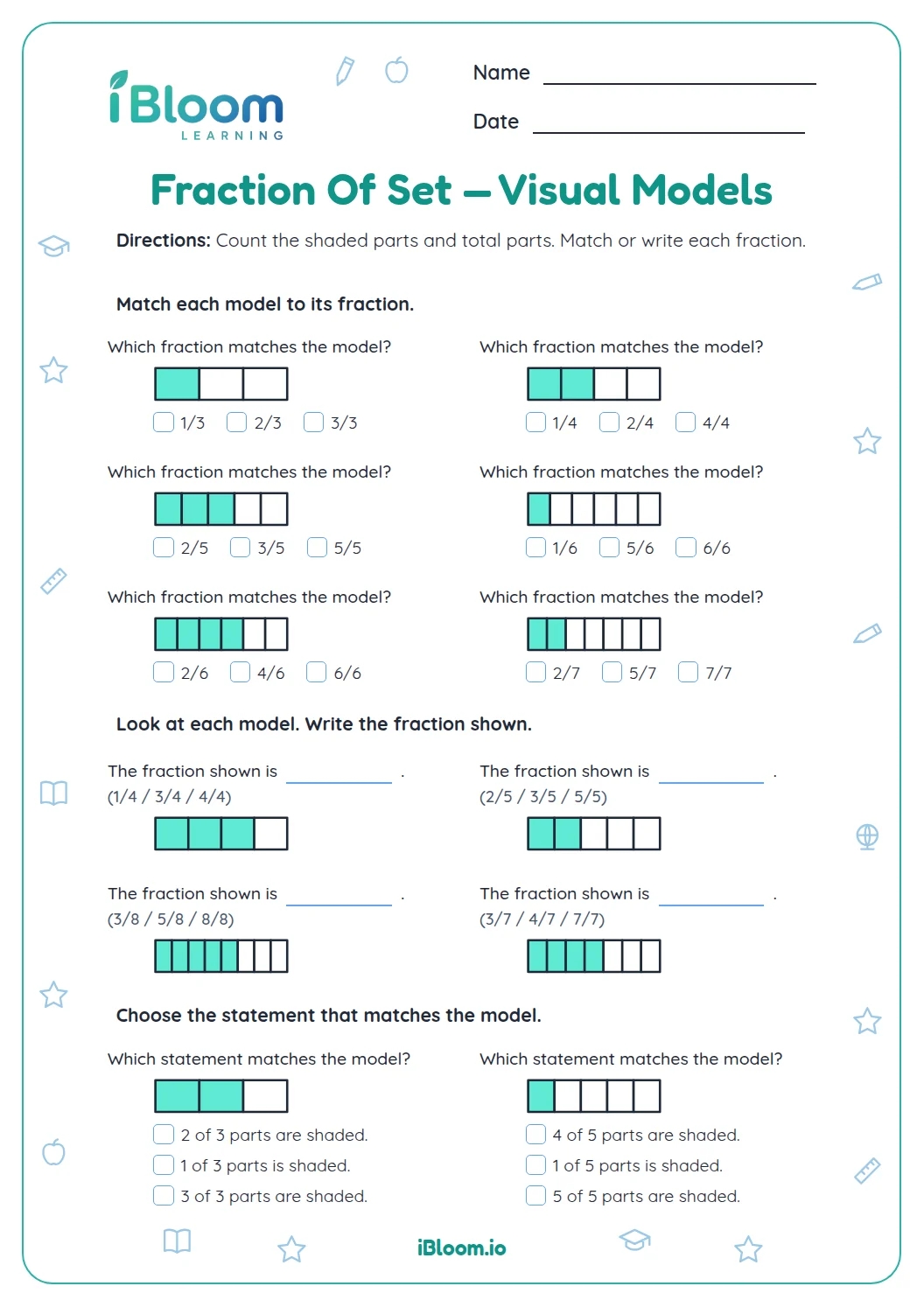
The visual models shade the number of parts described in each story.
How can equal parts solve everyday problems?
Read what the whole is and how many equal pieces it has. Then identify how many pieces are used, shared, or left. For example, if a pizza has four equal slices and two remain, two of its four parts are left.
How can you use this worksheet?
- 1Name the whole in the story.
- 2Notice how many equal parts make that whole.
- 3Count how many parts the question asks about.
- 4Write the fraction with counted parts first and total parts second.
- 5Check that the model shows equal-size parts.
What mistakes should learners watch for?
The mistake
Counting pieces without checking that they are equal.
The fix
Compare the sizes of the shares; the story and model should show equal parts.
The mistake
Switching the numerator and denominator.
The fix
Say “parts counted over parts in the whole” before writing.
The mistake
Naming the whole as one part.
The fix
Count all equal pieces in the full shape to find the denominator.
What to practice next
Make more practice
Further reading
Questions parents and teachers ask
What fractions do students practice?
The stories focus on halves and fourths. Students name one equal part, count several parts, and identify parts that remain or are used. Each model shows a whole divided into two or four equal pieces, linking a familiar situation to a fraction.
How many problems are on the worksheet?
There are fourteen problems, each paired with a fraction model. Students name one equal part, count several pieces, or identify what remains in familiar situations. The answer key lists a matching fraction or fraction name for every item.
What does the denominator tell us?
The denominator tells how many equal parts make the whole. In 3/4, the whole has four equal parts. The numerator, 3, tells how many of those parts are being counted. The models make both quantities visible, so children can connect the symbols to the shares.
Why does the sheet use drawings of circles, bars, and squares?
The page uses circles, bars, and squares to show that equal shares can appear in different whole shapes. Each model still divides one whole into two or four equal pieces. Students connect the story’s object and number of pieces to that visual representation.
Can children use words instead of fraction notation?
For questions asking what one part is called, answers such as “one half” are acceptable. When the story asks for a fraction of several pieces, the key uses notation such as 3/4 or 2/4. Both forms connect the spoken name to fraction symbols.