
About this worksheet
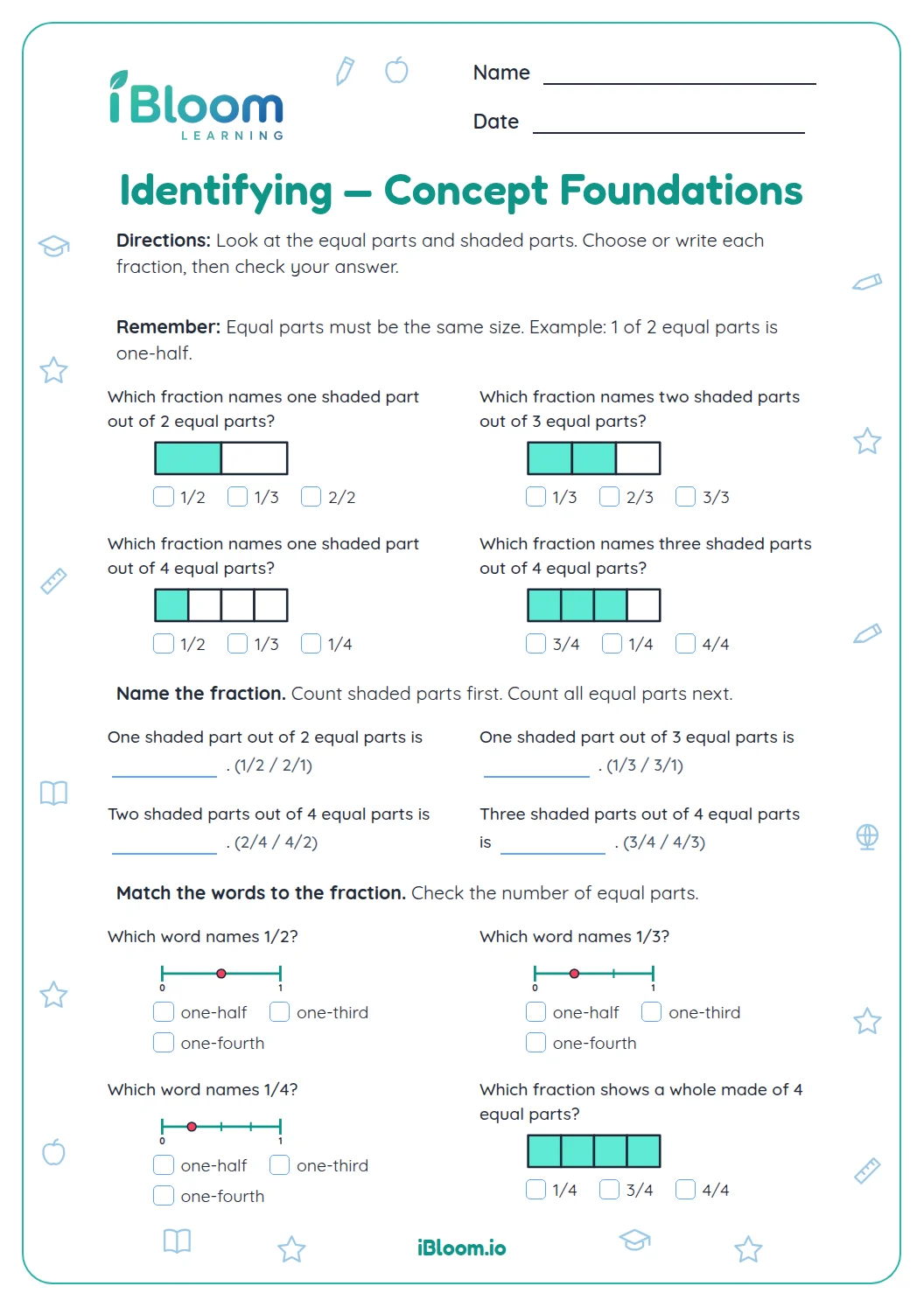
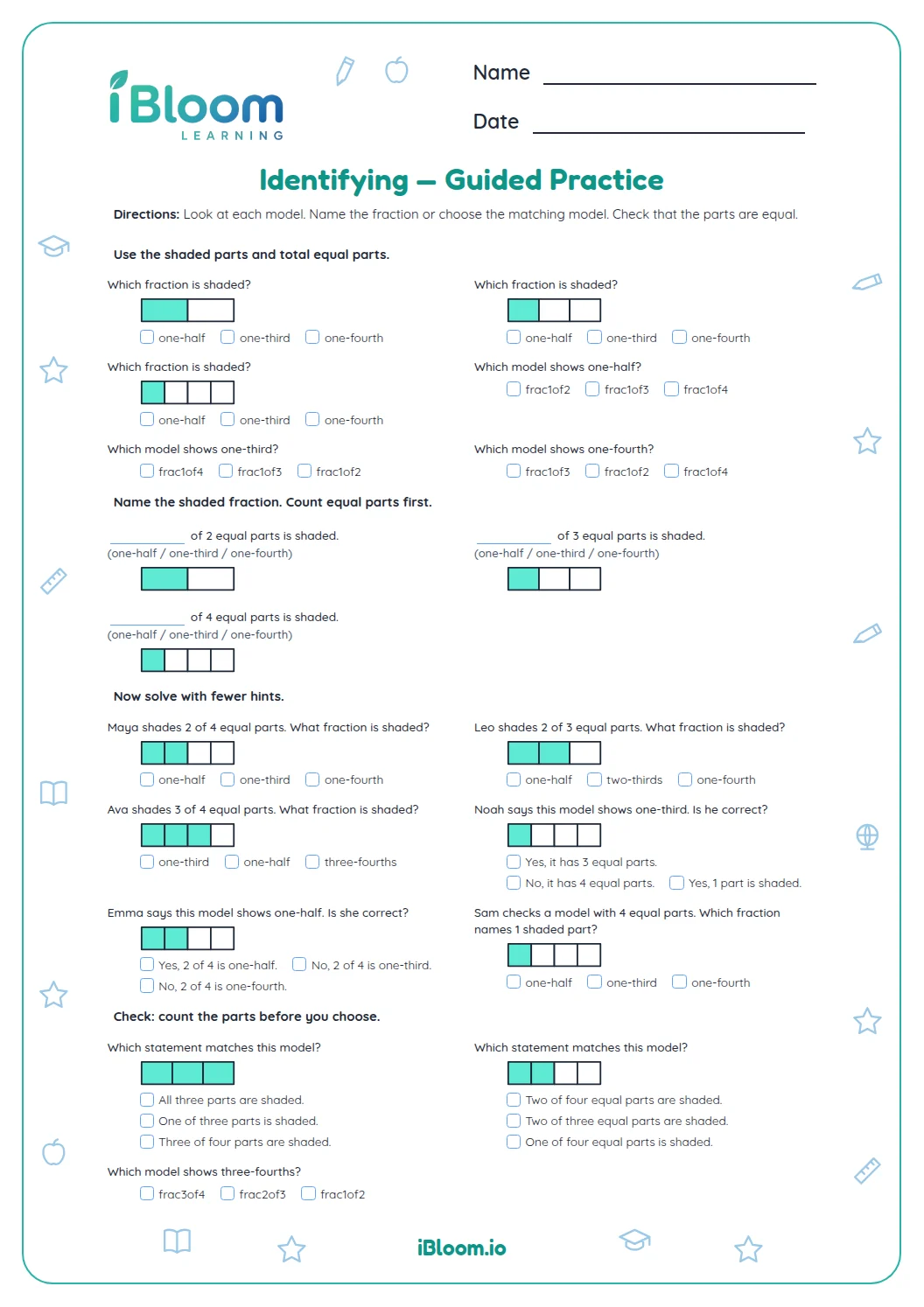
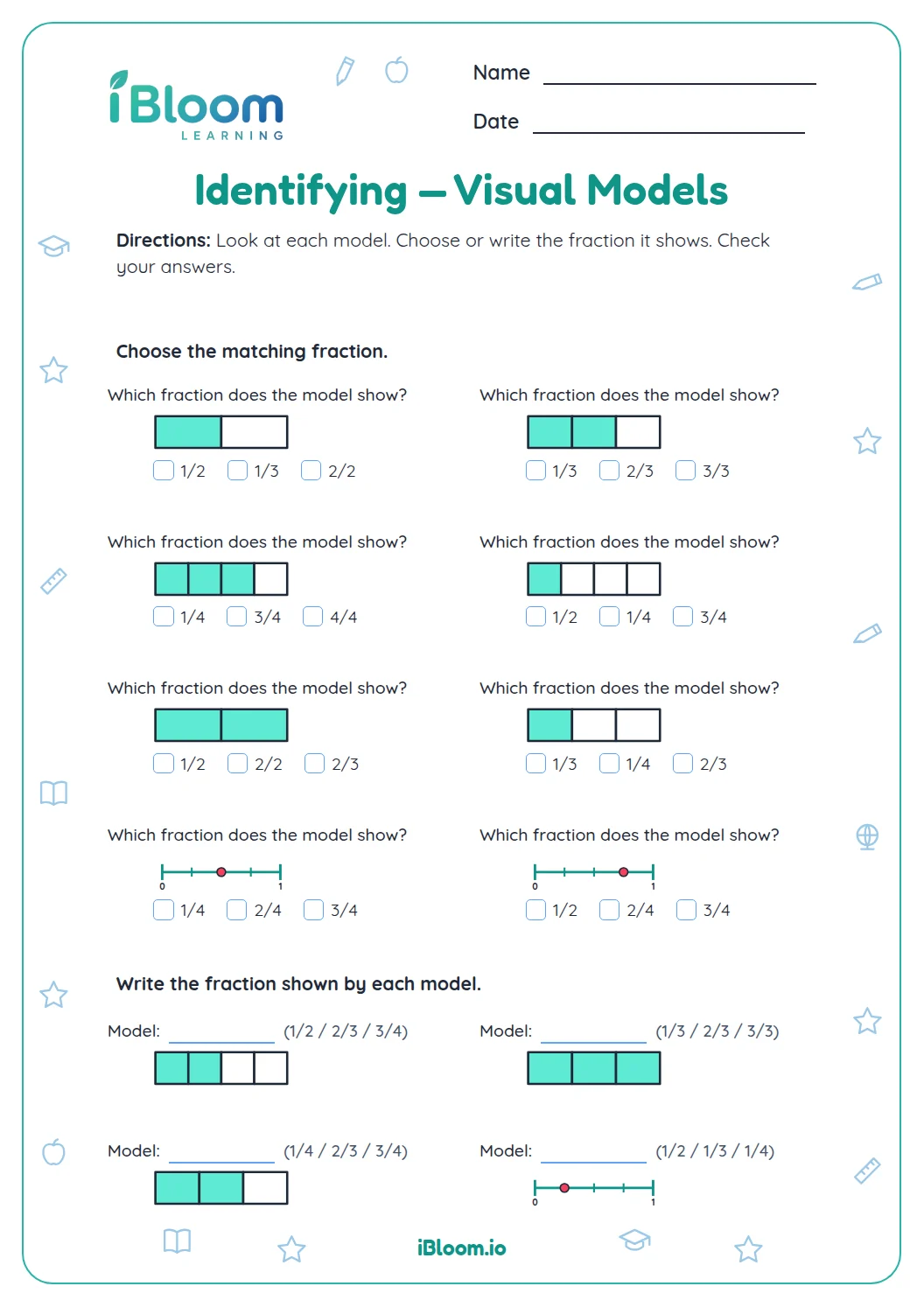
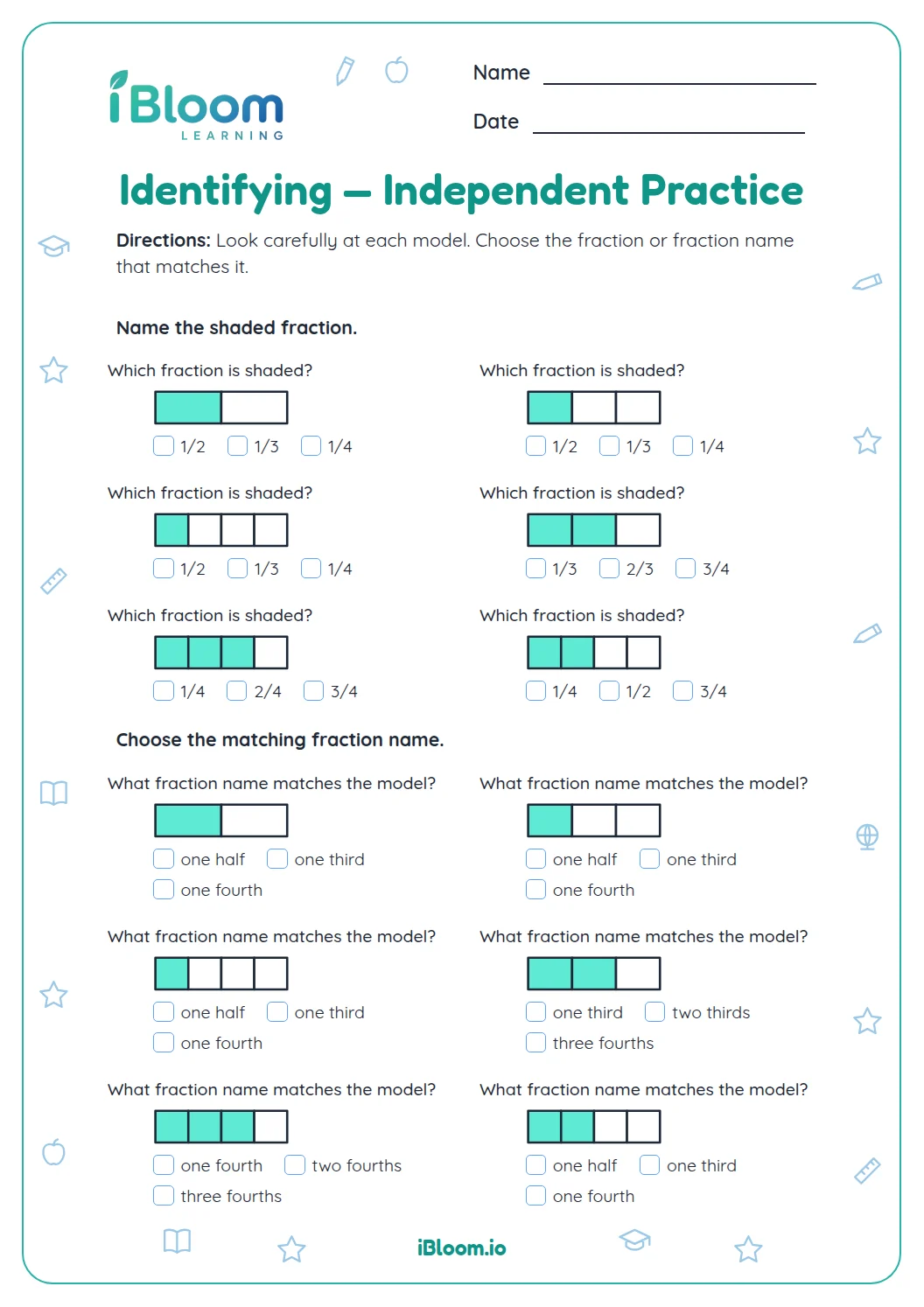
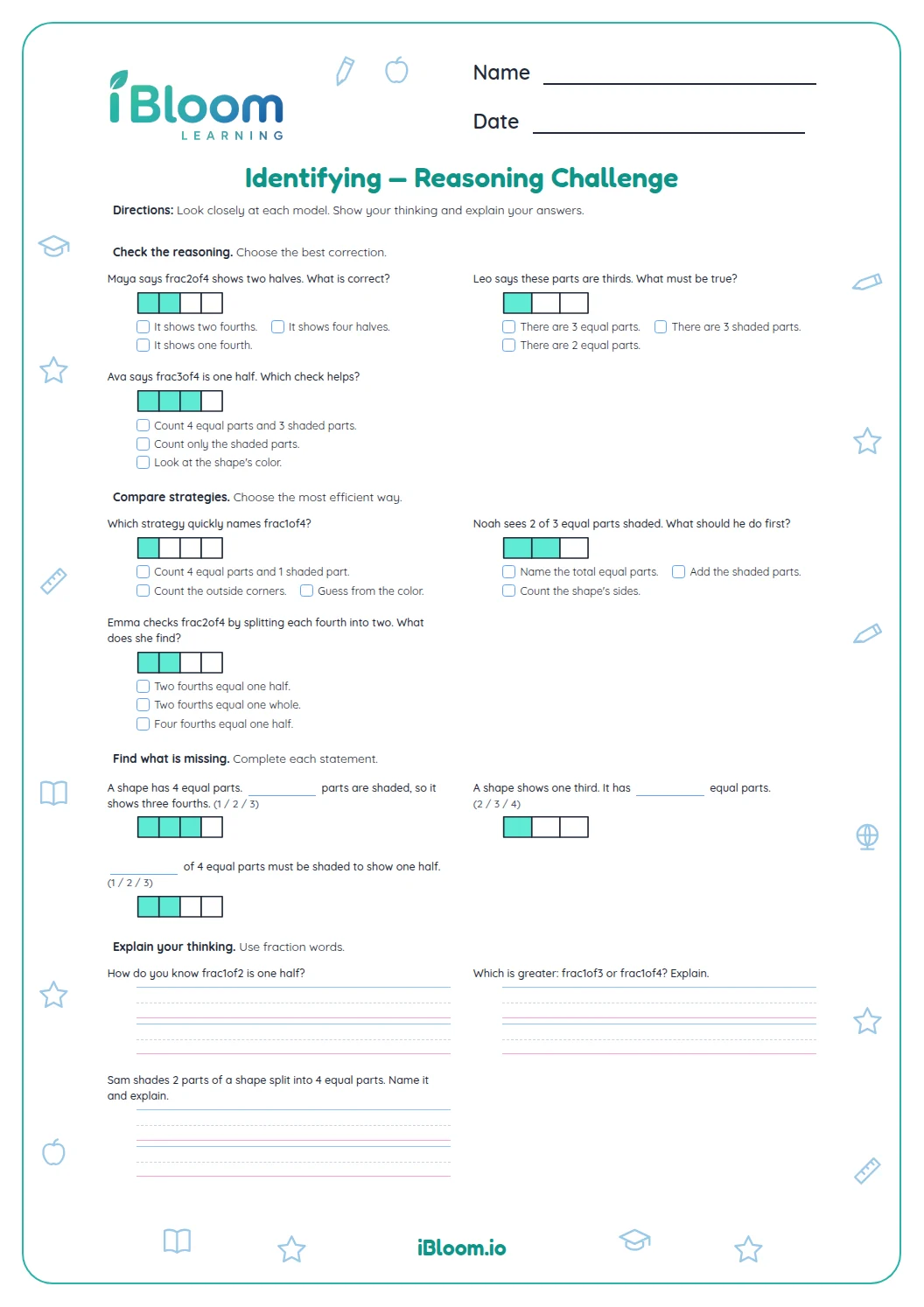
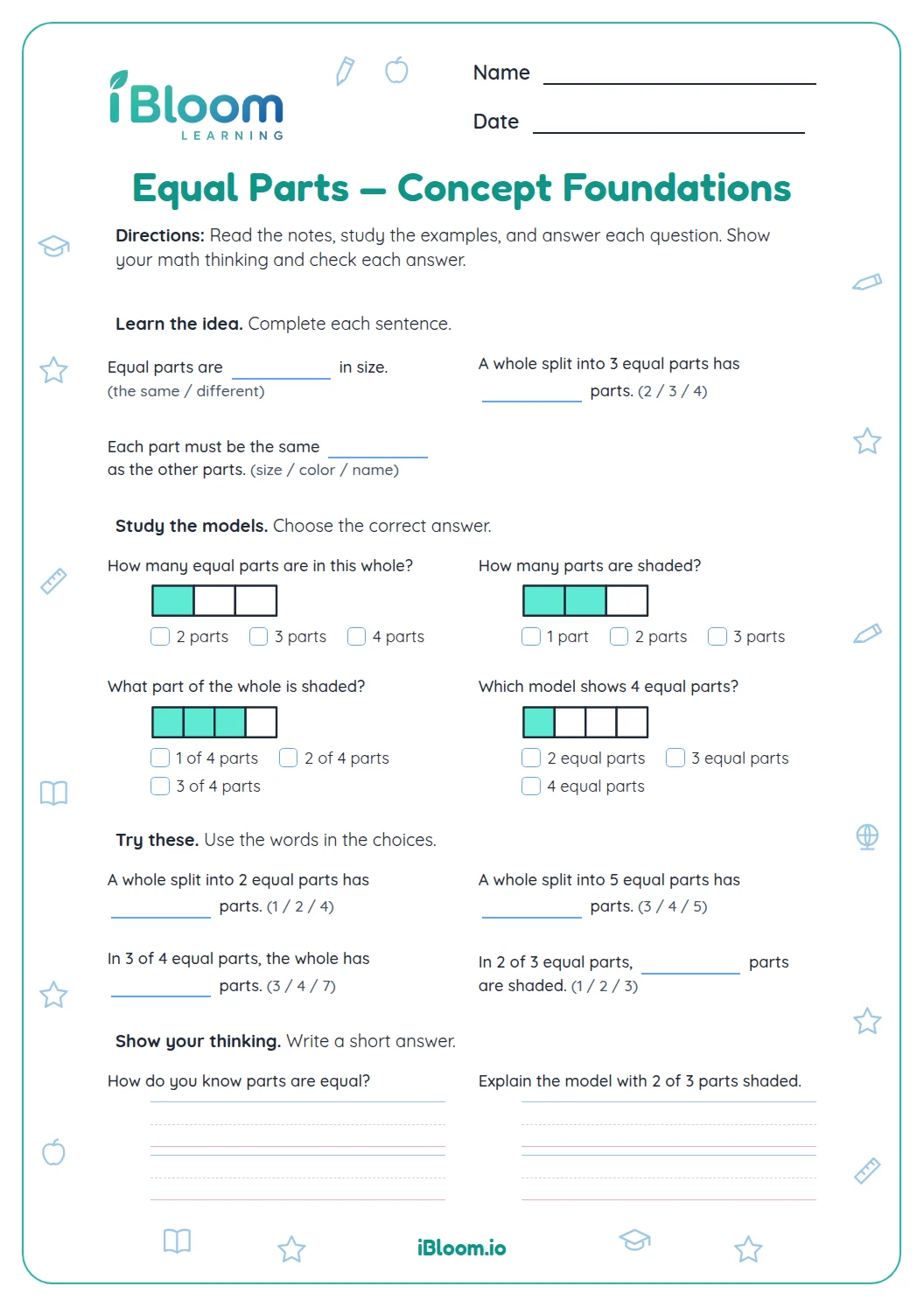
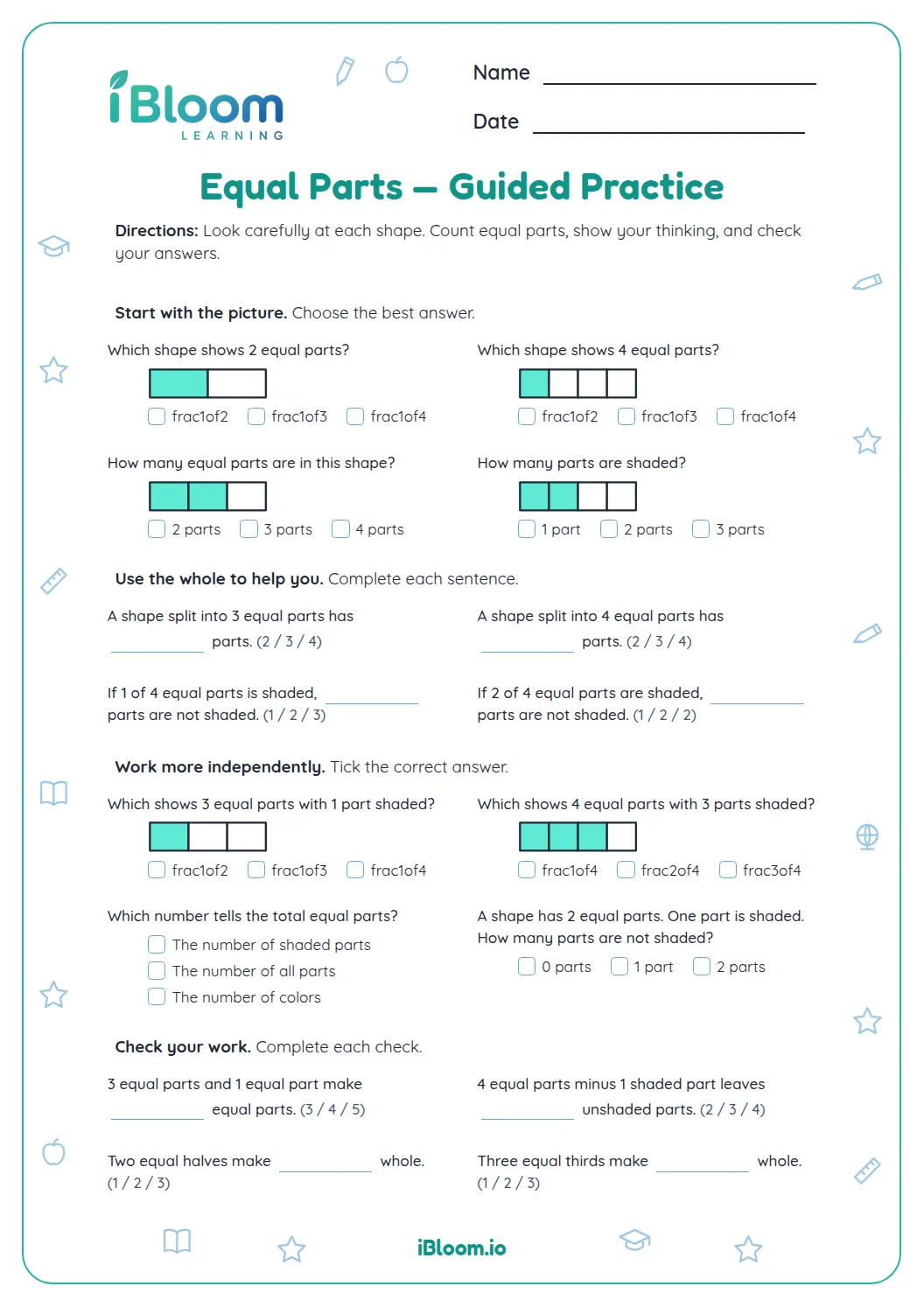
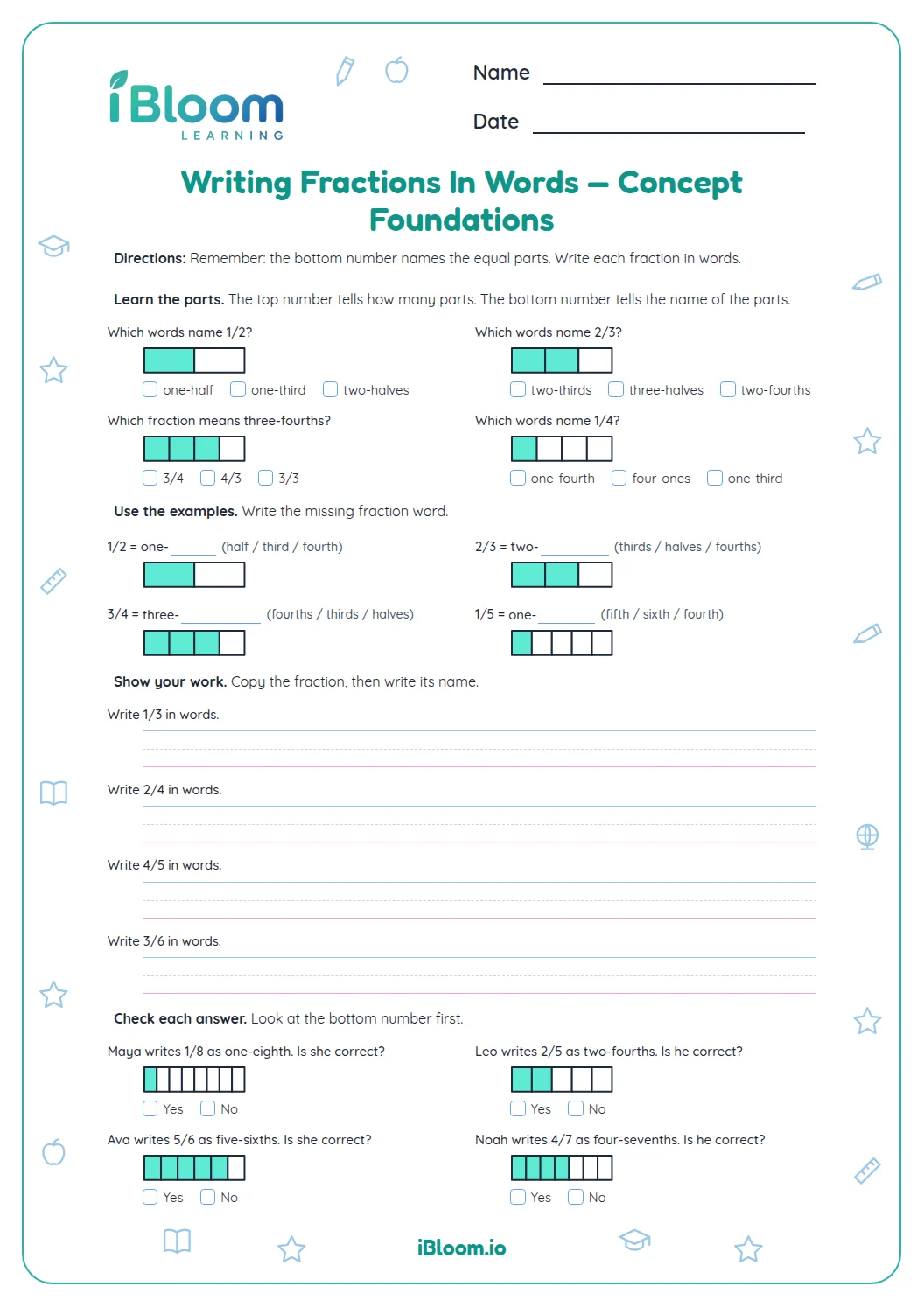
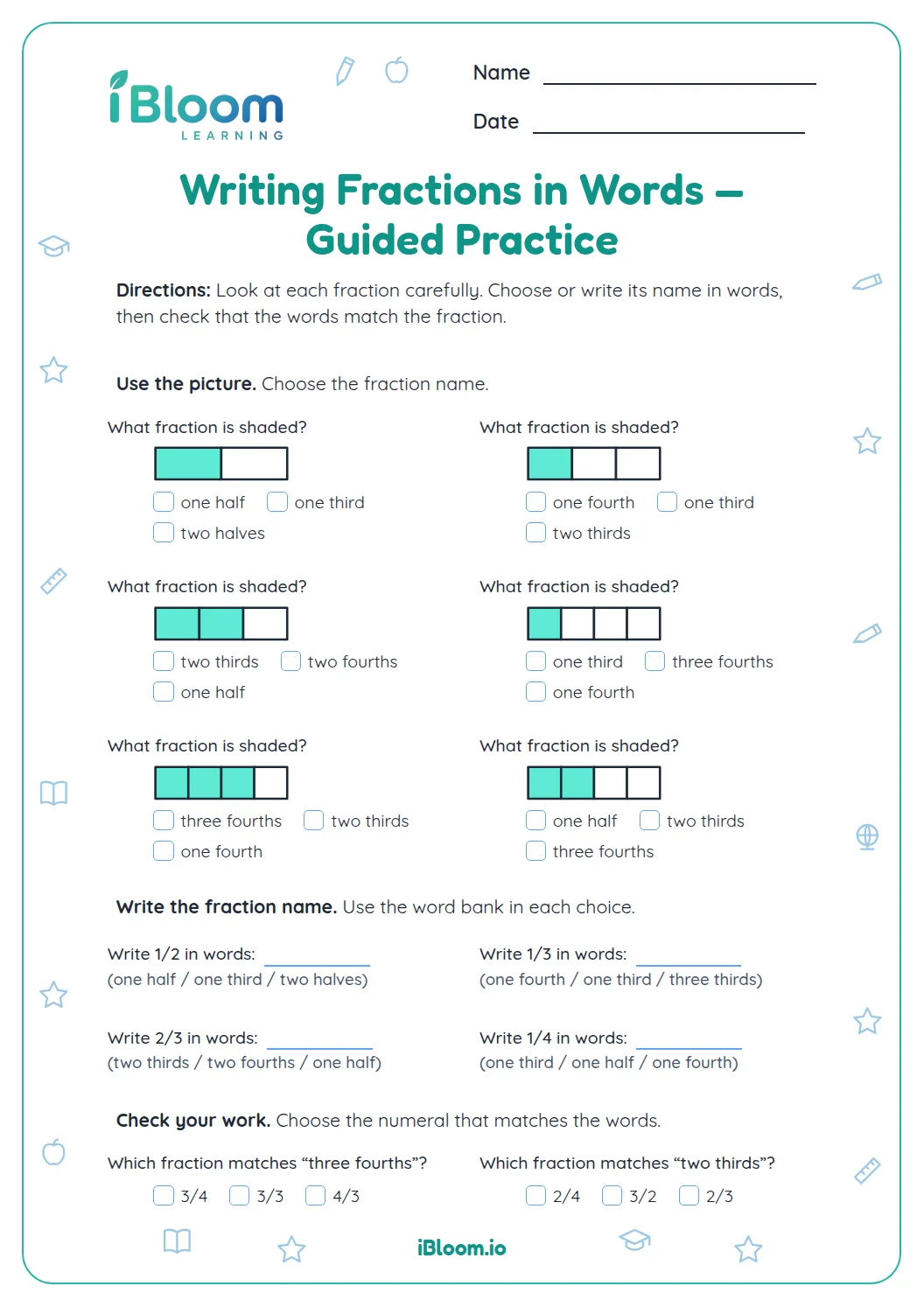
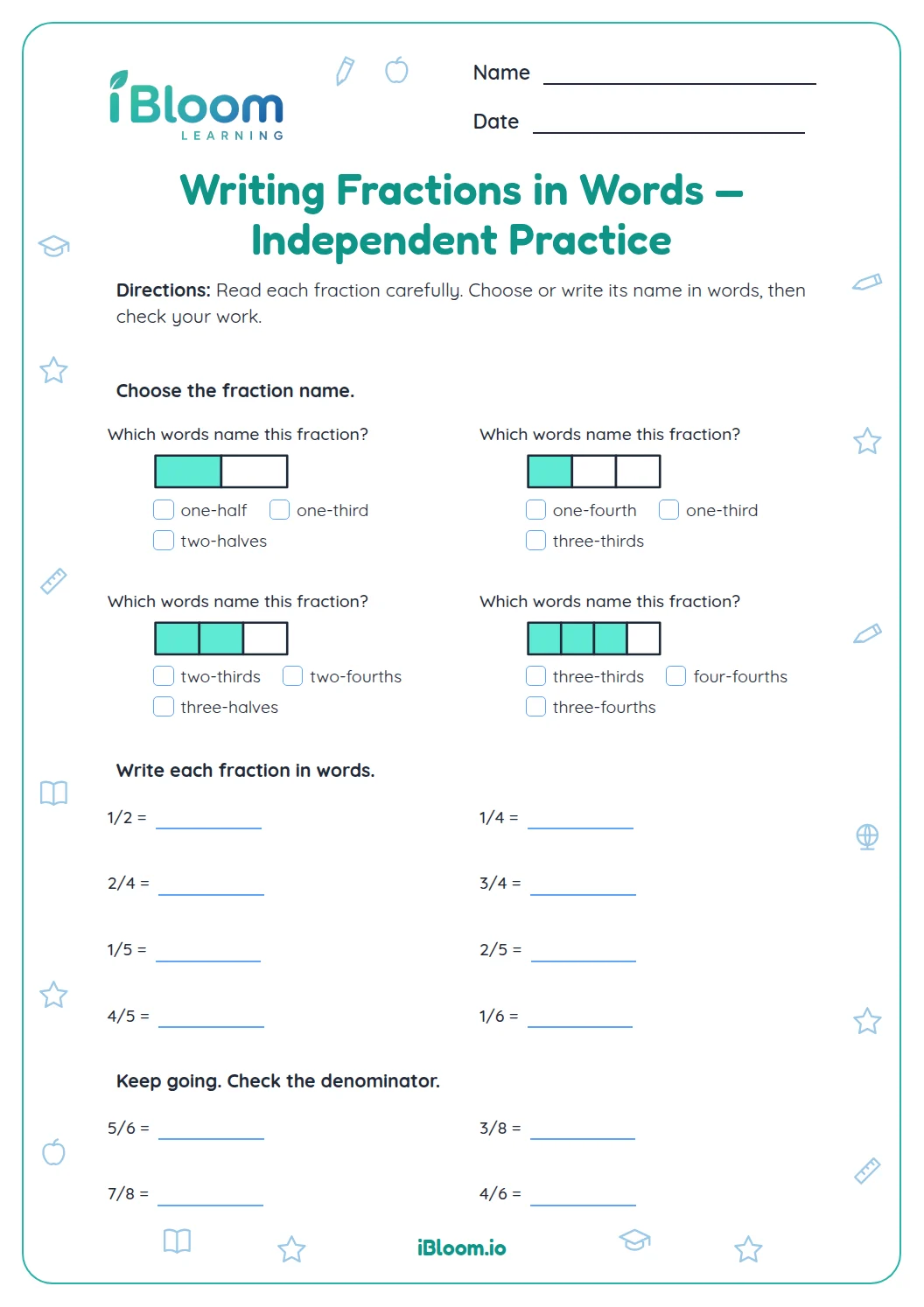
This Grade 2 printable helps children connect fraction words to equal shares in familiar situations. Questions use everyday settings such as sandwiches, cornbread, paper, and pizza to practice naming halves, thirds, and fourths. Children name one share or identify the matching fraction. The page focuses on halves, thirds, and fourths, with a separate key. It practices Common Core standard 2.G.A.3.
Aligned to 2.G.A.3
What makes shares fair?
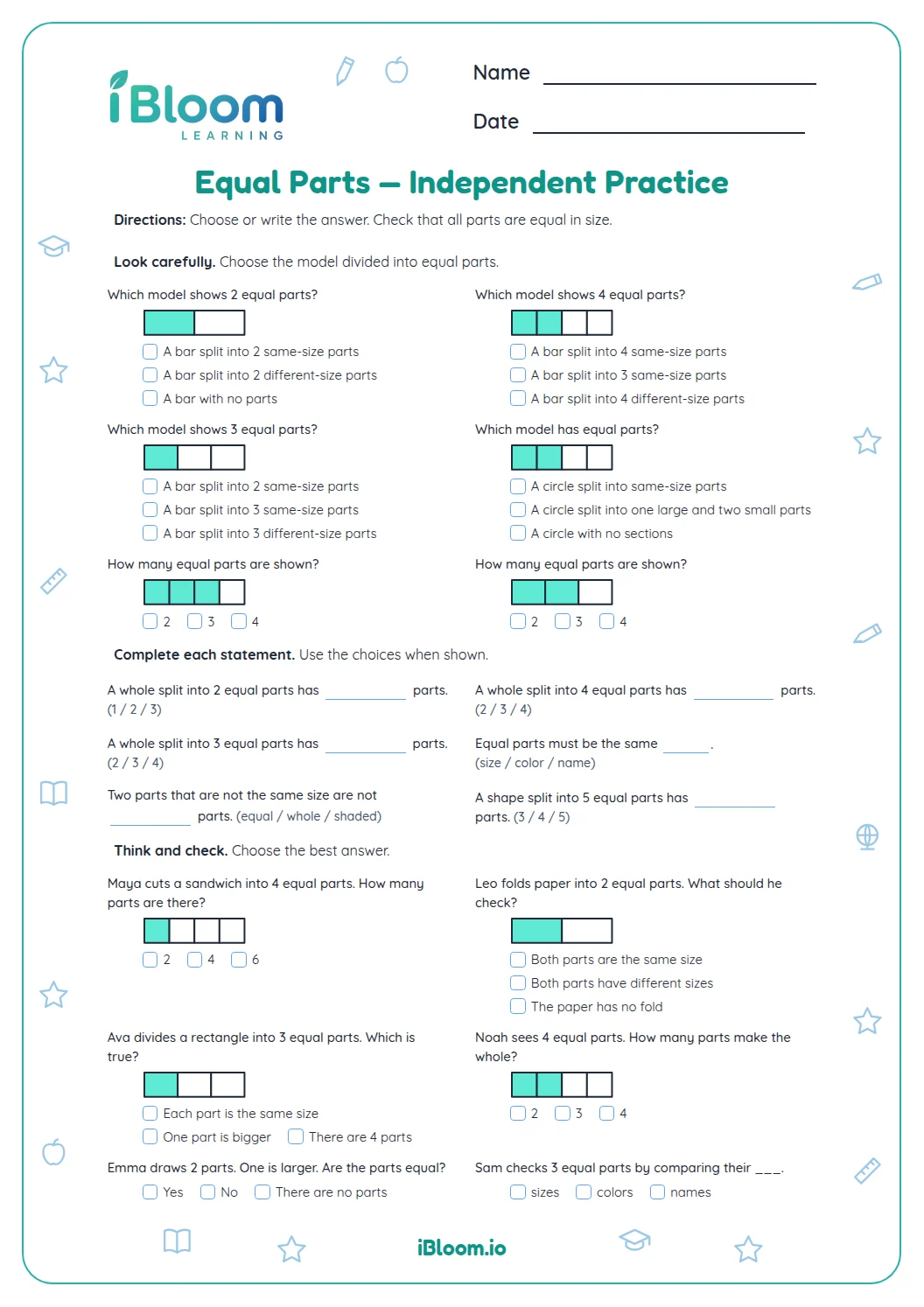
Equal shares have the same size. A whole split into two equal pieces has halves; a whole split into three equal pieces has thirds. Each real-world situation describes the whole and how it is divided.
How do you name one equal share?
Count how many equal parts make the whole. One of two parts is one half; one of three parts is one third; one of four parts is one fourth. The questions connect these names to foods and familiar objects.
- 1A round pie is split into 4 equal slices.
- 2One slice is one of the 4 equal parts.
- 3Answer: 1/4.
Where do children see fractions in real life?
Food can be cut into equal pieces, and paper or garden space can be divided into equal sections. Naming the equal share helps children describe how a part relates to the whole.
How to use this worksheet
- 1Check that the whole is divided into equal parts.
- 2Count the total number of parts.
- 3Name one part as a half, third, or fourth.
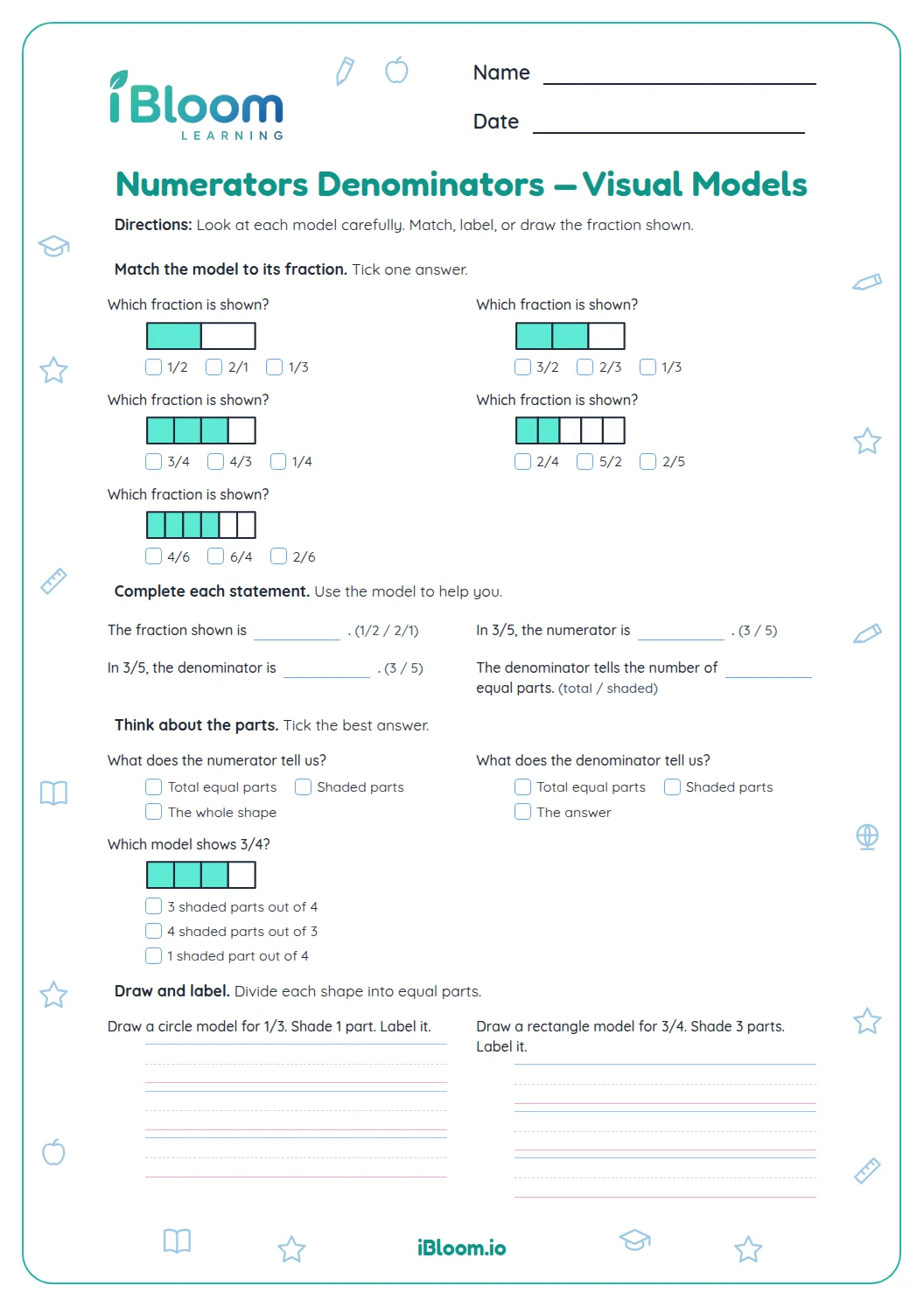
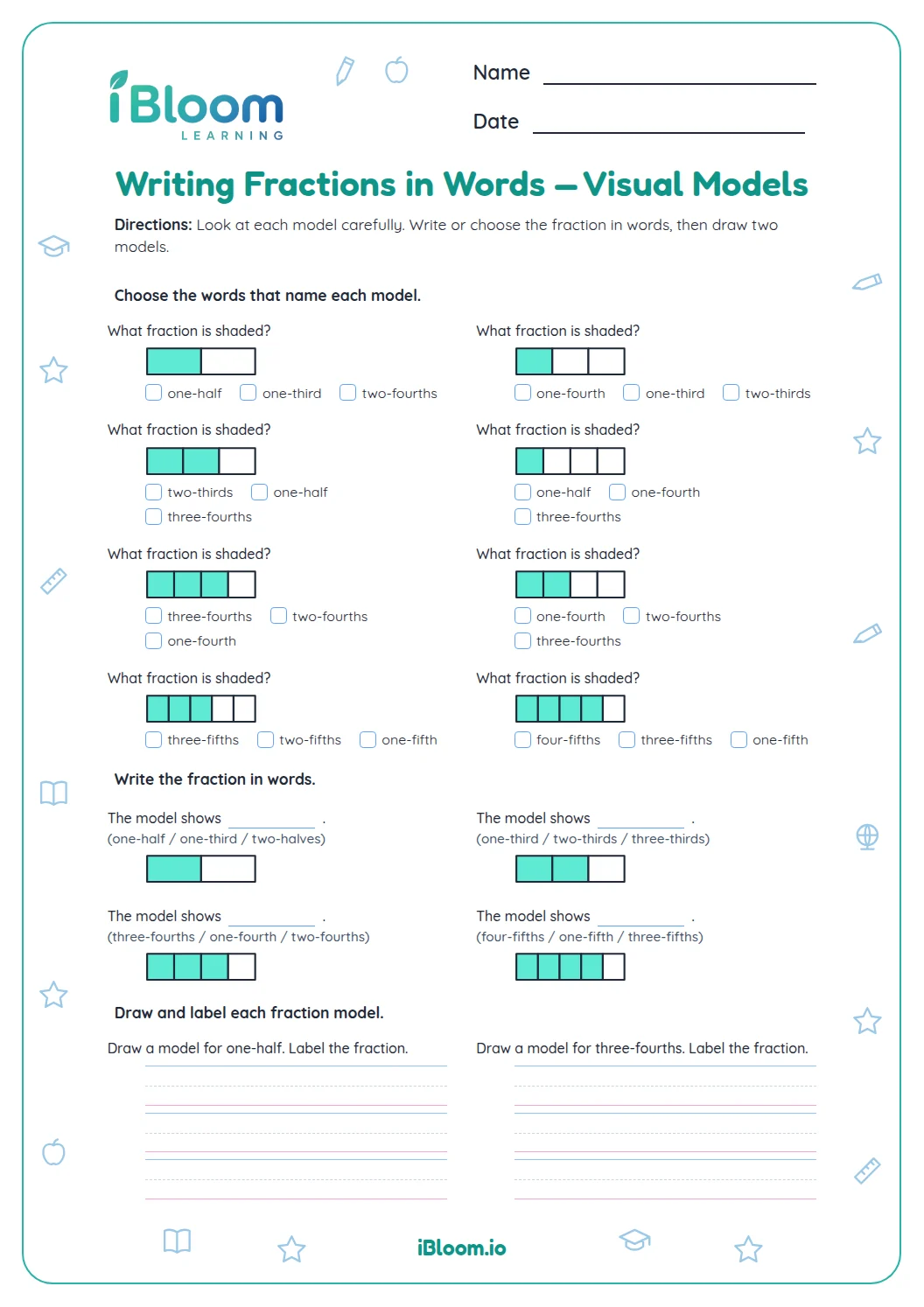
- 4For a shaded model, count the shaded parts too.
- 5Check that the fraction matches the whole item in the story.
Common mistakes and quick fixes
The mistake
Calling unequal pieces halves or fourths.
The fix
Compare the pieces: each share must be the same size.
The mistake
Using the shaded count as the denominator.
The fix
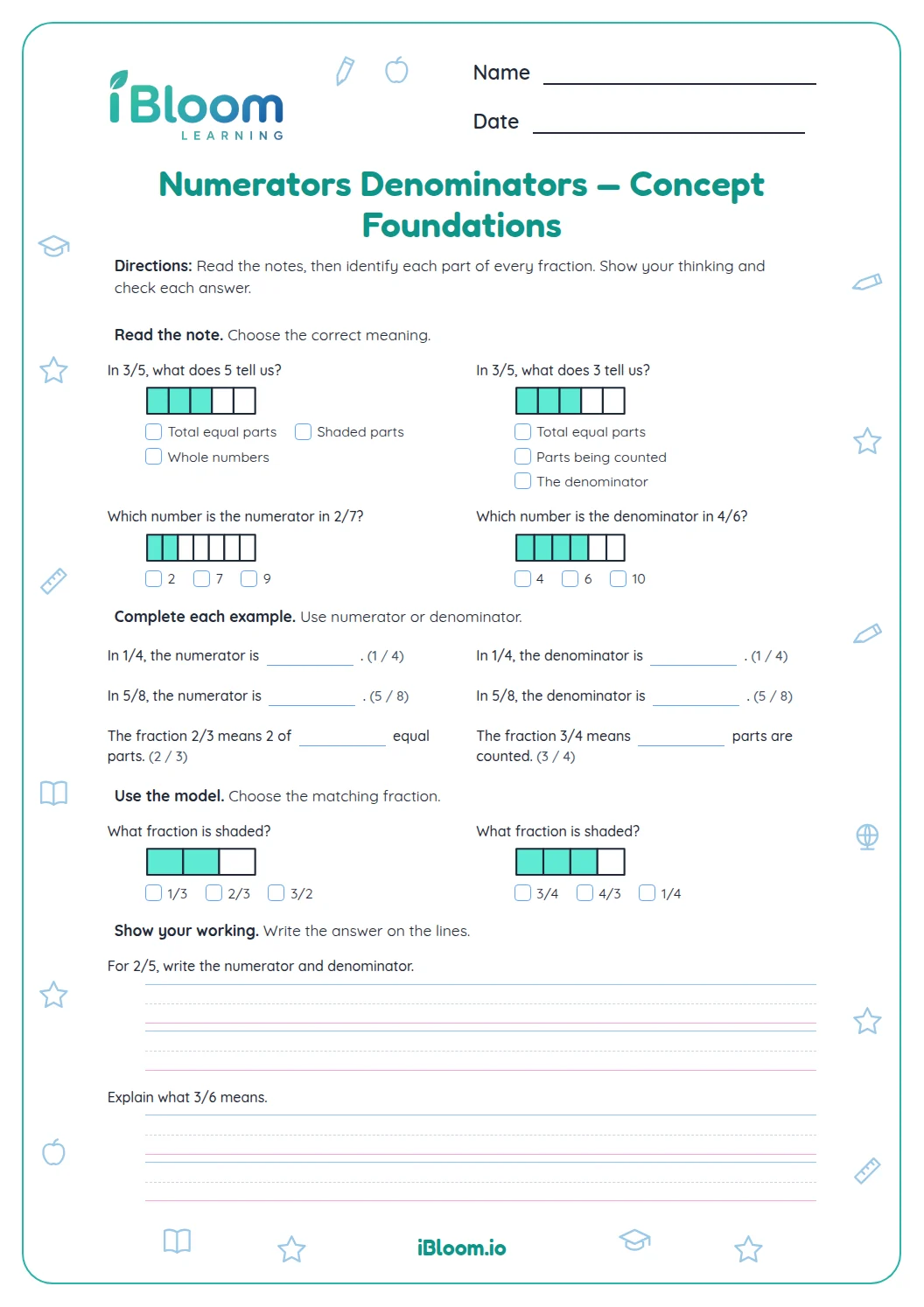
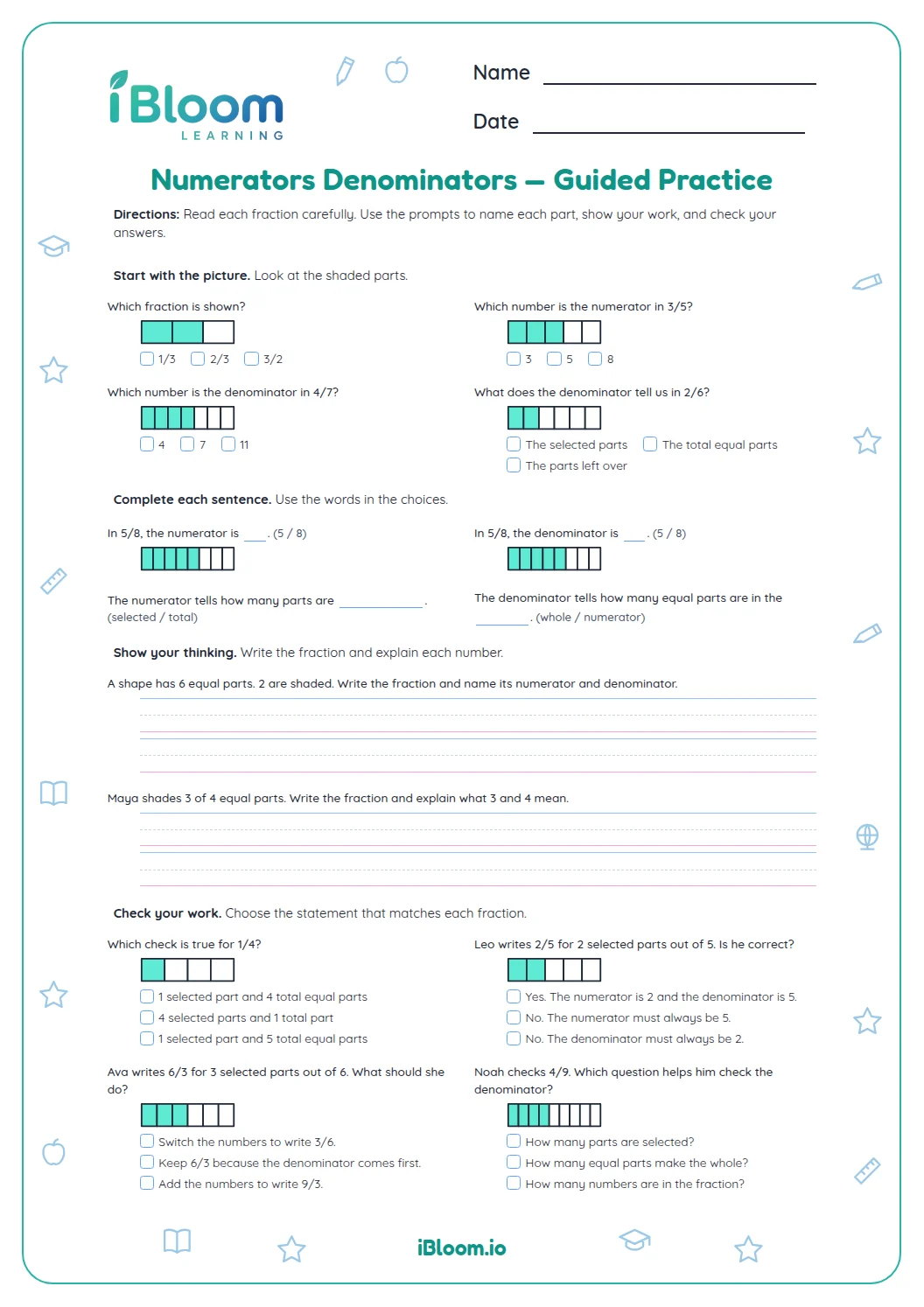
The denominator tells how many equal parts make the whole.
The mistake
Confusing one share with all shares.
The fix
Name whether the question asks for one piece or the part left.
Common Core alignment
Partition shapes into equal shares and name one share as a half, third, or fourth.
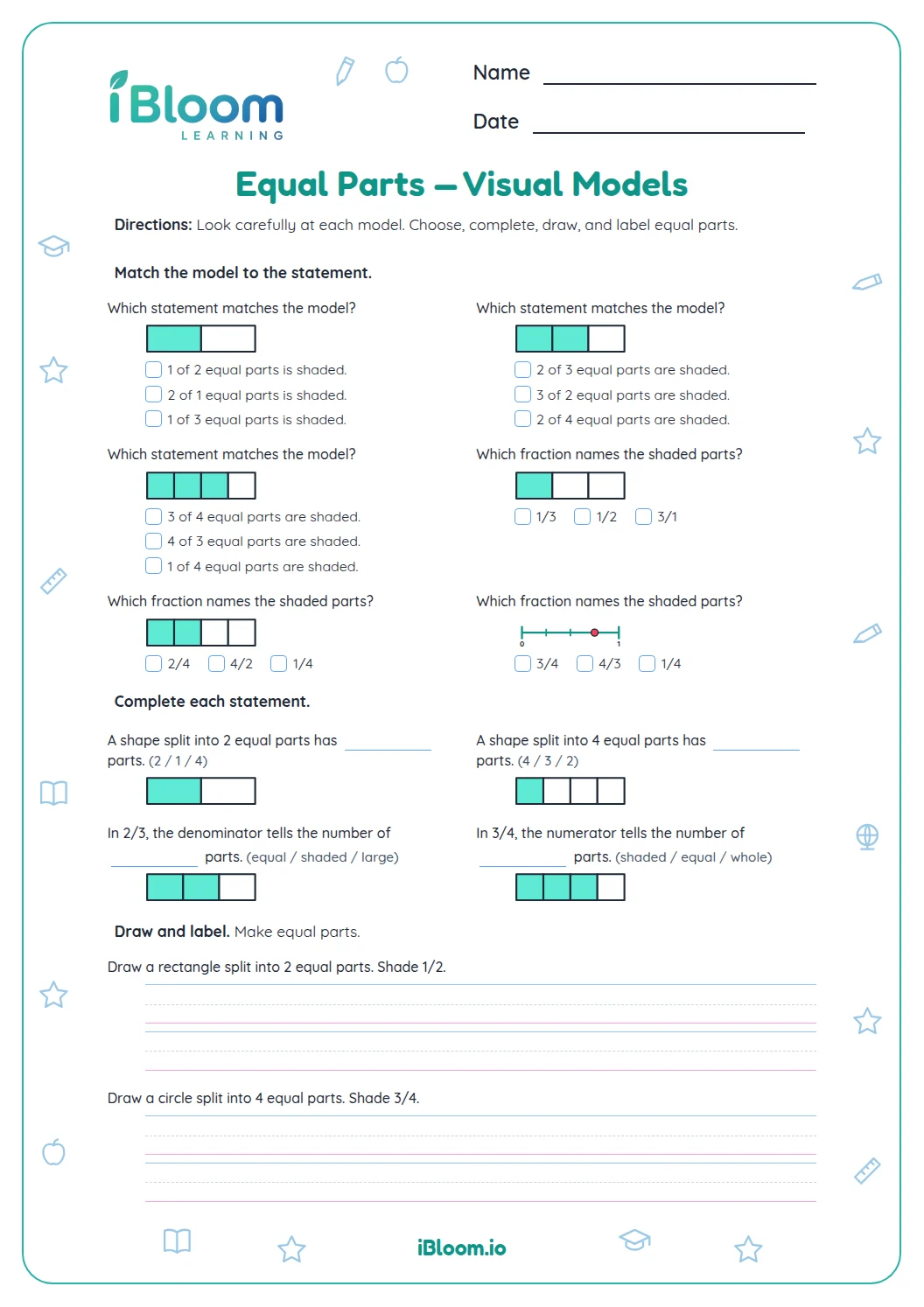
On this sheet: The models partition circles, squares, and bars into equal halves, thirds, and fourths; the contexts name those shares.
Show the official wordingHide the official wording
Partition circles and rectangles into two, three, or four equal shares, describe the shares using the words halves, thirds, half of, a third of, etc., and describe the whole as two halves, three thirds, four fourths. Recognize that equal shares of identical wholes need not have the same shape.
What to practice next
Make more practice
Further reading
Questions parents and teachers ask
What fraction words appear?
The questions use halves, thirds, and fourths. Children identify one equal share of a whole or name the fraction represented by the shaded parts in a visual model. Use the passage and printed questions as the reference when checking each response with the separate answer key.
Why must the pieces be equal?
A fraction describes equal shares of one whole. If pieces are different sizes, they are not equal halves, thirds, or fourths, even if there are two, three, or four pieces. Use the passage and printed questions as the reference when checking each response with the separate answer key.
Does this worksheet use fraction drawings?
The questions describe equal shares in words and offer fraction choices to select from. Children can sketch a quick circle or bar on scrap paper if they want to picture how a pie or paper strip is divided.
What is the difference between one fourth and three fourths?
One fourth means one of four equal parts. Three fourths means three of those four parts. The total number of equal parts remains four in both fractions. Use the passage and printed questions as the reference when checking each response with the separate answer key.
Does the answer key show the visual answers?
Yes. The key lists the fraction or share name for every question, including the models. For a model question, children can count total equal parts and then count the shaded parts. Use the passage and printed questions as the reference when checking each response with the separate answer key.