




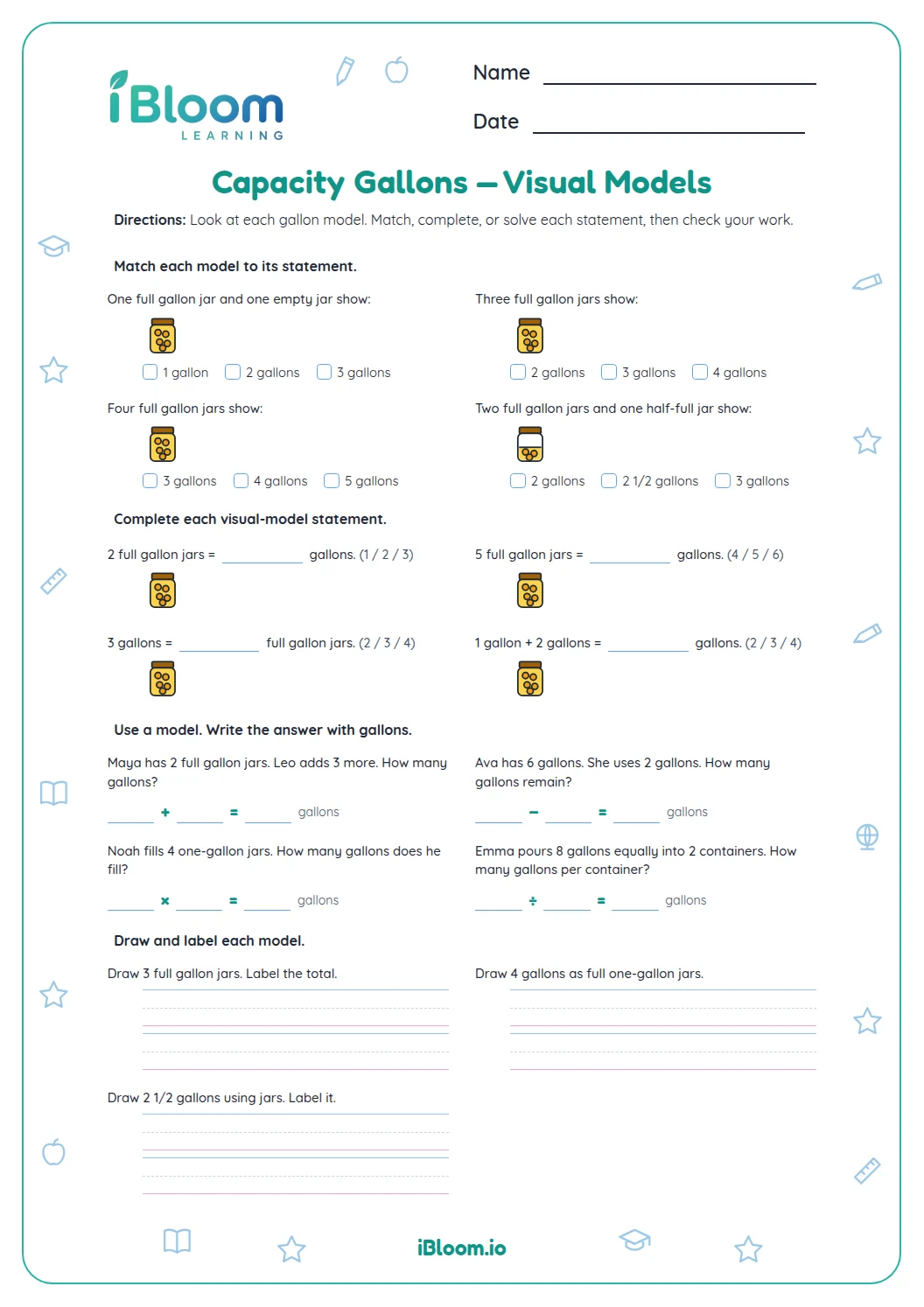
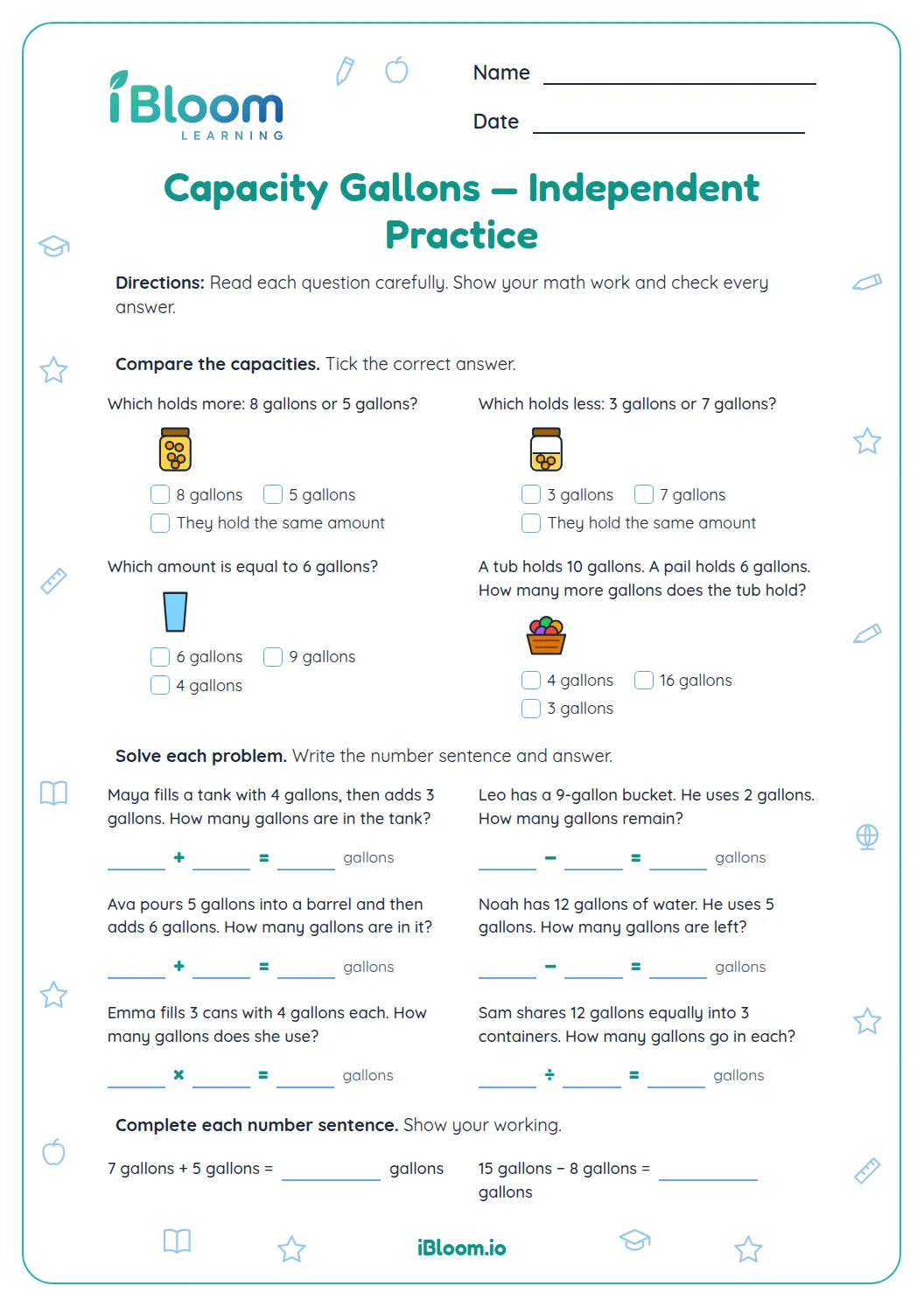
About this worksheet
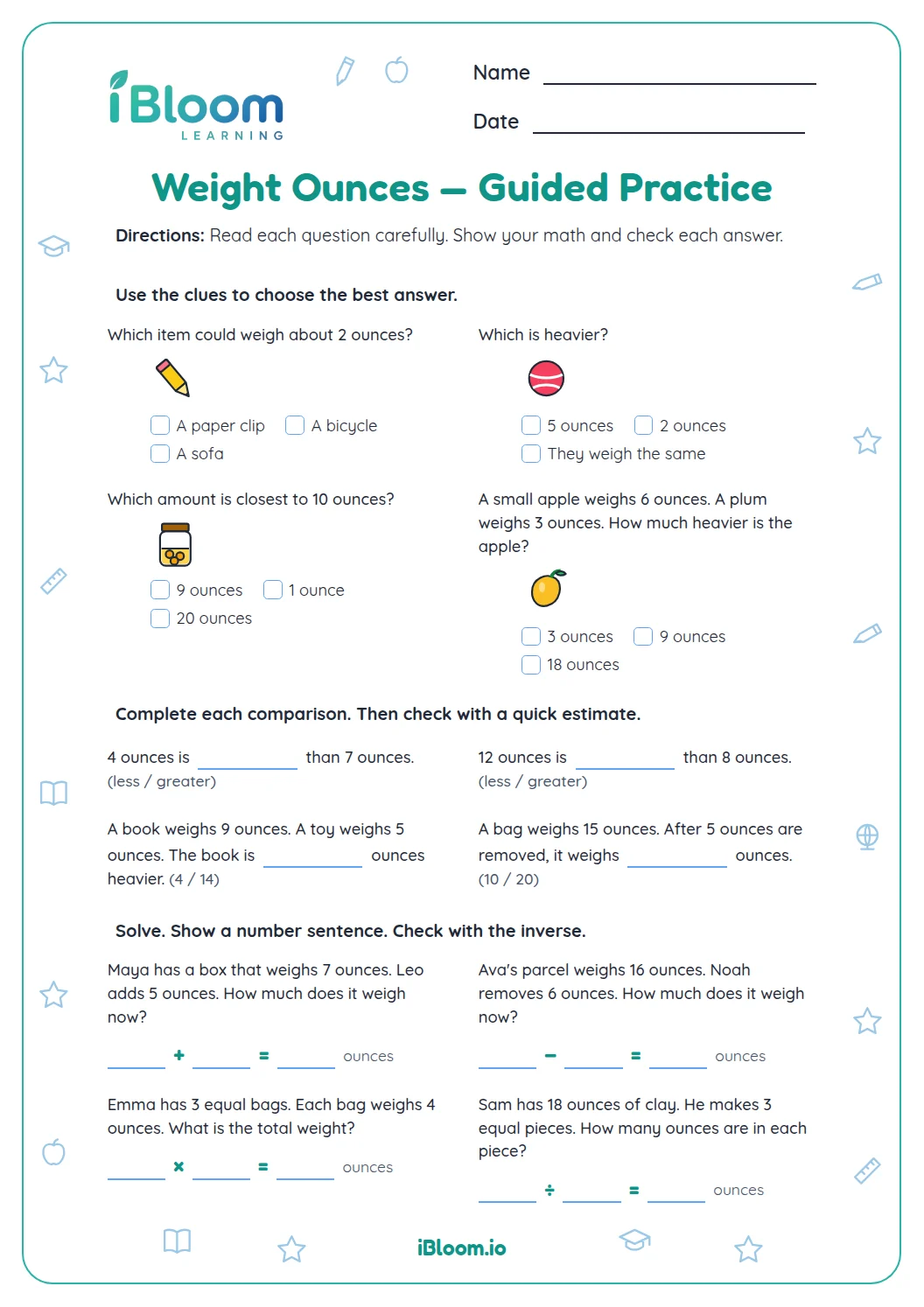
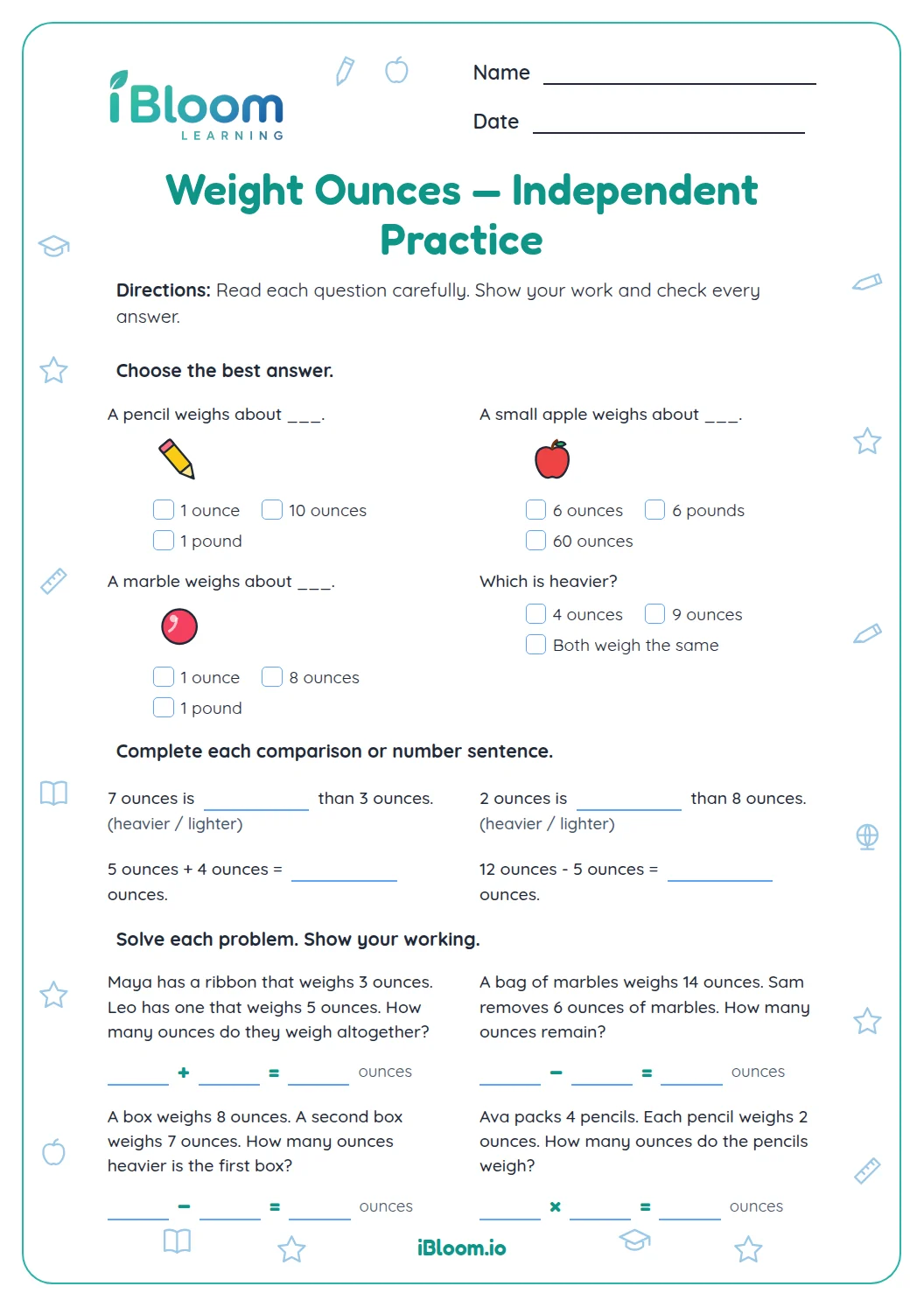
This Grade 2 printable practices comparing and reasoning about weight in ounces. Children start by choosing which familiar item is heavier or finding a small difference, then solve short stories about totals, equal groups, and what remains. Each question uses ounces so the focus stays on interpreting the situation and choosing addition or subtraction. The practice sheet is followed by a separate answer key.
Aligned to 2.MD.A.1
How do you compare weights in ounces?
Ounces give a shared unit for talking about light everyday objects. When two weights use ounces, compare the numbers: 8 ounces is more than 6 ounces. The difference is found by subtracting the smaller weight from the larger one. Part A compares pictured objects and ounce amounts; Parts B and C use written stories about totals, differences, and unknown weights.
How do you choose an operation in a weight story?
Look for what the question asks. Altogether usually calls for addition; how much heavier or how much less calls for subtraction. Keep the unit in the answer so the result still describes a weight.
- 1A 16-ounce bag and a 9-ounce bag
- 216 − 9 = 7
- 3The first bag is 7 ounces heavier.
What kinds of problems are on the pages?
The first part compares amounts and uses familiar objects. Later parts ask for totals, equal groups, and an unknown amount in short parcel and lunch stories.
How to work through the sheet
- 1Read the full story and identify the weights that matter.
- 2Underline the question word such as total, heavier, or remains.
- 3Choose addition or subtraction and write the number sentence.
- 4Calculate, then attach ounces to the answer.
- 5Check whether the answer makes sense: a total should be larger than either part.
Common weight-story slips
The mistake
Subtracting when the question asks for the combined weight.
The fix
Ask whether the story joins two weights; if so, add.
The mistake
Giving only the number and omitting ounces.
The fix
Copy the unit from the question into the final answer.
The mistake
Subtracting the larger weight from the smaller one for “how much heavier.”
The fix
Put the heavier amount first so the difference is positive.
Common Core alignment
This sheet gives children practice describing and comparing weight with familiar ounce amounts.
Compare familiar objects by weight using the same unit.
On this sheet: The problems use ounce labels as a common unit for comparing weights.
Show the official wordingHide the official wording
Measure the length of an object by selecting and using appropriate tools such as rulers, yardsticks, meter sticks, and measuring tapes.
What to practice next
Make more practice
Further reading
Questions parents and teachers ask
Does this page teach ounce conversions?
It practices comparing weights stated in ounces and using addition or subtraction to solve weight stories. Every problem keeps the same unit, and the separate answer key gives the expected result with ounces where needed. Children can compare amounts directly because no conversion is required.
How can my child tell whether to add or subtract?
Ask what the story is asking for. A combined total uses addition; a difference such as how much heavier one item is uses subtraction. The question wording and the quantities tell which operation fits, and the equation makes that choice visible.
Why are ounces written in the answers?
The number tells how many units, and ounces name the unit being counted. Including ounces makes the answer a weight rather than a number by itself. Encourage your child to copy the unit from the problem whenever the final answer names a weight.
What does the answer key include?
The separate key gives an answer for every question, including the equation-story results. It helps an adult check both the calculation and whether the child included the unit. For a wrong answer, reread the question together and identify what quantity it asks for.
Can we use objects at home to practice?
Yes. Choose two small objects and estimate which feels heavier, then compare their ounce weights if a suitable scale is available. Keep the worksheet numbers as the practice data and use real objects as a conversation starter about how measurement lets us compare fairly.