

About this worksheet
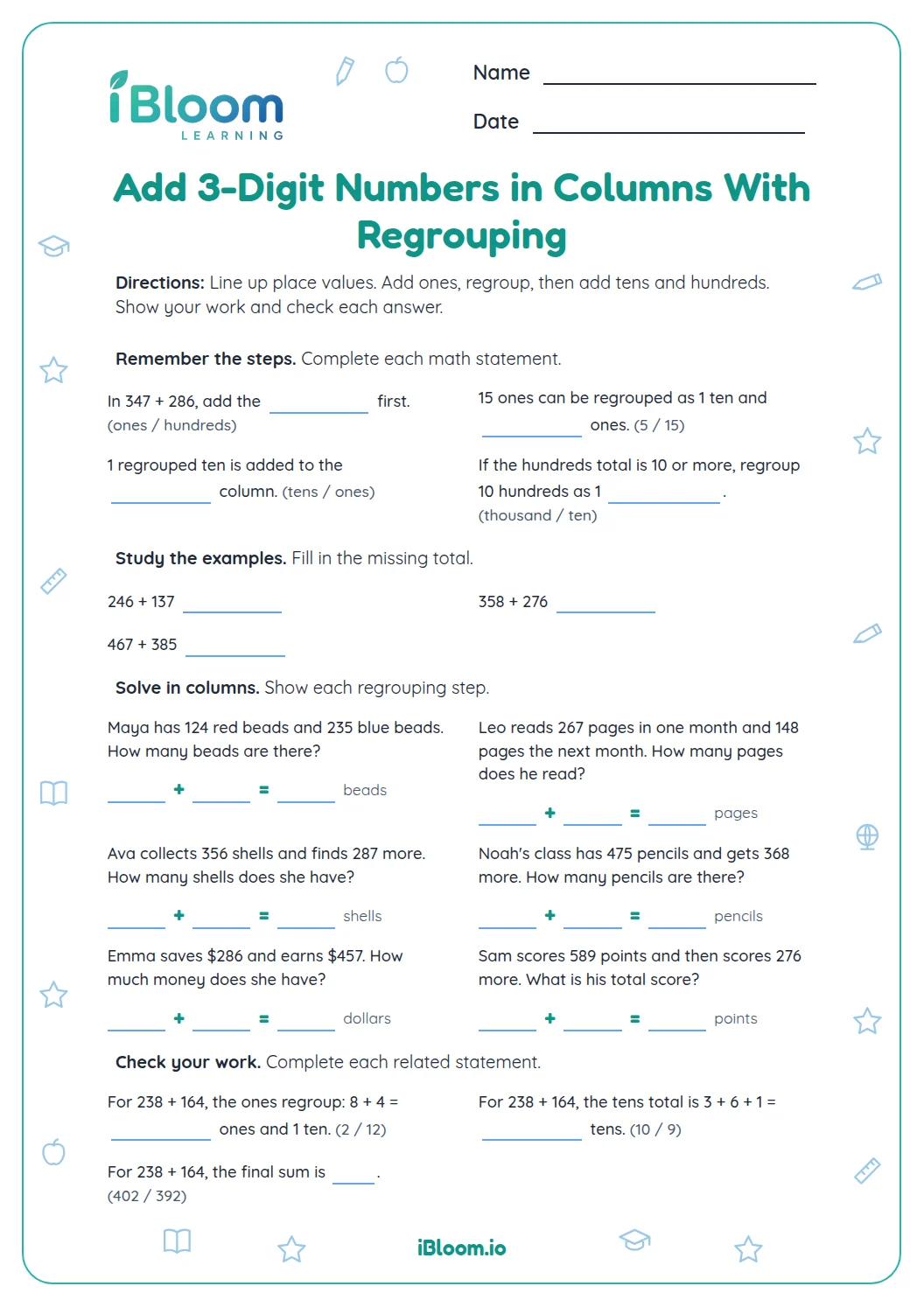
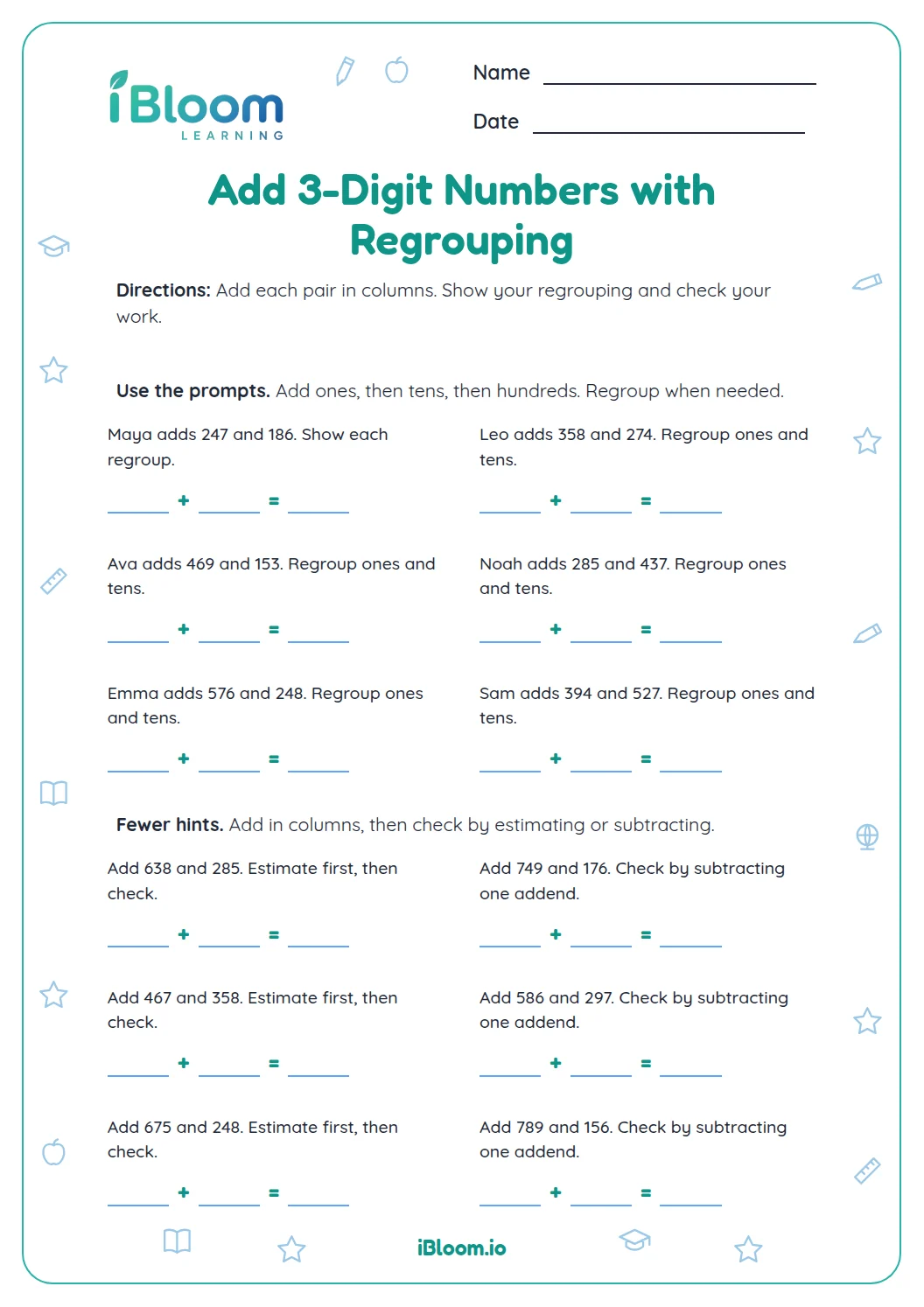
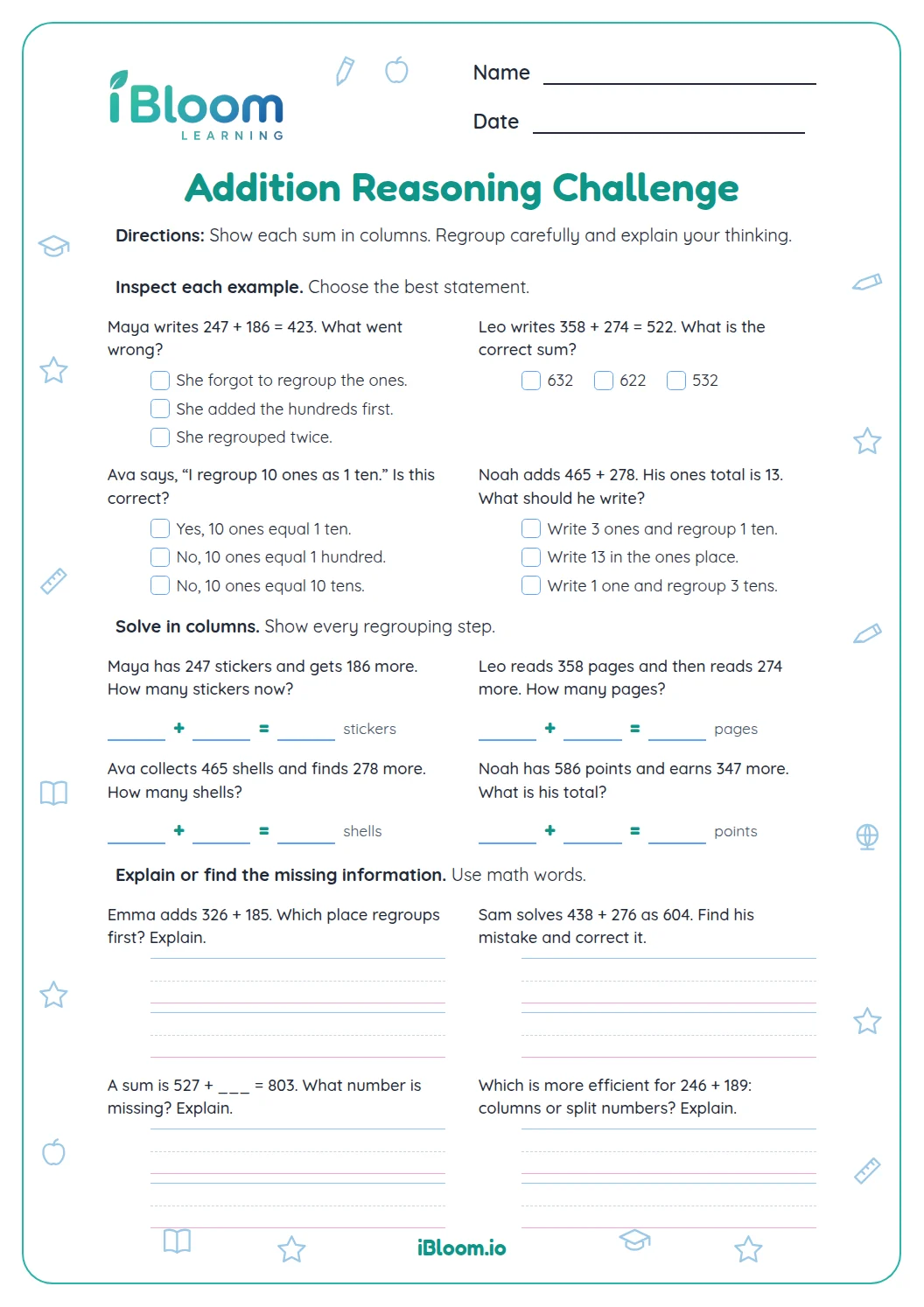
Each story gives two three-digit amounts to combine. Learners write an addition equation, line up hundreds, tens, and ones, regroup where needed, and label the total with the context’s unit.
Aligned to 3.NBT.A.2
How to use this real-world addition worksheet
Read each direction aloud if needed. Encourage the learner to work carefully and check each response with the separate key. The questions begin with a direct example and then ask the learner to apply the same skill independently.
What does the worksheet include?
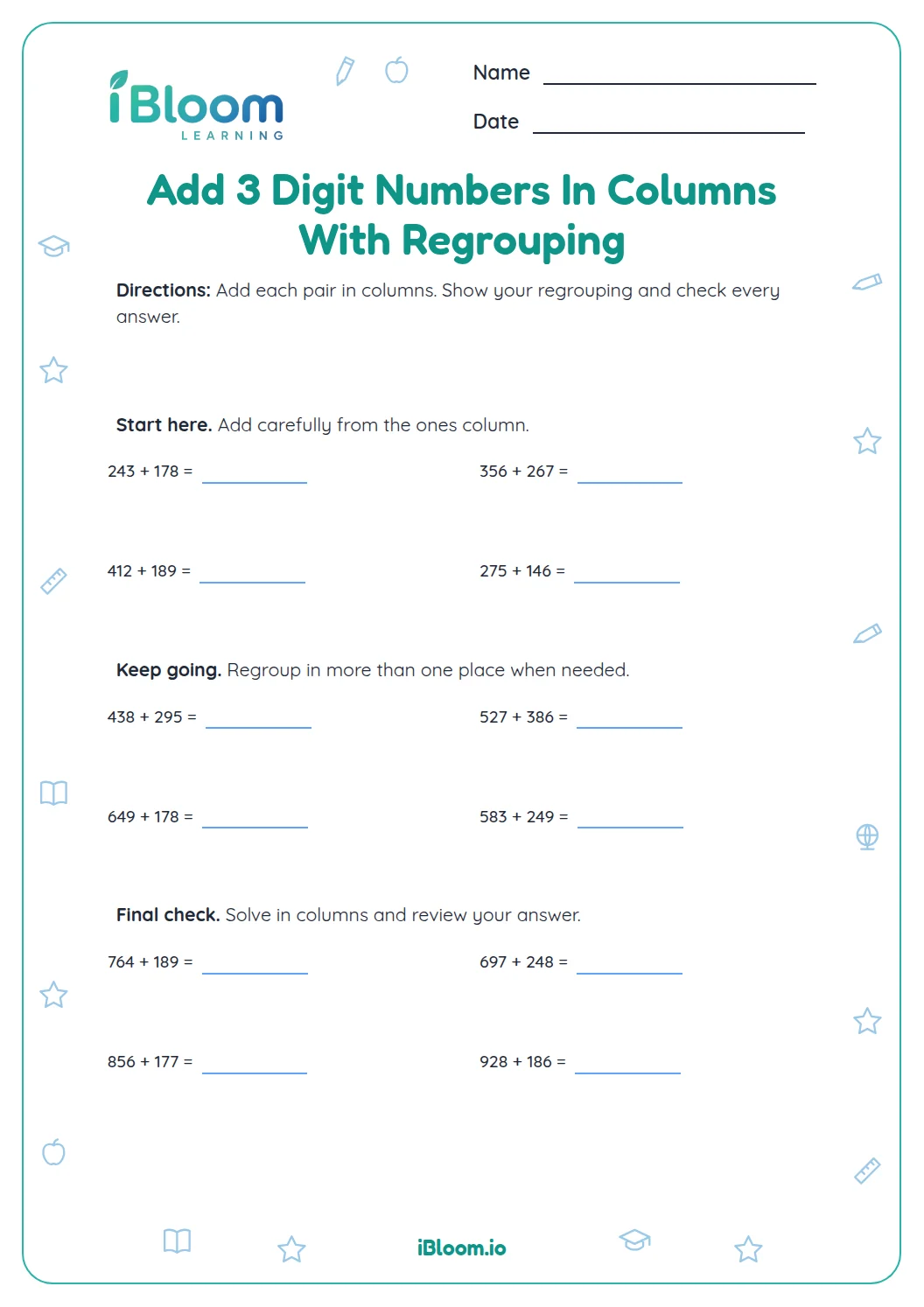
The sheet has 14 questions arranged in short parts. Each part focuses on one way to practice the target skill, so a learner can build confidence while still getting varied examples.
A simple way to practice
- 1Read the whole direction before beginning a part.
- 2Complete one item at a time, using the printed model or drawing when provided.
- 3Review the finished page with the answer key and revisit any response that needs another try.
Helpful reminders
The mistake
Rushing past a direction or model.
The fix
Pause and identify what the question asks before writing or tracing.
The mistake
Stopping after one example.
The fix
Complete every item in the part to practice the full target skill.
Curriculum alignment
This page focuses on the skill named in its title. The alignment below describes the closest applicable US learning standard.
Fluently add and subtract within 1,000 using strategies and algorithms.
On this sheet: Every item combines two three-digit numbers within 1,000 and requires regrouping in column addition.
Show the official wordingHide the official wording
Fluently add and subtract within 1000 using strategies and algorithms based on place value, properties of operations, and/or the relationship between addition and subtraction.
What to practice next
Further reading
Questions parents and teachers ask
How many problems are included?
There are 14 real-world addition problems across the student sheet. Each combines two three-digit amounts and provides room for an equation and column work. The answer key helps check the response, and the learner can revisit the passage or work shown whenever a detail needs another look.
Do the problems require regrouping?
Yes. Each problem is designed for three-digit addition with at least one regrouping step. Add from ones to hundreds and record each regrouped value in the next column. The answer key helps check the response, and the learner can revisit the passage or work shown whenever a detail needs another look.
Should students write an equation as well as the sum?
Yes. The work area provides space for the addition sentence and its total. Writing the equation helps check that the two amounts from the story were combined. The answer key helps check the response, and the learner can revisit the passage or work shown whenever a detail needs another look.
Why should answers include labels?
A label connects the total to the story. For example, a question about books should have an answer in books, while a money question should keep its dollar sign. The answer key helps check the response, and the learner can revisit the passage or work shown whenever a detail needs another look.
How can I help a student check a sum?
Ask the student to review each column from right to left and verify any regrouped ten or hundred. They can also estimate whether the total is reasonable before checking the answer key. The answer key helps check the response, and the learner can revisit the passage or work shown whenever a detail needs another look.