




About this worksheet
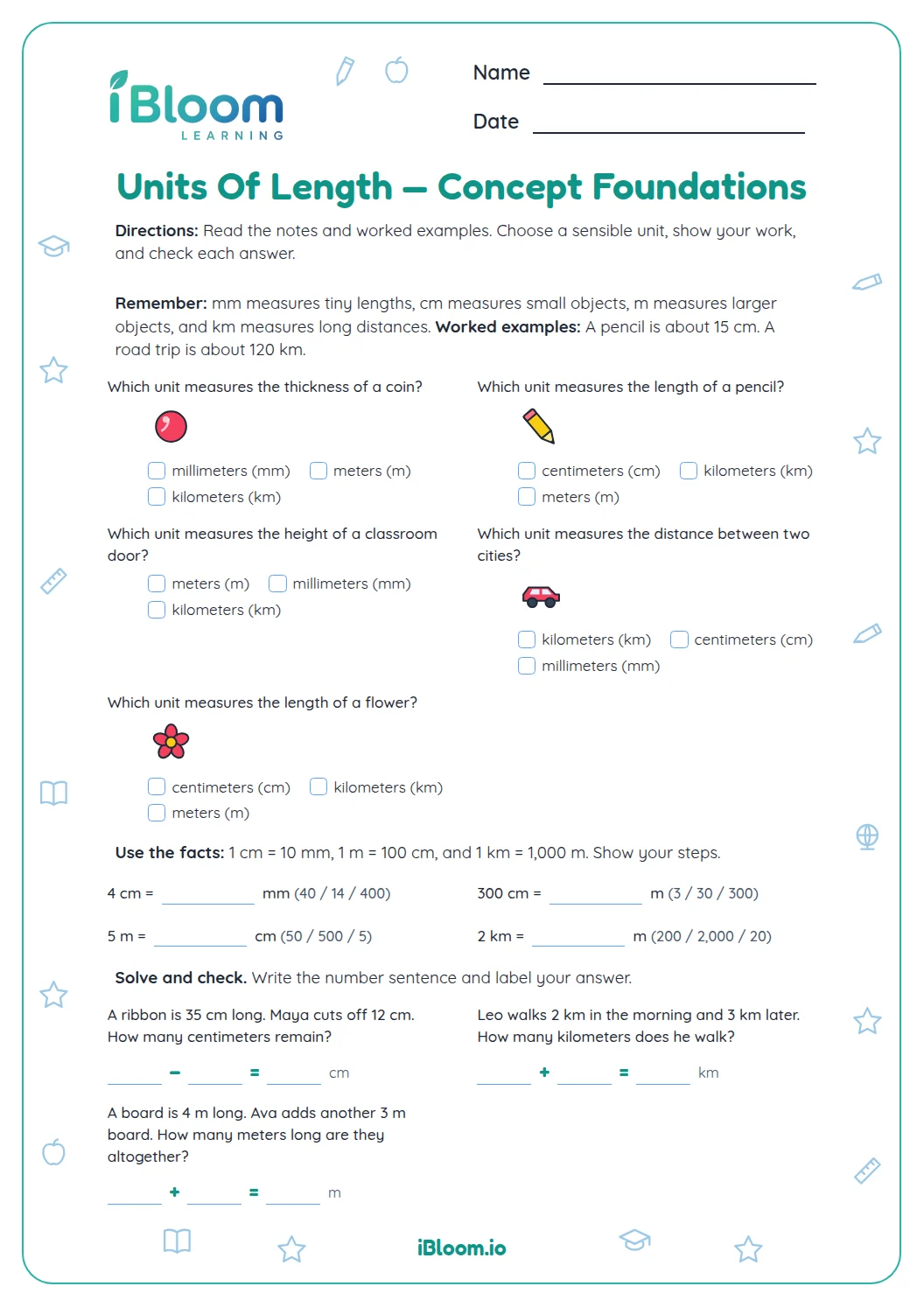
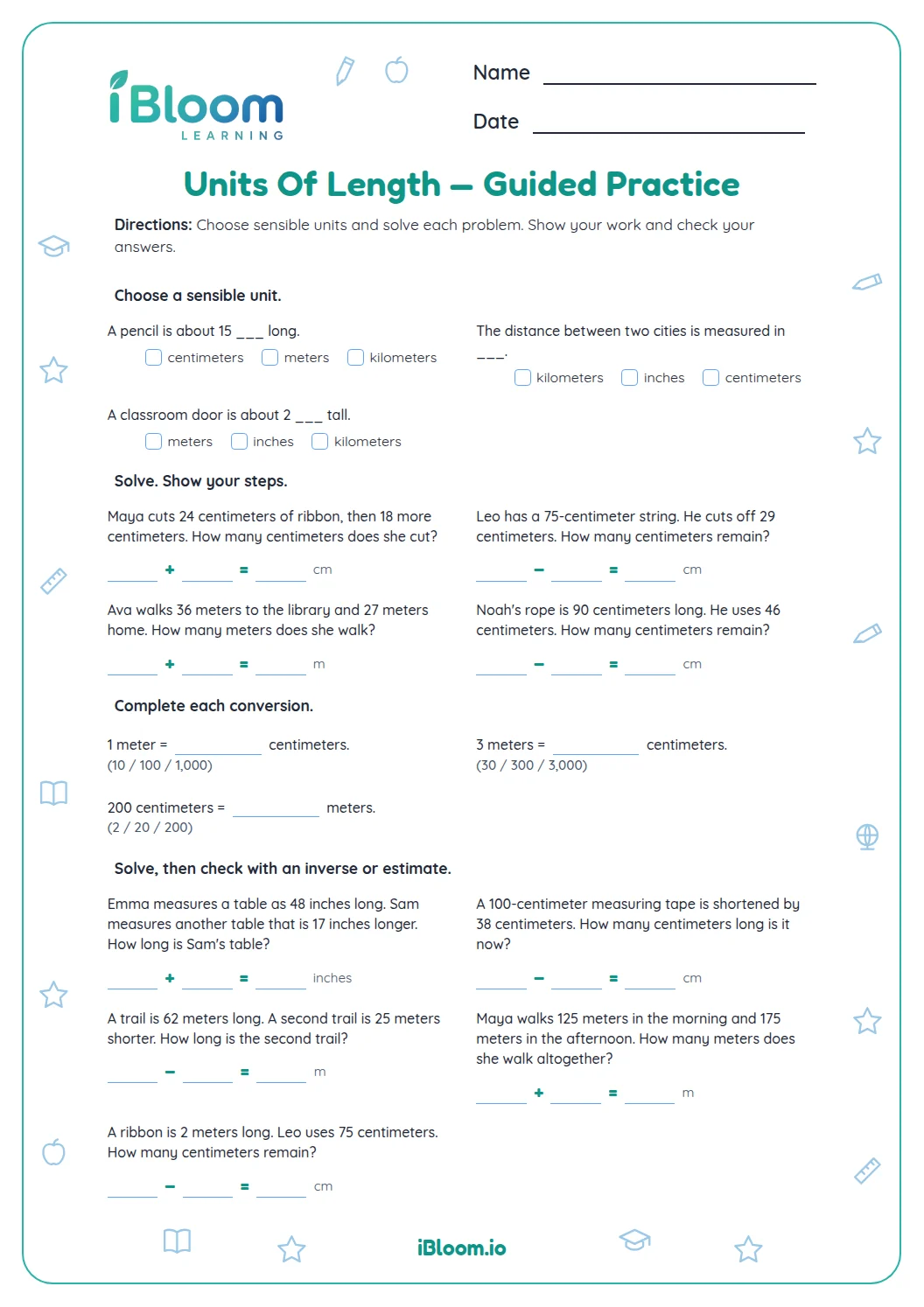
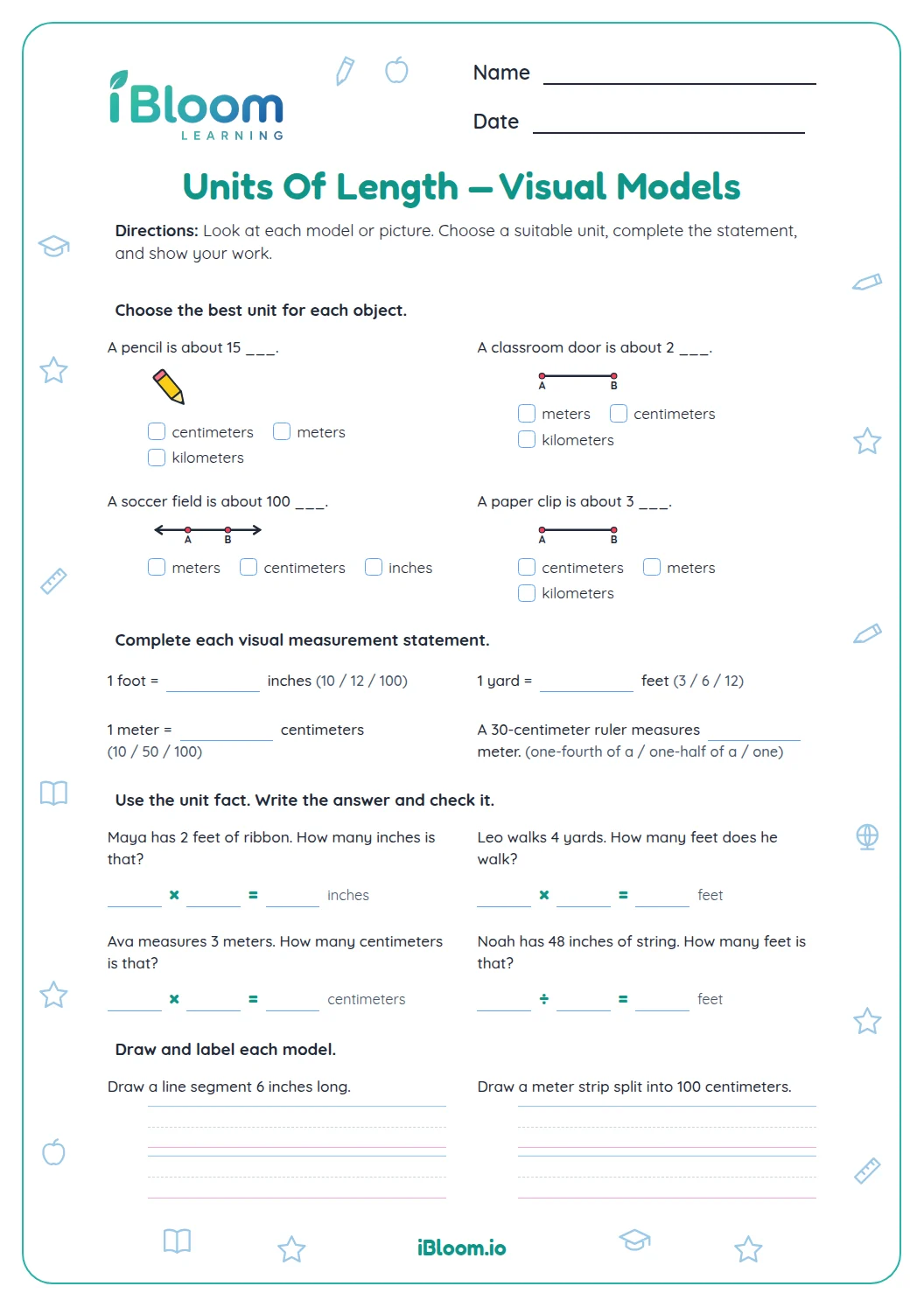
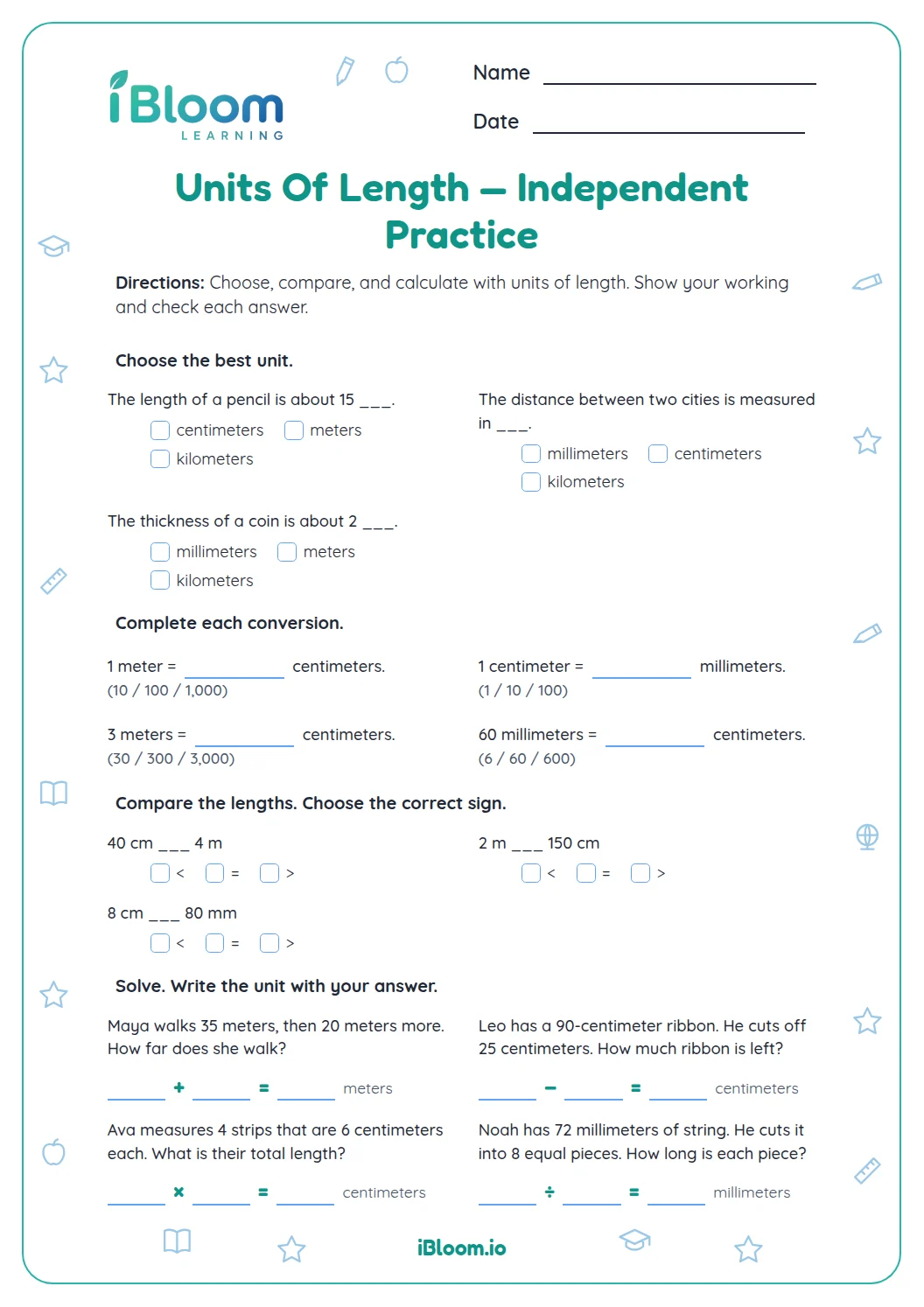
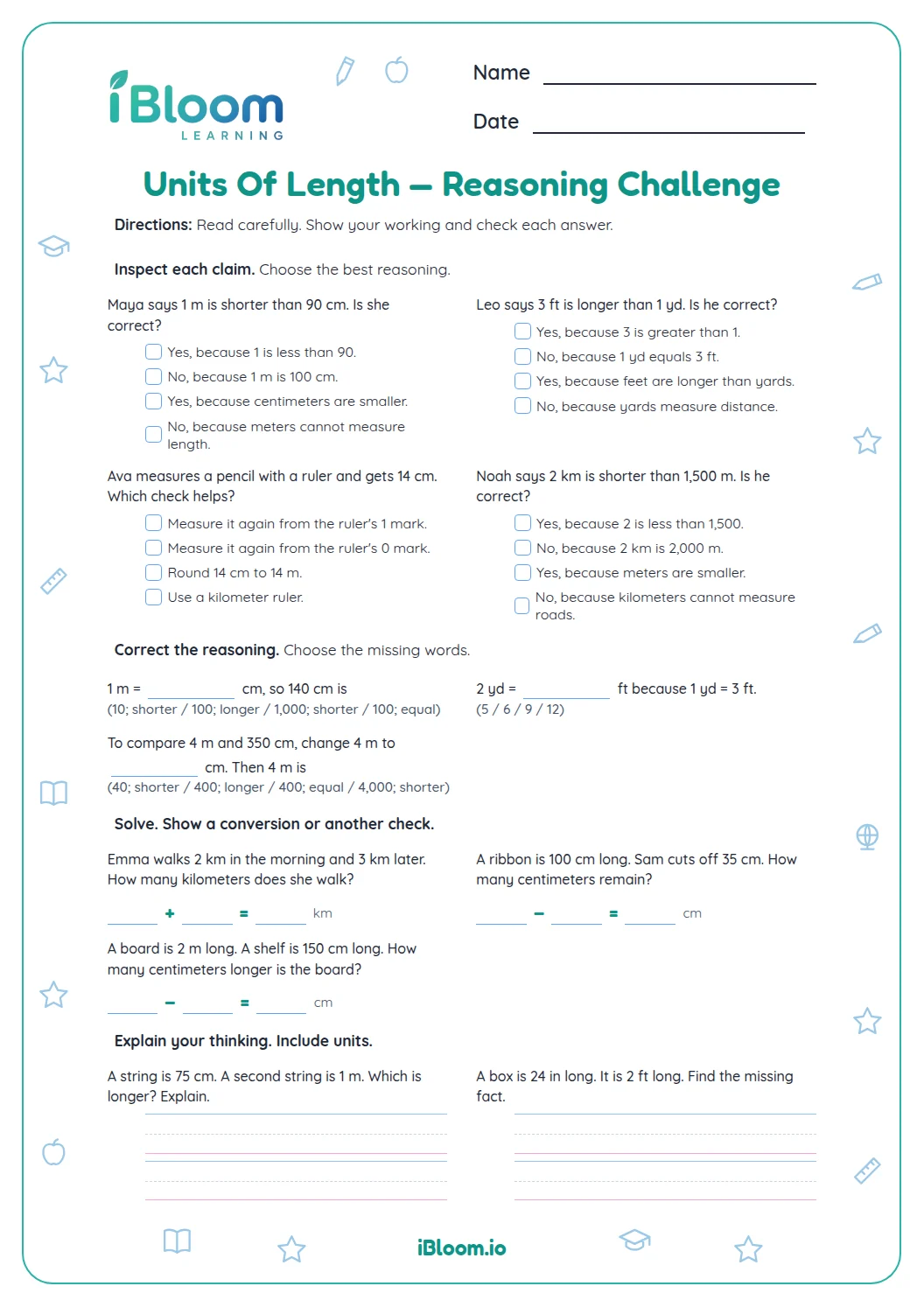
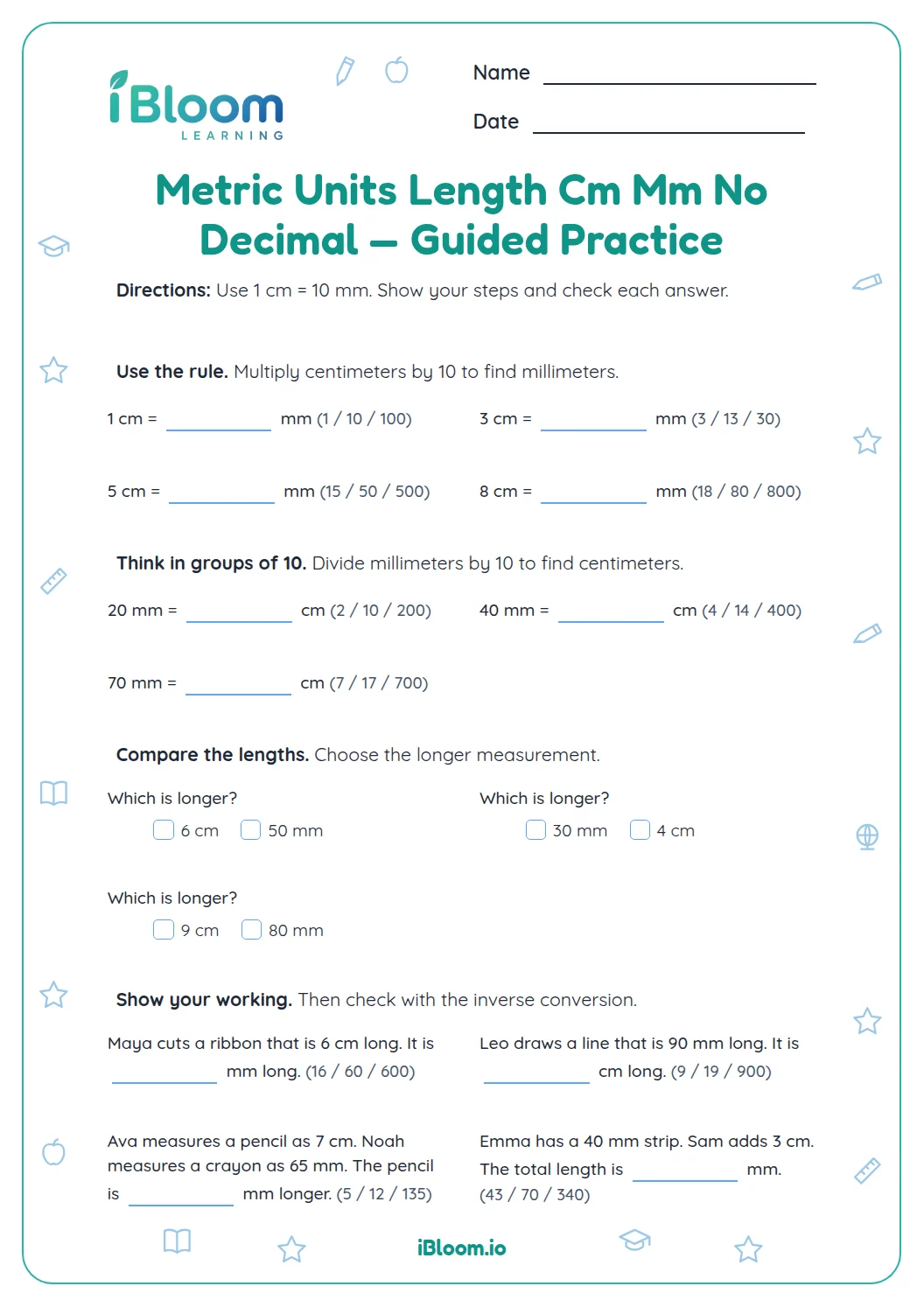
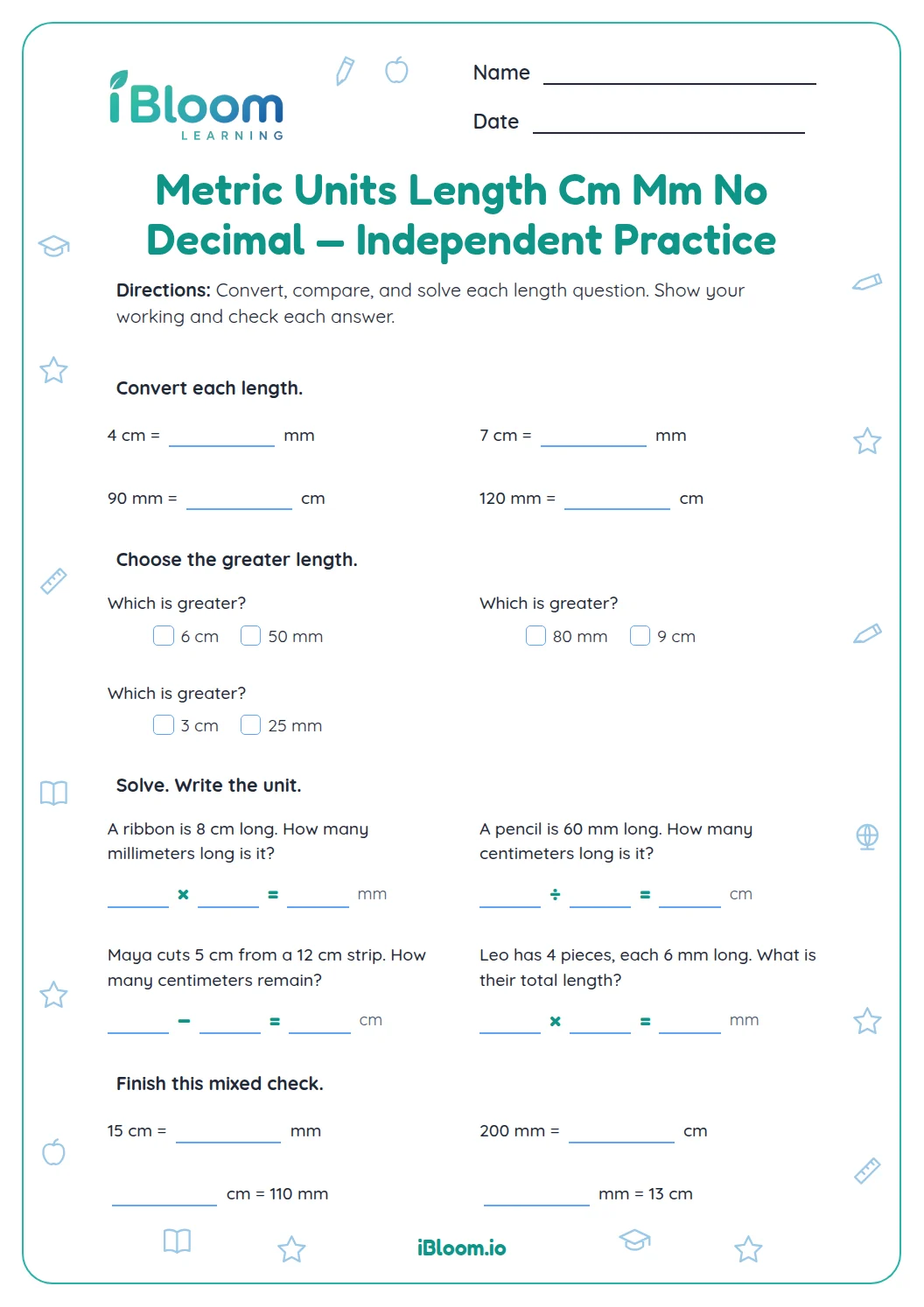
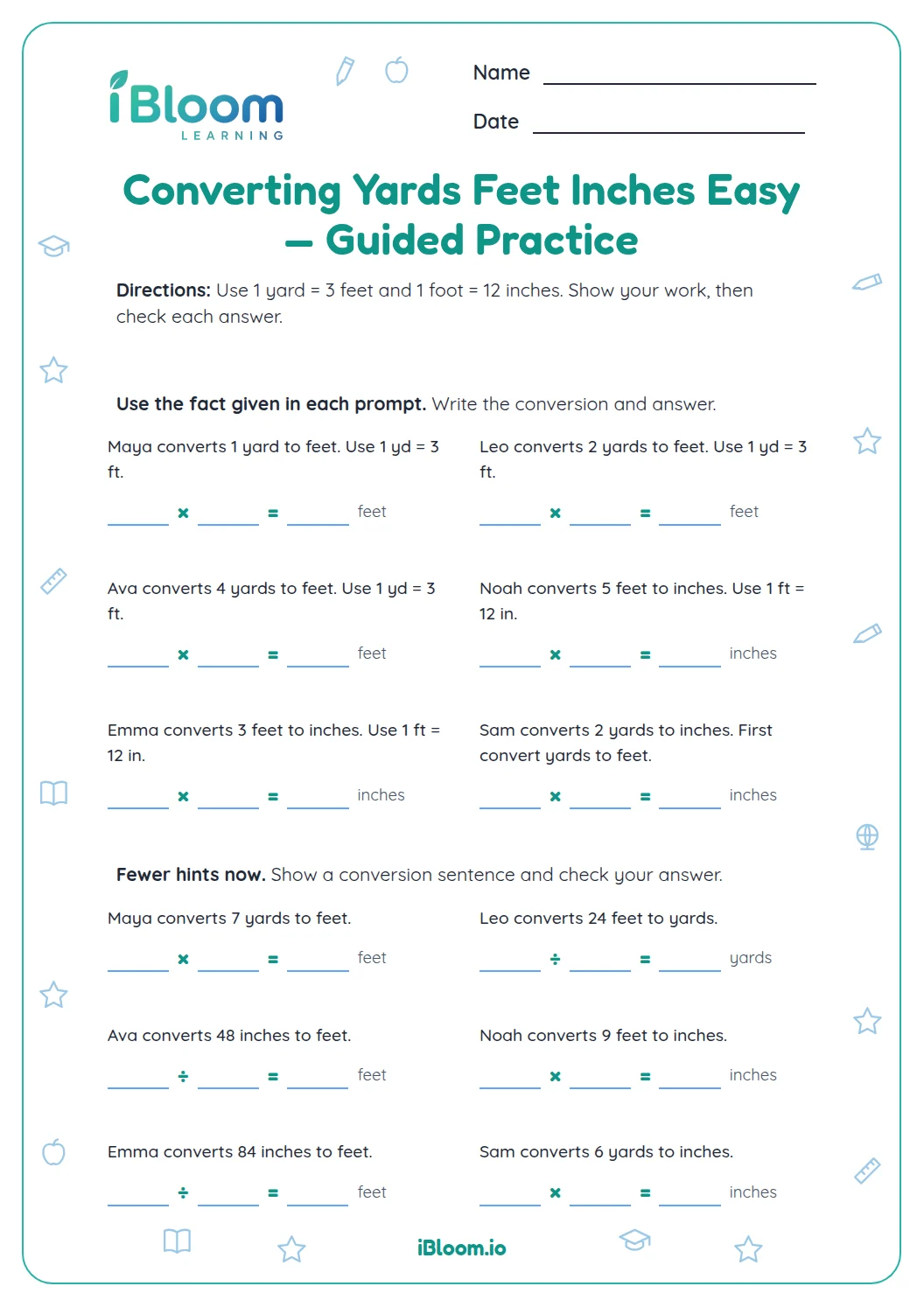
Students select sensible units for familiar objects, convert between meters and centimeters, then add or subtract lengths. Word problems use consistent units when the calculation begins.
What is on this worksheet?
Part A checks unit sense and simple conversions.
Parts B and C use conversions in addition, subtraction and division problems.
- Part A: build accuracy with the first set of questions
- Later parts add explanation and more demanding examples
- Answer key included
How should students approach the harder questions?
Before adding or subtracting, rewrite both measurements in the same unit. One meter equals 100 centimeters.
- 1For 1 m 20 cm minus 95 cm, convert 1 m 20 cm to 120 cm, then subtract: 120 − 95 = 25 cm.
- 2A useful estimate also catches unit mistakes: 4 meters is about 400 centimeters, not 4 centimeters.
Why practice this skill?
Length problems help students choose units and interpret measurements in familiar settings.
How to use this worksheet
- 1Read the direction under each part before beginning.
- 2Work one question at a time and show calculations when a problem asks for them.
- 3Use the answer key to discuss any answer that was difficult to explain.
- 4Ask the student to make one new example using the same skill.
Common mistakes and quick fixes
The mistake
Adding measurements written in different units.
The fix
Convert one measurement so both lengths use the same unit before calculating.
The mistake
Choosing a unit that is too small or too large.
The fix
Estimate the object’s size first. A classroom is measured in meters, while a crayon is measured in centimeters.
What to practice next
Make more practice
Questions parents and teachers ask
How many centimeters are in one meter?
A unit that is too small creates an awkwardly large number, while a unit that is too large may hide useful detail. Estimate the object first: classroom lengths are sensible in meters, but a crayon is more naturally measured in centimeters.
When should I convert units?
Adding measurements written in different units directly mixes unlike quantities. Before calculating, convert one length so that both measurements use the same unit. Then add or subtract, and write the unit in the final answer so its meaning is clear.
How can I check a length answer?
One meter equals 100 centimeters. To change meters into centimeters, multiply by 100; for example, 3 meters is 300 centimeters. To change centimeters into meters, group the centimeters into hundreds, keeping any remaining centimeters when the measurement is not a whole meter.
Why do some questions ask for an explanation?
Convert when a problem compares, adds or subtracts lengths that use different units. For example, change 1 meter 20 centimeters into 120 centimeters before comparing it with 95 centimeters. Choosing one shared unit makes the arithmetic meaningful and prevents mixing meters and centimeters in the same calculation.