Free printable practice
Pictures Objects Practice Activities
Printable Class 1 maths worksheets that help children understand subtraction by looking at pictures, crossing out objects, and counting what remains.
Free printable worksheet PDFs
Preview every available page, then download the free worksheet PDF for home, homeschool, tutoring, or classroom practice.
Preview the exact activity before downloading it.
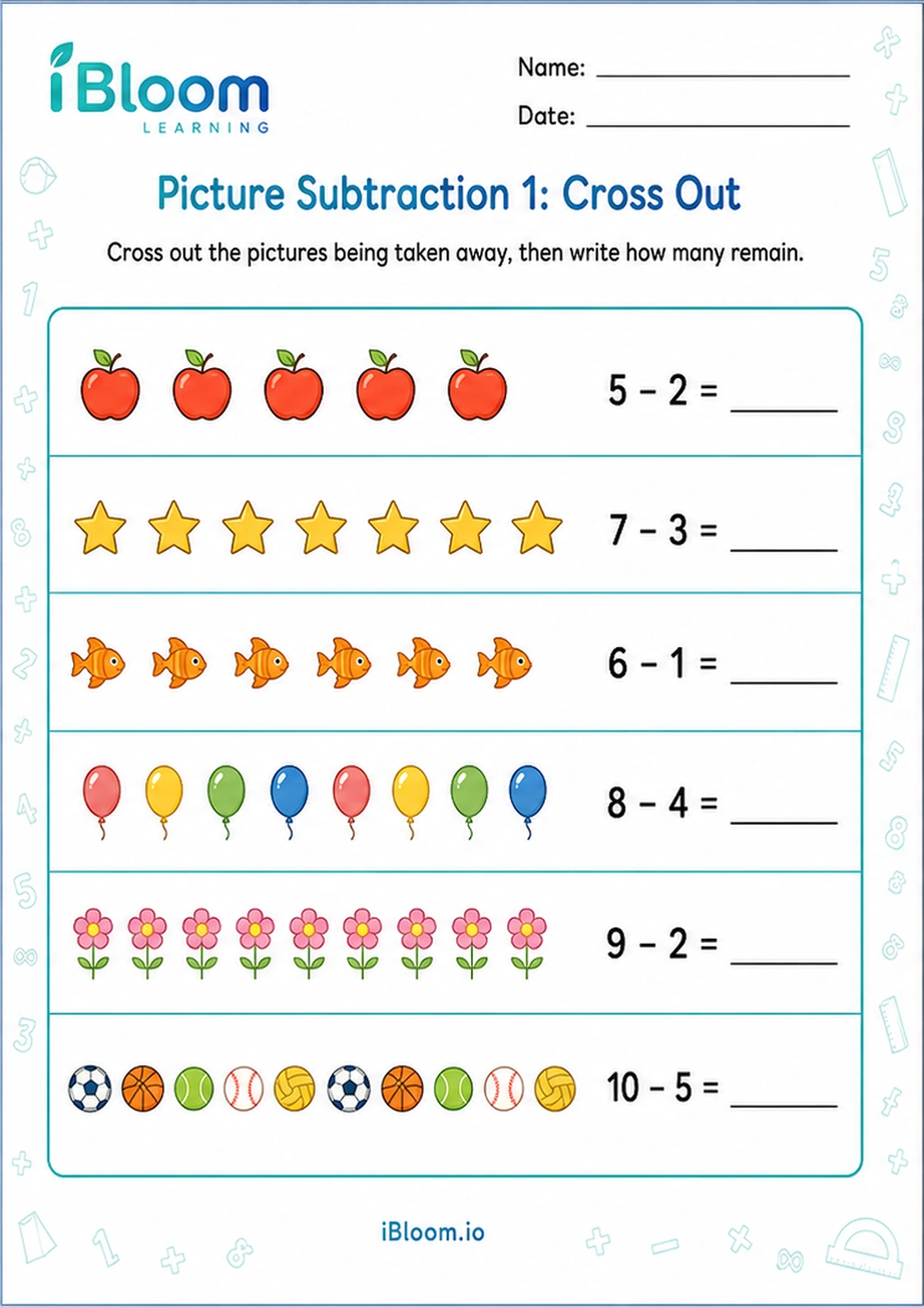 Picture Subtraction 1: Cross OutClass 1 printable practice for Picture Subtraction.Class 1Free PDF preview
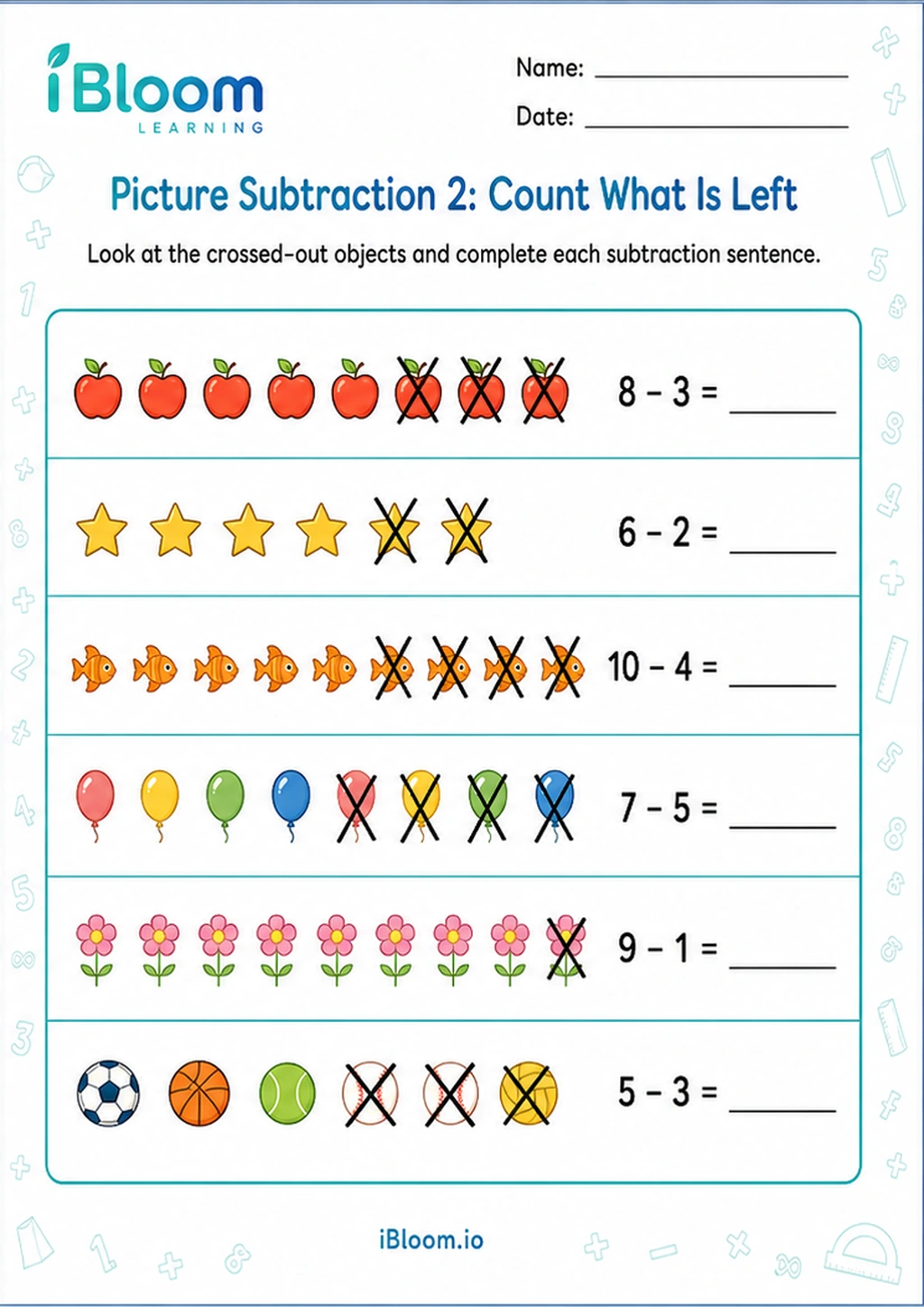 Picture Subtraction 2: Count What Is LeftClass 1 printable practice for Picture Subtraction.Class 1Free PDF preview
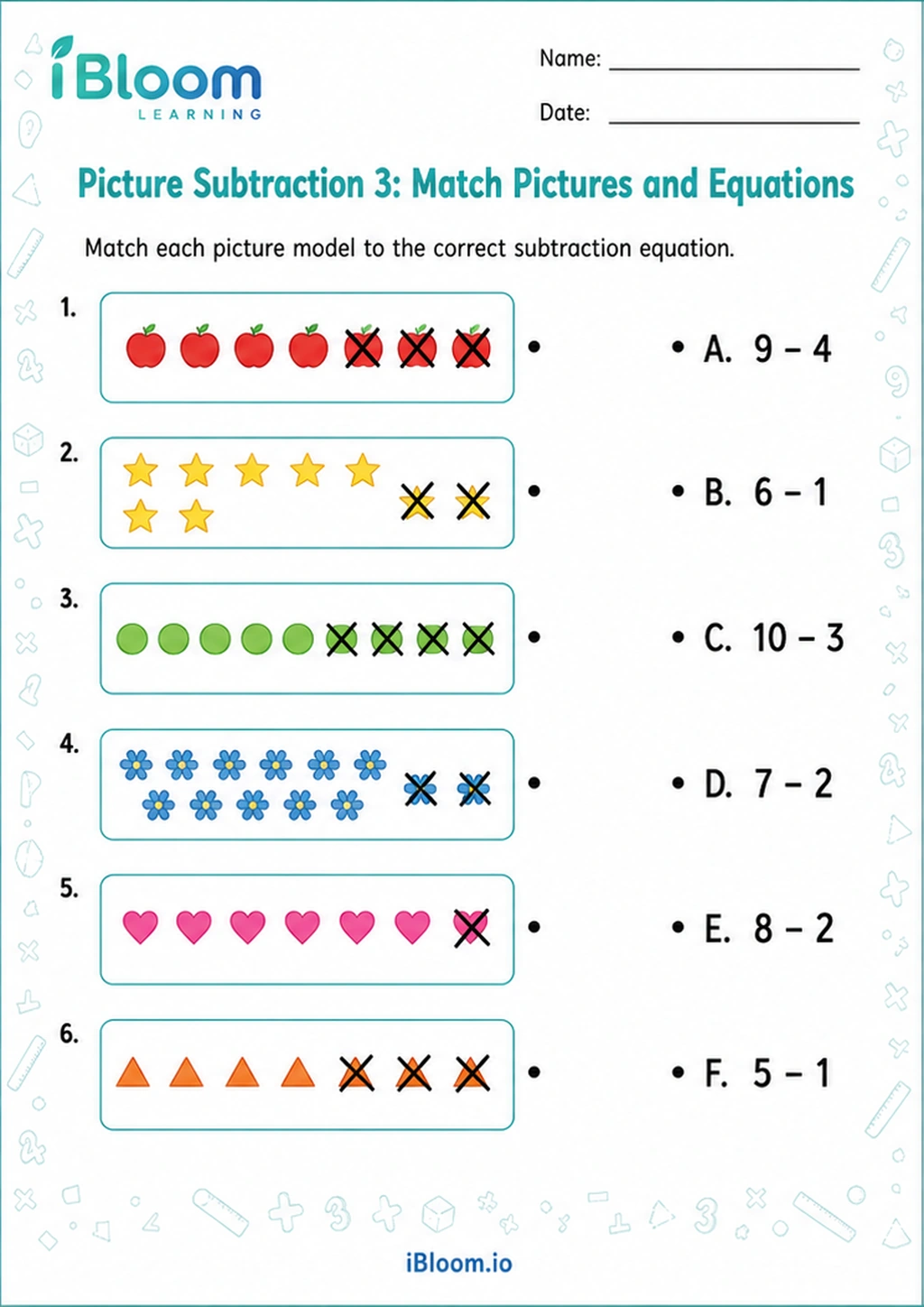 Picture Subtraction 3: Match Pictures and EquationsClass 1 printable practice for Picture Subtraction.Class 1Free PDF preview
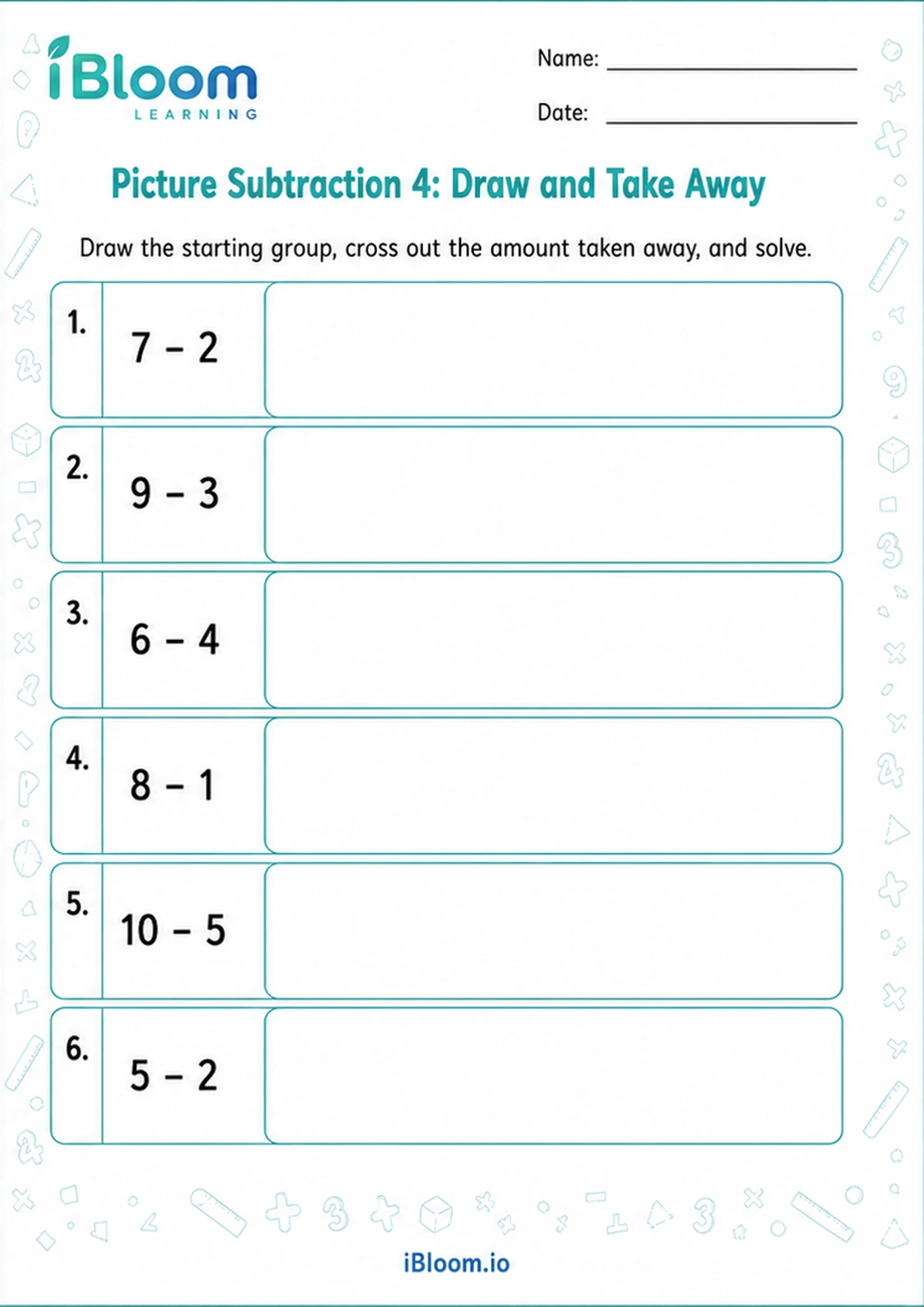 Picture Subtraction 4: Draw and Take AwayClass 1 printable practice for Picture Subtraction.Class 1Free PDF preview
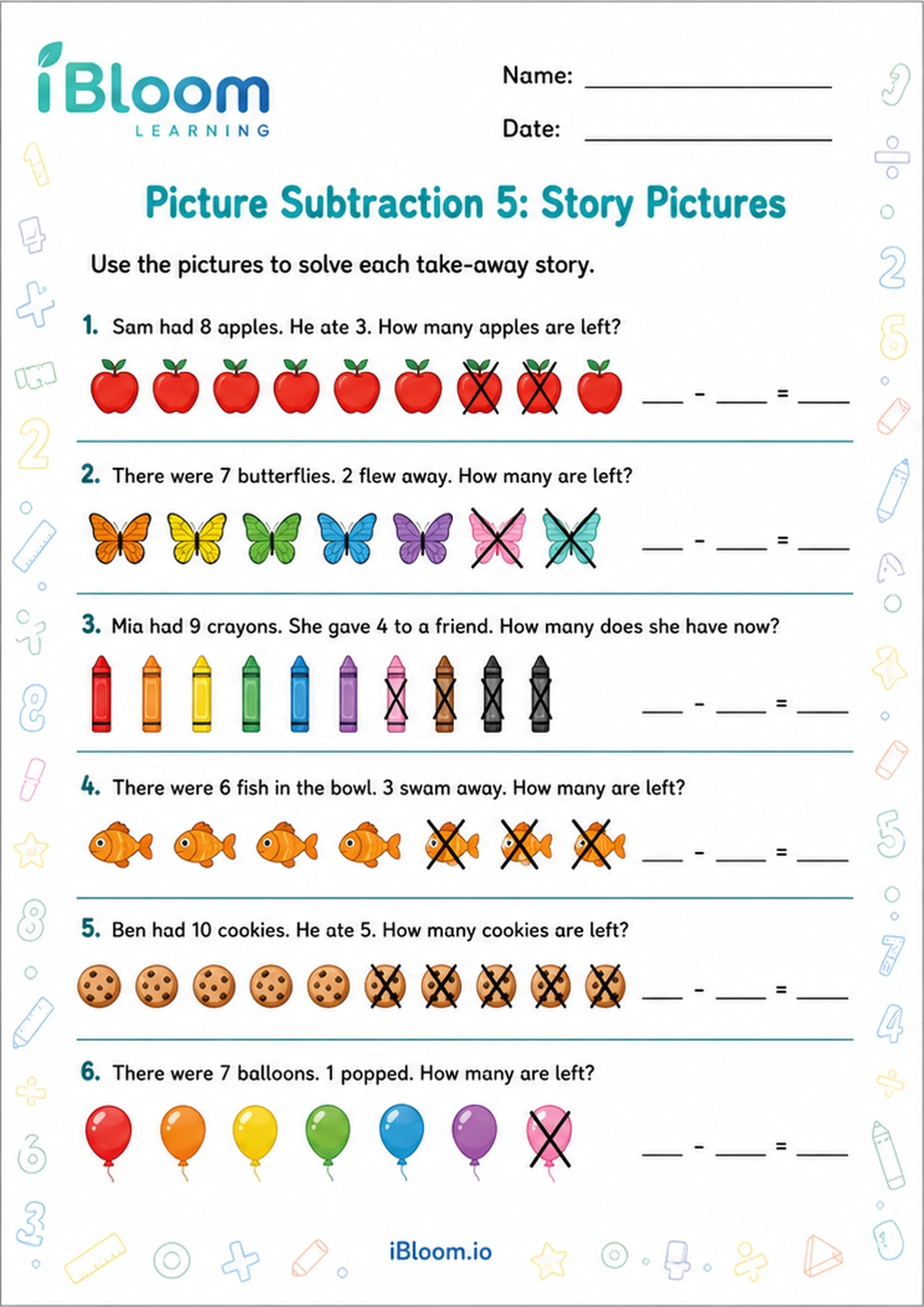 Picture Subtraction 5: Story PicturesClass 1 printable practice for Picture Subtraction.Class 1Free PDF preview
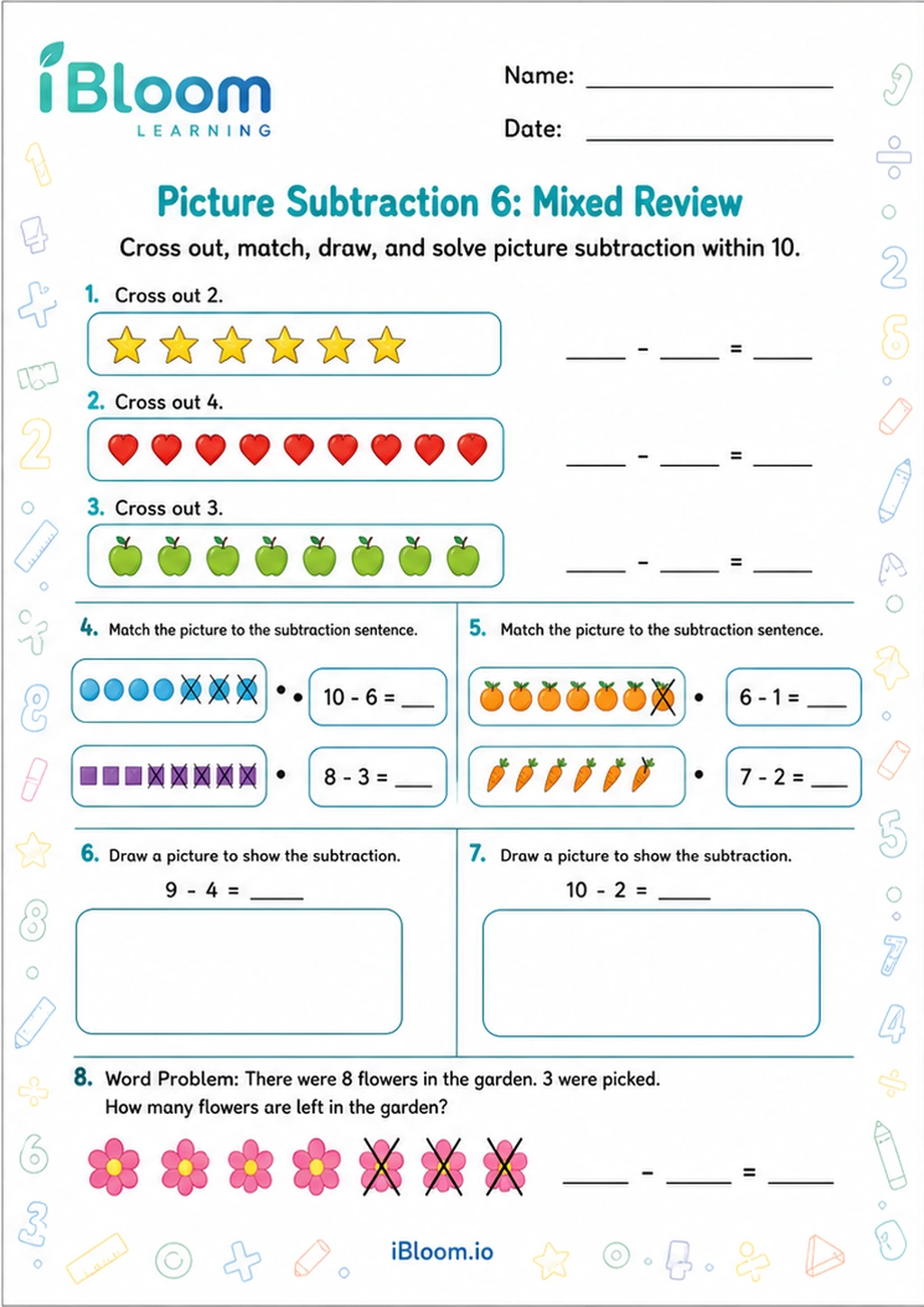 Picture Subtraction 6: Mixed ReviewClass 1 printable practice for Picture Subtraction.Class 1Free PDF preview
Practice that builds confidence
Understanding subtraction with pictures
These Class 1 subtraction worksheets help children see subtraction as “taking away” using clear pictures and familiar objects. Learners practise looking at a group, removing some items, and counting how many are left.
The printable activities include visual subtraction tasks such as crossing out objects, matching pictures to subtraction sentences, and writing the remaining number. They are designed for early maths practice before children move fully to abstract sums.
Pictures make subtraction concrete for Class 1 children. Instead of starting with only numbers, learners can see a group of balls, fruits, stars, or other objects, take some away, and count the objects that remain. This builds the meaning of words such as subtract, take away, left, minus, and equals.

How the practice progresses
The worksheets begin with simple visual actions: count the whole group, cross out the objects being taken away, then count what is left. Children then connect the picture to a subtraction sentence, for example seeing objects removed and writing the missing answer after the equals sign. This gradual shift helps them understand that a subtraction sum records what happened in the picture.
A simple parent routine
At home, give your child buttons, crayons, or small toys. Say, “There are some crayons. Take away these. How many are left?” Ask the child to touch and count the remaining objects slowly. Then show a worksheet problem and use the same language: “First count all, then cross out, then count what is left.” Keep the focus on explaining the action, not just writing the answer.

Classroom uses for teachers
Teachers can use these pages during subtraction introduction, revision, maths centres, or small-group support. They are useful for checking whether children understand the idea of taking away before expecting quick written answers. Pupils can also colour the remaining objects or circle the answer to show their thinking.

Common errors to watch for
Some children count the crossed-out objects instead of the remaining objects. Others copy the first number as the answer or confuse the minus sign with addition. Encourage them to point to each object and say whether it is “taken away” or “left.” Neat crossing out also matters, because messy marks can make the picture hard to read.
Free printable PDF download
Use this Class 1 subtraction with pictures worksheet page to preview the activity, print it, or download it as a PDF for quick practice. It works well for homework, homeschool lessons, tutoring, morning work, revision, and classroom centers.
Answers and answer key support
After the child completes the worksheet independently, parents and teachers can use the answer support or answer key information to check the work, review mistakes, and choose the next practice step.
Why iBloom worksheets help
iBloom worksheets keep the subtraction idea visible. The child-friendly pictures, clear spaces for answers, and repeated take-away patterns help learners build confidence step by step. A helpful strategy for children is: “Count all, cross out, count left, write the number.”
Helpful answers
Frequently asked questions
What skill do these Class 1 worksheets teach?
They teach subtraction as taking away from a group of pictures or objects, then counting how many remain.
Why use pictures before written subtraction sums?
Pictures help children understand what subtraction means. They can see the objects being removed before working with only numbers and symbols.
How should my child solve a picture subtraction problem?
Ask your child to count all the objects, cross out the number being taken away, count the objects left, and then write the answer.
What if my child counts the crossed-out objects as the answer?
Remind your child that the answer is what is left, not what was taken away. Have them point only to the uncrossed objects while counting.
Can these worksheets be used in a classroom maths centre?
Yes. They work well for independent practice, small-group teaching, revision, or checking whether pupils understand subtraction with visual support.
Is this Class 1 subtraction with pictures worksheet free?
Yes. You can preview it for free and use the printable worksheet for home or classroom practice.
Can I download this Class 1 subtraction with pictures worksheet as a PDF?
Yes. Use the worksheet download option to save a printable PDF, or print the worksheet directly from the page.
Does this Class 1 subtraction with pictures worksheet include answers or an answer key?
When the activity has fixed answers, iBloom includes answer support so parents and teachers can check the completed worksheet.