Free printable practice
Multiply By 2 3 4 Practice Activities
Printable maths practice for building quick, accurate multiplication facts with 2, 3 and 4 through drills, patterns and fact recall.
Free printable worksheet PDFs
Preview every available page, then download the free worksheet PDF for home, homeschool, tutoring, or classroom practice.
Preview the exact activity before downloading it.
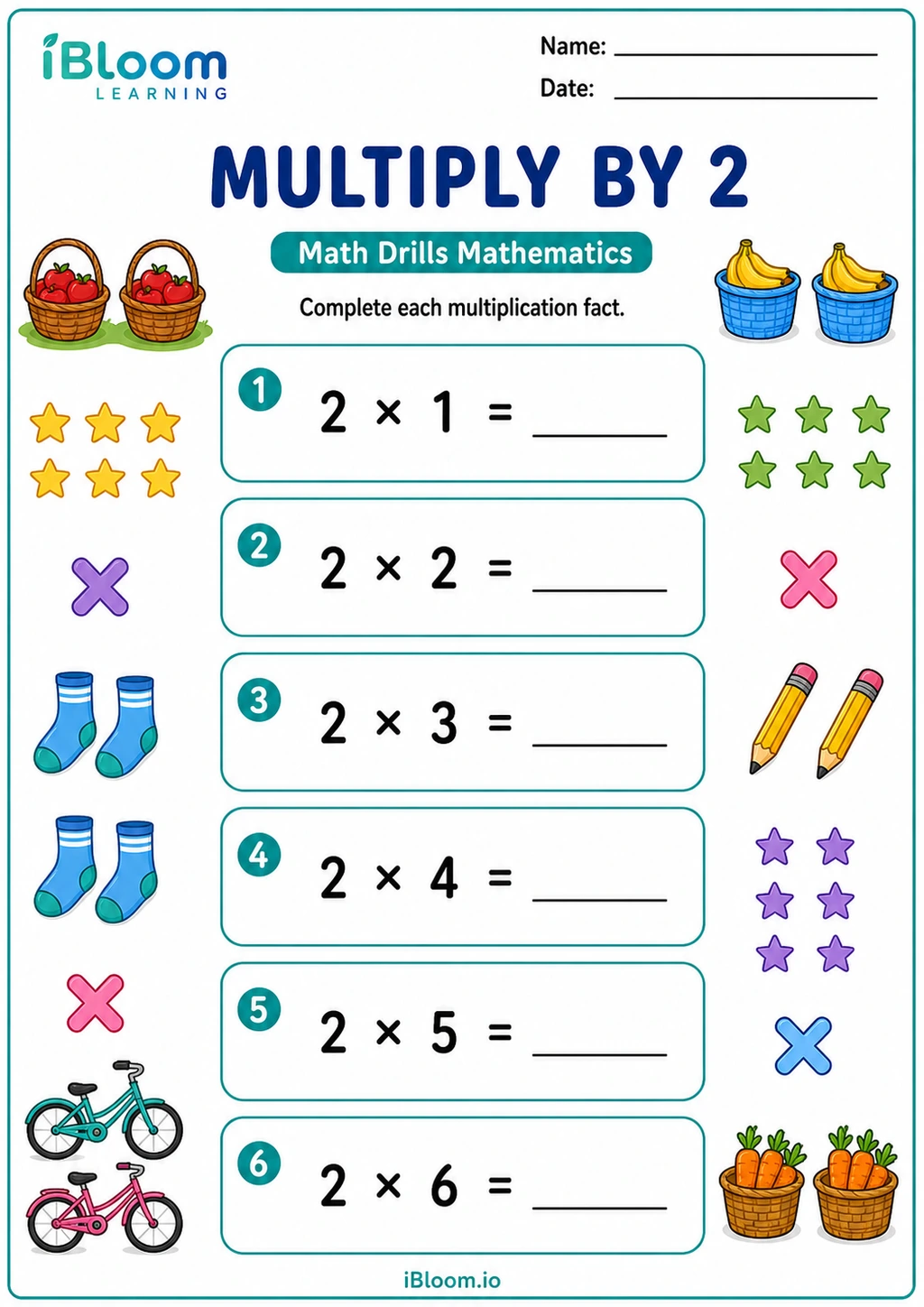 Multiply by 2Focused multiply by 2, 3, and 4 practice for Math Drills learners.Math DrillsFree PDF preview
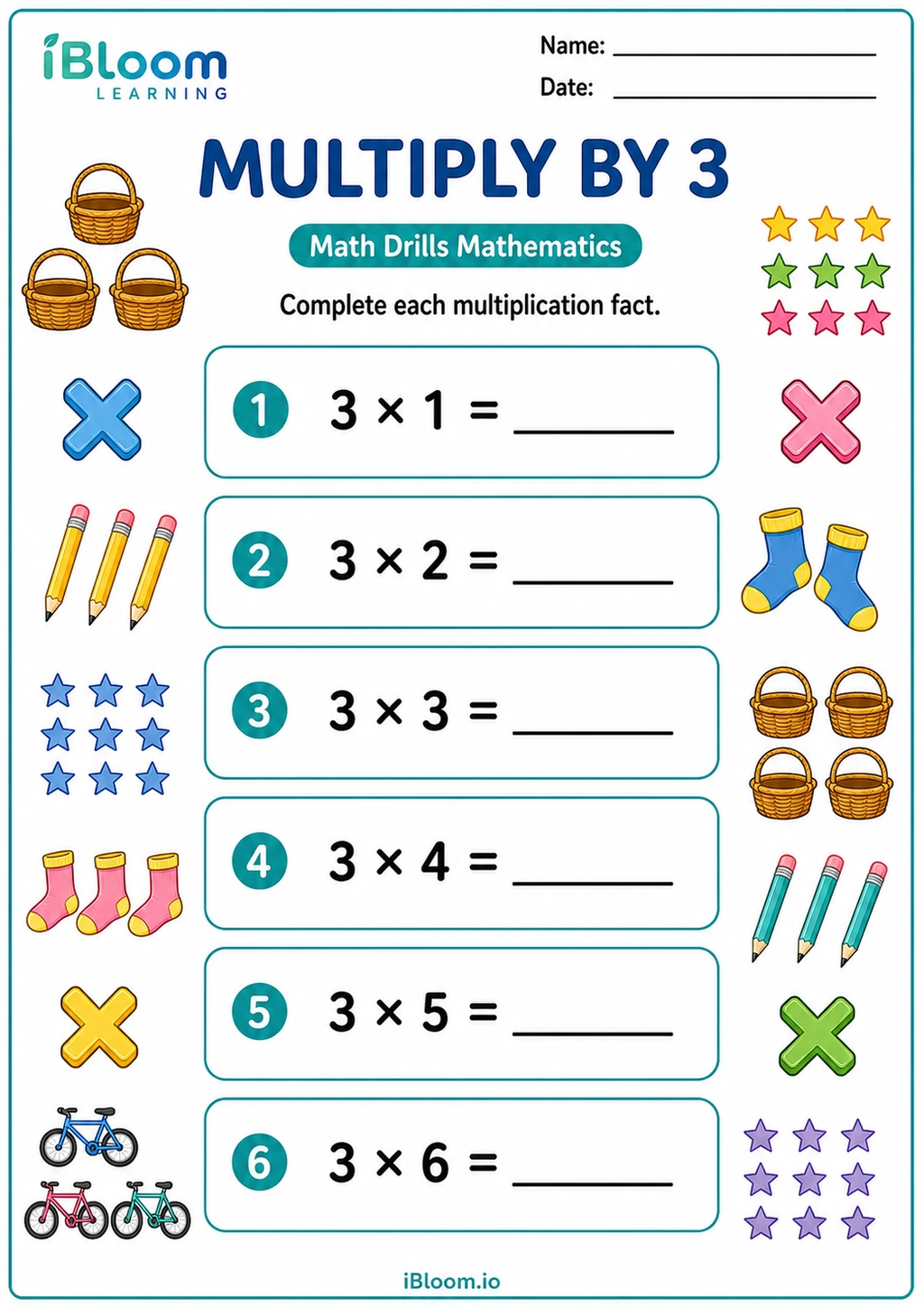 Multiply by 3Focused multiply by 2, 3, and 4 practice for Math Drills learners.Math DrillsFree PDF preview
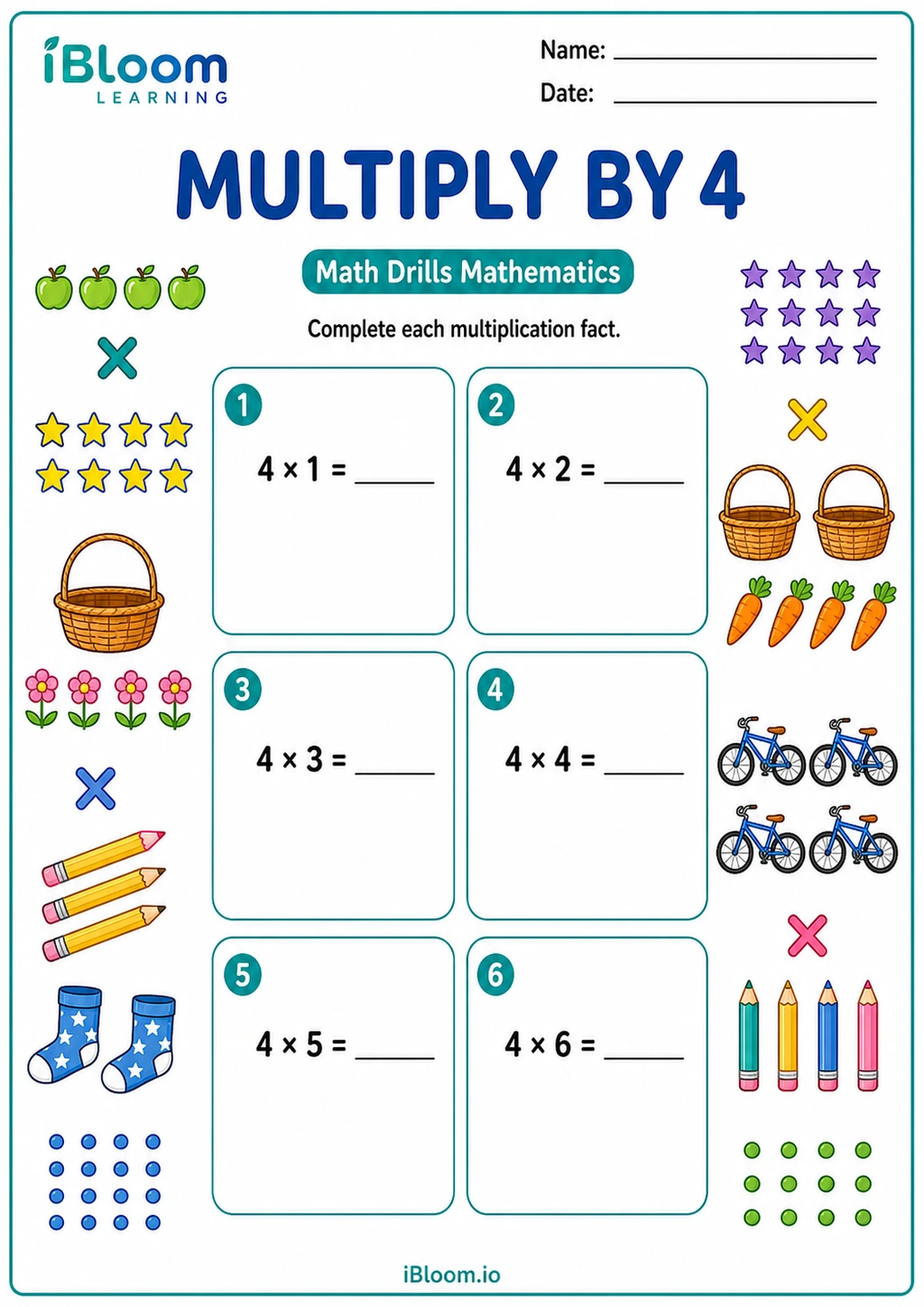 Multiply by 4Focused multiply by 2, 3, and 4 practice for Math Drills learners.Math DrillsFree PDF preview
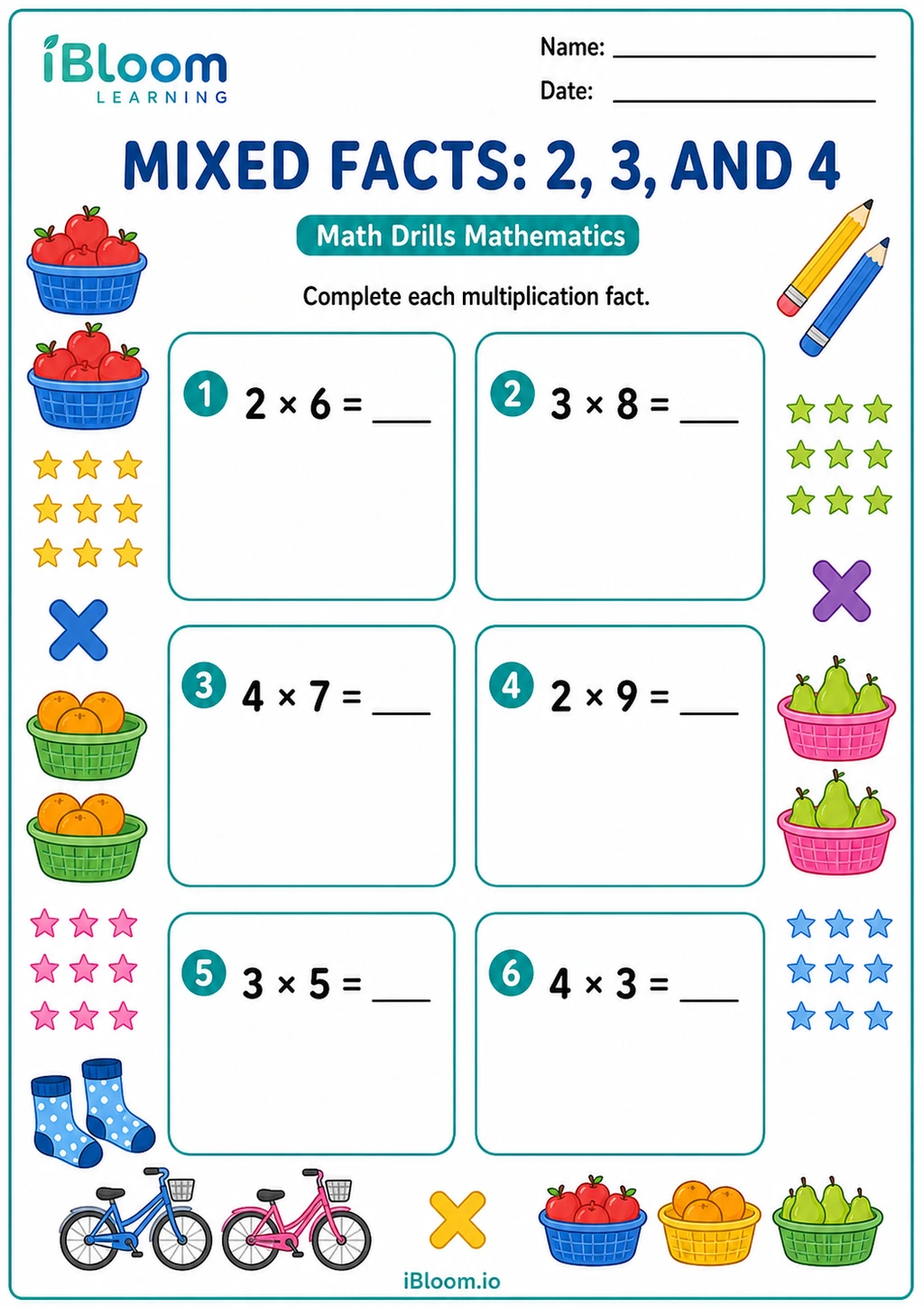 Mixed Facts: 2, 3, and 4Focused multiply by 2, 3, and 4 practice for Math Drills learners.Math DrillsFree PDF preview
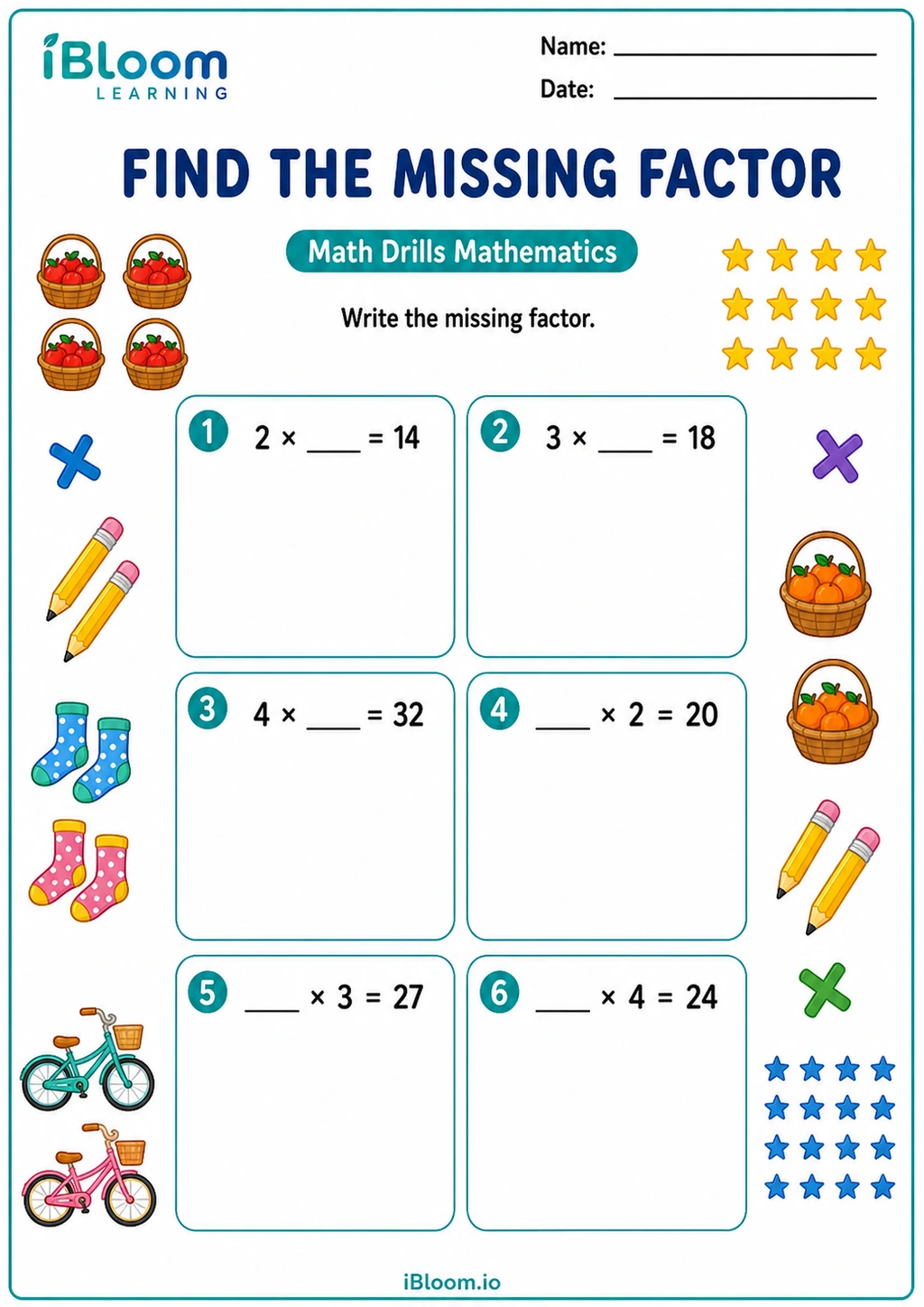 Find the Missing FactorFocused multiply by 2, 3, and 4 practice for Math Drills learners.Math DrillsFree PDF preview
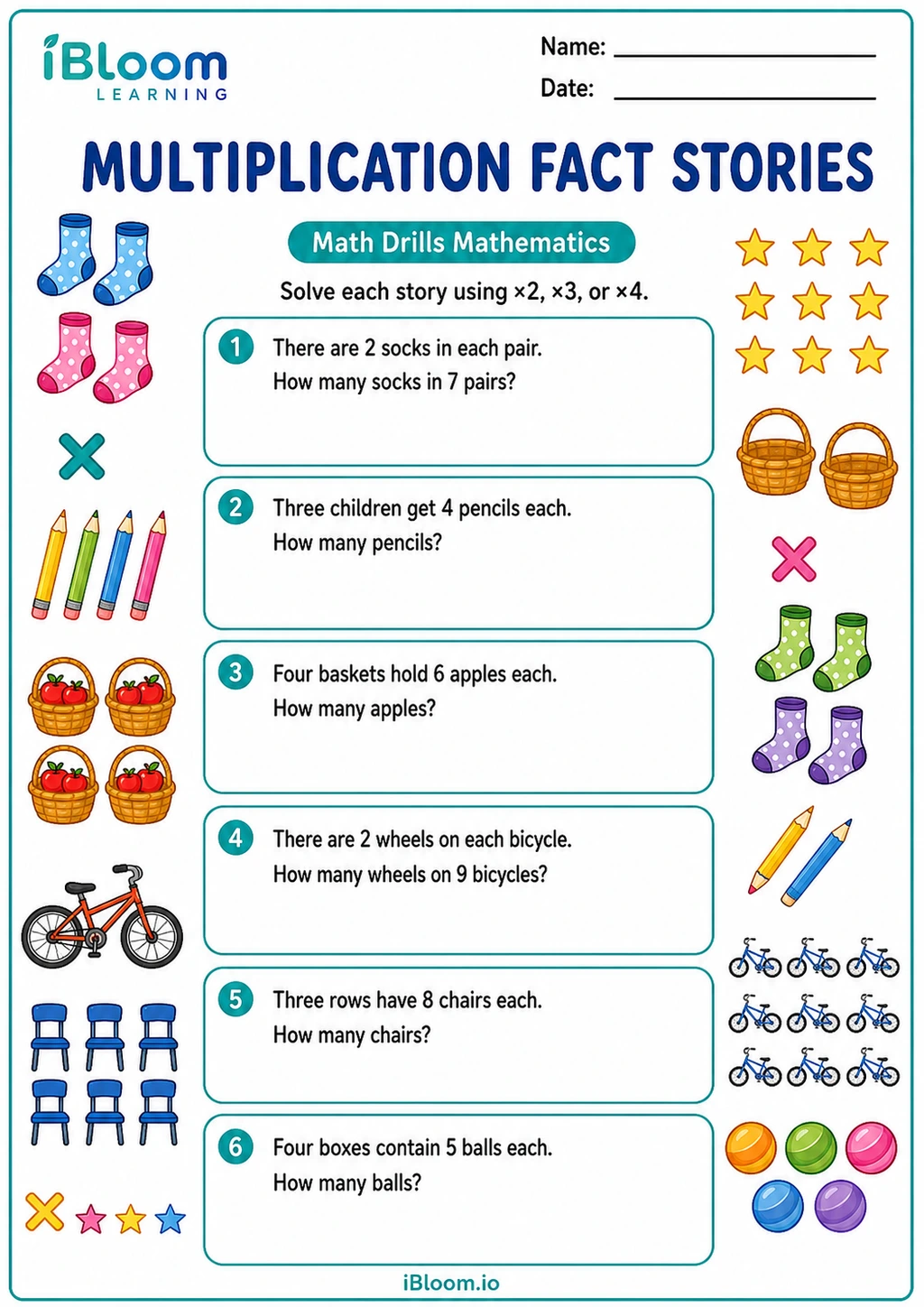 Multiplication Fact StoriesFocused multiply by 2, 3, and 4 practice for Math Drills learners.Math DrillsFree PDF preview
Practice that builds confidence
Building from patterns to facts
These multiplication fact worksheets help children practise multiplying by 2, 3 and 4 with accuracy and growing confidence. Learners strengthen skip counting, equal groups, repeated addition and quick recall for the first set of essential times table facts.
The printable activities include focused practice pages, mixed fact questions and simple visual thinking tasks that keep attention on the 2, 3 and 4 times tables. They are useful for home revision, classroom drills, maths centres or extra support after a lesson.
Multiplying by 2, 3 and 4 is often the bridge between counting and fluent times table recall. Children first notice patterns: doubles for 2, count-on groups of 3, and double-doubles for 4. Worksheets can connect equations such as 3 × 4 to three equal groups of four, helping learners see that multiplication is not just memorising answers.

A clear progression for practice
Start with one table at a time so the child can hear and see the rhythm: 2, 4, 6, 8; then 3, 6, 9; then 4, 8, 12. Move to mixed questions only after the separate facts feel familiar. Include both orders, such as 2 × 4 and 4 × 2, so children begin to use the commutative property without needing a formal label.
Parent routine at home
Choose one small set of facts for the day. Ask your child to skip count aloud, solve a few written questions, and explain one answer using equal groups or an array drawn with dots. If an answer is wrong, avoid rushing to the correction; ask, “Which table are you in?” or “Can you count the groups again?” End by revisiting two facts that were tricky.

Classroom uses for teachers
Teachers can use these printables as warm-ups before a multiplication lesson, quick checks after teaching a table, or independent practice in maths centres. Mixed pages are helpful for spotting whether pupils are recalling facts or still counting from one each time. Pair work also works well: one child reads the fact, the other explains the strategy.

Common errors to watch for
Some children mix the 3 and 4 times tables, skip a count in the sequence, or treat 3 × 4 as 3 + 4. Others know the chant but cannot connect it to the written equation. Encourage them to underline the multiplier, draw equal groups when unsure, and check whether the answer is reasonable.
Free printable PDF download
Use this multiply by 2 3 4 worksheet page to preview the activity, print it, or download it as a PDF for quick practice. It works well for homework, homeschool lessons, tutoring, morning work, revision, and classroom centers.
Answers and answer key support
After the child completes the worksheet independently, parents and teachers can use the answer support or answer key information to check the work, review mistakes, and choose the next practice step.
Why iBloom worksheets help
iBloom practice keeps the focus narrow: only multiplication by 2, 3 and 4. This reduces overload while giving enough repetition for fluency. A child-friendly strategy is “say the table, picture the groups, then write the fact.” That simple routine supports both mental maths and written accuracy.
Helpful answers
Frequently asked questions
What facts do these worksheets focus on?
They focus on multiplication facts where children multiply by 2, 3 and 4, including separate practice and mixed questions for these tables.
Should my child memorise the 2, 3 and 4 times tables first?
Memorising helps, but understanding should come alongside it. Encourage skip counting, equal groups and simple arrays so your child knows why each fact works.
How can I help if my child confuses the 3 and 4 times tables?
Practise them separately for a few sessions, say the skip-counting sequence aloud, and ask your child to draw groups for tricky facts before returning to mixed practice.
Are these worksheets useful for quick maths drills?
Yes. They are designed for focused multiplication fact practice and can be used for oral warm-ups, written drills, revision sheets or maths centre activities.
What is a good strategy for multiplying by 4?
A useful strategy is double-doubles. For example, to find 4 groups of a number, double the number and then double it again.
Is this multiply by 2 3 4 worksheet free?
Yes. You can preview it for free and use the printable worksheet for home or classroom practice.
Can I download this multiply by 2 3 4 worksheet as a PDF?
Yes. Use the worksheet download option to save a printable PDF, or print the worksheet directly from the page.
Does this multiply by 2 3 4 worksheet include answers or an answer key?
When the activity has fixed answers, iBloom includes answer support so parents and teachers can check the completed worksheet.