Free printable practice
Adding Objects Practice Activities
Picture-based preschool and kindergarten addition worksheets where children combine object groups, count the total, and begin reading simple addition sentences.
Free printable worksheet PDFs
Preview every available page, then download the free worksheet PDF for home, homeschool, tutoring, or classroom practice.
Preview the exact activity before downloading it.
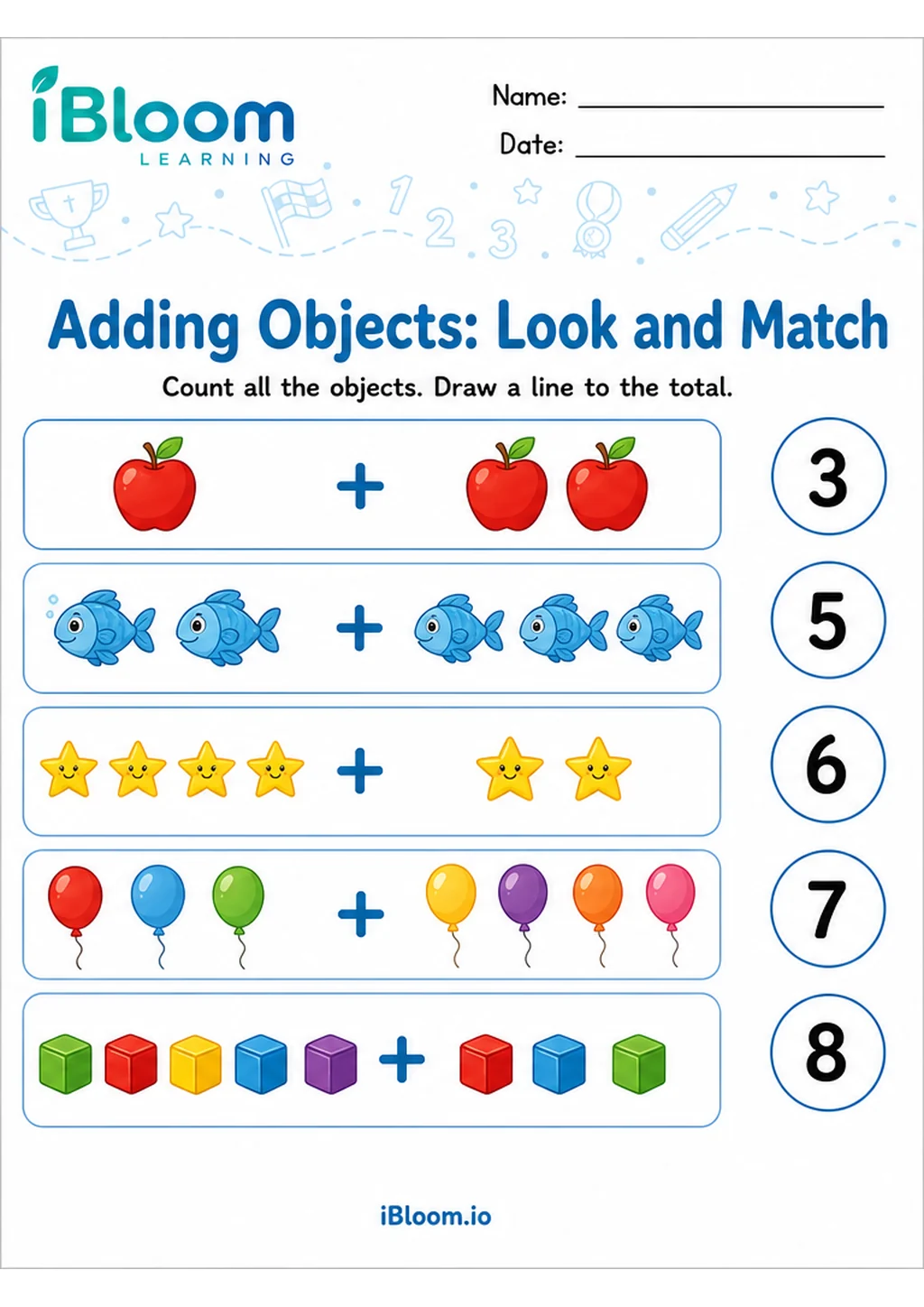 Adding Objects — Look and MatchPicture-based preschool and kindergarten addition worksheets where children combine object groups, count the total, and begin reading simple addition sentences. This look and match worksheet provides a distinct, age-appropriate way to practise the same lesson.Preschool, KindergartenFree PDF preview
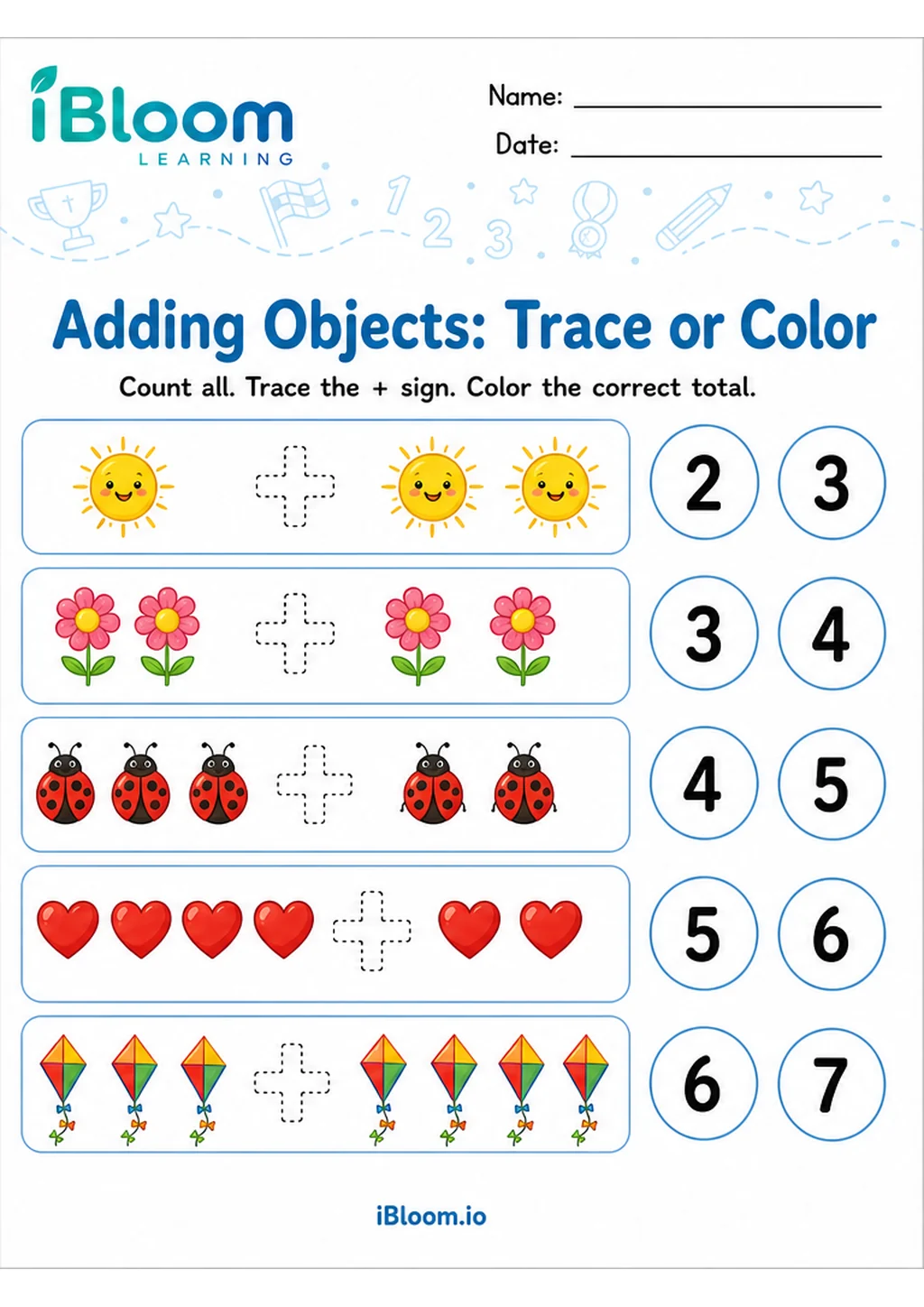 Adding Objects — Trace or ColorPicture-based preschool and kindergarten addition worksheets where children combine object groups, count the total, and begin reading simple addition sentences. This trace or color worksheet provides a distinct, age-appropriate way to practise the same lesson.Preschool, KindergartenFree PDF preview
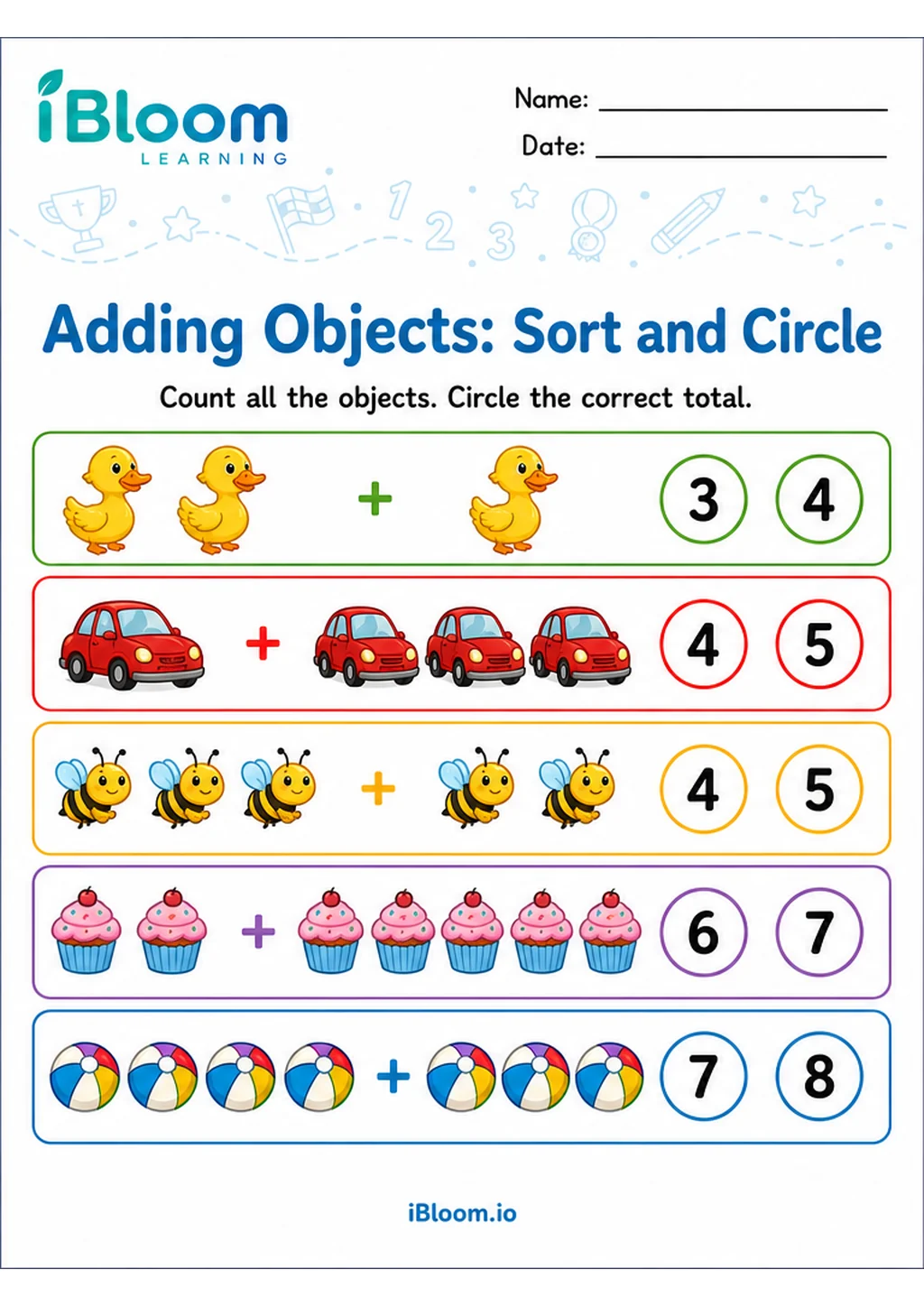 Adding Objects — Sort and CirclePicture-based preschool and kindergarten addition worksheets where children combine object groups, count the total, and begin reading simple addition sentences. This sort and circle worksheet provides a distinct, age-appropriate way to practise the same lesson.Preschool, KindergartenFree PDF preview
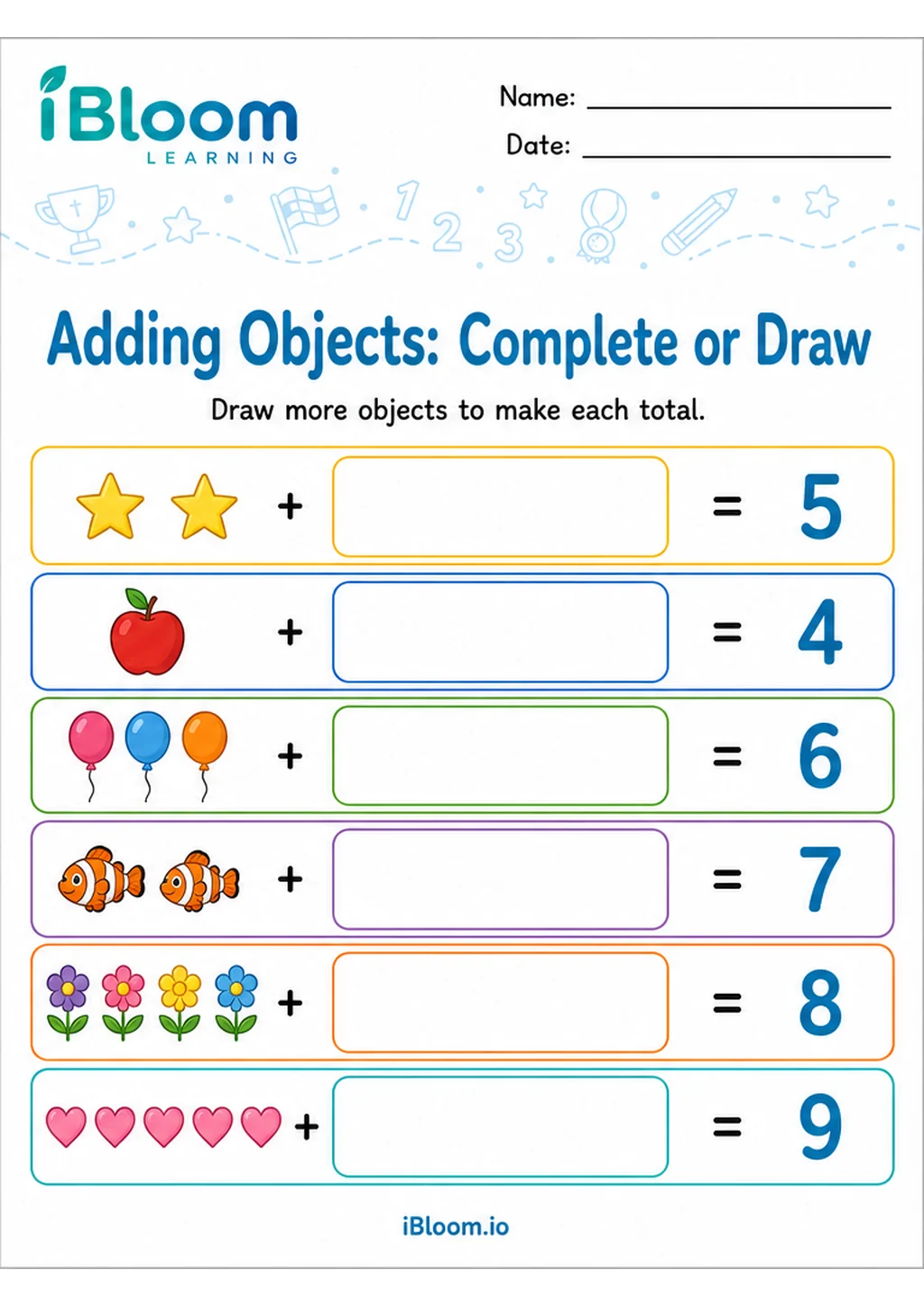 Adding Objects — Complete or DrawPicture-based preschool and kindergarten addition worksheets where children combine object groups, count the total, and begin reading simple addition sentences. This complete or draw worksheet provides a distinct, age-appropriate way to practise the same lesson.Preschool, KindergartenFree PDF preview
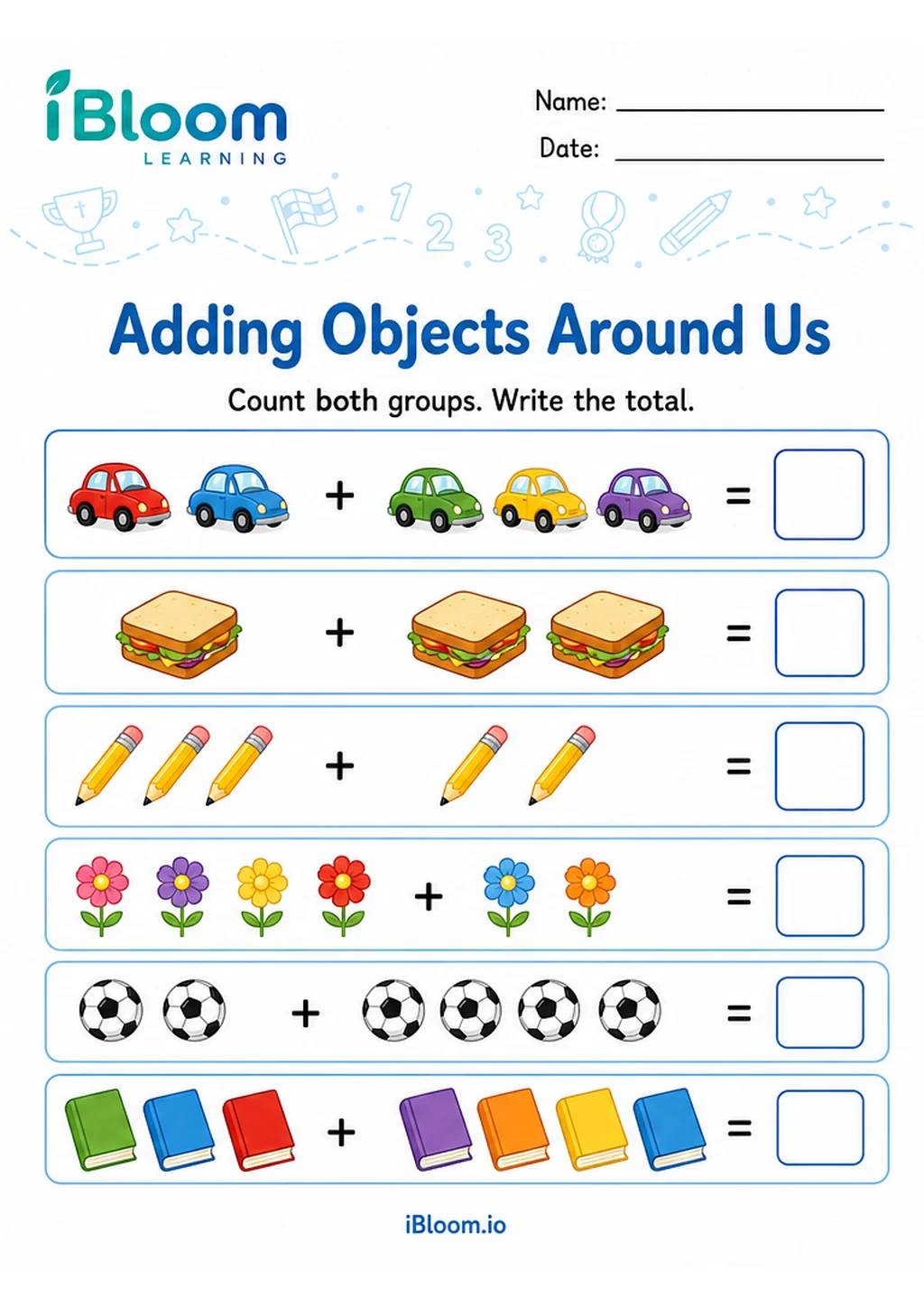 Adding Objects — Use It in a Familiar ContextPicture-based preschool and kindergarten addition worksheets where children combine object groups, count the total, and begin reading simple addition sentences. This use it in a familiar context worksheet provides a distinct, age-appropriate way to practise the same lesson.Preschool, KindergartenFree PDF preview
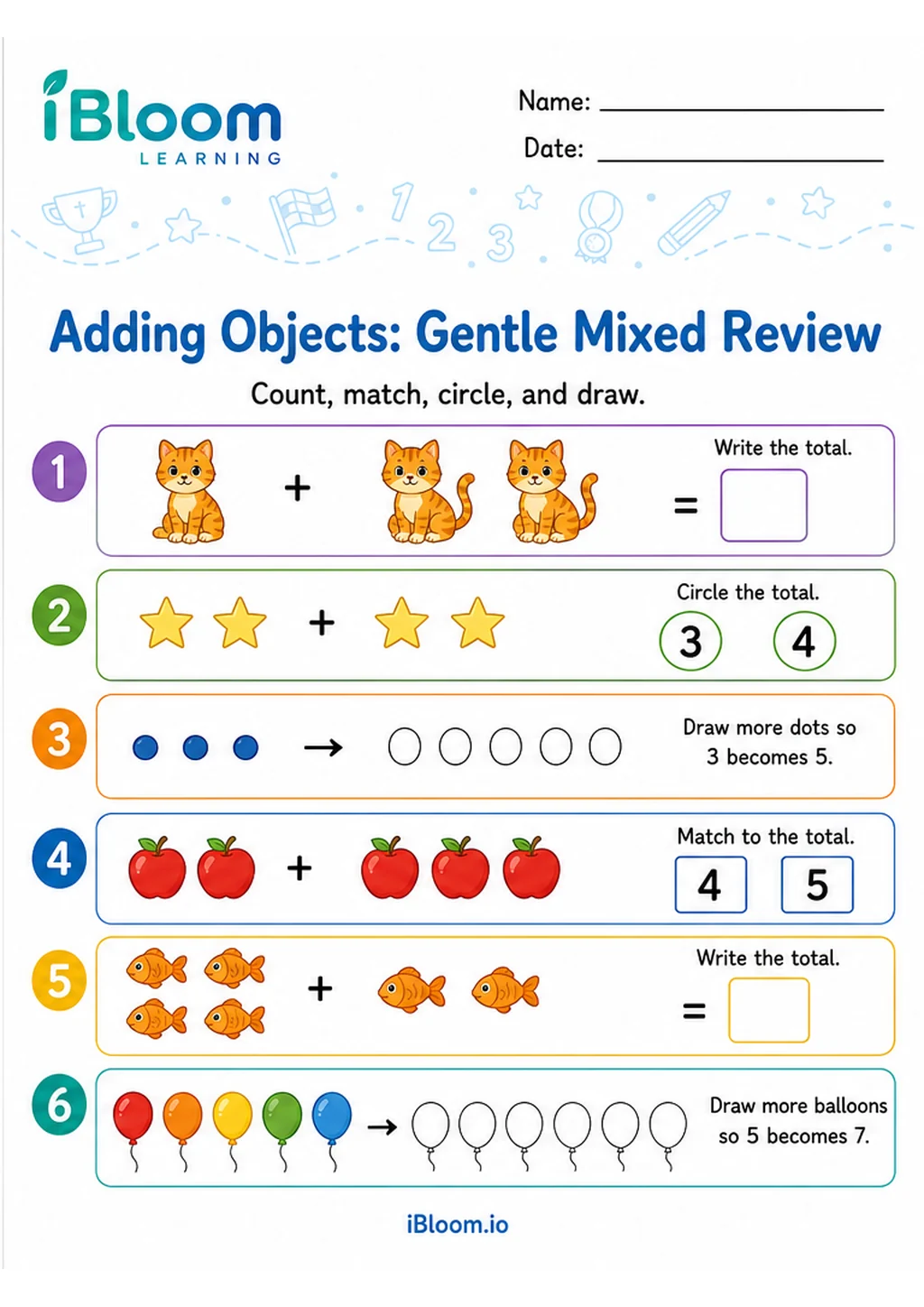 Adding Objects — Gentle Mixed ReviewPicture-based preschool and kindergarten addition worksheets where children combine object groups, count the total, and begin reading simple addition sentences. This gentle mixed review worksheet provides a distinct, age-appropriate way to practise the same lesson.Preschool, KindergartenFree PDF preview
Practice that builds confidence
Building the idea of addition
These Adding Objects worksheets help preschool and kindergarten children understand addition as “putting together.” Children count pictures, combine two small groups, and connect the total to an addition sentence using familiar objects instead of abstract numbers alone.
The printable activities include picture-based sums, counting-and-writing totals, simple plus and equals signs, and visual problems where children add one group of objects to another. They support early learners building one-to-one counting, number writing, and math vocabulary.
Adding objects is often a child’s first practical step into addition. Instead of memorizing facts, children see two groups, count each group, and then count how many there are altogether. This makes words such as add, plus, equal, total, and altogether meaningful because they are tied to pictures children can point to and count.

What children practise on the page
These worksheets focus on visual addition: counting objects in the first group, counting objects in the second group, and writing or selecting the total. Some activities may show a simple number sentence with a plus sign and an equals sign, helping children connect “3 apples and 2 apples” with “3 + 2 = 5.” The pictures keep the task concrete while children learn how addition is recorded.
A simple parent routine
At home, start by asking your child to touch each object while counting aloud. Then say, “How many are in the first group? How many are in the next group? Now let’s count them all together.” If your child loses track, cover one group, count it, uncover the second group, and count on from the first number. Finish by having your child read the full addition sentence in words.

Classroom uses for teachers
Teachers can use these printables in small-group lessons, morning work, math centers, or quick checks after a hands-on activity with counters or cubes. They also work well for comparing strategies: some children may count every object from one, while others begin to count on. Discussing both approaches helps children understand that addition combines quantities, not just pictures.

Common errors to watch for
Young learners may skip objects, count the same object twice, reverse digits when writing, or treat the plus sign as a signal to write any number. Encourage careful pointing, left-to-right counting, and checking the answer by recounting the total group. If a child writes the two addends side by side instead of adding them, return to the picture and ask, “How many altogether?”
Free printable PDF download
Use this adding objects worksheet page to preview the activity, print it, or download it as a PDF for quick practice. It works well for homework, homeschool lessons, tutoring, morning work, revision, and classroom centers.
Answers and answer key support
After the child completes the worksheet independently, parents and teachers can use the answer support or answer key information to check the work, review mistakes, and choose the next practice step.
Why iBloom worksheets help
iBloom worksheets keep early addition concrete, visual, and uncluttered. The object groups give children something real to count, while the gradual move toward number sentences builds readiness for later addition facts. A child-friendly strategy is: “Count the first group, count the next group, then count them all to find the total.”
Helpful answers
Frequently asked questions
What does “adding objects” mean for young children?
It means combining two pictured groups and counting how many objects there are altogether. Children use the pictures to understand what addition does before relying only on numbers.
Are these worksheets suitable for both preschool and kindergarten?
Yes. Preschoolers can use them mainly for counting and combining picture groups, while kindergarten children can also practise writing totals and reading simple addition sentences.
Should children count every object or count on?
Beginners may count every object from one, which is appropriate. As they become more confident, encourage them to start with the first group’s number and count on through the second group.
How can I help if my child keeps miscounting the pictures?
Ask your child to touch or lightly mark each object once while counting. You can also cover one group at a time, count slowly, and then recount the full set to check the total.
Do children need to know addition facts before using these printables?
No. These activities are designed to build the meaning of addition through objects, pictures, and counting, so children can develop understanding before memorizing facts.
Is this adding objects worksheet free?
Yes. You can preview it for free and use the printable worksheet for home or classroom practice.
Can I download this adding objects worksheet as a PDF?
Yes. Use the worksheet download option to save a printable PDF, or print the worksheet directly from the page.
Does this adding objects worksheet include answers or an answer key?
When the activity has fixed answers, iBloom includes answer support so parents and teachers can check the completed worksheet.