



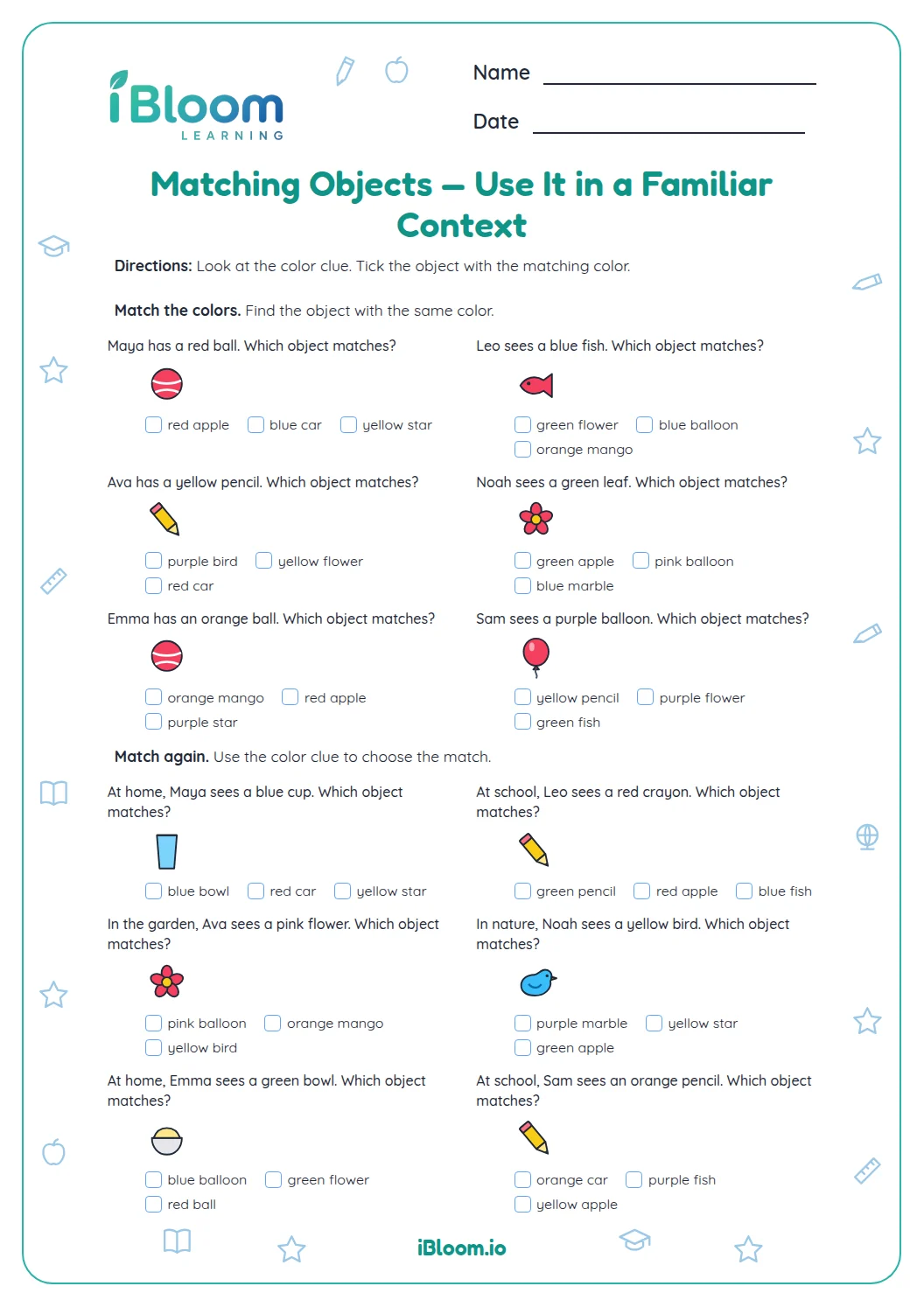
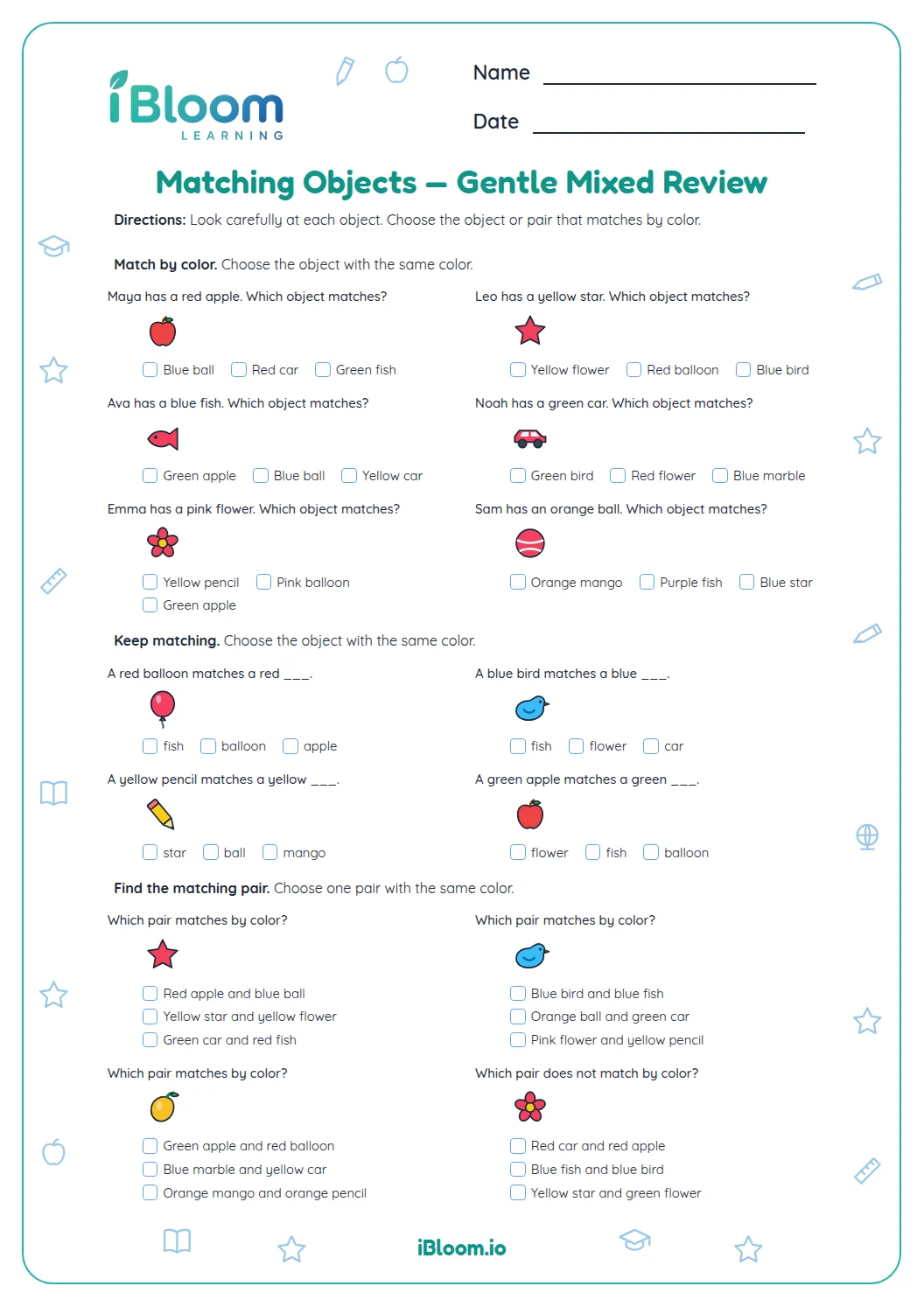
About this worksheet
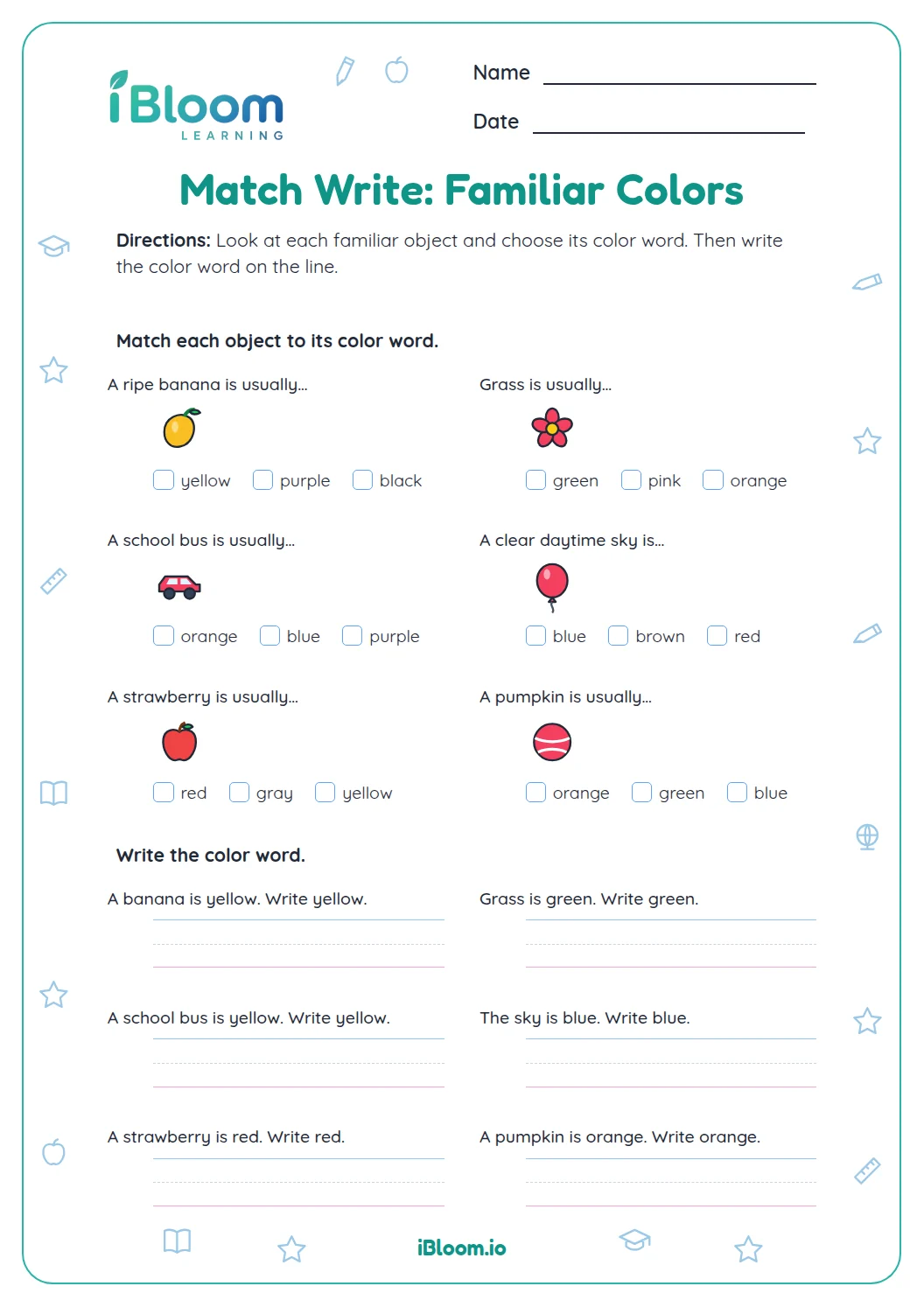
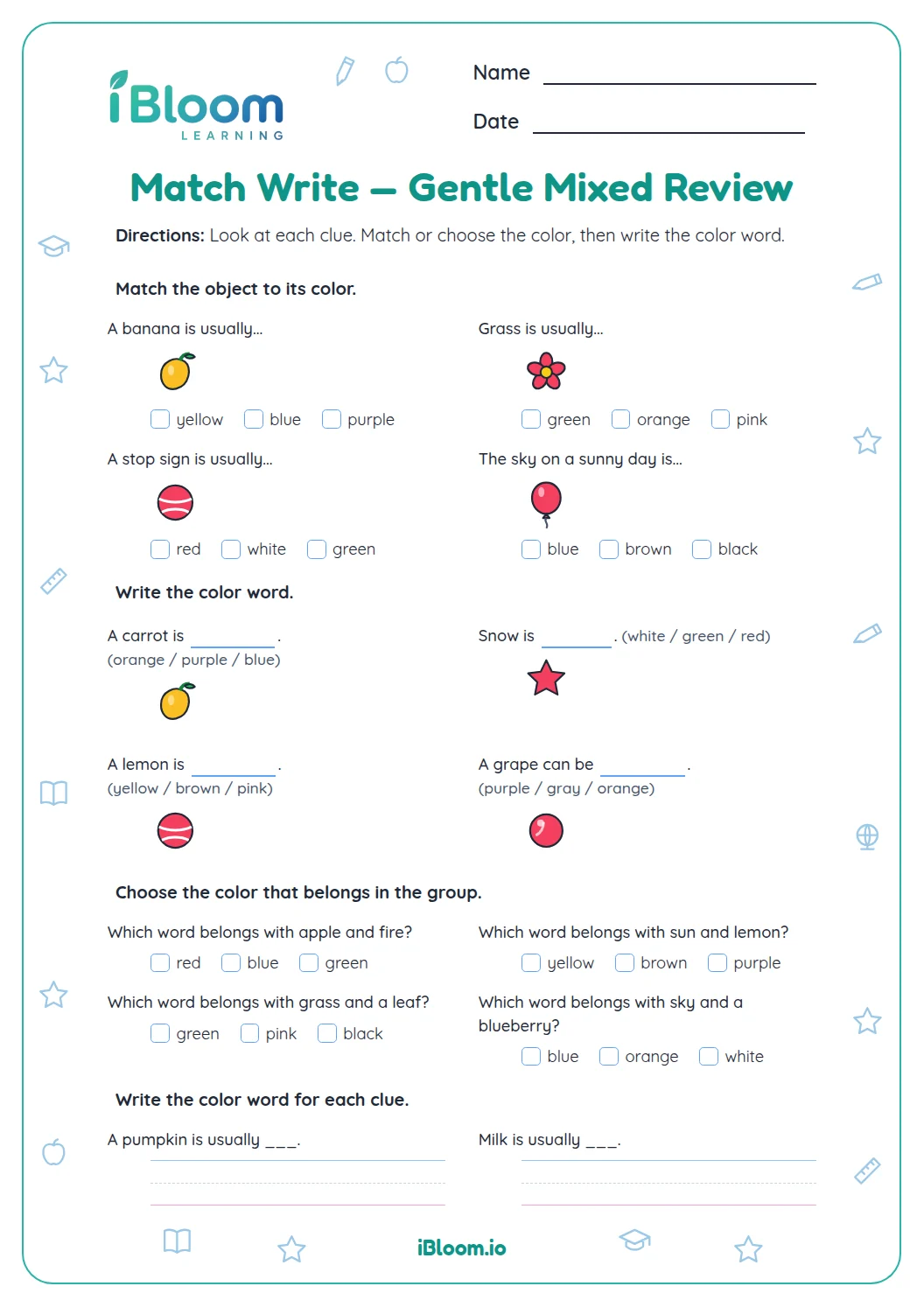
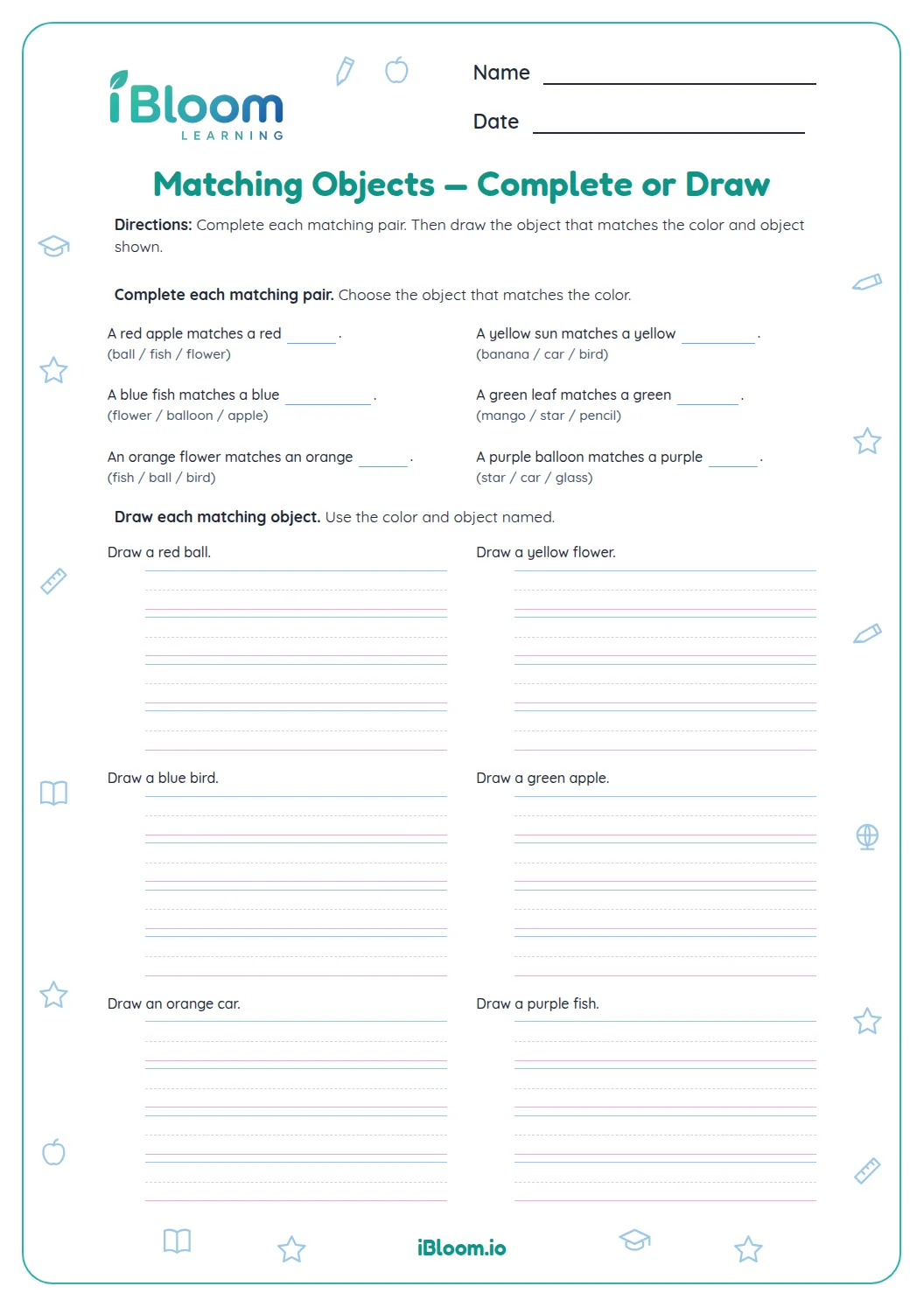
This preschool and kindergarten printable follows two familiar tasks: finish the spelling of eight color words, then draw an object for each of six colors. It practices reading and writing color names alongside drawing choices from everyday life. The answer key supplies the completed words and accepts any clear object that matches a drawing prompt.
Which color words will children complete?
The first part leaves letters out of eight familiar color names: red, blue, green, yellow, orange, purple, pink, and brown. Children say the color and write the missing letters to finish each word.
- 1Complete the color word: r___d
- 2Say the color name and fill its missing letters.
- 3Answer: e
What should children draw?
Four picture questions connect familiar objects with their usual colors. The final two prompts each ask for three color examples in a drawing box. The answer key stays flexible because many things can match a color.
How can an adult support color-word practice?
Say the color word aloud and invite the child to notice its letters. For a drawing, ask the child to name the object and color together, such as “green leaf.” This links the written word with a familiar example.
How to use this worksheet
- 1Say the color name shown by the partial word.
- 2Write the missing letters to complete it.
- 3Read the finished word aloud.
- 4For each drawing prompt, choose a familiar object in that color.
- 5Draw the object and name both the object and color.
- 6Use the key to check spellings and review the drawings.
Common mistakes and quick fixes
The mistake
Leaving out a letter in a color name.
The fix
Say the word slowly and compare the spelling with the completed example.
The mistake
Mixing up similar color words such as blue and purple.
The fix
Read the whole word and point to its letters before drawing.
The mistake
Thinking there is only one possible object for a color.
The fix
Accept any clear object that matches the named color.
What to practice next
Make more practice
Questions parents and teachers ask
Which color names are on the page?
The spelling section includes red, blue, green, yellow, orange, purple, pink, and brown. Four picture clues connect familiar objects with usual colors. Two drawing prompts ask children for objects in red, blue, green, yellow, orange, and purple. The key also lists all eight spellings.
What can my child draw for each color?
Any familiar object that clearly matches the named color is fine. A child might draw a red apple, a blue ball, or a green leaf, but these are examples rather than required answers. The key accepts a clear matching object.
Does the worksheet have an answer key?
Yes. The separate key gives missing letters for all eight color words and identifies the expected answers to four picture questions. It also accepts any clear object that matches the colors in the two drawing prompts, since many objects can fit.
How can I help with the spelling blanks?
Say the color name together and let the child listen for its sounds while looking at the letters already printed. Write the missing letters, then reread the full name. Picture clues and drawing prompts add familiar examples to the spelling work.
Is this for preschool or kindergarten?
The activities are designed for preschool and kindergarten learners practicing familiar color names. An adult can read the directions or say a color aloud while the child completes the spelling, picture-choice, and drawing tasks. The six drawing examples leave room for many correct objects.