Free printable practice
Letter G Practice Activities
Printable Letter G activities help preschool and kindergarten children recognize G, hear its beginning sound, and practise writing uppercase and lowercase forms.
Free printable worksheet PDFs
Preview every available page, then download the free worksheet PDF for home, homeschool, tutoring, or classroom practice.
Preview the exact activity before downloading it.
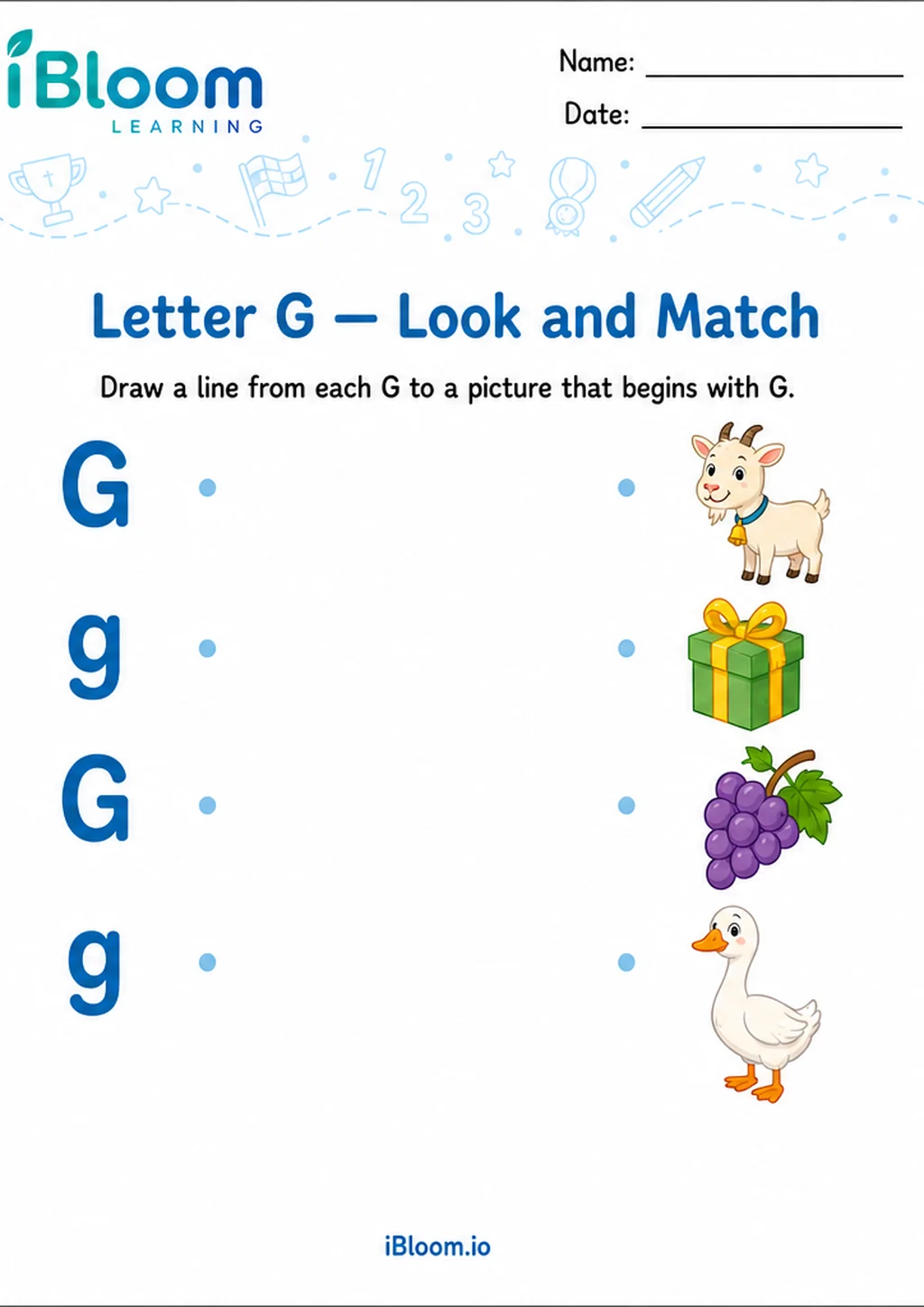 Letter G — Look and MatchPrintable Letter G activities help preschool and kindergarten children recognize G, hear its beginning sound, and practise writing uppercase and lowercase forms. This look and match worksheet provides a distinct, age-appropriate way to practise the same lesson.Preschool, KindergartenFree PDF preview
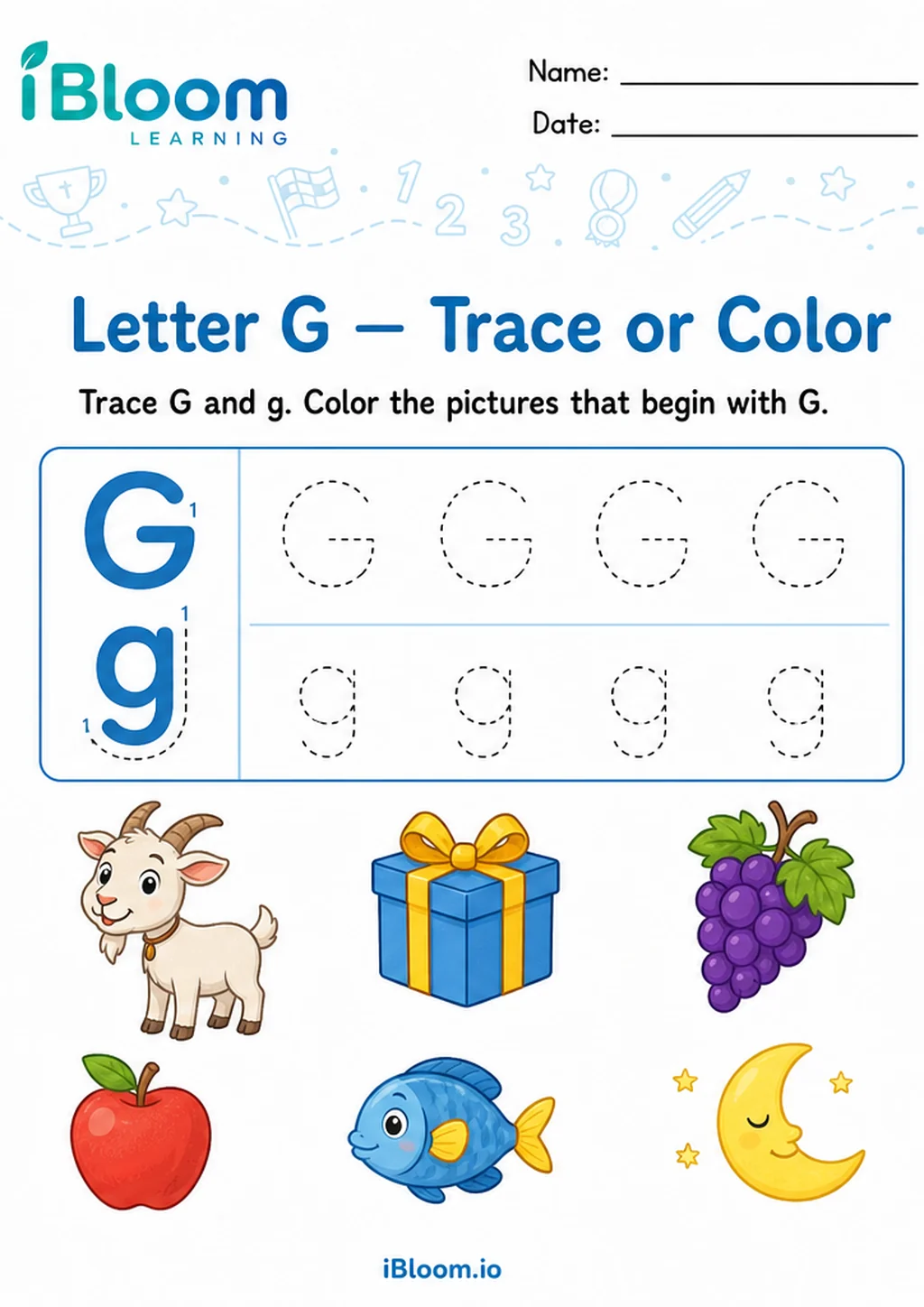 Letter G — Trace or ColorPrintable Letter G activities help preschool and kindergarten children recognize G, hear its beginning sound, and practise writing uppercase and lowercase forms. This trace or color worksheet provides a distinct, age-appropriate way to practise the same lesson.Preschool, KindergartenFree PDF preview
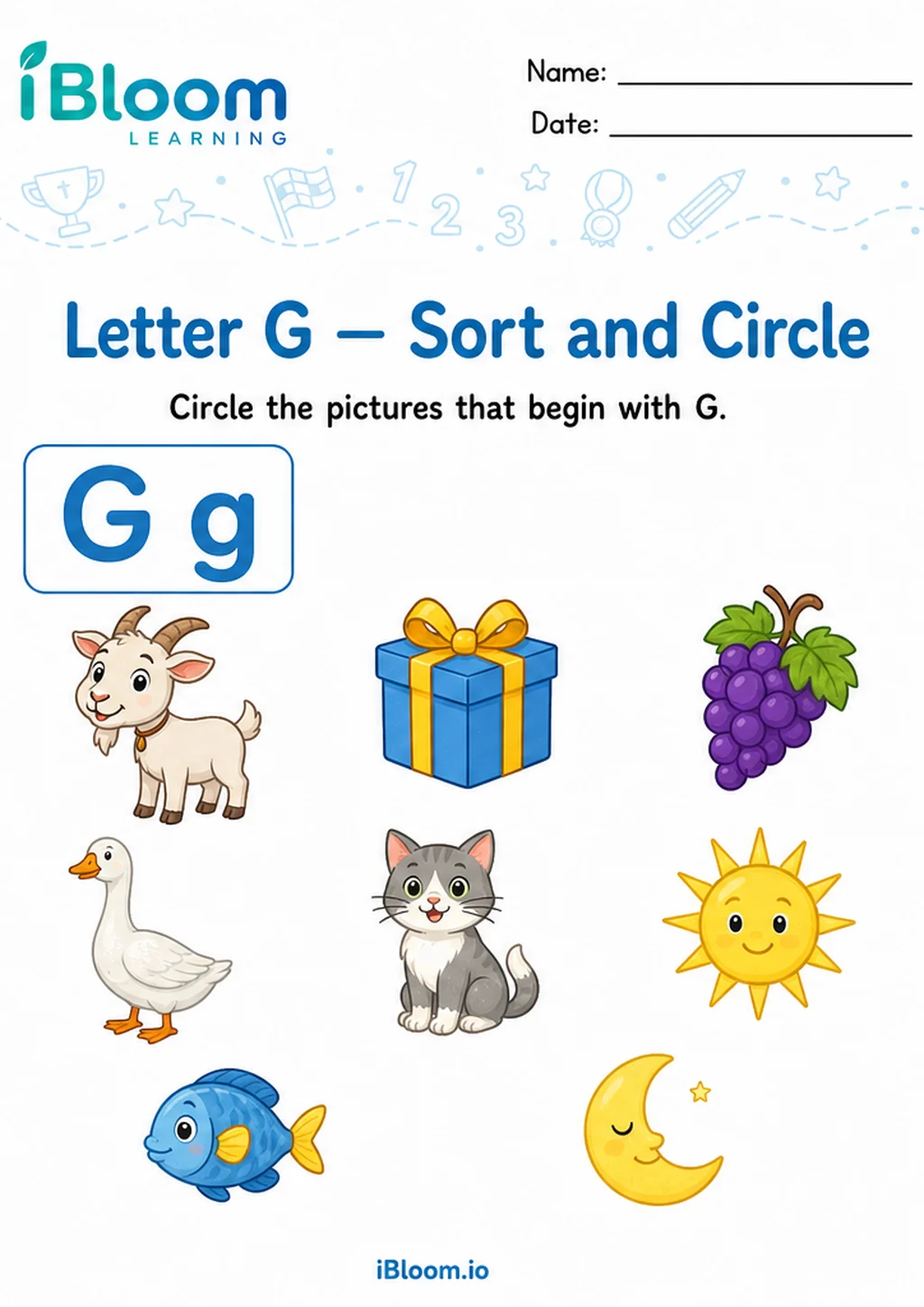 Letter G — Sort and CirclePrintable Letter G activities help preschool and kindergarten children recognize G, hear its beginning sound, and practise writing uppercase and lowercase forms. This sort and circle worksheet provides a distinct, age-appropriate way to practise the same lesson.Preschool, KindergartenFree PDF preview
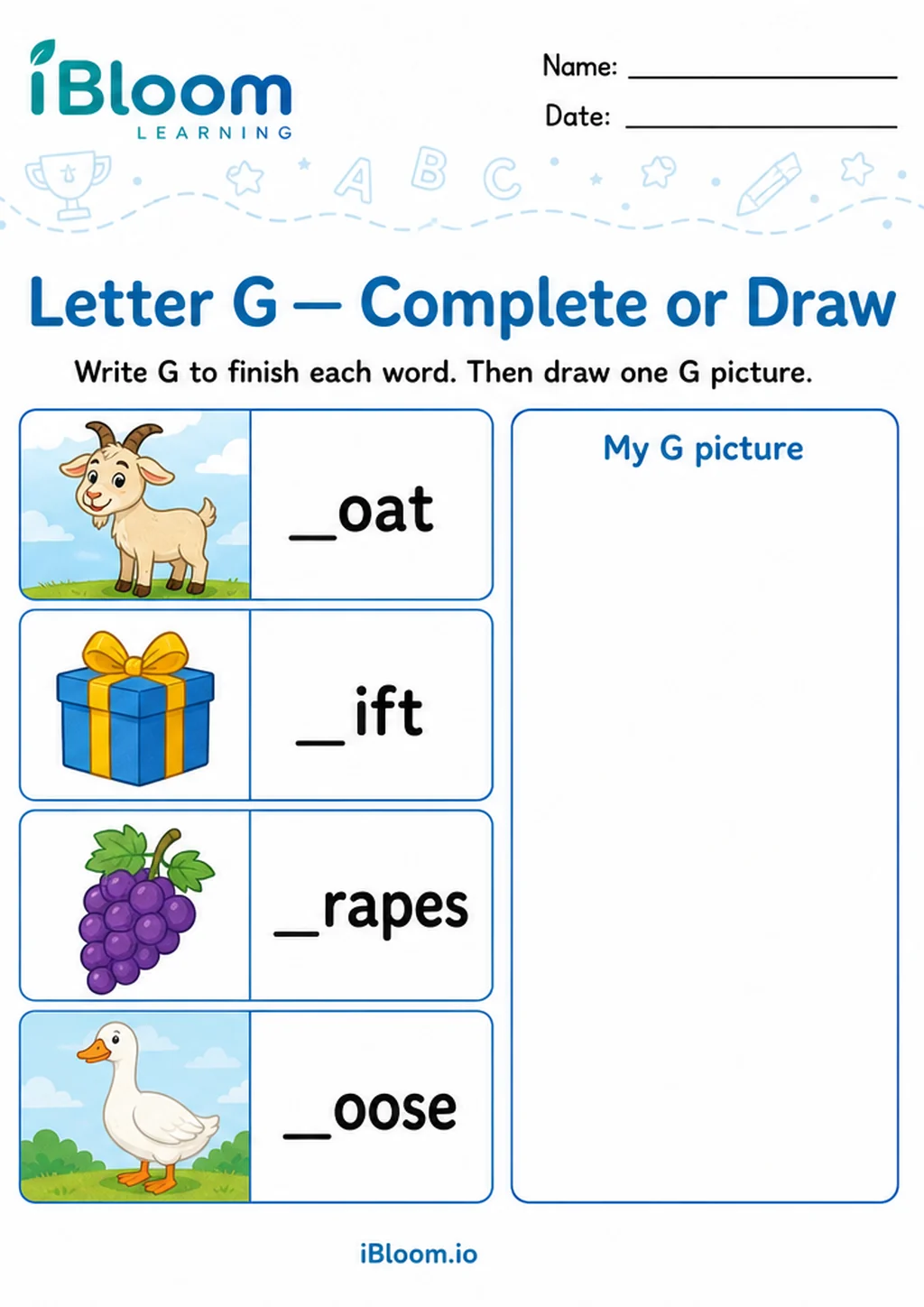 Letter G — Complete or DrawPrintable Letter G activities help preschool and kindergarten children recognize G, hear its beginning sound, and practise writing uppercase and lowercase forms. This complete or draw worksheet provides a distinct, age-appropriate way to practise the same lesson.Preschool, KindergartenFree PDF preview
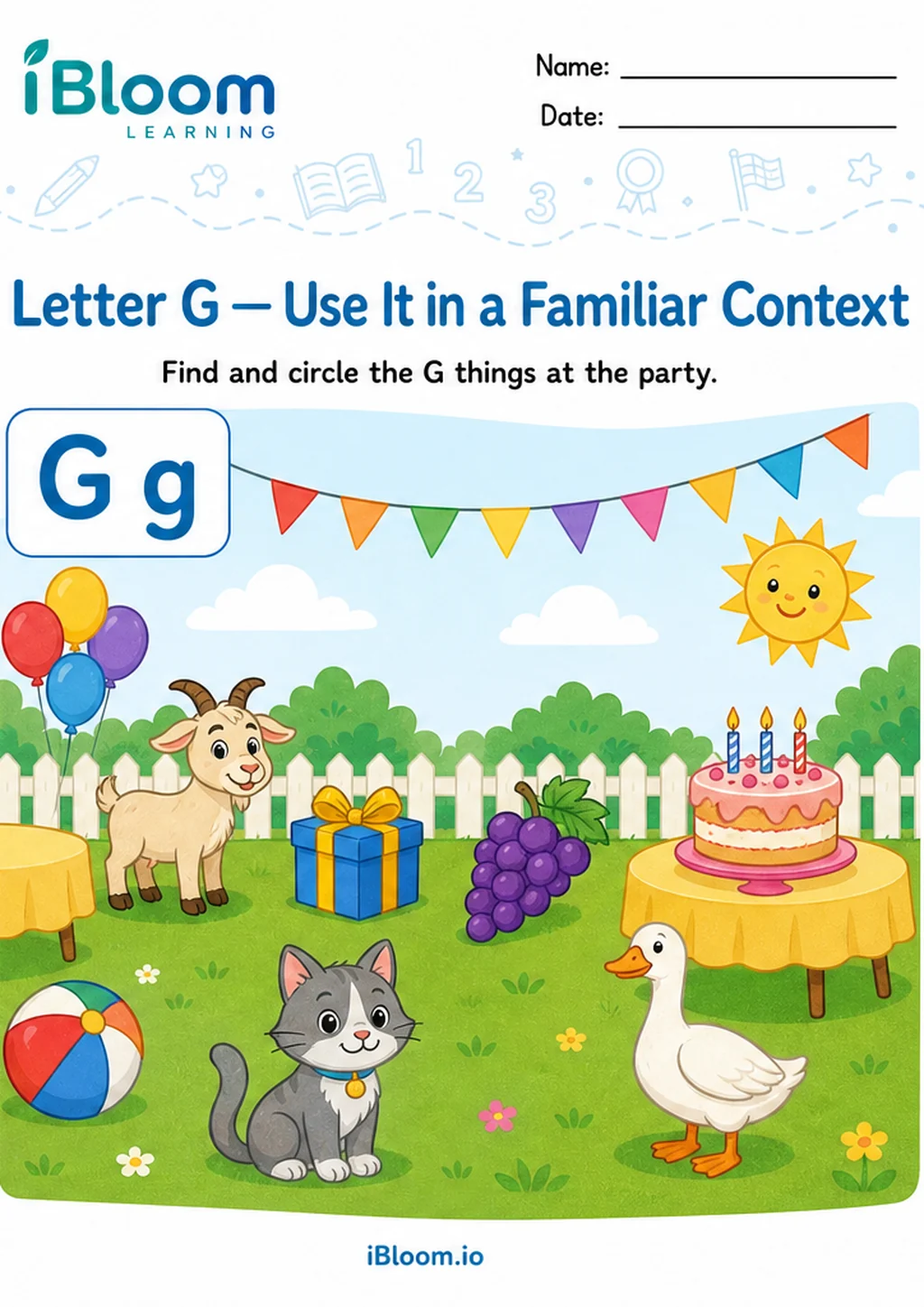 Letter G — Use It in a Familiar ContextPrintable Letter G activities help preschool and kindergarten children recognize G, hear its beginning sound, and practise writing uppercase and lowercase forms. This use it in a familiar context worksheet provides a distinct, age-appropriate way to practise the same lesson.Preschool, KindergartenFree PDF preview
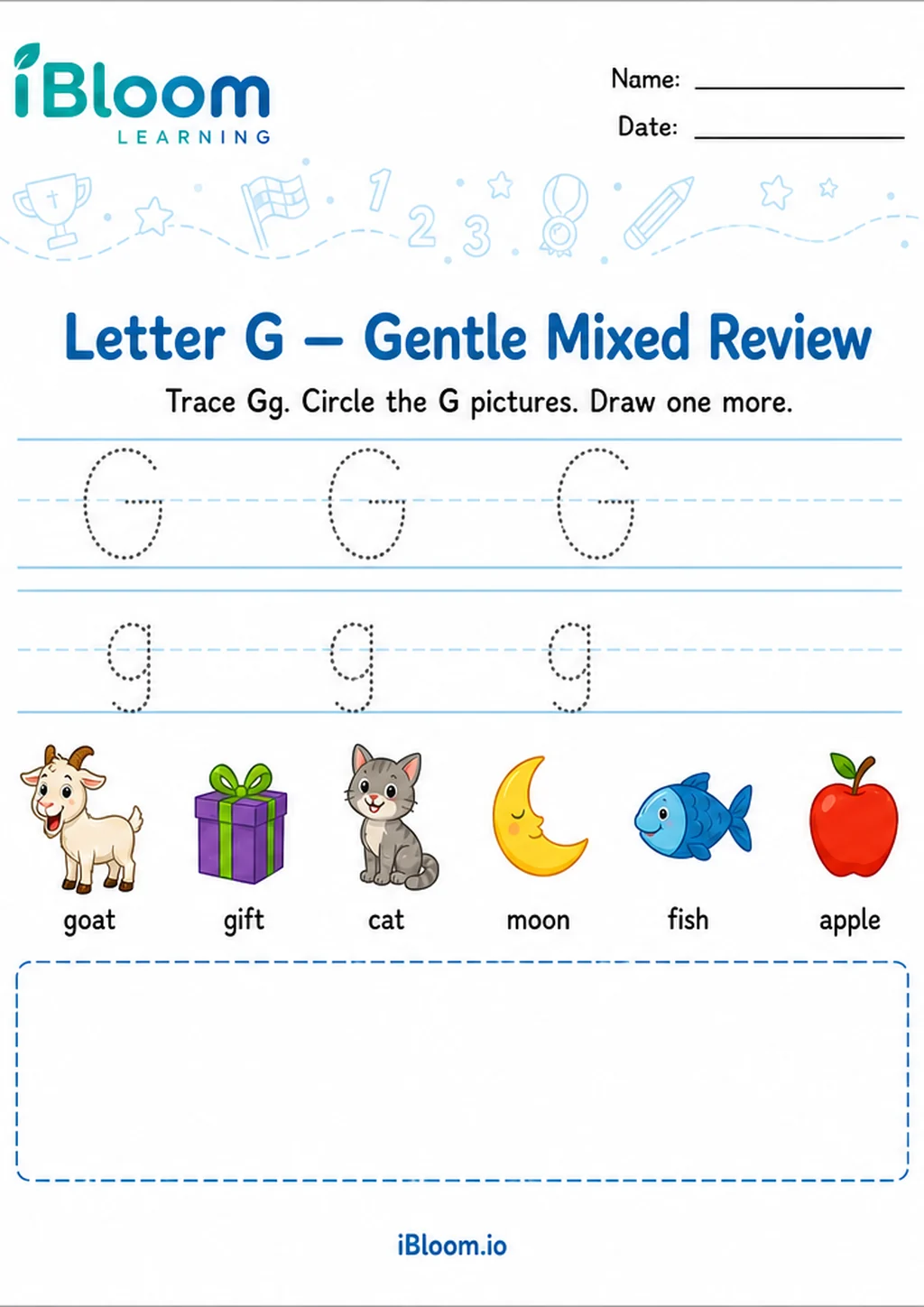 Letter G — Gentle Mixed ReviewPrintable Letter G activities help preschool and kindergarten children recognize G, hear its beginning sound, and practise writing uppercase and lowercase forms. This gentle mixed review worksheet provides a distinct, age-appropriate way to practise the same lesson.Preschool, KindergartenFree PDF preview
Practice that builds confidence
What the letter G represents
These Letter G practice activities help preschool and kindergarten children connect the printed letter G with its beginning consonant sound. Children look for G in words and pictures, say the hard /g/ sound as in goat or gum, and build confidence with alphabet recognition.
The printable pages include focused practice with uppercase G, lowercase g, tracing, writing, matching, and identifying pictures that begin with the Letter G. Activities are simple enough for early learners but varied enough to support repeated practice without feeling repetitive.
Letter G can be tricky because children see both uppercase G and lowercase g, and later they may meet soft g words. These worksheets keep the focus clear: the beginning hard /g/ sound heard in words such as goat, gate, gum, and gift. Children practise listening for the first sound, not just memorizing a picture name.

How the practice progresses
Activities move from recognition to use. A child may first find G among other letters, then trace large G and g shapes, then match the letter to pictures that start with /g/. Writing lines support pencil control while picture tasks strengthen sound awareness. This progression helps children connect letter name, letter shape, and beginning consonant sound.
A simple home routine
At home, choose one page and preview it aloud together. Say, “G says /g/ in goat,” then have your child repeat the sound while touching the letter. Before writing, trace G in the air with a finger. After the worksheet, play a quick hunt: find something nearby that begins with /g/, such as a game, glove, or green object if the word itself starts with G.

Classroom and small-group uses
Teachers can use these printables during alphabet centers, morning work, small-group phonics lessons, or handwriting review. The pages are useful after a letter-sound mini lesson because children can independently circle, match, trace, or write. They also give teachers a quick look at who can recognize G visually and who needs more practice hearing the initial sound.

Common mix-ups to watch for
Some children confuse G with C because the uppercase shapes look related, or they may say the letter name instead of the sound when sorting pictures. Others may form lowercase g with the loop facing the wrong way. Slow modeling helps: start at the top, curve around, and check that the letter is not becoming a backwards shape.
A child-friendly strategy
Use the phrase “Growl for G” to anchor the sound. Children can make a gentle /g/ growl, then ask, “Do I hear /g/ at the start?” before choosing a picture. This keeps the task playful and helps them listen before marking an answer.
Free printable PDF download
Use this letter g worksheet page to preview the activity, print it, or download it as a PDF for quick practice. It works well for homework, homeschool lessons, tutoring, morning work, revision, and classroom centers.
Answers and answer key support
After the child completes the worksheet independently, parents and teachers can use the answer support or answer key information to check the work, review mistakes, and choose the next practice step.
Why iBloom worksheets help
The pages are designed around one clear skill at a time, so young learners are not overwhelmed. Children see G, say /g/, trace G, and apply the sound to pictures in different ways. That mix of visual, oral, and handwriting practice supports stronger beginning consonant learning.
Helpful answers
Frequently asked questions
Do these Letter G worksheets teach hard g or soft g?
They focus on the hard /g/ sound heard at the beginning of words such as goat, gum, gate, and gift. Soft g can be introduced later after children are secure with the basic consonant sound.
Are these worksheets better for preschool or kindergarten?
They can work for both. Preschool children can use the tracing, matching, and recognition pages, while kindergarten children can use them for beginning sound review and more controlled writing practice.
How can I help if my child confuses G and C?
Point out that uppercase G starts like C but has an extra line or turn. Have your child trace both letters with a finger and say the sounds separately: /g/ for G and /k/ for C.
Should my child know the letter name before doing the pages?
It helps, but it is not required. You can introduce the page by saying, “This is G. Its sound in goat is /g/,” then guide your child through the first few examples.
What should I listen for when my child names pictures?
Listen for the first sound of the word. If the picture is goat, the important answer is that goat begins with /g/. Encourage your child to stretch the first sound before choosing.
Is this letter g worksheet free?
Yes. You can preview it for free and use the printable worksheet for home or classroom practice.
Can I download this letter g worksheet as a PDF?
Yes. Use the worksheet download option to save a printable PDF, or print the worksheet directly from the page.
Does this letter g worksheet include answers or an answer key?
When the activity has fixed answers, iBloom includes answer support so parents and teachers can check the completed worksheet.