




About this worksheet
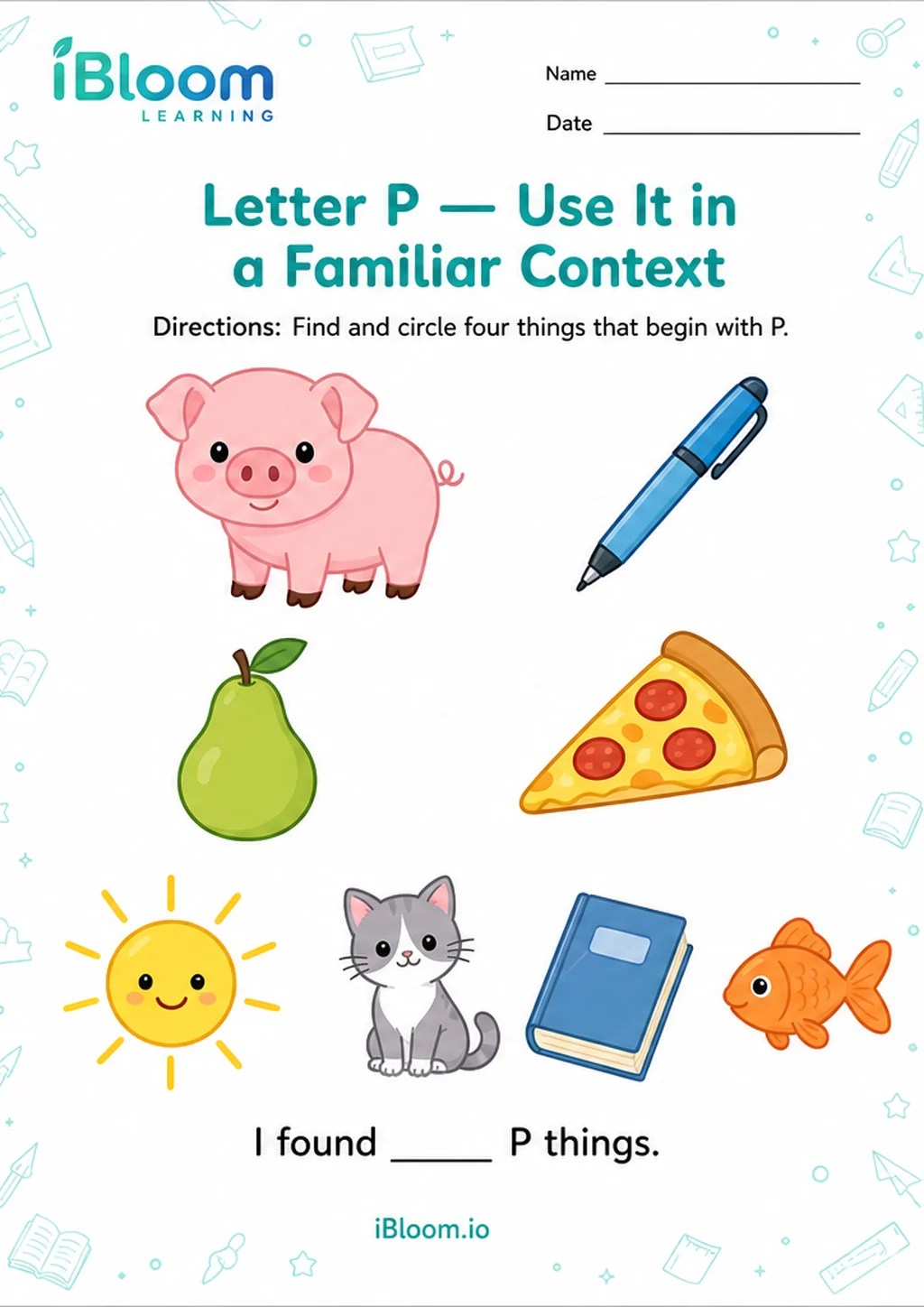
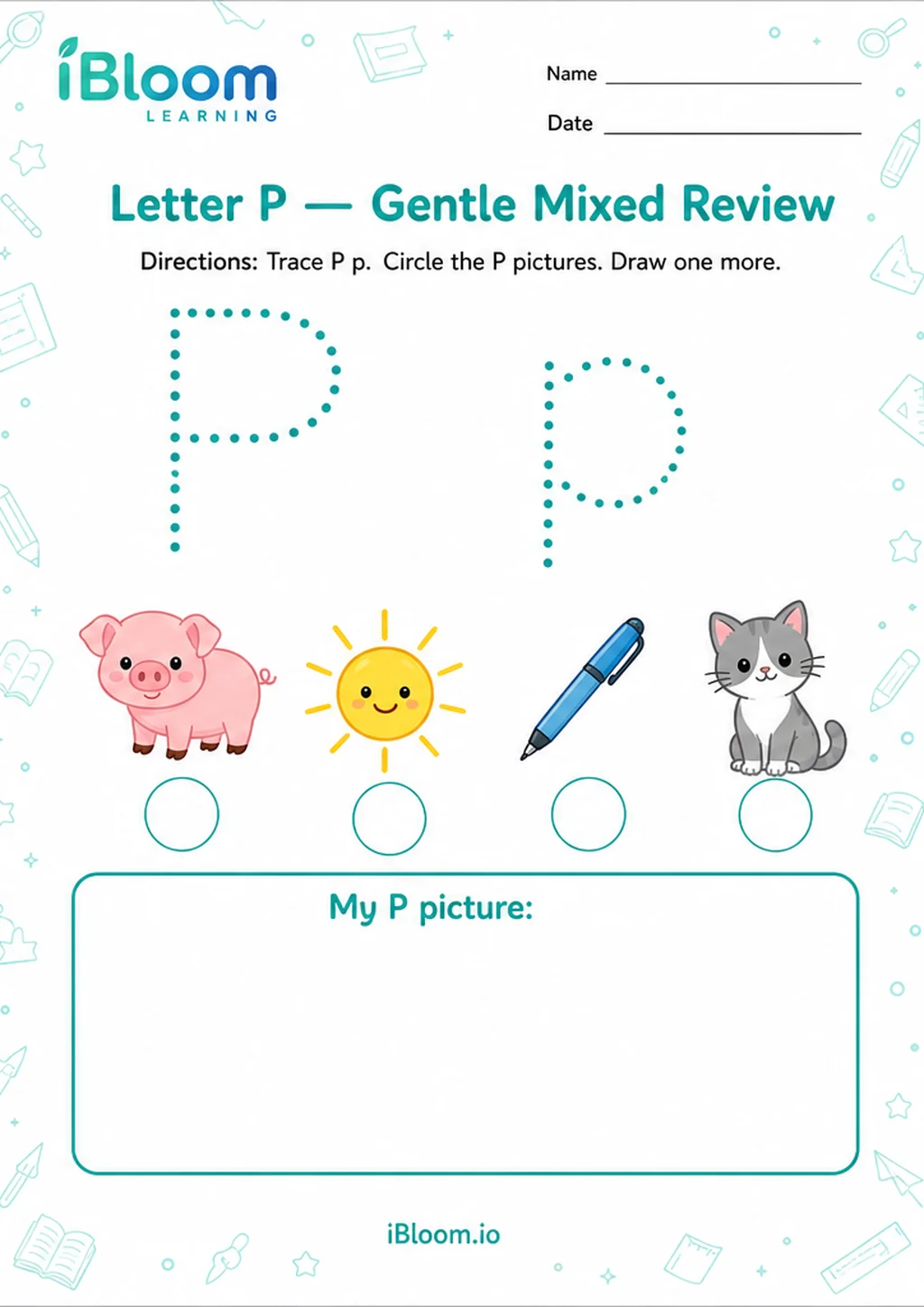
This free printable letter P worksheet gives preschool and kindergarten children eleven ways to connect P with the sound /p/. Part A has six picture words to complete with a capital P, including pig, pear and pencil. Part B asks children to choose a picture that starts with the same sound. Part C gives them a box for their own P drawing. The activities practice Common Core RF.K.3a, matching a consonant to its sound. An adult can name unfamiliar pictures and read the directions aloud. The separate answer key identifies the picture choices and gives an example for the drawing.
Aligned to RF.K.3a
What sound should children listen for?
P represents /p/ in the six Part A picture words. Say pig naturally, then repeat just its first sound. Keep that sound short; adding an extra “uh” makes it harder to hear where the next sound begins.
Say the letter name separately: “This is P. It can stand for /p/.” Children can then connect the printed letter to the sound they hear.
How do the missing-letter pictures work?
Part A pairs each picture with a word missing its first letter. The six words are PIG, PIE, PEAR, PENCIL, PIZZA and PENGUIN. The remaining letters are already printed, so children can focus on the beginning consonant.
- 1Name the picture: pig.
- 2Say the first sound: /p/.
- 3Write P before IG to make PIG.
What should children do after completing the words?
Part B has four pairs of pictures: pencil and apple, cat and panda, pineapple and sun, then dog and pig. Children name both pictures before choosing the one that begins with /p/.
Part C asks for one more P item. A plate, potato or peach works. Have the child tell you the picture’s name and first sound; recognizable artistic detail is less important than that sound connection.
How to use this worksheet
- 1Name the six Part A pictures together before writing.
- 2Model a short /p/ sound with pig, then point to capital P.
- 3Let the child add P to each word and say the completed word aloud.
- 4Read the Part B direction and name both pictures in each pair.
- 5Ask the child to name the P item they plan to draw in Part C.
- 6Check the choices with the key and listen to the child name the drawing.
Mistakes to notice and fix
The mistake
Saying the letter name “pee” when asked for the first sound.
The fix
Say pig, then isolate /p/. Follow with “The letter P writes that sound.”
The mistake
Calling the pear an apple.
The fix
Name the picture as pear before the child works on the letter; the printed EAR is another clue.
The mistake
Choosing an item with P somewhere in its name, such as cup.
The fix
Say the whole name slowly and check its very first sound. Use a beginning-P item such as plate instead.
Common Core alignment
Connect the letter P with /p/ at the start of pictured words.
On this sheet: Children say picture names, supply P and select pictures beginning with /p/.
Show the official wordingHide the official wording
Demonstrate basic knowledge of one-to-one letter-sound correspondences by producing the primary sound or many of the most frequent sounds for each consonant.
What to practice next
Make more practice
Further reading
Questions parents and teachers ask
Does my child need to read all six words?
No; an adult can name each picture and read the directions. The task is to hear /p/ at the start and connect it to P. The remaining letters are supplied, so children can complete the words while an adult helps them say the whole word.
Should children write capital P or lowercase p?
This sheet asks for capital P because the rest of each picture word is in capitals. Point to the tall line and rounded top as you model it. If a child writes lowercase p, acknowledge the correct sound connection and model the capital form beside it.
What pictures are used in the choice questions?
The pairs are pencil and apple, cat and panda, pineapple and sun, and dog and pig. The correct choices are pencil, panda, pineapple and pig. Name both pictures in each pair before choosing so the child bases the answer on the first sound rather than a favorite picture.
What counts as a correct drawing?
A drawing is correct when the child can name an item that begins with /p/. Plate, potato and peach are possible choices beyond the pictured examples. Ask the child to say the name and first sound; a simple sketch is enough to show that connection.
How should I use the answer key?
Use the key after the child has named and completed the pictures. It shows P for the six missing letters and marks the four correct picture choices. The final drawing has a sample response, so accept another item when its spoken name begins with /p/.