


About this worksheet
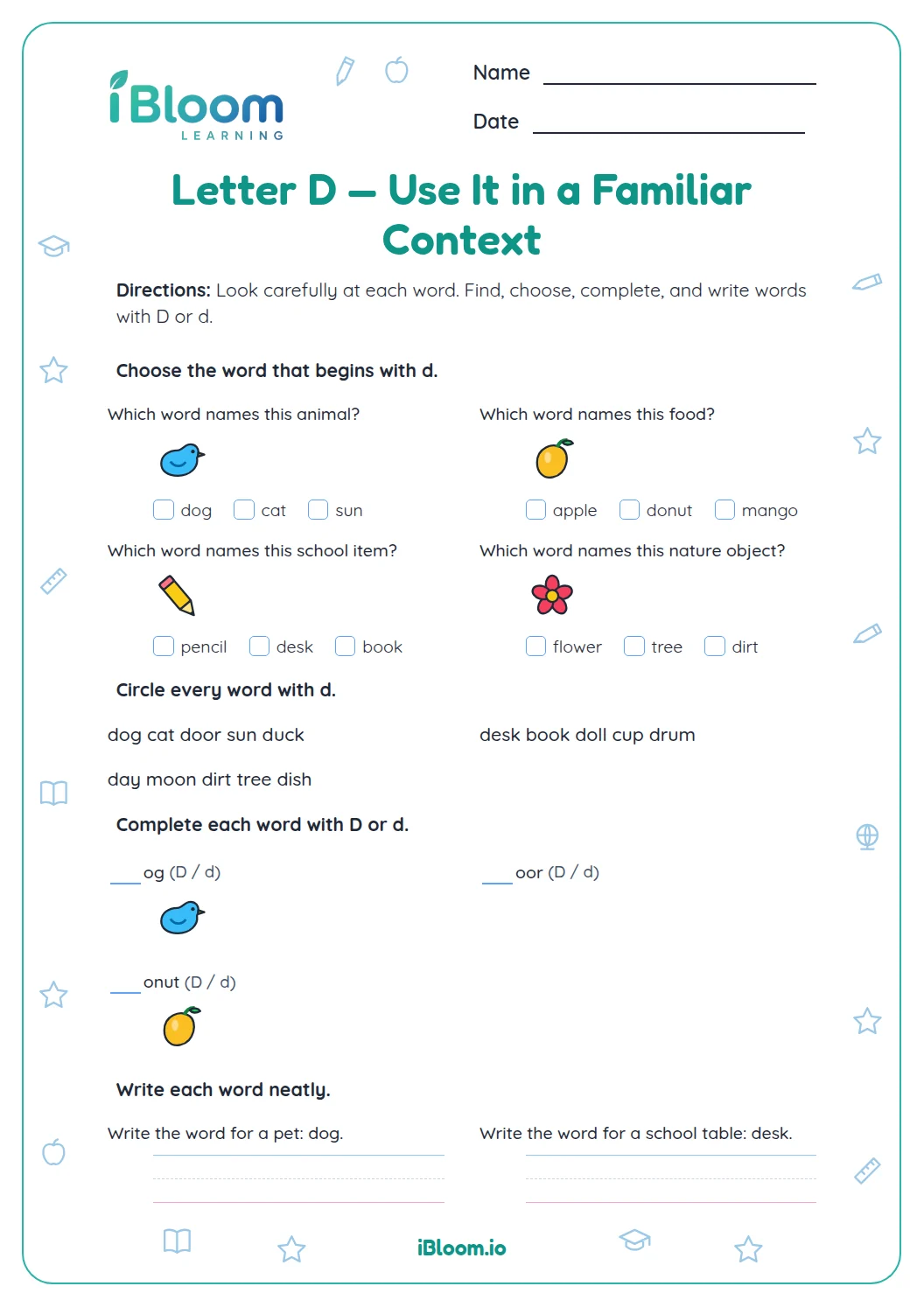
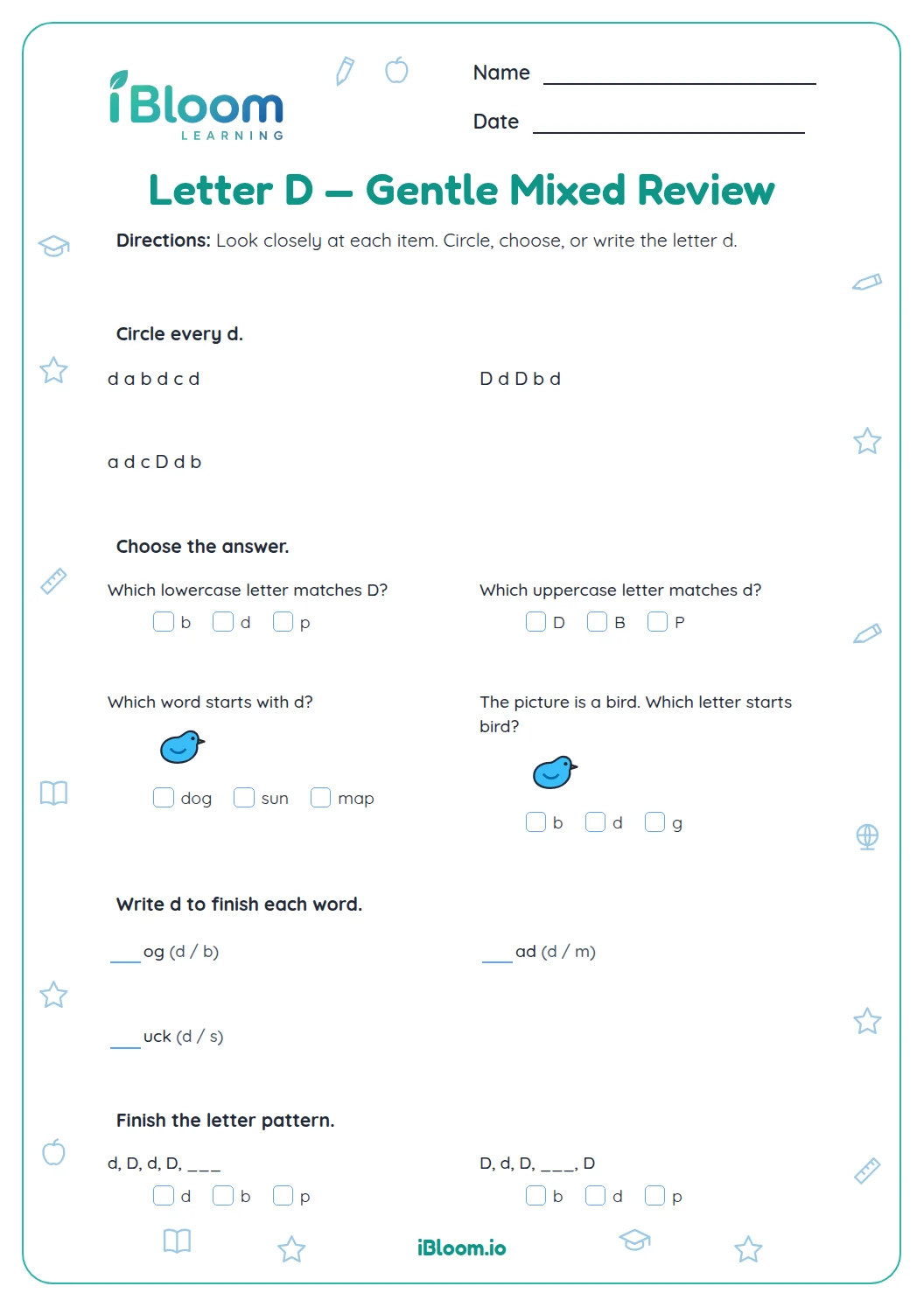
This Letter D worksheet combines letter practice and pictures for preschool and kindergarten learners. Children trace D and d, identify words that begin with the D sound, complete familiar words, and draw a dog and a door.
Aligned to RF.K.3.a
What does Letter D practice include?
Children trace uppercase D and lowercase d, then trace a familiar word that begins with D. Saying dog aloud connects the printed letter with the word’s first sound.
The remaining activities ask children to recognize D picture words, complete familiar letter prompts, and draw two things whose names begin with D.
A gentle way to practice
Move slowly through the trace rows. Invite the child to name the letter, follow its shape with a finger, and trace it with a pencil.
In picture choices, say each word aloud before choosing. In the draw boxes, accept a recognizable child drawing and ask the child to name the object.
Practice letter D
- 1Trace uppercase D and lowercase d slowly from the gray model.
- 2Say each picture choice aloud and listen for the first sound.
- 3Finish each d___ word by naming the familiar object in the clue.
- 4Draw a dog and a door, then say each name aloud.
Letter and sound checks
The mistake
Confusing uppercase D with lowercase d.
The fix
Compare the two models and trace each form on its own.
The mistake
Choosing a picture because its name contains D later.
The fix
Say the word from the beginning and listen for /d/ as its first sound.
The mistake
Leaving off a letter when finishing a D word.
The fix
Say the whole word, then add the letters after the printed d.
Curriculum alignment
This page gives focused practice with the listed grade-level skill. State and district pacing can vary.
Uppercase and lowercase D formation with beginning-sound picture recognition
On this sheet: Tracing supports letter familiarity; identifying spoken D words practices the consonant’s primary sound.
Show the official wordingHide the official wording
Demonstrate basic knowledge of one-to-one letter-sound correspondences by producing the primary sound or many of the most frequent sounds for each consonant.
What to practice next
Make more practice
Further reading
Questions parents and teachers ask
Which letter forms are practiced?
Children trace uppercase D and lowercase d, then trace the word dog. The page also asks them to write the two letter forms in short completion prompts. This repetition helps a young learner notice how uppercase and lowercase D look different while sharing the same beginning sound.
Why are there picture choices?
Pictures give young learners a familiar word to say aloud. The child can name a dog, duck, drum, or door and listen for the first sound. Picture choices keep the sound task concrete and make the activity accessible before children can read every word independently.
What should a child draw?
The two drawing prompts ask for a dog and a door. A child’s picture does not need to look realistic; it should be recognizable enough for the child to name it. Asking for the name reinforces the connection between the D sound and the object word.
How should an adult help with tracing?
First say the letter name, then let the child trace the model slowly with a finger. Offer a pencil when the child is ready. Encourage a clear starting point and a steady path, while allowing the child to practice the shape without expecting perfect handwriting.