






About this worksheet
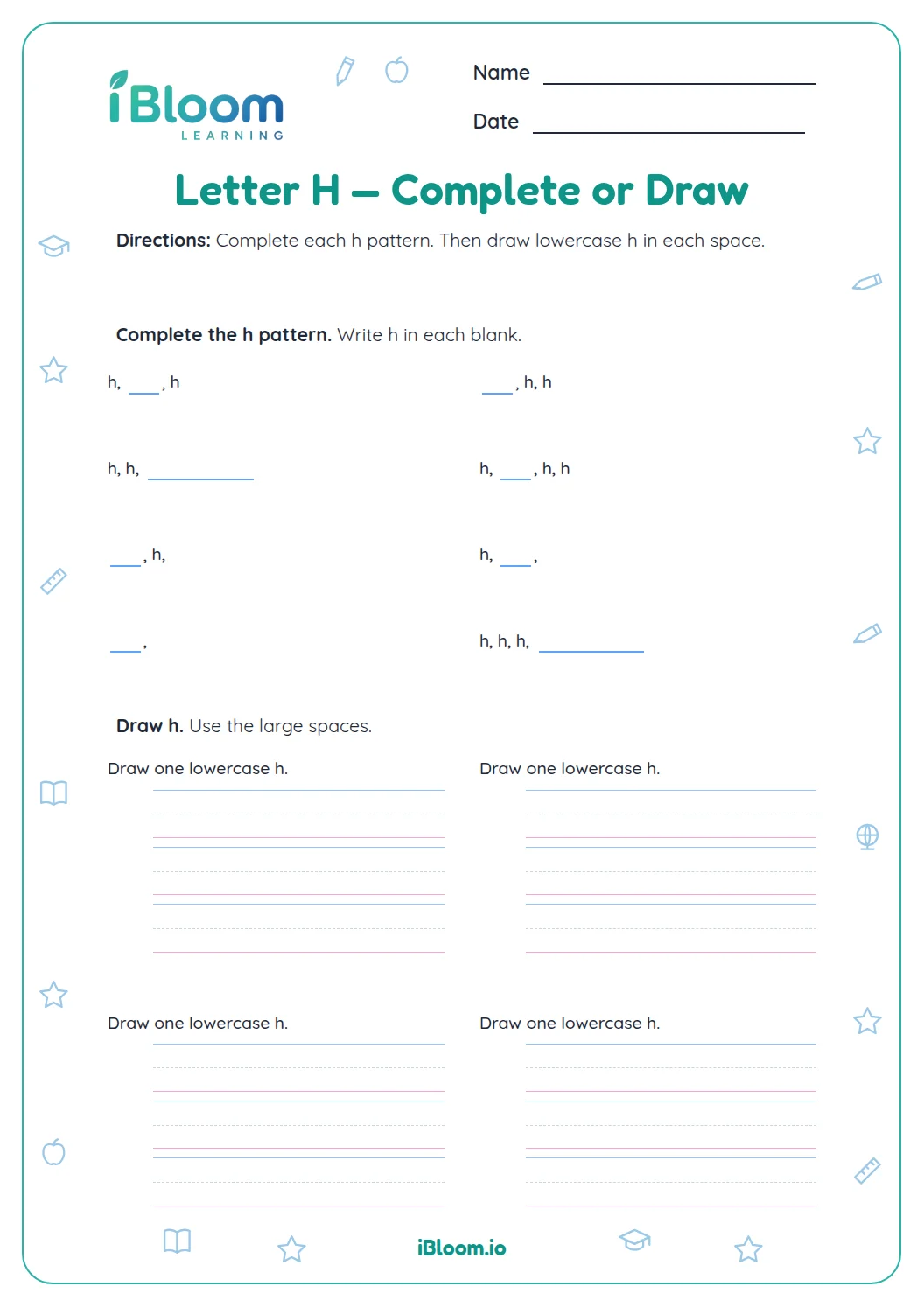
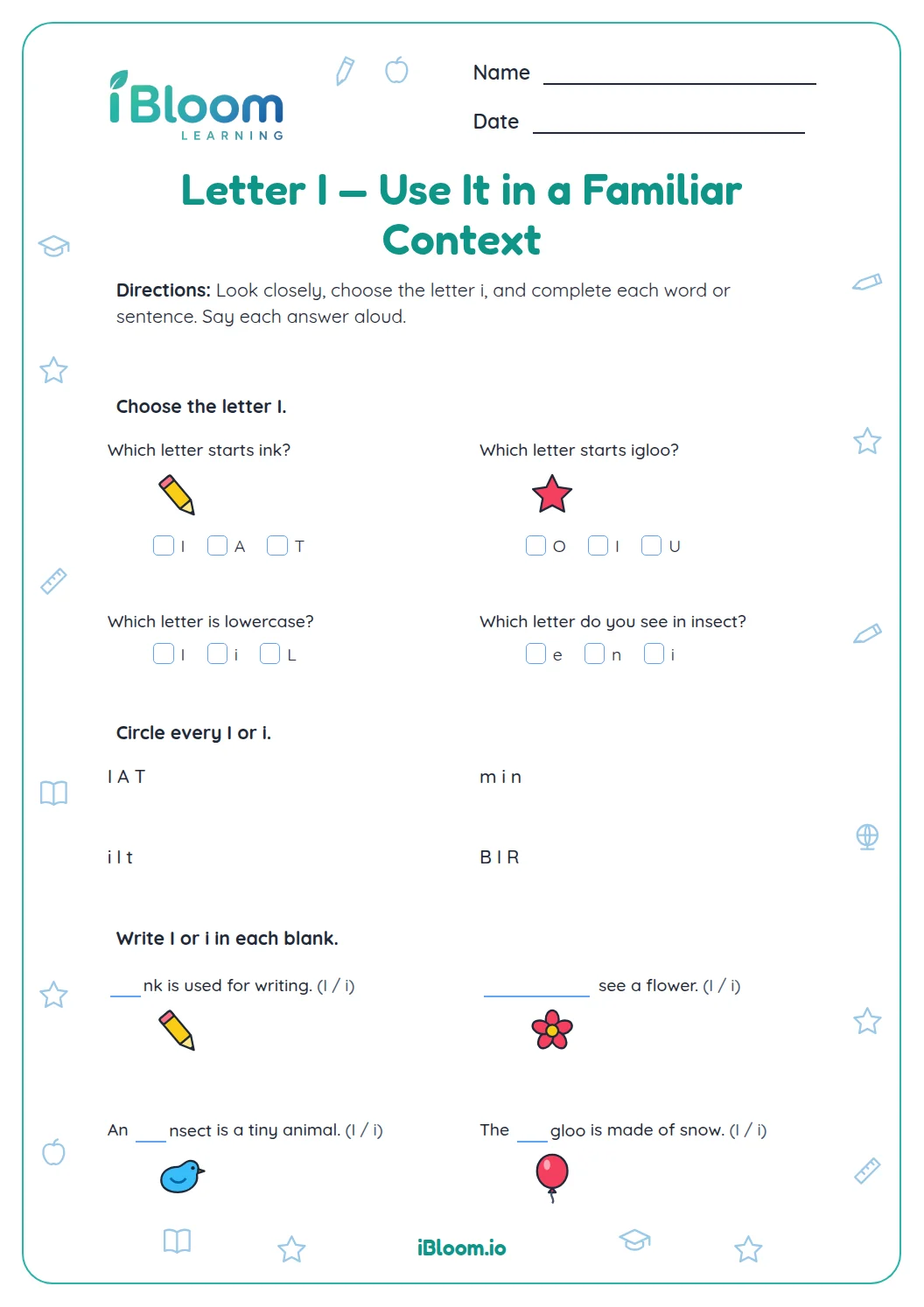
This printable gives preschool and kindergarten learners picture-based practice with the letter H. Children identify pictured words that begin with H, trace uppercase and lowercase H, listen for H at the start of a word, and connect familiar H words to their meanings. The pictures keep the page accessible before children can read every prompt independently.
Aligned to RF.K.3a
How do pictures support letter practice?
The first part shows groups of three familiar objects. Children say the names aloud, listen for the first sound, and choose the two names that begin with H. The later sentence items ask them to find H words in short sentences.
How should children trace H and h?
Start at the model and follow its shape slowly. The page includes both uppercase and lowercase forms and a mixed row, so learners can practice noticing that the two forms look different but represent the same letter.
How can I help a child hear the H sound?
Say each target word clearly and emphasize its first sound without adding an extra vowel. Then let the child repeat the whole word and point to the picture that matches it.
How to use this worksheet
- 1Say the picture names aloud together.
- 2Ask which names begin with the /h/ sound.
- 3Trace the uppercase and lowercase models slowly.
- 4Read each short sentence and circle its H word.
- 5Check the choices together with the answer key.
Common mistakes and quick fixes
The mistake
Choosing a picture because it contains H later in the word.
The fix
Listen only to the first sound in each picture name.
The mistake
Mixing up uppercase H and lowercase h.
The fix
Compare the tall capital with the smaller lowercase form before tracing.
The mistake
Saying “huh-at” instead of hat.
The fix
Keep the /h/ sound short and blend it directly into the rest of the word.
Common Core alignment
This worksheet practices the listed Common Core English language arts skill.
Say the primary /h/ sound in pictured familiar words.
On this sheet: Picture names and short sentences reinforce the primary sound for H.
Show the official wordingHide the official wording
Demonstrate basic knowledge of one-to-one letter-sound correspondences by producing the primary sound or many of the most frequent sounds for each consonant.
What to practice next
Make more practice
Further reading
Questions parents and teachers ask
Which pictures are used?
Four picture groups ask children to find two names that begin with H. The groups include hats, houses, dogs, horses, fish, hearts, hands, apples, hens, and a sun. Later questions use pictures and short sentences to connect the letter and sound with familiar H words.
Does the page practice uppercase and lowercase H?
Yes. Four tracing rows include uppercase H, lowercase h, and mixed forms. Children can follow each model with a finger first, then trace and copy the printed letter. The answer key repeats the forms so an adult can check which letter each row practices.
Can a child complete the page without reading?
An adult can read each prompt aloud and name the pictured objects with the child. The child can point to familiar items, say the names, and listen for the first sound. Tracing and picture choices do not require independent reading of the directions.
What should I say when teaching the H sound?
Say /h/ briefly, without adding an extra vowel, and blend it into the word: /h/ at, hat. Then ask the child to repeat the whole word. The worksheet’s picture groups and sentence examples give several chances to listen for H at the beginning.
What comes after this worksheet?
After this page, invite the child to find familiar objects whose names begin with H, then practice another letter. Keep the focus on saying the object name and hearing its first sound. The page itself combines picture choices, tracing, and familiar H words.