




About this worksheet
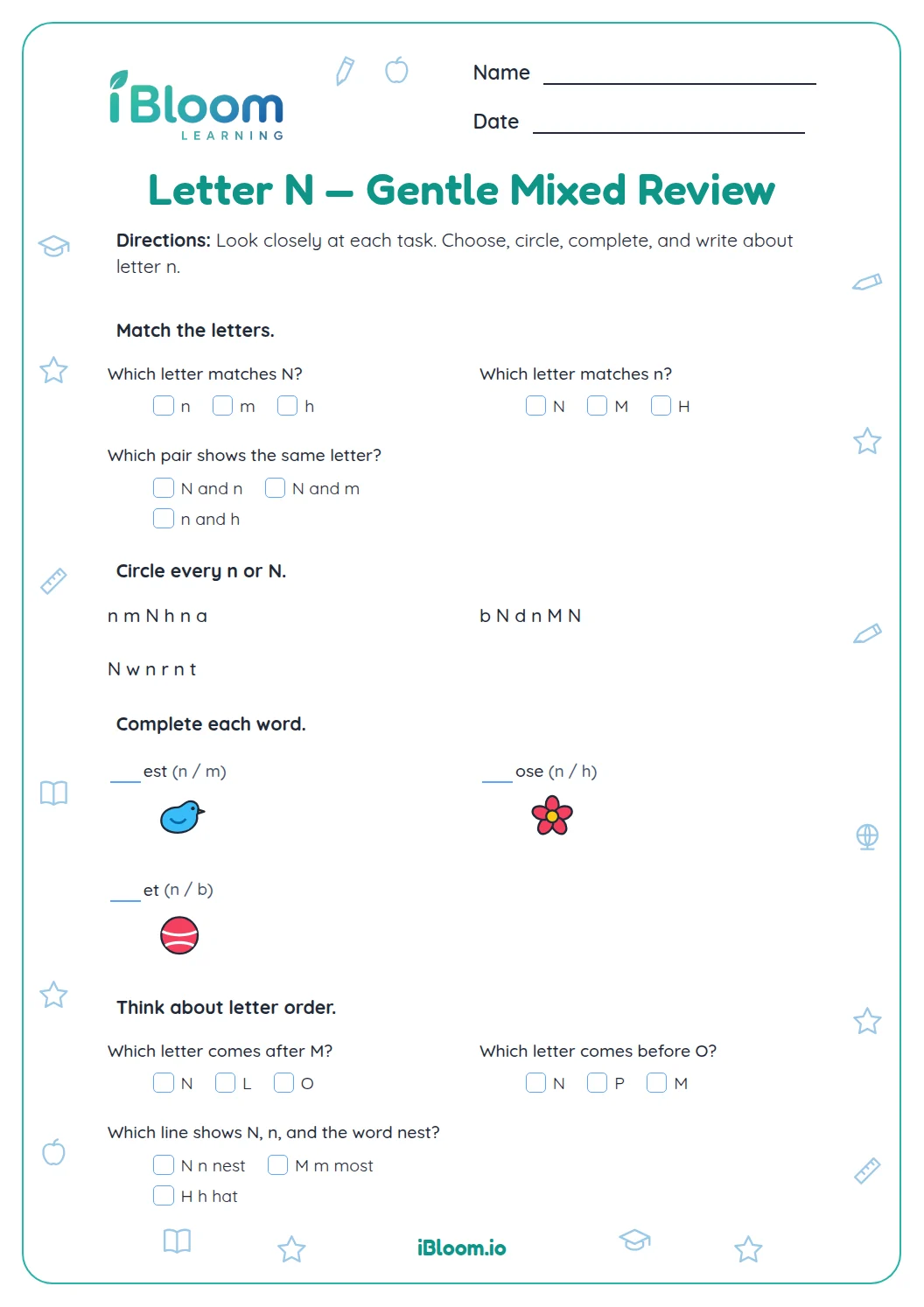
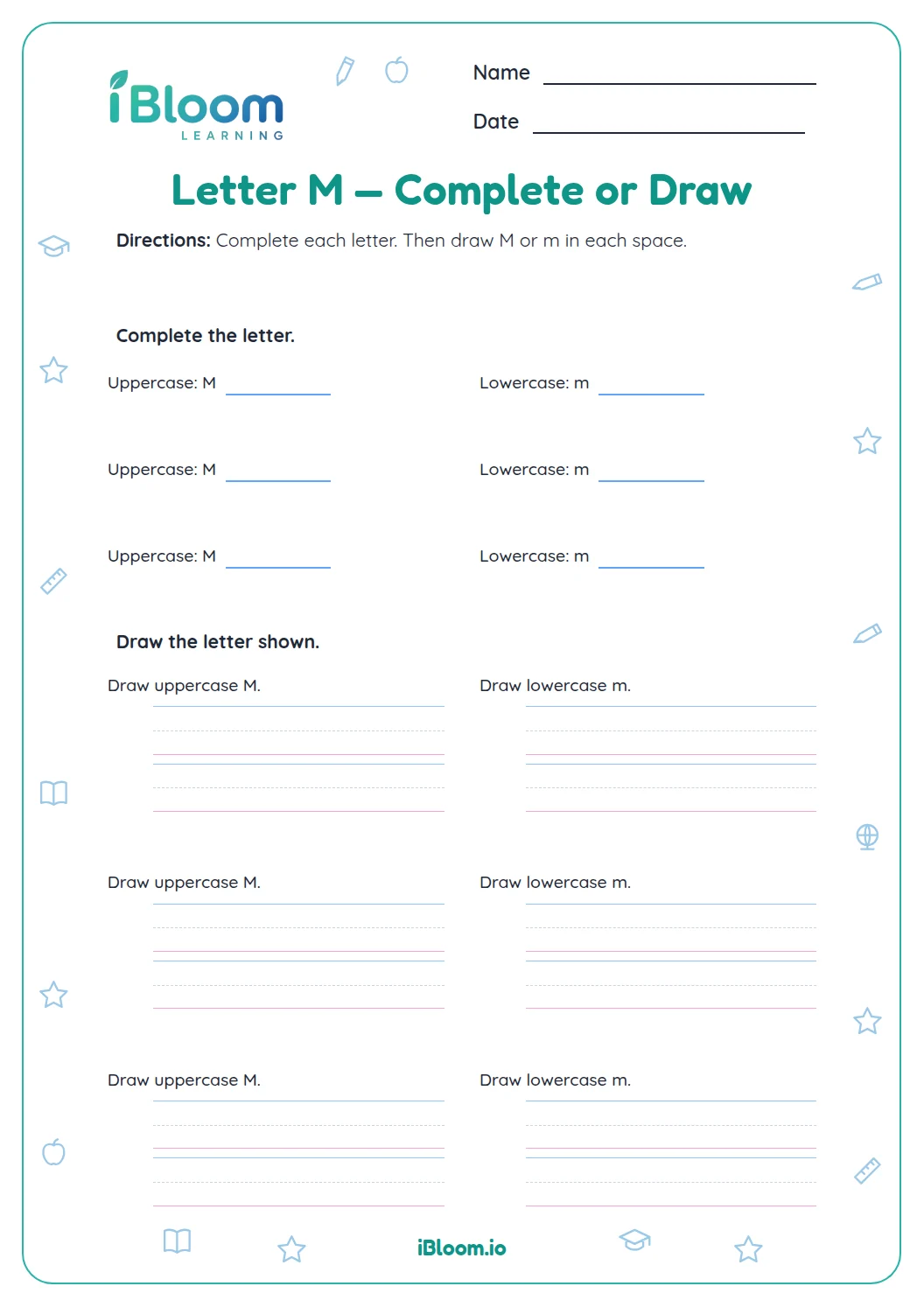
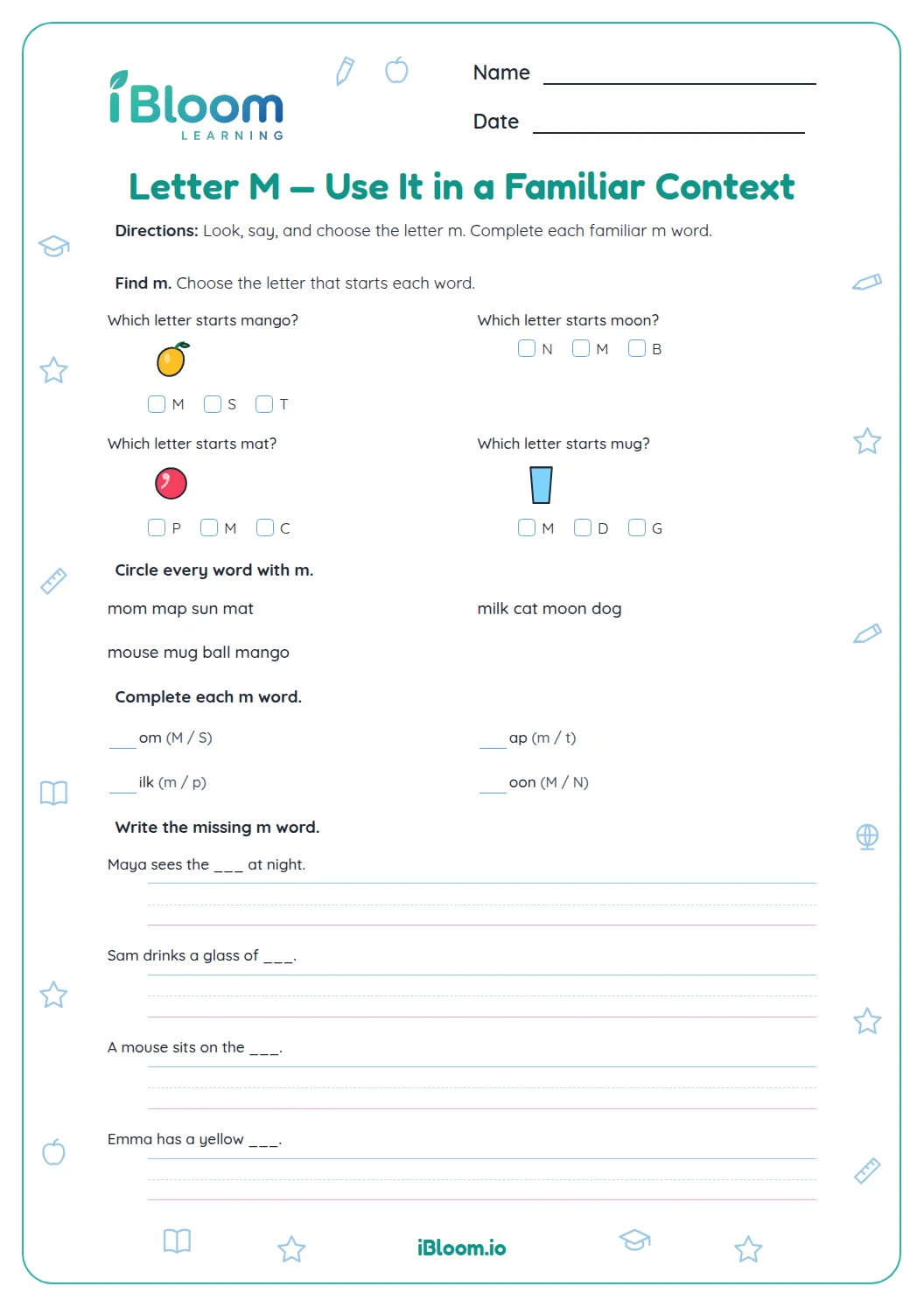
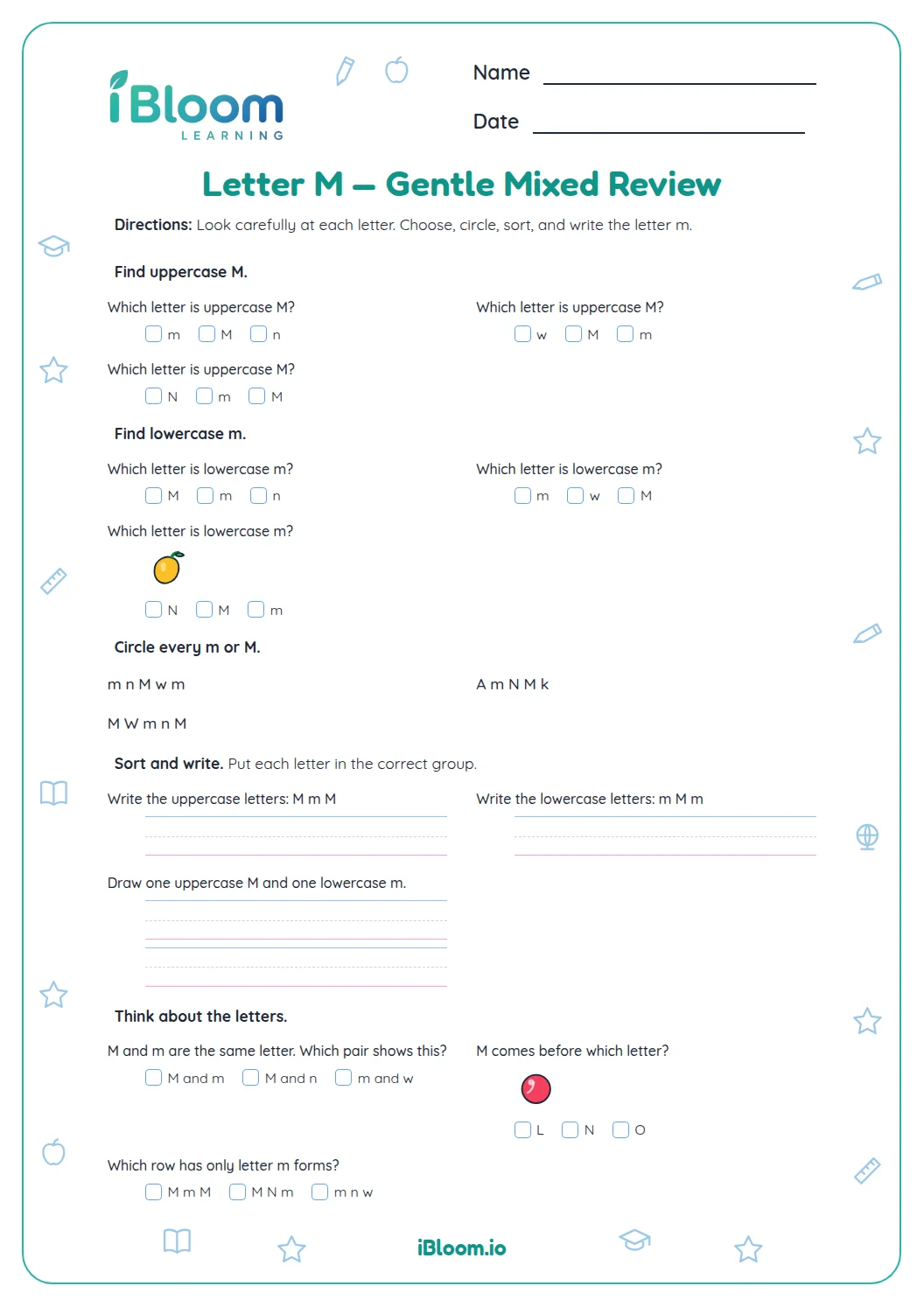
This free printable worksheet gives preschool and kindergarten children 14 activities with letter N. Part A traces N and n. Part B uses nest, nose, and noodles picture clues; Part C asks children to write n to complete nest and nose; Part D asks them to identify uppercase N and lowercase n, then choose five familiar words beginning with N. The writing practice supports Common Core L.K.1a. An adult can read directions aloud, and the answer key shows the target letters and words.
Aligned to L.K.1a
How are uppercase N and lowercase n different?
Uppercase N has two tall straight sides joined by a diagonal. Lowercase n has one short upright stroke and one rounded hump. Name each form while modeling it, then let the child trace the matching row.
Part C gives children a chance to copy familiar words. Part D begins by distinguishing uppercase N from lowercase n, then applies that recognition to familiar words.
How do the pictures help children use N?
The nest, nose, and noodles pictures connect a printed letter with words a child can say. Name each picture together before reading the sentence. All three Part B items need lowercase n to complete the word.
Questions 6 and 7 ask children to write lowercase n to complete nest and nose, connecting the letter form with each familiar word.
- 1Say “nest” while pointing to the nest.
- 2Read: A bird rests in a ___est.
- 3The missing first letter is n.
- 4Write n to complete nest.
How do children spot N in familiar words?
Part D asks children to distinguish the uppercase and lowercase letter, then choose five familiar words that begin with N or n. Read each option aloud if needed and invite the child to look at its first letter.
How to use this worksheet
- 1Name uppercase N and lowercase n.
- 2Model each form with a finger before tracing.
- 3Say nest, nose, and noodles while pointing to their pictures.
- 4Complete each picture clue with lowercase n.
- 5Copy nest and nose.
- 6Choose the letter form and words that begin with N or n.
Mistakes to notice and fix
The mistake
Giving lowercase n two humps like m.
The fix
Point to the single hump in the tracing model and retrace it with a finger.
The mistake
Using uppercase N inside nest or nose.
The fix
Find lowercase n in the tracing model, then copy that form into the word blank.
The mistake
Writing only n when question 6 asks the child to copy nest.
The fix
Point to all four letters of nest and copy them in order, saying each letter name.
Common Core alignment
Trace and print uppercase N and lowercase n in familiar words.
On this sheet: Children trace both forms, complete familiar N words, and independently write N and n.
Show the official wordingHide the official wording
Print many upper- and lowercase letters.
What to practice next
Make more practice
Further reading
Questions parents and teachers ask
Does an adult need to read the worksheet aloud?
An adult can read the directions and sentences aloud so the child can focus on N and n. Name the nest, nose, and noodles pictures together. Then pause for the child to trace, copy, or choose a word without needing to decode every instruction independently.
Which words does this letter N sheet use?
The worksheet uses nest, nose, and noodles in picture clues. Nest and nose also appear as words to copy, and Part D includes familiar choices such as Nina and napkin. Say each word aloud and point to its first letter before the child responds.
What goes in the three picture-clue blanks?
Each picture-clue blank needs lowercase n. Questions 3 through 5 already print the rest of nest, nose, or noodles. Point to those letters and say the complete word together. Questions 6 and 7 ask the child to copy nest and nose.
How can a child tell uppercase N from lowercase n?
Uppercase N has two tall straight sides joined by a diagonal. Lowercase n has one short upright stroke and one rounded hump. The tracing rows model both forms, and questions 8 and 9 ask the child to identify each one.
How can I check the copied words?
Look for the letters in the right order: n-e-s-t in nest and n-o-s-e in nose. The answer key prints a model for each word. Compare the child’s attempt with the model while allowing for normal differences in letter size and spacing.