




About this worksheet
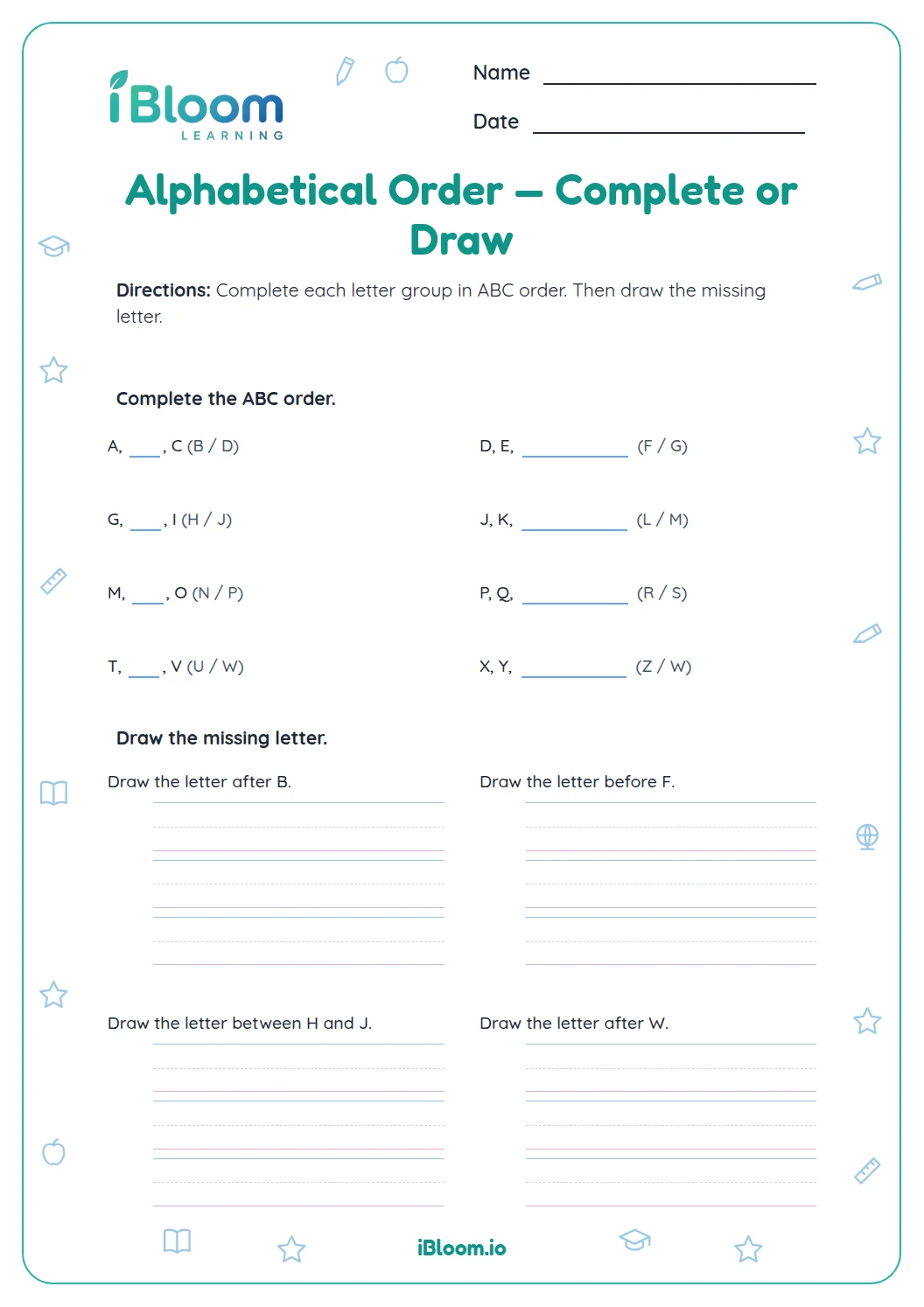
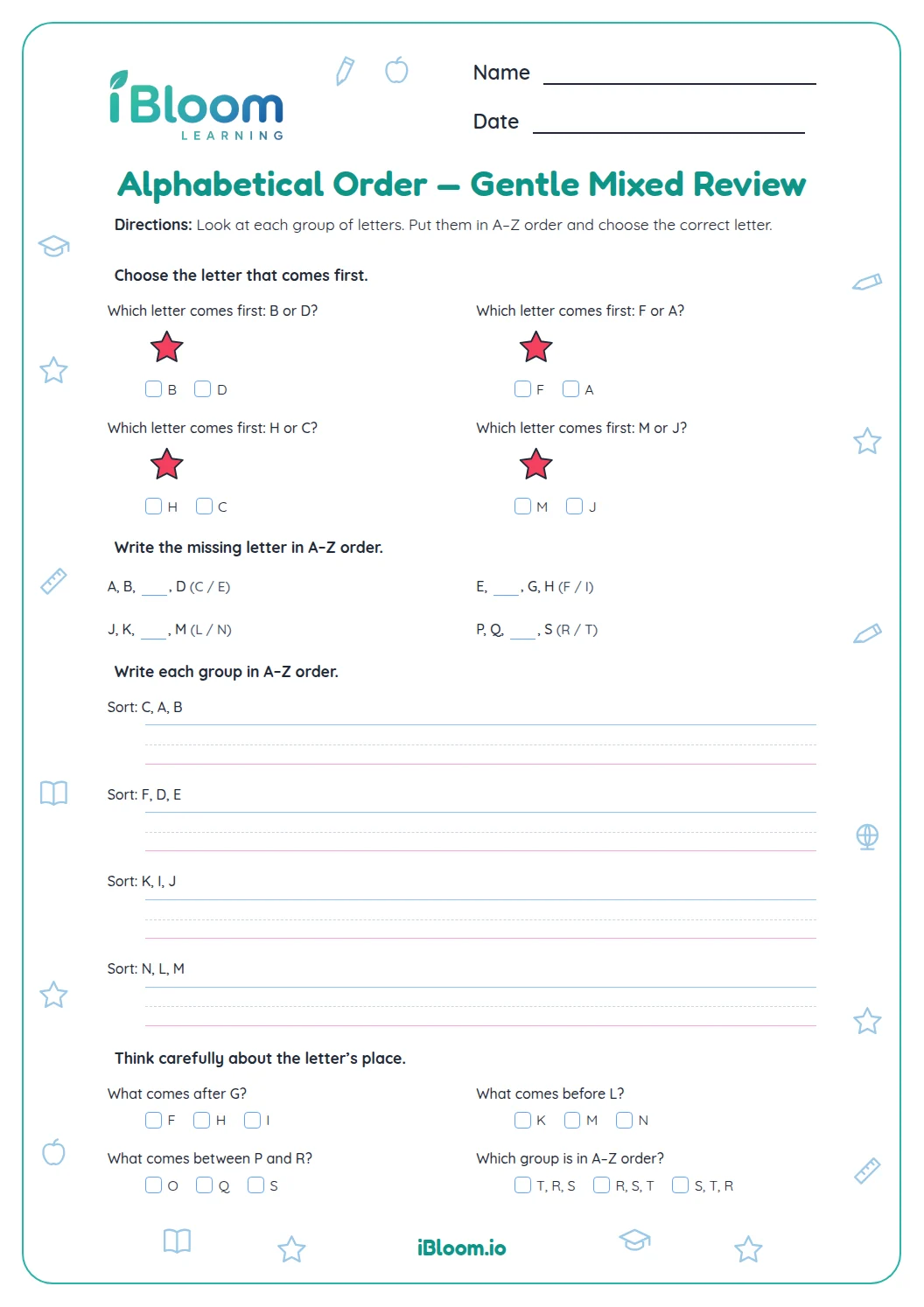
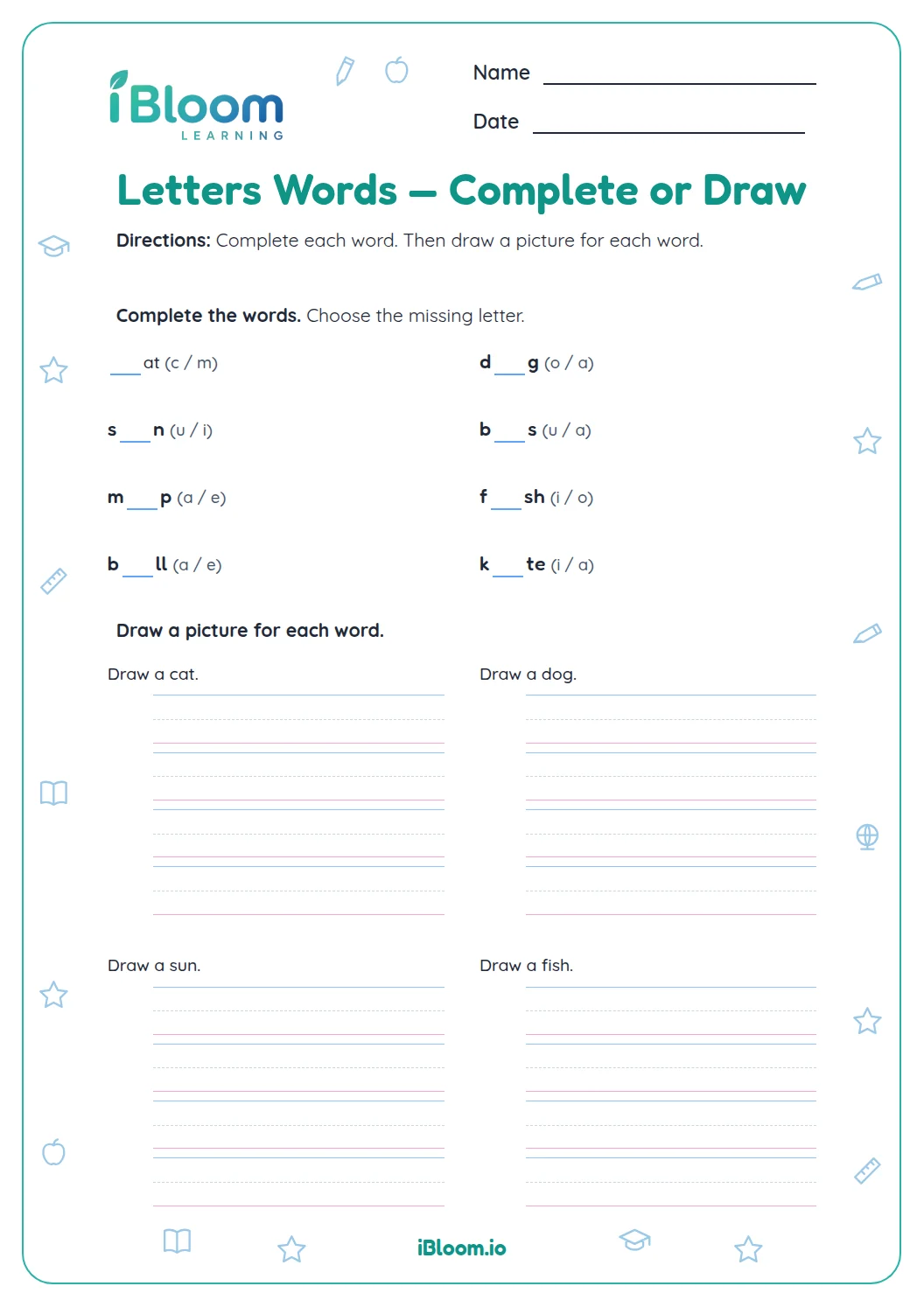
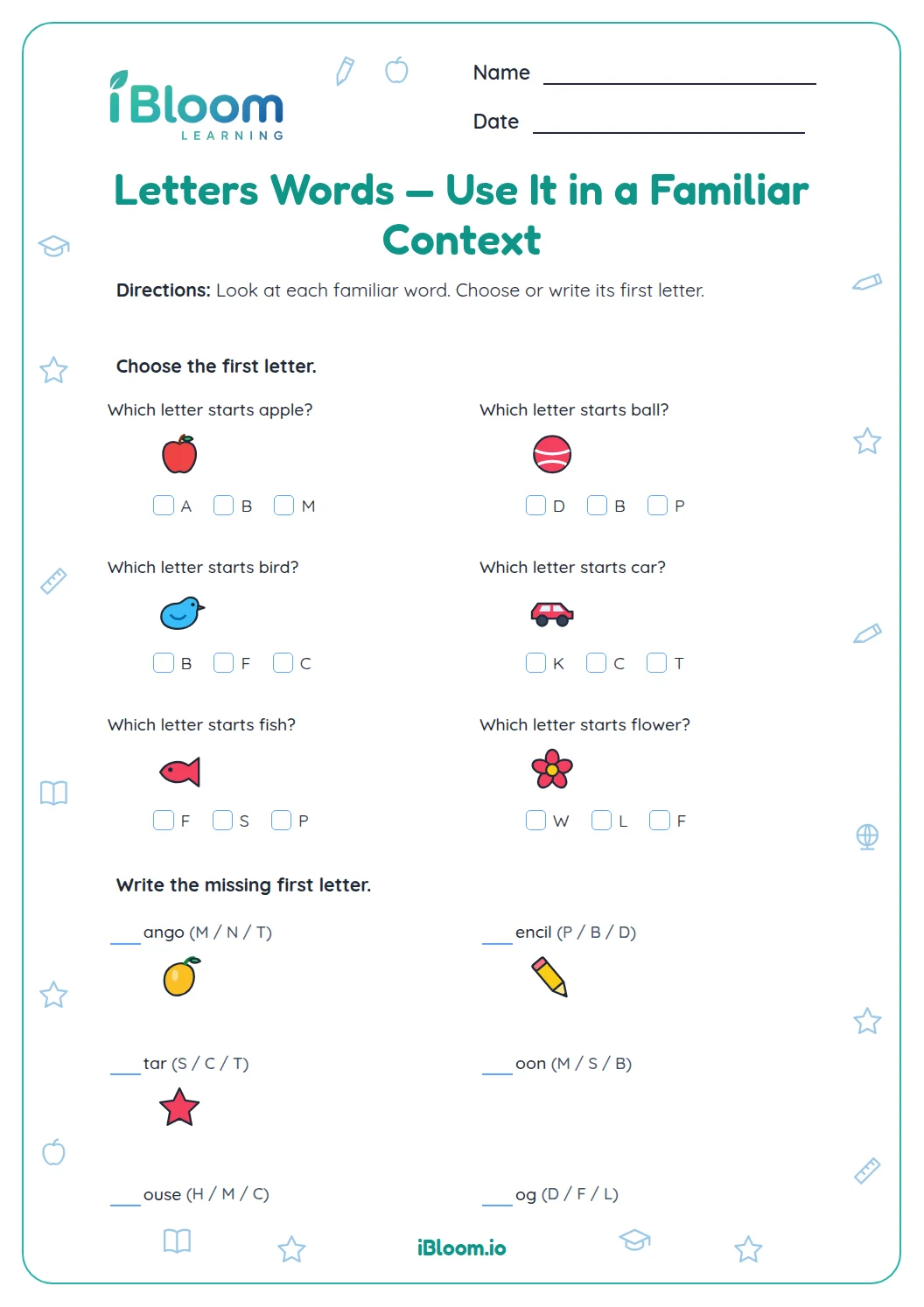
This printable preschool and kindergarten literacy worksheet practices uppercase and lowercase letter pairs. Children use familiar picture words to notice beginning letters, match uppercase and lowercase forms, and complete letter pairs. It includes 16 questions and a separate answer key.
How do I work with uppercase and lowercase letter pairs?
Children use familiar picture words to notice beginning letters, match uppercase and lowercase forms, and trace letter pairs.
A letter has an uppercase and a lowercase form.
- 1For [pic:apple], choose a, A, or e.
- 2Say apple and listen to its first sound.
- 3Choose lowercase a.
What practice is included?
16 questions: 8 picture clues, 6 letter matches, and 2 tracing rows. The questions move from direct practice to applying the same idea.
How to use this worksheet
- 1Name the familiar picture.
- 2Say its first sound.
- 3Choose the matching lowercase letter.
- 4Say the uppercase or lowercase partner.
- 5Trace each model from left to right.
Common mistakes and quick fixes
The mistake
Choosing a letter from the middle of the picture word.
The fix
Say the word slowly and listen for its first sound.
The mistake
Mixing up uppercase and lowercase forms.
The fix
Compare the two shapes in the letter pair.
The mistake
Tracing without following the letter shape.
The fix
Start at the model’s starting point and follow its strokes.
What to practice next
Make more practice
Questions parents and teachers ask
How many activities are on the worksheet?
There are 16 items: eight picture clues for beginning letters, six questions matching uppercase and lowercase partners, and two letter pairs to trace. A separate answer key accompanies the pages. Adults can say each picture name aloud and invite children to point to the first letter before choosing.
What do the picture clues ask children to do?
Children name each familiar picture and choose its beginning lowercase letter. The first eight items use pictures such as an apple, ball, cat, and dog. Adults can say each picture name aloud and invite children to point to the first letter before choosing.
Which letter pairs do children trace?
The tracing rows use Aa and Bb. Children can say each uppercase and lowercase name as they follow the printed model. Adults can say each picture name aloud and invite children to point to the first letter before choosing. Ask the learner to explain one answer using the pictured word or stated values.
How can I help a child who confuses letter cases?
Place the uppercase and lowercase forms side by side and name both. Point out how the shapes match or differ, then let the child find the same pair in the worksheet. Adults can say each picture name aloud and invite children to point to the first letter before choosing.
Can preschoolers use this worksheet?
Yes, with an adult reading directions and naming pictures as needed. Children can answer orally, point to a choice, or trace the displayed letter pairs. Adults can say each picture name aloud and invite children to point to the first letter before choosing.
Is an answer key included?
Yes. The answer key lists the beginning-letter choices, case partners, and tracing examples for all 16 items. Adults can say each picture name aloud and invite children to point to the first letter before choosing. Review the picture clues and letter partners aloud while checking the answers.